

Author: Allen Graves

10 Powerful Ways To Use Captive Portals to Grow Your Business

Running a restaurant requires more than just serving great food and assuming you’re giving guests exactly what they expect.

You need to know what your most loyal patrons expect so you can keep them coming back, rather than giving their business to competitors.

While you may already gather data through your POS system, it’s not always thorough enough to know what is most important about your guests.

But how do you find the time to collect more thorough guest data?

If you already offer free WiFi to your restaurant patrons, you can turn it into an intelligent data-gathering system using a captive portal.

A captive portal is a page that users are automatically taken to when they attempt to access the internet. On the page, they are asked to enter certain data points – such as their name and email address – prior to gaining access.
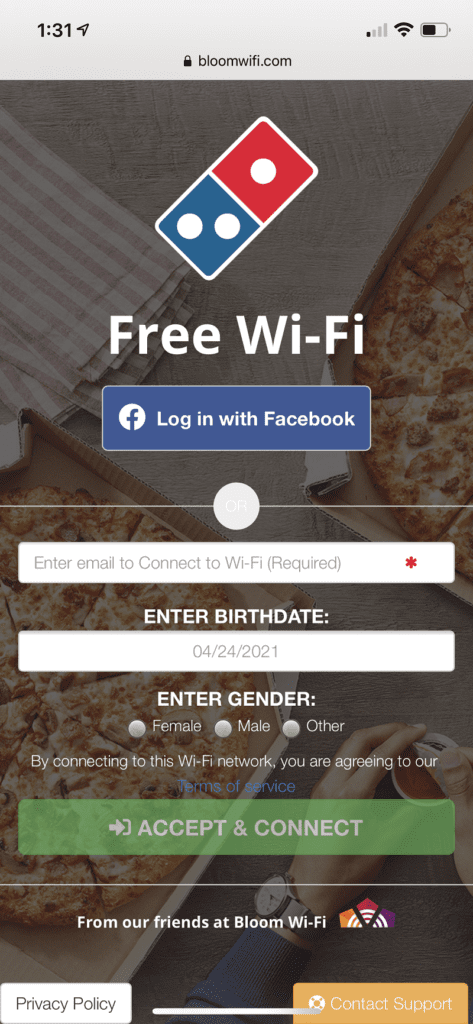
captive portal page

In addition, you can implement progressive profiling. This means that every subsequent time that guests log into the WiFi, the captive portal will ask them for a different data point, such as their date of birth, postal code, gender, and other information.

Over time, you will have a database of rich, clean customer data to use for segmentation, marketing, and making operational decisions.

You’ll be able to capture data you couldn’t receive from POS technology and have new methods to do more targeted, less-expensive marketing.

Here are ten best practices for captive portals to use for your restaurant marketing.

1. Monitor Customer Traffic for Better Marketing and Operations

Do you really know how many people come and go from your restaurant each business day? Maybe you know about a few loyal customers, though what about those you don’t know well?

When customers opt in to allowing you to collect their data by choosing to log in, you’ll know exactly who’s coming in, how long they’re staying, and when they leave. If they’re leaving too early, you can then adjust your restaurant marketing strategy, or to tap into other data to see why.

You’ll be able to make marketing and operational decisions with actual customer data and monitor effectiveness. You’ll be making intelligent, data-driven decisions to improve your business and lower costs.

2. Study and Improve Your Guest Churn Rate

It’s normal to see guests churn in the restaurant industry, though you don’t want a high churn rate.

Acquiring mobile data can help you determine some of the more specific reasons why the churn rate is higher than normal.

Does it relate to the wait staff in your restaurant? Or maybe it has to do with your menu and customers wanting some changes. Restaurants that take guest data seriously can study that data for insights into why a churn rate is high.

A WiFi customer intelligence platform like Bloom Intelligence will monitor the visit rates of each individual customer in your database. Using machine learning, it will determine when a customer is at risk of churning and will automatically send them a message to help lure them back.

It is all done behind the scenes. All you have to do is monitor the campaign reporting and tweak your messaging as necessary.

3. Understand How Many Guests are Returning?

Some customers you don’t know well may keep returning to your restaurant without your knowledge.

By studying their data, you can start treating them like VIPs with personalized marketing messages. Likewise, letting them know about special restaurant deals in real-time while in the local area can bring them in immediately.

Studies show that finding new guests is much more expensive than retaining the ones you already have. Get a grasp on your returning guest traffic and you can address return guest management in marketing and operations strategies.

It all starts with collecting customer data using your captive portal and WiFi sensors.
captive portal data to save churning guests

4. Promote Your Loyalty Program

Another best practice is to use the customer data to start a loyalty program for customers you value. You may already have one in place, but mobile data captured automatically goes toward creating more personalized programs.

You can also use your captive portal page to showcase your mobile app or loyalty program, complete with links and information.

Doing more targeting lets you send discount offers to segmented customers based on the things they like and their specific demographics. This will improve guest engagement and help lower marketing costs while improving customer lifetime values.

5. Re-Market to Customers Who Haven’t Visited in a While

It’s inevitable you’ll encounter loyal customers who don’t visit for a long while due to various circumstances.

If you gather data on them with a captive portal, you’ll know how to entice them back with re-marketing efforts. Restaurant re-marketing is sending targeted advertisements to your previous customers only.

You can do this by creating new Google and Facebook ads and target those you know are familiar with your brand, increasing advertising ROI while saving costs over sending mass advertising.

6. Send Offers/Promotions to First-Time Customers

How should you market to a first-time customer visiting your restaurant for the first time?

Capturing their data when they first visit can enable you to put together special offers and limited-time offers you know they’ll like and engage with.

While it might take several visits to gather more data, you can learn a lot about what a first-time visitor enjoys based on their behavior and spend during their visit.

Bloom can easily automate a message to go out to first-time customers to encourage them to return and become loyal guests.
captive portals can help customer loyalty programs

7. Optimize Staff Scheduling and Purchasing

Another best practice for capturing data through a captive portal is to use it to make more profitable business decisions. One of those includes staff scheduling.

Analyzing actual guest data behavior you captured from customers can help you bring in only the staff you really need on certain days and at certain times. Now you can save money on staffing you later realized you didn’t need.

Likewise, knowing your daily guest counts and visit times will help you optimize your food purchasing, eliminating the need to waste food, or have to 86 a menu item.

8. Closely Understand Marketing ROI

Creating content or offers for your restaurant may need A/B testing first. With captive portal data available, you can narrow this down faster so you don’t have to test as long.

Nevertheless, it’s always a best practice to do marketing tests on a consistent basis. Improving your offers can occur faster thanks to the thorough information you’ll have available.

Bloom’s detailed reporting modules can show you how many messages were delivered, how many customers opened and clicked the message, and who came back to your location and redeemed any offer you may have included in the message.

With testing and monitoring these metrics, you can optimize your messaging over time to get the most from your efforts. Best yet, it can all be automated using Bloom’s automated marketing suite of tools.

9. Compare Franchise and Chain Store Data

Those of you owning a restaurant franchise want to know what’s going on in each of your locations.

WiFi technology and captive portal data can help you compare performance at each location. You can easily load metrics from multiple stores and compare them side-by-side to see which stores excel in specific areas.

Then you can compare the marketing efforts from each location and perhaps optimize for locations that are not performing well in certain metrics.

Since the data is stored in the cloud, you can easily access it on your own mobile device to compare how many customers visit each location, and their behavior and spending habits.

The same best practice principles apply to chain restaurants. This could entail a lot more data since your chains may extend across state lines, and even international lines.

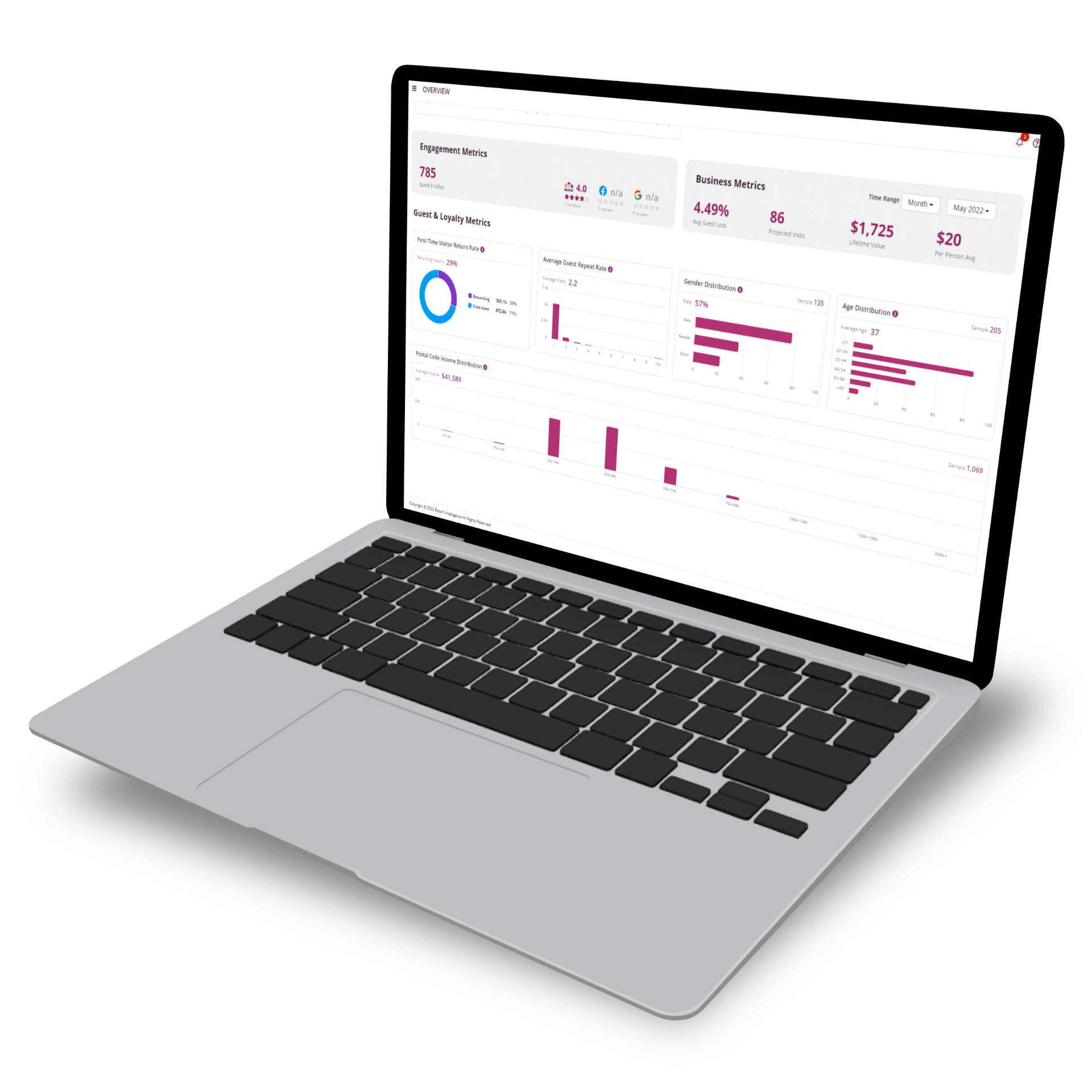
Bloom can show you not only the postal codes your customers are visiting from, but also the average income of each postal code area. This data can be used to optimize messaging and send specific messages only to guests from a specific postal code.

What’s important is to equip each restaurant in your chain with a captive portal WiFi system. You’ll finally see a big picture of what’s occurring in all of your stores without having to continually second-guess yourself. It is rich, clean guest data from your actual customers.
Bloom Intelligence captive portals guide

10. Discover Bloom Intelligence

What you have read above is only a fraction of what Bloom Intelligence can do to save you time and money while finding new customers, keeping them coming back, and improving your revenue on autopilot!

Call today to schedule a free demo. Discover all the ways Bloom can help save you time and grow your business. Call 727-877-8181 or click here to schedule a demo online.

11 Micro-Brewery and Taproom Marketing Ideas for 2025

Breweries and taprooms are all the rage right now. With so many breweries and taprooms opening up, it’s not always easy to find a unique marketing strategy that will grab consumer attention.

In this article, we’ll explore some of the best micro-brewery and taproom marketing strategies for owners in 2025.

The following tips offer plenty of great ideas on how to get started with developing your own creative plans for success.

1. Collect Guest Data

The most important tool to have in your brewery marketing plan is first-party customer data. Unlike online businesses, it can be difficult for offline businesses to gather accurate, comprehensive customer data.

However, there is a way to gather rich, clean customer data at a very low cost. Plus, it is done passively, giving you the time to concentrate on running and growing your business.

Using your guest WiFi, you can ask your actual customers for information as they log into your WiFi through a captive portal. Typically, businesses ask for the guest’s name and email address. When the data is entered by the guest, a new customer profile is created for the patron.

Your WiFi access points can sense the guest’s device and update their customer profile with specific behavior data such as dwell times, visit days and times, which locations they visit, and more.

You can also collect data from website forms, online ordering and reservation systems, your POS, and other channels of rich guest data.

2. Use Progressive Profiling

Progressive profiling allows you to continue collecting more detailed customer data over time.

Once a guest has logged into your WiFi and a customer profile has been created, you can then begin asking the customer for other information each subsequent time they log in.

For instance, on their second login, you might ask for their birthdate and age. The next time you might ask for their postal code and phone number, and so on.

Over time you will have a customer database full of rich, valuable customer data. Then, you can use the data to automate targeted marketing campaigns.

Collecting guest data with a captive portal

3. Implement Marketing Automation and Segmentation

We know that time is a valuable commodity for anyone operating a microbrewery or taproom. That’s why we have created a best-in-class marketing automation suite of tools to save you time while improving micro-brewery and taproom marketing ROI and guest lifetime values.

Now that you know who your customers really are and how they behave at your place of business, it becomes much easier to brainstorm messaging to get those customers back through your doors. You can even send micro-brewery and taproom marketing messages to individual groups of guests based on their demographics and behavior.

For example, you could send a message only to guests who are male, below 30 years old, and have dwell times of more than one hour. Or, you could create a campaign for women over 21 years old in a specific postal code, who have visited more than twice in the last month.

Segmentation allows you to customize your message and target each list with messaging that they relate to and will engage with. This messaging is much more effective and valuable than sending out a single, vague message to your entire database.

The best part is that once it is set up, it will run on autopilot. All you have to do is monitor results and watch your ROI increase!

You can set up automated campaigns for various campaigns, such as a birthday campaign, a campaign to win back lost guests, a campaign to solicit ratings and reviews, and so much more. In a nutshell, if you can think of it, you can automate it!

To learn more about marketing automation with Bloom, click on our marketing automation page.

micro-brewery and taproom beers

Other Micro-Brewery and Taproom Marketing Ideas

Now that you have set up guest data collection and marketing automation, here are other ideas you can consider with the time you will be saving.

4. Have a Specialty

When operating a microbrewery or taproom, it’s important to have a specialty that makes you stand out from the rest.

This can be anything from the type of beer you brew, to the atmosphere you create inside your business.

Finding a niche and focusing on it will help attract customers and keep them coming back for more.

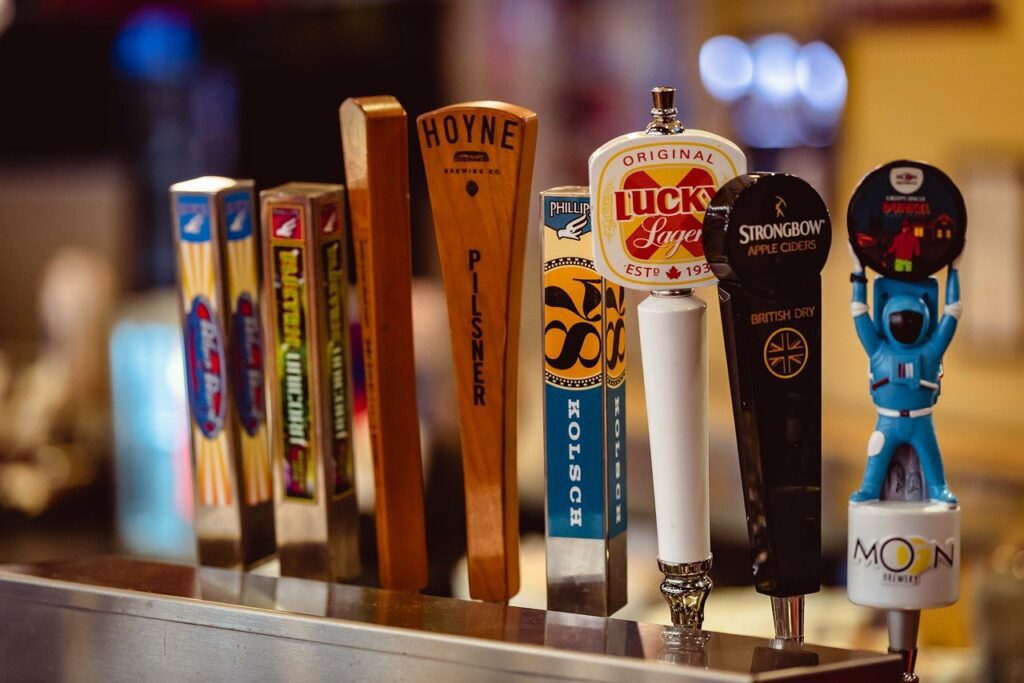
5. Personalized Tap Handles

You would be surprised how many different businesses offer custom tap handles for breweries and other establishments.

These make great additions to any business, as they can show people what beer you serve, or even act as a decoration that matches your overall theme.

personalized tap handles

6. Growlers!

Growlers have been a huge hit for microbreweries and taprooms all around the world.

Guests love the fact that they can take home a taste of your beer, or even half a gallon without committing to an entire keg or pitcher.

These are great ways to attract new customers and get them coming back for more.

7. Food

Food is a huge part of the micro-brewery and taproom experience, and it’s important to have menu items that pair well with your beer.

This can be anything from snacks to full-blown meals. Offering food will not only attract new guests but also keep current ones coming back for more.

Micro-brewery and taproom food and drink

8. Merchandise

Merchandise is a great way to bring in extra money, as well as show what your micro-brewery or taproom is all about.

People love the fact that they can purchase merchandise related to their favorite beer brand and enjoy wearing it proudly at social gatherings.

Plus, there’s nothing better than free advertising!

9. Local News and Media Coverage

News coverage is a powerful tool for any small business, and breweries and taprooms are no exception.

Getting your business featured in local newspapers or websites can help attract attention from potential customers who might not have known you existed.

10. Social Media

Social media is a must-have for any business these days, and breweries and taprooms are no exception.

Make sure to set up accounts for your business on Facebook, Twitter, and Instagram to stay connected with your customers and make new ones.

It is important to monitor these pages and engage with your followers as much as possible. It shows that you care about your guests and can attract new patrons.

11. Host or Sponsor Events

Events can be a great way to attract new customers and get them coming back for more.

Whether you host music festivals or beer-tasting events, they’re always a blast and most people will love the opportunity to hang out in your taproom or micro-brewery.

If you are not keen on hosting an event, you can sponsor an event at another venue and offer your product in an effort to attract more new regular guests.

Discover Bloom Intelligence

These are just a few of the many micro-brewery and taproom marketing ideas that can help your brewery or taproom succeed in 2024. Use them as a starting point to develop your own plans and watch your business grow.

Using a WiFi marketing and customer intelligence platform like Bloom Intelligence can help you execute many of these restaurant marketing strategies at a very affordable price.

Based on the list of strategies above, perhaps the most powerful way to boost revenue, improve online ratings, bring back lost customers, and improve customer lifetime values – all while saving time and money – is to invest in WiFi marketing and customer intelligence platform like Bloom Intelligence.

If you would like to see Bloom in action, and how easy it is to use, call us today to schedule a demo, or schedule a demo online here.

WiFi Marketing Guide

10 Restaurant Marketing Strategies for 2025

Marketing is an integral part of running a successful restaurant business in today’s competitive marketplace.

Restaurant marketing strategies are vital to your success in the food industry because they allow you to promote your brand more efficiently and effectively. It keeps your place of business in the minds of your local consumers.

Here are some of the most effective ways restaurants today use to create an effective restaurant marketing plan, advertise their establishment, get new customers through their doors, increase customer satisfaction, get more repeat customers, and get them talking about how great your restaurant is.

1. Set Up Google My Business

Google My Business (GMB) is a free service that allows businesses to create and manage their online presence across Google. It offers more control over your company’s information, which can help you attract customers by making it easier for them to find you.

Setting up a GMB account is relatively easy and fast.

Once set up, Google will add your details to their search results when users search for your restaurant online. Likewise, your restaurant may also appear when users search for your type of cuisine or atmosphere (sports bars near me, Italian restaurants in New York, etc).

If you already have a GMB account set up, consider using their reservations option so your customers can make reservations online. Some restaurants see a 20% increase in online reservations when they do this simple technique.

Google My Business Restaurant Marketing Strategy

2. Have a Functional Online Menu and Ordering System

There’s a lot of competition in the restaurant industry. It can be tough to attract customers and get them to come back for more.

But there is one way to help ensure more consistent business – taking orders online.

Online ordering for restaurants saves your guests time, but it also makes your life easier as a restaurant owner too. You don’t have to worry about hiring extra staff to take phone calls or wait on people at the counter.

Instead, that would all fall on whoever handles orders and takes payments (such as vendors like GrubHub and UberEats). Plus, when people order from home, they might add more items than they would if they were dining out, which means higher profits for you.

All in all, this is one small change that could have a big impact on your restaurant business.

The menu should be able to list the different dishes that the restaurant has to offer. The contents of the menu should also provide a photo for each dish. The dishes on the menu should also be detailed such as their ingredients, preparation process, and price.

3. Create a Seamless, Touchless Experience

In today’s post-Covid society, consumers are more aware than ever of the dangers of cross-contamination and how viruses are transmitted through touch.

Fortunately, technology has made it possible for diners to have a completely touchless experience, from online reservations to touchless menus, to touchless payments, and more.

We have already discussed online reservations, but in the touchless experience, this can be a huge plus.

If you are on a wait time, visitors will not have to stand in a crowd of people. Likewise, they will not have to touch a pager or worry about interacting with a host or hostess.

Once at their table, visitors can scan a QR code, or connect to WiFi to see a digital menu. You can create a QR code using a dynamic QR code generator available online. Then, they can use your online app or a table-top monitor to order their meal.

Once their dining experience is complete, they can pay their bill through an online app using Apple Pay or Google Pay, or a similar service.

Creating a touchless experience for your guests can streamline their dining experience and save you time and money while decreasing overall table turn times.

Restaurant marketing strategies: touchless experience

4. Build an Email Database for Email Marketing

Email marketing is a powerful tool for restaurants and other food establishments and one of the most powerful restaurant marketing strategies. It’s the most cost-effective marketing method because it doesn’t require any overhead or upfront costs, and can be done on your own time.

Restaurants have been using email marketing strategies to improve their business through digital communication with customers for years.

The following are just a few ways that you can use email marketing as part of your restaurant strategy:

  • Create an e-newsletter to send out monthly specials or updates about upcoming events at the restaurant.
  • Send out promotions such as “buy one get one free” deals.
  • Announce new menu items by sending out announcements and coupons via email.
  • Update existing patrons about your new menu or upcoming events that are coming up.
  • Send out thank you notes to loyal customers, and ask them how they enjoyed their experience at your restaurant.

The main point is to keep your customers engaged and to keep your restaurant top-of-mind with your local consumers.

Don’t forget to keep your email marketing strategy relevant by offering coupons for favorite foods, special discounts for returning customers, or prizes for frequent diners.

5. Invest in Customer Data Collection Tools

An email marketing campaign will only work if you have a list of customer email addresses.

Without customer data collection tools, building an email list can become cumbersome and time-consuming.

Perhaps the easiest way to build a large list of customer emails is by using your WiFi captive portal, also known as a WiFi landing page.

When a customer attempts to access your WiFi, they are taken to this page where they must enter their email address to gain access to the internet. Or, they can log in using a social media account such as Facebook.

You will quickly build an email list to use for your email marketing campaigns.

Plus, using a tool like Bloom Intelligence, your customer data and email addresses are cleaned and verified in real-time, keeping you from wasting resources sending emails to unknown or non-existent addresses.

Content Marketing Guide for Restaurants

6. Use a WiFi Marketing Platform to Build Customer Databases & Profiles

In today’s competitive food & beverage industry, knowing who your customers are and how they behave is crucial for an effective marketing strategy.

Having your own first-party customer data enables you to personalize and segment your marketing campaigns for better engagement and I much higher ROI.

But how do you collect customer data when your time is so limited?

Simple. Use a WiFi marketing platform like Bloom Intelligence.

Using your WiFi access points, your customers can be tracked individually by their cell phone WiFi signal, whether they log into WiFi or not.

You’ll have immediate access to behavior data such as:

  • Daily traffic
  • Customer dwell times
  • Dwell times by hour
  • First-time customers
  • Repeat customers and repeat rates
  • First-time customer repeat rates
  • Popular days and times

When customers log in to your WiFi, you can collect even more data about them, such as:

  • Customer age and gender
  • Postal code and income distribution
  • Visit behavior data (visit days, times, and durations)
  • Phone number
  • Birthdate

Then, you can use this data to segment your customer list and market to each segment with messaging that they will more likely engage with. This increases not only engagement but ROI.

Plus, you’ll be able to track attribution all the way down to a customer walking back into your door and/or redeeming an offer.

Guide to Customer Segmentation for Restaurant Marketing Strategies

7. Implement Remarketing and Lookalike Campaigns

With your own first-party data, you will have the ability to remarket to those customers using Google Ads or Facebook/Instagram.

These platforms allow you to upload your customer names and email addresses into their system and create ads that will be shown to them when on Google or Facebook/Instagram.

This is known as remarketing, and it is a great way to keep current customers coming back.

Likewise, you can create “lookalike” campaigns. When you upload your customer list – just as you would for a remarketing campaign – you can tell Google and/or Facebook to analyze your list and only serve ads to people who have similar characteristics and demographics as those on your list.

Knowing your target audience like this, and allowing lookalike ads to be sent to them, you can find new customers faster, without spending money on mass advertising campaigns.

8. Identify and Bring Back Lost Customers

Bloom Intelligence uses machine learning to identify when a customer is potentially churning (at risk of not coming back).

Once they are identified, the system will fire off an email to the customer with a message and, if you like, an incentive to get customers back through your door. Bloom users have seen up to 38% of lost customers return.

Saving lost customers is much less expensive than finding new customers, so this is a very powerful restaurant marketing strategy.

Powerful Restaurant Marketing Strategy: Customer Churn Success Report

9. Focus on Ratings and Reviews

Now more than ever, consumers are flocking to sites like Google and Facebook to check ratings and reviews prior to making a dining decision.

It is important not only to have many positive ratings but to have new ones consistently appearing. This is crucial for successful restaurant marketing strategies.

Fortunately, with a platform like Bloom Intelligence, you can actively solicit ratings and reviews from your visiting customers. When a customer leaves your place of business, you can send them an email asking your customer to rate you on Google, Facebook, Bloom Intelligence, or if they had a bad experience to contact you directly (giving a frustrated customer the ability to vent directly to your organization rather to friends and online).

Over time, you will see your rating improve as you collect a consistent stream of new positive ratings and reviews on Facebook, Google, and Bloom.

You can also respond to all of your reviews directly from within the Bloom platform and your responses will appear on Facebook and Google in real-time. This can save you a great deal of time and show your customers – and potential customers – that you care about their experience.

Restaurant Marketing Strategies: Ratings and Reviews

10. Use Customer Sentiment to Improve Your Customer Experience

Using ratings and reviews is a great way to measure customer sentiment. They allow you to identify specific issues and spot trends over time and apply them to your restaurant marketing strategies.

Then, you can use that data to improve your business.

For instance, you may see a consistent flow of reviews saying that the lighting in your dining room is too dim during dinner service. So, you can try more lighting and then watch future reviews to see if the issue is resolved and your customers’ experiences have improved.

This is just one example of using customer sentiment to improve your business. The opportunities are truly endless.

The issue is that it can be very time-consuming to study all of your reviews on a consistent basis.

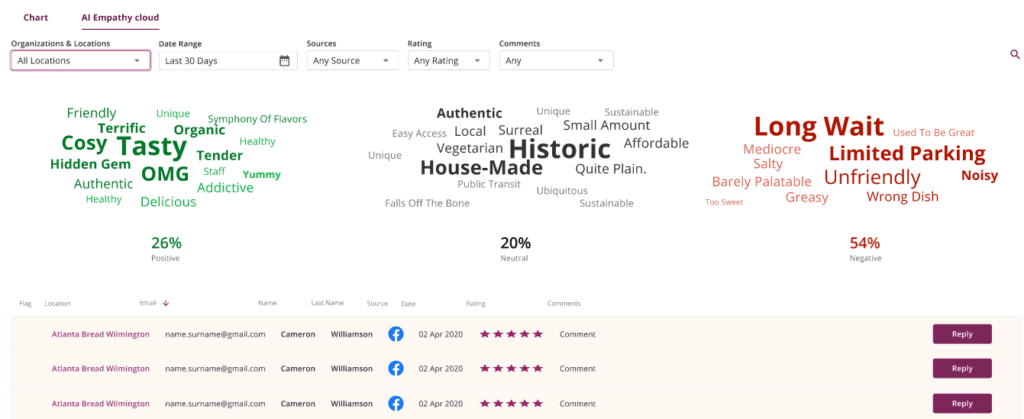
Bloom uses artificial intelligence to measure customer sentiment using all of your Google, Facebook, and Bloom reviews. It displays them in an easy-to-understand word cloud.

Customer Sentiment Cloud to Gauge Strategy Success

Positive sentiment is in green, neutral in grey, and negative in red. The larger the word or phrase, the more it appeared in your customer reviews.

This makes it super simple to measure customer sentiment and improve your business over time.

Discover Bloom Intelligence

Restaurant marketing strategies are a very important part of marketing your restaurant and improving the overall customer experience.

Using a WiFi marketing and customer intelligence platform like Bloom can help you execute many of these restaurant marketing strategies at a very affordable price.

Based on the list of strategies above, perhaps the most powerful way to boost revenue, improve online ratings, bring back lost customers, and improve customer lifetime values – all while saving time and money – is to invest in WiFi marketing and customer intelligence platform like Bloom Intelligence.

If you would like to see Bloom in action, and how easy it is to use, call us today to schedule a demo, or schedule a demo online here.

WiFi Marketing Guide

Restaurant Reputation Management is Crucial for Getting New Customers

Restaurant reputation management is one of the most important restaurant marketing tactics owners and marketers should include in their restaurant marketing strategy.

Effective restaurant reputation management is crucial for business success because, in today’s world, online ratings are very persuasive to new and existing customers, and restaurant owners need to ensure they receive an online rating that accurately represents their restaurant.

Opinions expressed in restaurant reviews on sites like Google and Facebook shape restaurant consumer purchasing decisions. So, restaurant marketers need to consider how they manage online reputation effectively. Improving consumer perception of their restaurant when potential diners search for a place to eat and drink is crucial.

customer-metrics3

Many consumers are more likely to choose a restaurant with a high rating compared to one that has just been established or is low-rated.

According to Modern Restaurant Management, an increase of just one-star rating can give a business an approximate 5-9% increase in revenue. And an increase of just one-half star would likely fill your seats during peak business times.

They also reported that 34% of diners choose a restaurant based on peer review websites.

And 53% of 18-to-34- year-olds reported that online ratings and reviews factored into their dining decisions.

Correct restaurant reputation management practices will ensure a restaurant receives great ratings. And, it also increases the credibility of the restaurant’s marketing campaigns.

According to Time.com, customers who have a realistic or ordinary experience at your place of business will typically not leave a customer review online. So it is also crucial to ask your customers to rate their experience.

Improve Ratings with Restaurant Reputation Management

Need More Ratings? It’s OK to Ask

Ratings on popular online websites largely consist of 1’s and 5’s. This is because the motivation to leave an online review stems from a great experience or a terrible one.

So remember to ask your customers to give you a rating online. According to a BrightLocal Local Consumer Review Survey, 68 percent of consumer respondents actually left a local business review when asked to do so.

Also, a mixture of good and not-so-stellar ratings can appear more authentic to internet surfers, but you obviously want a lot more of the positive ones. When asking your patrons for ratings and reviews, look for those who are outwardly having a great time, are “regulars” at your location, are dwelling longer than your average patrons, who compliment your food or atmosphere, or who gave a large tip

These customers can become your best online advocates, so be on the lookout for them and don’t be afraid to ask for a rating or review.

Responding to Negative Rating and Reviews

To establish and maintain a positive restaurant reputation, it is important to respond to your ratings and reviews – both positive and negative – in a timely manner. If restaurant owners and marketers do not respond to reviews, restaurant consumers might assume the restaurant does not truly care about its customers.

According to research conducted by BrightLocal, 78% of local business owners are tracking social media and online review sites in some way. Also, 90% of them said that customer feedback is important for company growth.

When responding to a negative review, always thank the customer for taking the time to give you the review.

Instead of approaching it with a negative mindset, think of it as something that can give you the ability to make your business better through negative feedback!

Likewise, thanking them will show them – and everyone else who reads your response – that you truly care about your customers.

Obviously, you want to apologize for the issue that caused the bad review. Then offer to continue the conversation offline. Make sure to request this in the initial response. Offer your business email address or phone number.

That will let the public know that you want to work with the customer to make things right.

Responding to Positive Ratings and Reviews

Many restaurant marketers will see a positive review online and think that they do not have to respond. However, restaurant marketing is about customer relationships, and you should respond just as quickly to positive reviews.

This will keep the restaurant’s reputation in good standing with online restaurant rating sites and it can leave a lasting impression on your current and potential customers.

Again, thank them for spending the time to leave the review. Then, you want to describe your business or location. For example, you can include a sentence like, “As downtown’s oldest premier Italian restaurant…”

You can also use this opportunity to cleverly market your restaurant including some kind of marketing statement, such as how you provide a free drink or dessert for customers on their birthday. Make sure not to be too “salesy” or promotional.

Then, you can quickly engage the customer. Ask them to visit again soon or to share the word with their friends.

By responding to both negative and positive reviews, you can positively increase your customer loyalty, new customer acquisition, and customer lifetime values.

Automate Everything with Bloom Intelligence

With Bloom, you can send messages directly to your customers via email asking them to rate you on Facebook, Google, or directly in the Bloom platform. The message also contains a link to contact you directly if they had a bad experience.

This is important because it can give you a direct way to take hold of the issue immediately. Then, you can quickly make things right with the customer.

Any ratings and reviews received can be seen in one place on your Bloom platform. You can respond to all ratings and reviews in one place! No more surfing site to site looking for any new reviews. This can save you a great deal of time and energy, allowing you to focus on improving your business.

Likewise, you can easily spot trends and issues in the graphical user interface. Using artificial intelligence, Bloom can show you what your customer sentiment is in your chosen time period. This will give you valuable insight to help improve your business even further.

Start taking control of your restaurant reputation management. Schedule a free online demo or call us at 727-877-8181. We’ll show you how Bloom can make you the hero of your restaurant business!

Powerful Ways To Get More New Restaurant Customers in 2025

The restaurant industry is always changing. New marketing trends appear often and constantly evolve, so it’s important for restaurateurs to stay on top of them in order to keep their business afloat.

As with any business, acquiring new customers is key to maintaining business growth. To do this, owners need to focus on marketing strategies that will bring new customers in the door without exhausting their budget.

Restaurant marketing can be tough because of all the competition out there vying for your potential customers’ attention. Here are a few powerful strategies that can help make it easier, save you time, and improve your revenue.

Managing Online Ratings and Reviews

The internet has been a golden opportunity for many businesses to promote their products and services. With various online communities, forums, and social media networks, you can reach a wide array of people who might be interested in your restaurant.

Online ratings and reviews are a great way to reach potential customers. They are key to attracting (and retaining) new customers. They increase your brand’s visibility and help potential customers discover and choose your restaurant. 

This can have a huge positive impact on customer acquisition and on your bottom line.

Plus, you’ll get feedback from your customers while providing them with a space to share their honest thoughts on your business.

However, it can be difficult to manage these online reviews without the knowledge and proper tools to help you. To be efficient and save time, look for a tool that allows you to see and respond to all of your reviews in one platform.

That way you can save time browsing from platform to platform looking for new reviews and responding in different place.

Think About the Customer

It’s clear that online reviews can make or break a business; however, many companies don’t realize it’s their responsibility to actively manage these online ratings and reviews. Some businesses wait for reviews to come in while others ask for feedback after a customer calls their customer service line. No matter which method you choose, it’s important to stay proactive and manage your online reviews before they have a chance to do any damage!

If you are looking for a way to manage your online ratings and reviews, make sure that you keep these guidelines in mind.

Make it clear what types of feedback you want from customers so they know how to provide it. It’s also important to respond quickly when someone posts an issue or complaint about your company or product – especially if the problem is widespread among other people too.

Remember that even though there may be some negative comments, this could work out in your favor by highlighting areas where you need improvement!

Finally, don’t forget to thank those who have left positive reviews because their words can go farther than just boosting morale within your business – sometimes they’ll drive new sales as well!

To learn more about improving your ratings and reviews to get new customers, click Acquiring New Restaurant Customers With Positive Ratings & Reviews.

c

Advertising: Similar Audience and Lookalike Campaigns

Online advertising is obviously a great way to get new customers to visit your restaurant. However, it is more important than ever to target your advertising to the right audience.

Most restaurant and retail locations will not have the budget for television and radio advertising. Fortunately, the internet, today’s technology, and Bloom Intelligence can provide relatively low-cost ways to advertise your brand without breaking the bank.

More importantly, you can target you advertising to the right people at the right time.

This can be done using Google’s Similar Audience campaign strategy and Facebook’s Lookalike campaigns. These campaigns allow you to tell Google and Facebook about your customers, and they will only serve your ads to other people who have the same demographics and behaviors as your current, ideal customers.

When customers log into WiFi at your place of business, they are taken to a WiFi landing page, also known as a captive portal. This page requires the customer to enter their email address to gain full access to the internet.

Bloom then creates a customer profile for that customer and stores the email address – along with all of the past and future behavior and demographic data – in your customer database.

Over time you will passively collect a large customer database with cleaned, verified data. Then, you can upload that customer list to Google and Facebook. You will create targeted ads, and then they will be served to your “lookalike” audiences.

This has been proven to increase engagement and conversion rates because your ads are seen by your target audience.

To learn more about this strategy, click Advertising to Get New Customers.

Get More New Restaurant Customers: A Guide

Use Business Listings on Google and Facebook

It’s no secret that Google and Facebook are two of the most popular websites in the world. So, why not use them to your advantage?

If you are having a problem finding new customers and keeping them coming back, then adding your restaurant business listing on these websites can make a difference in your restaurant’s revenue and customer acquisition/retention.

Today’s consumers often visit Google and Facebook to do research on a restaurant prior to making a dining decision.

With an informative and positive business listing on these powerful websites, you can easily attract new customers to your restaurant. And it’s absolutely free to do!

Did you know that 43% of all Google searches are local or location-based? Likewise, more than 50% of all mobile searches are local or location-based.

Location-based means that they are looking for results about a product or service in their local area.

The Statistics

It only makes sense to get your business listing up and running as soon as possible. Then you can take advantage of Google’s enormous traffic for your restaurant marketing strategies.

Here are some other interesting statistics:

  • 49% of location-based businesses (like restaurants) will get more than 1,000 views of searches per month.
  • 50% of “near me” searches done through mobile result in an in-store visit.
  • 76% of “near me” searches result in a visit to a related store the same day.
  • 34% of “near me” searches done on desktop/tablet result in an in-store visit.
  • One-third of Google searches made on mobile are related to the searcher’s location.

So it just makes good business sense to get your business listings set up and optimized as soon as possible. Bloom can make it easy and maintain your business listing all in one place.

To learn more about the power and value of getting new customers from business listings, click Attracting New Customers With Google and Facebook Business Listings.

Using GMB and Facebook to get more new customers: A guide

Discover Bloom Intelligence and Get More New Customers!

What you have read above is only a fraction of what Boom can do to save you time and money while finding new customers, keeping them coming back, and improving your revenue on autopilot! 

Call today to schedule a free demo. Discover all the ways Bloom can help save you time and grow your business. Call 727-877-8181 or click here to schedule a demo online. 
Get New Customers with Our WiFi Marketing Guide

Attracting New Customers With Google and Facebook Business Listings

No matter what business you are running, finding new customers at the lowest cost possible is extremely important – especially for restaurants. 

The competition is high, and consumers are unpredictable. So, you need to find low-cost ways to get your brand in front of those consumers as much as possible. 

Now, more than ever, consumers are turning to the internet to help them make their dining decisions. Perhaps the most visited sites for this purpose are Google and Facebook. 

They give you an amazing opportunity to show local consumers what others are saying about your restaurant, providing valuable social proof. And the better your ratings and reviews, the more likely people are to give you their business. 

Using Google to Find New Customers

Have you ever been searching for something on Google and come across a result that is displaying a star rating and the number of votes? This is great social proof because the ratings come directly from customers who have left a rating on Google.  

This is called rating schema, or structured data. It is a standardized format for providing search engines information about a web page and classifying the page content. If you’re new to structured data, you can learn more about how structured data works here. 

It calls attention to your search result, leading to more visibility and clicks to your website. 

It can be complicated for most restaurateurs. So, Bloom Intelligence has made it very easy for restaurant owners and webmasters to display rating schema on their search engine results. 

Attracting New Customers Using Google My Business

Google My Business (GMB) is a free tool offered by Google that helps businesses manage their online presence in Google Search Results and Google Maps. It also makes it easier to communicate and interact with your customers. 

According to a recent article from Hootsuite: 

A Google My Business profile lends credibility to your company. Need proof? Customers are 70% more likely to visit businesses with a Google My Business listing. 

Another study found that businesses with complete listings on Google are twice as likely to earn trust from customers. 

Trust is a crucial factor when it comes to making purchase decisions. The more confident a consumer feels, the more likely they are to buy. Credibility gained from Google is enough to sway people to be 38% more likely to visit your store and 29% more likely to buy something. 

Google My Business reviews help build trust, too. Research by Think With Google finds that 88% of consumers trust online reviews as much as personal recommendations. 

When someone searches for your business or terms related to your business, Google My Business will present them with extra information. This info includes your address and contact information, hours of operation, customer ratings and reviews, and more. 

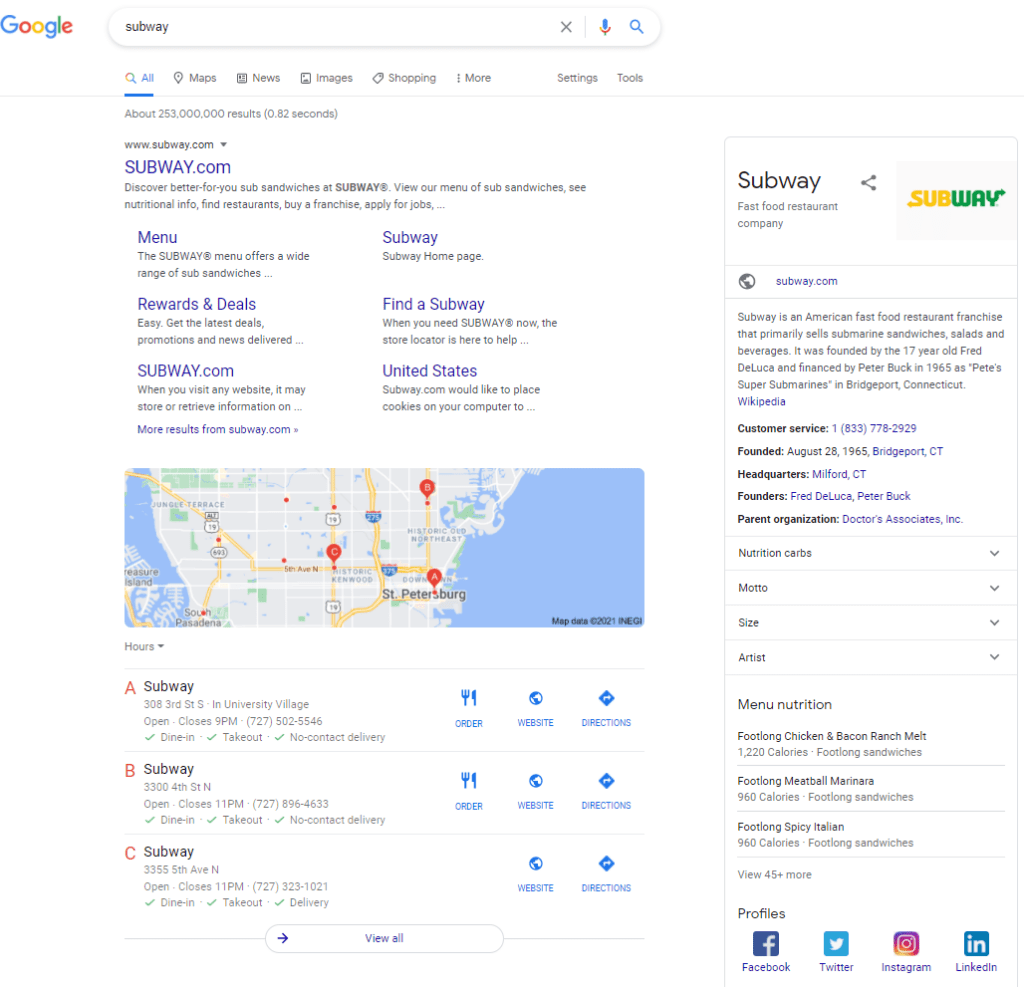
For example, if you do a Google search for Subway, you will see a local map of Subways near your location and a section on the right side of the main search results with more information. 

In the image below, you can see: 

  • a description of the company 
  • other company information (phone, headquarters, etc.) 
  • nutrition information of menu items 
  • company motto 
  • information about sandwich sizes 
  • information about “sandwich artists” 
  • social media links

Attracting new customers using Google

Take Advantage of Free Tools

This search result can make your search result in Google much more attractive and informational for potential customers.  

Likewise, it can be a great local marketing tool for your business. 

When people search for companies near them, Google almost always displays GMB information for businesses nearby. That is why it is essential to create, configure, and maintain a search-friendly GMB account for your company. 

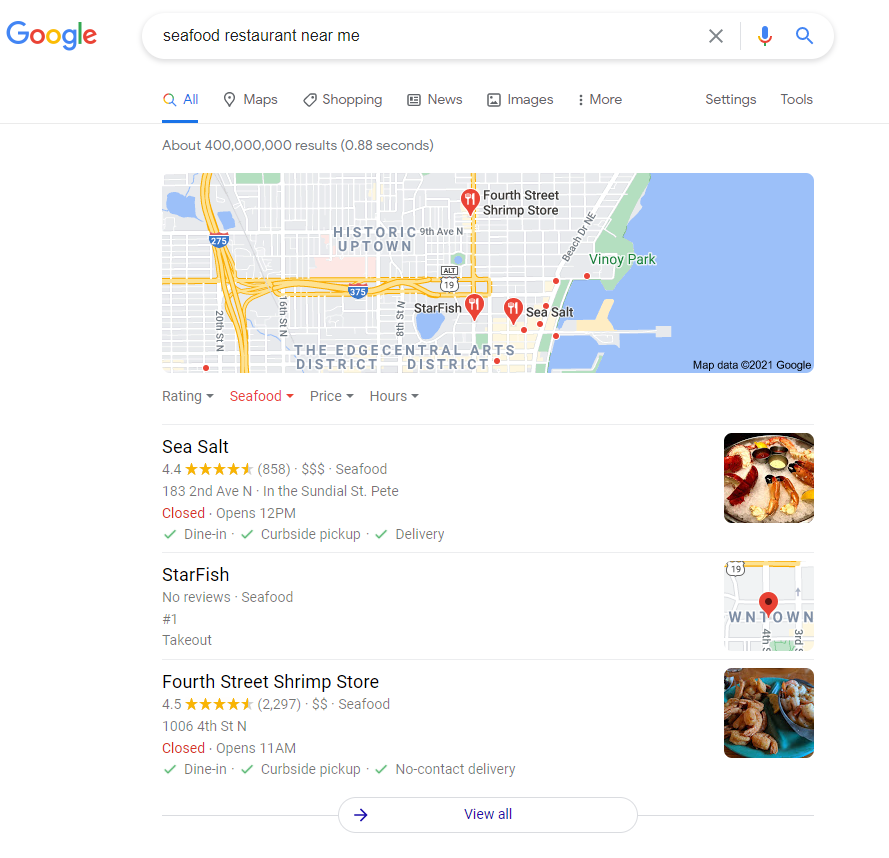
Imagine owning a small seafood restaurant and popping up at the top of local search results for “seafood restaurants near me” – a great example of free marketing, which is vital in today’s challenging and competitive marketplace. 

 Using Google My Business for attracting new customers

As you can see, learning what Google My Business is for your business can make a big difference when used and configured correctly. 

Attracting New Customers Using Facebook Business Listings

Facebook is essential for business for good reasons. Facebook is by far the most popular and most used social media site, with over 2.7 billion monthly active users as of the second quarter of 2020. 

It is the largest social network in the world. 

Years ago, restaurants began to experiment with Facebook to attract new customers and provide customer service.  

However, today, it’s no longer an option. Unarguably, social media engagement is a necessity in 2021. 

Increasing customer activity on Facebook can increase influencers’ visibility, therefore gaining more new customers. 

At the same time, over 1 billion people use Instagram every month. The social media platform has grown immensely over the last few years and is now one of the most powerful social media channels in the world. 

Consider these statistics (as of January 2021): 

  • Instagram is the sixth-most visited website in the world 
  • It is the 9th most popular Google query 
  • It has the 4th most users of any mobile app 
  • 200 million Instagram users visit at least one business profile daily 
  • 81% of people use Instagram to help research products and services 
  • 130 million Instagram users tap on shopping posts every month 

Indeed, with these kinds of numbers, it only makes sense for businesses to use Instagram for customer engagement and marketing. 

Bloom Intelligence can help you manage your Google My Business and Facebook business listings easily – all in one place. 

How Bloom Intelligence Makes It Easy

Bloom Intelligence can save you time by helping you manage your business listings all in one place. 

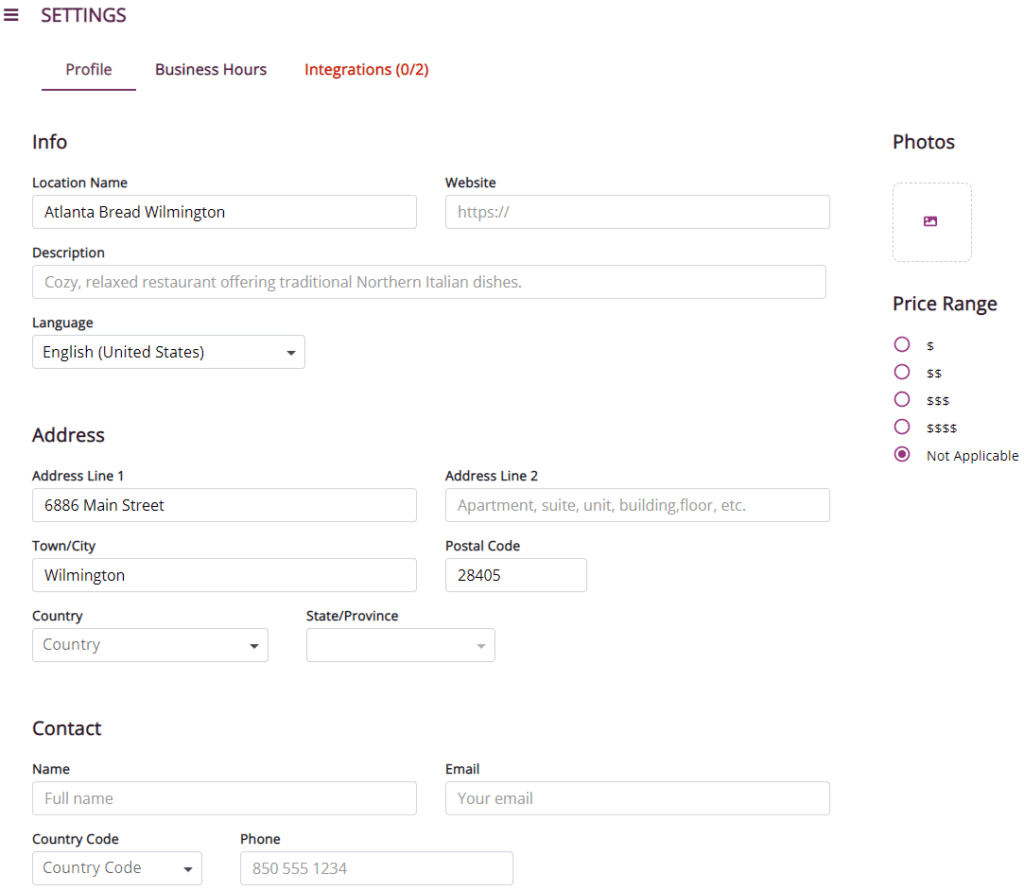
Bloom services now include the ability to create your restaurant’s business profile in your Bloom dashboard and connect your Google My Business & Facebook business accounts. 

This means that moving forward, you only need to update your Bloom business listings, push save, and it will then sync your restaurant’s locations business information to both Google & Facebook.  

Discover Bloom Intelligence

Bloom Intelligence has multiple powerful restaurant marketing tools to help grow your restaurant business. Quickly grow a large clean customer database, improve ratings and reviews, create social proof, increase foot traffic and customer lifetime values, identify, and bring back lost customers, and so much more. 

To see everything Bloom Intelligence has to offer, call us to schedule a demo at 727-877-8181 or click here to schedule a demo online and we’ll show you exactly how it’s done! 

4 Powerful Ways to Get More Customers and Keep Them Coming Back

Here at Bloom Intelligence, we talk to restaurant owners, operators, and marketers every single day. We understand that time is the one thing you need more of to run your business effectively. 

With labor shortages, rising costs, and unpredictable consumer behavior, it may seem like a daunting task to make the time to execute effective marketing campaigns and track attribution. 

But this is what is needed to get new customers, keep them coming back, and increase their lifetime value. 

That’s why we are constantly upgrading our products and services, and creating new features to save you time and money while improving customer acquisition/retention, and improving customer spend, frequency, and loyalty. 

Here are just a few of the things Bloom can do to help you grow your business. Get More Customers - A Guide

Finding New Customers 

It is essential for any business to consistently find new customers. In the restaurant industry, this can be done by using social media, advertising, and maintaining a consistent stream of positive online ratings and reviews. 

Advertising on Google and Facebook

Google and Facebook are two of largest and most powerful advertising websites in the world – especially for restaurant marketers. 

With Facebook’s nearly 3 billion users and Google’s incredible traffic amounts, it only makes sense for restaurateurs to advertise on these platforms.  

Today’s consumers expect personalized marketing messages that relate to them and their interests, so it is important to get the right message in from of the right audience. Unfortunately, these platforms are shifting away from lookalike campaigns and direct remarketing – unless you have your own first-party data.  

Bloom allows you to passively collect large amounts of customer data and create clean, detailed customer profiles. Before you know it you can have a list of thousands of actual customers. And, it is your data to own and use as you wish. 

With your own first-party data, it is quick and easy to import the data into Facebook and Google to create direct remarketing and lookalike campaigns. Likewise, you can create different lists for your different customer segments and advertise with messaging that they will relate to and engage with.  

More information about advertising and remarketing here. 

Managing Ratings and Reviews 

Clearly, restaurant owners and operators want to see high ratings and positive reviews for their establishment. This gives them a general idea that the restaurant is running well and that the overall sentiment of the customer is high. But there are so many more benefits to having great customer ratings. 

According to Modern Restaurant Management, an increase of just one star can give a business an approximate 5-9% increase in revenue. And an increase of just one-half star would likely fill your seats during peak business times. 

They also reported that 34% of diners choose a restaurant based on peer review websites. And 53% of 18-to-34- year-olds reported that online ratings and reviews factored into their dining decisions. 

Based on these statistics alone, if you’re not monitoring and actively taking steps to improve your customer ratings, you could be impeding potential customers and leaving a lot of money on the table. 

Ratings and reviews management is more important now than ever, as consumers are flocking to sites like Google and Facebook to research ratings and reviews prior to making a dining decision. 

Bloom can help you passively reach out and ask customers to rate their recent experience at your restaurant.  

When a customer leaves your place of business, you can send them an email asking them to rate you on Google, Facebook, or directly in Bloom Intelligence. Or, if they had a bad experience, they can contact you directly. This gives frustrated customers the ability to connect directly to your organization, not friends and online review sites. 

You can monitor them and respond to them all on one easy-to-use platform. Over time, you’ll see your ratings – and your revenue – improve as you collect a consistent stream of positive new reviews on Facebook, Google, and Bloom 

Get More Customers with Great Ratings

Keep Customers Coming Back 

It is widely known that retaining new customers is much more cost-effective than finding new customers. Bloom offers ways to keep your existing customers coming back. And the best part? It is all completely automated for you.  

WiFi Marketing Automation 

As you passively create a large, clean customer database, Bloom continues updating customer profiles with customer demographic and behavior data. 

It gives you the ability to create engaging, well-designed emails in the drag & drop email builder, and then automatically send out those emails to customers based upon whatever demographic and behavior data you choose. 

For instance, you could create an email that your younger late-night crowd would engage with. Then, configure the system to send it only to customers who have visited more than 3 times, who are 30 years old or younger, and who have average dwell times of more than 30 minutes. 

There is no limit to the number or types of campaigns you can create. 

This type of targeted marketing is much more effective than sending a single message to your entire customer database. 

To learn more, and to see the various types of campaigns you can create, visit our WiFi marketing automation page. 

WiFi Marketing Guide

Identify and Bring Back Lost Customers 

It is inevitable that some customers will lose interest in your product or service over time. It’s just part of running a restaurant business. 

When customers stop coming to a business, it is known as customer churn, or customer attrition. 

An out-of-control churn rate can be devastating for any business. Worse, if you do not recognize it, it will only continue to climb. 

Unfortunately, many restaurateurs do not know what their churn rate is, or which way it is trending. 

And when churn rates begin to climb with no intervention, it can quickly derail any momentum your business has generated. 

Bloom Intelligence can quickly identify when a customer is likely to be churning or is a lost customer already. 

Using machine-learning algorithms, the system can identify when a customer may have stopped visiting your place of business based upon their previous visit patterns. 

Like the marketing automation discussed above, Bloom allows you to set up an automated, or triggered, marketing campaign. 

All you need to do is create a single message to send your churning customers. Ideally it should contain an incentive to return, such as a free drink or appetizer. 

When Bloom identifies a customer who is likely churning, the system will immediately send that message to the customer. 

Customers across the country use the Bloom platform to run this type of campaign. And they are seeing impressive results leading to strong business growth. 

For instance, a Florida-based restaurant chain began running one of these campaigns several months ago. Now, they have seen a whopping 38% of these customers return to their restaurants. 

Additionally, their customer attrition rate has dropped every month since executing the campaign. 

To see the details, download the report here. This is one of the most powerful campaigns that Bloom’s intelligent marketing suite can execute. 

Discover Bloom Intelligence 

What you have read above is only a fraction of what Boom can do to save you time and money while finding new customers, keeping them coming back, and improving your revenue on autopilot! 

Call today to schedule a free demo and see all the ways Bloom can help save you time and grow your business. Call 727-877-8181 or click here to schedule a demo online. 

WiFi Marketing Guide

9 Restaurant Marketing Technology Tools for Better Marketing

Just like any other business, restaurants need to attract and retain customers with creative and effective marketing and operations strategies. Fortunately, there are many ways that your restaurant can utilize a restaurant marketing platform to establish a strong connection with guests — from online reservation and ordering systems to WiFi marketing and artificial intelligence.

Here, we will explore some of these options for you so that you can make informed decisions about how to best promote your establishment’s offerings and run a successful business without breaking the bank.

This article will start by discussing why restaurant marketing is important in general before diving into specifics about what type of restaurant marketing software restaurants should be looking at when developing their own restaurant marketing strategy.

Why is Restaurant Marketing Technology Important?

Restaurant Marketing Technology can Fill your Seats During Peak TimesMarketing strategies are different for every company, depending on what they are offering, what their target market is like, where they are located geographically, and many other factors.

However, some of the most common ways that restaurants can use technology to market themselves include online reservation and ordering systems, digital menus, email marketing, and newsletters, online ratings and reviews, social media accounts, and WiFi-assisted marketing.

It is important that your restaurant create an effective presence on the internet and email as it is more than just a useful tool for communication; it has become a place where consumers expect to be able to interact with companies and brands they are interested in, and it is the best way to allow you to communicate with your target market.

When developing your marketing strategy, consider each of these suggestions below as a starting point for how your restaurant can utilize restaurant marketing technology to strengthen relationships with customers both new and old.

1. WiFi Marketing and Remarketing Tools

Using restaurant marketing software like Bloom Intelligence, restaurants use their WiFi to track customer behavior and create detailed customer profiles stored in a CRM (more on CRMs later).

As you build your customer database, you can send out marketing messages based upon user behavior, such as their number of visits, or dwell time, and demographics such as birthday, gender, or postal code.

What makes this incredibly time-saving is that these messages are sent automatically whenever a visitor meets your specified criteria.

Not only can you automate your marketing messages, but you will also be able to identify lost customers, improve your online ratings and reviews, and easily identify customer sentiment – all automatically. Then, you can take action to improve marketing and operations to get more new customers, improve your restaurant reputation, and keep customers coming back.

To learn more about WiFi marketing and how it can improve your revenue, visit our WiFi marketing automation page.

2. POS Systems

A restaurant POS (point-of-sale) system is a computerized cash register that includes software and hardware to manage the day-to-day operations of a restaurant. It typically includes:

  • A touch screen monitor for ordering, paying, viewing menus and specials, etc.
  • A card reader or bar code scanner
  • An electronic receipt printer for printing customer’s receipts.

These systems are often connected with accounting software as well as inventory management systems.

POS systems also offer a great way to make your customer experience better. For instance, quality POS’s offer the ability to set up online ordering, making take-out and delivery service quicker and easier for your customers.

They also offer ways for dining customers to pay through a tabletop touch-screen monitor or through a smartphone app. This can bring down table turn times and make the customer experience more engaging and satisfying.

Some POS systems will automatically update the digital menu if certain items are 86’d and unable to be served. Again, improving your customer experience.

3. Digital/Online Menus

Many restaurant menus are getting a digital makeover.

They’ve been around for decades, but now they’re starting to appear in restaurants everywhere. The idea behind the digital menu is that it helps streamline and simplify ordering while also saving time and money on printing costs.

Now, diners can look at their phone screens for all the information they need about menu items and prices.  Diners can also use these screens to order food or drinks without waiting for service or flagging down wait staff.

The digital menu is also more environmentally friendly.  Likewise, they are touchless, which many consumers now find favorable.

4. Contactless Technology

Contactless is becoming a quickly-emerging restaurant technologyNot only do digital menus provide a contactless experience, so too do contactless payment systems.



Contactless payments provide convenience for both customers and merchants who want an easier way to pay without worrying about carrying cash or cards

Additionally, they offer increased security with no need for signatures or PIN numbers. Most experts say that contactless is just as secure, if not more so than traditional payment methods.

Touchless technology eliminates the risk of spreading germs and bacteria by touching something contaminated.

It provides an added layer of protection against viruses like Covid-19 because it reduces human contact in public spaces such as restaurants.

5. Online Reservation Systems

Online reservation systems are used by many restaurants as an easy way for customers to find out if there are any open tables at restaurants on certain dates, at certain times.

Today, more than ever before, people are relying on these systems as they find it easier to book their reservations without having to call several different restaurants.

As these online reservation systems are becoming more popular, restaurateurs are faced with the challenge of making their own reservation systems stand out from the rest.

The restaurant industry is one that caters to heavy competition to be at the top. Restaurateurs use various methods to get patrons to come back again and again. Offering good food and service is only part of the equation.

One way to do this is by making their online reservation system appear very attractive and simple to use.

6. Email Marketing/CRM Databases

A restaurant CRM database is a collection of customer profiles that can include online & offline behavior, demographics, email, phone numbers, income, zip codes, transactions, and even visit history.

Savvy restauranteurs automatically collect, aggregate, and clean customer data into restaurant customer databases to unlock customer insights and increase customer lifetime values through marketing automation.

As discussed above, automating marketing messaging based upon customer behavior and demographics can not only save you time but can also increase customer lifetime values by keeping your customers coming back.

The data can be analyzed by a WiFi marketing platform like Bloom Intelligence to identify lost customers and send them messaging to get them to come back through your doors. Bloom users are seeing up to 38% of their lost customers return using this powerful method.

You also can sort and filter the database. You can create different customer personas based upon behavior and demographics, and then create separate, segmented email marketing campaigns with messaging that resonates better with each persona.

According to ClickZ, when using proper targeting, marketers can drive 3x the revenue per email as compared to broadcasting. Likewise, Mailchimp found that segmented email campaigns also earn 100.95% higher clickthrough rates as compared to non-segmented email campaigns.

On the operations side, having access to a CRM database and metrics like daily traffic, dwell times by hour, customer frequency, customer rating results, and much more allows you to see data you could not see before that are critical to operational success.

As a result, this transparency into customer behavior and sentiment gives you data to optimize staffing, ordering, and discover problematic trends before they become a larger issue.

7. Social Media Management Tools

Restaurant marketing Tech should include social media toolsRestaurant social media management should be a crucial part of your strategy for success.

It’s not enough to just have a great restaurant, you need to be able to tell people about it and get them in the door. Having an online presence will help you do that.

Whether you’re using Facebook or Instagram or any other platform, your goal should be the same: make sure people know who we are and what we offer so they can visit us when they want a great meal.

You don’t need any special skills or knowledge beyond basic computer literacy and creativity to create compelling content for your social media channels. The main thing is that you’re consistent with updating posts regularly, so people always see fresh content from your company on their feeds.

There are tools available, such as Hootsuite and Sprout Social, that allow you to enter multiple social media posts on multiple social media channels at once, and then schedule them to automatically post at various future dates and times.

You can not only schedule the posts all in one platform, but you can monitor them and see reporting on each post in real-time. This allows you to optimize your social media messaging over time.

8. Online Ratings & Reviews Management Tools

Did you know that an increase of just one star can increase your revenue by up to 9%, and an increase of just one-half star would likely fill your seats during peak business times?

Ratings and reviews management is more important now than ever, as consumers are flocking to sites like Google and Facebook to research ratings and reviews prior to making a dining decision.

Therefore, it is important to not only monitor your ratings closely, but to actively ask for ratings from your customers, and respond to all of them – positive or negative.

The Bloom Intelligence platform provides a way to automate the process of asking for ratings, and gives you the ability to monitor them and respond to them all in one easy-to-use platform.

You can also use Bloom’s ratings widget to consolidate and showcase all your online reviews on your website as social proof that ultimately will drive more customers into your business.

This saves you time and money, all while passively and consistently gathering new ratings, and working to improve your online ratings and reviews by understanding customer sentiment. Then, you can use that information to optimize your marketing and operations.

Restaurant Technology to Improve Ratings: A Guide

9. Artificial Intelligence

Bloom’s restaurant marketing software also uses artificial intelligence (AI) to analyze your online customer reviews.

Using AI, the system will “read” your online Google, Bloom, and Facebook reviews and create custom word clouds showing you positive, neutral, and negative customer sentiment.

In the word cloud, the larger the word, the more times it has been used in reviews.

This gives you a very quick way to see and understand customer sentiment. Then, you can work to make changes to your menu, marketing, and operations to turn negative sentiment into a positive.

In the image above, green is positive, grey is neutral, and red is negative.

You can easily see what your customers like about your place of business, and what could use improvement. For instance, using the example above, you can see that customers enjoy your food and cozy atmosphere, but are frequently upset by your limited parking and long wait times.

In Conclusion

Restaurant marketing technology is ever-evolving, but the good news is that brick-and-mortar locations are now getting the same tools that have turned online companies such as Amazon into business powerhouses.

You could argue that restaurant marketing technology will enable a new gold  en age of restaurants where you now can use technology to expand your distribution channels (online ordering, third-party delivery, curbside pickup, ghost kitchens, and much more) plus have the tools to maximize your revenue per customer using automation, personalization and artificial intelligence in ways that were just not possible before.

Based on the list above, perhaps the most powerful way to boost revenue, improve online ratings, bring back lost customers, and improve customer lifetime values – all while saving time and money – is to invest in a restaurant marketing platform like Bloom Intelligence.

The real question is, can you afford not to start investing in restaurant marketing technology?

If you would like to see Bloom in action, and how easy it is to use, call us today to schedule a demo, or schedule a demo online here. It’s time to watch your business bloom!

WiFi Marketing Guide

Measuring Customer Sentiment to Improve Your Business

Successful companies collect and analyze data from customers to identify customer sentiments, which can be used to identify areas of improvement and strengths.

Customer sentiment analysis is a powerful tool that gives insight into the thoughts and feelings of consumers. By understanding how your company is perceived by its customers you can make adjustments to improve it or find out what aspects are most valued by your target audience.

Here we will learn more about the different ways restaurants can use sentiment analysis, such as analyzing online ratings and reviews, to see if they are meeting customers’ needs.

Using Ratings and Reviews to Measure Customer Sentiment

Not only are ratings and reviews good for your bottom line, but they are also great for spotting trends and measuring customer sentiment.

Measuring customer sentiment can give you very deep insight into your customer base. It tells you not only what customers like and dislike, but the reasoning behind the way they feel that way.

This allows for actionable insight to improve the customer experience, manage complaints better, spot trends, spot new opportunities — all of which can increase brand loyalty and repeat customers.

Measuring Customer Experience Using Ratings and Reviews

Examples of Using Customer Sentiment to Improve Business

For example, you may discover consistent negative reviews about a certain menu item being too salty or not large enough in portion size – so you change the recipe and increase portion size. This is a great example of being able to make positive changes based on customer sentiment.

It is valuable unsolicited customer feedback at no cost whatsoever. It tells you what customers like and dislike about your product or service, but it also provides you with extremely valuable information on why they feel that way.

Customer sentiment analysis is the process of obtaining and analyzing this feedback from customers.

To get the most out of your data, you need to be able to focus on the big picture while also looking at specific details. In using sentiment analysis tools, customer feedback becomes clear and useful information that can help you make targeted changes to improve your marketing, operations, and overall customer experience.

Use a Word Cloud to Spot Sentiment More Easily

Bloom Intelligence offers great customer sentiment tools to help you optimize your marketing and operations.

Bloom is integrated with Google and Facebook. Using Google and Facebook ratings and reviews, Bloom allows you to read, manage, and respond to all reviews in one centralized platform.

Moreover, the platform will analyze all of your ratings and provide you with an AI-driven word cloud to show a graphical image of positive, neutral, and negative words and phrases from all of your reviews on Google and Facebook.

Customer Sentiment Word Cloud

In the image above, green is positive, grey is neutral, and red is negative.

You can easily see what your customers like about your place of business, and what could use improvement. For instance, using the example above, you can see that customers enjoy your food, but are frequently upset by your limited parking and long wait times.

Respond To All Reviews

It is also very important that you respond to your reviews to help build positive customer sentiment.

If a review is great, thank the reviewer and tell them you hope to see them again soon. If the review is positive, but not glowing, try to see if you can spot something that would have made their experience better.

Responding to negative reviews is also very important. Your response to a negative review can actually influence and impress potential future customers.

Make sure to respond in a positive tone and provide an effective solution to the issues that caused the negativity.

This shows that you are actively listening to your customers and that you commit yourself and your company to making things better. Make sure and take action to resolve the issue.

These are just a few examples of using customer reviews to make your customer experience and sentiment better – the options are endless.

By monitoring and evaluating customer sentiment, and then taking action based on it, you can keep your restaurant top-of-mind of your local consumers, build that five-star reputation, and watch your business grow.

Improve Customer Sentiment Using Ratings and Reviews

Using Customer Ratings to Improve Your Restaurant Business

Positive customer ratings and reviews can be one of the most valuable and powerful customer acquisition and marketing tools for your restaurant business. If you’re ignoring your ratings and reviews, take a look at our post, Why Every Restaurant Should Care About Customer Ratings, to discover the potential revenue you’re most likely leaving on the table.

We also learned that receiving more customer reviews on a consistent basis can not only help you increase foot traffic and revenue, but consumers will have more assurance and trust that they will have a pleasurable experience at your establishment.

Here are a few ways in which you can get more ratings and reviews from your restaurant visitors.

Guide to Automating Customer Ratings and Reviews


Put Your Reviews Where Customers Can Easily Find Them

If you want your customers to leave you ratings and reviews, they need to know where to do it. One of the best solutions is to utilize your guest WiFi landing page. When customers log into your WiFi, you can ask for a review there, or provide links to your review pages on the popular review sites.

Other ideas might include adding signage on your tables or at your POS, or adding a review form directly on your website.

If you have an automated WiFi marketing platform, you can set up an automatically triggered email to go to your customers after they leave your establishment asking them for a rating. If the rating is good, you can follow up with links to the popular online rating sites.

Plus, with Bloom Intelligence, you can monitor all of your Facebook and Google reviews – and respond to them – easily in one single platform. This can save a great deal of time and effort.

Just Ask Them

There’s nothing wrong with asking happy customers to give you a review. When you see a guest having a pleasant experience, strike up a conversation. Then ask them to visit a site like Google or Facebook and share their experience.

Ask for ratings and reviews

Requesting a review while face-to-face with your customer can be incredibly effective. According to marketingland.com, “asking in person can garner you seven to eight times more reviews than asking via email.”

Strike At The Right Time

Yes, a mixture of good and not-so-stellar ratings can appear more authentic to internet surfers, but you obviously want a lot more of the positive ones. When asking your patrons for ratings and reviews, look for those who:

  • Are outwardly having a great time
  • Are “regulars” at your location
  • Dwelling longer than your average patrons
  • Compliment your food or atmosphere
  • Finished their entire meal
  • Gave a large tip

These customers can become your best online advocates, so be on the lookout for them and don’t be afraid to ask for a rating or review.

Go Where Your Customer Go

You can ask for ratings and reviews online, as well as in person. The key here is to find out where your customers are online. For instance, if a large portion of your customer base is active on Facebook, make sure you have a company Facebook page that you are actively posting and commenting on. This engagement generates trust, loyalty, and comfort.

social-media-in-2020

This applies to any social media channel. The time you spend engaging with your customers will be well worth it. And when they feel comfortable with you online, they’ll likely leave you a more positive review when asked.

Offer a Reward

Asking for a rating or review is a very effective way of increasing positive online ratings. So why not reward customers who rate or review your restaurant? You could offer every customer who gives you a rating a free item from your menu or a discount.

Make Use of Artificial Intelligence (AI) to Measure Customer Sentiment

Customer sentiment is an important aspect of running any business. Knowing how your customers feel about your restaurants can allow you to make changes in your marketing and operations that will further improve your restaurant’s reputation.

Customer ratings and reviews are the perfect avenue to collect and understand customer sentiment.

Furthermore, using AI can make the process fast and the results simple to understand. For example, Bloom Intelligence offers AI-driven word clouds to show a graphical image of positive, neutral, and negative words and phrases from all of your reviews on Google and Facebook.

In the image above, green is positive, grey is neutral, and red is negative.

You can easily see what your customers like about your place of business, and what could use improvement. For instance, using the example above, you can see that customers enjoy your food, but are frequently upset by your limited parking and long wait times.

The video below is a webinar that details collecting customer ratings and reviews, and measuring customer sentiment to improve your business.

Be Best at What You Do

Above all, you should always strive to present the best food and drink with amazing service in an incredible atmosphere. When you do this, great ratings will inherently follow. And when you begin encouraging customers to give you ratings by following the tips above, you’ll be sure to see increases in overall foot traffic, customer frequency, and customer spend.

Guide to Improving Customer Ratings and Reviews