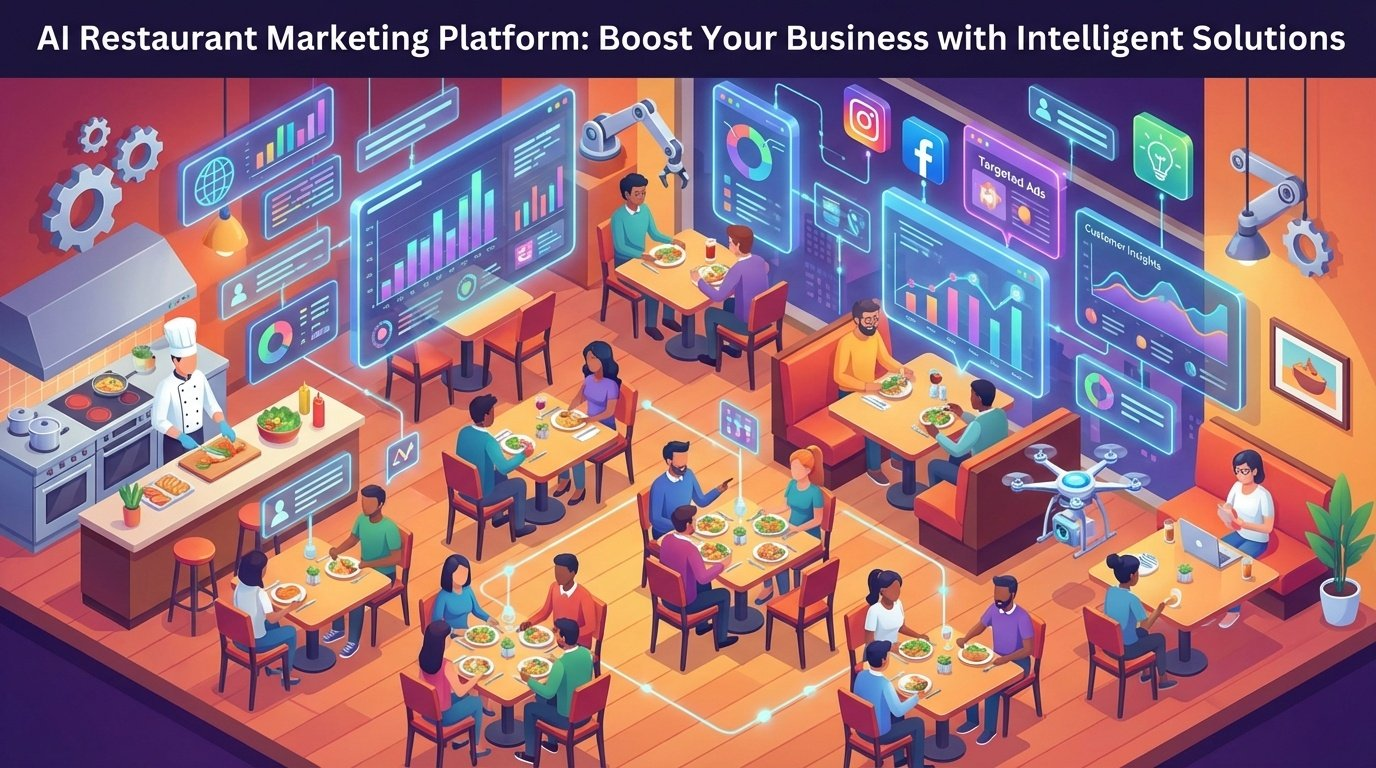



Author: Allen Graves

Every Guest Who Walks Through Your Door Makes You Easier to Find Online

The Best Discovery Strategy Isn’t What an Agency Does. It’s What Happens Inside Your Restaurant Every Day.

Most restaurants think about discoverability as a marketing problem — something that happens on websites, in ad campaigns, or through content strategies developed by agencies and SEO consultants. This framing misses something fundamental.

The most powerful discovery signals available to any restaurant are not produced by marketers. They are produced by guests — during actual visits, actual orders, actual reviews, actual return trips. Every guest interaction your restaurant has today is simultaneously a discovery signal that either builds or fails to build your restaurant’s authority with AI engines, Google, and voice assistants.

The restaurant that understands this stops treating discovery as a separate project and starts treating operations as the discovery engine.

The Core Problem

The problem isn’t a lack of data. The problem is a broken loop. Most restaurants generate all of this raw material continuously — and then it disappears into disconnected systems, never touching the digital presence that AI engines evaluate. The visit happened. The order was placed. The review was posted. But none of it became a discovery signal. None of it made the restaurant more findable tomorrow than it was yesterday.

What Every Guest Interaction Actually Generates

To understand why the flywheel works, you need to see each guest touchpoint for what it actually produces — not just as an operational event, but as a data event. The cards below map what happens at each moment, and the difference between that data being captured versus discarded.

The Four Guest Touchpoints: Captured vs. Discarded
🚶
Guest Walks In
In-venue visit begins
Behavioral Signal
Duration · Frequency · New vs. Returning · Daypart · Dwell time
Loop Broken

An anonymous visit. No record it ever happened. Behavioral proof evaporates.

Loop Closed

Verified behavioral data point added to a living guest profile — proof AI engines cannot fabricate from copy.

🍽️
Guest Places an Order
Transaction intelligence
Transaction Signal
What ordered · Spend level · Combinations · Item preferences · Daypart
Loop Broken

A POS transaction isolated inside your POS system. No connection to guest identity or digital presence.

Loop Closed

Preference data layered onto the behavioral profile — creating a guest picture specific enough for AI engines to characterize your restaurant with confidence.

Guest Leaves a Review
Sentiment signal across platforms
Sentiment Signal
Specific language · Emotional quality · Topics mentioned · Consistency across platforms
Loop Broken

A customer service event. Read once, maybe replied to, then forgotten.

Loop Closed

Live entity enrichment — independent language that AI engines extract to characterize what your restaurant genuinely is, from a source they trust more than any marketing copy.

📅
Guest Books Again
Loyalty proof signal
Loyalty Signal
Return intent · Booking source · Occasion type · Dining frequency pattern
Loop Broken

A reservation in a booking system, siloed from every other piece of guest data.

Loop Closed

Return frequency confirmation — behavioral proof that tells AI engines this restaurant delivers on its promise, consistently, to real guests who keep coming back.

The guest experience is identical in both scenarios. The operations are identical. The difference is purely infrastructural.

Touchpoint 1: The Visit — Behavioral Proof That Cannot Be Fabricated

When a guest walks into your restaurant, an in-venue visit begins generating one of the most valuable discovery signals available: verified behavioral data. How long did they stay? Was this their first visit or their tenth? What time of day? What day of week? Are they coming more frequently over time or less?

This behavioral layer is the discovery signal no competitor can build by writing better content about themselves. Visit frequency and dwell time patterns across real guests, captured passively at scale, tell AI engines something that marketing copy cannot: this restaurant is genuinely good enough that real people choose to spend real time here, repeatedly.

The majority of restaurant guests make only one verified visit — which means every single return visit is a compounding behavioral proof point of disproportionate value.

Touchpoint 2: The Order — Transaction Intelligence That Tells the Real Story

Every order placed at your restaurant is a declarative statement about what your guests actually value. Not what your marketing says they value. Not what your website claims is popular. What real guests are choosing, spending money on, returning for.

“A restaurant that says ‘our pasta is exceptional’ is fundamentally less trustworthy to an AI engine than a restaurant whose guest data shows that a specific pasta dish drives more return visits and higher spend than any other item on the menu.”

The distinction between self-reported positioning and verified operational reality

Touchpoint 3: The Review — Sentiment That Compounds Across Platforms

A review posted on Google, OpenTable, TripAdvisor, or Yelp is not just a customer service event. It is an independent, third-party entity enrichment — a data point from a source that AI engines treat as more reliable than anything a restaurant writes about itself.

When the same dishes, the same experience quality, the same staff attributes appear in reviews across multiple platforms independently, AI engines treat that convergence as corroborated fact. This is the Sentiment Consistency signal — and it is generated entirely by real guests making unprompted decisions to share their experience.

▸ The Insight Most Operators Miss

The review your guest left this morning about your wood-roasted chicken is not just a 5-star rating. It is a specific, independent, third-party entity claim that AI engines will cross-reference against every other review mentioning that dish. If that same dish appears positively in reviews across three platforms over twelve months, AI engines begin treating it as a verified restaurant attribute — a characteristic they can cite with confidence when recommending your restaurant to someone specifically asking for that type of food.

This is happening whether you know about it or not. The question is whether your responses, your consistency, and your connected intelligence platform are accelerating it — or leaving it entirely to chance.

Touchpoint 4: The Return — Loyalty Proof That Validates Every Other Signal

When a guest books a reservation, they are making an intent statement — a verifiable declaration that they are choosing your restaurant deliberately, in advance, for a specific occasion. When they return multiple times, that pattern becomes one of the most powerful discovery signals available: loyalty proof.

More than 1.5 million reservation records flow through the Bloom platform network. Each one is not just a booking — it is a data point in a guest relationship history that, when unified with behavioral, transactional, and sentiment data from the same guest, produces a depth of verified intelligence that no marketing campaign can replicate.

The Broken Loop: Why Most Restaurants Discard Their Best Discovery Signals Every Day

Understanding that every guest touchpoint generates a discovery signal makes the next question obvious: why aren’t more restaurants dominating AI search?

The answer is not a lack of effort. Most restaurant operators are working extremely hard. The answer is structural: the systems that capture each type of guest data — the POS, the reservation platform, the WiFi network, the review platforms — were not built to talk to each other. And none of them were built to translate operational data into digital presence signals.

The Broken Loop vs. The Closed Loop
The Broken Loop

Data Generated. Value Discarded.

  • Guest visits. WiFi connects. Visit data lives in hardware, untracked.

  • Order placed. POS records transaction. Profile connection: none.

  • Review posted. Seen once. Reply is generic or absent. Signal wasted.

  • Systems don’t speak. Data doesn’t flow. Discovery stays static.

  • Competitors who close the loop build an insurmountable data lead every month you don’t start.

The Closed Loop

Data Generated. Authority Compounded.

  • Guest visits. WiFi captures behavioral signal passively. Profile enriched.

  • Order linked to guest identity. Preference data layers onto profile.

  • Review gets brand-voiced AI response. Entity-enriching language added to the public record across all platforms.

  • Unified intelligence translates operational truth into digital presence AI engines trust.

  • Each rotation adds compounding discovery authority that no content sprint can replicate.

The Broken Loop is not a technology problem. Most restaurants already have the capture systems. What they lack is the layer that unifies them.

▸ Coined Concept: The Broken Loop

The Broken Loop describes the gap between operational data generation and discovery signal activation. Every restaurant with a POS, a WiFi network, a reservation system, and a review presence is generating the raw ingredients of AI discoverability continuously. The Broken Loop is what exists when those ingredients have no connected infrastructure to translate them into the verified, specific, multi-source digital signals that AI engines use to build recommendation confidence. The data is real. The loop is broken. The discovery potential is entirely unrealized.

The Discovery Flywheel: What Happens When the Loop Closes

When guest intelligence is connected — when WiFi behavioral data, POS transaction data, reservation history, and review sentiment all flow into a unified profile that continuously enriches the restaurant’s digital presence — something qualitatively different happens. The restaurant stops doing SEO as a separate activity and starts generating discovery authority as a natural byproduct of operations.

This is the Discovery Flywheel in motion. Each stage reinforces the next — and every rotation makes the next rotation faster.

The Discovery Flywheel — 5 Compounding Stages

The Discovery Flywheel

Every rotation builds data authority that no competitor starting today can replicate

1
Guest Visits
Duration, frequency, new vs. returning — behavioral proof AI engines cannot fabricate from copy.

88M+ sessions

2
Enriched Profile
Visit layered with orders, reviews, reservations into a multi-source identity AI engines trust.

7.3M profiles

3
Stronger Presence
Operational reality translates into a living digital presence — not static copy, but verified current truth.

Dynamic Discovery

4
AI Recommendation
ChatGPT, Google AI Overviews, and voice search cite your restaurant by name with specific attributes.

ChatGPT · Perplexity

5
New Guests → More Data
AI-referred guests visit, order, review. Their interactions enrich the profile. Each rotation is faster.

Compounding ↑

A competitor starting today cannot close the gap through content alone. The flywheel compounds data authority that can only be built through time.

▸ The Compound Advantage

Dynamic Discovery — a digital presence continuously updated with verified guest intelligence — compounds in a way that Static Presence never can. A static website that was excellent when it launched is progressively less authoritative as competitors’ connected digital presences grow richer, more current, and more specifically corroborated by real guest data.

The advantage of Dynamic Discovery is not just that it performs better today. It is that it automatically performs better tomorrow — and the day after — with no additional marketing effort required.

What a Restaurant Needs to Close the Loop

The practical question every operator reading this should be asking is not “how do I get better at SEO?” It is “why isn’t the data my restaurant generates every day already working for me online?” The answer points to three connected capabilities.

Three Capabilities to Close the Broken Loop
01
Capability 1
Unified Guest Intelligence
One identity-resolved profile per guest across every touchpoint — WiFi visits, POS transactions, online orders, reservations, and review activity. Without this, the four touchpoints remain four disconnected data streams. WiFi-based capture is particularly powerful: it requires no opt-in and captures behavioral data that no loyalty app generates.
02
Capability 2
Connected Reputation Management
Treating reviews as a live discovery asset rather than a customer service function. A systematic, brand-voiced response program across every review platform — not sporadic responses, but engagement that adds specific entity-enriching language to the public record over time. Every response is a small act of entity building. Over hundreds of responses across multiple platforms, the cumulative effect is brand specificity AI engines recognize as distinctive and trustworthy.
03
Capability 3
Continuous Discovery Optimization
The connective tissue: a platform that translates unified guest intelligence into a digital presence that continuously reflects verified current reality. The dishes guests are ordering most. The sentiment themes appearing consistently across recent reviews. The behavioral patterns showing which guest segments are growing. This is what separates Dynamic Discovery from Static Presence — not the quality of the initial content build, but the ongoing connection between operational reality and digital representation.

The Flywheel in Practice

Three restaurant groups whose Discovery Flywheels are running — and what’s compounding as a result.

Roka Akor

Fine Dining / Japanese Steakhouse GroupTop RankedAI search ranking for their category

Achieved top placement in AI search through operations that generated verified, specific, multi-source entity data — not a content campaign. New guests arriving via AI recommendation, with specific expectations already formed.
Corky’s Kitchen & Bakery

Full-Service Chain · 18 Locations+50%Marketing database growth · 60,000 new profiles

Every new verified guest profile added a behavioral data point. Multiplied across 18 locations, the result was a guest intelligence platform with the breadth to feed a Discovery Flywheel at meaningful scale — alongside a 38% recovery rate of at-risk guests.
Beachside Hospitality Group

Multi-Concept Hospitality Group15–20 hrsSaved weekly on review management alone

Inconsistent review response was a flywheel brake. AI reputation automation brought consistency — the same brand voice, the same specificity, the same response rate — removing a bottleneck and adding a continuous stream of entity-enriching language across all platforms.
▸ How Bloom Closes the Loop

Bloom Intelligence unifies guest data from WiFi visits, POS transactions, online orders, reservations, and review platforms into a single connected intelligence layer — then uses that verified data to continuously build the discovery authority that AI engines, Google, and voice assistants use to decide which restaurant to recommend.

The flywheel starts on day one. Within 3–6 months, meaningful AI recommendation authority builds as behavioral patterns accumulate depth and sentiment consistency establishes itself across platforms. A restaurant running connected guest intelligence for 12 months has a discovery authority profile that is qualitatively different from — and not closeable by — a competitor starting today.

Frequently Asked Questions

Voice and AI search–optimized answers to what restaurant operators ask most

Every verified guest visit generates behavioral data — duration, frequency, new versus returning status, visit patterns — that AI engines treat as a more credible quality signal than any restaurant-authored marketing copy. When this behavioral data is captured through connected guest intelligence infrastructure and reflected in a restaurant’s digital presence, it builds the kind of verified entity specificity that earns AI engine recommendation confidence.

The Discovery Flywheel is the compounding loop in which verified guest interactions — visits, orders, reviews, reservations — generate behavioral and sentiment data that enriches a restaurant’s AI entity profile, which drives higher recommendation confidence on AI engines, which brings in new guests whose interactions further enrich the data. Each rotation of the flywheel makes the next rotation faster. Restaurants with connected guest intelligence activate this flywheel automatically. Those without it generate the raw ingredients every day and discard them.

The core issue is the Broken Loop: restaurant operations generate rich, verified, multi-source data continuously, but disconnected systems mean that data never reaches the digital presence AI engines evaluate. The visit happened but wasn’t captured. The order was placed but not connected to a guest profile. The review was posted but the response was generic and inconsistent. None of it compounds into the kind of authoritative entity profile AI engines recommend with confidence.

Dynamic Discovery is the state in which a restaurant’s digital presence continuously reflects verified current reality — updated automatically by real guest behavioral data, real transaction intelligence, and real multi-platform sentiment — rather than remaining a static publication maintained infrequently. Traditional SEO optimizes a website at a point in time. Dynamic Discovery creates a living digital presence that grows more authoritative with every guest interaction, whether or not the marketing team takes any action.

WiFi-based guest capture generates verified behavioral data — the visit duration, frequency, and return patterns that represent behavioral proof AI engines cannot get from any self-reported source. When this behavioral data is unified with transaction, reservation, and review data into a connected guest intelligence platform, it builds the depth and specificity of entity profile that AI engines use to evaluate recommendation confidence. WiFi capture is particularly valuable because it is passive: it captures every guest who visits, not just those who opt into a loyalty program.

Reviews generate independent, third-party sentiment signals across multiple platforms that AI engines cross-reference when building a restaurant’s entity confidence profile. When the same dishes and experiences are described positively across Google, OpenTable, TripAdvisor, and other platforms, AI engines treat that convergence as corroborated fact. A systematic review response program — consistent, brand-voiced, entity-specific — adds a compounding layer of public language to this profile that builds Discovery Authority over time.

A restaurant Customer Data Platform unifies guest data from every touchpoint — WiFi visits, POS transactions, online orders, reservations, and reviews — into a single identity-resolved guest profile. When that unified intelligence is connected to a restaurant’s digital presence and discovery optimization, it translates operational data into the verified, specific, continuously updated entity signals that AI engines like ChatGPT, Google AI Overviews, and voice assistants use to decide which restaurant to recommend.

The flywheel begins generating data from day one, but meaningful AI recommendation authority typically builds over three to six months as behavioral patterns accumulate depth, sentiment consistency across platforms establishes itself, and the entity profile grows specific enough for AI engines to cite with high confidence. The compounding nature of the flywheel means that improvements accelerate over time rather than plateau: the restaurant that has been running connected guest intelligence for twelve months has a discovery authority profile that is qualitatively different from — and not closeable by — a competitor starting today.

Start the Flywheel

Your Restaurant Is Already Generating the Signals. Start Capturing Them.

Every service you ran today generated behavioral data. Every order placed added to a guest’s transaction profile. Every review posted added a sentiment signal to your entity profile. The question is whether any of it made your restaurant more findable tomorrow — or disappeared into the Broken Loop, generating no lasting discovery value at all.

See How the Flywheel Works for Your Locations →

99.3% client retention
108M+ guest records
Live in days, not months
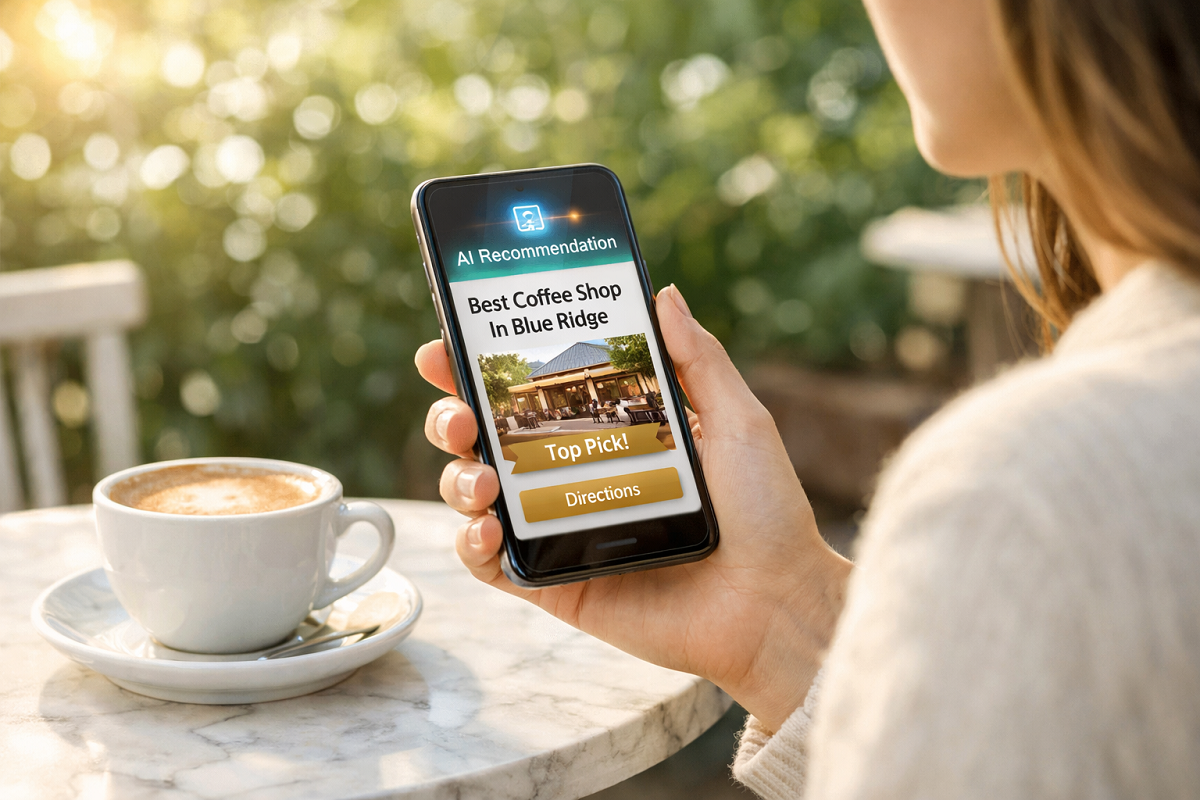
Why AI Engines Recommend Some Restaurants and Ignore Others

ChatGPT, Google AI Overviews, and Perplexity are recommending restaurants right now. The question isn’t whether your restaurant should be optimized for AI search. It’s whether the data behind your digital presence is verified, specific, and trustworthy enough to earn the citation.

► THE ANSWER

AI engines recommend restaurants based on Data Authority — the aggregate of verified, specific, and multi-source corroborated data signals in a restaurant’s digital presence. Restaurants with higher Data Authority appear in ChatGPT responses, Google AI Overviews, and voice search results. Those without it remain invisible to AI-driven discovery, regardless of their actual quality or Google ranking.

The Restaurant AI Keeps Recommending

Two restaurants. Same city. Same cuisine category. Similar price points. Similar star ratings.

One of them gets recommended by ChatGPT when someone asks for the best place for a special occasion. The other doesn’t appear at all. The operator of the second restaurant can’t figure out why. Their website is clean. Their reviews are solid. They’ve done what they were told.

This scenario is playing out in every major market, in every cuisine category, right now. And the gap between the two restaurants has almost nothing to do with food quality.

It has everything to do with the quality of their data.

When a top-ranked fine dining group achieved standout placement in AI search for their category, the mechanism wasn’t a campaign. It wasn’t a clever content push or a review surge. What they had built — systematically, over time — was a digital presence so grounded in verified, specific, multi-source data that AI engines had no choice but to treat them as the authoritative recommendation.

That is the new competitive reality of restaurant discovery. And the playbook to win it starts not with content, but with data.

How AI Engines Actually Decide Who to Recommend

To understand why verified data is the foundation of AI discoverability, you need to understand what AI answer engines are actually doing when someone asks for a restaurant recommendation.

Traditional Google is a retrieval system. It finds the most relevant, most authoritative page that matches a query and surfaces it. Signals like domain authority, content relevance, and technical performance determine that ranking.

AI answer engines — ChatGPT, Perplexity, Google AI Overviews — are synthesis systems. They don’t find a page. They build an answer from everything they know about a restaurant entity — synthesized from multiple sources, cross-referenced for consistency, filtered for trustworthiness — and recommend the entity with the highest confidence score. Not the highest-ranking page. The most trustworthy entity.

That confidence score is what we call Data Authority.

► CONCEPT

Data Authority is the aggregate of verified, specific, and multi-source corroborated data signals that AI engines use to evaluate how trustworthy and citable a restaurant entity is. It is not a single metric you can track in any dashboard. It is the cumulative effect of five signals — Entity Specificity, Sentiment Consistency, Behavioral Proof, Cross-Platform Corroboration, and Recency — working together to build or erode AI engine confidence in your restaurant as a recommendation.

Here is the crucial implication: you can have a beautifully designed website, a strong Google ranking, and hundreds of five-star reviews — and still have low Data Authority. Because Data Authority is not about quantity of information. It is about verified information. Specific information. Information that appears consistently across multiple independent sources and that no competitor could replicate simply by writing better marketing copy.

Millions
Verified Guest Interactions Tracked
WiFi · POS · Reservations · Reviews · Online Ordering
Millions
Reviews Aggregated Across Platforms
Google · OpenTable · TripAdvisor · Yelp · Facebook · Tock
Overwhelmingly
Positive — 4 & 5 Stars
An untapped Data Authority signal pool for most operators

The Five Signals That Build Data Authority

These five signals are how AI engines evaluate restaurant entities. The more deliberately you develop each one, the higher your restaurant’s Data Authority — and the more consistently you appear in AI-generated recommendations, Google AI Overviews, and voice search results.

01

Entity Specificity

How precisely and distinctively a restaurant is described across its digital footprint. Generic language registers as noise to AI engines. Specific, unique, verifiable claims give AI engines an anchor for confident recommendations.

Why AI trusts it: Specificity enables confident, un-hedged recommendation
02

Sentiment Consistency

When guests on Google, OpenTable, and TripAdvisor independently describe the same dishes, experiences, and attributes in consistently positive terms, AI engines treat that convergence as corroborated truth — not marketing.

Why AI trusts it: Consistency across independent sources signals truth
03

Behavioral Proof

Verified visit patterns, dwell time, and return frequency that reflect real-world guest engagement. The one Data Authority signal structurally resistant to manipulation — you cannot fabricate how long guests stay or how often they return.

Why AI trusts it: It cannot be manufactured by better copywriting
04

Cross-Platform Corroboration

The same facts appearing consistently across multiple independent, authoritative platforms. A claim on your website is self-assertion. The same claim verified across six platforms is corroborated fact. AI engines treat these as categorically different levels of evidence.

Why AI trusts it: Corroboration multiplies trust; isolation erodes it
05

Recency Signal

How recently a restaurant’s digital presence has been updated with new, verified information. AI engines treat recency as a proxy for accuracy. Data Authority is not a permanent achievement — it requires active maintenance to sustain.

Why AI trusts it: Recent data = current reliability
► HOW TO

How to Build Data Authority for Your Restaurant

Five operational steps that turn real guest interactions into the verified signals AI engines use to recommend your restaurant by name.

  1. 1

    Build Entity Specificity

    Audit every public-facing description of your restaurant and replace all generic language with specific, verifiable, unique claims. Reference signature dishes by name, cite actual accolades, name your cuisine style precisely. Every vague claim replaced with a specific one increases Data Authority.

    Target: Website · Google Business Profile · Menu listings · Social bios
  2. 2

    Create Sentiment Consistency Across Review Platforms

    Respond to every review — not just negative ones — in a consistent brand voice that reinforces your restaurant’s specific identity. When multiple platforms independently describe the same dishes and experiences positively, AI engines treat that convergence as corroborated truth.

    Target: Google · OpenTable · TripAdvisor · Yelp · Facebook
  3. 3

    Capture and Connect Behavioral Proof

    Implement guest intelligence infrastructure that captures verified visit patterns, dwell time, and return frequency from real interactions across WiFi, POS, reservations, and online ordering. Connect this behavioral data to your digital presence — this is the signal AI engines weight most because it cannot be fabricated.

    Target: WiFi · POS · Reservations · Online ordering
  4. 4

    Build Cross-Platform Corroboration

    Ensure your restaurant’s defining attributes — signature dishes, atmosphere, distinctive qualities — appear consistently across multiple independent, authoritative platforms. A claim on six independent platforms is corroborated fact. A claim on your own website alone is self-assertion.

    Target: 6+ independent platforms minimum
  5. 5

    Maintain Recency Discipline

    Treat your digital presence as a living system. Keep hours, menus, and offerings current everywhere. Sustain a steady cadence of fresh, verified reviews. AI engines treat recency as a proxy for accuracy — a profile built on data from two or three years ago is progressively deprioritized against entities continuously refreshed with current signals.

    Ongoing: Monthly audits minimum · Weekly review responses

Signal 1: Entity Specificity — The Difference Between a Mention and a Recommendation

When a guest tells ChatGPT they want “the best wood-fired pizza in Nashville for a date night,” the AI doesn’t scan for keyword matches. It evaluates which restaurant entity has the most specific, verified, multi-source claims around wood-fired pizza, romantic atmosphere, and Nashville.

“Great pizza and a cozy vibe” is noise. It could describe four hundred restaurants.

“Neapolitan-style pizza baked in a wood oven, recognized by Nashville Scene three consecutive years, with a wine list nominated by a regional food publication” is a citable entity claim. AI engines can anchor a confident recommendation to it.

Entity specificity is not keyword optimization. It is the practice of describing your restaurant so specifically and verifiably that an AI engine can recommend it without hedging. Every vague claim replaced with a specific, verifiable one increases Data Authority.

► TEST YOUR SPECIFICITY

Ask ChatGPT: “What is [your restaurant] known for?” If the answer is generic, vague, or your restaurant doesn’t appear at all — that response is a direct readout of your current Data Authority profile. The AI is telling you exactly what it sees when it evaluates your entity. If you don’t like what it says, the fix is more specific, verified data — not better marketing copy.

Signal 2: Sentiment Consistency — When Every Source Tells the Same Story

AI engines are sophisticated pattern recognizers. When evaluating a restaurant entity, they analyze the qualitative patterns across reviews — not just star ratings, but the language guests use, the themes that emerge repeatedly, the experiences consistently described.

A restaurant where reviewers on Google, OpenTable, and TripAdvisor independently use specific positive language about the same dishes, the same service, the same atmosphere — that sentiment consistency is a Data Authority signal of the highest order. Consistency signals truth. It tells the AI engine: this is what this restaurant genuinely is, confirmed independently from multiple unrelated sources.

Sentiment inconsistency — strong reviews on one platform, mediocre on another, no discernible pattern across a third — signals ambiguity. AI engines deprioritize ambiguous entities. If the system can’t characterize a restaurant with confidence, it recommends one it can.

Across Bloom’s platform network, the vast majority of reviews are positive — with an overwhelmingly favorable pattern on every major platform. Most operators are sitting on an enormous, largely untapped Data Authority signal pool and doing almost nothing to activate it. The restaurants that treat their review corpus as a strategic asset — not a customer service inbox — are the ones building the sentiment consistency profile AI engines trust.

Signal 3: Behavioral Proof — The Signal That Cannot Be Faked

Entity Specificity and Sentiment Consistency can be improved through deliberate content and reputation strategy. Behavioral Proof is different. It is the one Data Authority signal structurally resistant to fabrication.

Behavioral Proof is what verified guest visit patterns, dwell time, and return frequency tell AI engines about the real-world quality of a restaurant. A restaurant where guests consistently stay for a full-length dining experience is demonstrably different from one where guests leave quickly. A restaurant whose regulars return many times a year demonstrates something no marketing copy can claim: that the experience actually delivers.

Across the Bloom platform network, guest dwell time data tells a clear story about how genuine guests engage with the restaurants they love. This is behavioral data reflecting how real guests actually spend their time — the kind of verified, observable signal that AI engines weight precisely because it cannot be produced by writing a better “About Us” page.

The practical implication: the connection between a restaurant’s guest intelligence infrastructure and its digital presence is what converts behavioral proof into Data Authority. This is the mechanism most restaurants are missing entirely — and the one that creates the widest competitive moat once established.

Signal 4: Cross-Platform Corroboration — The Consistency Multiplier

A claim that appears once on your own website is self-assertion. The same claim appearing consistently across multiple independent, authoritative platforms is corroborated fact. AI engines treat these two scenarios as categorically different levels of evidence.

When your signature dishes are mentioned on your website, your Google Business Profile, OpenTable reviews, Yelp, TripAdvisor, and food media — all describing the same experience in independently consistent terms — AI engines treat those dishes as established, trustworthy entity attributes. When the same information only appears in your own marketing materials, the AI assigns it lower confidence.

Cross-Platform Corroboration is why how a restaurant responds to reviews matters far beyond customer service optics. Every response in a consistent, recognizable brand voice — across multiple platforms, over time — actively builds the corroboration web that AI engines use to characterize the restaurant with confidence.

The compounding math: more platforms, multiplied by more specific, consistent language, multiplied by more authentic corroboration, equals higher Data Authority. This is not a project with a finish line. It is an ongoing operational discipline.

Signal 5: Recency Signal — The Data Asset That Decays Without Maintenance

Data Authority is not a permanent achievement. It is a living asset that grows with investment and decays with neglect.

AI engines treat recency as a proxy for accuracy. A restaurant’s hours, menu, ownership, and character change over time. An entity profile built on data from two years ago is inherently less reliable than one continuously refreshed with current, verified signals. This is why restaurants that invest in a strong launch and then go dormant lose AI discoverability ground even when their Google rankings hold steady.

Recency also explains why recent review velocity matters disproportionately. A restaurant with a strong volume of recent reviews signals current quality. AI engines interpret this freshness pattern as evidence that the information in its entity profile reflects what the restaurant actually is today — not what it was when it first got online.

The implication: building Data Authority is an operational posture, not a campaign. The restaurants sustaining AI discoverability are those treating their digital presence as a living system — one continuously fed with fresh, verified data from real guest interactions — rather than a static publication maintained infrequently.

Dynamic Discovery vs. Static Presence

Most restaurant websites are frozen in time. They reflect what the restaurant was when the site was last rebuilt — often two to four years ago. The menu has changed. The team has changed. The guest sentiment patterns have evolved. But the website still says what it said at launch.

AI engines are not frozen. They continuously update their understanding of what a restaurant is — pulling from new reviews, new citations, new behavioral signals. An entity profile built from stale, generic, self-reported information is progressively deprioritized against entities whose digital presence reflects current, verified reality.

This is the strategic gap between Static Presence and Dynamic Discovery:

❌ Static Presence
Losing Ground
✓ Dynamic Discovery
Winning
Website reflects what the restaurant was, not what it is today Digital presence continuously updated with current, verified information
“Great food and friendly service” — language that describes everyone Specific, verified claims drawn from real guest sentiment and real experience
Reviews answered inconsistently or not at all Every review responded to promptly, in a consistent and recognizable brand voice
No connection between in-venue guest data and digital presence Real guest interactions — visits, orders, sentiment — continuously enrich the entity profile
The same menu copy from three years ago Content that reflects current offerings, current accolades, current guest language
AI engines characterize the restaurant generically AI engines cite the restaurant by name as a confident, specific recommendation

The restaurants winning AI discoverability in 2026 are not the ones that launched the best website. They are the ones whose digital presence continuously reflects verified current reality — because they have built the infrastructure to connect their guest intelligence to their digital presence automatically.

The Discovery Flywheel: Why Data Authority Compounds

Here is the insight most SEO guides miss: for restaurants with the right infrastructure, Data Authority is not a linear investment with diminishing returns. It is a compounding flywheel.

Every verified guest interaction generates data. That data, when connected to a restaurant’s digital presence, builds the entity specificity, sentiment consistency, and behavioral proof that AI engines use to increase their recommendation confidence. Higher confidence drives more new guest discovery. More discovery brings more guests. More guests generate more verified interactions. The flywheel accelerates.

► THE DISCOVERY FLYWHEEL
More verified
guest interactions
Richer behavioral
& sentiment data
More specific, authoritative
entity profile
Higher AI engine
Data Authority
More new guest
discovery through AI
↻ Each revolution builds on the last — the flywheel accelerates
The compounding advantage: The restaurant that starts building this flywheel today will have a Data Authority profile in twelve months that a competitor starting tomorrow cannot replicate with a content sprint. Data compounds. Copy does not.

This is why the earliest movers in AI discoverability are pulling away from competitors at an accelerating pace. It is not that they’ve done more optimization work. It is that they started the flywheel earlier — and the compound effect of twelve months of verified data accumulation creates a gap that is genuinely difficult to close by working harder on the same tactics.

Corky’s Kitchen & Bakery understood this. By growing their guest intelligence infrastructure — dramatically expanding their guest profile database and generating thousands of new verified guest connections — they built the data asset that feeds the flywheel. More profiles meant more behavioral data, richer sentiment signals, and more authoritative entity characteristics across every platform where guests discover restaurants.

What AI-Trustworthy Restaurants Do Differently

The gap between restaurants with high Data Authority and those without it is not primarily a content gap. It is an infrastructure gap. The restaurants earning consistent AI recommendations are not producing more content or spending more on advertising. They have built a different kind of operating foundation — one that systematically converts real guest interactions into verified digital signals.

At the strategic level, the differentiators are consistent across every restaurant operating at the top of AI discoverability rankings:

  • They treat their guest intelligence as a living asset — not a static database. Every guest visit, every transaction, every review is a data point that enriches the entity profile that AI engines use to evaluate their recommendation confidence.
  • They maintain a consistent brand voice across every review platform — treating every response as an opportunity to reinforce specific, verifiable entity claims rather than generic customer service acknowledgments.
  • They connect in-venue behavioral data to their digital presence — closing the loop between what happens inside the restaurant and what AI engines can verify externally. This behavioral corroboration is the competitive moat no competitor can build by writing better copy.
  • They operate with recency discipline — maintaining current, accurate information across every platform where guests and AI engines look, treating staleness as an active competitive liability rather than a background maintenance issue.
  • They build entity specificity as an ongoing practice — continuously replacing vague marketing language with specific, verifiable claims drawn from real guest feedback, real accolades, and real operational facts that distinguish the restaurant from every generic competitor description.

The common thread across all five: these are not content strategies. They are operational postures powered by connected guest intelligence. The infrastructure that makes all five sustainable at scale is a platform that unifies guest data from every touchpoint — visits, orders, reservations, sentiment — and translates it into continuously updated digital signals that AI engines recognize as authoritative.

Bloom Intelligence: The Infrastructure Behind AI-Trustworthy Restaurants

Bloom’s unified guest intelligence platform automatically builds all five Data Authority signals — from verified behavioral data to cross-platform reputation consistency — without adding work to your team.

  • WiFi, POS, reservations & online ordering unified into verified guest profiles
  • AI reputation automation responds to every review in your brand voice, at scale
  • Dynamic Discovery infrastructure that continuously refreshes your entity profile

Data Authority in Practice

Case Study

Roka Akor: Top-Ranked in AI Search for Their Category

Roka Akor — a fine dining Japanese steakhouse group — earned top placement in AI search for their category through a digital presence built on verified data rather than content volume. Their entity profile reflects what they genuinely are: a specific, distinctive, multi-source corroborated restaurant identity that AI engines can characterize with confidence.

The result translated directly to business outcomes — measurable increases in discoverability-driven reservations and new guest acquisition. Not estimated impressions. Guests who arrived having received a specific AI recommendation, with specific expectations, who experienced exactly what the entity profile described.

Key Outcome: Measurable increases in AI-driven reservations and new guest acquisition
Case Study

Beachside Hospitality Group: Reputation as a Discovery Engine

Beachside Hospitality Group used AI reputation automation to save 15–20 hours weekly on review management while simultaneously building the review response consistency that feeds Data Authority across all discovery channels. When every review is responded to — not just the negative ones — in a consistent, recognizable brand voice, the cumulative effect is a sentiment signal that grows stronger with each passing month.

The Marketing Director’s assessment: Bloom’s guest intelligence and automation have driven measurable revenue growth for our group. The connection is direct: reputation management, executed at scale and with consistency, is not a customer service function. It is a discovery infrastructure investment that pays compounding dividends over time.

Key Outcome: 15–20 hours saved weekly + measurable revenue growth through consistent Data Authority building
Case Study

Corky’s Kitchen & Bakery: Building the Data Asset That Feeds the Flywheel

Corky’s Kitchen & Bakery — an 18-location full-service chain — grew their guest intelligence database dramatically, adding tens of thousands of new verified guest profiles. This is Data Authority at the infrastructure level: each new profile is a real guest interaction, each interaction enriches the behavioral and sentiment data that flows into their entity characteristics, and each enrichment increases the confidence with which AI engines can recommend them over competitors with thinner data profiles.

The published results — 38% recovery of at-risk guests through automated win-back campaigns, significant cost savings from platform consolidation — are the marketing outcomes. The compounding AI discoverability benefits of having a richer, more verified, more current entity profile across every platform where guests discover restaurants are the structural advantage that continues to grow long after the initial infrastructure investment is made.

Key Outcome: 38% at-risk guest recovery + tens of thousands of new verified profiles feeding the Data Authority flywheel

Frequently Asked Questions

Voice and AI search optimized answers to the questions restaurant operators and marketers ask most about AI engine discoverability.

What is Data Authority and why does it matter for restaurant SEO?

Data Authority is the aggregate of verified, specific, and multi-source corroborated data signals that AI engines use to evaluate how trustworthy and citable a restaurant entity is. Restaurants with high Data Authority appear in ChatGPT responses, Google AI Overviews, and voice search results. Those without it remain invisible to AI-driven discovery — regardless of their food quality or traditional search ranking.

How do AI engines like ChatGPT decide which restaurant to recommend?

AI answer engines synthesize restaurant recommendations from entity profiles built across multiple sources — review platforms, websites, behavioral data, and verified business information. They prioritize restaurants with specific, consistent, multi-source corroborated data over those with generic marketing copy. A restaurant whose identity can be characterized precisely and confidently, from multiple independent sources, earns recommendations. Ambiguous entities get deprioritized or skipped entirely.

What is AEO and how is it different from traditional restaurant SEO?

AEO — Answer Engine Optimization — is the practice of structuring restaurant content and data so AI engines can extract, synthesize, and cite it directly as a recommendation. Traditional SEO drives clicks to a website page. AEO drives citations in AI-generated answers — often a more influential outcome because guests frequently act on a direct AI recommendation without further research. Both are necessary in 2026; they serve different discovery moments in the guest journey.

Why do my restaurant’s online reviews matter for AI discoverability?

Reviews are among the highest-impact Data Authority signals available to restaurants. They provide multi-platform sentiment consistency that AI engines interpret as corroborated quality evidence, specific guest-language entity attributes that AI engines extract as citable characteristics, and recency signals that demonstrate the restaurant reflects current quality. A systematic, brand-consistent review response program simultaneously builds guest engagement signals and enriches the entity profile across every platform where AI engines look.

What does Dynamic Discovery mean for a restaurant’s online presence?

Dynamic Discovery is the state in which a restaurant’s digital presence continuously reflects verified current reality — updated with fresh guest sentiment, current operational data, and ongoing behavioral proof from real interactions. The opposite is a Static Presence: a website and digital footprint that reflects what the restaurant was years ago, while AI engines continuously update their entity evaluations. Static Presence loses AI discoverability ground over time even when traditional search rankings hold.

How long does it take to build Data Authority for a restaurant?

Data Authority is a compounding asset that builds over months, not weeks. Early investments grow disproportionately over time because the five signals reinforce each other: better entity specificity attracts more reviews, more consistent reviews build higher sentiment corroboration, higher corroboration attracts more AI citations, and more citations drive more guest interactions. The most significant competitive cost is delay — a restaurant that starts building Data Authority six months later than a competitor will face a gap that cannot be closed by working harder on the same tactics.

How does verified guest data help a restaurant rank on AI search engines?

AI search engines trust verified data over self-reported claims because verification is structurally more reliable than assertion. When real guest visit patterns, real transaction behavior, and real multi-platform review sentiment all tell the same coherent story about a restaurant, the AI engine can recommend that restaurant with a confidence level it cannot achieve for a restaurant whose digital presence is built primarily on its own marketing copy.

Is it worth investing in AI search optimization for my restaurant in 2026?

Yes — and the window for first-mover advantage is narrowing in most markets. AI answer engine usage for restaurant discovery is growing rapidly across every guest demographic. Restaurants that build Data Authority now establish entity profiles that compound in AI knowledge graphs over time, creating a structural discovery advantage over competitors who start later. The optimization investment is relatively modest compared to the compounding discovery benefit. The most expensive decision is waiting.

The Data Advantage Compounds. Start Building It Today.

Two restaurants. Same city. Same category. One recommended by ChatGPT. The other invisible.

The difference is not food quality. It is not marketing budget. It is not SEO execution in any traditional sense.

It is Data Authority — the verified, specific, multi-source corroborated data that AI engines use to characterize a restaurant entity with enough confidence to recommend it by name. And Data Authority is not a campaign you run. It is a flywheel you build — one that compounds with every guest interaction, every verified review, every authentic response written in a consistent brand voice, every enrichment of the entity profile that AI engines continuously re-evaluate.

The restaurants that are invisible on ChatGPT today are not bad restaurants. They are restaurants whose data has not yet told AI engines who they are in language those engines can understand and trust.

The five signals are clear. The strategic imperative is documented. The only variable is when you start.

► HOW BLOOM BUILDS DATA AUTHORITY AUTOMATICALLY

Bloom Intelligence: Your Restaurant’s Discovery Loop

Bloom Intelligence connects guest data from WiFi visits, POS transactions, reservations, online orders, and review platforms into a unified guest intelligence layer — then uses that verified data to continuously strengthen the discovery signals that AI engines, Google, and voice assistants use to build recommendation confidence.

  • Unified Guest Intelligence — Every touchpoint captured into verified guest profiles
  • AI Reputation Automation — Consistent brand-voice responses across every platform, at scale
  • Dynamic Discovery Infrastructure — Real guest data continuously feeding your entity profile
  • Discovery Loop Technology — The flywheel that converts today’s guest into tomorrow’s AI recommendation

Key Takeaways

  1. AI engines are synthesis systems, not retrieval systems. They recommend the most trustworthy restaurant entity — not the highest-ranking page.
  2. Data Authority is the new competitive currency. The aggregate of verified, specific, multi-source corroborated signals determines who gets recommended.
  3. Five signals build Data Authority: Entity Specificity, Sentiment Consistency, Behavioral Proof, Cross-Platform Corroboration, and Recency.
  4. Behavioral Proof cannot be faked. Visit patterns, dwell time, and return frequency are the signal AI engines weight precisely because it cannot be manufactured.
  5. Static Presence loses ground continuously. AI engines update constantly; restaurants that don’t are progressively deprioritized.
  6. Data Authority is a compounding flywheel. The restaurant that starts building today will have a profile no competitor can replicate with a content sprint six months from now.
  7. The most expensive decision is waiting. First-mover advantage in AI discoverability compounds — the gap grows with every month of inaction.

The Best Restaurant Guest Experience Software Doesn’t Manage Experiences. It Builds the Intelligence That Creates Them.

The Best Restaurant Guest Experience Software Doesn’t Manage Experiences.
It Builds the Intelligence That Creates Them.

Bloom Intelligence unifies guest behavior, sentiment, and transaction history into living profiles — then deploys agentic AI to deliver personalized experiences at scale, automatically.

By Bloom Intelligence


10 min read

The best restaurant guest experience software unifies guest behavior, transaction history, sentiment, and survey feedback into living guest profiles — then deploys agentic AI across marketing, reputation, operations, and discovery to deliver personalized experiences at scale. Bloom Intelligence recovers an average of $53,000+ per location annually by acting on guest intelligence automatically, before operators ever have to ask.

What You’ll Learn

  1. The Gap Between Managing and Creating Experiences — why reactive software fails
  2. What a True Guest Intelligence Profile Contains — 5 dimensions that matter
  3. The Four Flywheels That Deliver Experience at Scale — compounding intelligence loops
  4. Brand Voice, Brand Rules & the AI That Sounds Like You — making AI feel human
  5. Surveys: The Missing Dimension — direct guest feedback at transaction level
  6. Point Solutions vs. Integrated Intelligence — an honest comparison
  7. Surprise and Delight at Scale — real scenarios, real impact
  8. Multi-Location Intelligence — consistency without micromanagement
  9. Frequently Asked Questions — voice and AI search optimized

A regular walks in on a Tuesday night. She’s been coming every two weeks for two years — salmon, glass of Chardonnay, always a corner booth. Last month, something changed. She visited once. Then went quiet for 40 days.

Your servers don’t know this. Your host stand doesn’t know this. But your guest intelligence platform does. It flagged the pattern. It triggered a personalized message that said, in your restaurant’s voice, that you missed her. She came back. Ordered the salmon. Left a five-star review.

That’s not a loyalty program. That’s hospitality powered by intelligence — and it’s the difference between a restaurant that feels like it knows you and one that treats everyone the same.

The Gap Between “Managing” and “Creating” Guest Experiences

Most platforms sold as restaurant guest experience software are actually reactive tools. They collect feedback after a bad visit. They respond to reviews after the damage is done. They send a discount after a guest has already churned. They manage the aftermath of experiences instead of shaping the experience itself.

The gap between reactive and proactive guest experience is not a feature gap. It’s a data gap. Restaurants that consistently deliver world-class experiences don’t do it through better training alone — they do it because their systems know something everyone else’s systems don’t.

They know who their guests are. Not just a name and an email address. They know how often each guest visits, what they order, what they’ve said in reviews, how satisfied they are right now, which ones are drifting away, and what it takes to bring them back. That level of contextual intelligence is what separates a transactional restaurant from a hospitality brand.

Across our restaurant network, more than three in four guests with tracked visit data have only visited once. The gap between a first visit and a loyal regular is not about food quality or ambiance alone — it’s about whether the restaurant has the intelligence to bridge it.

22+
Data Sources Unified
$53K+
Avg Revenue Recovered / Year
20+hrs
Saved Weekly Per Operator

What a True Guest Intelligence Profile Actually Contains

A guest profile in a top-tier restaurant guest experience platform is not a contact record. It is a living, multi-dimensional identity that grows richer with every interaction. Here is what it contains — and why each dimension matters.

1
Behavioral Intelligence

Visit frequency, dwell time, daypart patterns, new vs. returning classification, cross-location behavior, and visit cadence trends. The foundation that tells you whether a regular is cooling off before they churn.

📡 Passive WiFi Capture — 88M+ data points
2
Transaction Intelligence

Order history, item-level preferences, average spend, daypart purchasing behavior, delivery vs. dine-in patterns, and revenue contribution per guest. Where intelligence connects directly to your P&L.

💳 POS-connected lifetime value
3
Sentiment Intelligence

Review data aggregated from Google, OpenTable, TripAdvisor, Yelp, Facebook, and Tock. NLP-analyzed topics — food quality, service speed, ambiance, specific staff mentions. Across the Bloom network, 9 in 10 reviews are 4 stars or higher.

⭐ 6 platforms, real-time NLP
4
Survey Intelligence

NPS scores, emoji-scale sentiment, multi-question flows, and menu item ratings at the transaction level — all triggered by behavioral events and layered over the guest’s existing profile.

📝 Voice of the Guest, direct
5
Lifecycle Intelligence

Every guest sits somewhere in a lifecycle: New Guest, Regular, Super Guest, Cooling Off, At-Risk, Lost. These are not static categories — they update continuously based on real behavior. RFM segmentation + sentiment powers the classification engine, and predictive scoring assigns churn probability, health scores, and expected next visit dates to every profile. Knowing where every guest sits in their lifecycle is the prerequisite for every personalized action that follows.

🔄 RFM + Sentiment · Continuous scoring

The Four Flywheels That Deliver Guest Experience at Scale

A unified guest profile is the foundation. The flywheels are the mechanism. Unlike point solutions that handle one function in isolation, the best restaurant guest experience software operates four interconnected intelligence loops that compound over time — each one making the others smarter.

The Bloom Intelligence Engine

Four Compounding Intelligence Loops

📈
Flywheel 1
The Marketing Loop

At-risk guests get personalized win-back campaigns triggered by visit-frequency declines, not calendar schedules. New guests get welcome sequences. Super Guests get VIP recognition that makes them feel known — not marketed to.

38% At-Risk Recovery
💬
Flywheel 2
The Sentiment Loop

AI reads every review across 6 platforms, responds in your Brand Voice within minutes, and feeds language patterns back into the intelligence layer. A cluster of negative reviews about slow service on Friday nights is an operational alert — surfaced automatically.

6 Platforms · Minutes to Respond
⚙️
Flywheel 3
The Operations Loop

Watches behavioral, transactional, and sentiment data simultaneously — looking for anomalies that precede problems instead of documenting problems after they’ve already damaged the guest relationship. Early warning, not autopsy.

Proactive Alerts · Zero Manual Review
🔍
Flywheel 4
The Discovery Loop

Uses verified guest data — real transactions, real visit behavior, real sentiment — to optimize your restaurant’s website for AI engines (ChatGPT, Gemini, Perplexity), traditional search, and voice assistants. Turns a retention platform into a growth engine.

AEO · SEO · Voice Search

🔄 The Compounding Advantage

Each flywheel feeds every other. Marketing recovers at-risk guests whose return visits improve discovery rankings. Positive sentiment from review responses builds website authority. Operational fixes reduce negative reviews, improving both sentiment scores and search visibility. Survey feedback sharpens targeting precision. Every guest interaction across any loop compounds the intelligence for all the others — and the longer the platform runs, the wider the moat becomes.

Brand Voice, Brand Rules & the AI That Sounds Like You

The most common fear operators express about AI-generated guest communications is that it will feel generic. A response that sounds like it came from a chatbot. The Voice Engine — the combination of Brand Voice, Brand Rules, and Voice of the Guest analysis — is what makes the difference between AI that sounds like an AI and AI that sounds like your restaurant.

🎤
Voice of the Guest

Continuously analyzes thousands of reviews to extract the actual language guests use — the words they choose, the phrases that signal delight or frustration. This corpus becomes part of every AI output.

🎨
Brand Voice

Tone, vocabulary preferences, signature phrases, personality. Set once, applied everywhere — ensuring that Location #12 sounds identical in spirit to Location #1, and both sound human.

📋
Brand Rules

Explicit guardrails: what to always mention, what to never say, how to handle complaint types, whether to offer compensation, approval workflows. AI has freedom within boundaries the operator controls completely.

✓ The Result

AI that delivers surprise and delight at scale — not in a way that feels automated, but in a way that feels like the restaurant actually knows and cares about each guest. That’s not a feature. That’s the business of hospitality, executed intelligently.

Surveys: The Missing Dimension of World-Class Guest Experience

Most restaurant guest experience software collects passive signals — what guests do, what they order, what they say in public reviews. The highest-performing platforms also collect direct signals: what guests actually think about specific things, right after they experience them.

Bloom’s multi-step survey capability brings structured, transaction-level guest feedback directly into the intelligence platform — not as a standalone survey tool, but as a dimension that enriches every other data source already in the system.

  • 🍽️

    Menu item ratings at the transaction levelA guest who ordered the new seafood pasta and rates it 3 out of 5 is providing feedback that connects directly to that item, that visit, and that guest’s overall satisfaction trajectory — not just an anonymous aggregate score.

  • 📊

    NPS scores that compound with behavioral dataA Promoter who visits 4x per month is a Super Guest to protect. A Detractor who has only visited once is a recovery opportunity. The same NPS score means different things depending on who’s giving it — and the guest profile knows who’s who.

  • 🔔

    Multi-step question flows triggered by behavioral eventsA guest whose visit frequency just dropped gets a check-in survey. A guest who just tried a new menu item gets a targeted rating request. A first-time visitor gets a welcome survey. The trigger is behavioral; the question is contextual.

  • 😊

    Emoji-scale feedback for fast, high-response-rate signalsSimple, mobile-native formats that guests actually complete — feeding real-time sentiment data into the operations and marketing flywheels without requiring lengthy form completion.

💡 Key Insight

Surveys are not a feedback collection task. They are an intelligence-generation engine. Every survey response feeds back into the guest’s profile, enriches the sentiment flywheel, sharpens marketing targeting, and triggers operational alerts when patterns emerge.

Point Solutions vs. Integrated Guest Intelligence: An Honest Comparison

Most operators comparing restaurant guest experience software are comparing point solutions to other point solutions. The right comparison is what you currently pay and manage across all of them combined versus what an integrated intelligence platform delivers.

Capability Point Solutions Bloom Intelligence
Guest profile depth Email address + order history Behavior + transactions + sentiment + surveys + lifecycle score
Data capture method Requires guest opt-in (loyalty app, email signup) Passive WiFi capture + active integrations — no app required
Segmentation Static lists, manual segments Dynamic RFM segments updated continuously by real behavior
Campaign execution Manual send to static list Automated behavioral triggers tied to lifecycle stage and profile
Review management Monitor + manually respond AI responds in brand voice across 6 platforms in minutes
Survey feedback Standalone tool — no profile connection Transaction-level, behavioral-triggered, feeds into guest profiles
Operational intelligence Manual dashboard review Automated pattern detection + proactive alerts before problems escalate
Website + discoverability Separate SEO / AEO tool Verified CDP data auto-optimizes for AI engines, search & voice
Revenue attribution Estimated, email-only Closed-loop: campaign → return visit (WiFi) → transaction (POS) → revenue
Tools required 5–7 separate platforms One integrated platform. Everything makes everything else smarter.

Surprise and Delight at Scale: The Business of Hospitality

The phrase “surprise and delight” has been hijacked by marketers into meaning “send a coupon.” That’s not hospitality. That’s a transaction with better timing.

True surprise and delight requires intelligence. Consider what becomes possible when every flywheel runs together:

👩
The Regular

A regular who visits twice a week receives a follow-up campaign that references their loyalty and invites them to a soft launch of the new menu. The message doesn’t feel automated. It feels like the staff appreciates her.

😕
The Dissatisfied Guest

A guest who rated a new menu item a 2 in their post-visit survey is flagged in the operations loop. Their feedback connects to similar responses that week. The chef is alerted. The guest receives a personal note that acknowledges their feedback and invites them to try it again, on the house. They feel heard.

🆕
The First-Timer

A first-time visitor who came in for lunch and stayed 90 minutes is sent a welcome message 48 hours later that reflects their daypart preference and highlights the dinner menu. Not “come back and get 10% off.” Just “we noticed you enjoyed your time with us. Here’s what’s new at dinner.”

The Super Guest

A Super Guest who’s been visiting for three years gets a handwritten-style anniversary note triggered on the month they first visited. No offer. Just acknowledgment. The kind of thing a great maître d’ would do at a high-end restaurant — delivered automatically at every location, for every qualifying guest.

💡 The Key Principle

None of these moments require a human to initiate them. They require intelligence: a unified guest profile, a Voice Engine that sounds human, Brand Rules that ensure nothing goes off-script, and four flywheels that keep the data current, the signals fresh, and the actions timely. That is hospitality at scale.

Multi-Location Intelligence: Consistent Experiences Without Micromanagement

The guest experience challenge multiplies with every location you add. A 3-location operator can manage brand consistency manually — barely. A 20-location chain cannot. Inconsistent review response quality, disconnected guest data across locations, inability to identify which sites are underperforming — these are the silent revenue drains that grow with scale.

Guest profiles exist at the network level, not the location level — so when a guest who visits your downtown location starts appearing at your suburban location, the system knows. Brand Voice, Brand Rules, and Brand Kit ensure that every review response, every campaign message, and every survey follow-up sounds like the same restaurant, whether it’s coming from Location #1 or Location #47.

Multi-Location Capabilities

🌐
Network-Level Profiles

Cross-location behavioral tracking. Know when a guest migrates between locations.

📊
Performance Benchmarking

See which locations outperform on retention, sentiment, and revenue recovery — and which need attention.

🎙️
Brand Consistency

Operator sets the parameters once. AI executes consistently everywhere. Location #47 sounds exactly like Location #1.

🎯
Coordinated Marketing

Chain-wide campaigns without cannibalization. Each location gets the right message at the right time.

Zero Oversight Required

Agentic AI handles review responses, campaigns, and alerts across all sites — no manual oversight at each location.

📈
Rollup Reporting

Chain-wide dashboard plus per-location drill-down. See the forest and the trees, simultaneously.

Bloom Intelligence

See What Your Guests Are Actually Telling You

Bloom Intelligence unifies your guest data, deploys agentic AI across every touchpoint, and starts recovering at-risk revenue from day one. Most operators are live within 48 hours.

  • $53,000+ average revenue recovered per location per year
  • 38% of at-risk guests recovered through automated win-back
  • 20+ hours saved weekly through AI automation
  • 22+ data sources unified into living guest profiles

No commitment. See your data working in minutes.

Common Questions and Answers:

What is the best restaurant guest experience software?

The best restaurant guest experience software unifies guest behavior, transaction history, sentiment, and survey feedback into living guest profiles, then uses agentic AI to automate marketing, manage reputation, and optimize operations across all locations — delivering personalized experiences at scale without manual effort. Bloom Intelligence recovers an average of $53,000+ per location annually and maintains a 99.3% client retention rate by doing exactly this.

How does restaurant guest experience software work?

Restaurant guest experience software aggregates data from WiFi, POS, online ordering, reservations, reviews, and surveys into unified guest profiles with RFM segmentation. AI then automatically triggers personalized campaigns, responds to reviews in the brand’s voice, surfaces operational alerts, and optimizes the restaurant’s website for discoverability — creating a compounding intelligence system that gets smarter with every guest interaction.

What is the difference between restaurant guest experience software and a loyalty program?

Loyalty programs require guests to opt in, earning points through a separate app or card. Only a fraction of guests bother. Guest experience software captures data passively from WiFi, POS, and reservations without requiring any guest action — building profiles on everyone who walks through the door, not just loyalty members. The result is a complete picture of the entire guest base, not just your most digitally engaged regulars.

How does AI improve restaurant guest experience?

AI improves restaurant guest experience by continuously analyzing guest behavior, transaction patterns, review sentiment, and survey feedback — then automatically triggering personalized win-back campaigns, responding to reviews in the brand’s voice, alerting operators to service issues before they escalate, and optimizing the restaurant’s online presence to attract new guests. Every action feeds back into the intelligence layer, making every subsequent action smarter.

Can restaurant guest experience software work across multiple locations?

Yes — and multi-location capability is where integrated intelligence platforms most dramatically outperform point solutions. Guest profiles exist at the network level, enabling cross-location behavioral tracking, coordinated marketing campaigns, and benchmarking that shows which locations are outperforming and which need attention. Brand consistency is maintained automatically through the Voice Engine and Brand Rules, without requiring manual oversight at each site.

How do surveys improve restaurant guest experience?

Restaurant surveys collect direct guest feedback at the transaction level — including NPS, emoji scales, menu item ratings, and multi-step question flows. When connected to a guest intelligence platform, survey responses layer over behavioral and sentiment data to create a complete picture of what drives satisfaction, what needs fixing operationally, and which guests need immediate re-engagement. The result is a direct feedback loop from guest voice to operational action.

What data does restaurant guest experience software collect?

Top restaurant guest experience platforms collect data from WiFi login sessions, POS transactions, online ordering, reservation systems, review platforms (Google, OpenTable, TripAdvisor, Yelp, Facebook, Tock), website activity, and direct surveys — unifying all sources into a single guest profile with behavioral patterns, lifetime value scores, churn risk predictions, and real-time sentiment analysis.

How much does restaurant guest experience software cost?

Bloom Intelligence’s restaurant guest experience platform starts at $95–$105 per location per month for the AI Customer Data Platform, $150–$165 per location for full AI marketing automation, and $205–$225 per location for the complete suite including AI reputation management and website optimization. Most operators recover the platform cost within weeks through automated guest recovery alone — at a platform-wide average of $53,000+ per location per year.

Key Takeaways

  1. The gap is a data gap, not a training gap. Restaurants that deliver world-class experiences do it because their systems know more — behavioral data, transaction history, sentiment, and survey feedback unified into living guest profiles.
  2. Passive WiFi capture changes the math entirely. Bloom captures 88M+ data points without any guest action required — building profiles on everyone who walks through the door, not just loyalty app users.
  3. Four flywheels compound over time. Marketing, Sentiment, Operations, and Discovery loops each make the others smarter — creating a compounding moat that widens the longer the platform runs.
  4. AI sounds like you, or it doesn’t work. The Voice Engine — Brand Voice, Brand Rules, and Voice of the Guest analysis — is what separates AI that builds loyalty from AI that destroys it.
  5. Surveys are an intelligence engine, not a feedback form. Transaction-level, behaviorally triggered surveys create a direct line from guest feedback to operational action that no passive data source can replicate.
  6. 38% of at-risk guests are recoverable — automatically. Bloom’s platform-wide win-back campaign data proves that personalized, timely, intelligence-driven outreach dramatically outperforms discounting and calendar-based sends.
  7. Multi-location operators need network-level thinking. Point solutions create data silos. Integrated intelligence creates a network effect where every guest interaction at every location makes the whole system smarter.

Ready to Start?

Turn Guest Data Into Revenue — Automatically

Join hundreds of restaurant operators who’ve replaced 5–7 point solutions with one integrated intelligence platform. Live in 48 hours. No technical expertise required.

Sources & Data

All statistics and performance benchmarks are sourced from the Bloom Intelligence platform network, including data from 1088M+ guest touchpoints across multi-location restaurant operators. Platform-wide averages referenced include at-risk guest recovery rates (38%), average annual revenue recovered per location ($53,000+), and review sentiment distribution (9 in 10 reviews at 4 stars or higher). Bloom Intelligence · bloomintelligence.com · (727) 877-8181

8 in 10 Restaurant Guests Never Come Back. Here’s What That’s Costing You.

Key Takeaway

Eight in ten restaurant guests who have ever visited your location have never returned, creating a measurable revenue gap called the LTV gap. Restaurants that unify guest data across WiFi, POS, and reservations into a single customer data platform, segment guests by behavioral lifecycle stage, and automate personalized interventions recover an average of 38% of at-risk guests before they churn, generating $53,000+ in recovered revenue per location annually.

Think about your five busiest regulars. The ones who come in every week without fail, know your menu by heart, and bring friends. Now think about how you market to them.

Odds are, you’re sending them the same email blast you’re sending someone who walked in once six months ago and never came back. Same message. Same timing. Same offer.

That gap — between how well you know your regulars and how little that knowledge shapes your marketing — is the most expensive mistake in the restaurant business. It has a name: the LTV gap. And across millions of guest profiles in Bloom’s restaurant network, it’s draining more revenue from operator locations than almost any other single factor.

Here’s exactly what the data reveals and what the restaurants winning on guest retention are doing differently.

What Restaurant Guest Lifetime Value Actually Means, and Why Most Operators Get It Wrong

Guest lifetime value isn’t a textbook concept. It’s the most important number in your restaurant that almost nobody tracks.

The definition is simple: LTV is the total revenue a guest generates across every visit and online order, for as long as they keep coming back. It is the product of three variables:

Most restaurant operators track covers, average check, and table turns. These are operational metrics. They tell you what’s happening tonight. LTV tells you whether your business is getting stronger or quietly eroding — month over month, location by location.

The reason most restaurants get this wrong comes down to data architecture. To calculate LTV, you need to connect a guest’s identity across every visit, every transaction, every review, and every online order. A POS system gives you transaction data. It cannot tell you who placed that order, whether they’re coming back, or what they’re worth over the next three years.

“Your POS knows what Table 12 ordered. It doesn’t know who’s sitting there, whether they’ve been coming for three years, or that their visit frequency just dropped by half.”

That’s not an analytics problem. It’s a data architecture problem — and the restaurants that solve it have a structural advantage over every competitor still flying blind.

What is guest lifetime value in a restaurant?

Guest lifetime value (LTV) is the total revenue a guest generates across all visits throughout their entire relationship with a restaurant. It is calculated by multiplying visit frequency by average spend per visit by the duration of the guest relationship. LTV is the single metric that determines whether a restaurant’s guest base is building equity or quietly eroding — and it is invisible without a unified customer data platform that connects WiFi behavior, POS transactions, and reservations into identity-resolved guest profiles.

The LTV Gap — What the Data Reveals About Your Guest Base

Across millions of guest profiles in Bloom’s restaurant network, a pattern emerges that operators find genuinely startling the first time they see it.

8 in 10
Guests Visit Once — Never Return

2.1×
Average Visits for a Tracked Guest

38%
At-Risk Guests Recovered Through Automation

The average tracked guest visits just over twice. And nearly eight in ten guests with any visit history — visited once and never returned.

Eight in ten. Let that land for a moment. The overwhelming majority of guests your restaurant captures data on are, statistically, gone. They walked in, they had an experience, and you never saw them again. You may have sent them a birthday email. You probably didn’t send them anything designed specifically to bring them back within the window when a second visit was still likely.

This distribution has a direct P&L consequence. If your marketing treats all guests identically — the one-time visitor and the three-year regular get the same message — you are optimizing for the wrong variable. You are spending marketing budget on an audience that is statistically unlikely to return, while under-investing in the relationships that are actually driving your revenue.

The question isn’t whether you have an LTV gap. Every restaurant does. The question is how large it is — and whether you can see it.

How do you calculate customer lifetime value for a restaurant?

Restaurant guest LTV = (average visit frequency per month) × (average spend per visit) × (average relationship duration in months). A guest who visits twice a month at $45 per visit for 36 months has an LTV of $3,240. The challenge is that this calculation requires connecting guest identity across WiFi visits, POS transactions, and reservations — which requires a restaurant customer data platform, not a POS system alone.

The High-Frequency Guest: Your Most Valuable and Most Invisible Asset

Among millions of guest profiles in Bloom’s network, roughly 234,000 have visited five or more times. That is a small percentage of the total guest base. It is not a small percentage of total revenue.

High-frequency guests — the ones who have crossed the loyalty threshold — share behavioral patterns that make them disproportionately valuable. They visit more often, compounding LTV faster than any campaign you could run. They spend more per visit because they know the menu. They refer new guests through reviews, word of mouth, and direct recommendations. And they are significantly more resilient to a bad experience — one off night doesn’t end a three-year relationship the way it ends a first visit.

The irony is that most restaurant marketing ignores these guests entirely. The assumption is: they’re already coming in, so they don’t need marketing. That assumption is exactly backwards.

High-frequency regulars are worth protecting with the same discipline you’d apply to your most important vendor relationship — because they are your most important revenue relationship. And they are invisible without unified guest data.

How much is a loyal restaurant regular worth?

A loyal restaurant regular who visits twice a month at an average spend of $45 generates $1,080 per year in direct revenue. Over three years, that relationship is worth $3,240. Over five years, $5,400. Multiply 200 high-frequency regulars at a single location and the retention economy exceeds $648,000 in cumulative 3-year value — without acquiring a single new guest.

What Destroys Guest LTV — The Four Silent Revenue Killers

Guest LTV doesn’t collapse dramatically. It erodes quietly, through patterns that are nearly invisible without behavioral data. Here are the four mechanisms draining the most revenue — and why most restaurants miss all of them.

Silent Churn

Guests don’t announce they’re leaving. A regular who visits twice a month starts coming once a month, then every six weeks. Four months later, you’ve lost the relationship — and never knew it was happening. This is the default state for restaurants without predictive guest intelligence.

The Undifferentiated Blast

Sending the same campaign to your most loyal guests and your most recent first-timers actively signals to your regulars that you don’t know them. The guest who has been coming in every Thursday for two years doesn’t need a “first-time visitor” offer. They need recognition. Undifferentiated marketing is the fastest way to erode the emotional component of guest loyalty.

Unmanaged Reputation

A 2-star Google review that goes unanswered for three weeks doesn’t just reflect one bad experience — it signals to every prospective guest that nobody’s paying attention. That review compounds in search results, shaping first impressions for guests who haven’t met you yet. Bloom responds to every review in the brand’s voice, in minutes, not weeks.

The Missed Intervention Window

Between “guest frequency is declining” and “guest is gone” there is a window. Behavioral data shows visit frequency slips before churn — often weeks before a guest disappears entirely. That window is the most valuable moment in guest lifecycle management. Most restaurants miss it entirely, not because they don’t care, but because they can’t see it without unified behavioral data.

How to Increase Restaurant Guest Lifetime Value — The Intelligence-Driven Approach

LTV growth is not a campaign. It is a system. Here is how the restaurants that do this well actually build it — and what makes each step compoundingly more valuable than the last.

1
Unify Your Guest Data

You cannot manage LTV you cannot see. The first requirement is a unified guest profile connecting WiFi visit data, POS transaction history, online ordering behavior, website opt-ins, reservation records, and review sentiment into a single identity-resolved record. In Bloom’s restaurant network, WiFi-based guest capture is the single largest data source — generating passive guest profiles from everyone who walks in and connects, with no loyalty app opt-in required.

2
Segment by LTV, Not by List

RFM segmentation — Recency, Frequency, Monetary — turns a unified guest database into actionable intelligence. Every guest in Bloom’s platform is automatically scored and placed into a dynamic segment that updates continuously based on actual behavior, not static rules. When a Regular’s visit frequency drops below their established pattern, they move to Cooling Off automatically — no manual review required.

⭐ Super GuestsHighest frequency, spend & tenure
✓ RegularsStable core — retain & reward
★ New GuestsVisit 2 is the highest-leverage moment
↓ Cooling OffFrequency declining — intervene now
⚠ At-Risk38% recovered with automation
— LostReactivation still possible

3
Automate the Lifecycle

Every stage of the guest lifecycle should have an automated touchpoint designed to extend LTV. Post-visit thank-you messages that trigger a return. Birthday recognition using actual visit history to personalize the offer. VIP acknowledgment when a guest crosses the Super Guest threshold. Win-back sequences that deploy at the first sign of declining frequency. None of these require manual execution. They run continuously, at scale, personalized to each guest’s actual profile.

4
Intervene Before Churn

Predictive guest scoring in Bloom’s platform identifies the behavioral signatures that precede churn — declining visit gaps, reduced spend per visit, shifted daypart patterns — and flags at-risk guests before they’re gone. The intervention happens in the window when it still matters: before the relationship ends, not after.

5
Measure and Prove the LTV Impact

Closed-loop attribution connects every campaign send to a return visit and a transaction. This is not estimated ROI. Campaign → guest walks back in → transaction recorded → revenue attributed. The chain is complete. This is how you know the system is working — and how you prove LTV growth to ownership with data that cannot be questioned.

What data do I need to track restaurant guest lifetime value?

Tracking restaurant guest LTV requires connecting at least three data sources: visit behavior (from WiFi or foot traffic data), transaction history (from POS or online ordering), and guest identity (email or device-level resolution). Adding reservation data and review sentiment creates a more complete picture. A restaurant customer data platform — CDP — is the system that connects these sources into unified guest profiles. A POS system alone captures only transaction data and cannot build or track LTV.

What $53,000+ in Recovered Revenue Actually Means for LTV

The math behind Bloom’s average revenue recovery per location starts with the at-risk guest pool.

At a typical location, a meaningful percentage of the guest base is in declining-frequency territory at any given time. Some are on their way to Cooling Off. Some have already crossed into At-Risk. Without an automated intervention system, most of them churn silently — the restaurant never knew they were about to leave.

Bloom’s at-risk campaigns — triggered automatically when behavioral patterns indicate declining engagement — recover 38% of flagged guests within the attribution window. Those aren’t one-time visits. Each recovered guest re-enters the LTV compounding engine. They come back once, and then they come back again. Their relationship with your brand resumes.

Case Study
Corky’s Kitchen & Bakery — 18 Locations
38%

At-risk guest recovery rate
+50%

Marketing database growth
60K

New guest profiles added

Automated win-back campaigns running continuously across all 18 locations — no manual execution, no campaign manager required. Each recovered guest re-entered the LTV compounding engine.

“The question isn’t whether your at-risk guests can come back. It’s whether you’re asking them to — at the right moment, with the right message, automatically.”

Every recovered guest has LTV implications extending well beyond the immediate return visit. A guest who was worth $1,080 per year, churned for three months, and was recovered through an automated campaign brings back not just one visit but a resumed trajectory. The flywheel restarts.

How do restaurants increase customer lifetime value?

Restaurant guest LTV increases through five primary levers: converting first-time guests to second visits (the highest-leverage moment in the lifecycle), increasing visit frequency through personalized behavioral campaigns, extending relationship duration through proactive churn prevention, growing average spend through preference-based personalization, and recovering at-risk guests through automated win-back campaigns that trigger at the precise moment behavioral patterns indicate declining engagement. Bloom’s platform automates all five simultaneously.

What a Healthy Restaurant Guest Base Actually Looks Like

There is no universal LTV benchmark that applies to every restaurant segment. A fine dining guest LTV looks nothing like a fast casual guest LTV. But there are structural health signals that apply across the board — and that Bloom’s Command Center surfaces in a single executive view.

In a high-performing guest base, all of these trend in the right direction simultaneously:

  • Visit frequency is rising across the active guest base — more return visits per month, per location
  • The proportion of guests in At-Risk and Lost segments is declining month-over-month
  • The high-frequency guest pool is growing as a percentage of the total base
  • Recovery rate on at-risk campaigns is measurable, tracked, and improving over time
  • New guest-to-Regular conversion rate is tracked and actively optimized — visit 2 is the biggest lever

In Bloom’s Command Center, these signals are visible in a single executive view — no spreadsheets, no analyst required. The platform surfaces which locations have elevated at-risk ratios before they show up as declining covers on a P&L. It benchmarks your metrics against the broader restaurant network so you know not just how you’re performing, but how you’re performing relative to comparable operations.

The compounding advantage is real. Every month the platform runs, the behavioral data gets richer, the predictive models get more accurate, and the automated campaigns get more precisely timed. LTV intelligence is not static — it compounds, exactly like the guest relationships it is designed to protect.

Your Restaurant Reputation Management Software Only Does 10% of the Job. Here’s What It’s Missing.

Key Takeaway

Most restaurant reputation management software only handles review responses. That’s just 10% of the value your guest sentiment contains. When reviews feed into marketing automation, operational alerts, and AI-optimized discoverability through a unified data platform, restaurants recover an average of $53,000+ per location annually. Reputation isn’t a feature. It’s a foundational intelligence layer that makes every part of your marketing stack smarter.

What Most Reputation Software Actually Does (and What It’s Missing)

Most restaurant reputation management software does one thing: it pulls your reviews into one dashboard and helps you reply faster. That’s the whole product. And if that’s all you’re using it for, you’re leaving 90% of the value of your guest sentiment on the table.

The restaurants that figured this out are recovering an average of $53,000+ per location annually — by turning every review, every star rating, and every guest comment into a revenue-generating data asset.

This isn’t about replying to reviews faster. That matters. And ignoring reviews entirely is worse. Restaurants that leave negative reviews unanswered tell every prospective guest who reads them that they don’t care.

But even if you’re responding to every review, that’s still just the starting line. The real question is: what is your guest sentiment actually doing for your business?

Inside every review — every 5-star rave, every 2-star complaint, every “great food but terrible wait” — there is intelligence. The kind that traditional marketers spend tens of thousands of dollars and months of research to uncover. The kind that most restaurant reputation management software completely ignores.

What is restaurant reputation management software?

Restaurant reputation management software monitors and manages online reviews across platforms like Google, Yelp, Facebook, TripAdvisor, and OpenTable. Basic platforms aggregate reviews and help you respond. Advanced platforms like Bloom Intelligence use AI to analyze guest sentiment, trigger operational alerts, power marketing campaigns, and optimize website content for AI engines and search visibility, turning reviews into a revenue-generating data asset.

The Blind Spot Hiding in Your Reviews

Think about the last 100 reviews your restaurants received. What did you do with them? If you’re like most operators, you read them, replied to the urgent ones, and moved on. Maybe you glanced at the average star rating.

But did anyone analyze what guests are actually saying?

Your reputation management software shows you a feed of reviews and a response box. It treats every review as a customer service ticket instead of what it actually is: the most honest, continuous, unsolicited market research your restaurant will ever receive.

It’s free. It never stops. And almost nobody is using it.

The Focus Group That Never Ends

Understanding how your guests think, feel, and talk about your restaurants is extraordinarily expensive and painfully slow when done traditionally. Focus groups, survey firms, transcript analysis, it takes weeks, costs tens of thousands of dollars, and the insights are stale before they reach your desk.

Most growing restaurant chains — the ones with 5, 10, 20 locations — can’t afford any of that. They’re making marketing decisions based on gut instinct and anecdotal feedback from the last GM meeting.

But they already have the data. It’s sitting in hundreds or thousands of reviews across Google, Yelp, Facebook, TripAdvisor, OpenTable, and Tock. The actual words guests use. The dishes they love. The frustrations that drive them away.

The Shift

Bloom’s Voice of the Guest engine does what a research team does, automatically and continuously. It analyzes thousands of reviews and survey responses across every connected platform, extracting intelligence you’d normally pay a firm five figures to compile.

Traditional Research

Quarterly Focus Groups
  • Costs $15K–$30K+ per study
  • Results take 4–8 weeks
  • Small sample size (20–40 people)
  • Stale by the time you act on it
  • One-time snapshot, not continuous
  • Misses real-time sentiment shifts

Voice of the Guest

Always-On Intelligence
  • Built into your platform — no extra cost
  • Updates continuously in real-time
  • Analyzes every review across every platform
  • Topic-level sentiment: food, service, ambiance
  • Tracks emotional patterns over time
  • Feeds marketing, operations, and discovery

Voice of the Guest extracts the language your guests actually use, not what you think they care about, but what they demonstrably talk about. Specific dish names. Descriptors like “cozy,” “loud,” or “perfect for date night.” Service moments that made or broke the experience.

It tracks emotional patterns — what triggers delight versus frustration, by location and time period — so you can see whether a new menu rollout improved satisfaction or made things worse.

And it categorizes topic-level sentiment across food, service, cleanliness, ambiance, and employees — so you’re never guessing where the problems are.

What is Voice of the Guest, and why does it matter for restaurants?

Voice of the Guest is the actual language, emotional patterns, and satisfaction drivers extracted from thousands of guest reviews and surveys. It functions as continuous, automated market research, replacing expensive focus groups and manual analysis. Bloom uses Voice of the Guest intelligence to power campaign copy, review responses, and website content that resonates because it mirrors how guests actually describe their experiences.

Four Things Your Reviews Should Be Doing Right Now

Most reputation management software treats reviews as a one-way street: they come in, you respond, and it’s done. In Bloom’s Revenue Flywheel, every review triggers intelligence that feeds four loops simultaneously — and each loop makes the others stronger.

Loop 1
Sentiment Drives Smarter Marketing

When guests rave about “spicy miso ramen,” that language flows directly into campaign copy. When negative sentiment clusters around a location, automated re-engagement campaigns trigger instantly.

38% at-risk guest recovery

Loop 2
Sentiment Triggers Operational Alerts

12 guests mentioned “wait time” at your suburban location? Cross-referenced with declining lunch transactions, that’s a specific, actionable alert in your Command Center — days before it becomes a rating problem.

Days, not months, to detect

Loop 3
Sentiment Powers Your Responses

Bloom’s Voice Engine combines Voice of the Guest, Brand Voice, and Brand Rules to generate responses that mention the specific dish, acknowledge the specific issue, and sound authentically like your brand.

Minutes, not hours to respond

Loop 4
Sentiment Fuels Discoverability

Guest language powers AI-optimized website content that ChatGPT, Google, and Perplexity recognize as authentic, because it’s corroborated by real reviews. That drives new guest acquisition.

AI-engine trust signal

How Sentiment Drives Marketing Revenue

When Bloom’s Voice of the Guest engine identifies that guests at your midtown location consistently rave about a specific dish, that language doesn’t stay in the reviews section. It feeds directly into marketing campaign copy — because messages that use the words guests already use resonate at a fundamentally different level than generic promotional language.

But it goes deeper than copy. When sentiment analysis detects that a cluster of guests at a specific location have left mixed or negative reviews, the platform can automatically trigger a personalized re-engagement campaign to those guests. Across the Bloom network, automated at-risk campaigns recover 38% of guests who would otherwise have silently churned.

“That’s not a feature of your review response tool. That’s your reviews doing marketing’s job, automatically.”

How Sentiment Prevents Revenue Loss

Here’s a pattern that plays out every day: food quality at one location starts slipping. Guests notice. They leave reviews. The star rating ticks down a fraction — not enough to trigger alarms. Meanwhile, visit frequency quietly declines. By the time a manager investigates, revenue has already taken a hit.

When guest sentiment data connects to behavioral and transaction data in a unified guest data platform, the system catches this in days, not months. Twelve guests mentioned “wait time” at your suburban location this month? That’s an operational alert surfaced in your Command Center before it becomes a rating problem. Negative food mentions spiking at lunch on Wednesdays? Cross-referenced with declining sales on the same day, that’s a specific, actionable insight no reputation management dashboard will ever give you.

How does AI reputation management work for restaurants?

AI reputation management uses natural language processing to analyze every review for topic-level sentiment — food, service, cleanliness, ambiance, and employees — then generates brand-voice responses that reference specific guest experiences. Critically, it feeds sentiment patterns into marketing automation and operational intelligence, so reviews become a data asset that drives revenue, not just a customer service task.

How the Voice Engine Makes Every Response Authentic

When Bloom’s AI generates a review response, it doesn’t produce a generic template. It uses the Voice Engine — the combination of Voice of the Guest (how guests actually talk), Brand Voice (how you want to sound), and Brand Rules (what you always or never say, how to handle specific complaints, whether to offer recovery incentives).

The result: responses that mention the specific dish, acknowledge the specific issue, and sound like they came from someone who actually works at the restaurant. Responses go out in minutes versus the industry average of hours or days. And every response the system generates makes the next one more accurate.

How Sentiment Makes AI Engines Recommend You

This is the connection almost nobody is making — and it might be the most valuable of all.

When a diner asks ChatGPT, Google, Perplexity, or Siri “where should I eat tonight,” those AI engines synthesize signals: review sentiment, review specificity, review recency, and whether your website content corroborates what guests are saying.

A restaurant with hundreds of reviews mentioning a signature dish and a website that confirms that dish with optimized, authentic content? That restaurant gets recommended. A restaurant with vague reviews and a static website? Invisible.

Bloom’s Voice of the Guest intelligence feeds directly into website optimization. The actual language guests use becomes the language on the website — language that AI engines recognize as authentic because it’s corroborated by real reviews. This is the Discovery loop: sentiment powers the content that drives new guest acquisition, and new guests generate new reviews that strengthen the cycle.

Behavioral Surveys That Go Beyond Reviews

Reviews are powerful, but they’re unstructured. A guest who mentions “the food was just okay” is giving you a signal — but not enough detail to act on. Which dish? Compared to what? One-time issue or trend?

This is where Bloom’s multi-step survey capabilities take sentiment intelligence further. Instead of blasting generic satisfaction surveys to your entire list, Bloom triggers targeted surveys based on actual guest behavior:

  • A guest who visited twice a month and hasn’t been back in 45 days gets a survey about their recent experiences
  • A guest who left a 3-star review gets a follow-up asking them to rate specific menu items and service touchpoints
  • A guest whose transaction data shows they stopped ordering a regular dish gets a survey about menu preferences

These aren’t random. They’re behavioral triggers tied to the guest’s actual journey — and the responses flow directly into the guest’s profile in the Customer Data Platform, enriching the intelligence that powers every other part of the flywheel.

Survey data layers with review sentiment, transaction history, and visit behavior to create the most complete picture of guest satisfaction any restaurant operator has ever had access to. And it builds itself. Continuously. No research firm. No quarterly reports. No lag.

The Compounding Advantage Your Competitors Can’t Copy

Here’s the part that changes how you think about restaurant reputation management software entirely.

$53K+
Avg. Revenue Recovered Per Location
38%
At-Risk Guest Recovery Rate
99.3%
Client Retention Rate

Every review response Bloom’s Voice Engine generates makes the next response more authentic. Every sentiment pattern detected improves the next marketing campaign’s targeting. Every operational fix driven by review intelligence reduces future negative reviews. Every month the system runs, your website content becomes more authoritative because it’s grounded in fresher, richer sentiment data.

AI engines trust you more, which means more new guests discover you, which means more reviews come in, which means the intelligence gets deeper. This is the Revenue Flywheel.

A competitor can build a review response tool. They can build a dashboard that shows star ratings. What they cannot build is the compounding intelligence that comes from unifying sentiment data with behavioral data from WiFi, transaction data from POS, reservation data, and millions of guest profiles across hundreds of restaurant brands — all feeding one AI that gets smarter with every interaction.

“That’s not reputation management software. That’s reputation intelligence. And it’s the difference between replying to reviews and driving revenue from them.”

How does Bloom Intelligence differ from other restaurant reputation management software?

Most platforms stop at review aggregation and responses. Bloom Intelligence treats every review as a data point that feeds the Revenue Flywheel: sentiment powers marketing campaigns, triggers operational alerts, trains the AI Voice Engine, and optimizes website content for AI engines and search. Combined with guest data from WiFi, POS, online ordering, and reservations, Bloom turns reputation management into a foundational intelligence layer — not a standalone feature.

Can reputation management actually drive restaurant revenue?

When guest sentiment feeds into marketing automation, operational intelligence, and AI discoverability — not just review responses — it becomes a direct revenue driver. Bloom Intelligence clients recover an average of $53,000+ per location annually, with at-risk guest campaigns achieving a 38% recovery rate. The revenue comes from the intelligence embedded in reviews, not just the act of responding to them.

The 13x Guest: How Restaurant Data Analytics Reveals Your Most Valuable Customers

Key Takeaway

Your most loyal restaurant guests spend 13 times more than first-time visitors — but most restaurants can’t identify, retain, or replicate them because their guest data is trapped in disconnected systems. A unified customer data platform that connects WiFi, POS, online ordering, reservations, and review site data into a single guest profile transforms fragmented information into a full-stack marketing flywheel — powering AI discoverability, personalized automation, and reputation management that attracts new high-value guests while protecting the ones you already have.

Somewhere in your restaurant right now, there’s a guest who has visited more than ten times. They’ve spent an average of $576 across those visits. They leave reviews. They bring friends. They order online on Tuesdays and dine in on Saturdays. They are, by every measurable standard, the most important person in your business.

And most restaurants have no idea who they are.

Not because the data doesn’t exist — it does. Your POS has their transaction history. Your WiFi captured their email months ago. Your reservation system knows their preferred party size. Google has their 4-star review from last March. The problem is that none of these systems talk to each other. So instead of seeing one high-value guest with a rich, actionable profile, you see five disconnected data points floating in five different dashboards.

But here’s what most platforms miss entirely: the data sitting in those systems doesn’t just tell you about the guests you already have. It tells you exactly how to attract the next wave of guests — by revealing, in your customers’ own words, what makes your restaurant worth visiting. And in 2026, that language is the fuel that determines whether AI search engines, voice assistants, and traditional search results send new guests to your door or your competitor’s.

This is the full-stack analytics opportunity. Not just retention. Not just marketing. A complete flywheel — from discoverability to landing to expansion to retention — powered by the same unified guest data.

The Math That Changes Everything

Multi-channel guest data reveals a consistent and dramatic spending pattern when you connect it across sources. Guests who visit just once spend an average of $36. Get that same guest to come back two to four more times, and their average spend jumps to $88. By the time a guest reaches ten or more visits, their average cumulative spend climbs to $576.

That’s not a 2x improvement. That’s a 13x multiplier from a single visit to a loyal regular.

First Visit1 visit
$36
$36avg. spend
Returning2–4 visits
$88
$88avg. spend
Loyal Guest5–9 visits
$241
$241avg. spend
Super Guest10+ visits
$576
$576avg. spend
13×
multiplier from a single first visit to a loyal regular — driven by frequency, not higher ticket averages.

The guests with ten or more visits who also have linked transaction data represent a small fraction of total guests, yet they account for nearly a quarter of all tracked revenue. A tiny group of people driving an outsized share of your top line.

The restaurant industry has talked about the value of “regulars” for decades. Every operator knows intuitively that repeat guests matter. But there’s a canyon between knowing that regulars are important and being able to identify exactly which guests are on the path to becoming one, which are starting to drift away, and what specific action will keep them coming back.

And there’s an even wider canyon between retaining the guests you have and systematically attracting new ones who look just like your best customers. Both canyons are data problems. And solving them requires more than a better dashboard.

Q: How much more do repeat restaurant guests spend compared to first-time visitors?

Multi-channel guest data shows that restaurant guests who reach 10 or more visits spend an average of $576 cumulatively — 13 times more than the $36 average of a single-visit guest. Guests who return 2–4 times average $88 in total spend. This 13x multiplier demonstrates that guest retention and frequency growth are the highest-leverage revenue strategies for restaurant brands.

Why Fragmented Data Creates Expensive Blind Spots

Most multi-location restaurant brands have invested in technology — a POS system, an online ordering platform, WiFi marketing, a reservation system, and they’re accumulating reviews across Google, Yelp, OpenTable, and TripAdvisor. The issue is that each system captures a different slice of the guest, and none captures the whole picture.

✕ Siloed Systems
📶 WiFi: “logged in 3× this month”
💳 POS: “spent $47 Tuesday night”
⭐ Reviews: “left a 2-star review”
🍽️ Reservations: “table for 4”
📱 Online: “2 delivery orders”
✓ Unified Guest Profile
Sarah M. — 12 visits, $684 LTV
Visits declining: weekly → monthly
Recent 2-star review: “slow service”
Prefers: Sat dine-in, Tue delivery
⚠️ Status: At-risk — trigger win-back

Each system, on its own, tells a partial story. And partial stories lead to partial decisions. This fragmentation creates four specific blind spots that directly impact revenue — including one that most restaurants don’t even realize exists.

👻
Silent Churn

Without visit frequency and spending data in the same view, a guest who’s been visiting weekly for six months can quietly drop to once a month without anyone noticing. By the time their absence becomes obvious, they’ve already found another spot.

💔
Disconnected Sentiment

If review data lives in one silo and guest profiles in another, you have no way of knowing whether an unhappy reviewer is a first-time visitor you’ll never see again — or a high-value regular whose next visit hangs in the balance.

📢
Batch-and-Blast Marketing

Without unified data, everyone gets the same email and the same offer. A first-time visitor receives the same 15%-off coupon as a loyal guest who’s spent hundreds. At best, it’s inefficient. At worst, it devalues your best relationships.

🔍
Invisible Guest Language

Reviews contain the exact words guests use to describe your restaurant — “best burger around,” “perfect for date night.” If that language lives only on review sites but not on your website, you’re handing your AI discoverability to platforms you don’t control.

Q: Why is fragmented restaurant data a problem for guest retention?

Fragmented data across POS, WiFi, reservations, and review platforms creates blind spots that directly reduce revenue. Restaurants cannot identify high-value guests before they churn, cannot connect negative reviews to spending behavior, default to generic batch-and-blast marketing, and miss the opportunity to use verified guest language for AI discoverability. Unifying these data sources into a single customer data platform eliminates these blind spots.

The Unified Guest Profile: Where Analytics Becomes Intelligence

The solution isn’t more data — restaurants are drowning in data. The solution is connected data, structured, clean, and unified around the individual guest. This is what a customer data platform built for restaurants is designed to do.

It ingests data from every guest touchpoint — WiFi logins, website interactions, online orders, POS transactions, reservations, review sites, and surveys — and resolves it into a single profile per guest. That profile doesn’t just store information. It creates context.

“When you know that a guest first connected through your WiFi, then placed three online orders over two months, then started dining in every other week, and most recently left a 4-star review mentioning slow service — you don’t just have data. You have a story. And that story tells you exactly what this guest needs from you next.”

But the intelligence doesn’t stop at the individual level. When you aggregate hundreds of thousands of guest profiles — their behaviors, transactions, and sentiments — patterns emerge that power every stage of the guest lifecycle. Not just retention. Acquisition too.

This is the difference between data analytics and guest intelligence. Analytics tells you what happened. Intelligence tells you what to do about it — across every channel and every stage of the funnel.

6+
Data Sources Unified
1
Profile Per Guest
360°
Behavioral Context

From Insight to Action: The Full-Stack Marketing Flywheel

When clean, structured, multi-channel guest data feeds an AI engine, the system doesn’t just segment and report. It suggests and acts across four distinct stages — discover, land, expand, and retain — creating a compounding flywheel where each stage feeds the next.

The Guest Intelligence Flywheel
01
Discover

Mine verified guest language to fuel AI search, voice assistants, and website discoverability.

02
Land

Convert website visitors into known guests through optimized WiFi, widgets, and ordering flows.

03
Expand

Personalized AI automation turns first-timers into repeat guests and cross-channel buyers.

04
Retain

Proactive reputation management and loyalty workflows protect your most valuable relationships.

Stage 1: Discover — Reverse-Engineering Relevancy From Verified Guest Data

Turning guest language into AI discoverability signals.

Before a guest walks through your door, they have to find you. In 2026, “finding you” increasingly means asking an AI — whether it’s a Google search, a voice query to Siri or Alexa, or a conversational AI recommending restaurants. The algorithm is looking for the same thing: verified, structured, contextually rich signals that prove your restaurant is relevant.

This is where most restaurant marketing falls apart. Brands spend thousands on generic website copy written by agencies who’ve never eaten there. Meanwhile, their actual guests are writing hundreds — sometimes thousands — of reviews that describe the experience in vivid, specific, authentic language.

💡 Key Insight

Guest review language is a discoverability asset. Phrases like “best burger around,” “great vegetarian options,” and “perfect for date night” are the exact terms real people use when they search, ask a voice assistant, or query an AI engine. A platform that unifies review data with transaction and behavioral data can identify which themes and phrases your highest-value guests associate with your brand — and surface them on your website where AI engines can find and trust them.

When an AI engine crawls your site and finds language that matches the patterns in hundreds of verified reviews across Google, OpenTable, Yelp, and TripAdvisor, it doesn’t just index your page — it trusts your page. Because the signal is consistent across first-party and third-party sources. This is reverse-engineered relevancy, and it turns your guest data into a discoverability engine.

Stage 2: Land — Converting Visitors Into Known Guests

Turning traffic into capturable, marketable guest profiles.

Discoverability drives traffic, but traffic without conversion is just a vanity metric. When a potential guest lands on your website — from an AI recommendation, a search result, or a social ad — the experience they encounter determines whether they become a known guest or a bounce statistic.

This is where WiFi landing pages, website widgets, and online ordering flows become critical capture points. A platform built on unified guest data can optimize these touchpoints based on what’s actually working: which WiFi landing page offer generates the most first-time email captures, which widget placement drives the highest conversion to online orders.

And the content on those pages? It’s informed by the same guest intelligence that powers discoverability. If your highest-rated reviews consistently mention “date night” and “craft cocktails,” your landing page shouldn’t lead with “family-friendly dining.” The data tells you what resonates. The platform helps you act on it.

Q: How does a customer data platform help restaurants convert more website visitors?

A restaurant customer data platform optimizes website conversion by using unified guest data to identify which WiFi landing pages, widget placements, and online ordering flows generate the most first-time guest captures. It also ensures that website messaging reflects the language and themes that resonate most with high-value guests, based on verified review data and transaction behavior — aligning discoverability signals with conversion content.

See the Flywheel In Action

Turn Guest Data Into a Discoverability & Retention Engine

See how Bloom Intelligence unifies WiFi, POS, online ordering, reservations, and review data into AI-powered marketing automation that attracts, converts, and retains your most valuable guests.

1,000+ locations
4.9★ Google
99.3% retention

Get Your Free Demo

Stage 3: Expand — Turning First-Timers Into Repeat Guests

Where the 13x multiplier comes to life through AI-powered automation.

This is where the 13x multiplier comes to life. A guest whose visit frequency is declining gets a personalized win-back message — not a generic coupon, but a message timed to their typical visit cadence, referencing the location they visit most, offering something relevant to their order history. The AI doesn’t guess. It calculates.

A new guest who’s visited twice in their first month gets an automated nurture sequence designed to push them toward that critical third and fourth visit — the inflection point where average spend jumps from $36 to $88 and the probability of long-term loyalty increases dramatically.

A guest who placed their first two orders online gets an SMS inviting them to dine in, with a personalized message that references what they ordered and suggests a complementary experience. The goal isn’t just another transaction. It’s expanding the relationship across channels — online to in-store, weekday to weekend, solo to group.

This is what AI-powered marketing automation looks like when it has access to visit frequency, spending data, capture source, channel behavior, and sentiment — all in one profile. Every message is contextual. Every offer is informed by real behavior.

Weekly Intelligence Brief

Get Restaurant Intelligence Delivered Weekly

Join 30,000+ restaurant operators receiving data-driven insights, AI marketing strategies, and guest retention tactics every week. No fluff — just actionable intelligence.


Stage 4: Retain — Protecting Your Most Valuable Relationships

Proactive reputation management meets loyalty intelligence.

A super guest with 30-plus visits doesn’t need a coupon to come back. They need to feel valued. So instead of 15% off, they get early access to a new menu item, a personal note from the general manager, or an invitation to an exclusive tasting event. The AI knows the difference because the data makes it obvious.

But retention isn’t just about rewarding loyalty. It’s about catching problems before they become defections.

When review data from Google, Yelp, OpenTable, TripAdvisor, Facebook, and first-party surveys flows into the same system as guest behavioral data, reputation management transforms from a reactive task into a strategic retention capability.

A high-value guest who leaves a negative review triggers an immediate, personalized recovery workflow — not a generic “we’re sorry” reply, but a response that acknowledges their loyalty and offers a specific remedy. AI drafts the response. A human reviews and approves it. The guest feels heard. The relationship is preserved.

🔄 The Flywheel Closes

That same guest’s recovery story — their sentiment shift from frustrated to appreciated — becomes another data point that strengthens the system. Their positive follow-up review adds to the corpus of verified language that fuels discoverability for the next wave of guests. Retention feeds discovery. Discovery feeds landing. The flywheel compounds.

Q: How does AI-powered reputation management help retain high-value restaurant guests?

AI-powered reputation management connects review data from Google, Yelp, OpenTable, TripAdvisor, and Facebook with individual guest profiles containing visit frequency and spending history. When a high-value guest leaves a negative review, the system triggers a personalized recovery workflow that acknowledges their loyalty history and offers specific remedies — not generic apologies. AI drafts contextual responses for human review, enabling rapid recovery that preserves relationships with a restaurant’s most valuable guests.

The Operational Flywheel: Data That Improves the Experience Itself

The most overlooked application of multi-channel guest analytics isn’t marketing — it’s operations. When you connect transaction data, visit patterns, and sentiment at scale, patterns emerge that no single location manager could see on their own.

Friday lunch service at one location has seen a steady decline in average check size over six weeks — and negative review mentions of “rushed” and “cold food” have ticked up at that same location during that window. That’s not a marketing problem. That’s an operational problem. And the data surfaced it before it became a P&L problem.

“Guest data doesn’t just fuel marketing and discoverability. It informs staffing decisions, menu optimization, and service improvements. And those improvements generate better guest experiences, which generate better reviews, which generate stronger discoverability signals.”

This is what separates a platform from a point solution. Every new guest who connects through WiFi, every POS transaction that links to a profile, every review that adds sentiment context — it all compounds. The brands that onboard today benefit from the intelligence built by every brand that came before them.

~25%
Revenue From Super Guests
38%
Lost Guest Recovery Rate
20+
Hours Saved Weekly

Clean Data in 2026: The Competitive Advantage No One’s Talking About

AI models are only as good as the data they consume. Feed an AI fragmented, dirty, siloed data and you’ll get generic, unreliable outputs. Feed it clean, structured, multi-channel guest data with real context — transactions, behavior, and sentiment unified in a single profile — and you get a system that can genuinely think on behalf of your marketing team.

This applies to everything: the quality of your AI-generated email campaigns depends on the richness of your guest profiles, the accuracy of your churn predictions depends on real visit frequency data, and the effectiveness of your website’s discoverability depends on whether the language on your pages reflects verified guest experience or generic marketing copy.

In 2026, the restaurants that win won’t be the ones with the biggest marketing budgets. They’ll be the ones with the cleanest data infrastructure.

Verified EmailsReal addresses from WiFi, ordering, and reservations — not purchased lists.
Real Transaction DataActual spend amounts and items from POS integration — not estimates.
Actual Visit CountsTrue frequency data from WiFi and POS — not modeled assumptions.
Genuine Guest SentimentReal reviews from Google, Yelp, OpenTable, and first-party surveys.
Cross-Channel BehaviorOnline ordering, dine-in, delivery — unified per guest profile.
Verified Guest LanguageAuthentic phrases from reviews that fuel AI discoverability.

Q: Why is clean data important for restaurant AI marketing in 2026?

AI marketing effectiveness depends entirely on data quality. Restaurants with clean, structured, multi-channel guest data — verified emails, real transaction amounts, actual visit counts, and genuine review sentiment — get AI systems that deliver accurate churn predictions, personalized automation, and effective discoverability optimization. Restaurants relying on fragmented or estimated data get generic, unreliable AI outputs that waste marketing spend and miss retention opportunities.

Your 13x Guests Are Waiting

Every restaurant has guests on the verge of becoming regulars. Guests who’ve visited twice and are deciding whether to come back a third time. Guests who’ve been coming every week but skipped the last two. Guests who love your food but had one bad experience that’s making them hesitate.

And somewhere out there, a potential guest is asking their phone: “What’s the best place for a date night near me?” The answer depends on whether your data — your real guest data, from real transactions and real reviews — has made its way into the signals that AI engines trust.

Because the full opportunity isn’t just keeping your best guests. It’s building a flywheel where every guest interaction strengthens your ability to discover, land, expand, and retain the next one. Where the language of your happiest customers becomes the signal that brings new guests through the door. Where every transaction, every visit, every review makes your entire operation smarter.

Somewhere in that data is your next 13x guest. And the only thing standing between them and a lifetime of loyalty is whether your restaurant can see them clearly enough — and be seen clearly enough — to act.

Find Your 13x Guests

Your Data Already Knows Who They Are. Now You Can Too.

Bloom Intelligence unifies guest data from WiFi, POS, online ordering, reservations, and reviews into a single platform — giving your team the AI-powered analytics, marketing automation, and reputation management to attract, convert, retain, and grow your most valuable guests.

1,000+ locations
4.9★ Google
99.3% retention

Get Your Free Demo

Best Restaurant Email Marketing: Why Data Beats Templates in 2026 | Bloom Intelligence

Key Takeaway:

Restaurant email marketing generates $36 for every $1 spent — a 3,600% ROI — but most restaurant chains capture fewer than 15% of guest emails and send undifferentiated blasts to stale lists. The gap between average and exceptional email marketing isn’t about templates or subject lines: it’s about the guest data infrastructure underneath. Chains that connect email automation to real behavioral data from WiFi, POS, and online ordering can attribute exact visit and revenue lift to every campaign, while those relying on general-purpose tools are quietly hemorrhaging thousands of dollars per month in preventable guest attrition.

There’s a number you’ve never calculated. It’s the revenue your restaurant loses every single month from guests who walked in, enjoyed a meal, paid their bill, and disappeared forever — not because the food was bad, not because the service was slow, but because nobody followed up.

No welcome email. No birthday offer. No “we miss you” message when they hadn’t been back in 60 days. Nothing.

That number isn’t small. And once you see it, you can’t unsee it.

3,600%

Email marketing generates roughly $36 for every $1 spent — higher ROI than paid search, social media, or nearly any other channel available to restaurant operators.

Yet most restaurant chains aren’t doing it. Or they’re doing it badly — one generic blast a month to a stale list they uploaded years ago, wondering why open rates are declining and nobody’s clicking.

This post isn’t another “top 10 email platforms” listicle. It’s a breakdown of what restaurant email marketing actually costs you when you’re doing it wrong, what it looks like when you’re doing it right, and why the platform you choose matters far less than the data behind it.

The Math Nobody Wants You to Do

The revenue you’re missing from email isn’t the $50 or $200 you’d spend on a platform subscription — it’s the compounding loss from guests you never captured, never segmented, never messaged, and never brought back.

📝 Napkin Math — Run This Now
Monthly guest count
×
% without an email on file
×
Average per-person spend
×
Probability of 1 return visit in 90 days

For a multi-location chain doing a few thousand covers per location per month, this number lands somewhere between several thousand and tens of thousands of dollars. Every month. Quietly.

Now ask yourself honestly: what percentage of your monthly guests do you have an email address for? If you’re being honest, it’s probably somewhere between 5% and 15%. That’s the gap. That’s the number that should keep operators up at night — not open rates, not unsubscribe rates, not template designs.

Q: What is the ROI of email marketing for restaurants?

Email marketing generates approximately $36 for every $1 spent, representing a 3,600% return on investment. For restaurants specifically, the ROI can climb even higher because repeat visitors already know and trust the brand, lowering the cost of conversion compared to acquiring a new guest through paid advertising. The key driver of email ROI in restaurants is data quality — chains that connect email automation to real POS and behavioral data consistently outperform those using general-purpose tools with manual list management.

$36
Return per $1 spent on email

<15%
Typical guest email capture rate

30×
More revenue from automated vs. blast campaigns

Why Most Restaurant Email Marketing Fails Before It Starts

The standard advice goes like this: sign up for an email marketing platform, upload your customer list, design a template, write a subject line, hit send. Repeat monthly. This advice treats restaurants like e-commerce stores — and it’s wrong in three fundamental ways.

The List Problem

E-commerce businesses capture emails at checkout automatically. Every single customer. Restaurants don’t. Your guests pay and leave. Unless you have systems that passively capture guest information — from WiFi logins, POS transactions, online orders, reservations, or website interactions — your email list grows slowly, manually, and unreliably. Most restaurants that sign up for Mailchimp or Constant Contact discover the same thing within 60 days: they have a tool but no list worth emailing.

The Data Problem

A generic email marketing platform knows that someone opened your last email. It doesn’t know that this guest has visited your downtown location three times in the last month, that their average check is above your restaurant’s mean, or that their visit frequency is starting to decline. Without this behavioral data, every email is a guess. With it, every email is a conversation.

The Labor Problem

Restaurant marketers — especially at chains with 2 to 50 locations — are rarely dedicated email specialists. They’re managing social media, local store marketing, menus, seasonal promotions, and sometimes operations. They don’t have time to manually segment lists, build automation flows from scratch, or export POS data into a spreadsheet every week to figure out who’s at risk of churning. A tool that requires that level of manual work isn’t a solution. It’s another job.

“A tool that requires hours of weekly data maintenance isn’t a marketing solution — it’s another job description. And most restaurant marketing teams are already out of job descriptions to fill.”

These three problems explain why so many restaurants try email marketing, see mediocre results, and quietly abandon it — concluding that “email doesn’t work for restaurants.” It does. Spectacularly. But only when the data infrastructure exists to make it work.

Q: Why doesn’t email marketing work for restaurants?

Email marketing underperforms for most restaurants because of three structural problems: poor list capture (restaurants don’t automatically collect guest emails the way e-commerce stores do), absent behavioral data (generic email tools can’t see actual visit frequency, spending, or POS activity), and unsustainable labor requirements (manual list management and segmentation consume more time than most lean restaurant marketing teams have). When these three problems are solved with a restaurant-specific data platform, email marketing consistently delivers exceptional ROI.

The Three Tiers of Restaurant Email Marketing Maturity

Nearly every restaurant’s email marketing falls into one of three tiers. Understanding where you are today — and what’s required to level up — is worth more than any platform comparison chart.

⚠ Tier 1

Spray and Pray — Where ~80% of Chains Operate

A monthly newsletter goes to the entire list with no segmentation. The same message about the new seasonal menu goes to a guest who visits twice a week and the guest who came in once 18 months ago. Open rates are declining. Unsubscribe rates are climbing. Nobody tracks whether email recipients actually visit afterward because there’s no connection between the email platform and the POS.

  • List built from a website form, a fishbowl at the register, and a one-time POS export
  • Marketing manager reports open rates and click-through rates — that’s all the platform offers
  • No way to prove email drives revenue. Resources consumed, results unmeasurable.

⚡ Tier 2

Basic Automation — Better, But Still Blind

Welcome emails go out to new subscribers. Birthday emails fire on the right date. There may be a lapsed-customer email after 90 days of inactivity. Automated emails generate significantly more revenue — some studies indicate up to 30× the return of one-off blasts. But the automations are built on incomplete data.

  • Welcome email goes to form-fillers, not actual first-time visitors
  • Birthday emails only reach guests who manually provided their date of birth
  • Lapsed triggers fire based on email engagement date, not last in-store visit
  • Feels productive. Looks professional. Still disconnected from actual guest behavior.

✓ Tier 3

Intelligence-Driven — What Best Looks Like

Guest profiles are built automatically from every touchpoint — WiFi, POS, online orders, reservations, website, and review sites. Segmentation is based on actual behavior. Automations trigger based on what guests do, not what they click. Results are measured in revenue, not open rates.

  • Guests enter the system the moment they interact with your restaurant in any way
  • Segments update continuously: super guests, regulars, new, cooling off, at-risk
  • A guest whose visit frequency drops gets a different message than a first-timer
  • Email platform connected to POS — every campaign measured in actual visits and dollars

The gap between Tier 2 and Tier 3 isn’t about email copywriting or template design. It’s about the data infrastructure underneath. Most chains don’t realize they’re at Tier 1 or Tier 2 because the results look plausible — until you see what Tier 3 actually delivers.

Find Out Where You Stand

Which Tier Is Your Email Marketing Actually In?

Most operators think they’re at Tier 2. A Bloom Intelligence demo will show you exactly what’s being left on the table — with real numbers from restaurants like yours.

1,000+ locations
4.9★ Google
99.3% retention

Get Your Free Demo

The Comparison Most “Best Restaurant Email Marketing” Articles Won’t Make

Every comparison post about restaurant email marketing evaluates the same criteria: template design, ease of use, pricing per contact, A/B testing, and automation features. These matter — but they’re table stakes. The question that actually determines your email marketing ROI is this: does the platform know who your guests are, how they behave, and what they’re worth?

Q: What’s the best email marketing platform for restaurant chains?

The best email marketing platform for restaurant chains is one that connects directly to guest behavioral data — including POS transactions, WiFi logins, online orders, and reservation systems — rather than relying on manual list imports. General-purpose platforms like Mailchimp are designed for e-commerce and require restaurants to bring their own data infrastructure. Restaurant-specific customer data platforms like Bloom Intelligence automatically aggregate guest data from every touchpoint, enabling behavioral segmentation and POS-attributed revenue reporting that general-purpose tools cannot provide.

Capability General-Purpose Tools Restaurant Point Solutions Bloom Intelligence
Automatic guest capture from WiFi & POS Manual imports only Own channel only All touchpoints
Behavioral segmentation (visit frequency, recency, spend) Email engagement only Partial data Full behavioral model
Lifecycle stages (new, regular, at-risk, churned) Manual tagging Loyalty members only Auto-updated continuously
POS-attributed revenue tracking per campaign Open/click only Limited Actual visits & revenue
Review site data feeds email automation No integration Typically separate Native reputation loop
Multi-location behavioral targeting Tag-based, manual Varies Per-location visit history
List building requires ongoing staff time Yes — weekly work Moderate Fully automated
Platform capability comparison across the three most common categories restaurant chains consider. The differentiating factor is always the underlying guest data model, not the email editor or template library.

General-purpose email platforms are excellent at sending emails. But for restaurants, they require you to bring your own data — which means manual imports, disconnected systems, and constant maintenance. Restaurant-specific point solutions handle one piece of the puzzle but only see data from their own silo. A restaurant customer data platform with integrated marketing automation takes a fundamentally different approach: it starts with data and makes email one of several automated outputs.

What the Data Infrastructure Actually Changes

When your email marketing platform is connected to real guest behavior data, five specific things change — and they compound on each other in ways that fundamentally alter your email program’s effectiveness.

Your List Grows Without Anyone Lifting a Finger

Guests are captured from WiFi logins, POS transactions, online orders, reservations, and website interactions. Across restaurant chains on the Bloom platform, WiFi is consistently the largest source of guest capture — it’s passive, it’s automatic, and it happens every time a guest connects. Online ordering, reservations, and website widgets each add substantial incremental volume. The result: your email list grows proportionally to your foot traffic without consuming any marketing team time.

Email Validation Rates Go Through the Roof

Because guests provide their email through authenticated systems rather than a scribbled signup card, the data quality is fundamentally higher. Bloom validates email addresses automatically, maintaining list hygiene without manual scrubbing. Across the platform, more than 80% of captured guest emails are validated and deliverable — because poor list quality tanks your sender reputation, which tanks your deliverability, which means even your best emails don’t reach anyone.

Segmentation Reflects What Guests Actually Do

Instead of segmenting by “opened last email” or “clicked a link,” you’re segmenting by visit frequency, recency, spending patterns, and location. You can identify your highest-value guests — those with five, ten, or fifty-plus tracked visits — and treat them differently than a first-time visitor. You can catch guests whose visit frequency is declining before they churn, not after. For multi-unit chains, you can target by location, sending a message about your downtown location’s jazz night only to guests who actually visit downtown.

Your Reputation Data Feeds Your Marketing

Bloom aggregates reviews from Google, OpenTable, Tripadvisor, Yelp, Facebook, and other platforms. When a guest leaves a five-star review, that’s a signal to send a loyalty or referral email. When a guest leaves a critical review, that’s a signal to send a service recovery message — not a promotional blast. This loop between reputation management and email marketing is invisible to general-purpose email tools. They don’t even know the review exists.

Results Are Measured in Dollars, Not Percentages

Because Bloom connects to your POS, you can attribute actual visits and revenue to specific email campaigns. Not “this email had a 22% open rate.” Instead: “This campaign drove 340 return visits and $10,200 in attributed revenue across 12 locations last month.” That’s the number your CFO cares about. That’s the number that justifies your marketing spend. And that’s the number most restaurant email platforms simply cannot provide.

“The most important email marketing metric for restaurant operators isn’t open rate or click rate — it’s attributed revenue per campaign. That number requires a POS connection. Most tools don’t have it.”


Weekly Intelligence Brief

Get Restaurant Intelligence Delivered Weekly

Join 30,000+ restaurant operators receiving data-driven insights, AI marketing strategies, and guest retention tactics every week. No fluff — just actionable intelligence.


No spam. Unsubscribe anytime. Read our privacy policy.

The True Cost of “Cheap” Email Marketing

A general-purpose email tool might cost $50 to $300 per month depending on list size. That looks affordable. But the total cost of ownership includes everything it takes to make that tool actually work for a restaurant — and those hidden costs frequently exceed the subscription price.

What You See
The Visible Costs
  • Platform subscription: $50–$300/mo
  • Email template design (one-time or periodic)
  • Basic A/B testing setup
What You Don’t
The Hidden Costs
  • Staff time for weekly POS data exports and list cleaning
  • Manual segmentation creation and ongoing maintenance
  • Integration development to connect POS, reservations, and review platforms
  • Revenue lost from guests never captured into the list
  • Campaigns run without revenue attribution — no ROI proof

Staff time for list management alone — exporting POS data, cleaning it, de-duplicating it, formatting it, and importing it — can consume several hours per week at a multi-location chain. At a marketing coordinator’s loaded salary, that’s often more than the platform subscription itself. Integration costs to connect a general-purpose tool to your POS, reservation system, and review platforms typically require custom development or third-party middleware that needs ongoing maintenance as systems update.

But the biggest line item is the one that’s completely invisible: every guest who walks into your restaurant, pays, and leaves without being captured represents a missed opportunity for future revenue. That opportunity compounds every month it goes unaddressed.

Q: What is the true cost of restaurant email marketing tools?

The true cost of a restaurant email marketing tool is significantly higher than the monthly subscription price. Hidden costs include staff time for weekly list management and manual segmentation (often several hours per week at multi-location chains), integration development costs to connect the platform to POS, reservation, and review systems, and — most significantly — the ongoing revenue loss from guests who are never captured into the email list at all. A platform that automates guest capture and list building can eliminate these hidden costs entirely.

Who Should Use What — An Honest Assessment

Not every restaurant needs the same solution. Here’s an honest breakdown based on where you are in your growth journey.

Single Location · Under 500 Contacts
Start with the basics — but don’t stay there

If you’re a single-location independent restaurant just getting started with email, a general-purpose platform is a reasonable place to begin. You need to learn the fundamentals — what to send, how often, what works — and the free or low-cost tiers of popular email tools are adequate for that. Your data volume is low enough that manual processes are manageable. But start planning your data infrastructure now, before growth makes the switch painful.

2–5 Locations · Growing Chain
You’re at the inflection point — manual breaks here

This is where manual processes that worked at one location break at three. Your marketing person is already stretched thin. You need a platform that captures guest data automatically, segments by behavior, and runs lifecycle automations without requiring hours of weekly maintenance. This is where a restaurant-specific marketing automation platform starts to deliver outsized value — because the data aggregation and automation aren’t add-ons, they’re the core product.

6–100+ Locations · Established Chain
Every month without this is revenue you won’t recover

If you’re operating at this scale and your email marketing is still built on a general-purpose tool with manual data imports, you’re almost certainly leaving significant revenue on the table. At this scale, the compounding effect of automated guest capture, behavioral segmentation, and POS-attributed revenue tracking is transformative. The question isn’t whether you can afford a purpose-built platform — it’s whether you can afford not to have one. Every month without it is another month of guest attrition you could have prevented.

Built for Your Growth Stage

Your Guests Are Already Visiting. Start Capturing Them.

Whether you’re running 2 locations or 50, Bloom Intelligence scales with you — automating guest capture, segmentation, and lifecycle marketing from day one. See exactly what your current list is missing in a free demo.

1,000+ locations
4.9★ Google
99.3% retention

Get Your Free Demo

What Bloom Intelligence Does Differently

Bloom Intelligence isn’t an email marketing platform that bolted on a restaurant integration. It’s a restaurant customer data platform where AI-powered marketing automation — email and SMS — is one of several intelligence outputs.

The platform aggregates guest data from every major touchpoint: WiFi networks, POS systems, online ordering platforms, reservation systems, website interactions, and third-party review sites. It builds a unified profile for every guest, validates contact information, and continuously updates behavioral segmentation based on actual visit patterns, spending, and engagement.


Guest Intelligence Platform

Bloom Intelligence Data Flow

Data Sources


WiFi
Networks


POS
Systems


Online
Ordering


Reservation
Systems


Website
Interactions


Review
Sites

Auto-captured · Validated

Core Engine
Unified Guest Profile
Contact validated · Visit history · Spend data · Behavioral model

80%+
valid emails

360°
guest view

Lifecycle Segmentation — Auto-Updated Continuously

New Guests

Regulars

Super Guests

Cooling Off

At-Risk

Churned

Behavior-triggered automations

Automated Email
Lifecycle campaigns

Welcome series
Loyalty recognition
Re-engagement
Win-back / recovery
Birthday offers

Automated SMS
Targeted messaging

Flash promotions
Reservation reminders
Review requests
Lapsed guest nudges
Event announcements

POS Revenue Attribution Loop
Closed Loop

Campaign results measured in actual POS visits & revenue — not just open rates. Every email and SMS campaign is attributed to real dollars.

$36
per $1
spent

30×
vs. blast
campaigns


Revenue data feeds back into guest profiles, continuously refining segmentation and improving future campaign targeting

Bloom Intelligence aggregates guest data from all touchpoints into unified profiles, then uses behavioral segmentation to trigger automated lifecycle marketing — with revenue results attributed back to specific campaigns via POS integration.

That guest data fuels automated lifecycle marketing — welcome sequences for new guests, recognition for your most loyal regulars, re-engagement for guests whose visit frequency is declining, and recovery for those at risk of churning. It also fuels reputation management, with sentiment analysis across hundreds of thousands of reviews, automated response workflows, and the ability to close the loop between what guests say about you online and how you communicate with them directly.

Q: How does Bloom Intelligence differ from Mailchimp or Constant Contact for restaurants?

Bloom Intelligence differs from general-purpose email tools like Mailchimp or Constant Contact in its foundational approach: instead of starting with an email editor and asking restaurants to add data, Bloom starts with a restaurant customer data platform and makes email one of several automated outputs. Bloom automatically captures guest data from WiFi, POS, online ordering, and reservations; segments guests by actual behavioral data (visit frequency, spending, lifecycle stage); and attributes email campaign results to actual POS revenue — none of which Mailchimp or Constant Contact can do natively for restaurants.

For restaurant CEOs, founders, and operators managing the complexity of multi-location growth — often with a lean marketing team wearing multiple hats — Bloom provides the intelligence and automation that would otherwise require a dedicated data team, a dedicated email marketing specialist, and a dedicated reputation manager. It’s the marketing department in a box, powered by guest data that grows smarter with every transaction.

“This isn’t about replacing your team. It’s about giving your one-person marketer or small team the capabilities that only large chains with big budgets and dedicated engineers have traditionally been able to afford.”

The Revenue You’re Not Capturing Today

Go back to that napkin. Every guest who visits your restaurant and isn’t captured in your system is a lost future email, a lost future visit, and lost future revenue. Every email you send without behavioral data behind it is a shot in the dark. Every month you operate without connecting your email campaigns to POS revenue is a month you can’t prove — or improve — your marketing ROI.

The restaurant industry is approaching $1.5 trillion in U.S. sales. The chains that win in this environment won’t be the ones with the best email templates or the catchiest subject lines. They’ll be the ones who know their guests, who communicate with them based on what they actually do, and who can measure the revenue impact of every message they send.

Q: How much revenue are restaurants losing by not capturing guest emails?

Restaurants that capture fewer than 15% of guest email addresses are losing significant compounding revenue each month. For a multi-location chain running several thousand covers per location monthly, the calculation is straightforward: multiply uncaptured guests by average per-person spend by the probability of even one return visit within 90 days. For most chains, this represents thousands to tens of thousands of dollars in preventable revenue loss every month — driven entirely by the absence of passive guest capture infrastructure, not by anything related to the quality of food, service, or experience.

That’s not a technology problem. It’s a data problem. And for restaurants, it’s a solved one. Schedule a free demo to see what your guest data is worth — and what it’s been costing you to leave it on the table.


Click to schedule a Free Online Demo, or call 727-877-8181 to see how guest intelligence can transform your restaurant’s retention strategy.

Restaurant Marketing Platform Buyer’s Guide 2026

What is the best restaurant marketing platform?
The best restaurant marketing platform combines a customer data platform (CDP), marketing automation, reputation management, and AI-powered analytics in a single unified system. Top platforms like Bloom Intelligence deliver 5,200-6,900% ROI by unifying guest data from WiFi, POS, reservations, websites, and online ordering to power online discoverability and personalized 24/7 campaigns. For multi-location restaurants, unified platforms consistently outperform stacks of disconnected tools by eliminating data silos and enabling true revenue attribution.

Why Platform Selection Matters Now

The restaurant industry generates $1.5 trillion annually across more than 749,000 establishments in the United States alone. Yet despite this massive scale, most restaurants operate with a fundamental problem: 70% of first-time guests never come back.

Not because the food was bad. Not because service was slow. They simply forget you exist.

This isn’t a marketing problem in the traditional sense—it’s a systems problem. The restaurants thriving in 2026 aren’t necessarily spending more on marketing. They’re operating with unified platforms that capture guest data, trigger personalized outreach, protect their reputation, and measure actual ROI.

The 2026 Restaurant Marketing Landscape

  • 55% average retention rate — 20 points below the global benchmark of 75%
  • 73% of operators increased technology investment in 2024
  • 90% of diners research restaurants online before visiting
  • 50%+ of searches now involve AI-powered responses
  • 92% of first-time guests without personalized outreach never return

Why 2026 Is Different

Three fundamental shifts have changed what restaurant marketing platforms must deliver:

1. AI Transformation: Artificial intelligence has moved from buzzword to baseline requirement. In 2026, 53% of restaurants use AI for sales prediction, 33% for personalized recommendations, and 81% report that AI improved their SMS marketing success.

2. CDP Consolidation: The era of disconnected point solutions is ending. Forward-thinking operators are consolidating fragmented tools into unified customer data platforms that provide a single view of each guest across every touchpoint.

3. Third-Party Cookie Deprecation: With privacy regulations tightening and third-party tracking disappearing, first-party data collection has become mission-critical. Restaurants that can capture and unify their own guest data have a sustainable competitive advantage.

Website Optimization: The Top of Your Marketing Funnel

Your platform is only as powerful as the guests it can reach. Discovery starts with your website—and the data that makes it intelligent.

Why is website optimization critical for restaurant marketing platforms?
Your website is the entry point for your entire marketing funnel. With 90% of diners researching online before visiting and 50%+ of searches now involving AI-powered responses, an optimized website feeds your marketing platform with discoverable, convertible traffic. The best platforms use unified guest data to continuously optimize your website’s relevance signals, driving more qualified traffic from search engines, AI assistants, and voice queries.

SEO — Getting Found in Traditional Search

The fundamentals matter: 46% of Google searches have local intent, and 76% of those local searchers visit a business within 24 hours. But the restaurants winning at SEO in 2026 are going beyond the basics—using their customer data to create sustainable discovery advantages.

Transaction data reveals search intent. What do your highest-spending guests order? What occasions drive visits? This informs the content and keywords that attract similar guests.

Review sentiment surfaces language. The words guests use in reviews are the words prospects use in searches. Mining sentiment data reveals authentic keyword opportunities that no keyword tool can provide.

AEO — Getting Cited by AI Assistants

What is Answer Engine Optimization (AEO) for restaurants?
Answer Engine Optimization positions your restaurant to be cited and recommended by AI assistants like ChatGPT, Google AI Overviews, Perplexity, and Claude. Unlike traditional SEO, AEO is about authority, clarity, and relevance—AI systems recommend restaurants they trust, based on consistent data signals, genuine guest sentiment, and clear information that answers the questions diners are asking.

The restaurants appearing in AI recommendations aren’t gaming a new algorithm—they’re demonstrating authentic authority that AI systems are designed to detect. When your website content aligns with actual guest behavior, it creates consistency that AI recognizes as trustworthy.

Voice Search — Capturing Conversational Queries

How do restaurants optimize for voice search?
Voice search optimization means understanding how people speak when asking Siri, Alexa, or Google Assistant for restaurant recommendations. Voice queries are conversational, specific, and often include context like “near me,” “open now,” or “good for groups.” Restaurants that understand their guests’ language patterns can create content that matches how real people talk about dining.

The Website-to-Platform Connection

GUEST DATA (CDP)

Informs website content, positioning, relevance signals

OPTIMIZED WEBSITE (SEO/AEO/Voice)

Attracts qualified traffic matching ideal guest profiles

DATA CAPTURE (WiFi, reservations, ordering)

Enriches guest profiles with behavior, transactions, sentiment

[Loops back to CDP — continuously improving]

The 8 Essential Features of a Top Restaurant Marketing Platform

1. Restaurant Websites — Optimized for AEO, SEO, and Voice Search

Why is website optimization essential for restaurant marketing platforms?
Your website is the foundation of restaurant discovery. With 90% of diners researching online before visiting and over 50% of searches now involving AI-powered responses, an unoptimized website means invisible revenue. The best restaurant marketing platforms connect your customer data platform to your website strategy—using real guest behavior, transaction patterns, and sentiment data to create the relevance signals that AI assistants, search engines, and voice assistants trust and recommend.

Discovery has fundamentally changed. Guests no longer just “search” for restaurants—they ask AI assistants for recommendations, use voice commands while driving, and expect instant, personalized answers. The restaurants appearing in these results aren’t gaming algorithms; they’re demonstrating authentic relevance that modern discovery systems are designed to detect.

The CDP-to-Discovery Connection: Traditional website optimization relies on keywords and technical fixes. Data-driven optimization goes further—using your unified guest data to understand what your best customers actually search for, what language resonates with them, and what content drives conversions. When your website content aligns with actual guest behavior, it creates consistency that AI recognizes as trustworthy.

Why This Matters for Revenue: Restaurants with optimized discovery presence capture guests at the moment of intent. Whether someone asks ChatGPT “best Italian restaurant for a date night,” searches Google for “restaurants with private dining near me,” or tells Alexa to “find a family-friendly brunch spot”—your platform should ensure you appear in these high-intent moments.

The Relevance Signal Advantage: Guest transaction data reveals your true specialties. Review sentiment surfaces the language prospects use in searches. Behavioral patterns expose content gaps. The restaurants winning at discovery in 2026 use their CDP to continuously improve website relevance—creating a flywheel where better data drives better discovery, which captures more guests, which generates more data.

2. Unified Customer Data Platform (CDP)

What is a restaurant customer data platform?
A restaurant CDP is a unified software system that collects guest data from WiFi, POS, online ordering, reservations, websites, and reviews into single customer profiles. CDPs enable personalized marketing, predictive analytics, and ROI tracking across all touchpoints. Research shows restaurants using CDPs achieve 9.1x higher guest satisfaction and 2.9x greater year-over-year revenue growth.

The CDP is the foundation everything else builds on. Without unified data, every other capability is compromised—marketing automation can’t personalize effectively, AI can’t make accurate predictions, and attribution can’t trace campaigns to revenue.

3. Multi-Channel Marketing Automation

What should restaurant marketing automation include?
Restaurant marketing automation should execute campaigns automatically based on guest behavior triggers across email, SMS, and push notifications. Essential workflows include welcome sequences for new guests, win-back campaigns for at-risk guests, birthday offers, post-visit review requests, and VIP recognition—all running 24/7 without manual intervention.

Email marketing delivers $36-42 for every $1 spent in the restaurant industry. SMS achieves a 98% open rate. And 37% of email revenue comes from automated campaigns. True automation means campaigns trigger based on guest behavior without anyone clicking “send.”

4. AI-Powered Guest Intelligence

How should a restaurant marketing platform use AI?
AI in restaurant marketing platforms should power predictive churn detection, intelligent guest segmentation, personalized offer generation, send-time optimization, sentiment analysis, and automated content creation. The best platforms use AI to make decisions and take actions—not just generate reports.

5. Reputation Management Integration

Why must reputation management be integrated with restaurant marketing?
Reputation directly impacts both revenue and discoverability. A one-star Yelp increase correlates with 5-9% revenue growth for independent restaurants. Review signals account for 16% of local search ranking factors. Integrated reputation management ensures satisfied guests become reviewers and negative feedback triggers recovery workflows.

6. First-Party Data Collection (WiFi Marketing)

Why is WiFi marketing essential for restaurant marketing platforms?
With third-party cookies deprecated and privacy regulations increasing, WiFi marketing provides the most reliable method for restaurants to collect first-party guest data. Guests willingly exchange contact information for WiFi access, creating an opt-in database of real customers with verified visit behavior. Restaurants using WiFi marketing see 5x sales lift from personalized campaigns versus generic blasts.

7. POS & Tech Stack Integration

Integration depth—not just count—determines whether data flows seamlessly into unified guest profiles. “We integrate with Toast” might mean a logo on a website, or it might mean real-time transaction data flowing into guest profiles. A platform with five deep integrations beats one with fifty shallow ones.

8. ROI Attribution & Analytics

How should restaurants measure marketing platform ROI?
True ROI measurement tracks campaigns to actual revenue—not just opens, clicks, or impressions. The best platforms attribute guest visits and spending back to specific campaigns, calculate customer lifetime value changes, and provide clear revenue-per-campaign reporting.

What Top-Performing Platforms Deliver

  • 5,200-6,900% ROI on marketing investment
  • 38% recovery rate for at-risk guests
  • 43% increase in guest lifetime value
  • Less than 2 hours/week management time required

Leveraging AI to Amplify and Optimize Your Marketing

AI isn’t a feature—it’s the force multiplier that separates leaders from laggards.

How is AI transforming restaurant marketing platforms in 2026?
AI transforms restaurant marketing from reactive campaigns to predictive systems that anticipate guest behavior. Leading platforms use AI to automatically identify at-risk guests before they churn, generate personalized offers, optimize send times for each guest, respond to reviews in brand voice, and surface operational insights from guest feedback. The shift is from AI that assists to AI that acts.

AI for Predictive Guest Intelligence

Churn Prediction: The most valuable AI capability is identifying at-risk guests before they’re lost. By analyzing visit patterns, transaction changes, and engagement signals, AI can flag guests who are likely to lapse—often before the guest themselves realizes they’re visiting less.

Next-Best-Action Recommendations: Which guests should receive which offers? AI analyzes response patterns to recommend actions that maximize engagement probability.

Lifetime Value Forecasting: AI can predict which new guests are likely to become high-value regulars, enabling differentiated treatment from the first interaction.

AI for Marketing Execution

Automated Website Optimization: AI analyzes guest behavior, transaction patterns, and sentiment data to continuously improve your website’s relevance signals—helping you get discovered by AI assistants, search engines, and voice queries without manual SEO work.

Automated Campaign Generation: AI that creates campaigns from scratch based on objectives, guest segments, and historical performance.

Dynamic Content Personalization: Different guests see different content within the same campaign framework—subject lines, offers, and calls-to-action all optimized for individual response patterns.

Send-Time Optimization: Every guest has times when they’re more likely to engage. AI learns these patterns and delivers messages at optimal moments for each individual.

AI Impact Benchmarks

  • 40%+ higher guest recovery rates with AI-powered churn prediction
  • 25-35% increase in open rates from AI-optimized send times
  • 70%+ of review volume handled by AI-generated responses
  • 3x faster campaign creation with AI content generation

The AI Readiness Test

Is AI built-in or bolted-on? Native AI developed alongside the platform will outperform third-party AI integrations added later.

What decisions does AI make automatically? The difference between AI that suggests and AI that acts is the difference between assistance and leverage.

How does AI improve over time? AI should get smarter as more data flows through the system.

Restaurant Marketing Platform Comparison Framework

Capability Evaluation Matrix

Capability Must-Have Questions to Ask
Website Optimization (AEO/SEO/Voice) Does the platform connect CDP data to website relevance signals?
Unified CDP How many data sources does it unify into single profiles?
Email Automation What behavioral triggers are available?
SMS Marketing Is SMS integrated or a separate add-on?
Reputation Management Which review platforms does it aggregate?
WiFi Marketing Does it track visits automatically?
AI Intelligence Is AI built-in or an add-on? What decisions does it make?
POS Integration How deep is the integration? Real-time or batch?
ROI Attribution Can it track campaigns to actual revenue?

Platform Type Comparison

Type Pros Cons Best For
Point Solutions Best-in-class for single function Data silos, integration overhead Single-location
POS-Bundled Convenient, single vendor Marketing often an afterthought Basic needs only
Unified Platforms Integrated flywheel, compound ROI Higher initial investment 2-100 locations
Enterprise Suites Massive scale, customization Complex, expensive, slow 100+ locations

5 Critical Questions to Ask Before Choosing

Question 1: Does it unify data or create another silo?

Can you see a single guest’s complete history—WiFi visits, POS transactions, online orders, reservations, reviews, email engagement—in one view? If not, you’re dealing with another silo.

Question 2: Can it run without daily management?

Top-performing platforms require less than 2 hours per week for ongoing management. If a vendor claims more is needed, question whether you’re buying a tool or a part-time job.

Question 3: What’s the actual ROI, not projected ROI?

Ask for case studies with real revenue attribution data. What did customers recover from at-risk guests? How did lifetime value change?

Question 4: Does it scale from 2 to 100 locations?

The platform you choose today should serve you as you grow. Replatforming is expensive and disruptive.

Question 5: Is AI built-in or bolted-on?

Native AI developed alongside the platform will outperform third-party AI integrations added later. Ask: “What decisions does your AI make automatically?”

The Integrated Flywheel vs. Point Solution Debate

When Point Solutions Make Sense

  • Single-location restaurants with a specific, narrow need
  • Testing a channel before committing to broader investment
  • Tight budgets requiring prioritization of one capability

When Unified Platforms Win

  • 2+ locations: The complexity of managing disconnected tools becomes prohibitive
  • Growth-focused operators: Plans to expand require scalable platforms
  • Limited marketing bandwidth: Teams that can’t dedicate managers to each tool
  • ROI-focused operators: Anyone who needs to prove marketing is working

The Flywheel Effect

DISCOVER (Website/AEO/SEO/Voice)

CAPTURE (WiFi/Data Collection)

UNIFY (CDP)

ENGAGE (Email/SMS Automation)

RETAIN (AI/Win-Back)

AMPLIFY (Reviews/Reputation)

[Back to DISCOVER — each cycle stronger]

Each rotation makes the next one more powerful. Data gets richer. Predictions get more accurate. Campaigns get more personalized. This compounding effect is why unified platforms outperform point solutions by widening margins over time.

Why Multi-Location Restaurants Choose Bloom Intelligence

What makes Bloom Intelligence different from other restaurant marketing platforms?
Bloom Intelligence is purpose-built for multi-location restaurants as a unified AI-powered marketing flywheel. Unlike point solutions or POS-bundled tools, Bloom combines a true restaurant customer data platform, WiFi marketing, email/SMS automation, optimized restaurant website, reputation management, and AI-powered intelligence in a single system that runs 24/7.

The Bloom Difference

Capability Point Solutions POS-Bundled Bloom Intelligence
Website/AEO/SEO ✓ CDP-powered discovery
Unified CDP Partial ✓ Full unification
AI Built-In ✓ Native AI that acts
WiFi Marketing Separate tool ✓ Integrated
Reputation Mgmt Separate tool ✓ AI responses
Time Required 10-20 hrs/week 5-10 hrs/week <2 hrs/week
ROI Attribution Limited Basic ✓ Full tracking

What Bloom Intelligence Customers Achieve

  • 5,200-6,900% ROI on marketing investment
  • 38% recovery rate for at-risk guests
  • 43% increase in guest lifetime value
  • Less than 2 hours per week management time

What’s Included

Website Optimization (AEO/SEO/Voice): CDP-powered relevance signals that help your restaurant get discovered by AI assistants, search engines, and voice queries—capturing guests at the moment of intent.

Customer Data Platform: Unifies guest data from WiFi, POS, online ordering, reservations, websites, and reviews into single guest profiles.

WiFi Marketing: Automatic guest data capture with verified visit tracking.

Email & SMS Automation: Behavior-triggered campaigns running 24/7.

AI-Powered Reputation Management: Multi-platform review aggregation with AI-generated responses.

Predictive Guest Intelligence: AI identifies at-risk guests, segments by behavior, optimizes timing and content.

Operational Intelligence: Guest feedback surfaces issues. Location benchmarking identifies outliers.

See the Flywheel in Action

Schedule a personalized demo to see how Bloom Intelligence transforms restaurant marketing from scattered tactics to a unified revenue engine.

Schedule Your Free Demo →

Key Takeaways

Choosing the Best Restaurant Marketing Platform

1. Start with discovery. Your website optimized for AEO, SEO, and voice search is the top of your marketing funnel. With 90% of diners researching online and 50%+ of searches now AI-powered, platforms that connect your CDP to website relevance capture guests at the moment of intent.

2. Demand unified data. If you can’t see a complete guest history in one view, you’re dealing with another silo, not a solution.

3. Require AI that acts. Ask every vendor: “What decisions does your AI make automatically without human intervention?”

4. Measure revenue, not vanity metrics. Insist on ROI tracking that connects campaigns to transactions.

5. Calculate true cost. Unified platforms often cost less than stacks of point solutions when you account for hidden costs.

6. Build the flywheel. Integrated platforms outperform point solutions because each component amplifies the others.

7. Match platform to growth. Plan for where you’ll be in three years, not just where you are today.

Sources

Statistics sourced from: National Restaurant Association (2026 State of the Industry Report), Aberdeen Group, Fortune Business Insights, BrightLocal Consumer Review Survey, McKinsey Restaurant Technology Study, TouchBistro Industry Report, and Bloom Intelligence proprietary research (2025-2026).

Ready to Transform Your Restaurant Marketing?

Join the multi-location restaurants achieving 5,200-6,900% ROI with Bloom Intelligence’s unified marketing flywheel.

Get Your Personalized Demo →

Click to schedule a Free Online Demo, or call 727-877-8181 to see how guest intelligence can transform your restaurant’s retention strategy.

St. Patrick’s Day Promotion Ideas For Your Restaurant Business

St. Patrick’s Day represents a significant revenue opportunity for restaurants and bars, consistently ranking as one of the highest-grossing days of the year for on-premise establishments. According to NielsenIQ analysis, St. Patrick’s Day is the highest grossing day of the year for U.S. bars and restaurants. In 2018, compared with the average day, beer sales grew 174% on St. Patrick’s Day, and spirits sales rose 153%.

St. Patrick’s Day Sales Performance vs. Average Day
Beer Sales
+174%
Spirits Sales
+153%
Bar/Pub Revenue
+57%

Source: NielsenIQ

The 2025 National Retail Federation survey shows that 61% of consumers plan to celebrate St. Patrick’s Day, with an average spend of $43.64 per person. With St. Patrick’s Day 2026 falling on Tuesday, March 17th, restaurants have the opportunity to extend celebrations throughout the weekend and capture multiple days of increased traffic.

No matter what type of restaurant you’re operating, St. Patrick’s Day can provide a major boost for spring sales. Here are proven strategies to help you maximize revenue on St. Patrick’s Day 2026 at your restaurant.

Overall Consumer Spending Trends

St. Patrick’s Day Consumer Spending 2024
$7.2B
Total U.S. Spending
$44.40
Average Per Person
61%
Participation Rate
27%
Dine at Bar/Restaurant

Source: National Retail Federation / Statista

In 2024, U.S. consumers planned to spend a total of approximately $7.2 billion to celebrate St. Patrick’s Day, representing a 4.3% increase from 2023. The average American spent $44.40 on St. Patrick’s Day celebrations in 2024, with 62% of the population participating in the festivities.

According to Prosper Insights & Analytics’ February 2025 survey, 61.8% of adults plan to celebrate St. Patrick’s Day, with average planned spending of $48.04 for those celebrating—showing consistent growth in participation.

Maximize Beer and Beverage Sales

St. Patrick’s Day is synonymous with beverage sales, particularly beer. Pubs and bars see uplifts of 57% compared with dining locations, which see an uplift of 7%. National stout sales rise significantly—up 141% versus the previous weekend.

Guinness Performance on St. Patrick’s Day Weekend 2025
Volume Share Increase
+117%
Pints Poured vs 30-Day Avg
+122%
Brand Ranking Jump
#13 to #9

Source: BeerBoard 2025 Report

Guinness performs exceptionally well during St. Patrick’s Day weekend. During the 2025 holiday weekend, Guinness Draught climbed from the #13 brand year-to-date to the #9 position. The brand’s volume share increased from 1.44% to 3.12%, surpassing its year-to-date share by 117%. Bars poured an average of 122% more Guinness pints during these four days than the daily average for the 30 days prior.

Beverage Strategy Recommendations:

  • Feature Guinness prominently with special pricing or promotions
  • Offer green beer using food coloring for visual appeal
  • Create Irish-themed cocktails featuring Irish whiskey
  • Don’t forget alternatives like Murphy’s Stout, Smithwick’s Irish Ale, or Harp Lager
  • Include green mocktails for non-drinkers and families
  • Consider whiskey tastings as upscale offerings
  • Bundle drink specials with food items

Create Irish-Themed Menu Specials

While St. Patrick’s Day is known for drinking, food plays a crucial role in the celebration. According to the National Retail Federation, 29% of celebrators plan to cook a special dinner, creating opportunities for both dine-in and takeout offerings.

Extend Celebrations Throughout the Weekend

St. Patrick’s Day 2026 falls on Tuesday, March 17th, but smart restaurants start celebrations early. Consider extending your promotions from Friday, March 14th through the weekend and into the actual holiday.

BeerBoard’s 2025 St. Patrick’s Day Report analyzed the holiday weekend (Friday-Monday, March 14-17), showing that celebrations span multiple days. This multi-day approach allows you to:

  • Maximize capacity across several nights
  • Capture different customer segments (weekend partiers vs. Tuesday traditionalists)
  • Smooth out staffing and inventory management
  • Market “practice” or “warm-up” events before the main day

Host Irish-Themed Events and Entertainment

Events drive traffic and create memorable experiences that encourage social media sharing and word-of-mouth marketing.

🎵 Live Irish Music

Traditional Irish bands or folk musicians create authentic atmosphere

💃 Irish Dance Performances

Professional dancers or dance competitions

🧠 Trivia Nights

Test customers’ knowledge of St. Patrick’s Day, Irish culture, or “all things green”

👗 Costume Contests

Prizes for best leprechaun, most creative green outfit, or best Irish-themed costume

🔍 Scavenger Hunts

Hide four-leaf clovers or gold coins throughout the venue with prizes

🍀 Four-Leaf Clover Hunt

Tape paper clovers under random bar stools—lucky seat winners get free items

🥮 Coin Toss Games

Guests throw plastic gold coins into leprechaun pots for points and prizes

🎤 Karaoke

Irish songs and pub favorites

Decorate for Maximum Impact

Nearly a quarter of consumers (approximately 24%) decorate their homes or workplaces for St. Patrick’s Day, showing the importance of visual ambiance.

Decoration Essentials:

  • Green, white, and orange decorations (Irish flag colors)
  • Shamrocks and four-leaf clovers throughout the venue
  • Rainbow and pot-of-gold displays
  • Leprechaun figurines and themed signage
  • Green lighting or uplighting for evening atmosphere
  • Irish flags and banners
  • Themed table centerpieces with shamrocks or mini pots of gold
  • Photo-worthy backdrop areas for social media sharing

Offer Family-Friendly Options

Family Appeal Strategies:

  • Green-themed kids’ menu items (green pancakes, green mac and cheese)
  • Non-alcoholic “mocktails” in festive green colors
  • Face painting station with shamrocks and Irish flags
  • Leprechaun treasure hunts for children
  • Coloring sheets and activities
  • Special kids’ meal deals
  • Early dining hours for families before evening crowds

Leverage Digital Marketing and Social Media

Wearing green is the leading St. Patrick’s Day activity at 79.4%, making visual content especially shareable.

Marketing Strategy:

  • Start promoting 3-4 weeks in advance
  • Create Instagram-worthy moments with themed decorations and drinks
  • Use hashtags: #StPatricksDay, #StPaddysDay, #LuckOfTheIrish, #GoGreen
  • Run social media contests (best green outfit, most festive photo)
  • Email past St. Patrick’s Day customers with early reservation offers
  • Post daily countdown content leading up to March 17th
  • Share menu sneak peeks and drink specials
  • Partner with local food bloggers or influencers
  • Create Facebook events for special programming

Manage Reservations and Capacity

With St. Patrick’s Day being one of the busiest days for restaurants, proper reservation management is critical.

Reservation Best Practices:

  • Open reservations 3-4 weeks in advance
  • Consider prepayment or deposit requirements to reduce no-shows
  • Implement time limits for table turns during peak hours
  • Use waitlist technology for walk-in overflow
  • Send confirmation reminders 24-48 hours before reservations
  • Overstaff for expected volume increase
  • Pre-batch popular cocktails to speed service
  • Prepare mise en place for high-volume menu items

Don’t Forget Takeout and Delivery

Not everyone wants to brave crowded restaurants and bars on St. Patrick’s Day. Offering takeout and delivery options expands your revenue potential.

Takeout Strategies:

  • “Meal for Two” or “Family Feast” Irish dinner packages
  • Pre-order systems to manage kitchen capacity
  • Special packaging that keeps food hot and fresh
  • Include reheating instructions for best quality
  • Bundle drinks (growlers of green beer, Irish whiskey bottles)
  • Offer pickup discounts to incentivize direct orders
  • Market through third-party delivery platforms
  • Create “St. Patrick’s Day Party Kits” with food, drinks, and decorations

Create Loyalty Through Post-Holiday Marketing

St. Patrick’s Day provides an opportunity to capture new customers and turn them into regulars.

Turn St. Patrick’s Day Visitors Into Loyal Customers

With Bloom’s restaurant marketing platform, you can:

– Automatically capture customer data from St. Patrick’s Day visitors

– Track who came in during the celebration and what they ordered

– Send automated follow-up campaigns in the following weeks

– Offer “come back” promotions for April to maintain momentum

– Segment customers by spending patterns and preferences

– Measure the true ROI of your St. Patrick’s Day promotions

– Build your customer database for future holiday marketing

The best part? Bloom automates these processes, allowing you to focus on delivering great experiences while the platform handles customer engagement and retention.

Click Here to Schedule a Free Online Demo, or call 727-877-8181 to see how we can help you save time and drive tangible results for your restaurants.


Restaurant Customer Retention: The 2026 Guide – Data-Backed Strategies

77.4%
of restaurant guests never return after their first visit
But the ones who do come back average 6.93 total visits — and are worth 26× more. This guide shows you exactly how to close that gap, backed by analysis of millions of guest profiles across 1,000+ restaurant locations.

What You’ll Learn in This Guide

This guide combines real data from Bloom Intelligence’s platform (millions of guest profiles, millions of tracked visits) with industry research and manual playbooks any operator can implement today. Whether you run 2 locations or 100, you’ll walk away with a complete retention system — from measuring your baseline to automating win-back campaigns that recover lost revenue while you sleep.

What You Will Learn:

  1. Why Guest Retention Is Your #1 Revenue Lever — The economics that should keep you up at night
  2. Know Your Guest Segments: The Retention Pyramid — Who you’re retaining and where they sit in value
  3. The 5-Part Restaurant Retention Framework — The interlocking system behind 35–45% return rates
  4. Your 90-Day Retention Action Plan — Week-by-week implementation guide
  5. The Financial Case: Manual vs. Automated — ROI comparison with real numbers
  6. Advanced Retention Tactics for 2026 — AEO, email, personalization, and staff retention

1. Why Guest Retention Is Your #1 Revenue Lever in 2026

Restaurant operators face a harsh economic reality heading into 2026. McKinsey’s January 2026 restaurant industry report confirmed that while full-service restaurants led transaction growth in 2025, diners are trading down when they visit — spending growth has declined at roughly twice the rate of transaction growth over the past two years. Meanwhile, food-away-from-home costs climbed approximately 6% from January 2024 to September 2025, outpacing grocery price increases and putting pressure on perceived dining value.

The message is clear: getting new guests through the door is harder and more expensive than ever. The operators who win in 2026 will be the ones who maximize the value of every guest who already knows their brand.

The Retention Economics That Should Keep You Up at Night

55%
Average restaurant customer retention rate (vs. 75.5% cross-industry)
69–78%
First-time guests who never return
5–7×
More expensive to acquire a new customer vs. retain one
25–95%
Profit increase from a 5% retention improvement

Metric Value
Average restaurant customer retention rate 55%
Cross-industry average retention rate 75.5%
First-time guests who never return 69–78%
Revenue from repeat customers 65–80%
Cost to acquire vs. retain (multiplier) 5–7× more expensive
Profit increase from 5% retention improvement 25–95%
Repeat guest spend increase vs. first-timers 67% more per visit

Sources: Harvard Business Review, Bain & Company, National Restaurant Association State of the Industry 2025, McKinsey ConsumerWise Survey 2025

What is a good customer retention rate for restaurants?

The restaurant industry averages a 55% customer retention rate, which is below the cross-industry average of 75.5%. A good target for restaurant operators is 60–70%, while top-performing restaurants achieve 70–80% retention rates. Based on analysis of millions of guest profiles, restaurants using integrated customer data platforms and marketing automation achieve 35–45% first-visit return rates compared to the 25% industry average.

What the Data Actually Shows: Millions of Guest Profiles Tell the Story

Bloom Intelligence’s customer data platform aggregates guest data from WiFi, POS, online ordering, reservations, websites, and review sites. When we analyzed millions of guest profiles across our restaurant clients, the retention opportunity became impossible to ignore:

Metric Value
Total guest profiles analyzed Millions
Guests with tracked visit data Millions
One-time visitors (1 visit only) 77.4%
Repeat visitors (2+ visits) 22.6%
Average visits per guest (all) 2.34
Average visits per repeat guest 6.93
Super guests (11+ visits) Tens of thousands
Average visits per super guest 36.5
Maximum visits by a single guest 3,000+
Guests with valid email for remarketing 84%

Source: Bloom Intelligence platform data, aggregated across multi-location restaurant clients, January 2024–February 2026

What percentage of restaurant customers never return after their first visit?

Analysis of millions of guest profiles with tracked visit data shows that 77.4% of guests visited only once and never returned. This aligns with broader industry data indicating 69–78% of first-time diners never come back. However, guests who do return for a second visit average 6.93 total visits, making the second visit the most critical moment in the restaurant customer retention journey.

⚠ The $375,380 Question

Bloom’s 2025 State of Restaurant Guest Retention report found that the 78.8% annual churn rate costs each location approximately $375,380 per year in lost opportunity. That’s the gap between what churned guests were worth ($26 average LTV as one-time visitors) and what they could have been worth ($685 LTV as regular guests). Closing even a fraction of that gap transforms your P&L.

How much revenue do restaurants lose from customer churn?

Bloom Intelligence’s 2025 State of Restaurant Guest Retention report found that the 78.8% annual churn rate costs each restaurant location approximately $375,380 per year in lost opportunity. This represents the gap between what churned guests were worth as one-time visitors ($26 average LTV) and what they could have been worth as regular guests ($685 LTV). A 5% improvement in retention can increase restaurant profits by 25–95% according to Harvard Business Review research.


2. Know Your Guest Segments: The Retention Pyramid

Before you can retain guests, you need to know who you’re retaining and where they sit in your value pyramid. Our platform data reveals a clear hierarchy that exists in every restaurant, whether you’re tracking it or not.

0.37%

Champions

51+ visits · Thousands of guests across our platform

Never lose them

2.5%

Super Guests

11–50 visits · Avg 36.5 visits · Tens of thousands

VIP treatment

4.0%

Regulars

6–20 visits · Hundreds of thousands · $685 avg LTV

Protect & reward

17.5%

Casual Guests

2–5 visits · Hundreds of thousands

Build frequency

77.4%

One-Time Visitors

1 visit · Millions of guests · $26 avg LTV

Convert to 2nd visit

Segment Visit Frequency % of Guests Bloom Data Strategic Priority
One-Time Visitors 1 visit 77.4% Millions Convert to 2nd visit
Casual Guests 2–5 visits 17.5% Hundreds of thousands Build frequency
Regulars 6–20 visits 4.0% Hundreds of thousands Protect & reward
Super Guests 11–50 visits 2.5% Tens of thousands VIP treatment
Champions 51+ visits 0.37% Thousands Never lose them
The critical insight: 77.4% of all guests visited only once. But those who did return averaged 6.93 total visits and became exponentially more valuable. Your entire retention strategy should focus on one primary mission: getting the second visit.

What are the best restaurant guest segments for retention marketing?

Based on Bloom Intelligence platform data from millions of guest profiles, restaurants should segment guests into five tiers: One-Time Visitors (1 visit, 77.4% of guests — priority is converting to second visit), Casual Guests (2–5 visits, 17.5% — build frequency), Regulars (6–20 visits, 4.0% — protect and reward), Super Guests (11–50 visits, 2.5% — VIP treatment), and Champions (51+ visits, 0.37% — never lose them). Each segment requires different retention strategies, with the highest ROI coming from converting one-time visitors to second-time visitors.

How to Identify Your Segments Manually

If you don’t have a customer data platform yet, you can start building a basic guest segmentation model using the tools you already have. Pull a customer list from your POS system and export it to a spreadsheet. Sort by visit count and calculate the percentage of guests in each frequency tier. If your POS tracks email addresses, you can cross-reference with your email marketing platform to see engagement levels.

📋 Manual Baseline Assessment Checklist

  1. Export your POS customer data for the past 12 months.
  2. Count total unique customers.
  3. Separate into tiers: 1-visit, 2–5 visits, 6–10 visits, and 11+ visits.
  4. Calculate the percentage in each bucket.
  5. Estimate average check by segment if possible.
  6. This is your retention baseline — measure against it quarterly.

Bloom Intelligence: See Your Real Retention Numbers

Stop guessing how many guests you’re losing. Bloom’s customer data platform automatically segments your guests and reveals your true retention rate — no spreadsheets required.

  • Unified guest profiles from WiFi, POS, online ordering, and reservations
  • Automatic segmentation into one-time, casual, regular, and super guests
  • Real-time retention metrics so you always know where you stand

3. The 5-Part Restaurant Retention Framework for 2026

Retention is not a single tactic — it’s a system. The restaurants achieving 35–45% first-visit return rates (compared to the 25% industry average) are running five interlocking processes simultaneously.

1
Capture Guest Data at Every Touchpoint
WiFi logins, POS, online ordering, reservations, review sites — build unified profiles
2
Measure What Matters
Track retention rate, first-visit return rate, guest frequency, LTV, and churn rate monthly
3
Win the Second Visit
48-hour follow-ups, second-visit incentives, and behavior-triggered campaigns
4
Protect Your Regulars
At-risk guest detection, frequency monitoring, and proactive re-engagement
5
Manage Your Reputation
Review monitoring, 24-hour response commitment, reinforcing positive experiences

What is the best way to increase restaurant customer retention?

The most effective restaurant retention strategy follows a 5-part framework: 1) Capture guest data at every touchpoint (WiFi, POS, online ordering, reservations), 2) Measure core retention metrics monthly (retention rate, first-visit return rate, guest frequency, lifetime value, churn rate), 3) Focus on winning the second visit through 48-hour follow-up campaigns with personalized incentives, 4) Protect regulars with at-risk guest detection and proactive re-engagement, and 5) Manage your online reputation to reinforce positive guest experiences. Restaurants using automated customer data platforms achieve 35–45% first-visit return rates versus the 25% industry average.

Part 1: Capture Guest Data at Every Touchpoint

You cannot retain guests you cannot identify. The foundation of every retention system is a unified guest profile. Our platform data shows WiFi logins captured 54.4% of all guest profiles, followed by POS/CRM imports (30.2%), website widgets (8.9%), and online ordering (5.3%).

Manual Approach

Train your staff to ask for email addresses during checkout. Frame it as a benefit: “Would you like to receive our weekly specials and a birthday reward?” Compliance rates of 15–25% are typical. If you offer guest WiFi, require an email login — this is the single highest-volume data capture channel.

Automated Approach

A customer data platform like Bloom Intelligence automatically ingests guest data from WiFi, POS, online ordering, reservations, website interactions, and review sites. Across our platform, 84% of all guests (millions) have valid email addresses available for remarketing — built passively, 24/7, without staff effort.

What is a restaurant customer data platform (CDP)?

A restaurant customer data platform (CDP) is a unified system that automatically aggregates guest data from multiple sources — WiFi logins, POS transactions, online ordering, reservations, website interactions, and review sites — to build comprehensive guest profiles. Unlike standalone POS reports or email lists, a CDP creates a single customer view that enables guest segmentation, behavior-triggered marketing automation, churn prediction, and personalized campaigns. Bloom Intelligence’s CDP captures data from 84% of guests with valid email addresses, compared to 15–25% capture rates from manual staff collection.

Part 2: Measure What Matters

Metric What It Tells You Industry Avg Top Performers
Customer Retention Rate % of customers retained 55% 70–80%
First-Visit Return Rate % of new guests who return 25% 35–45%
Guest Frequency Avg visits per period 1.23×/month 1.5–1.6×/month
Customer Lifetime Value Total revenue per guest $26 (one-timer) $685 (regular)
Churn Rate % who stop visiting 78.8%/year 55–60%/year

How do you calculate restaurant customer retention rate?

Customer Retention Rate = ((Customers at End of Period − New Customers Acquired) ÷ Customers at Start of Period) × 100. For example, if you started Q1 with 600 active customers, acquired 150 new ones, and ended with 700 total, your retention rate is ((700 − 150) ÷ 600) × 100 = 91.7%. Calculate this monthly or quarterly using POS data for accurate tracking.

How much does it cost to acquire a new restaurant customer vs. retaining one?

Acquiring a new restaurant customer costs 5–7 times more than retaining an existing one. Industry data shows fast-casual restaurants face an average paid customer acquisition cost of approximately $83 per guest, fast-food brands spend around $27, casual dining averages $125, and fine dining reaches $180. Meanwhile, retention marketing through email and automated campaigns costs a fraction of acquisition, with email marketing delivering $10–$36 for every $1 spent.

Part 3: Win the Second Visit

Our data is unambiguous: the single biggest drop-off point is between visit one and visit two. Of the millions of guests with tracked visits, 77.4% visited exactly once. But guests who made it to visit two averaged 6.93 total visits. The second visit is the gateway to loyalty.

Manual Strategy: The 48-Hour Follow-Up System

  1. Capture the email or phone during the first visit. WiFi login, digital receipt, or staff ask.
  2. Send a personal thank-you within 48 hours. Include 15% off their next visit within 14 days.
  3. Include a feedback request. One question: “How was your experience?”
  4. If they don’t return in 21 days, send a second touchpoint. Different offer, menu highlight, or seasonal promotion.

Automated Strategy: Behavior-Triggered Campaigns

Bloom Intelligence monitors guest behavior in real time and triggers campaigns automatically. Restaurants using automated retention campaigns achieve 35–45% first-visit return rates — a 40–80% improvement over industry average. At $105–$225 per location per month, the system delivers 5,200–6,900% ROI.

Part 4: Protect Your Regulars

Your most dangerous churn is invisible. A regular who visited twice a month and quietly stops doesn’t file a complaint — they simply disappear. Detection before churn is critical.

Manual: The Frequency Watch System

Run a monthly POS report of your top 50–100 guests by visit frequency. Compare month-over-month. Any guest missing from the list gets a personal reach-out from a manager.

Automated: AI-Powered Churn Prediction

A CDP monitors visit patterns and flags at-risk guests automatically. Bloom’s platform can recover up to 38% of lost guests through automated win-back campaigns. Every 100 at-risk regulars saved represents $26,030 in preserved revenue.

How do restaurants identify at-risk customers before they churn?

Restaurants identify at-risk customers by monitoring visit frequency patterns and detecting declines before guests disappear entirely. Manually, operators can run monthly POS reports on their top 50–100 guests by visit frequency, comparing month-over-month to spot missing regulars for personal outreach. With automation, a customer data platform uses AI-powered churn prediction to flag at-risk guests based on visit pattern changes and triggers win-back campaigns automatically. Bloom Intelligence’s platform recovers up to 38% of at-risk guests through automated campaigns, with every 100 saved regulars representing $26,030 in preserved revenue.

Part 5: Reputation Management as a Retention Multiplier

A guest who had a great experience but sees negative reviews may not return. Commit to responding to every review within 24 hours. Bloom Intelligence’s reputation management platform monitors reviews across all platforms, generates AI-powered response drafts, and maintains a 4.37/5.0 average satisfaction score across client locations.


4. Your 90-Day Restaurant Retention Action Plan

Weeks 1–2

Establish Your Baseline
  1. Audit your guest data from all sources (POS, reservations, online ordering, loyalty).
  2. Calculate your retention rate. Below 55% = industry average. Below 40% = urgent crisis.
  3. Segment guests into one-time, casual, regular, and super guests.
  4. Identify data gaps — what percentage of guests have contact information?

Weeks 3–4

Build Your Data Capture Engine
  1. Implement WiFi-based guest capture (54.4% of Bloom platform guests captured this way).
  2. Train staff on email/phone capture — target 20–25% of dine-in guests.
  3. Consolidate all data sources into a single system.

Weeks 5–8

Launch Retention Campaigns
  1. Deploy a new-guest welcome campaign (48-hour thank-you + second-visit incentive).
  2. Create a lapsed-guest win-back campaign (45+ days inactive).
  3. Establish a review response protocol (24-hour commitment).
  4. Launch a birthday/anniversary program.

Weeks 9–12

Optimize and Scale
  1. Measure results against your week 1–2 baseline.
  2. Double down on highest-performing campaigns.
  3. Implement at-risk guest monitoring.
  4. Evaluate manual vs. automated systems for your scale.

5. The Financial Case: Manual vs. Automated Retention

Manual Approach

Staff time/week8–15 hrs
Monthly cost (5 loc.)$2,400–$5,400
Data capture rate15–25%
First-visit return28–32%
Revenue/loc./year$30K–$55K
ROI8–15×

Automated (CDP)

Staff time/week1–2 hrs
Monthly cost (5 loc.)$525–$1,125
Data capture rate50–80%+
First-visit return35–45%
Revenue/loc./year$88K–$143K
ROI52–69×

Factor Manual Approach Automated (CDP + Automation)
Staff time per week 8–15 hours 1–2 hours (oversight only)
Monthly cost (5 locations) $2,400–$5,400 (labor) $525–$1,125 (platform)
Guest data capture rate 15–25% of guests 50–80%+ of guests
First-visit return rate 28–32% 35–45%
Annual incremental revenue/location $30,000–$55,000 $88,000–$142,600
ROI 8–15× 52–69×

What is the ROI of restaurant marketing automation vs. manual retention?

Automated restaurant retention using a CDP and marketing automation delivers 52–69× ROI, compared to 8–15× ROI for manual approaches. Automated systems cost $105–$225 per location per month, generate $88,000–$142,600 in annual incremental revenue per location, and require only 1–2 hours of weekly oversight. Manual retention costs $2,400–$5,400 monthly for 5 locations in labor and generates $30,000–$55,000 in incremental revenue. Automated systems also capture 50–80%+ of guest data versus 15–25% for manual collection.

What is the lifetime value of a regular restaurant guest vs. a one-time visitor?

Based on Bloom Intelligence platform data, one-time visitors have an average lifetime value (LTV) of just $26, while regular guests (6–20 visits) average $685 in LTV — a 26× difference. Super guests with 11+ visits average 36.5 visits and represent exponentially higher value. Repeat guests also spend 67% more per visit than first-time visitors, making each return visit increasingly profitable.


6. Advanced Retention Tactics for 2026

AI-Powered Answer Engine Optimization (AEO)

In 2026, guests discover and rediscover restaurants through AI search tools like Google AI Overviews, ChatGPT, and voice assistants. Optimize with structured data markup, complete Google Business Profiles, and consistent positive reviews. AI recommendations create a passive retention loop — your brand stays top-of-mind without paid media spend.

Email Marketing: Your Highest-ROI Channel

Email delivers $10–$36 for every $1 spent. Behavior-triggered campaigns outperform calendar-based blasts. With 84% of Bloom platform guests having valid emails, the channel scales powerfully — especially at 5–8 targeted messages per month ($48 ROI per $1 spent).

How effective is email marketing for restaurant customer retention?

Email marketing is the highest-ROI channel for restaurant customer retention, delivering $10–$36 for every $1 spent. Behavior-triggered email campaigns (such as 48-hour new guest follow-ups, lapsed guest win-backs, and birthday rewards) significantly outperform calendar-based email blasts. Bloom Intelligence platform data shows 84% of captured guest profiles have valid email addresses. Restaurants sending 5–8 targeted, behavior-based emails per month achieve up to $48 ROI per $1 spent, compared to lower returns from generic mass email campaigns.

Staff Retention Drives Guest Retention

Full-service staff turnover averages 75–100% annually. Regular guests build relationships with staff — when they leave, guest retention suffers. The cost of replacing one hourly employee ($2,000–$5,000) often exceeds the retention investment that would have kept them.

Personalization: The Expectation, Not the Exception

45% of QSR customers expect personalization based on order history. 72% are more likely to return with personalized offers. Generic discounts are losing effectiveness — segmented, behavior-based personalization is what drives results in 2026.

✓ The Bottom Line

Every strategy in this guide ladders up to one principle: know your guests, anticipate their needs, and make every visit worth repeating. Whether you implement manual playbooks or automated systems, the restaurants that treat retention as their #1 revenue lever in 2026 will outperform those still focused solely on acquisition.

Key Takeaways

  1. 77.4% of guests never return — but those who do average 6.93 visits and are worth 26× more ($685 vs. $26 LTV).
  2. The second visit is everything. Focus your highest-priority resources on converting one-time visitors into repeat guests.
  3. Data capture is the foundation. You can’t retain guests you can’t identify. WiFi capture alone drives 54.4% of guest profiles.
  4. Measure five core metrics monthly: retention rate, first-visit return rate, guest frequency, lifetime value, and churn rate.
  5. Automated retention delivers 52–69× ROI vs. 8–15× for manual approaches — at lower cost and less staff time.
  6. Reputation management multiplies retention. Respond to every review within 24 hours to reinforce positive experiences.
  7. Start this week. Use the 90-day action plan to establish your baseline and launch your first retention campaigns.

Ready to Build Your Retention System?

Calculate your retention rate this week. If you’re below 55%, you’re leaving hundreds of thousands of dollars on the table annually, per location.

  • See exactly how many guests you’re losing and how much revenue you can recover
  • Get a personalized retention audit based on your actual guest data
  • Launch automated campaigns that deliver 52–69× ROI while you sleep

Sources and Citations

Platform data: Bloom Intelligence customer data platform, millions of guest profiles across multi-location restaurant clients, January 2024–February 2026. All per-location metrics normalized for portfolio changes.

Industry data: Harvard Business Review; Bain & Company; National Restaurant Association State of the Industry 2025; McKinsey ConsumerWise Survey (August 2025, ~900 US consumers); Data & Marketing Association; Litmus State of Email 2025; Bloom Intelligence 2025 State of Restaurant Guest Retention Report.

Click to schedule a Free Online Demo, or call 727-877-8181 to see how guest intelligence can transform your restaurant’s retention strategy.