Category: Restaurant Marketing

The Cost of Customer Data is Rising: Or Is It?

In today’s restaurant industry, customer data is more valuable than ever. Businesses of all types and sizes are constantly looking for new ways to collect data so that they can better understand their customers and target them with more relevant messaging – none more so than restaurants.

Knowing who your guests are, what they like, and how they behave online and offline can help you make more informed decisions about everything from menu design to laser-targeted restaurant marketing campaigns.

customer data collection from Bloom IntelligenceWith the right data, restaurants can gain a deep understanding of their guests’ needs and wants, and they can use this information to tailor their marketing efforts accordingly.

Not only do restaurants have to invest in the technology and infrastructure needed to collect and store all this data, but they also have to invest in the staff needed to manage it.

Save Your Budget With a Restaurant CDP

Fortunately, for restaurants, gathering the right data can be done for much less than the significant investments that other companies are required to make.

With a quality restaurant customer data platform (CDP), restaurant marketing professionals can collect and use the exact type of data required for successful and profitable restaurant marketing campaigns. Moreover, it can be done at pennies-on-the-dollar compared to other data collection and marketing platforms or using multiple platforms.

A restaurant CDP like Bloom Intelligence gathers data from multiple channels, giving you deep guest insights and a full 360-degree view of your guests. This is also known as a restaurant’s single customer view.

Having a single customer view allows you to create marketing campaigns specifically targeted to specific guests, or groups of guests. With Bloom, you can easily divide your guest database into various guest personas, known as guest segmentation.

Then you can create messaging that will resonate with and engage each segment. This will provide a much higher ROI than simply sending a single message to your entire database.

restaurant customer data segmentation guide

The Value of Clean Data

Bloom also cleans and verifies the data you collect in real time. This prevents guests from entering bogus emails, phone numbers, birth dates, and more.

According to an article written by Thomas Redman for Sloan Management Review, the cost of bad data is an astonishing 15% to 25% of revenue for most companies.

“Better data means fewer mistakes, lower costs, better decisions, and better products. Further, I predict that many companies that don’t give data quality its due will struggle to survive in the business environment of the future,” according to Redman.

The value of guest data is immense, but the the value of clean and verified guest data is even higher.

Measuring the Cost of Customer Data

restaurant owner analyzing customer dataThe cost of guest data can be divided into two main categories: the costs of collecting and storing the data, and the costs related to using the data.

The first category, the costs of collecting and storing the data, is fairly self-explanatory. In order to gather guest data, you need to invest in tools like point-of-sale and online ordering systems.

These tools can be expensive to purchase and maintain, and they also require dedicated staff to operate them effectively.

In addition to the direct costs of collecting and storing customer data, there are also a few indirect costs such as training, paper supplies, printer ink, and labor.

The cost of guest data can add up, but the potential benefits often far outweigh the costs.

The Bloom restaurant marketing and customer data platform is very inexpensive when compared to other data collection methods and enterprise platforms.

Plus, when managed properly, guest data can give you a strong competitive edge, help you make intelligent decisions about your business, improve guest lifetime values, and boost your bottom line.

If you’re not already investing in tools to collect, store, and take advantage of guest data, now is the time to start.

To find out more about Bloom’s restaurant customer intelligence platform, and how it can grow your business, schedule your free demo below.

Bloom Intelligence Customer Data Platform

If you are ready to start building your own powerful restaurant customer data platform, take a look at Bloom Intelligence.

By building your own restaurant customer data platform you will take control of your own guest data, and unlock guest insights that will improve the success of your business.

Then, combine this with our unified WiFi marketing automation and reputation management to save time with automation, and money with the consolidation of services into one unified platform and increase your guest lifetime values.

In today’s competitive environment, we can give you the competitive edge for success!

If you’d like to see the Bloom restaurant marketing platform in action, and discover how you can grow your business through guest intelligence and marketing automation, schedule a free demo or call 727-877-8181.

Bloom Intelligence Restaurant Customer Intelligence Platform

Restaurant Customer Intelligence for Improved Marketing ROI

The competition in today’s restaurant industry is overwhelming. Each of your competitors is desperately seeking ways to seize their share of consumer dollars.

Due to rising labor costs, increasing food and drink prices, and operations costs that continue to rise, restaurateurs are feeling the pressure to save money, find new guests, and keep them coming back.

That’s why it’s so important to stand out from the crowd when it comes to your marketing and advertising campaigns. And it’s why you need to save on costs wherever possible.

It’s time to start saving time and working smarter, not necessarily harder. And to do so you will need one very important marketing component – accurate, comprehensive, and clean guest data from a large sample size of your customer base. This is also known as customer intelligence.

Restaurant Customer Intelligence to Grow Your BusinessRestaurant customer intelligence refers to the process of collecting guest data and analyzing it to identify guest personas, pain points, behavior, and purchasing habits. Then you can individually target your marketing efforts to each of the personas, increasing guest engagement and marketing ROI.

The data can also be used to lower operations costs as you make intelligent, data-driven purchasing and staffing decisions. It can also be used to make decisions about new products, or updates to existing ones.

Better yet, the data you collect is your own first-party data, allowing you to remarket to your guests and create lookalike campaigns on advertising platforms like Google or Facebook Ads.

Collecting Restaurant Customer Intelligence Data

As mentioned above, to execute an effective restaurant marketing campaign, you need solid guest data from a large sample size of your actual customer base.

Traditionally, this data has difficult for restaurateurs to collect on their own – and very expensive when collected by a third-party company. Plus, the data was typically from a small sample size of the customer base. Likewise, if they wanted updated data, they had to continue paying for it.

Fortunately, Bloom Intelligence has developed a world-class customer data platform that passively collects data from multiple sources – online ordering platforms, guest WiFi engagement, reservation systems, company websites, social media, and more.

Then, it stores the data in an easy-to-use database allowing you to garner deep guest insights and easily create engaging, targeted, and automated marketing campaigns to increase customer lifetime values,

This can alleviate the roadblocks and get you on your way to using restaurant customer intelligence to rapidly grow your business and leave the competition behind.

Since the advent of the internet and the countless tools available to collect customer data online, e-commerce companies have had an advantage over brick-and-mortar businesses for decades.

Bloom levels this playing field for restaurants and brick-and-mortar businesses, allowing offline companies to collect guest data easily and without breaking the bank.

By collecting data from multiple sources, restaurateurs can quickly realize the full 360-degree view of their guests, also known as a single customer view. By having a single customer view, businesses can more easily identify marketing opportunities and trends, and better serve their guests.

From online engagement, to online ordering, to on-site dining and more, data is collected that will show how guests are interacting with your brand. You’ll be able to make data-driven intelligent marketing and operations decisions and automate marketing messaging to save time while increasing guest lifetime values, improving your restaurant reputation, identifying and bringing back lost guests, and more.

What Type of Data can be Collected for Restaurants?

  • Guest Behavior Data – This type of data can range from actual visit behavior such as dwell times, visit days, and popular visit times, to things like purchase frequency and how each guest interacts with your brand (online order, WiFi login, location visit behavior, offers redeemed, etc.).
  • Transactional Data – this type of data is typically tied to each guest through an integration with a POS system. It can also include which offers the guest has redeemed and the
  • Demographic Data – this includes data such as age, gender, and postal code. It could also include contact information such as email address and phone number.
  • Social Media Data – this data is gathered when a guest logs into your location’s WiFi using a social media account like Facebook. Data is collected only if the guest has allowed sharing on that account. It can also include demographic data included in the list above.
  • Reputation Management Data – Bloom Intelligence integrates with Facebook and Google to allow restaurants to see ratings and reviews in real-time. Each rating and review is stored in each guest’s customer profile. The data is also aggregated to see a real-time view and trending data about how your overall ratings are given.

Using the Data – The Goal of Restaurant Customer Intelligence

Using Restaurant Customer Intelligence to Improve BusinessAs we discussed above, restaurant customer intelligence involves collecting and then using guest data to help with operational costs, marketing, and advertising.

Once you grow your list of guest profiles and you have a baseline of data about the overall behavior of your customers, you can begin using the data to improve and measure various parts of your business.

For instance, now that you have an accurate visualization of your customer visit times, dwell times and repeat rates, you can more accurately predict future footfall metrics. It also allows you to shape future marketing campaigns to further improve these metrics.

This gives you the ability to make data-driven decisions on how much staff to schedule on any given day, and at what times to have them clock in and out. Rising labor costs are an issue with many restaurants and chains today, and this will help you save on those costs.

Likewise, by analyzing your guest data, you can make more intelligent purchasing decisions. Knowing when your busiest days and times are can help avoid over-purchasing resulting in waste, or under-purchasing and 86’ing crucial products.

Improve Restaurant Marketing ROI

On the marketing side, you’ll be able to analyze the demographic and behavioral data of your guests and begin forming ideal customer personas, such as women under 30 who visit on weekdays during lunch hours. Or, men over 40 who visit on Sundays during football season.

It’s easy to see that having separate marketing campaigns targeted to each of these personas would be much more effective and engaging than sending a single message to all of them hoping that the message resonates with some of them.

Bloom makes it very simple and easy to configure, execute and measure these types of segmented marketing campaigns. And all metrics are updated in real-time, so there’s no waiting to see how well your campaigns are performing.

There are many other triggers that can be used, such as:

  • Birthday
  • Upon Exit
  • Upon (online) ordering
  • Upon Registration
  • Customer loyalty and milestones
  • Ratings upon exit
  • Churning Customers
  • Anniversary and more

You can also send out one-off messages to individual guests or customer segments, or you can schedule recurring messages, as well.

To find out more about Bloom’s restaurant customer intelligence platform, and how it can grow your business, schedule your free demo below.

Bloom Intelligence Customer Data Platform

If you are ready to start building your own powerful restaurant customer data platform, take a look at Bloom Intelligence. By building your own restaurant customer data platform you will take control of your own guest data, and unlock guest insights that will improve the success of your business.

Then, combine this with our unified WiFi marketing automation and reputation management to save time with automation, and money with the consolidation of services into one unified platform and increase your guest lifetime values.

In today’s competitive environment, we can give you the competitive edge for success!

If you’d like to see the Bloom restaurant marketing platform in action, and discover how you can grow your business through guest intelligence and marketing automation, schedule a free demo or call 727-877-8181.

Bloom Intelligence Restaurant Customer Intelligence Platform

Easy Way to Fill Your Seats During Peak Visit Times

With heavy competition and a large selection of restaurants for diners to choose from, filling seats during peak visit times is always at the top of every restaurateur’s mind.

In addition to the competition, there’s another reason why filling the seats becomes more difficult. After the pandemic consumers are choosing take-out and delivery more than ever, making your restaurant’s reputation crucial for success.

  • 83% of US adults reported not eating on-premises as often as they can.
  • Meal Kit usage is expected to rise. According to a recent survey, 61% of 1000 respondents are planning to use meal kits more often.
  • About 67% of residents preferred using online delivery services during the pandemic in the US.
  • 86% of U.S. citizens have ordered delivery at least once a month in 2022.
  • According to Deloitte’s 2021 report, 64% of consumers now prefer not to dine in.
  • Based on a 2021 report, 64% of millennials say that delivery and take-out are ‘essential to the way they live.’

Given these data, restaurant reputation management is more important than ever, and it is the secret to filling your seats not only during peak business times but throughout the day.

The Power of Restaurant Ratings and Reviews

The Covid pandemic changed the way consumers search for a place to spend their money. More than ever, diners who are looking for eat-in, take-out, or delivery are searching websites like Google, Facebook, and Yelp to read ratings and reviews.

In fact, more consumers read restaurant reviews this year than they did the year before. 90% of guests check out a restaurant online before eating there.

That’s why it is critical to have a rock-solid restaurant reputation management strategy that includes consistently asking your guests to leave you a positive rating. And it is just as important to make sure and respond to each one of them.

To attract new guests, and to keep your current guests coming back, it is important to manage and maintain positive ratings and reviews on a consistent basis.

Here are 11 tips for restaurant reputation management that will help you get consistent positive ratings to keep your seats full and help your business grow.

1. Consistently Monitor Ratings and Reviews

The first step in using ratings and reviews to improve your business is to monitor and evaluate them closely and consistently.

Getting on a regular schedule of evaluating and responding to your reviews can help. Soon you may begin to see specific patterns emerging.

When you identify an issue, good or bad, you should take immediate action to improve it.

Above all, you must keep a consistent schedule of monitoring and responding to your reviews.

Tips for restaurant reputation management - responding to reviews

2. Request Ratings and Reviews

According to a Time.com article, customer ratings are dominated by 5’s and 1’s and largely lack anything in the middle.

This happens because most guests who take the time to leave a review either had an amazing experience or a terrible one.

Guests who had a realistic or ordinary experience just don’t feel motivated to leave any kind of review at all.

To overcome this, don’t be afraid to ask your guests to leave a review for you online.

According to a 2017 BrightLocal Local Consumer Review Survey, 68% of consumer respondents actually left a local business review when asked to do so.

If you have a restaurant CRM database, you can use it to automate the process by sending an email with a rating request after a guest leaves your establishment.

restaurant reputation management with ratings and reviews guide

3. Respond to All Ratings and Review

A study by TNS NIPO researched over 2,000 negative online customer ratings and concluded that overall 70% of complainants hope to receive a response, while just 38% receive one. According to TNS NIPO, the success of the response is determined by 3 factors:

  • The speed of the guest review response time.
  • The quality of the solution provided to the guest.
  • How the response is provided, and how genuine the response is perceived.

Likewise, responding to positive reviews can greatly improve the reputation of your restaurant.

Most business owners will simply leave positive reviews alone. However, responding to them can greatly boost the effectiveness of that review.

The upside to responding to negative and positive ratings and reviews can make a huge difference in guest loyalty, customer service recovery, and new guest acquisition.

4. Showcase Your Ratings On Your Website

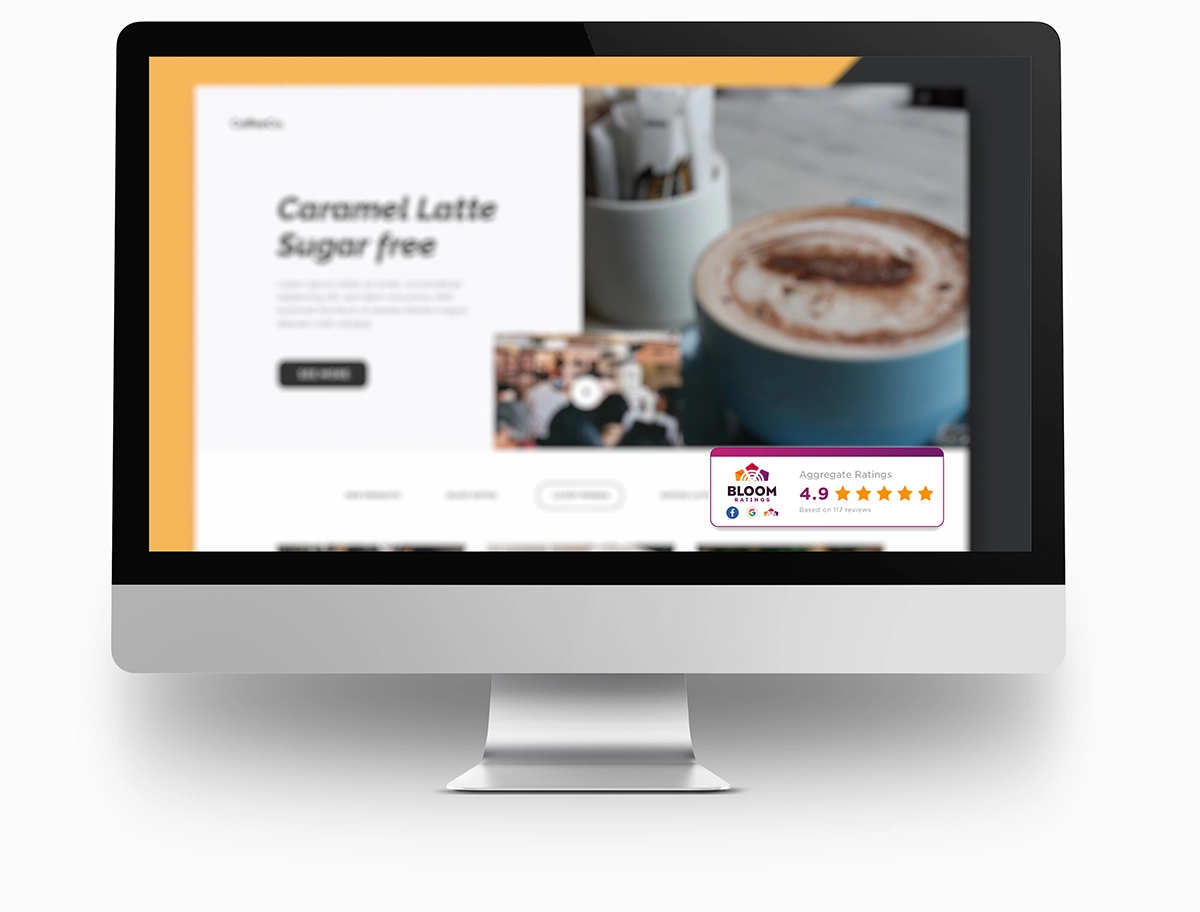
Bloom Website Ratings WidgetAs your ratings and reviews continue to build, it is a good idea to showcase those ratings on your website and social media platforms. This is powerful social proof.

Wherever possible, mention to your followers and website users about your aggregate ratings. At the same time, you can request new users to rate you as well.

You can also use Bloom’s configurable ratings widget to proudly display all your new positive ratings on your website.

When potential guests come to your website to see your menu or learn more about you, these positive ratings act as social proof to further encourage them to come to your locations.

Over time you will likely see your ratings and reviews become even more positive. This leads to more new guests and retention of your current customer base, which equals increased guest lifetime values and revenue for your business.

5. Make Negative Ratings Good

Even if you strive to provide stellar customer service, a guest will eventually have a negative experience.

As author and customer service strategist John Tschohl explains, “If there’s an industry that seems to have more problems, and more difficulties, and more things that can happen that are bad, it’s got to be in the restaurant business.”

Customer service recovery refers to the process of identifying a negative guest experience or a dissatisfied guest, responding to them and resolving their issue, and then converting them into a more loyal guest than if they had never had the negative experience.

This creates an excellent opportunity for you to convey to the guest how valuable they are to you and your business.

Here is a great post about how to respond to negative reviews.

6. Create Ratings Feedback Loops

Using a WiFi guest intelligence platform like Bloom Intelligence, it is simple and easy to create an automated feedback loop to help improve your online ratings and reviews.

When a guest leaves your restaurant, an initial message will be sent to thank the guest and ask them to rate their experience.

If the guest leaves a negative review, a secondary message can be sent that would offer an apology for providing anything less than stellar service and can include an incentive to get the guest back through your door for that valuable second chance.

The idea is to grab the guest’s attention and offer some kind of resolution to their issue before they get to an online ratings website.

If they know their issue is being addressed in a friendly and positive manner, they will most likely refrain from complaining online.

The best part is that the entire process is automated and runs behind the scenes while you concentrate on running your business.

7. Use AI to Know Customer Sentiment

Not only are positive ratings and reviews good for your bottom line, but they are also great for spotting trends and measuring customer sentiment.

Measuring customer sentiment can give you very deep insight into your customer base. It tells you not only what guests like and dislike, but the reasoning behind the way they feel that way. 

The first step in utilizing reviews to measure sentiment is to monitor and evaluate them consistently. Once you are on a regular schedule of evaluating your reviews, you may begin to see patterns emerging.

When an issue is identified, good or bad, always take swift action to improve it.

For instance, if you are seeing consistent positive comments about a certain product, you might want to feature it as a special.

Or, if you see consistent negative reviews about a certain item, you could try modifying it, or removing it from your menu altogether.

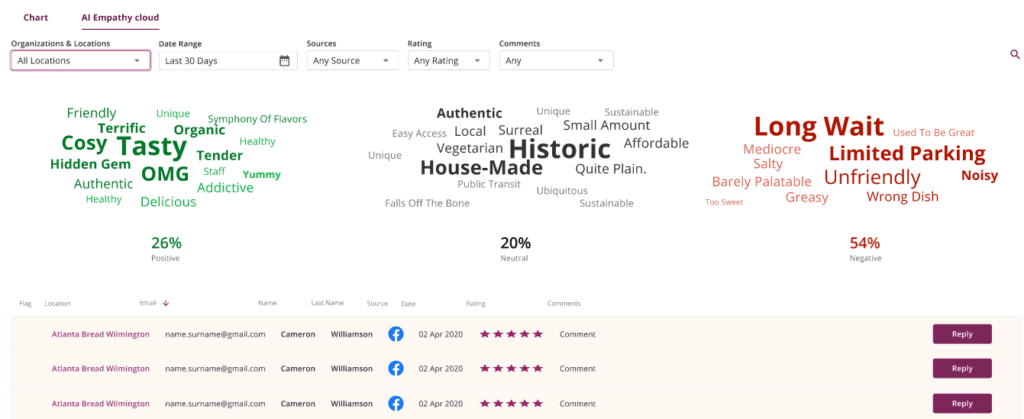
Bloom Intelligence makes this even easier by providing an artificial intelligence-generated word cloud showing positive, neutral, and negative customer sentiment. It’s an easy way to quickly spot trends and improve upon them.

Bloom Customer Sentiment Word Cloud

8. Use AI to Optimize Marketing and Operations

Measuring customer sentiment is also a great way to learn how you can use it to your advantage in your marketing and operations strategies.

For example, if you have a consistent positive sentiment on a particular menu item, you can showcase that item in your marketing messaging or on social media.

Or, if you see a trend about 86’ing a particular menu item often, you can change your purchasing quantity or schedule for that item. Or if there is a trend about having a short staff, you can adjust your staffing accordingly.

9. Incentivize Your Wait Staff

Your wait staff is your front line to the outside world. They are the ones talking to your guests the most. Why not incentivize them to solicit ratings and reviews from happy guests?

If they see a guest who is outwardly having a good time, finished their entire meal, or left a great tip, ask them to rate their experience online.

You can even offer a tangible incentive like a free meal for two, or a monetary reward.

10. Discuss In Employee and Management Meetings

To keep your restaurant reputation management top of mind with every employee, it is a good idea to make it a topic of conversation in all employee and management meetings.

Discuss the quality and quantity of ratings and reviews you are receiving. Brainstorm new ideas on how to get more, and better reviews. Give Kudos to employees who were directly mentioned in any reviews.

The more you discuss these things, the more apt your employees will be to help improve your online – and offline – reputation.

11. Use Bloom Intelligence Reputation Management Tools

It’s time to start leveraging the power of advanced restaurant reputation management tools to grow your business.

Bloom can save you a great deal of time and energy by automating guest rating requests, displaying all your ratings and reviews in one place, and showing you accurate customer sentiment which you can use to improve the guest experience.

This is only one small part of what Bloom can do to save you more time, increase guest lifetime values, increase the number of positive online reviews, win back lost guests, and improve your restaurant’s reputation.

If you’d like to see the Bloom restaurant marketing platform in action, and discover how you can grow your business through guest intelligence and marketing automation, schedule a free demo or call 727-877-8181.


To see more of what Bloom can do for your restaurant or coffee shop marketing, schedule a free demo today, or call us at 727-877-8181.

Guest Segmentation to Fuel Your Restaurant Marketing Campaigns

The restaurant marketplace is more crowded than ever. Every time a consumer opens a website on their desktop browser or smartphone browser, social media platforms, entertainment apps, and even productivity apps, they’re faced with all kinds of marketing messages.

How do you get the right eyes on your marketing content to promote your restaurant effectively?

Successful restaurant and coffee shop marketing is essential for staying competitive in a highly populated industry. No matter where you’re located, you probably have to contend with various other competitors offering similar products to yours.

Like the competition for successful marketing, competition to successfully draw customers to your restaurant or coffee shop (and away from your direct competitors), should be top-of-mind.

After all, marketing is an ongoing process. You have to stay competitive and stay present on various internet platforms in order to attract clientele.

Thankfully, there are powerful marketing strategies that you can utilize to your ultimate benefit. Customer segmentation, or guest segmentation, is a particularly excellent way to boost the return on investment from your restaurant’s marketing budget.

Collecting Guest Data for Customer Segmentation

It is impossible to accurately segment your customer base into various groups without comprehensive, dependable, and clean data. Firther, the data should be collected from multiple sources, such as:

  • WiFi engagement
  • Websites
  • Social media
  • POS systems
  • Rating and review sites
  • Reservation systems
  • and online ordering platforms

By collecting your guest data from many different sources, you will begin to get a full 360-degree view of your guests. Each of these data collection channels can give you different data points to use when you begin to segment your database.

Before we dive into data collection, let’s discuss the basics of guest segmentation.

What Is Restaurant Guest Segmentation?

Customer segmentation is a marketing strategy of “segmenting” your current or potential customers into distinct groups (market segments) and then marketing your business to them using focused, group-specific messaging.

Customers are split into groups based on their demographic data–age, geographic location, gender, etc.–and their behavioral and psychographic data–what online content they interact with, how they behave at your place of business, and their perceived interests.

These groups are called customer segments, and each segment has its own persona. And different personas like to be marketed to in certain ways.

Based on marketing research, when you engage with clients with unique, individualized methods, you’re more likely to garner interest and ultimately draw leads to your business.

Marketers can successfully collect segmentation data, then optimize their marketing campaigns based on which “segments” they’re addressing with a given advertisement, social media post, email, or SMS.

Customer Segmentation Guide for Restaurants and Coffee Shops

How To Group Your Customers?

You might wonder how the power of today’s technology can help you split your guests into these segments. The answer lies in customer data collection.

As discussed already, there are ways to retrieve data to form customer profiles, which help you understand your customers better. Then, you can subdivide your customer database into verious segments.

You can also use software to collect and analyze data for much less than outsourcing these services to an agency. Check out the Bloom Intelligence Restaurant Marketing & Customer Data Platform to see it in action.

Once you collect your guest data, you can sort and filter guest profiles to view your new grouped segments. Then, use this information to create targeted marketing messages. Fine-tune your current marketing strategies or devise new ones to personalize the guest experience.

Why Send Different Marketing Messages to Different Segments?

The ultimate goal of customer segmentation is to adjust your messaging to appeal to different segments. Customer segmentation helps certain demographic-specific businesses find their customers among the highly populated masses online.

For instance, cosmetic companies are probably looking for young, female clients that are particularly interested in beauty products. They’ll market themselves exclusively to this relevant segment.

Similarly, a skateboarding company knows that it isn’t relevant to the population at large. They will try to find relevant clients in urban teenagers and young adults.

So, marketing their products to seniors and middle-aged business people would produce little return on investment. Therefore, these companies would be wasting their marketing budgets without using effective customer segmentation.

The restaurant industry, meanwhile, has mass appeal. You aren’t necessarily looking to narrow down your audience as much as fine-tuning the voice of your marketing strategies to speak to different restaurant guests.

The voice of your marketing messages should be very different for older business people as it is for teenage skateboarders, but the message at the root of your strategy is the same: people should come to your restaurant!

Learn the Value of Customer Profiling

What the Studies Show

Studies show that guest segmentation works, and actually improves the customer experience, too.

CMO.com states that on average, advertisements targeted to unique customer segments are twice as effective as broad-audience, non-targeted ads. And, in fact, the Federal Trade Commission reports that almost 70% of polled consumers actually prefer marketing that tailors to their interests.

Customer segmentation isn’t just powerful; it’s popular.

Your direct competitors may very well be using this strategy. So, to stay competitive, you should as well.

How to Use Guest Segmentation

In the restaurant and coffee shop marketing industries, guest segmentation has plenty of benefits. First, you can use this tactic to improve messaging. Messaging refers to your approach to communication with your audience.

How do you engage guests and highlight the value of your restaurant? Modify your voice to speak to different segments of your customer base.

For example, if your restaurant has a formal, sophisticated ambiance, you might use professional language and elegant imagery to appeal to an older, higher-income segment of your audience.

Meanwhile, you can appeal to a younger, lower-income segment with more relaxed language and references to date nights or other special occasions.

Marketing messaging for your restaurant can be playful, refined, value-focused, or even exclusive – all based on the segment you’re speaking to.

Guest Segmentation for Advertising and Remarketing

You can use customer segmentation for remarketing on Google and other search engines. Identify profiles of users who have already visited your website or taken specific actions, like placing an online order or reservation, or those who logged into your WiFi.

Then, serve advertisements and other marketing messages to “remarket” toward these clients. The goal is to create lifetime customers who keep coming back.

Restaurants can also advertise with “lookalike” campaigns on Facebook, Instagram, and other popular platforms to increase engagement and appeal to new clients. This strategy identifies segments of existing customers–those who have already visited your website–and then targets digital profiles of similar segments.

For example, if you have a large population of college students that visit your website (and your restaurant), social media platforms can identify other college students in the area and market your restaurant to them, aiming to appeal to these lookalike profiles.

Just remember to adjust your messaging for these audiences!

Using Social Proof to Get More Customers

Automate Data Collection and Guest Segmentation with Bloom Intelligence

Customer segmentation may seem like a difficult strategy to implement. Unfortunately, it can be very difficult to collect and analyze the data you need in order to segment clients without the use of a WiFi customer intelligence platform like Bloom Intelligence.

You can either hire a third-party marketing company to track customer data–a potentially expensive option–or save money and use Bloom to collect large amounts of customer data for you.

With Bloom, you can quickly and easily segment clients yourself and create targeted automated marketing strategies for much less. This saves money and time, increases customer lifetime values, brings new guests, improves your reputation, and increases your bottom line.

To see more of what Bloom can do for your restaurant or coffee shop marketing, schedule a free demo today, or call us at 727-877-8181.

Restaurant Marketing Technology to Collect Valuable Guest Data

The restaurant industry has changed in so many ways in just the last few years. With the pandemic and the incredible competition, it is time to embrace technology as a way to keep your guests interested and your business alive.

To do this, restaurants need to understand who their guests are. This requires collecting guest data from multiple sources, such as your website, social media, WiFi logins, online ordering and reservation systems, and more. Then it can be compiled, analyzed, and presented in an easy-to-understand way using a restaurant customer data platform.

It will allow you to stay ahead of your competition by making effective data-driven decisions while keeping very close track of all your marketing campaigns.

Smart restaurant owners and operators are realizing that technology allows them to keep up with the rapidly changing marketplace. COVID-19 has not only caused a tremendous loss of industry income, but it has also created a lasting change in operations and restaurant marketing.

No longer is technology a choice. It is now a necessity.

While many things still remain unpredictable, it is clear that technology is going to play a major role in keeping ahead of the competition moving forward.

With no clear end in sight, and for the first time ever, restaurant success depends more on take-out, catering, and delivery services. Many restaurants have had to restructure their business to shift more toward these services, as well as mobile and online ordering.

This has brought about changes in restaurant technology at a pace that has outmatched any ever seen before. Even after the pandemic is gone, guest behavior is likely to have changed forever.

restaurant guest using restaurant technology

Restaurant Marketing Technology in 2022

As more and more consumers are seeking a flexible restaurant experience, owners and operators are turning to technology to help get them through these tough times and come out with solid leverage as revenue begins to rise again.

Collecting and leveraging data about how your guests engage with your brand can be very useful in this area.

The key lies in understanding who your guests are and how they behave, both individually and at scale. When you have access to this kind of data, you can then remarket to them based on their wants, needs, and preferences.

Likewise, you can custom-tailor your marketing campaigns to your own specific business needs (delivery, take-out, etc.) and market each campaign to specific segments of your customer base.

Whether you are a single-store owner, or you operate a small to a medium-sized franchise, guest data is what can keep your business competing with the big brands through tough times and for years to come.

Today’s technological tools, such as a restaurant customer data platform, can bring this to you at a surprisingly inexpensive cost.

Bloom Intelligence Restaurant Technology Guide

Using Technology to Segment and Target Guests

Especially in times of uncertainty, it is unwise to spend what money you have on mass marketing campaigns. With the marketplace in turmoil, it is best to leave this to the big brands who can afford it.

Perhaps a single mass message will resonate with many of the recipients, but for smaller companies, it is wiser to send targeted, personalized emails to various guest segments with messages specifically tailored for that group of people.

Why would a restaurant marketer want to segment guests and send different messages?

The answer is simple.

Segmented, targeted marketing is much more effective in terms of engagement and ROI. Then you can customize messages to each group’s particular needs and preferences.

The primary value in executing targeted, personalized marketing campaigns is that you are sending your message to guests who are more likely to engage and respond, and therefore purchase.

Again, the key to this it to have accurate, reliable, and comprehensive data from multiple sources about your guests’ actual demographics and behavior history.

Guest Segmentation Restaurant Technology Guide

Using Technology to Collect Guest Data

Ideally, you need an automated solution to gather guest data and store it in a singular platform. This will give you a true 360-degree view of your customer base and its various segments.

Even if you are closed for on-premises dining, there are still ways in which you can quickly build your customer database and begin executing targeted marketing campaigns.

Fortunately, there is a solution that can automate this for you. You can passively build your database while you concentrate on keeping your business running. Bloom Intelligence allows users to collect guest data from these multiple sources.

For instance, Bloom provides a simple-to-install widget that you can integrate with your website. This creates an unobtrusive pop-up that asks the visitor to enter their name and email address. It allows the website to write any message in the widget, such as signing up for a newsletter, specials, or deals, for example.

It can collect data from your POS system, from your online ordering platform, your reservations system, social media, mobile app downloads, your guest WiFi logins, and more.

As visitors come to your website, order online, engage with your brand online, or dine at your physical locations, your database will continue to grow.

Using Restaurant Technology

Collecting Guest Data Through WiFi

Another way to collect data using Bloom is through WiFi technology. When guests come into range of your WiFi, the platform can “sense” a guest’s presence and begin collecting anonymous behavior data for that guest. It will know every time the guest returns and how they behaved during each visit, such as their dwell time, time of day, repeat rate, and other anonymous data.

This alone can bring you valuable data about how your guests behave. But Bloom can also help you find out who your guests are.

When a guest logs into your WiFi, they will be taken to a captive portal page, also known as a WiFi landing page. This page will require them to enter their email address before gaining access to the internet.

At that point, their identity (email address) can be matched with all previous guest behavior data associated with their device. This is a great way to passively collect guest data and create a large CRM database filled with detailed customer profiles.

Then you can begin to execute various marketing campaigns to different customer segments with messaging to resonate with those different segments.

Discover Bloom Intelligence

Learn how Bloom Intelligence can do this and so much more to increase your restaurant revenue, improve ratings and guest lifetime values, automate marketing tasks, and much more – all while saving your time and money.

Discover Bloom Intelligence, your guests will love you for it.

8 Great Restaurant Website Design Examples

Creating a great website is a very important task for any business. However, for restaurants, it is even more essential.

A restaurant’s website is at the core of branding and marketing for the best possible user experience. It should be user-friendly and visually appealing, but at the same time, you should ensure it provides visitors with all the information they may be searching for. It can also be a great restaurant marketing tool for your overall strategy.

Diners today are visiting websites now more than ever to browse menus, find contact information and directions, order online, learn about company history, look for healthy/environmentally safe options, or simply discover the ambiance of your dining room atmosphere.

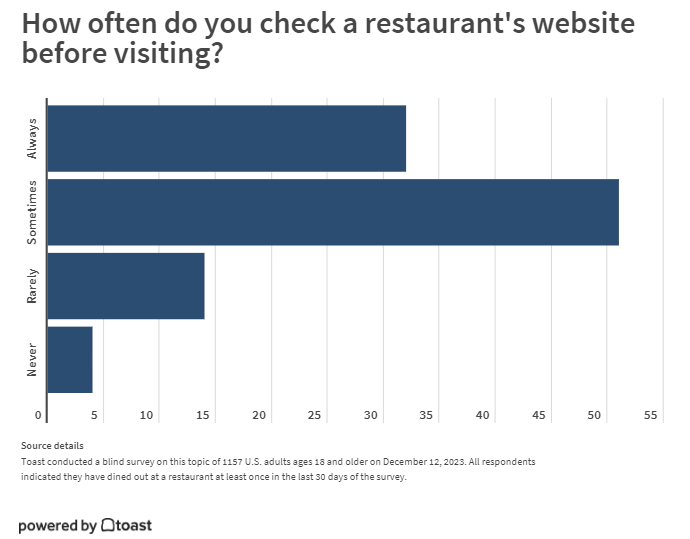
In a recent survey by Toast POS, over 80% of diners surveyed said that they “always” or “sometimes” check a restaurant’s website before visiting.

Survey: how many visit a restaurant's website before choosing?

Not only does it represent your restaurant to the online world, but it also serves as your primary interface with guests.

This means that it’s essential to make sure your website design is both user-friendly and visually appealing. To do this, you need to choose the right web designer, whether in-house or outsourced and then work with them to create a website that meets your specific needs and the needs of your guests.

Choosing a Restaurant Website Designer

There are a few key things to keep in mind when choosing a web designer. First, you need to make sure they have a good portfolio of past work. This will give you an idea of their skill level and what kind of designs they’re capable of creating.

Second, you need to make sure they understand your specific needs. Every business is different, so you need to make sure the web designer you choose is willing to work with you to create a custom website that meets those needs.

Finally, you should also make sure they offer good customer service. This way, if you have any questions or problems during the process, you know you can count on them to help you out quickly and competently.

Woman Searching for a Great Restaurant Website

What Should Be Included On Your Restaurant’s Website

Once you’ve chosen a web designer, it’s time to start thinking about what kind of website you want to create. The first step is to come up with a list of features that you want to include on your site. For restaurants, this should include things like:

  • All menus
  • Online ordering
  • Location and contact information
  • Photo gallery of both food and atmosphere
  • Consistently updated blog
  • Social media links and information
  • Company history
  • Environmental practices
  • Healthy dining options and information

Once you have a list of features, you can start thinking about the overall design of your site.

restaurant website design planning

Designing Your Website

Another important thing to remember at this point is that your restaurant branding should be consistent across all guest touch points – your menu design, social media pages, email/SMS messaging, and of course, your website.

There are a few things to keep in mind when designing your website. First, you need to make sure it’s easy to navigate. Guests should be able to find what they’re looking for without any trouble.

Second, you need to make sure the design is visually appealing. This means using colors and images that are pleasing to the eye and follow your company branding.

Finally, you need to make sure the content on your site is relevant and interesting. If visitors can’t find what they’re looking for, they’re not likely to stick around for very long.

Once you have a basic design in place, you can start thinking about ways to improve it. One way to do this is to add some interactivity to your site. This can be anything from a simple contact form to a more complex system that allows customers to book appointments or make reservations.

Another way to improve your website design is to add some multimedia content. This could include anything from video testimonials to audio clips of your staff talking about their experience with your business.

By adding this type of content, you’ll not only make your site more interesting, but you’ll also give visitors another reason to come back.

Great Website Examples for Your Inspiration

We’ve scoured the internet to find some great examples of restaurant websites. Here are a few that stand out.

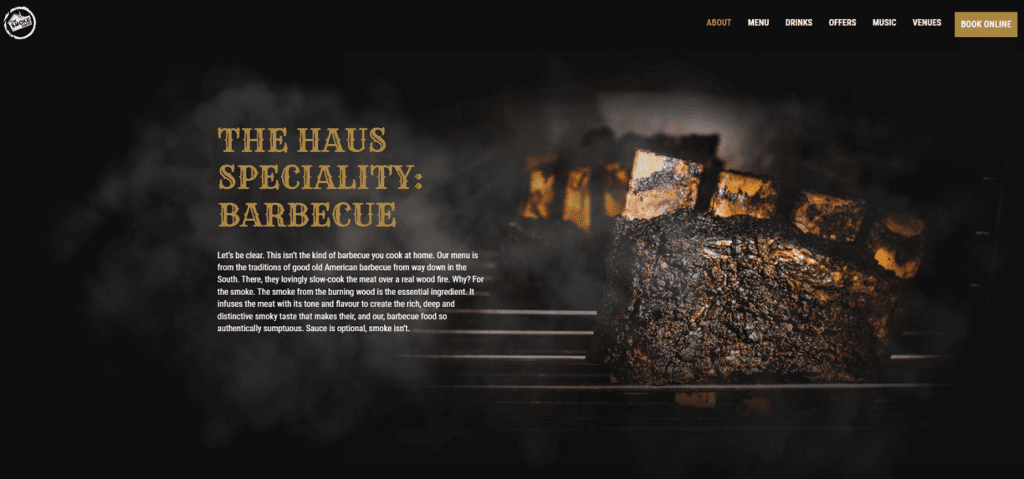
#1. The Smoke Haus

The Smoke Haus serves delicious American barbecue in Southern Wales. Their website is very pleasing to the eye and well laid out, offering a great experience for visitors.

The colors match the ambiance of the restaurant’s physical locations while branding is consistent across other channels. There is easy access to menus, directions, business hours, social media channels, and a story of their history, along with a convenient online reservation system. There is even an online jukebox link to control what music is playing at the locations.

Restaurant Website Example - The Smoke Haus

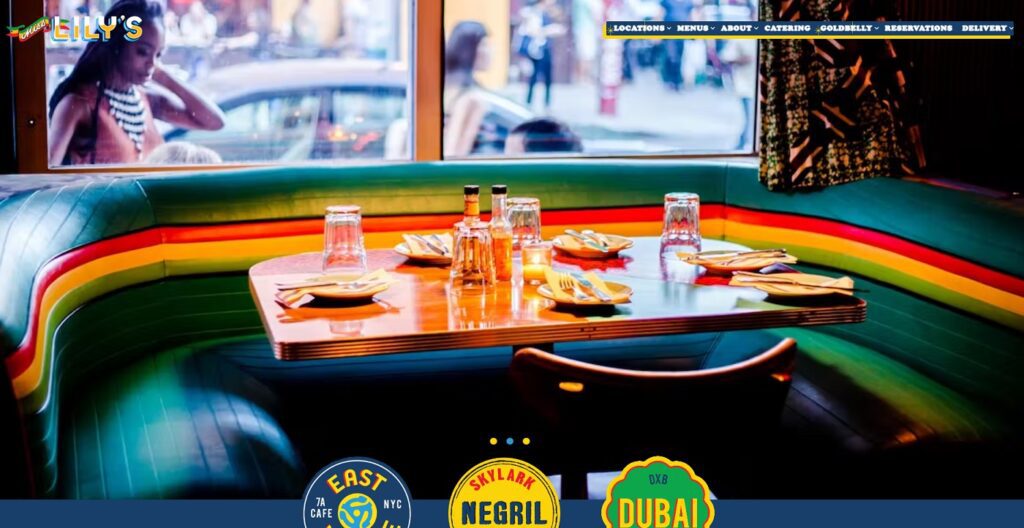
#2. Miss Lily’s

Miss Lily’s, located in New York City, Dubai, and Jamaica, is a Caribbean-themed restaurant through and through – and their website definitely portrays their brand identity. The layout is clean and easy to navigate, and the images of their unique food and atmosphere are outstanding.

The website has an easy-to-use reservation system and delivery platform. Likewise, menus show appetizing images of each dish. Email newsletter signup, social media links, and contact information is at the bottom of every page.

Restaurant Website Example - Miss Lily's

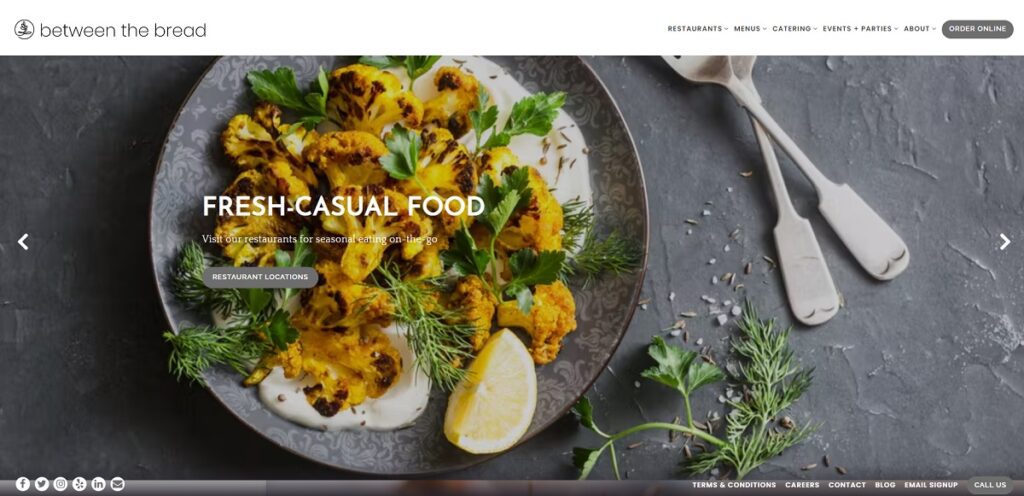
#3. Between the Bread

Between the Bread has three locations in New York City, offering flavorful, wholesome, and fresh seasonal meals in store, and bringing the very same food to offices and homes through catering.

Their website has a fresh, casual look which is how they brand their food and service. Menus and Catering options are provided, along with an online ordering system. Branding is carried out perfectly throughout all social channels, which are at the bottom of every page with blog, email signup, and contact/call links.

Restaurant Website Example - Between the Bread

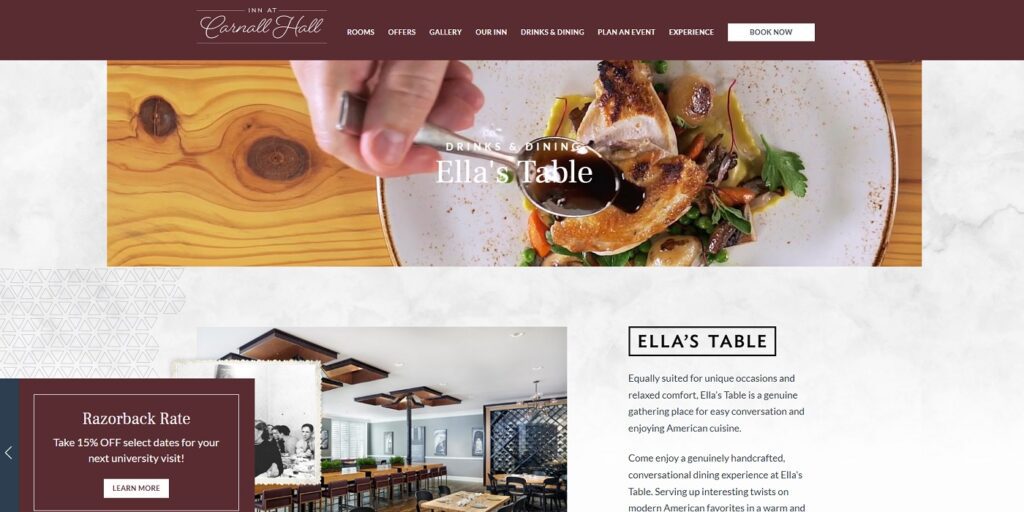
#4. Ella’s Table

Ella’s Table offers a great example of a restaurant website using only a single page – it is part of the Inn at Carnall Hall website. Showcasing beautiful imagery and video, the exquisite guest experience is conveyed throughout the page.

You’ll find contact information, hours of operation, their menu, catering information, and an email signup form, all placed perfectly in an easy-to-understand layout. There is also a convenient online reservation system for guests to book reservations in advance.

Restaurant Website Example - Ella's Table

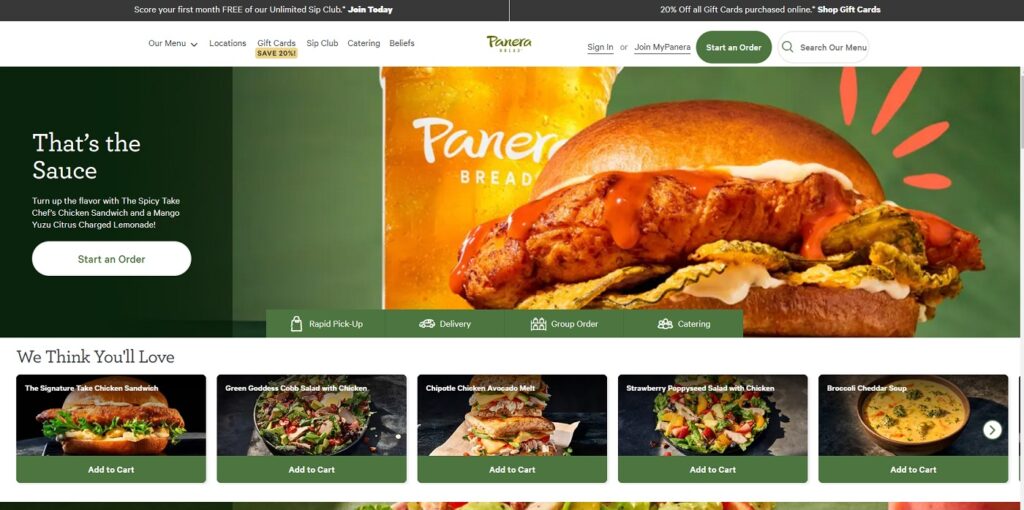
#5. Panera Bread

Panera Bread is a great example of laying out a design with almost everything a guest would want to see on a home page.  You’ll find (from top to bottom) loyalty program information, gift cards, a menu containing menus and online ordering links, pickup and delivery services, high def imagery of their food and drinks, catering information, and social media links.

The website is perfectly branded to Panera’s popular brand identity and is easy for users to navigate and understand.

Restaurant Website Example - Panera Bread

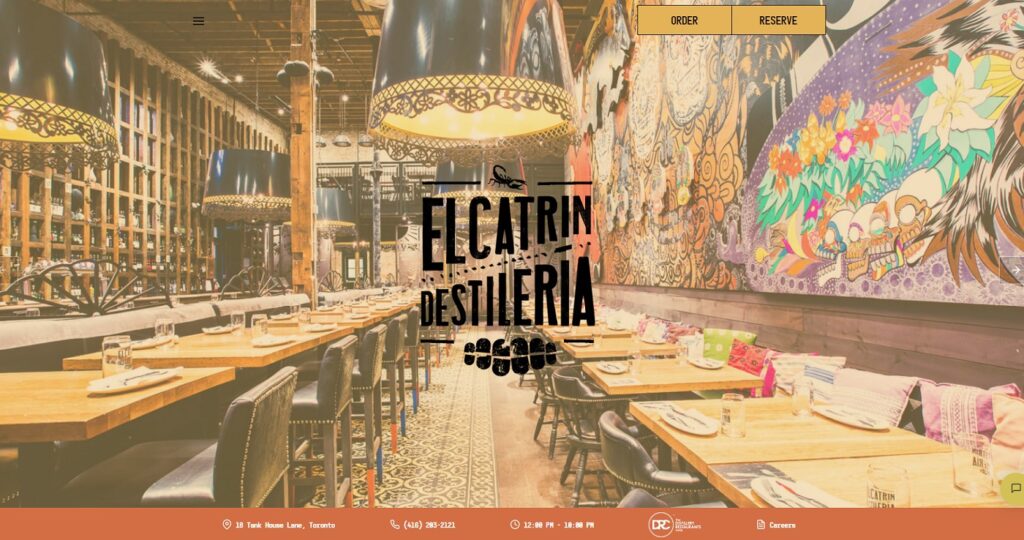
#6. El Catrin

A great restaurant website does not have to use an intricate theme. El Catrin is an example of a great website design that is minimal, yet provides what its guests are looking for.

Branding is consistent and uses many images of the restaurant’s dining room and food & drink. You’ll find menus, a photo gallery, and links to their frequently updated blogs. Online ordering and reservation links are found at the top of every page.

Restaurant Website Example - El Catrin

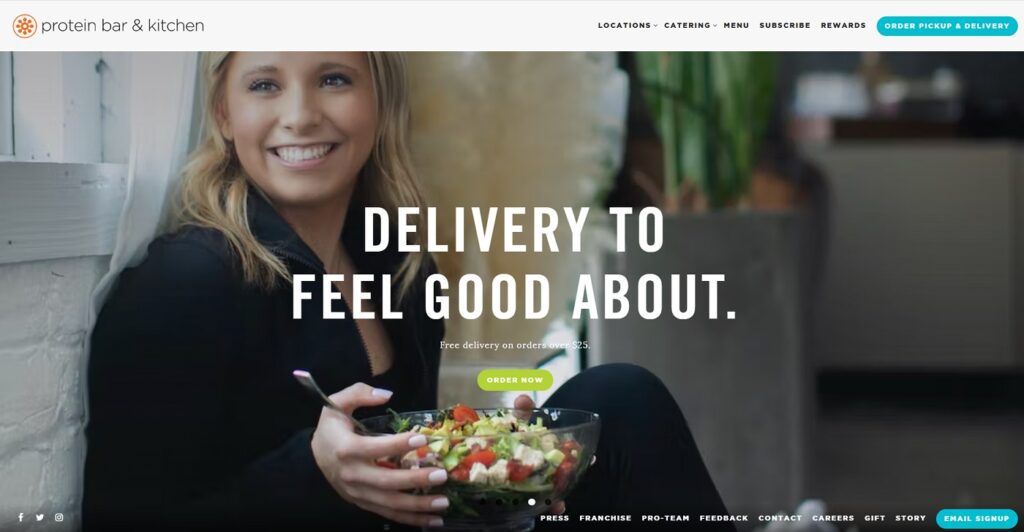
#7. Protein Bar and Kitchen

Protein Bar and Kitchen has done a great job bringing their multi-unit chain into one single website. Visitors can see the menu, hours, directions, and contact information for each location in the easy-to-use store locator. A great design for multi-unit operators who do not wish to have a separate website for each location.

Online ordering for pickup and delivery is found on every page along with loyalty program and newsletter signups.

Restaurant Website Example - Protein Bar and Kitchen

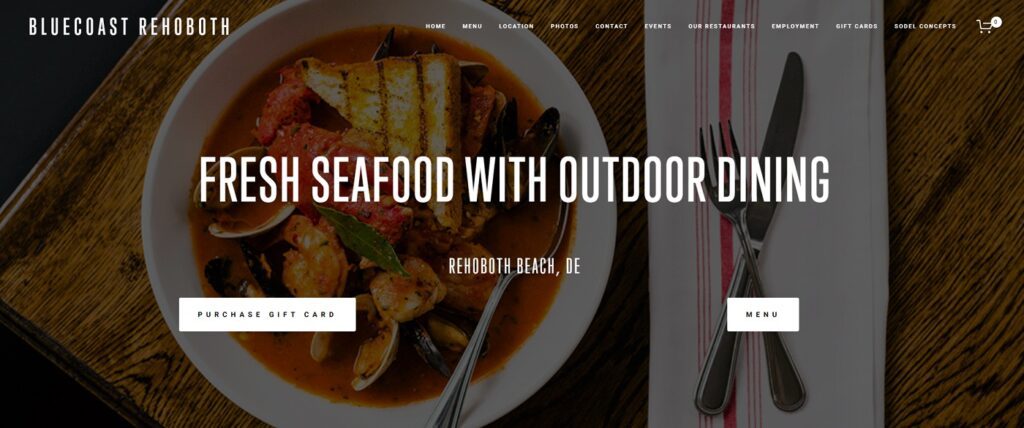
#7. Bluecoast Rehoboth

This is a great example of how to use imagery to show guests what their experience will be and how great your food & drink will be. Creating excitement through images is what Bluecoast Rehoboth is all about.

Complete with menus, online ordering, catering, and gift card options, this website is sure to leave its visitors wanting more.

Restaurant Website Example - Bluecoast Rehoboth

Discover Bloom Intelligence

No matter how you decide to create your website, it’s essential to use elements that will give your guests (and potential guests) a taste of what they will experience should they choose your restaurant for dine-in or takeout service.

As seen in most of the examples above, offering easy access to your menus, online ordering, high def imagery, online reservations, and gift card purchasing can create a sense of excitement to not only find new guests but to keep your current guests coming back again and again.

Learn how Bloom Intelligence can help you increase your restaurant revenue, improve ratings and guest lifetime values, automate marketing tasks, and much more – all while saving your time and money.

Discover Bloom Intelligence, your guests will love you for it.

Discover Bloom Intelligence

Why Restaurant Customer Satisfaction is So Important

Restaurant customer satisfaction is no doubt at the top of every restaurateur’s mind. When guests are happy and satisfied, they will not only come back for more, but they will tell their friends and family.

Likewise, they will share their experiences on online rating sites like Google, Yelp, TripAdvisor, and Facebook.

Plus, not only will they become ambassadors for your restaurant, but they will also be likely to spend more money on each visit.

With a deep-seated culture of focusing on guest satisfaction, your restaurant business can reap the benefits.

There are a variety of reasons why restaurant guest satisfaction is so important. Let’s take a look at some of the more recent powerful and telling statistics.

The Importance of Good Service in Restaurants

According to American Express, 7 out of 10 U.S. consumers say they’ve spent more money to do business with a company that delivers great service and satisfaction.

The Tempkin Group also reports that a merely moderate increase in customer experience generates an average revenue increase of $823 million over three years for a company with $1 billion in annual revenues.

Obviously, your restaurant may not be generating $1 billion in annual revenue, however, the numbers, in this case, speak for themselves. Imagine seeing this percentage of return on your annual revenue in just three years.

Customer satisfaction in restaurants can make a huge difference in revenue and generate more guest spending for higher guest lifetime values.

Customer Satisfaction Leads to Better Restaurant Reputation

A highly quoted Harvard Business School study found that a one-star increase in a restaurant’s Yelp rating correlated with a 5-9% increase in revenue.

OpenTable also found that 25 percent more people turn to consumer reviews on sites like OpenTable, Yelp, and TripAdvisor than those who rely on reviews by professional food critics.

To add to that, 60 percent read reviews before going out for a meal, a habit that takes precedence over getting directions to a restaurant or looking at food photos.

It’s obvious that having a great online (and word of mouth) reputation can go a long way.

Keeping your guests satisfied and happy is key to maintaining a consistent stream of positive online ratings and reviews. This can lead to increased guest lifetime values. Also, it can provide an increase in new guests visiting your restaurant or ordering online.

restaurant customer satisfaction is important

Should You Offer Freebies to Improve Restaurant Customer Satisfaction?

Many restaurateurs feel that they need to offer special incentives to help improve their overall customer satisfaction scores.

While this may not always be the case, some studies show that it can definitely help improve guest satisfaction.

Other things, such as providing guests their choice of music or television station, or allowing guests to choose their own table can also go a long way.

According to OpenTable, diners say that complimentary extras (69 percent) and seating preferences (65 percent) would go far in increasing customer loyalty.

How To Handle Negative Customer Experiences

No matter how much focus you and your staff place on great customer satisfaction, there will always be times when a guest is unhappy about something.

Consider these statistics about the effects negative online reviews can have on your business.

  • 75 percent of consumers will not visit or patronize a restaurant with negative reviews about its cleanliness. (Harris Poll for Cintas Corporation)
  • 38% of all customer complaints are on social media and review sites. Restaurants get only 14% of all complaints. (Jay Baer, Food Service Magazine)
  • After one negative experience, 51% of customers will never do business with that company again. (New Voice Media)

Negative experiences are bound to happen, it’s just the nature of the hospitality business.

It is how you handle the situations that is crucial. Offering effective restaurant customer service recovery can not only mend the situation but can create an even more loyal guest.

Controlling negative situations and creating a positive outcome for these guests will keep them from leaving negative online reviews. In fact, they may even turn into positive ones.

restaurant guests satisfied

Tips for Providing a Great Restaurant Customer Experience

We recently posted a great article that includes tips on providing a great customer experience for your guests. We suggest incorporating these tips at your place of business.

To summarize, a great restaurant customer experience includes:

  • Make sure your menu is easy to navigate and offers something for everyone.
  • Keep your dining area clean and clutter-free.
  • Train your staff to be friendly and attentive.
  • Offer prompt and consistent service.
  • Use quality ingredients in your recipes.
  • Price your items fairly.
  • Reward loyal guests with discounts or special offers.

To read details about these and many other tips, check out the article here: Restaurant Customer Satisfaction Tips and Trends

Bloom Intelligence Restaurant Guest Data Platform

Bloom Intelligence gives you the ability to track the results of every campaign you create. All the way down to a guest returning to your place of business and/or redeeming an offer. Bloom’s WiFi analytics detect the device of any consumer that walks back into your location that received one of your offers, messages, or surveys.

To learn more about the ways the Bloom Intelligence growth tools can help you improve your restaurant marketing to drive more sales, improve overall customer experience, measure customer sentiment and grow your business, schedule a free demo today.

To see more of what Bloom can do for your restaurant or coffee shop marketing, schedule a free demo today, or call us at 727-877-8181.

Bloom Intelligence Customer Satisfaction Platform

Game-Changing Restaurant Customer Satisfaction Tips and Trends

Restaurant Customer Satisfaction

In a world where customers are always looking for the best deal, it is more important than ever for restaurants to focus on customer satisfaction.

Satisfied customers are more likely to return and recommend your restaurant to others, while unhappy customers can damage your reputation with just one review.

But what exactly is restaurant customer satisfaction? And how can you make sure your customers are happy?

Here’s a look at what you need to know about customer satisfaction and how to achieve it.

Restaurant customers being satisfied

What is Customer Satisfaction?

Customer satisfaction is the degree to which a guest is happy with a product or service. In the restaurant industry, customer satisfaction can be affected by everything from the quality of the food to the speed of service.

Creating a culture of guest satisfaction starts with your employees. Train your staff to provide exceptional customer service and make sure they understand the importance of customer satisfaction.

In addition, regularly collect feedback from guests to get a sense of what they’re thinking and how they feel about your restaurant.

Measuring Restaurant Customer Satisfaction
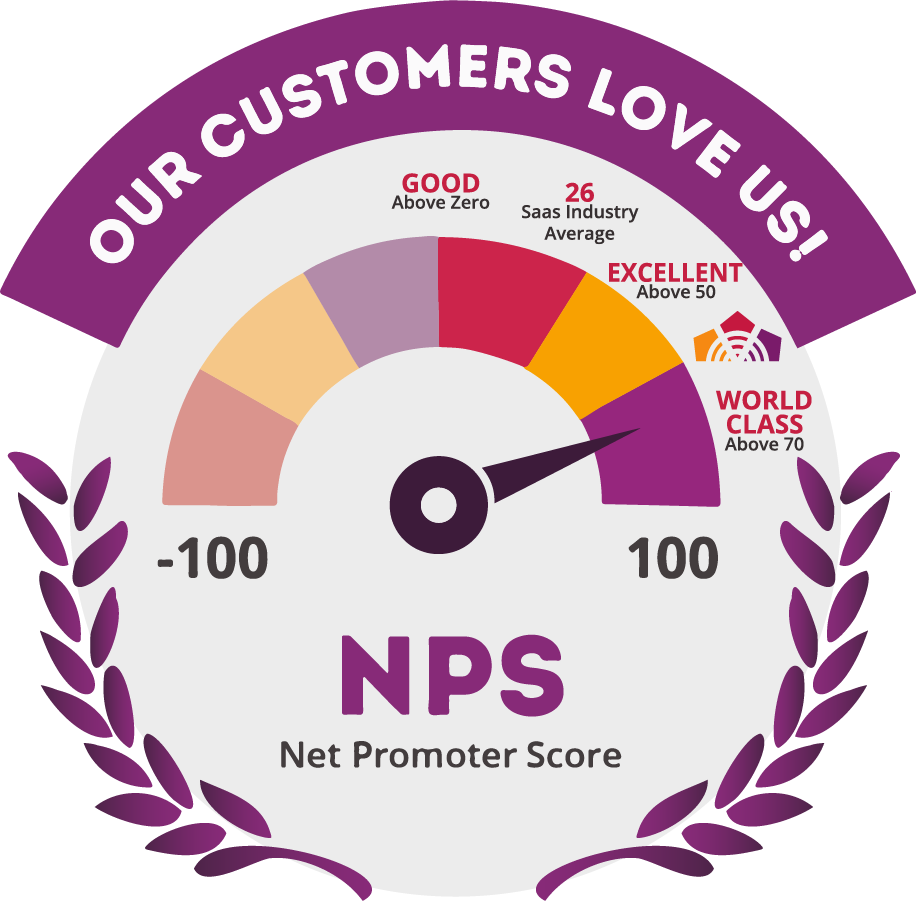
Customer Satisfaction Rating for Bloom IntelligenceThere are several ways to measure customer satisfaction, but one of the most common is the Net Promoter Score (NPS). To calculate your NPS, you simply ask guests how likely they are to recommend your restaurant to a friend or family member on a scale of 0-10.

Based on their answer, guests are placed into one of three categories:

  • Detractors (0-6): These are the guests who are unhappy with your restaurant and are unlikely to recommend it to others.
  • Passives (7-8): These guests are satisfied with your restaurant but may be swayed by a competitor.
  • Promoters (9-10): These guests are your biggest fans and are likely to recommend your restaurant to others.

To calculate your NPS, you take the percentage of promoters and subtract the percentage of detractors. For example, if 80% of guests are promoters and 20% are detractors, your NPS would be 60.

While the NPS is a good way to get a general sense of customer satisfaction, it’s also important to collect more detailed feedback from guests. This can be done through surveys, focus groups, or even simply talking to them in person.

Why is Customer Satisfaction So Important for Restaurants?

The importance of customer satisfaction cannot be overstated. Happy guests are more likely to return and spend more money at your restaurant, while unhappy guests can quickly damage your reputation.

In addition, satisfied guests are more likely to recommend your restaurant to others. In fact, word-of-mouth is one of the most effective forms of marketing. According to Nielsen, 92% of consumers believe suggestions from friends and family over all other forms of advertising.

Finally, happy guests can also help you attract new customers. In today’s world, online reviews are more important than ever. Sites like Yelp and Google can make or break a restaurant, so it’s crucial to make sure your guests are satisfied.

Remember that the importance of customer satisfaction does not discriminate. It can make or break the success of any restaurant, regardless of its size, location, demographics, or even the quality of the cuisine.

However, restaurant owners can find it increasingly difficult to identify the major contributing factors to customer satisfaction, especially when they disagree with what guests feel that they need.

It’s not about what restaurants need to feel satisfied, it’s about what guests feel restaurants need to do to satisfy them. It’s important not to inconvenience guests at the restaurant’s convenience.

The more satisfied guests are, the more likely they are to spend more, visit repetitively, share their positive experiences, and recommend restaurants to friends, families, and strangers online.

restaurant customer satisfaction

Telling Statistics of Guest Satisfaction

There are a variety of reasons that restaurant guest satisfaction is important, but let’s sum it up to these powerful statistics:

  • 7 out of 10 U.S. consumers say they’ve spent more money to do business with a company that delivers great service. (American Express)
  • A moderate increase in customer experience generates an average revenue increase of $823 million over three years for a company with $1 billion in annual revenues. (Temkin Group)
  • A Harvard Business School researcher found that a one-star increase in a restaurant’s Yelp rating correlated with a 5-9% increase in revenue.
  • 25 percent more people turn to consumer reviews on sites like OpenTable, Yelp, and TripAdvisor than those who rely on reviews by professional food critics. 60 percent read reviews before going out for a meal, a habit that takes precedence over getting directions to a restaurant or looking at food photos. (OpenTable)
  • Diners say that complimentary extras (69 percent) and seating preferences (65 percent) would go far in increasing customer loyalty. (OpenTable)
  • 75 percent of consumers will not visit or patronize a restaurant with negative reviews about its cleanliness. (Harris Poll for Cintas Corporation)
  • 38% of all customer complaints are on social media and review sites. Restaurants get only 14% of all complaints. (Jay Baer, Food Service Magazine)
  • After one negative experience, 51% of customers will never do business with that company again. (New Voice Media)

These statistics underline the importance of satisfying every guest who comes to your place of business or orders online. Here are some powerful ways to keep them satisfied and coming back for more.

Ways to Improve Restaurant Customer Satisfaction

When it comes to the restaurant industry, keeping your guests happy is key to success. In fact, a recent study found that a 1-point increase in guest satisfaction scores can translate into a 3-5% increase in profits.

So what can you do to ensure your guests are satisfied? Here are a few tips:

1) Make sure your restaurant menu is easy to navigate and offers something for everyone.

If you want to keep your guests happy, it’s important to make sure your restaurant menu is easy to navigate and offers something for everyone.

This means ensuring that there are plenty of options for different dietary needs, as well as varying tastes and budgets. It also means keeping the menu layout simple and organized, so guests can quickly find what they’re looking for.

One way to make sure your menu is customer-friendly is to offer a variety of choices. This means having options for different dietary needs, as well as different taste preferences.

For example, if you’re a vegan restaurant, it’s important to make sure you have plenty of vegan-friendly options. If you’re a pizzeria, you should offer a variety of pizza toppings so that everyone can find something they like.

It’s also important to keep your menu layout simple and organized. Focus on making it easy for guests to find what they’re looking for.

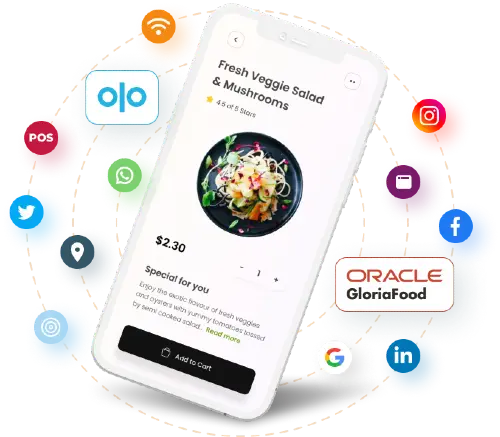
By offering a customer-friendly menu, you can help ensure that your guests have a positive dining experience and keep coming back for more. Oracle’s GloriaFood offers an online restaurant menu that is free of charge.

2) Keep your dining area clean and clutter-free.

No one wants to eat in a dirty restaurant. Not only is it unappetizing, but it can also be dangerous.

A cluttered dining area can also be a hazard, as people can easily trip over wires or cables.

Make sure your dining area is clean and clutter-free so that your guests will feel comfortable and safe while they’re eating.

training staff about restaurant customer satisfaction3) Train your staff to be friendly and attentive.

No matter how good your food is, if your staff members are unfriendly and unhelpful, you’re going to lose customers.

It’s important to train your staff on the basics of customer service so that they can provide a positive experience for every patron who walks through your door.

This includes being friendly and attentive, as well as helping guests navigate your menu and answering any questions they may have.

4) Offer prompt and consistent service.

To provide prompt and consistent service, it is important that your waitstaff be well-trained and knowledgeable about the menu.

They should also be familiar with the restaurant’s policies and procedures so that they can effectively deal with any situation that may arise.

In addition, it is essential to have a system in place for taking orders, delivering food, and collecting payments so that everything runs smoothly.

By following these tips, you can ensure that your customers are happy with the service they receive.

5) Use quality ingredients in your recipes.

Cooking with quality ingredients is important for a few reasons. First, it ensures that your food will taste great.

Second, it shows your guests that you care about their experience and are willing to put in the extra effort to make sure they have a good meal.

Finally, it sends the message that you take your cooking seriously and are committed to providing a high-quality dining experience for your guests.

6) Price your items fairly.

When pricing your menu items, you want to make sure that you are fair to both your customers and your business. You don’t want to charge too much, lest you scare customers away, but you also need to make a profit.

7) Reward loyal guests with discounts or special offers.

Loyalty programs are a great way to show your customers that you appreciate their business.

By offering special rewards and discounts, you can encourage customers to keep coming back and make them feel appreciated.

This can lead to increased customer loyalty and better word-of-mouth advertising for your business.

Other areas to improve for better guest satisfaction.
  • Updated interior design: A restaurant’s physical environment will immediately evoke positive or negative feelings about a restaurant’s brand.
  • Ambient light: While rarely mentioned, ambient lighting that is too bright or too dark has a high likelihood of becoming a deterrent and a silent brand detractor
  • Colors: The colors of a restaurant will immediately and subconsciously showcase the quality of a brand. They also evoke specific feelings. For example, red and yellow stimulate appetites, and blue decreases appetites but increases feelings of calmness and comfort. Blue creates the appearance that time passes quickly. Red restaurants create the appearance that time passes by slower for guests.
  • Music: Multiple studies show that music has a direct impact on the amount the guests spend when visiting restaurants. Music should match a brand’s image. Slow music increases a guest’s willingness to spend more money, while faster music can contribute to more alcoholic beverage sales and create a more casual environment.
  • Background noises: Restaurants should have a medium sound level. Guests in quiet restaurants spend more money and eat more of their food. But they can also contribute the low sound levels to a low-quality restaurant with high-cost food. Guests in noisy restaurants both spend and eat less. So, if traffic is high it’s important to have interior soundproofing present.
  • Aesthetics: Not only do guests prefer a positive overall brand interior appearance, but attractive restaurants are also an additional social media marketing tool.

By following these tips, you can create a customer-centric restaurant that is sure to please.

And remember, satisfied guests equals increased profits. So it’s definitely worth your while to invest in customer satisfaction!

What Contributes to Poor Customer Satisfaction?

We recently put together a great article on the contributing factors of poor customer service and satisfaction. You can find it here.

To summarize, they include:

  • Neglecting the fundamentals of running a business
  • Misunderstanding what your guests want and need
  • Lack of cleanliness
  • Non-versatile menu options
  • Underestimating the power of unhappy guests
  • Not creating enough reasons for guests to come back (loyalty programs)
  • Poor food quality
  • Lack of brand consistency
  • No Incentives/Poor Incentives
  • Slow WiFi
  • Poor customer service
  • Bad environment
  • If a location is outdated, amplifies sound too much, has music that is too loud, or has no music at all, consumers classify it as a bad environment.
  • These are the top factors to improve a restaurant’s environment:
  • Unreasonable pricing
  • Lack of future planning
  • No competitive differentiation
  • Poor location

satisfied restaurant customers

Analyzing Guest Behavior for Satisfaction

Knowing how your guests are behaving is key to engaging them and keeping them satisfied. But how do you collect this data?

The secret to capturing this data is through a captive portal that works through your existing WiFi service. If you’ve already provided free WiFi to your guests, you can turn this into a symbiotic process.

A captive portal is simply the page that a guest is directed to when logging into your WiFi. There are many things you can do when developing a captive portal. You’ll find several examples here.
You can build customer profiles, onboard guest data onto third-party applications, and automate your marketing campaigns quickly and easily.

Once you begin collecting guest data, you might find some surprises about how your loyal patrons typically behave. Then you can adjust marketing and operations procedures to optimize your business over time.

You will see things like guest dwell times, popular days and times, age and gender distribution, guest repeat rates, postal codes, birthdates, and more.

Then, you create specific guest lists to send targeted marketing messages based on behavior and demographic data. This is known as customer segmentation and can provide a much higher ROI on your marketing efforts.

Customer Data Platform Insights Can Help Improve Satisfaction

Another great way to improve restaurant customer satisfaction is to keep your guests engaged with your marketing. Customer segmentation and personalization of your marketing messages is crucial in today’s competitive marketplace.

Segmentation refers to using guest data to create much more effective email content because it can be tailored for each individual or each customer persona.

Using personalized messaging has been proven to improve open rates and generate more revenue because it allows restaurant marketing professionals to create more relevant content that will more effectively pique the interest of the consumer. This leads to better overall trust and satisfaction.

By collecting guest data and grouping those guests into separate lists, marketers can focus on sending highly targeted messages to each customer segment, increasing open rates, and encouraging more engagement.
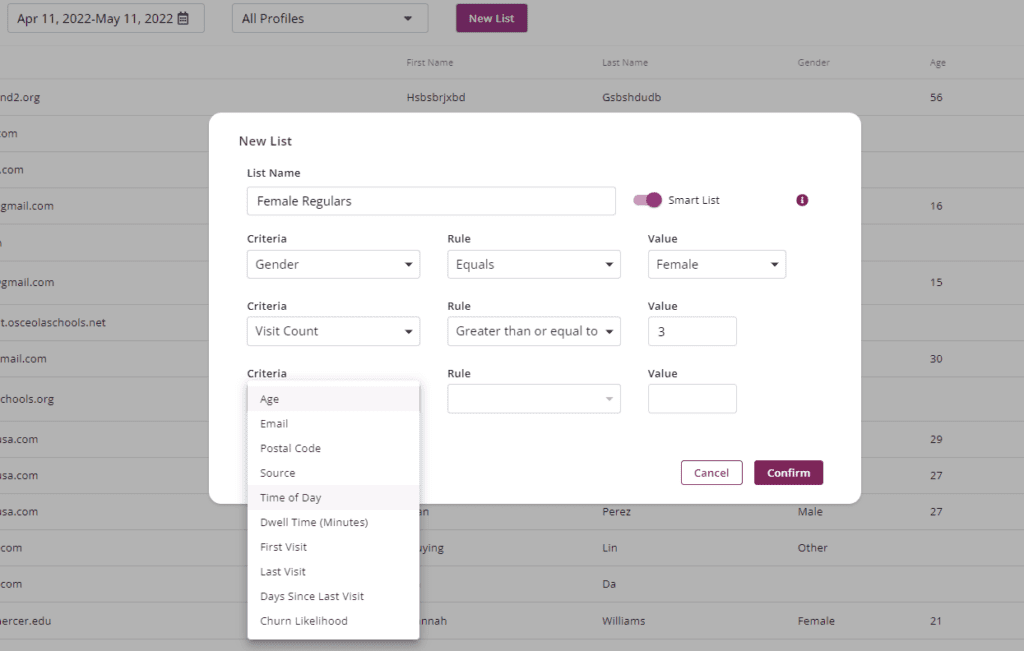
segmentation for restaurant customer satisfaction

How to Collect Individual Customer Data

To execute an effective and engaging marketing campaign, you’ll need to have comprehensive data about your individual guests.

There are various ways in which to collect guest data, but most are either expensive or take a great deal of time and energy. The only efficient way to gather enough comprehensive, verified data to effectively create a personalized campaign is to use a quality customer data platform.

It will allow you to passively gather the necessary individual guest information through your website, your on-site WiFi, your online ordering system, and other means. Then you can use the data to create targeted, segmented marketing messages.

The platform also tracks the physical behavior of your guests, logging things such as dwell times, repeat visits, coupon redemption, days of the week, and hours of the day they have visited.

With this kind of thorough and reliable data, marketers can begin using it to build powerful, data-driven targeted restaurant marketing campaigns to engage and further solidify guest satisfaction.

Using Data to Build Engaging Marketing Messages

According to research from Salesforce, the world’s #1 customer relationship management platform, data targeting and segmenting were used 51% more by over-performing businesses than those who were underperforming.

This makes perfect sense when thinking about today’s consumers. They expect personalized messaging and they quickly sniff out when they’re receiving a simple generic mass-marketing message.

The simplest way to get started creating segmented and personalized campaigns is to make your customer profile data filterable.

This will allow you to start building segments of specific guests based on their demographics and behavior data.

Using these tools, marketers will have the guest information necessary to create targeted and personalized marketing campaigns. This will give you the upper hand over your competition when rebuilding your revenue stream before, during, and after challenging times.

Likewise, you will be able to see the results of online and offline campaigns to measure ROI and optimize over time.
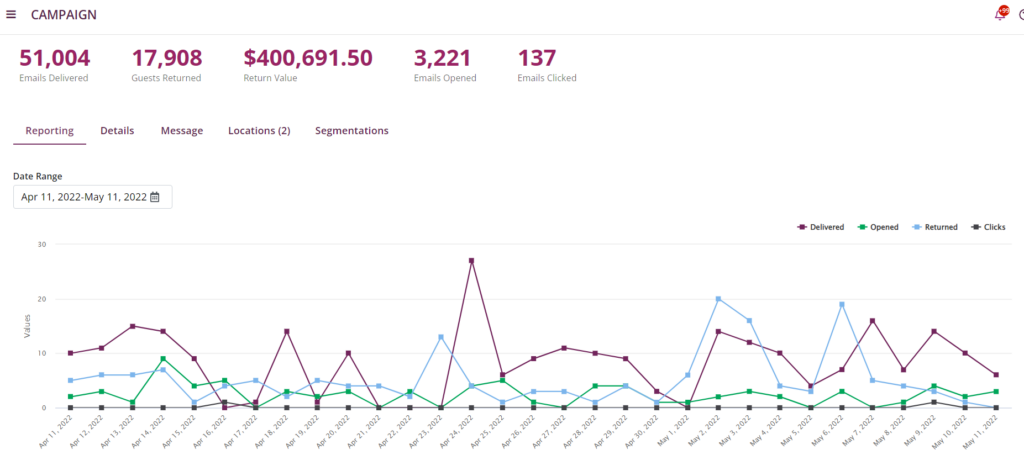
restaurant customer satisfaction report

Marketing Attribution and Examples

Accurate marketing attribution for restaurants, or any brick-and-mortar business, has always been a thorn in the side of marketing professionals. However, in today’s competitive environment, it is absolutely necessary.

In fact, adding attribution to your restaurant marketing strategy can improve your results tremendously. According to Gartner, the typical outcome of implementing attribution is a 20-30% gain in media efficiency and corresponding increases in ROI.

What is Marketing Attribution?

Marketing attribution is the marketing term used for applying credit to individual marketing tactics and messaging and attributing ROI to them. When done correctly, it allows marketers to apply more focus on tactics and messaging that are working well, and less focus on those that aren’t.

The main ingredient for effective, proper marketing attribution is accurate, comprehensive data.

Traditionally, this type of data was difficult and expensive to acquire. And it was simply a snapshot in time. In other words, if you wanted updated data, you would have to pay for it over and over.

Fortunately, today’s technology has eliminated this difficult challenge.

Using a restaurant customer data platform like Bloom Intelligence, marketers will have the ability to see the most accurate and reliable guest data available today to measure customer sentiment and satisfaction.

As soon as you install the platform, you will begin seeing data updated in real time. You’ll see things like daily/hourly visitors, repeat visitors, dwell times, popular visit times and so much more.

If a guest logs in to your WiFi, they are taken to a WiFi landing page, or captive portal. This page requires the user to enter information such as their name and email address before accessing the internet. At this point, the platform will create a customer profile for the patron and all of their previous and future data will be added to the profile.

How Does WiFi Marketing Attribution Work?

Now that you have the guest’s contact information, you can begin marketing to them. And you don’t have to send mass-marketing messages to your entire database. As discussed above, you can segment your database based on customer demographics and their online and offline behavior.

For instance, you can create a marketing campaign for women under 40 who visit your store on Sundays. Or, you can send a targeted message to men between 21 and 30 years old who have ordered online more than 3 times.

And since the platform will recognize when a guest comes back or orders online, marketing attribution on these campaigns becomes extremely easy.

With Bloom, you’ll be able to see who received a marketing message, who opened it, who came back to your location or ordered online, and whether or not they redeemed any offer that you attached to the message.

This is data that restaurant owners and operators haven’t had access to before. And its cost is pennies on the dollar compared to traditional market research solutions.
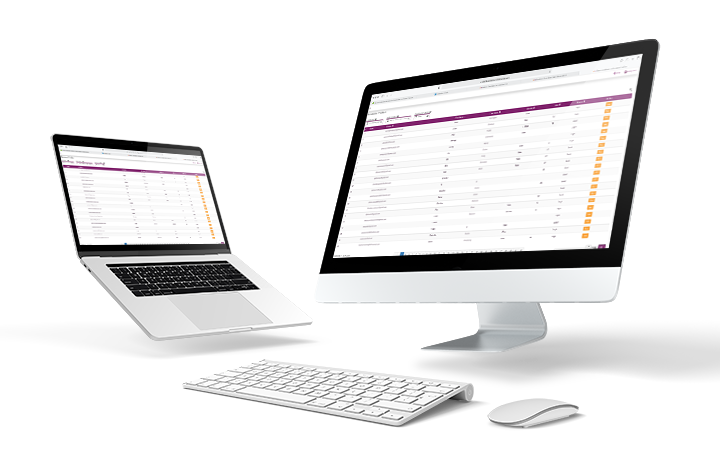
Using data for restaurant customer satisfaction

Let’s take a look at a couple of examples of WiFi marketing attribution.

Attribution Example 1

In this example, we will assume that you are finding your guest dwell times and online ordering are decreasing and you want them to increase. You create an email that you will send to your entire database. The email will contain an offer for a free dessert or 50% off an appetizer.

You send out the email and wait for the results.

A few days later, patrons begin redeeming the offer in your store or online. With Bloom Intelligence, you are not simply counting how many guests redeemed the offer. You will be able to see an accurate picture of how many people returned, even if they did not redeem the offer. Plus, you’ll be able to see accurate dwell time and online ordering measurements.

If the KPIs increase, then you can attribute this to your marketing campaign. You can then make an intelligent, data-driven decision around the ROI of the campaign and decide if you would like to continue, make changes to, or eliminate the campaign.

Attribution Example 2

With Bloom Intelligence, you have the ability to ask your guests their birthday. So you and your marketing team decide that you’d like to help increase guest loyalty by executing a “free meal on your birthday” campaign.

You create an email that you will send to anyone in your customer database who has entered their birthday. The email will be sent a few days prior so they can make plans to come to your place of business or order online. The email will also contain a redemption code.

From that moment on, you will be able to see how many people received the offer, how many viewed the offer, how many returned on their birthday or ordered online, and how many redeemed the offer. Over time you can attribute ROI to the campaign and decide whether to keep it running, make changes to it, or eliminate it altogether.

Ongoing Testing and Optimization
customer satisfaction from multiple sourcesNow that you have your guest segments properly defined, and you have an idea of the marketing messages and promotions you want to send to them, it’s time to get started.

When you create and send your marketing message to each list, it is vital that you monitor the ROI of each campaign and measure sentiment to confirm more restaurant customer satisfaction.

As initial results come in, analyze the results and keep them documented in your platform.

The next time you send a message to each group, you’ll want to make a small change to the message.

You should only make a single change to the message while testing. Send the message and compare its results to the original message.

If the results are not as good as the original, go back to your original message and test a different aspect of the message.

If the results are better, keep the change and continue testing and optimizing over time. This is known as A/B testing.

Side note: don’t forget that you’re not just targeting current guests. You should also be seeking out new lookalike prospects online and targeting them in an effective manner using the data you’ve collected. These prospects should have a higher probability of becoming new guests, providing a more cost-effective means of acquiring new customers.

Of course, none of this will be as effective if you have no way to accurately measure the results of your efforts.

You need to make sure that the solution you’re using provides detailed and comprehensive reporting features, and the ability to track testing campaigns, as well as overall and individual guest satisfaction.

It can be tempting to use your own intuition to predict what will improve your restaurant’s customer satisfaction, but it’s vital to understand that guest perceptions, experiences, and likes/dislikes are limitless.

Basing marketing decisions on one person’s “feelings” can be detrimental to your business.

All of this will allow you to optimize your marketing messages based on accurate, tangible data, and strive for continuous improvement of guest engagement and satisfaction. If you’re not measuring your marketing campaigns and ROI at this level of detail, you will not know for sure if what you are doing is helping or hurting your business.

You want to continuously test your marketing messages. Without testing, you’re always leaving potential revenue on the table. Just make sure that the tools you are using can give you the accurate reports and KPIs required to determine which messages are engaging your guests better than others.

And always allow plenty of time to give yourself a large enough sample size to confidently determine your winners – the more, the better.

Bloom Intelligence Restaurant Guest Data Platform

Bloom Intelligence gives you the ability to track the results of every campaign you create – all the way down to a guest returning to your place of business and/or redeeming an offer. Bloom’s WiFi analytics detect the device of any consumer who walks back into your location that received one of your offers, messages, or surveys.

To learn more about the ways the Bloom Intelligence growth tools can help you improve your restaurant marketing to drive more sales, improve overall customer experience, measure customer sentiment, and grow your business, schedule a free demo today.

To see more of what Bloom can do for your restaurant or coffee shop marketing, schedule a free demo today, or call us at 727-877-8181.


Bloom Intelligence Customer Satisfaction Platform

Restaurant Guest Segmentation Using Your Customer Data Platform

In our previous three posts, we discussed what a customer data platform is, how to gather guest data, the insights you can discover, and how to create effective restaurant marketing campaigns.

This post with dive further into making those marketing campaigns even more effective and engaging for your guests.

Restaurant Guest Segmentation Using Your Customer Data Platform

Even in the face of the pandemic, marketing and business technology solutions continue to advance at a rapid pace.

Today’s marketers are enjoying an excess of tools and solutions to utilize when creating, executing, and measuring their restaurant marketing campaigns.

Many people, however, still think small even when they have technology capable of providing big returns.

Understanding and using technology effectively is necessary to get the most out of your marketing and advertising budget. And it is most effective and cost-saving to invest in a customer data platform that can consolidate these solutions into one platform.

This can be achieved with adequate training and a proper mental approach of those using the software.

Above all, marketers must have the detailed data required to create segmented, personalized marketing messages, and measure the marketing attribution of each campaign.

Restaurant Marketing with a Customer Data Platform

Every time a potential client opens a website on their desktop browser or smartphone browser, social media platforms, entertainment apps, and even productivity apps, they’re faced with all kinds of marketing messages.

How do you get the right eyes on your marketing content to promote your business effectively?

Successful restaurant and coffee shop marketing is essential for staying competitive in a highly populated industry. No matter where you’re located, you probably have to contend with various other competitors offering similar products to yours.

Like the competition for successful marketing, competition to successfully draw guests to your restaurant or coffee shop (and away from your direct competitors), should be top-of-mind.

After all, marketing is an ongoing process. You have to stay competitive and stay present on various internet platforms in order to attract clientele.

Thankfully, there are unique marketing strategies that you can utilize to your ultimate benefit.

Market segmentation is a particularly excellent way to boost return on investment from your restaurant’s marketing budget.

What Is Guest Segmentation?

Guest segmentation is a marketing strategy of “segmenting” your current and potential guests into distinct groups (market segments) and then marketing your business to them using focused, group-specific methods.

Guests are split into groups based on their demographic data–age, location, etc.–and their behavioral and psychographic data–what online content they interact with, how they behave at your place of business, and their perceived interests.

These groups are called guest segments, and each segment has its own persona. Different personae like to be marketed to in certain ways.

Based on marketing research, when you engage with clients with unique, individualized methods, you’re more likely to garner interest and ultimately draw leads to your website.

Marketers can successfully collect segmentation data, then optimize their marketing campaigns based on which “segments” they’re addressing with a given advertisement, social media post, etc.

Restaurant guest segmentation improving business

How To Group Your Guests

You might wonder how the power of the internet and WiFi can split your potential clients into these segments. The answer lies in guest data collection.

There are ways to retrieve data to form customer profiles, which help you understand your guests better. Then, you can subdivide your restaurant guest database at large into segments.

You can also use software to collect and analyze data for much less than outsourcing these services to an agency. Check out the Bloom Intelligence WiFi Marketing Automation & Guest Intelligence Platform to see it in action.

Once you collect customer profile data, you can sort and filter profiles to view grouped segments. Then, use this information to create targeted marketing messages. Fine-tune your current marketing strategies or devise new ones to personalize the guest experience online.

restaurant guest segmentation list builder

Why Send Different Marketing Messages to Different Segments?

The ultimate goal of guest segmentation is to adjust your messaging to appeal to different segments. Guest segmentation helps certain demographic-specific businesses find their guests among the highly populated masses online.

For instance, cosmetic companies are probably looking for young, female clients that are particularly interested in beauty products. They’ll market themselves exclusively to this relevant segment.

Similarly, a skateboarding company knows that it isn’t relevant to the population at large. They will try to find relevant clients in urban teenagers and young adults.

So, marketing their products to seniors and middle-aged business people would produce little return on investment. Therefore, these companies would be wasting their marketing budgets without using effective guest segmentation.

The restaurant industry, meanwhile, has mass appeal. You aren’t necessarily looking to narrow down your audience as much as fine-tuning the voice of your marketing strategies to speak to different restaurant guests.

The voice of your marketing messages should be very different for older business people as it is for teenage skateboarders, but the message at the root of your strategy is the same: people should come to your restaurant!

What the Studies Show

Studies show that guest segmentation works and actually improves the guest experience, too.

CMO.com states that on average, advertisements targeted to unique guest segments are twice as effective as broad-audience, non-targeted ads. And, in fact, the Federal Trade Commission reports that almost 70% of polled consumers actually prefer marketing that tailors to their interests.

Guest segmentation isn’t just powerful; it’s popular.

Your direct competitors may very well be using this strategy. So, to stay competitive, you should as well.

How to Use Guest Segmentation

In the restaurant and coffee shop marketing industry, guest segmentation has plenty of benefits.

First, you can use this tactic to improve messaging. Messaging refers to your approach to communication with your audience.

How do you engage guests and highlight the value of your products? Modify your voice to speak to different segments of your customer base.

For example, if your restaurant has a formal, sophisticated ambiance, you might use professional language and elegant imagery to appeal to an older, higher-income segment of your audience.

Meanwhile, you can appeal to a younger, lower-income segment with more relaxed language and references to date nights or other special occasions.

Marketing messaging for your restaurant can be playful, refined, value-focused, or even exclusive – all based on who you’re speaking to.

restaurant manager using guest segmentation

Automate Guest Segmentation with Bloom Intelligence

Guest segmentation may seem like a difficult strategy to implement. Unfortunately, it can be very difficult to collect and analyze the data you need in order to segment clients without the use of a guest intelligence platform like Bloom Intelligence.

You can either hire a third-party marketing company to track guest data–a potentially expensive option–or save money and use Bloom to collect large amounts of guest data for you in real-time.

With Bloom, you can quickly and easily segment clients yourself and create targeted automated marketing strategies for much less. This will save money and time, increase guest lifetime values, bring in new guests, improve your reputation, and increase your bottom line.

To see more of what Bloom can do for your restaurant or coffee shop marketing, schedule a free demo today, or call us at 727-877-8181.

Bloom Intelligence Guest Segmentation

Attribution, Reporting, Testing, and Optimizing Your Restaurant Marketing Campaigns

In our previous four posts, we discussed what a customer data platform (CDP) is, how to gather guest data, the insights you can discover, how to create effective restaurant marketing campaigns, and how to segment your database for better marketing ROI.

This final post in the series will summarize these things and then discuss how to monitor your marketing campaigns, test them, and optimize them over time.

Accurate marketing attribution for restaurants, or any brick-and-mortar business, has always been a thorn in the side of marketing professionals. However, in today’s competitive environment, it is absolutely necessary.

In fact, adding attribution to your restaurant marketing strategy can improve your results tremendously. According to Gartner, the typical outcome of implementing attribution is a 20-30% gain in media efficiency and corresponding increases in ROI.

Analyzing Guest Behavior Using Your Customer Data Platform

The secret to capturing guest data is to use a captive portal that works through your existing WiFi service. If you’ve already provided free WiFi to your guests, you can turn this into a symbiotic process.

You can also capture guest data by integrating your CDP with your online ordering system, POS, or reservation system.

A captive portal is simply the page that a guest is directed to when logging into your WiFi. There are many things you can do when developing a captive portal. You’ll find several examples here.

You can build guest profiles, onboard guest data onto third-party applications, and automate your marketing campaigns quickly and easily.

Once you begin collecting guest data, you might find some surprises about how your loyal patrons typically behave. Then, based on real data, you can adjust marketing and operations procedures to optimize your business over time.

You will see things like guest dwell times, popular days and times, age and gender distribution, visit repeat rates, postal codes, birthdates, and more.

Then, you create specific guest lists to send targeted marketing messages based on behavior and demographic data. This is known as customer segmentation and can provide a much higher ROI on your marketing efforts.

Guide to Customer Segmentation

Customer segmentation and personalization of your marketing messages are crucial in today’s competitive marketplace. Segmentation refers to using customer data to create much more effective email content because it can be tailored for each individual or each customer persona.

Using personalized messaging has been proven to improve open rates and generate more revenue because it allows restaurant marketing professionals to create more relevant content that will more effectively pique the interest of the consumer.

By collecting guest data and grouping those guests into separate lists, marketers can avoid sending out a single mass message in hopes that it resonates well with at least some of the audience.

Instead, they can focus on sending highly targeted messages to each guest segment, increasing open rates and encouraging more engagement.

This can all be automated through your customer data platform. All you have to do is monitor results, test, and optimize over time.

Getting Started: How to Collect Individual Customer Data

To execute an effective personalized restaurant marketing campaign, you’ll need to have comprehensive data about your individual guests.

There are various ways in which to collect the data, but most are either expensive or take a great deal of time and energy. The only efficient way to gather enough comprehensive, verified data to effectively create a personalized campaign is to use a restaurant customer data platform to gather the data from WiFi and your existing third-party applications.

You’ll be able to capture data directly from your guests when they log into your WiFi access point, order online, make an online reservation, or interact with any of your other third-party digital applications.

This will allow you to passively gather the necessary individual guest data required for proper segmentation, reporting, and optimization.

In addition to all of the demographic information, the CDP also tracks the physical behavior of your guests, logging things such as dwell times, repeat visits, coupon & offer redemption, days of the week, and hours of the day they have visited.

With this kind of thorough and reliable data, marketers can begin using it to build powerful, data-driven targeted restaurant marketing campaigns and track them in detail – all the way down to a guest coming back through your door, redeeming an offer, or ordering online.

Selecting list criteria for customer segmentation

Using Data to Build Personalized Marketing Messages

According to research from Salesforce, the world’s #1 customer relationship management platform, data targeting and segmenting were used 51% more by overperforming businesses than those who were underperforming.

This makes perfect sense when thinking about today’s consumers. They expect personalized messaging and they quickly sniff out when they’re receiving a simple generic mass-marketing message.

The simplest way to get started creating segmented and personalized campaigns is to make your CDP data filterable. This will allow you to start building segments of specific customers based on their demographics and behavior data.

Customer Segmentation for Marketing Using Your Customer Data Platform

It is important to be able to save these segmented lists so you don’t have to build them each time you want to send out a message.

Some examples of segmented lists might include:

  • Women over 30 who visited on Mother’s Day of last year.
  • Any guest who has visited more than x times.
  • Guests whose average dwell time is under 20 minutes.
  • Men below 45 years old who have only visited your establishment once.
  • Women/Men who only visit at lunchtime.

As you can imagine, each of these specific audiences would likely engage and respond best to entirely different marketing messages. Being able to segment your guest list allows this to happen.

While building these lists, you’ll need to be brainstorming about how to effectively engage these groups. As you go through this process, ask yourself and your team members these questions:

  • What kind of action do I want this guest to take?
  • How is the best way to reach this guest?
  • What kind of deals or promotions would interest this guest?
  • What kind of deals and promotions would this guest NOT be interested in?
  • Think of new products or services that might engage this guest?
  • What are this guest’s pain points? Why do they need what I offer?
  • How can I attract and engage more guests like this?
  • What type of imagery/media would engage this guest?

Once you have created your restaurant’s ideal guest segments, then you can launch your campaigns and begin monitoring and testing.

Always Test and Optimize Your Marketing Campaigns

Testing Customer Segmentation marketing campaignsNow that you have your guest segments properly defined, and you have an idea of the marketing messages and promotions you want to send to them, it’s time to get started.


When you create and send your marketing message to each list, it is vital that you monitor the ROI and attribution of each campaign. (more on this below)

As initial results come in, analyze the results and keep them documented in your platform.

The next time you send a message to each group, you’ll want to make a small change to the message.

You should only make a single change to the message while testing. Send the message and compare its results to the original message.

If the results are not as good as the original, go back to your original message and test a different aspect of the message.

If results are better, keep the change and continue testing and optimizing with other changes over time. This is known as A/B testing.

Also, don’t forget that you’re not just targeting current guests. You should also be seeking out new lookalike prospects online and targeting them in an effective manner using the data you’ve collected.

These prospects will have a higher probability of becoming a new guest, providing a more cost-effective means of acquiring new patrons.

What’s most important to remember is that data from your customer data platform lets you set up a more targeted restaurant marketing campaign.  The more you know, the more targeting you can achieve in any future marketing content you send.

This adds value to the guest experience and can quickly improve your engagement rates and subsequent revenue.

Using a customer data platform to collect a large volume of the right data, personalizing your marketing campaigns, testing and optimization have never been easier. You’ll feel confident as you make solid data-driven decisions, drive company growth and build a much larger base of loyal guests.

What is Marketing Attribution?

Marketing attribution is the marketing term used for applying credit to individual marketing tactics and messaging, and attributing ROI to them. When done correctly, it allows marketers to apply more focus on tactics and messaging that are working well, and less focus on those that aren’t.

The main ingredient for effective, proper marketing attribution is accurate, comprehensive guest data.

Traditionally, this type of data was difficult and expensive to acquire. And it was simply a snapshot in time. In other words, if you wanted updated data, you would have to pay for it over and over.

Fortunately, customer data platform technology has eliminated this difficult challenge.

Using a Customer Data Platform for Accurate Guest Data

Using a restaurant customer data platform like Bloom Intelligence, marketers will have the ability to see the most accurate and reliable guest data available today.

As soon as you install the platform, you will begin seeing data updated in real-time. You’ll see things like daily/hourly visitors, repeat visitors, dwell times, popular visit times and so much more. Moreover, you can see this data even if your guests do not log into your WiFi – or if they order online.

If a guest does log into your WiFi or orders online, the platform will create a customer profile for the guest and all of their previous and future data will be added to the profile.

How Does Restaurant Marketing Attribution Work?

Now that you have the guest’s contact information, you can begin marketing to them. And you don’t have to send mass-marketing messages to your entire database. You can segment your database based on their demographics and behavior while at your place of business or when ordering online.

For instance, you can create a marketing campaign for women under 40 who visit your store on Sundays. Or, you can send a targeted message to men between 21 and 30 years old who have a dwell time of over 1 hour. The opportunities are endless.

And since your CDP will recognize when a guest comes back or re-orders online, marketing attribution on these campaigns becomes extremely easy. With Bloom, you’ll be able to see who received a marketing message, who opened it, who came back to your location or ordered online, and whether or not they redeemed any offer that you attached to the message.

This is data that restaurant owners and operators haven’t had access to before. And its cost is pennies on the dollar when comparing to traditional market research solutions.

Let’s take a look at a couple examples of WiFi marketing attribution.

WiFi Marketing Attribution Example 1

In this example, we will assume that you are finding your guest dwell times are decreasing and you want them to increase. You create an email that you will send to your entire database. The email will contain an offer for a free dessert or 50% off an appetizer.

You send out the email and wait for the results.

A few days later, patrons start redeeming the offer in your store or online. With Bloom, you are not simply counting how many guests redeemed the offer. You will be able to see an accurate picture of how many people returned, even if they did not redeem the offer. Plus, you’ll be able to see accurate dwell time measurements.

If the dwell times increase, then you can attribute this to your marketing campaign. You can then make an intelligent, data-driven decision around the ROI of the campaign and decide if you would like to continue, make changes to, or eliminate the campaign.

Restaurant Marketing Attribution Examples

WiFi Marketing Attribution Example 2

With Bloom, you have the ability to ask your guests their birthday upon logging into WiFi or ordering online. So you and your marketing team decide that you’d like to help increase guest loyalty by executing a “free meal on your birthday” campaign.

You create an email that you will send to anyone in your guest database who has entered their birthday. The email will be sent a few days prior so they can make plans to come to your place of business. The email will also contain a redemption code that can be redeemed when they arrive.

From that moment on, you will be able to see how many people received the offer, how many viewed the offer, how many returned on their birthday, and how many redeemed the item. Over time you can attribute ROI to the campaign and decide whether to keep it running, make changes to it, or eliminate it altogether.

More On Testing and Optimization

You need to make sure that the solution you’re using provides detailed and comprehensive reporting features, and the ability to track testing campaigns.

It can be tempting to use your own intuition to predict what will make people come into your restaurant or visit your store, but it’s vital to understand that customer perceptions, experiences, and likes/dislikes are limitless.

Basing marketing decisions on one person’s “feelings” can be detrimental to your business.

You also need to be able to attribute customer behavior to specific channels and campaigns. For instance, you want to distinguish if a guest came to your location because of an advertisement they saw online, through an email message, or from a radio commercial.

Additionally, you want to know which particular marketing message they responded to, and to which guest segment(s) they belong.

This will allow you to optimize your marketing messages based on accurate, tangible data, and strive for continuous improvement. If you’re not measuring your marketing campaigns and ROI at this level of detail, you will not know for sure if what you are doing is helping or hurting your business.

You want to continuously A/B test your marketing messages. Without testing, you’re always leaving potential revenue on the table. Just make sure that the tools you are using can give you the accurate reports and KPIs required to determine which messages are working better than others.

And always allow plenty of time to give yourself a large enough sample size to confidently determine your winners – the more, the better.

Bloom Intelligence Restaurant Guest Data Platform

Bloom Intelligence gives you the ability to track the results of every campaign you create – all the way down to a guest returning to your place of business, ordering online, and/or redeeming an offer. Bloom’s CDP analytics detect the device of any consumer that walks back into your location that received one of your offers, messages, or surveys.

To learn more about the ways the Bloom Intelligence growth tools can help you improve your restaurant marketing to drive more sales, improve overall guest experience, measure customer sentiment, grow your business, and save you time, call 727-877-8181 to schedule a free demo today or schedule a demo online here.

Bloom Intelligence Guest Segmentation