

Restaurant Website Examples: 8 Great Designs and What They Get Right
The short answer
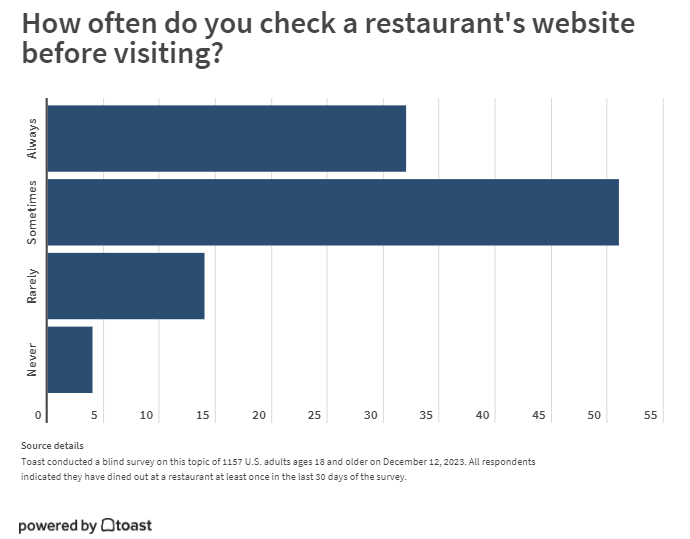
The best restaurant websites make it effortless to see the menu, find the location, book a table, and order online, on any phone. In Toast’s survey of 1,157 U.S. diners, 83% said they check a restaurant’s website before visiting. The eight examples below, all rechecked in October 2026, show what great looks like, and what it takes to be found by Google and AI assistants in the first place.
Creating a great website is a very important task for any business. However, for restaurants, it is even more essential.
A restaurant’s website is at the core of branding and marketing for the best possible user experience. It should be user-friendly and visually appealing, but at the same time, you should ensure it provides visitors with all the information they may be searching for. It can also be a great restaurant marketing tool for your overall strategy.
Diners today are visiting websites now more than ever to browse menus, find contact information and directions, order online, learn about company history, look for healthy/environmentally safe options, or simply discover the ambiance of your dining room atmosphere.
In a Toast survey of 1,157 U.S. diners, 83% said they always (32%) or sometimes (51%) check a restaurant’s website before visiting, and in a separate Toast survey of 850 diners, 65% said they go directly to the restaurant’s website to book a reservation.
Not only does it represent your restaurant to the online world, but it also serves as your primary interface with guests.
This means that it’s essential to make sure your website design is both user-friendly and visually appealing. To do this, you need to choose the right web designer, whether in-house or outsourced and then work with them to create a website that meets your specific needs and the needs of your guests.
Choosing a Restaurant Website Designer
There are a few key things to keep in mind when choosing a web designer. First, you need to make sure they have a good portfolio of past work. This will give you an idea of their skill level and what kind of designs they’re capable of creating.
Second, you need to make sure they understand your specific needs. Every business is different, so you need to make sure the web designer you choose is willing to work with you to create a custom website that meets those needs.
Finally, you should also make sure they offer good customer service. This way, if you have any questions or problems during the process, you know you can count on them to help you out quickly and competently.

Bloom Intelligence also builds restaurant websites designed to be found and recommended by Google and AI assistants. See AI restaurant website design.
What Should Be Included On Your Restaurant’s Website
Once you’ve chosen a web designer, it’s time to start thinking about what kind of website you want to create. The first step is to come up with a list of features that you want to include on your site. For restaurants, this should include things like:
- All menus
- Online ordering
- Location and contact information
- Photo gallery of both food and atmosphere
- Consistently updated blog
- Social media links and information
- Company history
- Environmental practices
- Healthy dining options and information
Once you have a list of features, you can start thinking about the overall design of your site.

Put online ordering front and center. In Bloom Intelligence’s 2026 study of first-time guests, those who first arrived through online ordering were roughly 60% more likely to return than walk-in guests, and more than 2.5 times more likely to become regulars (see the study). Your website is where that first order starts.
Designing Your Website
Another important thing to remember at this point is that your restaurant branding should be consistent across all guest touch points – your menu design, social media pages, email/SMS messaging, and of course, your website.
There are a few things to keep in mind when designing your website. First, you need to make sure it’s easy to navigate. Guests should be able to find what they’re looking for without any trouble.
Second, you need to make sure the design is visually appealing. This means using colors and images that are pleasing to the eye and follow your company branding.
Finally, you need to make sure the content on your site is relevant and interesting. If visitors can’t find what they’re looking for, they’re not likely to stick around for very long.
Once you have a basic design in place, you can start thinking about ways to improve it. One way to do this is to add some interactivity to your site. This can be anything from a simple contact form to a more complex system that allows customers to book appointments or make reservations.
Another way to improve your website design is to add some multimedia content. This could include anything from video testimonials to audio clips of your staff talking about their experience with your business.
By adding this type of content, you’ll not only make your site more interesting, but you’ll also give visitors another reason to come back.
Great Website Examples for Your Inspiration
We’ve scoured the internet to find some great examples of restaurant websites. Here are a few that stand out.
#1. The Smoke Haus
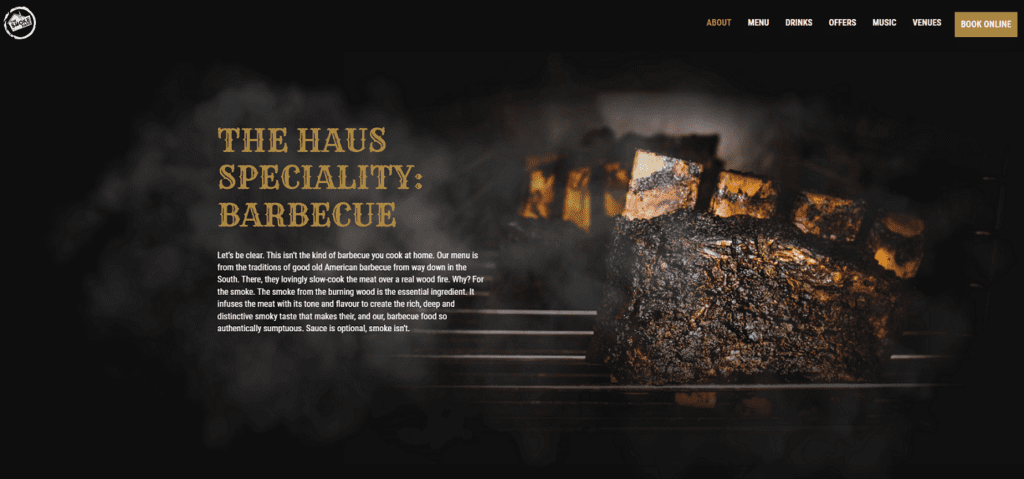
The Smoke Haus serves delicious American barbecue in Southern Wales. Their website is very pleasing to the eye and well laid out, offering a great experience for visitors.
The colors match the ambiance of the restaurant’s physical locations while branding is consistent across other channels. There is easy access to menus, directions, business hours, social media channels, and a story of their history, along with a convenient online reservation system. There is even an online jukebox link to control what music is playing at the locations.
#2. Miss Lily’s
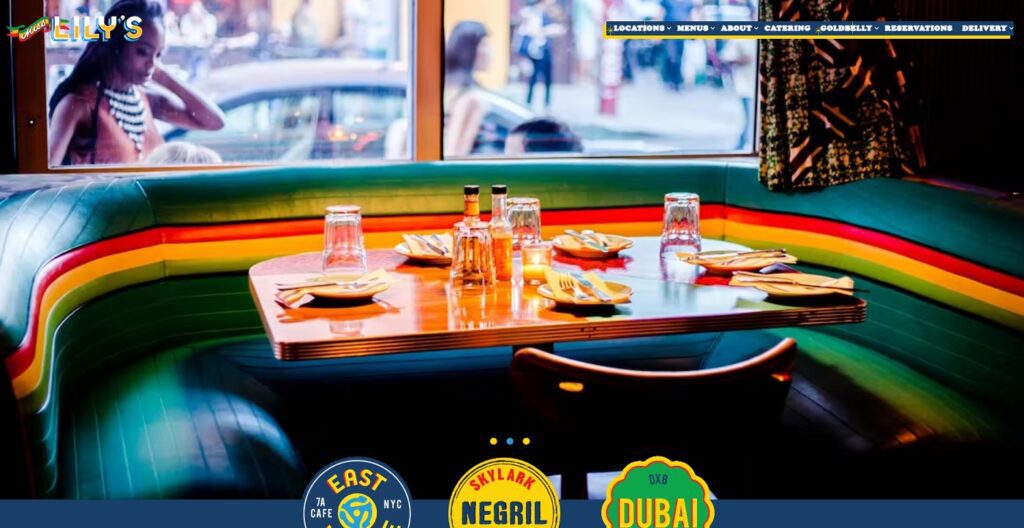
Miss Lily’s, located in New York City, Dubai, and Jamaica, is a Caribbean-themed restaurant through and through, and their website definitely portrays their brand identity. The layout is clean and easy to navigate, and the images of their unique food and atmosphere are outstanding.
The website has an easy-to-use reservation system and delivery platform. Likewise, menus show appetizing images of each dish. Email newsletter signup, social media links, and contact information is at the bottom of every page.
#3. Roka Akor
Roka Akor, a premier Japanese steakhouse group serving Wagyu, sushi, and robata grill, built its website to be found by AI, not just browsed. The site tells search engines and AI assistants exactly what it is, with restaurant schema and a published FAQ, and keeps reservations and online ordering one click from every page. (Disclosure: Roka Akor is a Bloom Intelligence client.)
It works. Ask ChatGPT for the best Japanese steakhouses in San Francisco, and Roka Akor is in the answer.

#4. Ella’s Table
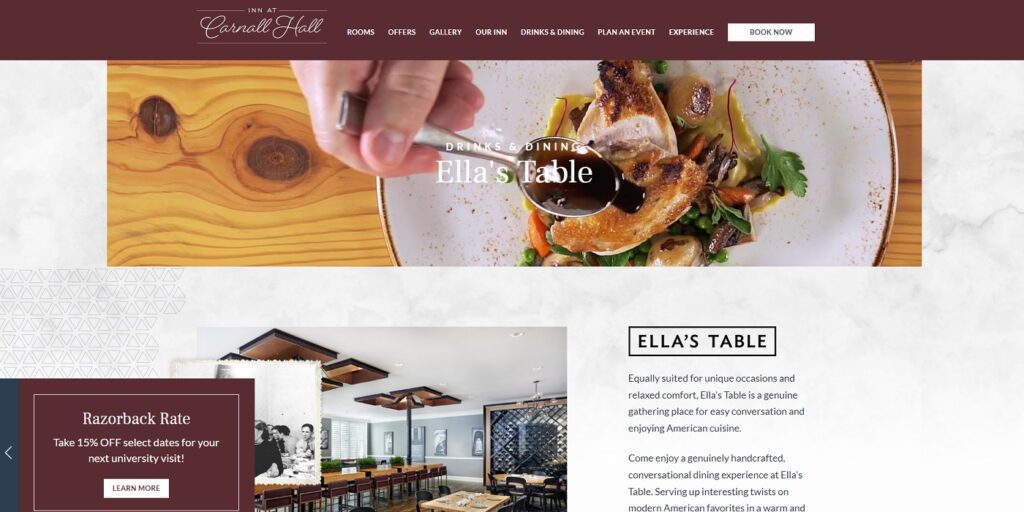
Ella’s Table offers a great example of a restaurant website using only a single page. It is part of the Inn at Carnall Hall website. Showcasing beautiful imagery and video, the exquisite guest experience is conveyed throughout the page.
You’ll find contact information, hours of operation, their menu, catering information, and an email signup form, all placed perfectly in an easy-to-understand layout. There is also a convenient online reservation system for guests to book reservations in advance.
#5. Panera Bread
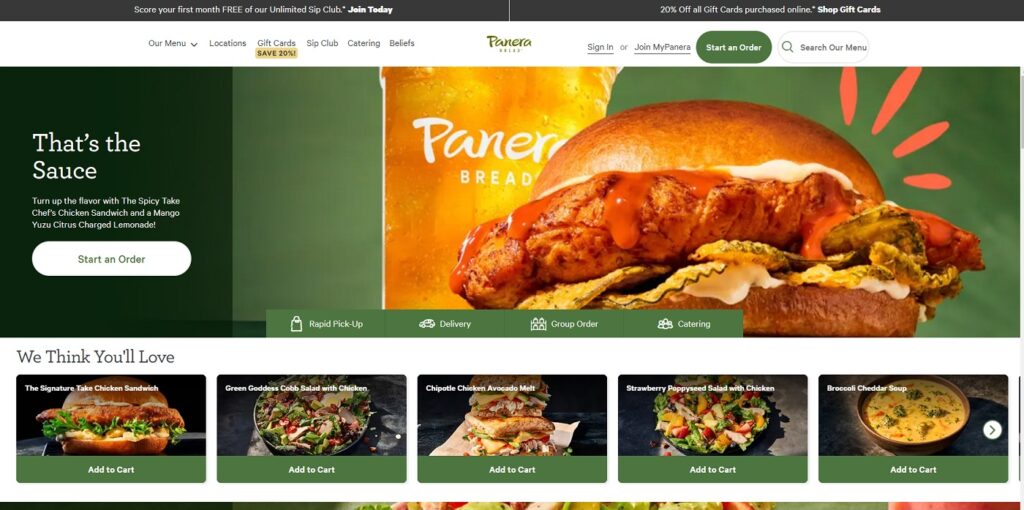
Panera Bread is a great example of laying out a design with almost everything a guest would want to see on a home page. You’ll find (from top to bottom) loyalty program information, gift cards, a menu containing menus and online ordering links, pickup and delivery services, high def imagery of their food and drinks, catering information, and social media links.
The website is perfectly branded to Panera’s popular brand identity and is easy for users to navigate and understand.
#6. El Catrin
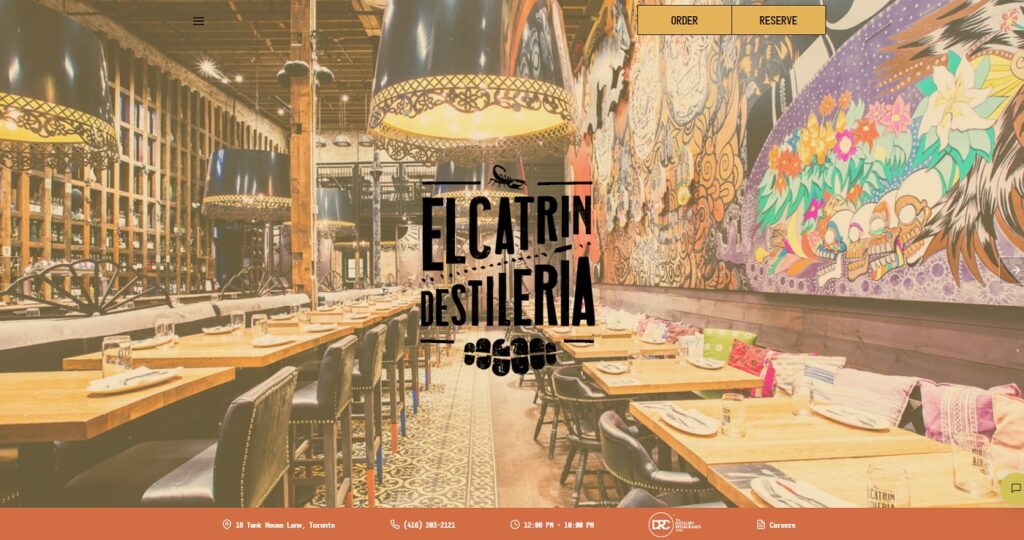
A great restaurant website does not have to use an intricate theme. El Catrin is an example of a great website design that is minimal, yet provides what its guests are looking for.
Branding is consistent and uses many images of the restaurant’s dining room and food & drink. You’ll find menus, a photo gallery, and links to their frequently updated blogs. Online ordering and reservation links are found at the top of every page.
#7. Protein Bar and Kitchen
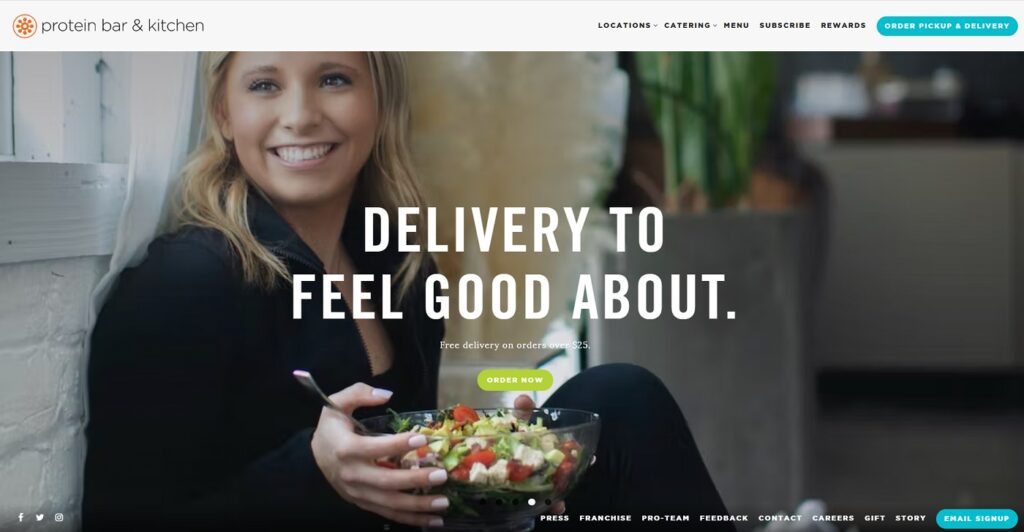
Protein Bar and Kitchen has done a great job bringing their multi-unit chain into one single website. Visitors can see the menu, hours, directions, and contact information for each location in the easy-to-use store locator. A great design for multi-unit operators who do not wish to have a separate website for each location.
Online ordering for pickup and delivery is found on every page along with loyalty program and newsletter signups.
#8. Bluecoast Rehoboth
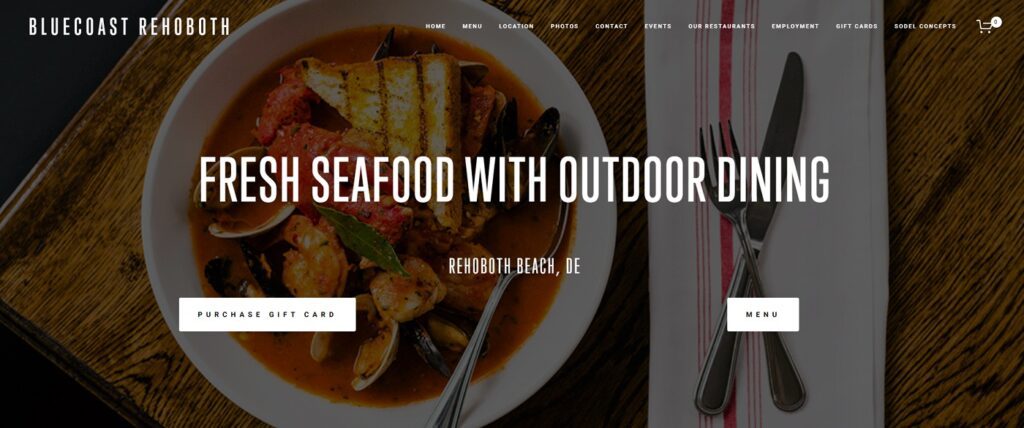
This is a great example of how to use imagery to show guests what their experience will be and how great your food & drink will be. Creating excitement through images is what Bluecoast Rehoboth is all about.
Complete with menus, online ordering, catering, and gift card options, this website is sure to leave its visitors wanting more.
We Rechecked Every Example in October 2026
Restaurant websites change, so we went back to every example on this page on October 2, 2026, and checked what each one does for search and AI discovery, beyond how it looks. One example from the original 2022 version of this list no longer loads and has been replaced.
| Website | Restaurant schema | Menu as a PDF | Online ordering link |
|---|---|---|---|
| The Smoke Haus | No | No | No |
| Miss Lily’s | No | No | Yes |
| Roka Akor | Yes | No | Yes |
| Ella’s Table | Yes | No | No |
| Panera Bread | No | No | Yes |
| El Catrin | Yes | No | Yes |
| Protein Bar and Kitchen | No | Yes | Yes |
| Bluecoast Rehoboth | Yes | No | Yes |
Source: Bloom Intelligence review of each site’s homepage on October 2, 2026. Restaurant schema means the page declares itself as a restaurant or local business in structured data. All eight sites are mobile-friendly.
The pattern is worth noticing. Every site looks good, but only half of them tell Google and AI assistants, in structured data, that they are a restaurant, with a location, hours, and a menu. That is the information AI search reads first when it decides which restaurants to recommend. One still serves its menu as a PDF, which is harder for search engines to read than a menu built into the page. Design gets a guest to stay on your site. Structured data, crawlable menus, and visible ordering links are what get your site found in the first place.
Discover Bloom Intelligence
No matter how you decide to create your website, it’s essential to use elements that will give your guests (and potential guests) a taste of what they will experience should they choose your restaurant for dine-in or takeout service.
As seen in most of the examples above, offering easy access to your menus, online ordering, high def imagery, online reservations, and gift card purchasing can create a sense of excitement to not only find new guests but to keep your current guests coming back again and again.
Learn how Bloom Intelligence can help you increase your restaurant revenue, improve ratings and guest lifetime values, automate marketing tasks, and much more, all while saving your time and money.
Discover Bloom Intelligence, your guests will love you for it.

Enjoying this? Get more Bloom Intelligence in your Google results.
FREQUENTLY ASKED QUESTIONS
Common Questions About Restaurant Websites
A good restaurant website makes the essentials effortless on a phone: the menu, location and hours, reservations, and online ordering, all within a tap or two of the homepage. It reflects the restaurant's personality through photography and design, loads quickly, and tells search engines and AI assistants exactly what the restaurant is through structured data.
Every restaurant website should include a current menu, the address with a map, hours, phone number, reservation and online ordering links, recent photos, and a short story about the restaurant. It should also include restaurant schema markup so Google and AI assistants can read the location, hours, cuisine, and menu, and a way to join the guest list or loyalty program.
It is better to build the menu into the page as text. A PDF menu is harder for search engines and AI assistants to read, slower to open on a phone, and easy to forget to update. A menu built into the page can be indexed, linked to individual dishes, and kept current in minutes. Of the eight examples on this page, only one still serves its menu as a PDF.
AI assistants such as ChatGPT and Google's AI Overviews recommend restaurants they can understand and trust. That means structured data declaring the restaurant, its location, hours, and menu, consistent details across Google, Yelp, and other listings, a steady flow of recent reviews, and clear, specific content on the website. When we rechecked the examples on this page in October 2026, only half used restaurant schema.
This page features eight great examples, rechecked in October 2026: The Smoke Haus, Miss Lily's, Roka Akor, Ella's Table at the Inn at Carnall Hall, Panera Bread, El Catrin, Protein Bar and Kitchen, and Bluecoast Rehoboth. Each does something especially well, from immersive branding to simple, single-page design to frictionless online ordering.
Ready to Turn Your Guest Data Into Revenue?
Join 1,000+ restaurant locations using Bloom Intelligence to recover lost guests, automate marketing, and drive measurable revenue growth.
Keep Reading
View All Posts →Agentic AI for Restaurants: How Bloom’s AI Agents Run Marketing, Reviews, Operations and Discovery
Key TakeawayAgentic AI for restaurants is software that notices what guests do, decides what to do about it, takes the...
Restaurant Customer Satisfaction: The 2026 Data Guide
Key Takeaway Restaurant customer satisfaction is the degree to which a guest’s experience meets or exceeds their expectations, and it...
Win-Back Campaigns: How Restaurants Bring Lapsed Guests Back
Key TakeawayA restaurant win-back campaign is an automated message sent to a guest whose visits have slowed, with a reason...