


Author: Allen Graves

Bloom Intelligence Now Integrates with OpenTable

Succeeding in the restaurant business involves more than just serving excellent food or providing top-notch service.

It requires leveraging advanced technology to understand guest behavior, personalize experiences, and drive effective restaurant marketing strategies.

Integrating Bloom Intelligence and OpenTable’s Reservation and Table Management System marks a significant step forward in achieving these objectives.

This sophisticated collaboration enables restaurants to centralize and utilize guest data in a way that fundamentally enhances marketing capabilities, improves guest satisfaction, and increases revenue.

Read on to explore the far-reaching implications of this transformative integration for restaurant owners and guests alike.

The Integration: A Quick Overview

When a guest books a reservation on OpenTable, the data instantly transfers into the Bloom Intelligence customer data platform. This is where the magic happens. Bloom uses this data to build your CDP faster and provide comprehensive guest profiles to power AI-powered marketing automation and reputation management tools in Bloom’s restaurant marketing platform.

This rich guest data feeds into Bloom’s marketing automation suite, paving the way for targeted campaigns, online reputation management, and even lost guest recovery.

In the following section, we’ll look at the unique advantages of this powerful duo – from advanced guest profiling that will take your personalized service to new heights to how targeted marketing campaigns can improve guest retention and build stronger relationships.

Additionally, we’ll look at how this synergy can help you identify and win back lost guests, manage your restaurant’s online reputation, and increase the overall value each guest brings to your establishment.

1. Advanced Guest Profiling

Sure, basic details like a guest’s name and contact info are useful. But what if you could know their favorite wine, the frequency of their visits, or even their usual table? That’s what Bloom Intelligence’s AI does—it takes basic data and enriches it with layers of behavioral insights from your location, online ordering, websites, and social and review sites.

In any relationship, understanding the other party is the key to building a meaningful and lasting connection. The same holds true for the relationship between a restaurant and its guests. Gone are the days when it was sufficient to merely know a guest’s name and maybe their go-to order. Advanced guest profiling, enabled through the Bloom Intelligence and OpenTable integration and other guest data integration, lets you dig deeper, offering a 360-degree view of your guests or a single customer view.

What It Is

Advanced guest profiling goes far beyond collecting basic data like names, phone numbers, and email addresses. It leverages Bloom Intelligence’s powerful AI to analyze and interpret behaviors, patterns, and preferences. When a guest books a table through OpenTable, that reservation data isn’t isolated; it flows into Bloom’s CDP, combining with other data points to build an enriched, multi-dimensional customer profile.

Why It Matters

Imagine the edge you’d have if you knew that a returning guest prefers window seats or loves your seasonal pumpkin soup. This isn’t just about impressing your guests with your memory; it’s about offering a tailored experience that turns first-time diners into loyal patrons. Knowing your guests’ preferences allows you to anticipate their needs, setting the stage for exceptional service that resonates personally.

The Practical Applications

Here’s where things get real. With advanced guest profiling, you can:

  • Personalize Marketing Campaigns: Send an anniversary discount to a couple celebrating their previous anniversaries at your restaurant.
  • Identify and Bring Back Lost Guests: Automate the identification of lost guests using AI to trigger marketing that brings back 38% of lost guests.
  • Singe Customer View: Gain clarity into your guest behavior across all guest-facing platforms to optimize your operations and marketing strategies.
  • Reputation Management: Cleary see guest sentiment trends with AI-powered reporting and automate review responses.

Looking ahead, the potential for advanced guest profiling is limitless. As AI algorithms grow smarter, they can predict future behavior, providing even more opportunities for personalization and service excellence.

Whether it’s knowing which specials are most likely to be a hit or identifying the ideal time to invite a guest back, the insights garnered can serve as a strategic roadmap for your restaurant’s operations and growth.

Advanced guest profiling doesn’t just benefit the restaurant; it also elevates the experience for the guest. It’s a win-win that takes the guesswork out of guest management, replacing it with data-driven strategies that resonate.

In a competitive industry where personalized experience is becoming the new norm, not the exception, advanced guest profiling is your ticket to standing out in the crowd.
2. Remarketing Like a Pro

Effective marketing today isn’t about casting a wide net and hoping for the best. It’s about sending the right message to the right person at the right time.

This targeted approach is what makes the integration of Bloom Intelligence and OpenTable so potent for restaurant owners.

Leveraging the data gathered from OpenTable reservations and stored in the Bloom CDP, restaurants can execute highly personalized and timely remarketing campaigns that resonate with their guests.

Understanding the Mechanics

When a guest makes a reservation through OpenTable, the system not only logs the reservation but also stores any associated data in Bloom’s CDP.

This data-rich profile is the secret sauce that powers Bloom’s marketing automation and reputation management suite. Now, instead of a one-size-fits-all marketing strategy, you can craft individualized messages tailored to each guest’s preferences and behavior.

The Power of Personalization

Imagine knowing that a guest frequently visits your restaurant on Saturday evenings and prefers your seafood dishes. Armed with this information, you could email them on Thursday afternoon, offering a special discount on your weekend seafood specials.

The power of this approach lies in its relevance. You’re not spamming your guests with generic promotions; you’re offering them something they actually want.

Practical Applications

With the advanced guest profiling that the Bloom and OpenTable integration facilitates, you can:

  • Re-Engage Lost Guests: Identify guests who haven’t visited in a while and send them personalized offers to entice them back.
  • Reward Loyalty: Celebrate milestones like a guest’s 10th visit with a unique offer, showing appreciation for their continued patronage.
  • Capitalize on Special Occasions: Know when a guest has a birthday or anniversary coming up. Send a special invitation with an exclusive offer to celebrate at your restaurant.
  • Event Promotions: Hosting a live music night? Target guests who have attended similar events in the past with a special invite.

This integration allows for real-time tracking and analytics, giving you immediate insight into the effectiveness of your campaigns. You can track metrics like open rates, conversion rates, and overall ROI, allowing you to refine your approach for greater effectiveness continually.

As AI continues to evolve, so will the precision and impact of your marketing efforts.

Future iterations could enable even more segmented targeting based on various behavioral and demographic factors, maximizing campaign effectiveness and reducing marketing spend waste.

Take the guesswork out of marketing, replacing it with data-driven strategies that hit the mark. The result is not just increased revenue but also a more engaged and satisfied guest base.

3. Bring Back Lost Guests

People stop visiting a restaurant for various reasons—maybe they had one bad experience, or perhaps they simply forgot how much they enjoyed your cuisine.

Whatever the reason, Bloom Intelligence can identify these lost guests and target them with campaigns designed to reignite their interest.

One of the most challenging aspects of the restaurant business is not just attracting new guests but also retaining the ones you’ve already served. Every restaurant has guests who, for one reason or another, haven’t returned in a while.

If you’re scratching your head over how to reconnect with these once-loyal patrons, the Bloom Intelligence and OpenTable integration offers a compelling solution.

When a guest makes an OpenTable reservation, that valuable information flows into Bloom’s CDP, providing a rich set of data that can be used to track behavior over time.

If the system detects a guest hasn’t made a reservation or visited within their regular visit pattern, Bloom can automatically flag this for action.

The secret is the nuanced approach you can take. Do you remember that a guest came in regularly for your Wednesday wine specials? Or that another was a big fan of your seasonal summer menu?

Utilizing this granular data, you can tailor re-engagement emails or text messages that speak directly to these unique interests and preferences.

Practical Steps

Here are some ways to effectively re-engage lost guests:

  • Targeted Discounts: Offer them a special discount on dishes or services they used to enjoy.
  • Event Invitations: Use data to send invites for events that align with their past preferences—like a wine-tasting event to a wine lover.
  • Personalized Updates: Let them know about menu updates or new services that align with their interests, making them feel missed and valued.
  • Feedback Loop: Send a carefully worded email asking for feedback about their experience, providing a platform for them to voice any concerns that may have led them to lapse.

Like your other marketing efforts, the Bloom and OpenTable system allows you to track how effective your re-engagement efforts are. It’s a strategic, measurable approach to win back lost guests.

Bringing back lost guests is more than just a short-term revenue boost. It’s a way to build long-term relationships and loyalty.

Combined with other features like advanced guest profiling and targeted automated marketing, this integration aspect offers a holistic strategy for not just winning guests but keeping them.

In a world where guest loyalty is gold, the ability to re-engage and bring back lost guests is a critical success factor. Bloom Intelligence provides the tools and insights you need to make this not just possible but also practical and measurable. It’s not just about filling tables; it’s about building a sustainable business built on enduring relationships.

5. Increase Customer Lifetime Value

By using this integrated system to engage your audience with personalized experiences and offers continually, you’re not just making a sale; you’re investing in a guest relationship. This directly correlates with higher lifetime values for each guest.

Customer Lifetime Value measures the total revenue a restaurant can reasonably expect from a guest throughout their entire patronage. It’s not just about how much they spend in a single visit, but how often they return and for how long.

In essence, CLV quantifies the long-term value a guest brings to your restaurant.

Why Increasing CLV Matters
  • Higher Profit Margins: It’s generally less expensive to retain an existing guest than it is to acquire a new one. A higher CLV indicates more repeat business, leading to higher profit margins.
  • Predictable Revenue: Knowing your average CLV can help forecast future revenue, aiding in everything from inventory management to staffing decisions.
  • Personalized Experiences: A focus on increasing CLV naturally leads to a focus on customer satisfaction. When guests feel valued and appreciated, they are more likely to become loyal patrons.
  • Referral Business: Satisfied, long-term guests are your best advocates. They’re more likely to refer friends and family, effectively becoming a free marketing channel.
Leveraging Bloom and OpenTable for CLV

Here’s where the integration of Bloom Intelligence and OpenTable truly excels. With rich data profiles for each guest, you can:

  • Personalize Marketing: Use past dining preferences to tailor marketing messages, leading to more effective campaigns and greater customer engagement.
  • Optimize Special Offers: Extend special promotions to high-CLV guests when you know they are most likely to dine with you.
  • Tailored Experiences: Utilize advanced guest profiling to exceed expectations, whether assigning their favorite table or suggesting a new menu item based on past orders.
  • Feedback and Improvement: Use positive and negative feedback to continuously adapt and improve your offerings, thus increasing overall satisfaction and, by extension, CLV.

Customer Lifetime Value is not just a number; it reflects the strength and sustainability of your restaurant’s guest relationships.

By leveraging the capabilities of Bloom Intelligence and OpenTable, you can transform this from a static metric into a dynamic strategy for long-term success.

With an elevated CLV, you’re not just enhancing your bottom line; you’re building a loyal community of guests who will sustain your business for years to come.
6. Elevating the Guest Experience

In the world of hospitality, nothing is more crucial than the guest experience. It’s the heartbeat of your restaurant, influencing everything from word-of-mouth recommendations to online reviews and, ultimately, your bottom line.

Through the integrated capabilities of Bloom Intelligence and OpenTable, you now have a sophisticated toolset to take your guest experience to unparalleled heights.

In a saturated market where several restaurants may offer similar cuisine or ambiance, the quality of the guest experience can set you apart.

A great experience will not only keep guests coming back but also turn them into ambassadors for your brand. Essentially, a well-crafted experience fosters loyalty, which in turn drives profitability and business longevity.

Through the data gathered from OpenTable reservations and stored in Bloom’s CRM, you get a detailed view of your guests’ preferences and habits.

This enables you to create more than just a meal—it allows you to curate an experience. For example, if the data shows a guest frequently orders vegetarian dishes, your staff can proactively recommend the latest additions to your vegetarian menu.

It also streamlines operations, enabling better service. By predicting busy times and optimizing table management, your staff can focus on delivering top-notch service rather than scrambling to handle an unforeseen rush.

Enhancements and Customizations
  • Birthday or Anniversary Alerts: Data can flag essential dates for your regular guests, allowing you to make those visits extra special with complimentary desserts or personalized messages.
  • Event Personalization: Use guest profiles to invite select patrons to exclusive events that match their interests, be it a wine-tasting session, a cooking class, or a special holiday menu preview.
  • Tailored Recommendations: Staff can suggest dishes based on guests’ previous orders, making them feel understood and valued.
  • Quick Issue Resolution: If a problem does arise, the rich data you have on hand can help resolve issues more effectively, turning a potentially negative experience into a positive one.

Improving the guest experience isn’t just good hospitality—it’s innovative business. With the advanced capabilities offered by the integration of Bloom Intelligence and OpenTable, you have both the insights and the tools to make each guest feel like the most important person in the room.

When guests feel cherished and understood, they don’t just return; they become a loyal part of your restaurant’s community. And in the long run, that’s an investment that pays off exponentially.
Final Thoughts

In a market where competition is fierce, and guest expectations are ever-rising, staying ahead requires more than just good food and ambiance. It demands an understanding of your guests that goes beyond the surface and the ability to transform that knowledge into actionable strategies.

The integration between Bloom Intelligence and OpenTable offers just that: a seamless, data-driven solution to optimize your marketing, elevate guest experiences, and fortify your bottom line.

With the power of Bloom Intelligence and OpenTable at your fingertips, you’re not just adapting to the new age of restaurant operations; you’re leading it.

Schedule a Free Demo Today

Focusing on guest satisfaction, intelligent marketing, and data-driven strategy using AI-driven tools can boost the visibility and reputation of your restaurant, helping you drive new guests into your restaurant – all while saving time and lowering marketing costs.

Call us or schedule a free demo online. Bloom will show you how our restaurant marketing platform can help you save time and increase your customer lifetime values by automatically building first-party customer databases, unlocking important guest insights to trigger marketing at the right time and place, discovering true guest sentiment, efficiently managing and respond to reviews in our reputation management suite, save at-risk guests, increase your current guests’ frequency, and find new guests.

Click Here to Schedule a Free Online Demo, or call Click To Call 727-877-8181 to see how we can help you save time and drive tangible results for your restaurants.



Harnessing the Power of Online Reviews to Attract More Guests

You’ve put your heart and soul into crafting a beautiful menu, training your staff, and creating an ambiance that people will remember. Yet, even with all these elements perfectly in place, attracting new guests always remains a challenge.

This is where the power of online reviews comes into play. Not only can these digital testimonials drive new guests to your establishment, but they can also significantly influence your restaurant’s reputation, and their decision to return.

Here, we will dive into how you can harness the power of online reviews to attract more guests to your restaurant while keeping your current guests coming back for more.

online reviews attract more guests

The Impact of Online Reviews on Dining Decisions

In today’s digital landscape, the influence of online reviews on a potential guest’s decision-making process is enormous. People have grown accustomed to quickly checking reviews on platforms like Yelp, Google, and TripAdvisor before deciding where to eat.

According to a recent survey conducted by Toast POS, for 46% of people, Google Reviews is the first place they check restaurant ratings, while 23% check ratings on Yelp first.

But why is this? What’s the psychology and impact behind online reviews, especially when it comes to attracting new guests to your restaurant?

Trust and Credibility

Firstly, reviews serve as a form of social proof, a psychological phenomenon where people look to the actions and opinions of others to make their own decisions. In essence, if numerous guests praise your restaurant’s exceptional food and service, this establishes a form of trust and credibility that money can’t buy.

For potential guests who are unfamiliar with your restaurant, these reviews serve as a vote of confidence.

Guest’s Risk Mitigation

Trying a new restaurant is a gamble for many people. They risk wasting time, money, and a potentially good evening on an experience that might not be worth it. Reading reviews helps to mitigate this risk.

Positive testimonials act as an assurance that their investment will likely pay off, while negative reviews provide cautionary tales that can steer them toward making a different choice.

Shaping Expectations

Online reviews don’t just inform potential guests about the quality of your food or service, they also set expectations. If reviews highlight the coziness of your restaurant and the friendliness of your staff, guests will walk in expecting a warm and inviting atmosphere.

These preconceived notions can either work for or against you, depending on how well the actual experience matches up with guest expectations.

Influencing Decision Factors

Some people prioritize specific aspects when choosing a restaurant, like dietary options, parking, ambiance, or kid-friendliness. Reviews often touch on these individual factors. A potential guest who needs gluten-free options will certainly pay attention to reviews mentioning the availability and quality of these dishes at your restaurant.

Amplifying Word-of-Mouth

Word-of-mouth has always been a potent restaurant marketing tool for restaurants. In the digital age, online reviews are the new word-of-mouth, but with an exponential reach. A single well-crafted review can be read by thousands of people.
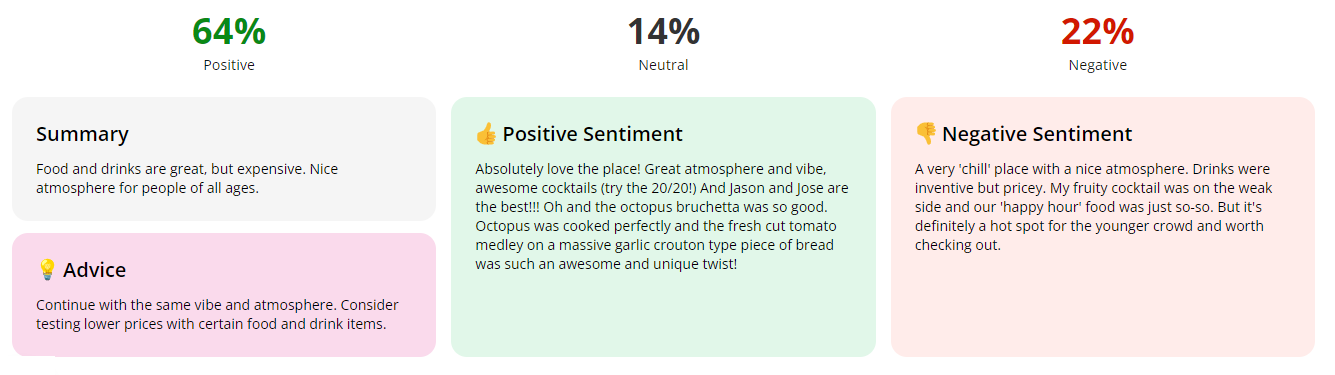
When these reviews are overwhelmingly positive, they become a powerful magnet that can draw new guests to your restaurant, effectively amplifying the classic word-of-mouth approach to an audience you couldn’t reach otherwise.

The Domino Effect

Every review counts. Each positive review can contribute to a snowball effect, encouraging more guests to visit and, hopefully, write their own positive reviews. On the flip side, a series of negative reviews can have the opposite effect, deterring potential guests from choosing your restaurant over competitors.

In summary, online reviews have a multifaceted impact on the decision-making process for potential guests. Likewise, they can influence decisions of previous guests,

They build trust, shape expectations, mitigate risks, influence specific decision factors, and amplify word-of-mouth, all of which collectively contribute to steering new guests towards or away from your restaurant.

Understanding this impact allows you to harness the true power of online reviews in attracting more guests.

restaurant online reviews to keep guests coming back

Take Control of Your Online Reputation

Taking control of your online reputation isn’t just a modern business practice, it’s a necessity in an era where everyone is a potential critic with a public platform. For restaurant owners, the online space provides not only challenges but also opportunities to directly influence how current and potential guests perceive your establishment.

Here’s how you can take the reins and positively shape your restaurant’s digital footprint.

Claim Your Profiles

The first step is claiming your business profiles on review platforms like Yelp, Google My Business, and TripAdvisor. This is more than just a formality. When you claim your profile, you gain the ability to respond to reviews, correct misinformation, update your business hours, and upload high-quality photos.

Essentially, you have more say in the narrative around your restaurant.

Keep Information Updated

There’s nothing more frustrating for a guest than showing up to a restaurant only to find it closed despite online listings stating otherwise. Ensuring that your business hours, menu, and contact information are accurate across all platforms is crucial.

Make it a routine to check and update this data, particularly if you have seasonal hours or menu changes.

Be Proactive, Not Reactive

Many businesses make the mistake of only interacting with their online reviews when something negative pops up. In reality, managing your online reputation should be a constant, proactive effort.

Regularly check review sites and respond promptly to reviews, both positive and negative, to show that you are engaged and value customer feedback.

Develop a Response Strategy

Responding to online reviews isn’t just about damage control; it’s also an opportunity to highlight what makes your restaurant special. Develop a response strategy that incorporates your brand’s voice and values.

For positive reviews, a simple thank-you can go a long way. For less favorable reviews, take the opportunity to apologize and address the issue, demonstrating your commitment to guest satisfaction.

Remember, how you respond to reviews sets the tone for potential guests reading them later.

Responding to an online review

Use Reviews as a Learning Opportunity

The idea of learning from reviews goes beyond simply managing your online reputation; it’s about extracting valuable insights that can drive improvement and innovation in your restaurant.

Reviews serve as a direct line to your guests’ thoughts and experiences, and wisely using this information can give you a significant edge in a competitive market.

Here’s how you can turn reviews into a potent learning tool.

Identifying Strengths and Weaknesses

First and foremost, online reviews provide an excellent opportunity to identify what you’re doing right and what needs improvement.

If multiple guests rave about your signature cocktail, you know that’s a strength you should maintain and perhaps even emphasize in future marketing efforts.

Conversely, if several reviews mention slow service during dinner hours, it might be time to reassess your staffing levels or consider additional training.

Adjusting Your Menu

Menu planning is both an art and a science. Reviews often contain valuable information about how particular dishes are received. Are guests mentioning that your vegan options are exceptional?

Then you might want to consider expanding that section of the menu. On the flip side, if a specific dish is frequently criticized, it may be time for a revamp or removal from the menu.

Enhancing Guest Experience

Sometimes, it’s the little things that leave a lasting impression. Reviews can offer insights into aspects you might not have considered. For example, guests might praise the atmosphere but suggest that the lighting is too dim or too bright.

These are elements that you can easily adjust to enhance the overall guest experience.

Training and Staffing

Your team is central to delivering an exceptional guest experience.

Reviews often provide feedback on staff performance, whether it’s a shoutout to a particularly attentive server or a complaint about unfriendly service. Use this information to identify training opportunities or to provide recognition for a job well done.

Real-Time Feedback for Quick Adjustments

One of the great advantages of online reviews is the immediacy of the feedback. Unlike formal surveys that might take weeks to analyze, reviews give you real-time insights that allow for quick adjustments to marketing and operations.

If you see recurring complaints about long wait times over a weekend, you can address this issue as soon as the next business day.

Setting Future Goals

Learning from reviews isn’t just about addressing current shortcomings, it’s also about setting new goals for your restaurant. Whether it’s aiming for a higher overall rating or striving to be the top restaurant in your local area for customer service or restaurant email marketing, reviews give you a measurable way to set and track these objectives.

By viewing online reviews as learning opportunities rather than mere critiques, you turn each piece of feedback into actionable data. This doesn’t just improve your restaurant in the eyes of future guests, it creates a culture of continual improvement within your team.

Over time, this approach will not only enhance the guest experience but also solidify your reputation as a restaurant that listens, learns, and evolves.

training staff about online reviews to improve guest experience

The digital landscape has made it easier than ever for guests to share their experiences, good or bad, with a wide audience. Leveraging the power of online reviews can make a significant impact on attracting new guests to your restaurant.

By actively managing your online reputation, engaging with reviewers, and using the feedback for improvement, you’re not just building credibility, you’re also laying down a red carpet that welcomes new guests to experience what your establishment has to offer.

In the end, the question isn’t whether online reviews are important, but how effectively you can use them to fuel your restaurant’s growth. So take charge, harness their power, and watch your guest list grow.

Schedule a Free Demo Today

Keeping a focus on guest satisfaction, customer sentiment, and online ratings and reviews using AI-driven tools can boost the visibility and reputation of your restaurant, helping you drive new guests into your restaurant – all while saving time and lowering marketing costs.

Call us or schedule a free demo online and Bloom will show you how our restaurant marketing platform can help you save time and increase your customer lifetime values by automatically building first-party customer databases, unlocking important guest insights to trigger marketing at the right time and place, discover true guest sentiment, easily manage and respond to reviews, save at-risk guests, increase your current guests’ frequency, and find new guests.

Click Here to Schedule a Free Online Demo or call Click To Call 727-877-8181 to see how we can help you save time and drive tangible results for your restaurants


How To Build a Restaurant Email Marketing List

In an age dominated by digital technology, the importance of email marketing for restaurants cannot be overstated. A well-curated email list can act as a powerful tool for enhancing guest engagement, boosting brand loyalty, and driving revenue.

While the benefits are evident, the real challenge lies in building and maintaining a robust email list that contributes to your restaurant’s growth.

One of the most effective ways to not only reach but also deeply connect with guests is through a well-executed restaurant email marketing campaign. Yet, the success of any email marketing strategy hinges on the quality and size of your email list.

This guide is designed to walk you through proven strategies and innovative techniques for collecting valuable email addresses, enhancing guest loyalty, and boosting your restaurant’s bottom line.


The Importance of an Email List

Before diving into the techniques, it’s vital to understand the significance of having an email list in the first place.

Unlike social media platforms, where you are subject to ever-changing algorithms, an email list is something you own. It allows direct, unfiltered communication with your guests, and when used right, it can drive exceptional ROI.

In the restaurant business, where the adage “out of sight, out of mind” rings especially true, an email list serves as an invaluable asset to keep your establishment at the forefront of your guests’ minds.

Yet, using a well-curated email list goes far beyond mere reminders. Below are some key reasons why an email list is indispensable for your restaurant’s marketing strategy:

Ownership and Control

Social media platforms are excellent for engagement, but they come with a catch— you don’t own the platform or the followers. Algorithm changes can significantly affect your reach and visibility. In contrast, an email list is entirely yours, providing a direct, unfiltered line of communication between you and your guests.

Targeted Outreach

A good email list allows for customer segmentation based on various metrics like customer preferences, frequency of visits, or geographic location. This targeted outreach enables you to send personalized messages, making each guest feel valued and special. Personalization can lead to higher open and click-through rates, ultimately driving more visits to your restaurant.

Cost-Effectiveness

Email marketing remains one of the most cost-effective forms of digital marketing. According to various studies, the ROI for email marketing can be exceptionally high, sometimes as much as $38 for every $1 spent. This efficiency makes it a compelling choice for restaurants that may be operating on tighter marketing budgets.

Building Long-Term Relationships

Emails are not just for promoting the latest offers or new menu items; they are a tool for relationship-building. Regular, meaningful communication via newsletters or special occasion emails (like birthdays or anniversaries) can help turn a first-time visitor into a loyal, repeat guest.

Analytics and Feedback

Modern email marketing platforms offer detailed analytics, providing valuable insights into guest behavior. You can track open rates, click-through rates, and even conversion rates, offering a tangible measure of guest engagement. This data can be invaluable for fine-tuning your marketing strategy and better understanding your audience.

Re-engagement Opportunities

Life happens. Sometimes regular guests might stop coming for various reasons. A well-maintained email list allows you the opportunity to re-engage with these lapsed guests. Special “We Miss You” promotions or a simple update about what’s new can often be enough to rekindle interest and bring them back.

In summary, an email list is much more than a collection of addresses. It’s a dynamic, evolving entity that, when managed correctly, can bring exceptional value to your restaurant’s marketing efforts.

It serves as both a short-term tactic for immediate revenue boosts and a long-term strategy for guest retention and loyalty-building. Therefore, investing in the growth and management of your email list should be a top priority for your restaurant.


Steps to Build Your Restaurant’s Email List

The process of building an email list might seem daunting at first glance, especially in a world teeming with digital distractions.

However, the secret to a thriving list doesn’t necessarily lie in complex technologies or elaborate schemes. Instead, it involves a balanced mix of tried-and-true methods and creative innovations, each focused on engaging with your guests in meaningful ways.

Here, we’ll break down a series of actionable strategies that will help you grow your email list from the ground up. Whether you’re starting from scratch or looking to revitalize an existing guest database, these tactics will serve as your roadmap to a more engaged and loyal guest community, ultimately contributing to your restaurant’s growth and success.

Here, we’ll explore the unique advantages of using a restaurant Customer Data Platform (CDP) to bolster your email marketing efforts and grow your restaurant’s guest list.


What is a Customer Data Platform (CDP)?

A CDP is a centralized platform that consolidates data from various sources to create a unified customer profile.

These profiles can include information like a guest’s name, email address, phone number, purchase history, and even their dining preferences.

By integrating data from multiple touchpoints — your website, point-of-sale systems, social media, etc. — a CDP offers a 360-degree view of your guest.


Why Use a CDP for Restaurant Email Marketing?

Traditional methods of growing an email list often involve manual data collection, and the absence of a centralized system makes it challenging to track a guest’s interaction history. With a CDP:

  • Seamless Integration: You can connect data from different systems, thereby eliminating data silos.
  • Automated Processes: Data collection and analysis become automated, making it easier to segment your guests for more personalized marketing.
  • Real-time Insights: Live data allows you to adapt your marketing strategies quickly, improving your chances of converting a one-time diner into a regular guest.


Strategies to Grow Your Email List Using a CDP

1. Utilize Reservation Data

If your restaurant uses an online booking system, this can be a goldmine for email collection. When the reservation system is connected to your CDP, every booking automatically populates the database with the guest’s information. This data can be used to:

  • Send post-dining surveys
  • Notify guests about upcoming specials
  • Offer birthday or anniversary deals
2. Leverage Wi-Fi Marketing

Many restaurants offer free WiFi to their guests. You can use this WiFi marketing opportunity to gather email addresses. Before accessing the network, guests can be prompted to enter their email address. This data then goes directly into your CDP, creating another touchpoint for personalized marketing.

3. Implement a Loyalty Program

A well-designed loyalty program encourages repeat visits and can be an excellent source for email addresses. Your CDP can track each guest’s transactions and send targeted emails based on their preferences and frequency of visits.

5. Special Events and Webinars

Hosting cooking classes, wine-tasting events, or webinars can attract a broad audience. Online registration forms can collect emails, feeding them into your CDP for future marketing endeavors.

6. Website Pop-Ups and Online Orders

Strategically designed website pop-ups can also be an effective way to collect email addresses. Likewise, online orders can be another source. Integration with your CDP ensures that these emails are used in your broader marketing strategy.


How to Make the Most of Your CDP

Segment Your Guest List

The power of a CDP lies in its ability to segment your guest list based on various parameters like age, dining frequency, or even dish preferences. Segmentation enables you to send highly targeted emails, increasing the likelihood of conversion.

A/B Testing

Most CDPs offer A/B testing features. This allows you to send two different versions of an email to a small segment of your list and analyze which performs better.

Real-Time Analytics

With a CDP, you can track the performance of your email campaigns in real-time, adapting your strategies based on guest engagement and other metrics.

A Customer Data Platform is not just another tech tool but a robust system that allows you to consolidate guest data from various sources. This centralized information hub enhances your ability to grow your restaurant’s email list intelligently and effectively.

By understanding your guest’s behavior and preferences through real-time data, you can create highly personalized and engaging email marketing campaigns.

This not only grows your email list but also fosters a deeper relationship with your existing guests, ensuring that your restaurant stays at the forefront of their minds when they make their next dining decision.

Building a restaurant email marketing list may seem like a daunting task, but it’s essential for long-term success. The key is to start small, employ a variety of strategies, and continually adapt as you learn more about your audience. Remember, the quality of your list is far more important than quantity. A well-crafted email list of engaged and interested guests can significantly outperform a larger but less-targeted list in terms of ROI and customer loyalty.

Invest time and resources in building and maintaining your email list, and it will pay off with increased guest engagement, higher retention rates, and ultimately, more feet through the door. Happy marketing!

Schedule a Free Demo Today

Keeping a focus on guest satisfaction, customer sentiment, and online ratings and reviews using AI-driven tools can boost the visibility and reputation of your restaurant, helping you drive new guests into your restaurant – all while saving time and lowering marketing costs.

Call us or schedule a free demo online and Bloom will show you how our restaurant marketing platform can help you save time and increase your customer lifetime values by automatically building first-party customer databases, unlocking important guest insights to trigger marketing at the right time and place, discover true guest sentiment, save at-risk guests, increase your current guests’ frequency, and find new guests.

Click Here to Schedule a Free Online Demo or call Click To Call 727-877-8181 to see how we can help you save time and drive tangible results for your restaurants


Restaurant Reputation Management Guide: Managing Online Guest Reviews

In today’s restaurant industry, a restaurant’s reputation is its lifeline. With the digital era in full swing, every guest’s opinion resonates far and wide, shaping consumer perception and influencing choices.

Positive reviews can turn a hidden gem into a city’s must-visit hotspot, while a single negative comment might send potential guests elsewhere.

How can restaurant owners and operators navigate proper restaurant reputation management? How can they foster positive feedback, handle criticism with grace, and ensure that their online reputation mirrors the quality and passion they have for their restaurant?

This guide is designed to answer these questions and more. For restaurant owners, managers, and marketers, here are insights, strategies, and practical advice on managing online guest reviews and building a strong restaurant reputation.

restaurant reputation management for strong reputation

The Impact of Online Reviews

Online reviews act as the modern word-of-mouth, greatly influencing potential guests. A study by BrightLocal found that a staggering 91% of people regularly read online reviews, and 84% trust them as much as personal recommendations.

Positive reviews can boost a restaurant’s reputation and bring in new guests. They provide social proof that your restaurant is a trusted and enjoyable place to dine.

Conversely, negative reviews can seriously harm your reputation if not handled appropriately. Even a few bad reviews can sway potential guests to look elsewhere.

Monitoring various platforms such as Yelp, TripAdvisor, and Google allows you to keep an eye on what’s being said about your restaurant. Engaging with both positive and negative reviews shows that you’re invested in your guests’ experiences and committed to continuous improvement.

Investing in a system like Bloom Intelligence that consolidates reviews from different platforms can make this process more manageable and ensure that you never miss an opportunity to engage with your guests.

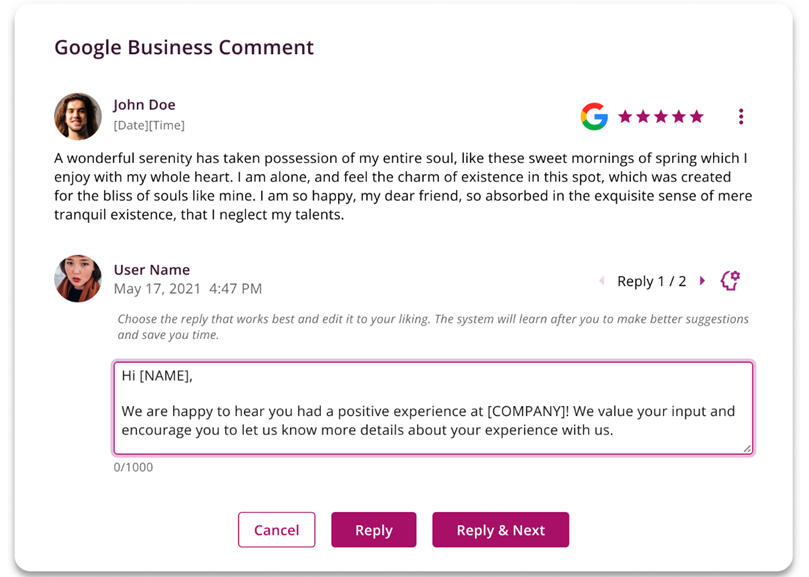
Likewise, Bloom’s AI-driven system can suggest appropriate, brand-specific responses for you – or even automate the entire process with unique and appropriate responses. More on this below.

Ensuring Genuine Feedback

In a competitive industry, it’s not unheard of for restaurants to fall victim to fake reviews, either glowing praise from hidden stakeholders or malicious slander from rivals.

Ensuring that feedback is genuine is critical to maintaining an authentic online presence.

Regularly monitoring reviews for suspicious patterns and understanding the common signs of fake reviews can be the first line of defense.

Encourage genuine reviews by creating an atmosphere where guests feel comfortable sharing their real experiences. Make it clear that their honest feedback is not only welcomed but actively sought.

Remember that open dialogue with guests builds trust and encourages authenticity.

restaurant staff encouraging online reviews

Encouraging Positive Reviews

Positive reviews from satisfied guests are a valuable asset for any restaurant. Building a culture that emphasizes exceptional service, outstanding food, and a welcoming atmosphere is essential to gaining positive feedback.

It begins with understanding your guests’ preferences and exceeding their expectations. Staff training that focuses on attentiveness, friendliness, and personalized service can leave lasting impressions.

Consider offering comment cards at the end of meals, asking for feedback, or even sending follow-up emails with first-party surveys. Emphasize to your guests that their opinions matter and that you appreciate their input.

Also, be cautious about asking for reviews too aggressively. Guests should feel comfortable sharing their experiences without feeling pressured. Balancing the approach is key. You want to create a path for positive feedback without pushing guests away.

Responding to Negative Reviews

Negative reviews are a fact of life in the restaurant business, but they don’t have to spell disaster. How you respond to them can often make the difference between losing a guest forever and winning them back.

Acknowledge the problem stated in the review and thank the reviewer for bringing it to your attention. Apologize without assigning blame and offer a solution. For example, you might invite the guest back to experience your restaurant under improved circumstances.

Acknowledge the issue, express regret, and assure the guest that you are addressing the problem. Tailoring your response to the specific concerns raised by the reviewer can demonstrate genuine care and attention.

Then, consider offering a resolution. Whether it’s a refund, a complimentary meal, or a promise to address the problem, a tangible response can turn the situation around. This is also known as restaurant customer service recovery.

Finally, learn from the review. Share it with your team, discuss what went wrong, and implement changes to ensure that the issue does not recur. Negative reviews are, in actuality, valuable feedback, and addressing them effectively can enhance your restaurant’s reputation.

Responding privately, when possible, might also be a good strategy. This can turn a negative public situation into a positive private resolution.

Avoid generic responses. Personalizing your replies shows readers that you genuinely care about their experience and aren’t merely going through the motions. Remember, every negative review is an opportunity to learn and grow. Embrace it as a chance to improve.

training staff on restaurant reputation management

Analyzing Feedback

Analyzing guest feedback should be a regular and systematic practice within your restaurant. It’s not enough to simply read and respond. You must translate this feedback into actionable insights.

Consider creating a schedule for weekly or monthly reviews of all feedback, both online and in-house. Utilize tools that aggregate reviews from various platforms, making the analysis more streamlined.

Break down the feedback into categories like food quality, service, ambiance, etc., and identify trends and patterns. Engage your team in this process, encouraging an open dialogue and ensuring that they understand how guest feedback shapes the restaurant’s strategies and policies.

Implementing changes based on guest feedback demonstrates a commitment to continuous improvement and helps build trust and loyalty among your guests.

Handling Reviews for Multiple Locations

Managing guest reviews for restaurants with multiple locations presents unique challenges. Maintaining consistency across various branches is essential to provide the same standard of guest care everywhere.

A centralized system like Bloom Intelligence that collects reviews for different locations can be invaluable in monitoring and responding to feedback uniformly. Implementing clear guidelines and training across all branches ensures that each location upholds the brand’s values.

Regular meetings with management teams from different locations facilitate the sharing of best practices, challenges, and insights. These meetings can foster a sense of unity and shared purpose, ensuring that the brand’s reputation is consistently managed across the board.

Technology plays a crucial role in multi-location review management. Platforms that enable cross-location comparisons, trend analysis, and aggregated reporting can provide valuable insights to drive improvement and ensure that every location meets guests’ expectations.

Multi-location Bloom users report saving dozens of hours every week which they can dedicate to other aspects of improving their business.

restaurant reputation management AI software

Strategies to Improve Ratings

Improving your restaurant’s online ratings involves a multifaceted approach, blending the pursuit of positive reviews from satisfied guests with the sensitive handling of negative feedback.

Training staff to recognize opportunities for exceeding guest expectations, then subtly encouraging those guests to share their experiences online, can be a powerful strategy.

Another approach is to offer incentives, such as a discount on a future visit or a free appetizer. However, this must be done judiciously and in accordance with the guidelines set by review platforms.

Addressing negative reviews with grace and an earnest desire to rectify the situation can also improve your overall rating. It demonstrates to readers that you value feedback and are committed to ensuring guest satisfaction.

Keep in mind that authenticity matters. Attempts to manipulate reviews through dishonest means can backfire, leading to a damaged reputation and potential penalties from review sites.

AI-Powered Reputation Management Software

One of the standout platforms leading this revolution is Bloom Intelligence, an AI-powered platform designed specifically for restaurant owners and operators.

What sets Bloom apart from the crowd is its unique ability to harness the power of artificial intelligence to manage and enhance your restaurant’s online reputation. It’s not just about collating reviews, it’s about understanding them, responding to them, and transforming them into opportunities for growth.

Perhaps one of the most fascinating features of Bloom is its capacity to create AI-generated response suggestions that are tailored to each review. No two guests are the same, and their feedback requires individualized attention. Bloom’s intelligent algorithms analyze the nuances of each review, from praise to criticism, offering personalized responses that resonate with your guests.

AI-powered review response example

Whether you’re dealing with glowing commendations or constructive critiques, Bloom’s suggested responses strike the right chord, preserving your unique brand voice while conveying genuine appreciation and understanding.

If time is of the essence, Bloom offers an even more advanced solution: the automation of review responses. Imagine a world where unique, appropriate, and heartfelt responses are crafted and dispatched without you having to lift a finger. That’s what Bloom’s AI-driven automation brings to the table.

These aren’t robotic or repetitive messages. Each response is crafted by AI, ensuring that it’s specific and relevant to the review in question. This means that you can maintain an active and engaging online presence without the enormous investment of time and effort traditionally required.

The restaurant business is demanding, and time is a precious commodity. By embracing Bloom Intelligence, you’re not only enhancing your online reputation management; you’re reclaiming hours that can be redirected towards perfecting your culinary offerings, training staff, or simply connecting with your guests.

The efficiency of Bloom doesn’t cut corners on quality. It represents the crossroads of technology and hospitality, where your restaurant’s voice remains authentic, and your interaction with guests stays personal, but without the overwhelming drain on resources.

Conclusion

Restaurant reputation management is a multifaceted endeavor that extends beyond mere response to online reviews. It encapsulates creating an inviting guest experience, analyzing feedback for continuous improvement, adhering to legal norms, leveraging technology, and more.

In the age of online connectivity, a single review can reach thousands of potential guests. Building a positive online reputation is not a one-time effort but a continuous commitment to excellence, both within the restaurant and in the virtual space where guests share their experiences.

By fostering positive relationships with guests, acting with transparency and integrity, training staff effectively, and leveraging technology, restaurant owners can create a strong and thriving reputation in a competitive landscape.

Embracing both positive and negative reviews, understanding the legal landscape, incentivizing genuine feedback, and consistently focusing on guests’ needs will set the foundation for success.

In the end, the investment in managing online guest reviews will yield rich dividends in trust, loyalty, and sustained business growth. It’s a journey well worth undertaking for any restaurant aiming to stand out in the ever-evolving and demanding world of hospitality.

Schedule a Free Demo Today

Keeping a focus on guest satisfaction, customer sentiment, and online ratings and reviews using AI-driven tools can boost the visibility and reputation of your restaurant, helping you drive new guests into your restaurant – all while saving time and lowering marketing costs.

Call us or schedule a free demo online and Bloom will show you how our restaurant marketing platform can help you save time and increase your customer lifetime values by automatically building first-party customer databases, unlocking important guest insights to trigger marketing at the right time and place, discover true guest sentiment, save at-risk guests, increase your current guests’ frequency, and find new guests.

Click Here to Schedule a Free Online Demo or call Click To Call 727-877-8181 to see how we can help you save time and drive tangible results for your restaurants


Coffee Shop Marketing Ideas: Satisfying Guests to Boost Your Business

The coffee shop industry is highly competitive, and success in this field requires more than just great coffee. It requires a strong coffee shop marketing strategy that focuses on customer satisfaction, building relationships, and creating a memorable experience.

Here we explore innovative coffee shop marketing ideas (that can work for any restaurant) with a unique emphasis on customer satisfaction, with the goal of increasing customer base and foot traffic.


1. Understanding Your Guests

Understanding the needs and preferences of your guests is foundational to any successful marketing strategy.

Conducting regular surveys, monitoring online reviews, and even informal conversations with guests can provide invaluable insights. These practices help you recognize what your guests value most, whether it’s the flavor of the coffee, the ambiance, or the friendly service.

By continually aligning your offerings with guest expectations, you can build trust and loyalty, leading to increased foot traffic and a growing customer base.


2. Personalized Guest Experience

Creating a personalized experience fosters a unique connection with your guests. Utilizing guest data to remember names, favorite orders, or special preferences can turn a routine visit into a memorable experience.

Training staff to recognize regular guests and empowering them to make personalized recommendations helps to make each guest feel unique and valued.

Customized or digital loyalty cards, tailored email campaigns, and even personalized greetings on receipts can enhance the personalized touch.


3. Loyalty Programs

Loyalty programs provide tangible rewards for repeat visits, fostering long-term relationships with guests.

An effective loyalty program can be as simple as a punch card or as sophisticated as a mobile app that tracks purchases and offers personalized rewards. Exclusive offers, birthday discounts, and surprise rewards can make guests feel special and appreciated.

A well-structured loyalty program not only encourages repeat business but also turns satisfied guests into brand advocates who bring in new customers.


4. Community Engagement

Engaging with the local community can transform your coffee shop from a mere business into a community hub.

Hosting local events such as poetry readings, musical performances, or art exhibitions helps you connect with various community groups. Collaborating with schools, local charities, or other organizations for fundraisers or awareness campaigns can build goodwill.

By fostering a sense of community, guests are more likely to view your coffee shop as a gathering place, resulting in increased loyalty and foot traffic.


5. Social Media Interaction

Social media platforms are powerful tools for connecting with guests and attracting new ones. Regularly sharing behind-the-scenes content, special promotions, and engaging stories can create a strong online presence.

Encouraging guests to share their experiences through hashtags or photo contests fosters user-generated content, amplifying your reach.

Responding to comments, celebrating guest milestones, and even sharing guest-generated content can build a community online, mirroring the welcoming atmosphere of your physical space.


6. Collaborations with Local Businesses

Collaborating with other local businesses provides opportunities for cross-promotion and community integration. Sourcing ingredients from local farmers or featuring products from local artisans not only supports your community but also adds authenticity to your offerings.

Hosting joint events or offering combined discounts with neighboring businesses can attract new guests.

Collaborations often lead to mutual benefits, enhancing the reputation of all involved and building a more robust community fabric.


7. Creating a Comfortable Atmosphere

The ambiance of your coffee shop plays a critical role in attracting and retaining guests. Comfortable seating arrangements, soothing color schemes, well-curated background music, and appealing décor contribute to a welcoming atmosphere.

Seasonal decorations, art from local artists, or unique design features can set your space apart.

Creating a space that encourages relaxation and social interaction can turn a quick coffee stop into a lingering visit, boosting sales and creating loyal guests.


8. High-Quality Products and Services

Offering high-quality products and services is vital for satisfying guests. This extends from the coffee beans and fresh ingredients to the presentation and service.

Regular training sessions for staff, meticulous quality control, and continually innovating the menu ensure consistency and excellence. Offering diverse menu options catering to different dietary preferences or trends ensures that guests of all tastes feel catered to.

High standards in every aspect of the guest experience set the stage for positive reviews and word-of-mouth referrals.


9. Eco-Friendly Practices

Environmental consciousness is increasingly important to consumers. Implementing eco-friendly practices, such as reusable cups, composting, recycling, and sourcing ethical products, aligns your business with sustainable values.

Communicating these practices to your guests, and even involving them through initiatives like discounts for using reusable cups, reinforces a positive brand image.

Demonstrating a commitment to sustainability not only satisfies eco-conscious guests but also sets your coffee shop apart in a crowded market.


10. Utilizing Technology

Technology can enhance the guest experience by adding convenience and modernity. Offering free Wi-Fi, integrating mobile ordering apps, or employing digital loyalty programs can appeal to tech-savvy guests.

Utilizing social media for exclusive offers or even virtual events creates additional touchpoints with guests.

Embracing technology like a customer data platform also provides valuable data and insights that can help you tailor offerings, measure the success of promotions, and better understand guest behavior.


11. Seasonal Promotions and Special Offers

Seasonal promotions and special offers create excitement and offer reasons for guests to visit more frequently.

Limited-time beverages, themed decorations, or festive events aligned with holidays or local celebrations can create a buzz. Offering special discounts during off-peak hours or bundling products can also incentivize visits.

Such promotions keep your offerings fresh and encourage guests to try something new, leading to increased foot traffic and sales.


Conclusion

In today’s competitive coffee shop landscape, satisfying guests is at the heart of successful marketing. By focusing on understanding, personalizing, rewarding, engaging, and innovating, you can create an experience that resonates with guests and encourages them to return.

The strategies outlined in this article represent a philosophy that prioritizes guests as part of the coffee shop’s community rather than mere consumers.

By cultivating relationships, embracing community values, maintaining high quality, and exploring creative marketing avenues, coffee shops can thrive and grow. It’s about serving more than coffee, it’s about serving connections, experiences, and a sense of belonging that keeps guests coming back for more.


Schedule a Free Demo Today

Bloom Intelligence is an AI-powered restaurant marketing platform that includes a powerful customer data platform, automated data collection, marketing automation, and reputation management tools.

Guest data is collected from many different sources and aggregated into one single platform, making it simple and easy to analyze and segment your restaurant’s guest personas for your restaurant email marketing.

Data is collected from sources like WiFi logins, online reservation systems like OpenTable, online ordering platforms like Oracle’s GloriaFood or Toast, POS systems, website forms, and more.

Bloom makes guest data collection effortless, allowing you to quickly execute the strategies listed above, saving you time, increasing customer lifetime values, attracting new guests, improving your reputation, and boosting your bottom line.

To see more of what Bloom can do for your restaurant, schedule a free demo today, or call us at 727-877-8181.


Utilizing Restaurant Reservation Systems for Effective Marketing with Restaurant CDPs

In today’s fast-paced world, dining has become more than just a means to satisfy a consumer’s hunger. It’s about the experience, the ambiance, and the connection that a guest feels with your restaurant.

With competition heating up, restaurants are now focusing more on personalizing this experience, making it unique and memorable for each guest.

A key component to achieving this is the use of reservation systems coupled with a customer data platform to gather rich guest data and use it for personalized, targeted marketing.

restaurant reservation systems can fill your seats

Understanding Reservation Systems

A restaurant reservation system is not merely a tool for booking tables. It’s an intelligent system that captures the guest’s preferences, special requests, past dining experiences, and more.

The reservation systems not only streamline the booking process but also provide a treasure trove of data that can be used for restaurant reservation marketing.

Understanding reservation systems is pivotal for restaurants looking to navigate the modern dining landscape. These systems are no longer a mere convenience but a strategic tool that, when used effectively, can significantly enhance guest satisfaction, loyalty, and revenue.

The blending of technology with traditional hospitality has paved the way for a more connected and personalized dining experience.

By investing in and utilizing a reservation system like OpenTable, restaurants are not only streamlining their operations but also creating lasting connections with their guests, encouraging them to return time and again.

How Does It Work?

When a guest makes a reservation online, the system collects basic information like name, contact details, date of the reservation, time, and any special requests.

But, more importantly, it begins to build a customer profile of each guest, noting preferences, frequency of visits, and other valuable data.

As you build more and more guest profiles, it becomes easy to segment your database into various guest personas. This allows you to send much more engaging messaging to each segment – leading to more engaged guests and higher customer lifetime values.

It’s a goldmine of information for any restaurant marketing professional when combined with the power of a restaurant customer data platform.

restaurant customer data platform

Integrating a Restaurant CDP

A restaurant customer data platform (CDP) is essentially a unified database that consolidates guest data from various sources, providing a complete 360-degree view of each guest.

In the context of restaurants, a restaurant CDP takes data from reservation systems, point-of-sale systems, first-party surveys, guest WiFi logins, online ordering, and other sources to create comprehensive guest profiles.

With a CDP like Bloom Intelligence, you can then use the built-in marketing automation and reputation management tools to market to your guests much more effectively while improving your reputation management.

Altogether, this will improve guest experience, loyalty, and customer lifetime values while bringing in more potential guests.

Benefits of Using a Restaurant CDP

  • Personalization: With detailed guest profiles, restaurants can craft personalized marketing messages. Whether it’s a birthday offer, a survey, an announcement, or a discount on their favorite dish, personalization increases guest engagement.
  • Remarketing: A restaurant CDP allows for effective remarketing. For example, if a guest frequently dines on weekends, sending them a special weekend offer can increase the likelihood of a revisit.
  • Enhanced Guest Experience: By understanding guest behavior and preferences, restaurants can tailor the dining experience for their guests, from the first welcome to the tasty dessert.
  • Data-Driven Decisions: With the insights gleaned from the restaurant CDP, management can make informed decisions on menu changes, pricing strategies, purchasing, staffing, and more.
  • Compliance and Security: CDPs like Bloom Intelligence ensure that the guest data collected is handled in compliance with regulations like GDPR, maintaining the trust of the guest.

Real-Life Applications

Here’s how some restaurants have successfully leveraged reservation systems and restaurant CDPs.

  • Personalized Offers
    By combining reservation data with insights from a restaurant CDP, eateries can create highly personalized offers that resonate with individual guest preferences. This leads to more meaningful connections with guests and encourages repeat visits.
  • Managing Seasonal Trends
    With the ability to track and analyze guest behavior during different seasons, restaurants can adjust their offerings and promotions to align with guest interests. This ensures optimal satisfaction and effective inventory management.
  • Event Management
    Reservation systems can identify guest interests in specific events, such as themed nights or live entertainment. Restaurants can then target these guests with special invites and offers, fostering a loyal community around shared interests.
  • Launching Targeted Loyalty Programs
    By identifying frequent guests or those who visit multiple locations, restaurants can develop restaurant loyalty programs that encourage cross-location dining and brand loyalty. These targeted programs add value to the dining experience for regular patrons.
  • Enhancing Guest Experience
    Data-driven insights enable restaurants to understand the specific needs of different guest demographics. Whether it’s families with children or couples seeking a romantic setting, eateries can tailor their service, menu, and atmosphere to meet those needs.
  • Community Engagement
    Restaurants can use reservation systems to identify guests who share the establishment’s values, such as sustainability or local sourcing. Inviting these guests to exclusive events or providing special offers fosters community engagement and loyalty.
  • Predicting and Preparing for Peak Times
    Reservation trend analysis helps restaurants predict peak dining times, allowing for adequate preparation in staffing, food freshness, and service efficiency. This foresight leads to shorter wait times and a more enjoyable dining experience.

The integration of restaurant reservation systems and CDPs offers a multifaceted approach to enhancing the dining experience. From personalized marketing to improved operations, these tools empower restaurants to connect with their guests on a deeper level.

The focus on data-driven decision-making elevates the guest experience from a mere transaction to a personalized connection, fostering loyalty, and setting the stage for long-term success in an increasingly competitive dining landscape.

reservation systems and a CDP can create loyalty

Tying It All Together

In a landscape where the guest is king, understanding and catering to their individual preferences and needs are paramount. A restaurant reservation system, when integrated with a restaurant CDP, becomes a potent tool in the hands of a marketer.

It’s not just about filling tables, it’s about creating memorable experiences that resonate with the guest, ensuring that they keep coming back.

The future of restaurant marketing is here, and it’s personal, data-driven, and guest-centric. By embracing this approach, restaurants are not only enhancing the guest experience but are also setting themselves apart in an increasingly crowded market.

After all, the way to a guest’s heart is not just through their stomach but through understanding, personalization, and genuine connection.

Schedule a Free Demo Today

Bloom Intelligence is an AI-powered restaurant marketing platform that includes a powerful customer data platform, automated data collection, marketing automation, and reputation management tools.

Guest data is collected from many different sources and aggregated into one single platform, making it simple and easy to analyze and segment your restaurant’s guest personas for your restaurant email marketing.

Data is collected from sources like WiFi logins, online reservation systems like OpenTable, online ordering platforms like Oracle’s GloriaFood or Toast, POS systems, website forms, and more.

Bloom makes guest data collection effortless, allowing you to quickly execute the strategies listed above, saving you time, increasing customer lifetime values, attracting new guests, improving your reputation, and boosting your bottom line.

To see more of what Bloom can do for your restaurant, schedule a free demo today, or call us at 727-877-8181.


Advanced Restaurant Marketing Techniques for Fine Dining Restaurants

In the world of fine dining, every detail matters, from the ambient lighting to the curve of the silverware, and most importantly, the cuisine offered on the plate. But creating this amazing guest experience is only half the equation for a successful business.

How you connect with current and potential guests and convey the uniqueness of your restaurant is what completes the story.

Here we will explore some comprehensive strategies to market your fine dining restaurant, focusing on reputation management and innovative marketing ideas.

Fine Dining Marketing Guide

Fine Dining Reputation Management

Reputation Management for Fine Dining Restaurants

Reputation is a hard-earned asset. It holds the power to drive footfalls into your restaurant – or steer them away. In the realm of fine dining, reputation management is all about creating an exceptional image that echoes your guests’ experiences.

1. Define Your Story

Every establishment has a tale to tell. Your story could be about the origin of your recipes, the inspiration behind your decor, or the core of your culinary team. Define this story and make it a central theme of your communication.

2. Engage with Reviews and Ratings

Don’t shy away from guest feedback. Encourage guests to express their thoughts online. Each review, be it praise or criticism, is an opportunity to showcase your commitment to guest satisfaction. Respond promptly and professionally, maintaining a positive attitude even in the face of criticism.

3. Collaborate with Thought Leaders

Engage with food bloggers, influencers, and critics in your area. They can provide honest reviews, document their experiences, and share them with their followers, thereby augmenting your restaurant’s visibility and credibility.

4. Initiate Exclusive Events

Promote your restaurant by hosting exclusive events like wine-tasting sessions, culinary workshops, or menu unveilings. This brings media attention, engages food enthusiasts, and enhances your reputation.

Expanding Horizons: Fresh Ideas for Fine Dining Marketing

Marketing a fine dining restaurant involves more than just capturing stunning pictures of your food. It’s about showcasing the immersive experience you offer and reaching out to those who would appreciate it.

1. Optimize Your Online Presence

Your website should serve as a virtual extension of your restaurant’s ambiance. Keep it classy, user-friendly, and up-to-date. Feature your menus, wine lists, and beautiful high-definition images to entice potential guests.

2. Harness the Power of CRM

Customer Relationship Management (CRM) systems can be a treasure trove of guest data. Analyze this data to understand your guests’ dining habits, favorite dishes, and special dates. Use these insights to tailor your marketing efforts and deliver personalized communication.

3. Create Reward Programs

Design reward programs that incentivize regular guests. This not only encourages repeat visits but also transforms your guests into ambassadors for your restaurant.

4. Launch Customized Ad Campaigns

Invest in targeted advertising to increase your reach. Leverage platforms like Google Ads or Facebook Ads to run campaigns that resonate with your potential guest demographic.

5. Engage Locally

Participate in local food festivals, community events, or fundraisers. This positions your restaurant as a community-supporting establishment and enhances local goodwill.

6. Deliver Memorable Experiences

Undoubtedly, the most effective marketing strategy is creating unparalleled guest experiences. From the moment they step into your restaurant to the moment they leave, ensure every interaction is memorable. Such experiences cultivate loyalty and stimulate positive word-of-mouth referrals.

Restaurant Benchmarks

Putting It All Together

The realm of fine dining is marked by stiff competition and changing trends. To stand out, your restaurant needs to adopt a blend of creative marketing strategies and dedicated reputation management.

By actively telling your story, engaging with online reviews, partnering with influencers, and hosting unique events, you can cultivate a sterling reputation.

At the same time, optimizing your online presence, employing CRM, designing reward programs, launching targeted ad campaigns, and engaging locally can help extend your restaurant’s reach.

However, remember that the core of all your efforts is the guest experience. Providing an outstanding experience will ensure your guests not only return but also become advocates for your brand.

Fine dining is more than a meal; it’s a journey, a spectacle, a memory etched into the minds of your guests. By perfecting your marketing approach, you can ensure that your restaurant is the destination of choice for those seeking an extraordinary culinary adventure.

Schedule a Free Demo Today

Bloom Intelligence is an AI-powered restaurant marketing platform that includes a powerful customer data platform, automated data collection, automated WiFi marketing, and reputation management tools.

Guest data is collected from many different sources and aggregated into one single platform, making it simple and easy to analyze and segment your restaurant’s guest personas for your restaurant email marketing.

Data is collected from sources like WiFi logins, online ordering systems like Oracle’s GloriaFood or Toast, online reservation systems like OpenTable, POS systems, and website forms.

Bloom makes guest data collection effortless, allowing you to quickly execute the strategies listed above, saving you time, increasing customer lifetime values, attracting new guests, improving your reputation, and boosting your bottom line.

To see more of what Bloom can do for your restaurant, schedule a free demo today, or call us at 727-877-8181.


AI for Restaurants: Harnessing Its Power for Reputation Management

In the increasingly digital age we live in, reputation management has become vital for businesses across all sectors. Restaurants, in particular, must pay keen attention to this aspect due to their direct, intimate interaction with their guests.

The advent of online reviews and social media feedback has made reputation management for restaurants both more challenging and crucial than ever before.

While a good review can attract guests, a single bad review can be quite damaging to your restaurant’s reputation.

Using AI to improve restaurant reviews

Fortunately, advances in Artificial Intelligence (AI) for restaurants now offer a new approach to tackle this challenge more efficiently and effectively.

AI has the potential to revolutionize restaurant reputation management by automating responses, suggesting suitable replies, and even improving pre-existing response templates with suitable and relevant replies.

This comes as a relief for restaurant owners and managers, who often grapple with the time-consuming task of managing online reviews and guest feedback across multiple platforms.

Using AI to Identify Guest Sentiment

One of the key areas where AI is making its mark is in managing and responding to online reviews. Every day, countless reviews are posted on platforms like Google, Yelp, and TripAdvisor, not to mention social media outlets like Facebook.

Parsing through this vast sea of data manually is not only time-consuming but also inefficient. Here, AI comes to the rescue with its capabilities in data processing and text analysis.

Machine Learning (ML), a subset of AI, can be employed to analyze reviews, categorize them into positive, negative, and neutral, and even identify key themes and areas of concern. For instance, if a restaurant repeatedly receives complaints about a particular dish or service aspect, ML can flag these for immediate attention.

Below is a screenshot of this in action, from Bloom Intelligence.

AI for restaurants: customer sentiment example

Using AI to Generate Review Responses

But AI goes beyond mere identification and analysis. Today’s advanced AI systems like Bloom can suggest or even automate responses to these reviews.

By employing Natural Language Processing (NLP), AI can understand the context and sentiment of a review and generate an appropriate response.

For instance, AI can draft a polite apology and promise improvement in response to a negative review, or express gratitude for a positive one. This allows for instantaneous, consistent, and brand-specific responses, all while saving significant amounts of time and effort.

Using AI to Rewrite Response Templates

Moreover, AI can rewrite and improve existing response templates, making them more empathetic, personalized, and effective. Traditional response templates can often sound robotic and impersonal, which may exacerbate a guest’s dissatisfaction.

On the contrary, AI can generate responses that sound human-like and genuine, which can go a long way in satisfying an upset guest or reinforcing a positive experience.

The system allows users to modify the responses and will “learn” over time to provide responses based on these edits.

AI-generated review response

Using AI and a CDP to Automate Responses

With an AI-powered restaurant customer data platform like Bloom Intelligence, users have the ability to not only use AI to generate appropriate responses and rewrite templates, but they can entirely automate the process.

The ability of Bloom Intelligence to auto-respond to reviews is perhaps one of its most transformative features. Through the use of NLP and AI technology that understands and generates human language, Bloom Intelligence can draft appropriate responses based on the sentiment and content of each individual review.

For example, for negative feedback, it can craft unique polite apologies and assurances of improvement. In the case of positive reviews, it can express gratitude and invite the guest for a return visit.

The integration of AI in Bloom Intelligence is not just about the present—it has an eye on the future too. By leveraging predictive analytics, it can identify potential reputational risks, helping restaurant owners to take proactive measures and avoid crisis situations.

By automating the review management process, Bloom Intelligence provides a tremendous advantage in terms of efficiency and effectiveness, liberating restaurant owners and managers from the often stressful task of managing their online reputation.

This, in turn, provides them with more time and mental bandwidth to concentrate on other important core aspects of their business.

The predictive capabilities of AI can help restaurants foresee potential reputation crises and respond proactively. For example, by analyzing historical data and patterns, AI can warn about a spike in negative reviews related to a specific issue.

AI-powered business suggestions

Discover Bloom Intelligence – Save Time While Improving Reputation

One thing is clear, AI and Bloom Intelligence are reshaping restaurant reputation management, offering solutions that are quick, efficient, and effective.

As we move forward into an increasingly digital age, the importance of online reputation management for restaurants will only grow. In parallel, AI technology and Bloom will continue to evolve and improve, becoming an essential part of the restaurant industry’s toolkit.

By embracing AI for restaurants, restaurants can ensure that they not only survive but thrive in this new era.

It’s time to step into the future of restaurant marketing with AI and witness the transformative impact it can have on your business.

Bloom Intelligence is an AI-powered restaurant marketing platform that includes a powerful customer data platform, WiFi marketing, and reputation management tools.

Guest data and reviews are collected from many different sources and aggregated into one single platform. This makes it simple and easy to analyze and segment your restaurant’s guest personas for automated marketing, and to implement an efficient reputation management strategy.

Bloom makes restaurant marketing tasks effortless, allowing you to quickly execute your marketing strategy, saving you time, increasing customer lifetime values, attracting new guests, improving your reputation, and boosting your bottom line.

To see more of what Bloom can do for your restaurant, schedule a free demo today, or call us at 727-877-8181.


Restaurant Reputation Management: Innovative New Integration by Bloom Intelligence

In the bustling, dynamic world of the restaurant industry, reputation is a vital currency. It’s a well-established truth that a restaurant’s reputation can directly influence its revenue and overall success.

A stellar reputation fosters consumer trust, encourages customer loyalty, and bolsters word-of-mouth marketing – all vital elements that contribute to a restaurant’s bottom line. Restaurant reputation management, therefore, should be an essential component of any food service business plan.

But in the age of social media and online reviews, this task can seem daunting. Fortunately, recent technological innovations, such as those offered by Bloom Intelligence, offer powerful tools to simplify and enhance reputation management for restaurants.

A holistic reputation management strategy can serve as a potent revenue booster. It begins with understanding that every customer interaction, from the greeting at the door to the quality of the meal, from the ambiance of the place to the farewell, contributes to your reputation.

Ensuring consistently excellent customer experiences helps foster positive reviews and ratings on various online platforms. This, in turn, has a proven track record of driving increased footfall.

Recent surveys have shown that the majority of consumers read online reviews before visiting a restaurant for the first time – and even repeat times.

They trust these reviews as much as personal recommendations from friends or family. As such, having a high rating and positive reviews on platforms like Google, Facebook, Yelp, and TripAdvisor can significantly enhance a restaurant’s image, pulling in more first-time guests and repeat diners.

Managing reviews across these multiple platforms, however, can be a significant challenge.

Bloom Adds TripAdvisor to Impressive List of Reputation Integrations

This is where Bloom Intelligence has stepped up its game with its latest innovative integration. Known for streamlining restaurant reputation management across Google, Facebook, and Yelp, Bloom has now incorporated TripAdvisor into its suite.

Bloom Intelligence’s comprehensive solution allows restaurants to view and respond to all reviews across these platforms in one simple place. This not only saves valuable time but also ensures that no review goes unnoticed and unaddressed.

Immediate and thoughtful responses to reviews – both positive and negative – demonstrate that a restaurant values its guests’ feedback, which in itself is a reputation booster.

What sets Bloom Intelligence apart, however, is its advanced use of artificial intelligence (AI). Not only does it streamline review management, but it also provides intelligent response suggestions.

These AI-generated responses can help restaurant owners craft responses that align with their brand voice while addressing the concerns or praises of the reviewer effectively.

This capability transforms the potentially daunting task of responding to online reviews into an opportunity for enhancing customer relations and building a solid online reputation.

But Bloom goes even further. The platform can even be set to respond to all reviews automatically with unique, brand-centric responses, further easing the burden on restaurant owners and managers.

This feature can be a game-changer for busy establishments struggling to keep up with their online presence.

The latest integration with TripAdvisor is a strategic addition. TripAdvisor is one of the world’s largest travel and hospitality platforms, hosting millions of reviews and opinions about restaurants. A restaurant’s reputation on this platform can significantly influence both locals and tourists looking for a great place to dine.
The integration of TripAdvisor into Bloom Intelligence’s repertoire fortifies its position as a powerful tool for restaurant reputation management.

By providing a one-stop solution to monitor, manage, and respond to reviews, it simplifies the reputation management process, freeing restaurant owners to focus on what they do best – providing exceptional dining experiences and improving guest exerience.

With its AI-driven review response capabilities, Bloom Intelligence continues to innovate and redefine the boundaries of restaurant reputation management.

The end result? An easier, more efficient way to manage your restaurant’s online reputation, leading to enhanced customer satisfaction, improved online ratings, and, ultimately, increased revenue.


Restaurant Omnichannel Marketing for More Revenue and Higher ROI

In today’s digital age of constant transformation, restaurants are striving to understand their guests more intimately than ever before.

As a restaurateur, this means knowing not just what your guests like to eat, but understanding their habits, preferences, demographics, and behaviors across all touchpoints. Omnichannel marketing, a strategy that integrates data from multiple channels, is the key to unlocking this depth of knowledge.

What is Omnichannel Marketing?

Omnichannel marketing is a holistic approach to guest engagement that seamlessly connects all customer touchpoints across both online and offline channels.

Unlike multi-channel marketing, which sees individual channels working in isolation, omnichannel marketing considers the entire customer journey.

Omnichannel marketing for restaurants is a strategic, customer-centric approach that provides a seamless and unified brand experience across all channels and touchpoints.

Rather than operating independently, channels like social media, websites, email marketing, mobile apps, online ordering and reservations, and physical locations work cohesively to engage customers.

The idea is to collect as much data as possible from these various channels to form comprehensive customer profiles for your restaurant guests,

This approach leverages data across all channels to better understand guest behaviors, preferences, and needs, enabling the restaurant to deliver personalized experiences, send targeted engaging marketing messages, enhance customer loyalty, and ultimately increase sales.

Omnichannel marketing sources

Gathering Guest Data from Multiple Touchpoints

To paint a clear picture of your guests, you must collect data from various sources to understand the complete customer journey. This includes WiFi logins, website forms, social media, online ordering platforms, Point of Sale (POS) systems, reservation systems, and online review sites.

Each data point contributes to a fuller understanding of your guest’s habits, preferences, demographics, and overall behavior.

– Guest WiFi Logins

With the widespread use of smartphones, WiFi logins are a gold mine of guest data. When guests log in to your WiFi at your place of business, you can capture key performance metrics and demographics within a captive portal, all of which help you understand your guest’s on a more granular level.

– Website Forms and Social Media

Website forms can help capture crucial guest information, including email addresses and preferences, while social media interactions can offer insights into a guest’s sentiments, preferences, and engagement with your brand.

– Online Ordering Platforms and POS Systems

Analyzing data from online ordering platforms, reservation systems, and POS systems can reveal restaurant insights into guest patterns in a guest’s dining habits, menu preferences, and spending behavior.

– Online Review Sites

Online review sites offer a wealth of information on customer satisfaction and areas for improvement. Using AI, a platform like Bloom Intelligence can even respond automatically to your reviews in a timely manner, with branded voice, and relevant responses.

Bloom Intelligence can collect data automatically for you from all these different channels, building your guest database faster and easier.

omnichannel restaurant marketing data

Building Comprehensive Guest Profiles

By aggregating and analyzing this multi-channel data, you can form comprehensive guest profiles that reflect the complete customer journey.

These profiles can then be used to segment your customers based on various attributes like behavior, preferences, demographics, and loyalty.

With these segmented lists created it becomes possible to execute targeted, personalized marketing campaigns. Personalization is the essence of a successful marketing strategy.

The segmented guest profiles enable you to create and deliver personalized marketing messages that resonate with your guests – messaging that they are more likely to engage with, leading to increased loyalty and repeat visits. These could be personalized offers, menu recommendations, first-party surveys, or targeted, triggered automated marketing campaigns.

This type of targeted communication ensures that your marketing resources are being utilized effectively, resulting not only in improved marketing ROI but saving you time and resources to spend on other areas of your business.

Saving Time and Money

One of the key benefits of an omnichannel marketing approach is that it saves time and money. By having a comprehensive view of your guests, you can make more informed marketing and advertising decisions.

The guesswork is eliminated. Instead of casting a wide net with broad marketing messages, you can create targeted restaurant email marketing campaigns that appeal directly to the specific segments of your guest profiles.

Furthermore, the automation of data collection and analysis dramatically reduces the amount of manual labor required, freeing up your time to focus on other aspects of your business.

Having a deep understanding of your guests not only enhances their experience but also leads to an increase in marketing ROI. By delivering personalized messages that resonate with your guests, you’re likely to see increased engagement, repeat visits, and higher spending, all of which positively impact your bottom line.

Using omnichannel marketing for better ROI

In Conclusion

Omnichannel marketing, fueled by data from multiple touchpoints, can revolutionize the way you engage with your guests. By understanding your patrons on a deeper level and personalizing their experiences, you set your restaurant apart from the competition.

The result? Increased loyalty, improved marketing ROI, and an enhanced reputation for your restaurant.

In essence, every WiFi login, online order, social media interaction, and customer review tells a story about your guests. The power of omnichannel marketing lies in weaving together these individual narratives into a comprehensive customer profile, helping you understand and cater to your guests in an unprecedented way.

Insightful interpretation of data can reveal patterns and trends, offering invaluable guidance for your marketing efforts. Segmented customer profiles allow for precision targeting, enabling you to reach out to your guests with relevant messages that inspire action.

This level of personalization has a profound impact on guest engagement. When your guests feel understood and valued, they are more likely to engage with your brand. This not only improves their overall experience but also boosts their loyalty, leading to increased frequency of visits and higher spending.

Plus, the ability to track and monitor the effectiveness of personalized marketing efforts means you can tweak and refine your strategies in real time. This agility is a significant advantage in a landscape that’s constantly evolving, helping you stay ahead of the curve.

Furthermore, the time and cost savings are significant. Omnichannel marketing, with its integrated approach to data collection and analysis, eliminates the need for manual data handling. This not only streamlines your operations but also reduces the risk of human error, leading to more accurate and reliable guest insights.

It’s not just about marketing smarter; it’s about creating meaningful connections that drive long-term loyalty and growth.

Schedule a Free Demo Today

Bloom Intelligence is an AI-powered restaurant marketing platform that includes a powerful customer data platform, automated data collection, automated WiFi marketing, and reputation management tools.

Guest data is collected from multiple sources and aggregated into one single platform, making it simple and easy to analyze and segment your restaurant’s guest profiles.

Bloom makes guest data collection effortless, allowing you to quickly execute the strategies listed above, saving you time, increasing customer lifetime values, attracting new guests, improving your reputation, and boosting your bottom line.

To see more of what Bloom can do for your restaurant, schedule a free demo today, or call us at 727-877-8181.