Author: Allen Graves

Restaurant Email Marketing: Personalization and Segmentation Tips

Personalization of restaurant email marketing messages is crucial to winning over today’s savvy consumers. Personalization refers to using customer data to create much more effective email content because it can be tailored for each individual or each customer persona.

Using personalized messaging has been proven to improve open rates and generate more revenue because it allows restaurant marketing professionals to create more relevant content that will more effectively pique the interest of the consumer.

By collecting guest data through your WiFi access points, and grouping those customers into separate lists, marketers can avoid sending out a single mass message in hopes that it resonates well with at least some of the audience.

Instead, they can focus on sending highly targeted messages to each customer segment, increasing open rates and encouraging more engagement.

email marketing personalization

How to Collect Individual Customer Data

To execute an effective personalized restaurant email marketing campaign, you’ll need to have comprehensive data about your individual customers. There are various ways in which to collect customer data, but most are either expensive or take a great deal of time and energy.

The only way to gather enough data to effectively create a personalized campaign is to use a quality WiFi Analytics platform. Using WiFi technology, you’ll be able to capture data directly from your customers when they log into your WiFi access point. This will allow you to passively gather the necessary individual customer information required for proper personalization.

Using progressive profiling, data such as name, email address, phone number, age, gender, birthday, and other information is entered by the customer each time they log back into your WiFi.

In addition to all of this demographic information, the WiFi analytics platform also tracks the physical behavior of your customers, logging things such as dwell times, repeat visits, coupon redemption, days of the week, and hours of the day they have visited.

With this kind of thorough and reliable data, marketers can begin using it to build powerful, data-driven targeted restaurant email marketing campaigns.

Personalization for restaurant email marketing guide

Using Data to Build Personalized Marketing Messages

According to research from Salesforce, the world’s #1 customer relationship management platform, data targeting and segmenting were used 51% more by overperforming businesses than those who were underperforming. This makes perfect sense when thinking about today’s consumers. They expect personalized messaging and they know when they’re receiving a simple generic mass-marketing message.

The simplest way to start creating personalized campaigns is to make your customer profile data filterable. This will allow you to start building segments of specific customers based on their demographics and behavior data.

Email Segmentation for Marketing

It is important to be able to save these segmented lists. Then, you won’t have to build them each time you want to send out a message.

Some examples of segmented lists might include:

  • Women over 30 who visited on Mother’s Day of last year
  • Any customer who has visited more than x times
  • Customers whose average dwell time is under 20 minutes
  • Men below 45 years old who have only visited your establishment once
  • Women/Men who only visit at lunchtime

As you can imagine, these specific audiences would likely respond best to entirely different marketing messages. Being able to segment your customer list allows this to happen.

While building these lists, you’ll need to be brainstorming about how to effectively engage these groups. As you go through this process, ask yourself and your team members these questions:

  • What kind of action do I want this customer to take?
  • What is the best way to reach this customer?
  • Which kind of deals or promotions would interest this customer?
  • What kind of deals and promotions would NOT interest this customer?
  • What new products or services might engage this customer?
  • Why do they need what I offer? What are this customer’s pain points?
  • How can I attract and engage more customers like this?
  • What type of imagery would engage this customer?

personalization

Always Be Testing

Now that you have your customer segments properly defined, and you have an idea of the marketing messages and promotions you want to send to them, it’s time to get started. When you send your marketing message to each list, monitor the ROI of each campaign.

As initial results come in, analyze the results and keep them documented in your platform. The next time you send a message to each group, you’ll want to make a small change to the message. You should only make a single change to the message while testing. Send the message and compare its results to the original message. If the results are not as good as the original, go back to your original message and test a different aspect of the message. If results are better, keep the change and continue testing and optimizing over time.

Also, don’t forget that you’re not just targeting current customers. You should also be seeking out new lookalike prospects online and targeting them in an effective manner using the data you’ve collected. These prospects should have a higher probability of becoming new customers. They can provide a more cost-effective means of acquiring new customers.

Final Thoughts On Email Personalization

Personalizing your restaurant email marketing messages with reliable customer data has been proven as an effective way to deliver relevant and engaging marketing content to your customers. This adds value to their experience and can quickly improve your open rates and subsequent revenue.

Using a WiFi marketing and analytics platform to collect a large volume of the right data, personalizing your marketing campaigns has never been easier. You’ll feel confident as you make solid data-driven decisions. You’ll drive company growth and build a much larger base of loyal customers.

With the amount of competition out there, email marketing can give you a strong competitive advantage and ensure lasting success.

Click for a free demo of the Bloom Intelligence platform, or call to schedule today at 727-877-8181.

What is a Restaurant Mission Statement?

A restaurant mission statement is a declaration of your company’s purpose, and it should be clear, concise, and inspiring. It should guide all your business decisions, and it should be something that you can always refer back to when making critical business decisions.

Here are three simple steps to create a mission statement for your restaurant, along with more tips below.

Define your restaurant’s purpose.

What is your company’s mission? What are you trying to accomplish? Define your goals and objectives, and make sure that they are realistic and achievable.

Write it down.

Mission statements should be written down and shared with all members of your team. Consequently, this will help to ensure that everyone is on the same page and knows what they need to do to help achieve the company’s goals.

Keep it updated.

Your mission statement should be a living document that you revisit and update as needed. As your business changes and grows, your mission statement should evolve to reflect your new goals and objectives.

Restaurant Owner Creating a Mission Statement

Why You Should Have a Mission Statement for Your Restaurant

Your mission statement is a declaration of what your company stands for, what it’s trying to achieve, and who it’s trying to serve.

It’s important because it provides clarity and focus for everyone involved in the company, from the employees to the customers. Without a mission statement, it can be tough to make decisions and stay on track.

Creating a mission statement can be a daunting task, but it’s worth taking the time to get it right. Here are a few tips:

  • Keep it simple. Your mission statement should be easy to remember and understand.
  • Make it relevant. The mission statement should reflect the unique characteristics of your business.
  • Make it inspiring. A good mission statement should inspire employees and customers alike.
  • Be realistic. Don’t set your company up for failure by promising things you can’t deliver.
  • Get input from everyone involved. Finally, the mission statement should be a collaborative effort, created by everyone who’s invested in the company.

Once you’ve created your mission statement, make sure to communicate it to everyone involved in the business. Post it on the wall, include it in employee manuals, and print it on marketing materials.

By making your restaurant’s mission statement visible and accessible, you’ll ensure that everyone is working towards the same goal.

Having a mission statement is essential for any business, but it’s especially important for restaurants. A clear mission statement can help you stay focused.

Likewise, it will keep you motivated while providing customers with a sense of what your restaurant is all about.

How to Use Your Restaurant Mission Statement

There are a lot of different things that your mission statement can accomplish for your business.

It can help you set restaurant marketing and operations goals and priorities, make decisions about what products/services to offer, and determine company values. It can also help you stay focused on what’s important and avoid getting sidetracked by less important issues.

Once your mission statement is created, shared with employees, and embedded into your company culture, you can begin sharing its message with your guests.

A great example of this comes from Maple Street Biscuit Company (MSBC), a southern comfort restaurant chain on a mission to create extraordinarily warm and welcoming dining experiences for its guests.

MSBC used Bloom Intelligence to help get this message in front of their guests. The goal was to amplify this mission, tell the brand story, and increase guest loyalty.

Zoey Rall, The Voice of Maple Street told us, “The mission behind my role is to tell the Maple Street story and show people how we are living our mission, and it matches up with Bloom’s capabilities really well.”

During her onboarding, she realized that the company was only using a very limited set of features and tools of the Bloom Intelligence restaurant marketing platform. “We were only collecting names and emails from WiFi. As far as email marketing went, it was very need-driven rather than based on a plan. We were using like 10% of what Bloom could do for us.”

Guests Enjoying the Restaurant Mission

Restaurant Mission Statement: An Example

So Zoey got to work. She began by working on new email journeys that run automatically anytime a guest gives Maple Street their email for the first time. Her first goal was to create a series of emails for stores that launch in new locations where customers do not already have brand affinity.

“We’re creating a four-email journey that says who we are, what we’re about – how we’re not just another restaurant – and thank them in a meaningful way for welcoming us into their local community. People in these new markets will come in knowing nothing about us, but the automated follow-up emails will help to build that awareness and transition into affinity.”

When Maple Street hosted their annual holiday brunch deal, Zoey created a final-call campaign infused with the brand’s warm and fuzzy personality aimed at capturing additional sales – and it worked.

“We realized there was time left to promote the special, so we sent out a last-minute reminder email and saw great bounceback. We even got email responses thanking us for the reminder,” said Rall.

Discover Bloom Intelligence

If you are ready to get your mission statement – or any messaging – in front of your guests, you need to give Bloom Intelligence a look.

Not only will you be able to automate your restaurant email marketing, but you can also use Bloom to unlock valuable guest insights, improve your ratings and reviews, identify and bring back lost guests, and so much more.

You’ll feel confident as you make solid data-driven decisions, drive company growth and build a much larger base of loyal customers.

With the amount of competition out there, Bloom can give you a strong competitive advantage and ensure lasting success.

So, click for a free demo of the Bloom Intelligence platform, or call to schedule today at 727-877-8181.

The Key to Digital Marketing for Restaurants: Build a Customer Data Platform (CDP)

Digital marketing for restaurants has come a long way since the first eateries took their menus online. Customers are interacting with restaurants via multiple channels and in new ways all the time.

Whether they’re walking into your physical locations, ordering online on a mobile app, or booking a table on a reservations platform, customers are building you a picture of their habits and desires at every interaction.

restaurant digital marketing with customer data

Savvy restaurant operators know that to maximize the potential of your business, digital marketing, data collection, and analytics are just as important as sourcing suppliers, training wait staff, and hiring the right head chef.

In fact, restaurants have access to so much potential data, it becomes an ordeal to even process it. What you need to get to grips with digital marketing for your restaurant is a foundation of clean, organized customer data.

This can be used in all sorts of ways to understand your guests, remarket to them and others like them, and ultimately maximize your revenue per channel.

What is a customer data platform (CDP) and why do you need one?

A customer data platform takes in data from a variety of sources. From different marketing channels, POS data, and WiFi login, for example.

All sorts of data from online and offline behavior, demographics, email addresses, phone numbers, income, zip code, transactions, and visit history, is cleaned, organized, and aggregated into customer profiles that can be used to improve marketing in a variety of ways.

In other words, a customer data platform creates a database of guest profiles that gives you deep insights into your guests’ behaviors, habits, and desires. It can be used in conjunction with other software to improve the targeting of your marketing, boost repeat business, and help you make the right decisions going forward.

guest data platform for restaurant digital marketing

The benefits of a well-run customer data platform are numerous.

Firstly, it allows you to own accurate first-party data, which is far more valuable than third-party data you could purchase. It tells you what your real customers do and want, rather than giving you speculations about theoretical customers.

A unified platform also avoids data silos, where data is trapped in separate systems and can’t be used effectively across the whole business.

Overall, a customer data platform allows you to deeply understand your customers so that you can retarget with effective omni-channel marketing. It allows you to create a profile of a customer, down to individual clicks on a website, while also giving you a large database of customer profiles to market to.

You get a big picture of your customer base but also granular data right down to their movements, habits, and searches. You can track a customer’s behavior across any channel through which they interact with your business.

How do you build a customer data platform for restaurant digital marketing?

You start by collecting data wherever customers interact with your restaurant. These days, that means in-store, with WiFi data capture for example, online on ordering websites and apps, on reservations platforms, review sites, and anywhere else that customers input information.

It can take anywhere from 4 weeks to six months to gather enough data for your platform to become useful so it is an investment of time. But the results will quickly pay for that investment many times over.

Building a customer data platform in-house is going to take up a whole lot of resources and requires specialist expertise. You may even need to set up an entire IT department to manage the process.

Many restaurant brands decide to leave it to the experts and team up with data collection specialists to set up and run their customer data platform.

However, Bloom Intelligence makes it easy! We get you started right away with WiFi data capture, and from there you build your customer data platform with guests data from online ordering, POS data, and even real-time customer data.

restaurant digital marketing key: customer databases

Restaurant digital marketing with a customer data platform?

Now that your customer data platform is set up and collecting insights, it’s time to put it to use. The truth is the possibilities are endless and you’ll never run out of ways to improve your restaurant’s digital marketing using your guest profiles.

But here are some of the ways to get the most from your platform straight away.

Create lookalike campaigns

A lookalike campaign takes an audience of existing customers and find a whole load of new customers in the same demographics with similar tastes. The idea is that these people are also likely to enjoy your service and a good percentage of them will become loyal customers themselves.

Once your lookalike audience has been created with a service like Facebook or Google Ads, you can send out targeted marketing messages to your new audience. A successful lookalike campaign could unlock an entirely new market of customers similar to those who already love your restaurant.

And the key to creating a good one is to know your own customers as well as possible using the data from your customer data platform.

Execute personalized digital remarketing campaigns

Building detailed customer profiles allows you to understand your customers. And it gives you a ton of data points that can be used to demonstrate that understanding with targeted marketing.

A personalized marketing message is likely to be much more effective than a generic template message. You’re far more likely to respond to an email that addresses you by name and includes an offer on your favorite dish, than one that is clearly being blasted out to hundreds of people with no personal relevance.

Personalized marketing using your customer profiles can turn once-in-a-while guests into regulars, and regulars into life-long patrons.

Build ideal customer profiles for restaurant digital marketing

A smart customer data platform with a service like Bloom allows you to use guest intelligence to create an ideal customer profile. Then you can go after that type of customer with intent.

Online advertising, on search engines, social media, and banner ads, is far more effective when it is targeted well. Ideal customer profiles help you target the right customers so that your per-click advertising spend isn’t wasted on people who aren’t going to make a purchase.

Discover new market opportunities

You never know what your guest data will reveal. You may find a new restaurant marketing opportunities you never knew existed by observing your guests’ habits and searches.

Perhaps there’s an unexplored opportunity for a Neopolitan pizzeria in a certain neighborhood, for example. You might explore the idea of adding the offering to your existing kitchen as a virtual brand.

The more data you collect, the more likely you are to find new opportunities in the marketplace. Opportunities which will lead to more and better data capture in a virtuous circle of continued growth.

Understand your customers and maximize revenue per channel

A customer data platform is the foundation of your restaurant’s digital marketing. It informs strategy, provides data to improve marketing online, and reveals new opportunities for growth.

In a world where customers are interacting with your restaurant in so many ways, online and offline, you need to be marketing to them in the right places. In the omni-channel future of digital marketing for restaurants, businesses that fail to automate data capture and get control of their own customer data will be left behind.

Setting up an effective digital marketing strategy informed and powered by a customer data platform might be easier than you think.

Bloom Intelligence has helped numerous businesses automate data capture and build a database of guest profiles, starting with something as simple as taking a customer’s email address when they login to the WiFi network.

If you’re looking to maximize revenue per channel in the world of digital marketing for restaurants, speak to a Bloom Intelligence data expert today for a demo.

Final Thoughts on Guest Data and Your Restaurant Digital Marketing

Segmenting and personalizing your email marketing messages with reliable customer data has been proven as an effective way to deliver relevant and engaging marketing content to your customers.

This adds value to their experience and can quickly improve your open rates and subsequent revenue.

Using a WiFi marketing and analytics platform to collect a large volume of the right data, personalizing your marketing campaigns has never been easier.

You’ll feel confident as you make solid data-driven decisions, drive company growth and build a much larger base of loyal customers.

With the amount of competition out there, customer profiling can be one of the easiest methods of gaining a strong competitive advantage and ensuring lasting success.

Click for a free demo of the Bloom Intelligence platform, or call to schedule today at 727-877-8181.

learn more about Bloom restaurant digital marketing tools

Bloom Intelligence Supports Our Ukrainian Colleagues


The war in Ukraine has generated worldwide concern and compassion for citizens of Ukraine.

We at Bloom Intelligence acknowledge our colleagues and friends in Ukraine, and express our solidarity and support for you all in this difficult time.

We see the deep pain and immensity of suffering that you and your countrymen are having to endure. We unequivocally stand next to the voices of those calling for the immediate end of this war, and we hope and pray that peace will return to you and your homes, families, loved ones, and country soon.

Even through this tragedy, you somehow continue to find time and show concern for your work when you are able. We have tremendous respect for your commitment, resilient spirit, and indomitable will.

All of us here at Bloom want you to know that you are on our minds and in our prayers, and we promise to support you to the best of our ability.

Restaurant Marketing Plan: Guest Segmentation to Improve ROI

Customer segmentation and personalization of your marketing messages is crucial for your restaurant marketing plan to be successful.

Segmentation refers to using customer data to create much more effective email content. You can tailor messaging for each individual or each customer persona.

Using personalized messaging has been proven to improve open rates and generate more revenue because it allows restaurant marketing professionals to create more relevant content that will more effectively pique the interest of the consumer.

By collecting guest data through your WiFi access points, and grouping those customers into separate lists, marketers can avoid sending out a single mass-message in hopes that it resonates well with at least some of the audience.

Instead, they can focus on sending highly targeted messages to each customer segment, increasing open rates and encouraging more engagement.

How to Collect Individual Customer Data

To execute an effective personalized email marketing campaign, you’ll need to have comprehensive data about your individual customers.

There are various ways in which to collect customer data, but most are either expensive or take a great deal of time and energy.

The only efficient way to gather enough comprehensive, verified data to effectively create a personalized campaign is to use a quality WiFi Analytics platform.

You’ll be able to capture data directly from your customers when they log into your WiFi access point.

This will allow you to passively gather the necessary individual customer information required for proper personalization.

Using progressive profiling, data such as name, email address, phone number, age, gender, birthday and other information is entered by the customer each time they log back into your WiFi.

In addition to all of this demographic information, the WiFi analytics platform also tracks the physical behavior of your customers, logging things such as dwell times, repeat visits, coupon redemption, days of the week and hours of the day they have visited.

With this kind of thorough and reliable data, marketers can begin using it to build powerful, data-driven targeted restaurant and retail marketing campaigns.

Using Data to Build Personalized Marketing Messages

According to research from Salesforce, the world’s #1 customer relationship management platform, data targeting and segmenting was used 51% more by overperforming businesses than those who were underperforming.

This makes perfect sense when thinking about today’s consumers. They expect personalized messaging and they quickly sniff out when they’re receiving a simple generic mass-marketing message.

The simplest way to start creating these campaigns is to make your customer profile data filterable.

This will allow you to start building segments of specific customers based on their demographics and behavior data.

Email Customer Segmentation for Marketing

It is important to be able to save these segmented lists. Then, you don’t have to build them each time you want to send out a message.

Some examples of segmented lists might include:

  • Women over 30 who visited on Mother’s Day of last year.
  • Any customer who has visited more than x times.
  • Customers whose average dwell time is under 20 minutes.
  • Men below 45 years old who have only visited your establishment once.
  • Women/Men who only visit at lunchtime.

As you can imagine, these specific audiences would likely respond best to entirely different marketing messages.

Being able to segment your customer list allows this to happen.

While building these lists, you’ll need to be brainstorming about how to effectively engage these groups.

As you go through this process, ask yourself and your team members these questions:

  • What kind of action do I want this customer to take?
  • How to best reach this customer?
  • What kind of deals or promotions would interest this customer?
  • What kind of deals and promotions would this customer NOT have interest in?
  • Are there new products or services might engage this customer?
  • What are this customer’s pain points? Why do they need what I offer?
  • How can I attract and engage more customers like this?
  • What type of imagery would engage this customer?

Test and Optimize

Now that you have your customer segments properly defined, and you have an idea of the marketing messages and promotions you want to send to them, it’s time to get started.

When you create and send your marketing message to each list, it’s vital to monitor the ROI of each campaign.

As initial results come in, analyze the results and keep them documented in your platform.

The next time you send a message to each group, you’ll want to make a small change to the message.

You should only make a single change to the message while testing. Send the message and compare its results to the original message.

If results are not as good as the original, go back to your original message and test a different aspect of the message.

If results are better, keep the change and continue testing and optimizing over time. This is known as A/B testing.

Also, don’t forget that you’re not just targeting current customers.

You should also be seeking out new lookalike prospects online and targeting them in an effective manner using the data you’ve collected.

These prospects should have a higher probability of becoming a new customer, providing a more cost-effective means of acquiring new customers.

Final Thoughts Customer Segmentation and Your Marketing Plan

Segmenting and personalizing your email marketing messages with reliable customer data has been proven as an effective way to deliver relevant and engaging marketing content to your customers.

This adds value to their experience and can quickly improve your open rates and subsequent revenue.

Using a WiFi marketing and analytics platform to collect a large volume of the right data, personalizing your marketing campaigns has never been easier.

You’ll feel confident as you make solid data-driven decisions, drive company growth and build a much larger base of loyal customers.

Restaurant Ratings and Reviews: Benefits and Tips

Restaurant marketing is truly complex. It is driven by seemingly countless digital marketing channels and even more tactics and strategies. There’s certainly a lot going on, and restaurant marketing professionals are constantly under the gun to keep their advertising costs at a minimum.

In the midst of all this, there’s one often-overlooked channel that can provide a huge return on investment, and restaurateurs may not be using to its full advantage – customer ratings and reviews.

Customer ratings and reviews can literally make or break your restaurant business. If you’re not paying attention to your online ratings and reviews, or you’re not working to improve them, you’re missing out on a serious competitive advantage. 

Why Are Ratings and Reviews Important

More and more, consumers are turning to the internet to help them make their dining decisions.

Ratings websites like Google and Facebook receive millions upon millions of visitors every single day, and these sites can be one of your restaurant’s most powerful and relatively inexpensive marketing commodities.

Obviously, positive reviews are a great thing, while negative customer reviews are somewhat of a bad thing. The more positive ratings you receive, the more consumers will trust that they will have a pleasurable experience at your establishment.

But the truth comes in the research that has been done around these ratings sites and the potential effects that restaurant ratings have on your overall bottom line.

restaurant ratings image

Positive Customer Ratings Improve Foot Traffic

A study performed by Michael Anderson and Jeremy Magruder, professors at the University of California, Berkeley, concluded that positive reviews have a direct correlation to increases in foot traffic during peak times.

They found that a ½-star rating increase resulted in a 30-40 percent increase in the number of 7 pm bookings.

Based on this study, although online rating websites may not generate attributable financial returns, they can certainly play a role in your restaurant’s success, driving more foot traffic and overall revenue.

At your next lunch or dinner peak time, think about what a 30-40 percent increase in bookings would look like at your restaurant.

Positive Customer Ratings Increase Revenue

Another study conducted by Professor Michael Luca at the Harvard Business School sought a correlation between online ratings and actual revenue.

The study found that a rating improvement of one star led to an increase in revenue of between 5 and 9 percent.

Interestingly, Luca also found that the star rating of restaurants played a much higher role in consumer decision-making, finding that website visitors were often overwhelmed by the number of written reviews.

Luca concluded, “Online consumer review websites improve the information available about product quality. The impact of this information is larger for products of relatively unknown quality…On the consumer side, simplifying heuristics and signals of reviewer quality seem to increase the impact of quality information.”

More Reasons Why Customer Ratings and Reviews Matter

There are many more studies about the effects of positive customer ratings and reviews.

In 2017, websitebuilder.org collected data and statistics about the effects of good and bad user reviews.

As you read through these statistics, think about current foot traffic and revenue at your establishment and you’ll further realize how important and valuable positive user ratings can be.

Among the data, here are some interesting facts they found:

  • 72% of consumers say that positive reviews make them trust a local business more.
  • 61% of consumers have read online restaurant reviews, more than any other type of business.
  • 53% of 18-to-34-year-olds report that online reviews factor into their dining decisions, as do 47% of frequent full-service customers.
  • 34% of diners choose a restaurant based on information provided on a peer review website.
  • Consumers are likely to spend 31% more on a business with excellent reviews.

It’s plain to see that receiving more and better customer ratings is key to growing your customer base, increasing revenue, and driving down costs – and this is expected to continue for quite some time.

Therefore, you should be doing everything you can and being proactive in improving your ratings across all the major review sites.

This includes leveraging your customer WiFi access to ask for a rating after a customer visits your establishment. If the rating is good, you can send them a convenient link to the ratings website of your choice.

If the rating is bad, you can apologize, offer to resolve any issues, and give them an incentive to come back and re-rate your restaurant.

Click here to see how Bloom intelligence can automate that process for you. Look for the Ratings Feedback Loop section.

Bloom Intelligence Ratings+

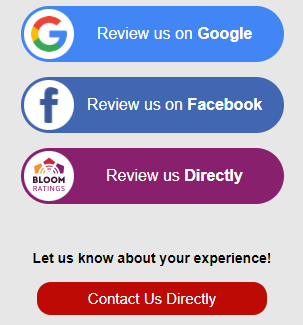
restaurant rating requestYou can also automatically send guests a ratings request straightaway. Using the Bloom platform, you can automate a message to guests after they leave your restaurant.

The message will contain direct links to your Facebook and Google ratings pages. When the guest leaves their rating and review, it is published on Facebook/Google and also recorded directly in the Bloom platform where you can monitor and manage them all in one easy place.

The message also contains a link for a guest to get in touch with you directly if they had a bad experience. This way, they may refrain from leaving a bad review online and will give you the chance to make things right with the guest (customer service recovery).

There will always be the occasional poor review, that’s just the nature of the internet. Remember that dealing with poor customer reviews the right way can actually have a positive impact on business.

At the end of the day, you should always be doing your best to provide quality service, excellent food and drink, and the best atmosphere possible.

If you do that, good ratings and reviews will naturally follow.

This will turn your restaurant’s pages on the ratings websites into a revenue generator, and may become one of the most powerful marketing tools in your arsenal.

Perhaps the most powerful way to boost revenue, improve online ratings, bring back lost customers, and improve customer lifetime values – all while saving time and money – is to invest in WiFi marketing and customer intelligence platform like Bloom Intelligence.

So, if you would like to see Bloom in action, and how easy it is to use, call us today to schedule a demo, or schedule a demo online here.

A Guide to improving restaurant ratings and reviews

Using Customer Data to Drive More Restaurant Revenue

No matter what type of marketing strategy you are employing, or when, it is crucial to have detailed customer data collection and marketing attribution tools.

Using these tools, marketers will have the customer information necessary to create targeted and personalized marketing campaigns. This will give you the upper hand over your competition when rebuilding your revenue stream before, during, and after challenging times.

Likewise, you will be able to see the results of online and offline campaigns to measure ROI and optimize over time.

using customer data

Collecting Customer Data

There are plenty of ways in which to collect customer data – official U.S. data sources, market research companies, WiFi data collection, or even DIY surveys and questionnaires.

However you collect your data, there are also tools available today to help you gather useful customer information and use it to effectively drive positive ROI.

Some of these tools will collect much more detailed data for you, in real-time, using WiFi technology – which further reduces your data collection costs and gives you a much larger sample size of your actual customers.

Knowing your customer segments and how each of these groups behaves can allow you to create much more creative and effective online campaigns for each of them on your website, your mobile app, and various online advertising channels, such as Google or Facebook.

It means knowing where they are online and offline, and appealing to their interests when and where it is most convenient for them, allowing you to focus on the most effective marketing channels.

Plus, you’ll gain a deeper understanding of what kind of information appeals to them and what questions and pain points they have.

This allows you to create high-quality, informational, and useful content for your website, social media channels, email campaigns, and offline marketing efforts.

It can also give you great insight as to how you might optimize your brand presence through testing. With customer behavior possibly changing after the pandemic, this can give you a very powerful advantage over your competition.

You can create more visually and intellectually appealing creative not only for your digital efforts but for your point of sale marketing as well.

For instance, you can provide more effective or engaging merchandise or signage to help you increase customer PPA at the POS itself, including suggestive selling by your employees.

Customer data can give you the ability to execute things you may not have even thought about, such as more effectively selecting the most profitable location for a new restaurant or store.

Likewise, it can help you better manage purchasing and staffing, and it can help you make much better decisions on special events and promotions.

Building a Customer Database: A Guide

WiFi Triggered Marketing

WiFi marketing and analytics platforms, Like Bloom Intelligence, are solutions that can passively collect customer data for you and create the detailed customer profiles necessary to thrive in today’s competitive marketplace.

But that’s just the beginning.

As you build these customer profiles, Bloom allows you to set up one-time, regularly-scheduled, and behavior-triggered marketing campaigns.

You instantly gain the ability to perform marketing in real-time, based on actual customer demographic and behavior data.

Here are examples of a few triggered campaigns you can implement immediately:

  • Birthday – When you know a customer’s birthday, you can send an offer or promotion a few days prior. Of course, you should still consider all of the other data points in their profile, such as age, gender, and personal interests. The goal is to bring that person back to your physical location, redeem your offer, spend more money, and become more loyal.
  • Come Back Soon – Another tactic is to send a marketing message to a first-time customer after they have left your place of business. When they leave your store, the tool waits a pre-configured time period (minutes, hours, days) and sends them a thank you message, and offers them an incentive to come back.
  • Give us a Rating – Using the same trigger as the ‘Come Back Soon’ example, you could send a message to a customer who has recently visited your place of business and ask them to rate their experience. If you are aware of the customer demographic and purchase decisions, and their rating is better than average, you can offer a compelling offer to get them to write a review on Yelp, Google, or any other ratings website.

You can also send triggered messages based on things like milestones, loyalty, registration, at-risk potential, good or bad customer ratings, and more. You may also send one-off messages and regularly scheduled messages to any or all of your customer segments.

Again, you want to keep in mind all the data points in your customer profiles as you create these campaigns.

Would you send a 50-year-old woman the same message you would send a 21-year-old man? Probably not.

WiFi Marketing Guide

Testing and Measuring Results

Of course, none of this will be as effective if you have no way to accurately measure the results of your efforts.

You need to make sure that the solution you’re using provides detailed and comprehensive reporting features, and the ability to track testing campaigns.

It can be tempting to use your own intuition to predict what will make people come into your restaurant or visit your store, but it’s vital to understand that customer perceptions, experiences, and likes/dislikes are limitless.

Basing marketing decisions on one person’s “feelings” can be detrimental to your business. 

WiFi analytics for restaurant marketing

You also need to be able to attribute customer behavior to specific channels and campaigns.

For instance, you want to distinguish if a customer came into your location because of an advertisement they saw online, or through an email message, or from a radio commercial.

Additionally, you want to know which particular marketing message they responded to, and to which customer segment(s) they belong.

This will allow you to optimize your marketing messages based on accurate, tangible data, and strive for continuous improvement. If you’re not measuring your marketing campaigns and ROI at this level of detail, you will not know for sure if what you are doing is helping or hurting your business.

You want to continuously test your marketing messages. Without testing, you’re always leaving potential revenue on the table.

Just make sure that the tools you are using can give you the accurate reports and KPIs required to determine which messages are working better than others.

And always allow plenty of time to give yourself a large enough sample size to confidently determine your winners – the more, the better.

Why You Need To Get Started Now

Using a WiFi analytics and marketing platform to collect customer data can make a huge difference for your business when you use them effectively.

But it can also work for your competition!

Now is the time to move forward to leverage a jump-start on other savvy marketers.

The concept is easy to master and can yield huge returns. Successful business owners not only know their business, they understand the differences in their customers and they provide specific, engaging messaging that addresses those differences.

Increasing customer frequency and spend, building customer loyalty, improving ratings, staying ahead of the competition, and striving for continuous improvement – all are potent and effective ingredients for restaurant and retail business success.

With the amount of competition out there, customer profiling can be one of the easiest methods of gaining a strong competitive advantage and ensuring lasting success.

Click for a free demo of the Bloom Intelligence platform, or call to schedule today at 727-877-8181.

If you’d like to learn more, take a look at our free guide: The Value of Customer Profiles.

Grow your business with Bloom Intelligence

How and Why to Improve Your Restaurant Customer Lifetime Values

No matter what business you are running, customer lifetime value (CLV) is one of the most important things to manage and improve. And this is even more important for restaurants.

Why? The answer is simple.

The more customers you acquire who keep coming back and spending more, the higher your overall revenue will continue to grow.

Likewise, you could reallocate customer acquisition dollars and apply them to other areas of business improvement.

As customer retention costs continue to rise, a loyal customer base becomes increasingly valuable to restaurant owners and operators in today’s extremely competitive industry.

How to Benefit From Increased Customer Lifetime Value

Customer lifetime value refers to how much time and money a customer is projected to spend at your business.

Again, one of the most important business metrics is the lifetime value of customers. In short, it is the expected amount that a single customer will spend at your business during their lifetime of patronage with you.

Customers with a high lifetime value tend to spend more per purchase, spend more often, and remain loyal for years.

The more high-value customers you have, the better your current and future business prospects. Acquiring these customers may take some time. This depends on whether increasing lifetime value is an active goal and one of the methods used in the customer acquisition and retention processes.

However, achieving rapid improvements in customer lifetime value is definitely doable.

How to Improve Customer Lifetime Value

How to Improve Your Restaurant CLV

Here are several ways you can begin improving your customer lifetime values at your restaurant.

Identify Your Best Customers

Instead of guessing at the demographics you connect with most, CLV assesses guests and finds those who typically spend the most time and money at your business.

Knowing this helps focus your marketing efforts so that when you do offer surveys and loyalty programs, you know who to target for the best results.

Connect Better with Your Guests

The CLV can also help you adapt to your customers’ preferences to engage them more appropriately.

For example, if a restaurant finds that senior citizens have the highest CLV among their customers, this shapes marketing and feedback efforts differently than with younger clients, as older generations are less likely to use social media.

In this instance, you might collect email addresses and market to those guests using email, instead of trying to create a large social media presence.

Get More Benefits from Customers

Knowing who your best guests are allows you to cater to them better. It gives you the opportunity to improve your business by capitalizing on the benefits of high CLV clients.

These customers are most likely to try new products, tell others about a company, and offer reviews and feedback. Those with high CLVs are the ones whose feedback will provide the most benefit.

Boost Loyal Customer Visits

There are several ways to improve CLV numbers, including running promotions, providing perks and loyalty programs, and creating a bigger presence online. What if you’re already doing some of these things but your CLV scores are still low?

You may need to target your efforts towards one group. Family friendly restaurants, for example, cater to a broad range of people.  Other traffic analytic tools could indicate the kinds of families to target.

You can track customer age, gender, new and repeat customers, and more. But these four metrics give you a general idea of who visits your establishment.

Tracking the demographics of return customers identifies the people to target when building loyalty to boost your CLV.

Planning New Ventures

When generating new business, you want to reach those who will turn into repeat customers. You will know who to target, as you want to reach guests who are similar to your high CLV guests.

The CLV metric also helps estimate the success of future endeavors like expanding to new locations, or adding new menu items or services.

Improve Customer Lifetime Value: A Guide

How to Improve Your Restaurant CLV

As you can see, customer lifetime value ties into many areas of your business.

Post-Sale Outreach

Restaurants can reach out to both high and low CLV customers after they finish their meal and leave.

Anything from old-fashioned coupons to email and social media marketing can help you create a connection with the customer that encourages future visits and more sales.

Also, making your interaction with the customer feel more personal and less “businessy” is always a plus.

Customer Rewards Programs

Guest loyalty programs are highly popular with consumers, and smart restaurant owners know this. So when you determine that a certain group of your customers are high CLV, it provides you with an opportunity to reward them for their loyalty.

This kind of reward program is one of the best ways to ensure the retention of such high CLV customers.

Rewards programs don’t have to be elaborate, computerized points systems. They can be as simple as punch cards offering a free sandwich with every 10 purchases.

Another simple way is to utilize your guest WiFi to measure guest return visits, then have the system email them a coupon or any other offer to redeem on their next visit.

Offering low CLV customers a rewards program in which they can get a discount on a pricey item is a useful way of convincing them to purchase that item later at the standard price – which represents a form of up-selling.

Server Up-Selling to Improve CLV

Up-Selling

Up-selling is one of the most effective ways to increase the value of low CLV customers. In this approach, restaurants try to convince the customer to add more items to their order or buy a more expensive item than the one they originally ask for.

Up-selling can also mean selling the customer a complimentary product that increases the profit margin on that particular sale.

For instance, some guests will decide to upsize their orders by getting the supersized combo instead of the regular one.

Suggesting the pairing of wine with a meal, or bringing the dessert tray before being asked, are also great ways to encourage larger tickets.

Down-Selling

Customers will often ask servers what a certain item costs. If they don’t like the answer, they’ll sometimes just walk away. This is where down-selling can be helpful.

Down-selling is a technique where restaurant servers can direct a customer to a lower-cost item that they might be more likely to buy. This approach is very useful for selling to low CLV guests since these people are more likely to be looking for bargains.

Offering a less-expensive product to these guests means at least some profit, which is better than no sale at all.

There are significant benefits for your restaurant if you understand the CLV of the people coming into your establishment.

Having these numbers in hand gives you the power to target customers through engagement, rewards programs and marketing in a way that can retain high CLV customers and convince low CLV customers to spend a bit more.

Discover Bloom Intelligence

This is only one of the many KPIs available to users of Bloom’s restaurant marketing software.

To discover more, visit our website page about Restaurant Benchmarks. There you’ll discover ways to use this powerful data to make intelligent, data-driven restaurant business decisions that you’ll be able to monitor in real-time for effectiveness.

To learn more about the ways Bloom Intelligence can help you grow your restaurant business to drive more sales, improve overall customer experience, measure customer sentiment, increase customer lifetime values, and grow your business, call us at 727-877-8181 or schedule a free demo today.

Learn More about Bloom Intelligence

Increase Customer Lifetime Values Using a WiFi Captive Portal

Customer lifetime value (CLV) is a metric used by businesses to measure the financial value of a customer over the entire period of their relationship with the company.

CLV considers not just how much a customer spends in a given period, but also how likely they are to return and spend more in the future. This information can be used to make decisions about how best to allocate resources, such as marketing dollars, in order to increase profits.

In today’s competitive restaurant space, it is more important than ever to create customer loyalty and keep them coming back.

Loyal customers boost your overall customer lifetime values and help lower marketing and customer acquisition costs. The more loyal guests you have, the less money and time you need to spend finding new customers.

There are several factors that go into calculating CLV, including the guest’s average purchase amount, the frequency of purchases, and the length of time they have visited your restaurant.

In order to optimize and increase CLV, businesses often employ retention marketing techniques such as loyalty programs and WiFi marketing, which incentivize guests to continue their relationship with your restaurant.

WiFi Captive portals to improve CLV - a Guide

Captive Portals and WiFi Marketing

In a world that’s constantly connected, WiFi marketing is becoming an increasingly important way to reach restaurant guests.

By using a WiFi captive portal to collect customer data, restaurant owners and operators can learn more about their customers and target them with relevant ads and offers.

Also, by providing free WiFi access, businesses can attract customers and keep them engaged while they’re visiting.

Here is how your WiFi captive portal can help improve your restaurant’s CLV.

How Captive Portals Help Improve CLV

When a guest logs into your free WiFi, a captive portal page will appear. A captive portal is a page that asks the guest to enter information, such as their name and email address, in order to access the internet.

Once the user logs in, it will create a customer profile for that guest. The customer profile contains all previous and future behavior data, such as dwell times or popular visit days and times.

Over time, you can ask for other information each time the guest returns and logs back in. You can collect demographic data this way, such as birthdate, gender, postal code, and more.

As you passively build a large list of customer data, you can begin segmenting guests into smaller individual lists. This is customer segmentation.

Then, you can send out different messages to each list that they will be more likely to engage with.

Improve CLV with a Customer Loyalty Program

Customer Segmentation to Improve Loyalty

Segmented, targeted marketing is much more effective in terms of engagement and ROI. Here are some examples:

  • An article from CMO.com stated that targeted advertisements are, on average, almost twice as effective as non-targeted ads.
  • eConsultancy.com reported that 74% of marketers say targeted personalization increases guest engagement.
  • In a study by The Direct Marketing Association, segmented and targeted emails generated 58% of all marketing revenue. And 77% of ROI comes from segmented, targeted, and triggered campaigns.

The major benefit of executing targeted personalized marketing campaigns is that you are sending your message to guests who are more likely to engage and respond.

With the ability to collect guest data like contact information,  demographics, physical behavior, guest ratings, purchasing habits, and other targeted information, you can deliver this type of highly effective advertising to help your business grow.

By implementing customer segmentation and executing well-thought-out targeted marketing campaigns, your guests will notice that you are communicating with them on a more personal level.

Today’s customers expect personalization when it comes to advertising, marketing, and personalized messaging. And when they see it, they engage, and you build stronger brand loyalty.

As they realize the personalization of your message and begin to engage with it, the chances of them coming back into your store increase dramatically.

Customer Segmentation to improve CLV

The Value of Restaurant CLV

Retaining loyal customers is much less expensive than acquiring new ones. According to the Harvard Business Review, acquiring a new customer can be anywhere from 5-25 times more expensive than retaining a current one.

Add to that the time between losing one customer and gaining another, and you can quickly see that an out-of-control churn rate can be devastating for any business.

Worse, if you do not recognize it, it will only continue to climb. Unfortunately, many restaurateurs do not know what their churn rate is, or which way it is trending.

Using a WiFi customer intelligence platform like Bloom Intelligence can offer another very powerful way to improve your restaurant’s CLV.

Get Back Lost Guests

Bloom uses machine learning to identify guests who are at risk of churning.

When it identifies a potentially churning guest, the system will send a message to the guest. Some restaurateurs will also include an incentive to help restore loyalty.

Bloom users are seeing up to 35%+ of their churning guests come back through their doors. This, of course, can have a huge impact on maintaining and growing your CLV.

Using your captive portal and WiFi analytics to monitor and report on your customer churn rate, you’ll be saving money compared to hiring a third-party to do this for you.

Plus, with Bloom, it is entirely passive. You don’t have to lift a finger to see your customer churn rate, which receives real-time updates.

Plus, you’ll be collecting data from a considerable sample size of your customer base. This gives you the ability to spot trends quickly.

Save at-risk customers to improve CLV

Focus on Customer Service

Another powerful way to improve customer lifetime values is to focus on providing excellent customer service.

Make sure that your team is well-trained in providing top-notch service. And be sure to respond to customer inquiries and complaints quickly and effectively.

You may also want to consider offering loyalty programs or other incentives to encourage customers to keep coming back.

By focusing on providing great customer service, you can improve customer lifetime values and boost your bottom line.

Using a WiFi marketing and analytics platform to collect a large volume of the right data, personalizing your marketing campaigns has never been easier.

You’ll feel confident as you make solid data-driven decisions. You’ll drive more company growth and build a much larger base of loyal customers.

To learn more about what you can do with data captured by your captive portal, and how to save time while increasing customer lifetime values, call us today for a free demo at 727-877-8181, or click here to schedule your free demo online.

10 Tips for Better Restaurant Reputation Management

In today’s restaurant industry, where a single online review can sway potential diners, managing your establishment’s reputation has never been more crucial.

With a majority of patrons reading reviews on websites like Google, Yelp, TripAdvisor, or Facebook before dining out, the power of digital word-of-mouth is undeniable.

In fact, according to Zippia, 92% of diners read restaurant reviews before attending a restaurant. A 2023 survey by BrightLocal found that 98% of consumers occasionally read online reviews when researching local businesses, and 76% read them regularly or always.

That’s why it is critical to have a rock-solid restaurant reputation management strategy that includes consistently obtaining ratings and reviews. Equally vital is ensuring a response to each of these reviews.

To attract new guests, and to keep your current guests coming back, it is important to manage and maintain positive ratings and reviews on a consistent basis.

Here are 10 tips for restaurant reputation management that will help you get consistent positive ratings to help your business grow.

1. Consistently Monitor Ratings and Reviews

The first step in using ratings and reviews to improve your business is to monitor and evaluate them closely and consistently.

Getting on a regular schedule of evaluating and responding to your reviews can help. As you immerse yourself in this consistent review evaluation, you’ll likely start noticing certain trends or recurring themes.

These patterns could be indicative of both strengths and areas for improvement within your business. When you identify an issue, good or bad, you should take immediate action to improve it.

It’s imperative to not only address these issues swiftly but also to ensure you maintain a steady and ongoing practice of monitoring and engaging with your guest reviews. This ongoing engagement is key to understanding customer sentiment and improving your business offerings continuously.

Tips for restaurant reputation management - responding to reviews

2. Respond to All Ratings and Reviews

A study by TNS NIPO researched over 2,000 negative online customer ratings and concluded that overall 70% of complainants hope to receive a response, while just 38% receive one. According to TNS NIPO, the success of the response is determined by 3 factors:

  • The speed of the customer review response time.
  • The quality of the solution provided to the customer.
  • How the response is provided, and how genuine the response is perceived.

Likewise, responding to positive reviews can greatly improve the reputation of your restaurant.

Many business owners often overlook the impact of responding to positive reviews, usually leaving them unaddressed. However, actively engaging with these positive comments can significantly amplify their beneficial effects.

A thoughtful response to a positive review does more than just acknowledge the customer’s satisfaction. It enhances the visibility and credibility of the review itself.

This engagement demonstrates to both the reviewer and potential patrons that the business values customer feedback and is committed to maintaining high standards of service.

Moreover, responding to positive reviews can foster a sense of community and loyalty among guests, encouraging repeat business and word-of-mouth recommendations.

By taking the time to personally acknowledge these positive experiences, business owners can strengthen their relationships with existing guests and attract new ones, ultimately boosting the overall reputation and appeal of their business.

Other upsides to responding to negative and positive reviews include making a huge difference in customer loyalty, customer service recovery, and new customer acquisition.

3. Showcase Your Ratings On Your Website
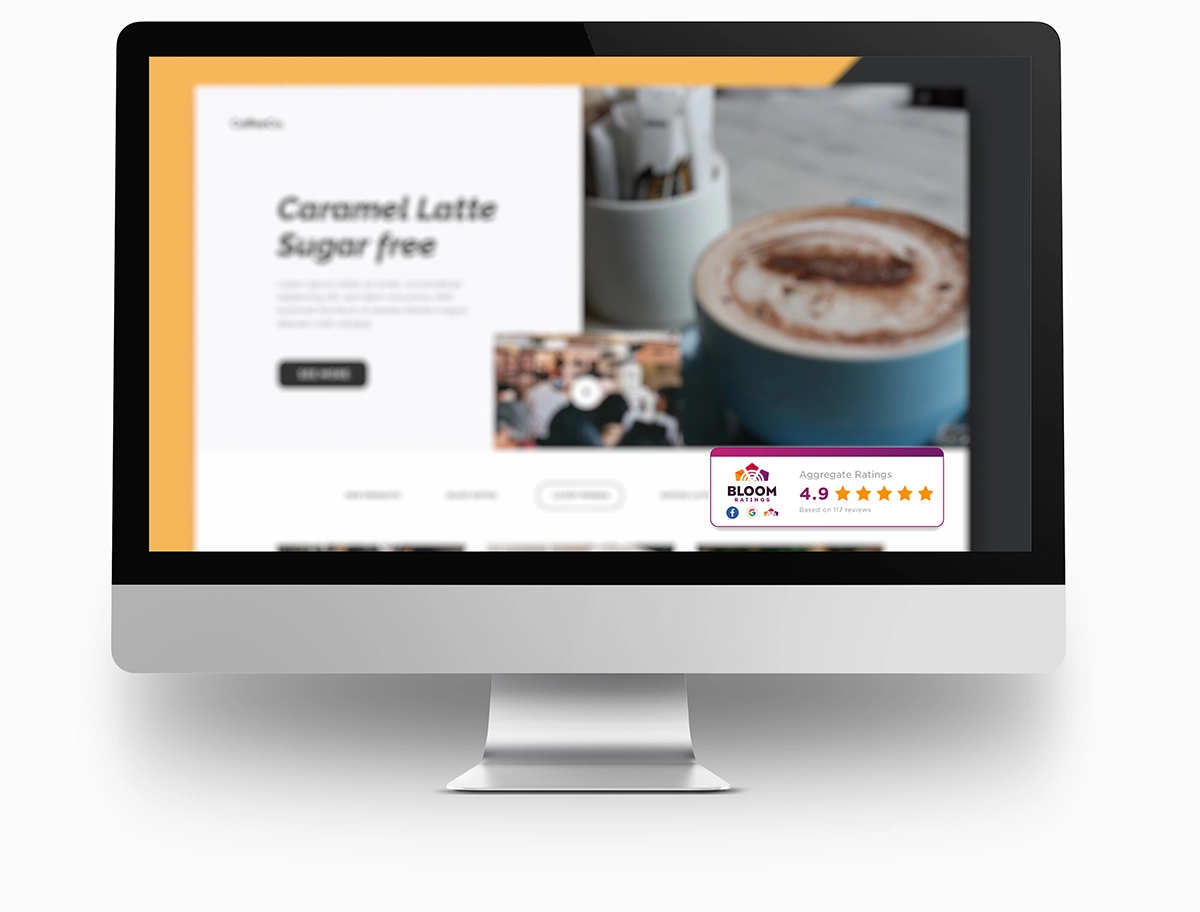
Bloom Website Ratings WidgetAs your ratings and reviews continue to build, it is a good idea to showcase those ratings on your website and social media platforms. This is powerful social proof.

Wherever possible, showcase your aggregate ratings to your followers and website visitors.

You can also use Bloom’s configurable ratings widget to proudly display all your new positive ratings on your website.

When potential guests come to your website to see your menu or learn more about you, these positive ratings act as social proof to further encourage them to come to your locations.

Over time you will likely see your ratings and reviews become even more positive. This leads to more new patrons and retention of your current customer base, which equals increased customer lifetime values and revenue for your business.

4. Make Negative Ratings Good

Even if you strive to provide stellar customer service, a guest will eventually have a negative experience.

As author and customer service strategist John Tschohl explains, “If there’s an industry that seems to have more problems, and more difficulties, and more things that can happen that are bad, it’s got to be in the restaurant business.”

Customer service recovery refers to the process of identifying a negative customer experience or a dissatisfied customer, responding to them and resolving their issue, and then converting them into a more loyal customer than if they had never had the negative experience.

This creates an excellent opportunity for you to convey to the guest how valuable they are to you and your business.

Here is a great post about how to respond to negative reviews.
5. Create Ratings Feedback Loops

Using a restaurant customer data platform like Bloom Intelligence, it is simple and easy to create an automated feedback loop to help improve your online ratings and reviews.

When a guest leaves your restaurant, an initial message will be sent to thank the guest and ask them to rate their experience.

If the guest leaves a negative review, a secondary message can be sent that would offer an apology for providing anything less than stellar service and can include an incentive to get them back through your door for that valuable second chance.

The idea is to grab the guest’s attention and offer some kind of resolution to their issue before they get to an online ratings website.

If they know their issue is being addressed in a friendly and positive manner, they will most likely refrain from complaining online.

The best part is that the entire process is automated and runs behind the scenes while you concentrate on running your business.

6. Use AI to Know Customer Sentiment

Not only are positive ratings and reviews good for your bottom line, but they are also great for spotting trends and measuring customer sentiment.

Measuring customer sentiment can give you very deep insight into your customer base. It tells you not only what customers like and dislike, but the reasoning behind the way they feel that way. 

The first step in utilizing reviews to measure sentiment is to monitor and evaluate them consistently. Once you are on a regular schedule of evaluating your reviews, you may begin to see patterns emerging.

When an issue is identified, good or bad, always take swift action to improve it.

For instance, if you are seeing consistent positive comments about a certain product, you might want to feature it as a special.

Or, if you see consistent negative reviews about a certain item, you could try modifying it, or removing it from your menu altogether.

Bloom Intelligence makes this even easier by providing an artificial intelligence-generated word cloud showing positive, neutral, and negative customer sentiment. It’s an easy way to quickly spot trends and improve upon them.
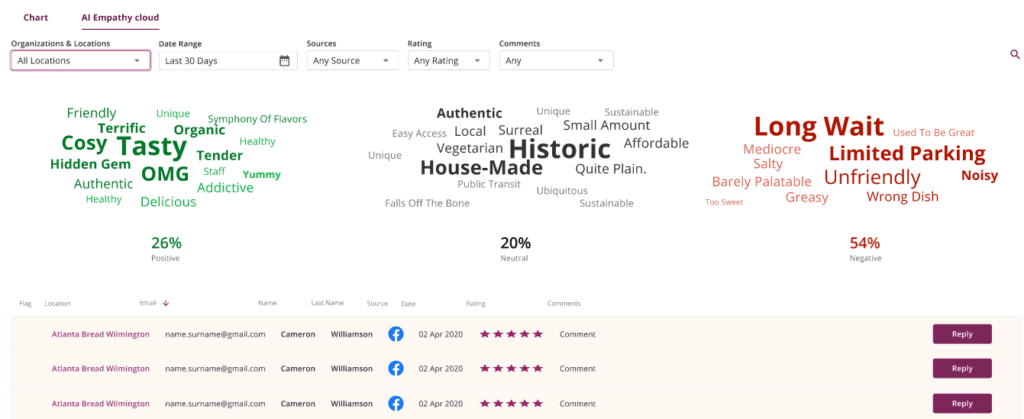
Bloom Customer Sentiment Word Cloud

7. Use AI to Optimize Marketing and Operations

Assessing customer sentiment is an invaluable strategy for gaining insights that can be leveraged to enhance your marketing tactics and operational strategies.

Take, for instance, if you notice a consistently positive sentiment towards a specific dish on your menu. This presents an excellent opportunity to highlight that item in your marketing campaigns or feature it prominently on your social media channels.

Such targeted promotion not only capitalizes on the item’s popularity but also attracts customers who are keen to try your best-reviewed offerings.

Conversely, if you observe a recurring pattern of a particular menu item being frequently removed or ’86’ed, this indicates a need to reevaluate your inventory management for that item.

You might consider adjusting the quantity ordered or altering the supply schedule to better align with its actual demand. This optimization can lead to reduced waste and improved cost-efficiency.

Similarly, if guest feedback reveals a trend related to staffing issues, such as frequent mentions of slow service or understaffing, it’s a clear signal to reassess your staffing levels.

Adjusting your staff scheduling, whether by increasing the number of staff during peak hours or ensuring better staff training, can significantly enhance the overall customer experience.

ratings and reviews white paper

8. Incentivize Your Wait Staff

Your wait staff plays a pivotal role as the primary interface between your restaurant and its clientele, effectively serving as the face of your establishment to the outside world. They engage in more direct communication with your guests than any other part of your team.

Considering this, it can be highly beneficial to motivate them to actively encourage ratings and reviews from guests who are evidently enjoying their experience.

Imagine a scenario where a waiter notices a guest visibly delighted with their meal, perhaps they’ve finished every bite on their plate, or they’ve expressed their satisfaction through generous tipping.

In such instances, your staff can be encouraged to politely encourage these guests to share their positive experiences by leaving a review online. This not only helps in boosting your restaurant’s online presence but also reinforces positive customer experiences.

To further incentivize your staff in this endeavor, you could introduce tangible rewards. For instance, offering a complimentary meal for two or a monetary bonus for every certain number of positive reviews garnered can be a great way to motivate your team.

This approach not only benefits your restaurant through an enhanced online reputation but also fosters a sense of achievement and satisfaction among your employees, creating a win-win situation.

Training wait staff on restaurant reputation management

9. Discuss In Employee and Management Meetings

To ensure that restaurant reputation management remains a priority for every member of your team, it’s essential to integrate it as a key discussion point in all staff and management meetings.

During these meetings, take the time to talk about the nature and volume of the ratings and reviews your restaurant is receiving. Analyze both their quality and quantity, highlighting what guests appreciate and areas where there’s room for improvement.

This kind of analysis provides valuable insights that can guide your team’s actions and strategies.

Encourage an open forum for brainstorming where employees can contribute innovative ideas on how to enhance the guest experience and, in turn, garner more positive reviews.

This collaborative approach not only fosters a sense of team spirit but also taps into the diverse perspectives and creativity of your staff.

Make it a point to acknowledge and commend team members who receive direct mentions in customer reviews. Highlighting these positive shout-outs in meetings can be a great morale booster and motivate other employees to strive for similar recognition.

By regularly discussing these aspects, you emphasize the importance of maintaining and improving the restaurant’s reputation, both online and offline.

This ongoing conversation keeps reputation management at the forefront of your team’s mind, encouraging them to actively contribute to positive guest experiences and, consequently, to the overall success of the restaurant.

10. Discover Bloom Intelligence

It’s time to start leveraging the power of advanced restaurant reputation management tools to grow your business.

Bloom can save you a great deal of time and energy by automating guest rating requests, displaying all your ratings and reviews in one place, and showing you accurate customer sentiment which you can use to improve customer experience.

This is only one small part of what Bloom can do to save you more time, increase customer lifetime values, increase the number of positive online reviews, win back lost guests, and improve your restaurant reputation.

If you’d like to see the Bloom restaurant marketing platform in action, and discover how you can grow your business through guest intelligence and marketing automation, schedule a free demo or call 727-877-8181.