

Category: Restaurant Marketing

How Restaurants Can Use Gift Card Sales to Boost Revenue During the Holiday Season

Every restaurant owner knows the holiday season can make or break annual profitability. What if you could unlock a revenue strategy that generates immediate cash, attracts new guests, and creates lasting loyalty—all without increasing your operational costs?

Gift cards are not just another holiday marketing gimmick. They’re a powerful financial tool that can inject thousands of dollars directly into your restaurant’s bottom line.

According to the National Restaurant Association, restaurants that strategically implement gift card programs see an average revenue boost of 15-25% during the holiday season.

This isn’t about selling pieces of plastic—it’s about creating a strategic approach that drives immediate revenue, fills seats during slow periods, and builds a sustainable customer acquisition pipeline.

During November and December, gift card sales can account for nearly half of a restaurant’s annual total, underscoring their significance in holiday revenue strategies. Moreover, the global gift card market is projected to reach $3.09 trillion by 2030, indicating a robust growth trajectory.

By strategically leveraging gift card sales and effective marketing during the holiday season, restaurants can enhance immediate profits and cultivate a loyal customer base that extends well beyond the holidays.

Here, you’ll discover a blueprint for transforming gift cards from a simple transaction into a powerful marketing and revenue generation tool.

Audio discussion and summary of this article:
 

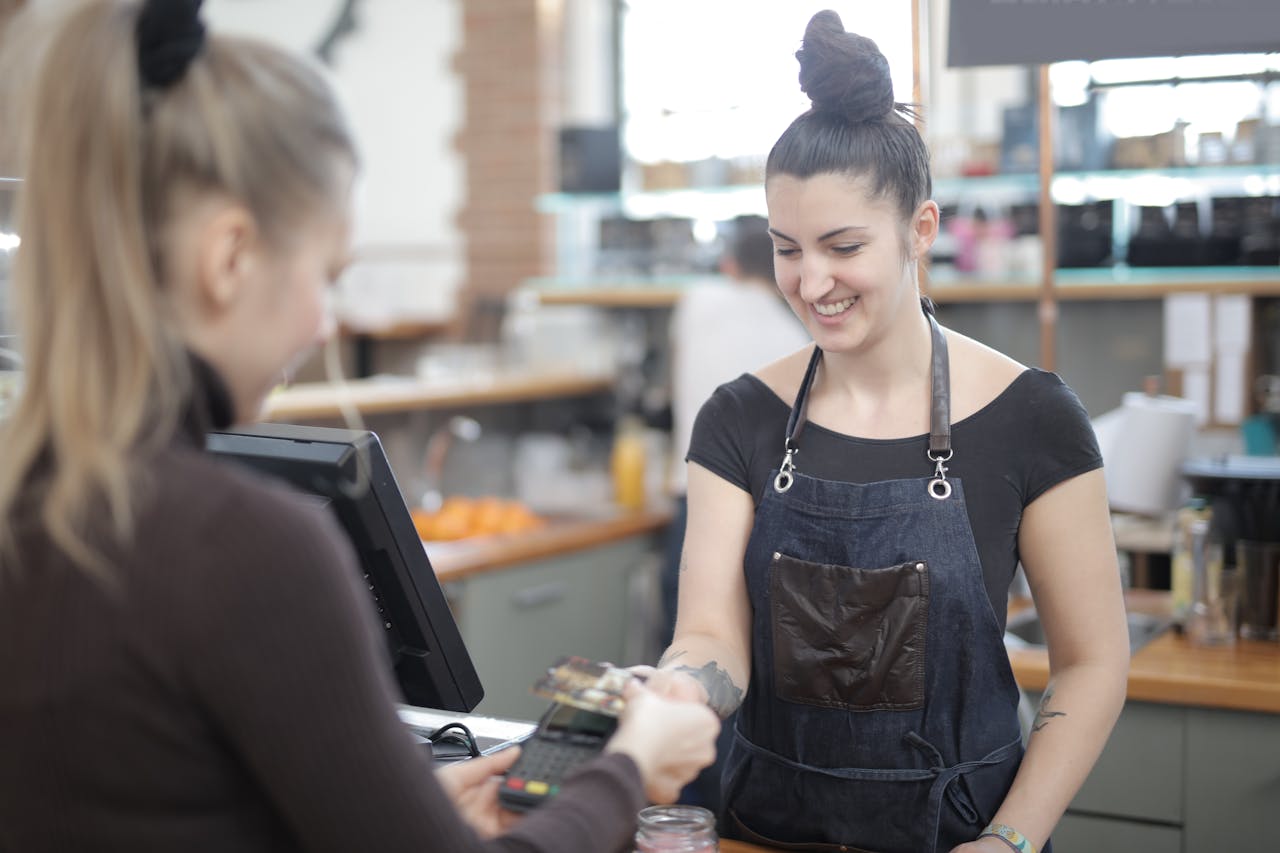
woman buying a gift card from a restaurant


The Value of Gift Cards in Restaurant Marketing

Gift cards are more than just convenient holiday gifts. They are a versatile and powerful tool in restaurant marketing. Their ability to drive revenue, attract new guests, and foster loyalty makes them an essential part of any restaurant’s strategy, especially during the holiday season.

Guests choose restaurant gift cards during the holidays for two primary reasons: convenience and flexibility.

A 2024 National Retail Federation survey revealed that 44% of holiday shoppers prefer gift cards as their go-to present, citing their universal appeal and ease of selection.

For gift-givers, restaurant gift cards solve multiple gifting challenges:

  • Eliminate guesswork about personal food preferences
  • Provide a memorable experience instead of physical items
  • Offer flexibility for recipients to choose their dining time

Recipients appreciate gift cards because they:

  • Control when and how they’ll use the gift
  • Can explore new dining experiences
  • Feel empowered to treat themselves without direct expense

Here’s why gift cards hold such significant value for your business.

1. Immediate Revenue Boost

When a guest purchases a gift card, your restaurant receives immediate cash flow, often at a time when operational costs are higher due to increased demand. The best part? Many gift cards go unredeemed or are only partially used, allowing you to retain a portion of the revenue without incurring additional costs. Even when redeemed, guests typically spend more than the card’s value, resulting in increased ticket sizes.

2. Expanding Your Guest Base

Gift cards serve as invitations for new guests to try your restaurant. They are often gifted by loyal patrons who want to share their favorite dining experience with friends, family, or colleagues. This word-of-mouth recommendation helps you reach a wider audience, introducing your restaurant to potential regulars and super-guests who might not have otherwise visited.

3. Encouraging Repeat Visits and Loyalty

For existing guests, gift cards act as a reason to return. When recipients have a positive experience, they are more likely to come back, turning one-time visits into recurring revenue. Integrating gift card redemptions with your loyalty program can amplify this effect, encouraging repeat visits and deeper engagement with your brand.

4. Low-Cost Marketing Tool

Compared to traditional advertising, gift cards are a cost-effective way to keep your restaurant top of mind. They act as physical reminders of your brand, offering sustained visibility until they are redeemed. The distribution of gift cards during peak seasons like the holidays ensures that your restaurant remains relevant throughout the year.

5. Versatility Across Multiple Channels

Gift cards can be sold and redeemed through various channels, including in-store, online, and even via mobile apps. This flexibility makes it easy for guests to purchase and use them, enhancing the overall convenience and accessibility of your restaurant. Moreover, digital gift cards allow for seamless integration with your marketing automation systems, enabling you to track usage patterns and tailor future campaigns accordingly.

Incorporating gift cards into your restaurant marketing strategy during the holiday season is a smart move. They not only provide a quick revenue boost but also help you attract new guests, encourage repeat visits, and enhance loyalty.

With their low cost and high return on investment, gift cards are an invaluable asset for driving sustained business growth.
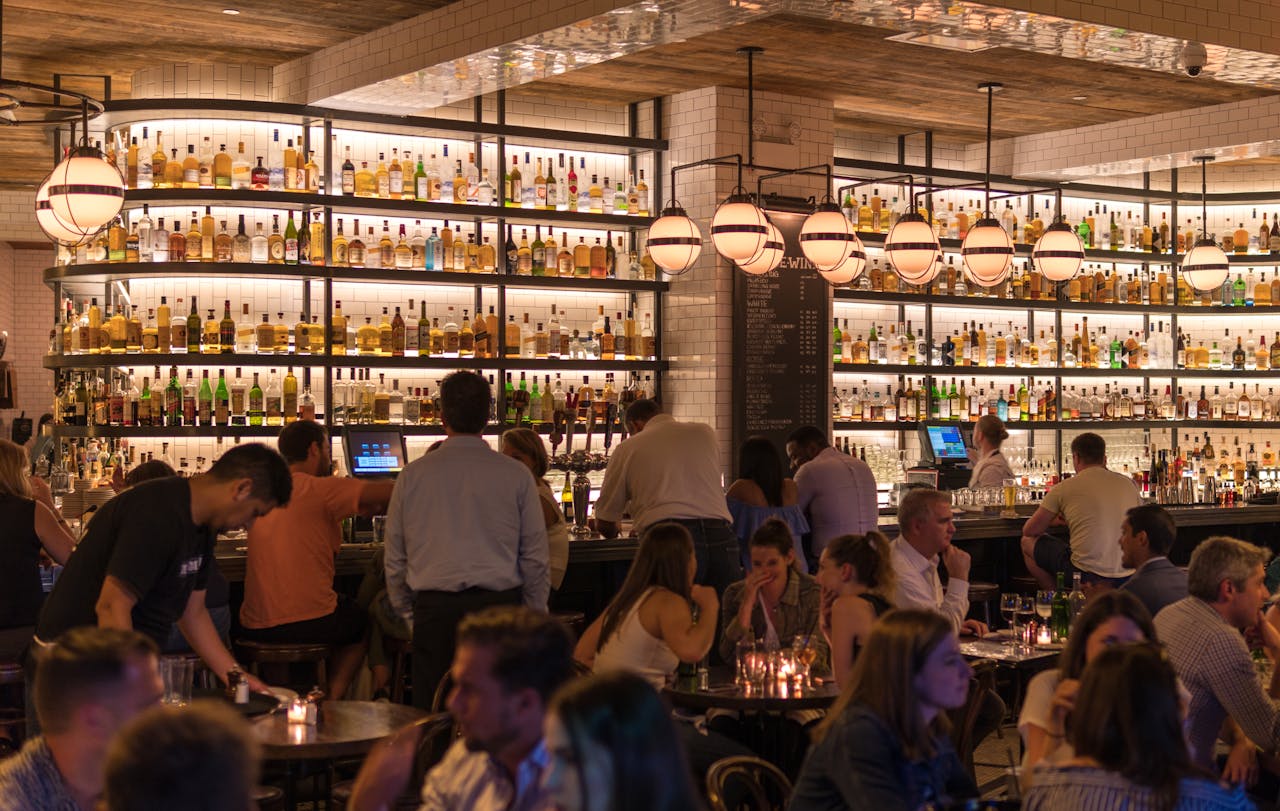
gift card sales can fill your seats


Gift Cards as a Strategic Marketing Tool

Gift cards are more than just a convenient payment method—they are a dynamic marketing tool that can significantly impact your restaurant’s growth.

By incorporating gift cards into your marketing strategy, you can leverage them to attract new guests, drive repeat visits, and even increase average check sizes.

Here’s how gift cards can elevate your restaurant’s marketing efforts.

1. Attracting New Guests

Gift cards act as powerful endorsements, often introducing your restaurant to first-time guests. When loyal patrons purchase gift cards as gifts, they essentially invite their friends, family, or colleagues to experience your restaurant. This word-of-mouth promotion can bring in new guests who may not have otherwise considered your establishment, giving you the chance to turn them into regulars. A 2023 restaurant industry report found that 65% of gift card recipients visit a restaurant for the first time through a gift card, expanding your potential customer base.

2. Driving Repeat Business

Once a guest redeems a gift card, their journey with your restaurant doesn’t end there. A positive experience increases the likelihood that they’ll return, even after the gift card balance is used. Pairing gift card promotions with loyalty programs can further encourage repeat visits, providing additional incentives for guests to keep coming back.

3. Increasing Average Spend

Gift cards often lead to higher check sizes and customer lifetime values. Research shows that guests redeeming gift cards typically spend more than the card’s value, particularly when dining with others. This upselling opportunity can significantly boost your revenue, especially during peak holiday seasons when guests are more inclined to indulge.

4. Enhancing Seasonal Promotions

During the holiday season, strategic gift card promotions can amplify your marketing efforts. Offering limited-time deals such as “Buy a $50 gift card, get a $10 bonus” creates a sense of urgency and encourages higher spending. These promotions not only drive immediate sales but also set the stage for increased guest traffic when the cards are redeemed.

5. Strengthening Brand Visibility and Engagement

Gift cards keep your brand top of mind, serving as physical or digital reminders for guests to visit your restaurant. They also provide an opportunity to engage with guests across multiple touchpoints. For example, digital gift cards can be customized with personalized messages, making the experience more memorable for both the giver and the recipient.

6. Supporting Multi-Channel Marketing

Gift cards are highly versatile, making them ideal for both in-store and online promotions. They can be seamlessly integrated into your marketing automation platforms, enabling targeted campaigns that reach specific guest segments. Whether promoting through email, social media, or your website, gift cards offer a consistent and effective way to engage with your audience.

Gift cards are a strategic asset that can drive both short-term revenue and long-term guest engagement. By using them to attract new guests, encourage repeat visits, and enhance your marketing efforts, you can create a cycle of sustained growth.

When integrated with your broader restaurant marketing strategy, gift cards become a powerful tool for building a loyal guest base and maximizing your restaurant’s potential.
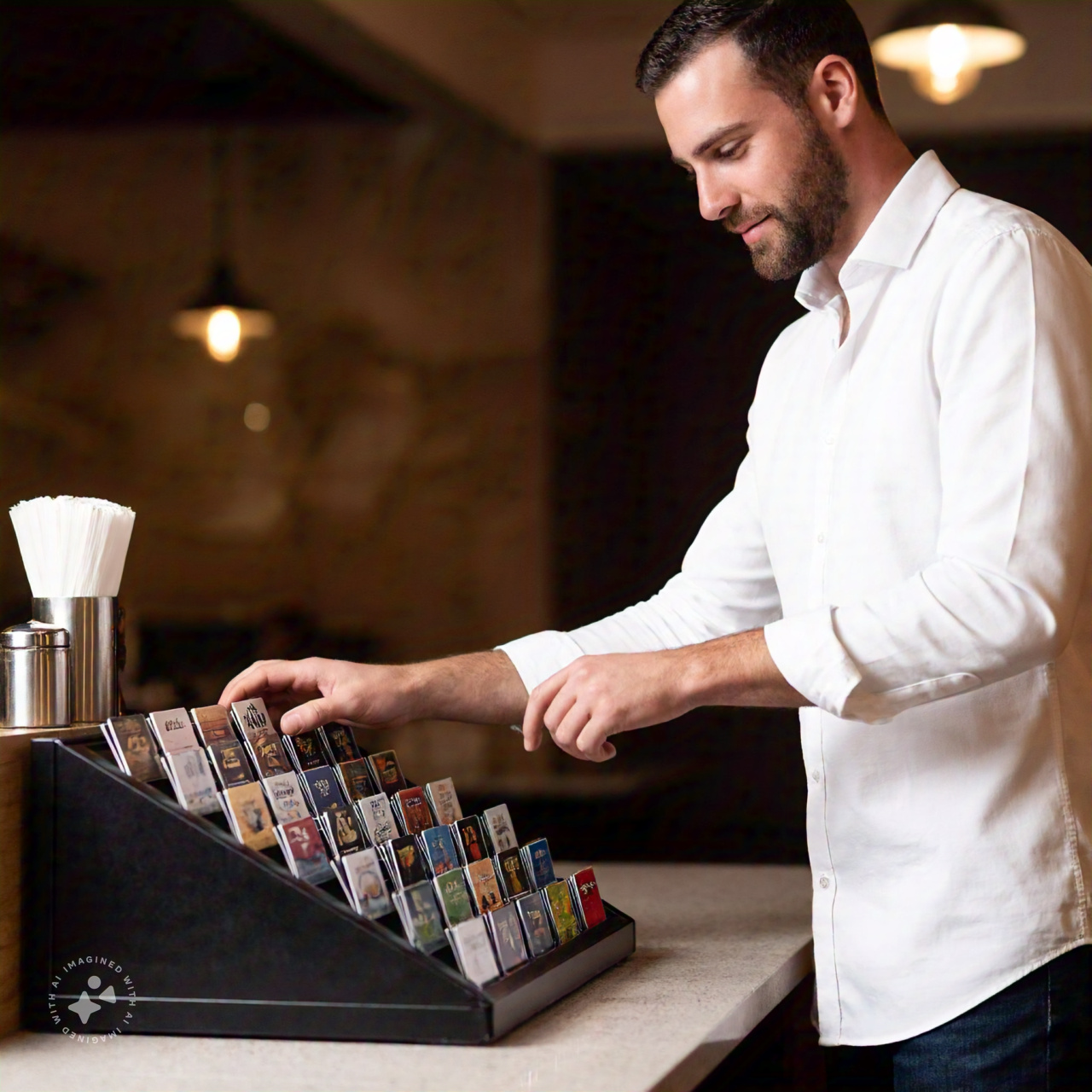
man choosing a gift card from a restaurant


Holiday Promotions and Campaigns for Gift Cards

The holiday season is the perfect time to launch creative and enticing gift card promotions. With increased demand for thoughtful and convenient gifts, restaurants can capitalize on this opportunity to boost sales and attract new guests.

By designing strategic holiday campaigns, you can maximize the potential of gift card sales and drive revenue throughout the festive season and beyond.

Here are some effective holiday promotions and campaign ideas.

Bonus Card Promotions

A classic and highly effective tactic is offering bonus cards with gift card purchases. For example, “Buy a $50 gift card, get a $10 bonus card.” This promotion encourages higher spending while rewarding the buyer, creating value for both the purchaser and the recipient. Bonus cards typically come with a shorter redemption period, driving traffic during traditionally slower months like January and February.

Limited-Time Holiday Packages

Bundle your gift cards with exclusive holiday-themed offers. For instance, pair a $100 gift card with a complimentary bottle of wine or a holiday dessert. These packages add a festive touch and make your gift cards stand out from generic options. You can also create premium bundles for corporate clients, offering catering discounts or exclusive dining experiences. Data from the National Restaurant Association shows that limited-time offers can increase gift card sales by up to 35% during the holiday season.

Digital Gift Card Discounts

Offer a discount for guests purchasing digital gift cards online, such as 10% off or free delivery for physical cards ordered through your website. Digital cards are convenient and easy to purchase, especially for last-minute shoppers. Promoting these options through email campaigns and social media can significantly boost online sales.

Social Media Giveaways

Leverage the power of social media by hosting gift card giveaways. Encourage followers to participate by tagging friends, sharing posts, or submitting their favorite holiday dining memories. This not only increases engagement but also broadens your restaurant’s reach, attracting potential new guests who may not be familiar with your brand.

“12 Days of Giveaways” Campaign

Run a festive “12 Days of Giveaways” campaign, offering daily prizes such as small gift cards, free appetizers, or discounts on larger gift card purchases. Each day’s promotion can be announced on your social media platforms, keeping your audience engaged and excited throughout the holiday season.

Corporate Gift Card Packages

Target local businesses looking for employee or client gifts. Offer bulk purchase discounts or customizable gift cards featuring the company’s logo or a personalized message. Position your restaurant as a hassle-free solution for corporate gifting, and you’ll tap into an entirely new revenue stream.

Loyalty Program Integration

Reward your most loyal guests by offering exclusive deals on gift card purchases. For instance, provide double loyalty points for every gift card bought during the holiday season. This not only incentivizes gift card sales but also strengthens your relationship with existing guests.

Holiday promotions and campaigns for gift cards can drive significant revenue and guest engagement during the festive season.

By offering a variety of creative incentives and leveraging multiple marketing channels, you can capture the attention of holiday shoppers and position your restaurant as the go-to destination for thoughtful, easy gifting.

These strategies not only boost immediate sales but also pave the way for long-term guest loyalty.

 

Marketing Channels to Promote Gift Cards

To maximize gift card sales during the holiday season, it’s essential to leverage multiple marketing channels.

A well-rounded promotional strategy ensures your message reaches a wide audience, driving both in-store and online purchases.

Here’s how to make the most of key marketing channels to boost your gift card sales.

In-Store Promotions

Capitalize on foot traffic by prominently displaying gift card promotions in your restaurant. Use eye-catching signage near the entrance, at the host stand, and on tables. Train your staff to mention gift card deals during interactions with guests, such as when presenting the check or suggesting dessert.

For added impact, offer incentives like bonus cards or holiday-themed packaging to encourage on-the-spot purchases.

Website and Online Ordering Platforms

Your website and online ordering platform are powerful tools for promoting gift cards. Ensure gift card options are easy to find, with a dedicated page that highlights holiday promotions.

Use banners and pop-ups to grab attention, and integrate the purchase process seamlessly with online ordering. For digital gift cards, emphasize the convenience of instant delivery, perfect for last-minute shoppers.

Email Marketing

Leverage your restaurant’s guest list to promote gift card offers directly to your most loyal guests. Send personalized emails highlighting holiday deals, limited-time bonus cards, and easy online purchasing options.

Use a platform like Bloom Intelligence to automate your guest segmentation and email sending, freeing up time and saving marketing budget dollars.

Schedule follow-ups to remind guests of the promotions as the holidays approach, and use segmentation to target specific groups, such as past gift card buyers or frequent diners.

Social Media

Social media platforms like Instagram, Facebook, and TikTok provide excellent opportunities to showcase your gift cards. Use festive visuals and engaging captions to capture attention and drive engagement.

Promote special offers through posts, stories, and reels, and consider using targeted ads to reach new audiences. Encourage followers to share your posts, further amplifying your reach.

Paid Advertising

Invest in digital advertising to expand your reach during the holiday season. Use Google Ads to target users searching for gift ideas, and run social media ads to promote your offers to a broader audience.

Retarget previous guests with ads highlighting your holiday gift card deals, reminding them of their interest in your restaurant.

Partnerships with Local Businesses

Collaborate with nearby businesses to cross-promote your gift cards. For example, partner with local boutiques, gyms, or spas to create bundled holiday packages that include your gift cards. This strategy helps you tap into their customer base and provides added value to your mutual guests.

SMS Marketing

Text messaging is a direct and effective way to promote time-sensitive offers. Use SMS marketing for your restaurant to alert guests about special holiday deals or flash sales on gift cards.

Keep messages short and include a link to purchase digital gift cards, making it easy for recipients to act immediately.

Loyalty Programs and Mobile Apps

If your restaurant has a loyalty program or mobile app, use these platforms to promote gift card sales. Send push notifications or in-app messages highlighting exclusive deals for loyalty members, such as bonus points or discounts on gift card purchases. This approach not only boosts gift card sales but also strengthens guest loyalty.

An integrated marketing strategy across multiple channels is essential to maximizing gift card sales during the holiday season.

By promoting your gift cards both online and offline, you can reach a diverse audience, drive revenue, and ensure your restaurant remains top of mind for holiday shoppers.

restaurant marketing team choosing channels for gift card marketing


Post-Holiday Strategies for Maximizing Gift Card Impact

The holiday season may end, but the value of your gift card sales doesn’t stop there. In fact, the post-holiday period offers a unique opportunity to build on the momentum generated by holiday gift card promotions.

By strategically encouraging gift card redemptions and driving guest loyalty, you can turn seasonal success into sustained growth.

Here are some effective post-holiday strategies to maximize the impact of your gift card campaigns.

Encourage Gift Card Redemptions During Slow Periods

January and February often bring a lull in restaurant traffic, but gift cards can help fill those empty seats. Encourage guests to redeem their cards during these slower months by offering special promotions. For example, provide a complimentary appetizer or dessert when guests use a gift card, or offer limited-time menu items to create excitement and urgency.

Track and Target Non-Redeemers

Not all gift cards are redeemed promptly, which presents an opportunity to re-engage guests. Use your customer data platform (CDP) to identify gift card recipients who haven’t redeemed their cards. Send targeted reminders through email or SMS, offering incentives like a discount on their next visit if they use their card within a specific timeframe.

Integrate with Loyalty Programs

Turn one-time gift card recipients into regular guests by integrating their redemptions with your loyalty program. When guests redeem a card, encourage them to sign up for your loyalty program to earn points on their purchases. This not only increases their likelihood of returning but also provides valuable data for future marketing efforts.

Upsell and Cross-Sell During Redemptions

Gift card redemptions often lead to higher ticket sizes, as guests tend to spend beyond the card’s value. Train your staff to upsell by suggesting premium menu items, drink pairings, or desserts. Additionally, consider offering special add-ons, such as “upgrade your entrée for $5,” to boost revenue further.

Leverage Post-Holiday Email Campaigns

Send follow-up emails to both gift card purchasers and recipients. For buyers, express appreciation and share information about upcoming events or promotions to encourage another visit.

For recipients, welcome them with a personalized message and a small incentive, like a discount on their next visit, to build a lasting relationship.

Analyze Data for Future Campaigns

Review the performance of your holiday gift card campaign to understand what worked and what can be improved. Analyze metrics such as total sales, redemption rates, and average spend per redemption.

Use this data to refine your strategy for future holiday seasons, ensuring even greater success.

Run “New Year, New Experience” Campaigns

Position the post-holiday period as a time for guests to try something new. Promote unique dining experiences or events, such as chef’s tasting menus, wine pairings, or themed nights. Encourage guests to use their gift cards to explore these offerings, enhancing their connection to your brand.

The post-holiday season is a crucial time to maximize the impact of your holiday gift card sales.

By encouraging timely redemptions, leveraging data-driven marketing, and integrating with loyalty programs, you can drive traffic, boost revenue, and turn holiday shoppers into loyal guests.

With these strategies in place, your holiday success will extend well into the new year.


Summing It Up

Gift cards are more than just a seasonal revenue boost—they are a powerful restaurant marketing tool that can drive guest acquisition, increase loyalty, and sustain your restaurant’s growth well beyond the holiday season.

From strategic holiday promotions to post-holiday engagement, gift cards provide a unique opportunity to fill seats, boost check sizes, and build lasting relationships with your guests.

By leveraging the right marketing channels, offering enticing incentives, and utilizing data-driven strategies, you can maximize the impact of your gift card program.

With the potential to increase revenue during the holiday season and generate ongoing customer engagement, gift card programs represent a critical investment in your restaurant’s financial future.

Don’t let another holiday season pass without maximizing your gift card potential. Start planning, implementing, and optimizing your strategy today.
crowded restaurant during the holiday season


Discover Bloom Intelligence

Bloom Intelligence is an AI-powered restaurant marketing platform. It includes a powerful customer data platform, automated guest data collection, one-click segmentation, marketing automation, and reputation management tools.

Data is collected from sources like WiFi logins, online reservation systems, online ordering platforms, POS systems, website forms, social media, and more. This makes it simple to analyze and segment your guest personas for your restaurant’s digital marketing and operations decisions.

Bloom makes guest data collection effortless, which allows you to quickly execute the strategies listed above, saving you time, increasing customer lifetime values, attracting new guests, improving your reputation, and boosting your bottom line.

Call us or schedule a free demo online and Bloom will show you how our restaurant marketing platform can help you save time and increase your customer lifetime values by automatically building first-party customer databases, unlocking important guest insights to trigger automated marketing at the right time and place, discover true guest sentiment, save at-risk guests, increase your current guests’ frequency, and find new guests.

Click Here to Schedule a Free Online Demo, or call 727-877-8181 to see how we can help you save time and drive tangible results for your restaurants.

From First-Time Guests to VIPs: Maximize Restaurant Revenue with Smart Audience Segmentation

Audio Summary of This Article:

Imagine knowing exactly who walks through your restaurant doors, what they love, and how to keep them coming back. What if you could predict which guests are at risk of never returning and take proactive steps to win them back?

In today’s fast-paced restaurant industry, the ability to understand and engage your guests on a personal level is no longer a competitive edge—it’s essential for survival.

Gone are the days of one-size-fits-all marketing. Your guests are diverse, each with their own preferences, habits, and potential to contribute to your bottom line.

From super guests who visit frequently and spend big to first-time visitors testing the waters, every interaction presents an opportunity to grow your business. However, without the right tools, tapping into these insights can feel overwhelming.

This is where a Customer Data Platform (CDP) like Bloom Intelligence steps in. By aggregating and organizing guest data from multiple sources, a CDP empowers you to segment your audience and implement automated personalized marketing campaigns with ease.

Whether you’re aiming to nurture new guests into loyal regulars or bring back those who are slipping away, the right strategy can turn data into dollars.

Below, we’ll explore the different types of restaurant guest audiences and their unique value to your business. You’ll also discover how using a CDP can revolutionize your marketing efforts, making audience segmentation and automation seamless.

Get ready to unlock the full potential of your guest data and drive meaningful growth for your restaurant.

restaurateur creating guest audiences


The Guest Audience Landscape: Who Are Your Diners?

To build meaningful relationships with your guests, you first need to understand who they are. Every diner who walks through your doors brings unique preferences, behaviors, and potential value to your business.

Identifying these distinctions allows you to tailor your marketing efforts, ensuring each guest feels seen and appreciated.

Here are 5 of the most important restaurant guest audiences:


1. Super Guests: The Backbone of Your Restaurant

Super guests are the holy grail of restaurant clientele. These are your most valuable customers who visit frequently, spend significantly more than average, consistently choose your restaurant over competitors, and often become brand ambassadors.

The value of super guests is extraordinary. An average super guest can generate 3-5 times more revenue than casual diners, providing stable and predictable income. They are also likely to bring friends and family and offer invaluable word-of-mouth marketing.

Marketing to super guests requires a personalized approach, including loyalty rewards, exclusive event invitations, VIP treatment, and early access to new menu items.

Super guests are your restaurant’s VIPs. These guests are invaluable for driving consistent revenue and influencing others through word of mouth and social media.

Value:

  • High customer lifetime value (LTV)
  • Brand ambassadors who attract new guests
  • Critical feedback providers for refining offerings

Potential Marketing Strategy: Reward them with exclusive perks, early access to new menus, or personalized experiences. This deepens loyalty and reinforces their importance to your brand.


2. Regulars: The Consistent Supporters

Regulars represent the steady pulse of your restaurant. They visit consistently, provide reliable revenue, appreciate familiarity and consistent quality, and often have specific menu preferences.

These guests offer a predictable revenue stream with lower customer acquisition costs and represent the potential for upgrading to super guest status.

The marketing approach for regulars should focus on personalized communication, targeted promotions, consistency in service, and gentle encouragement to increase visit frequency. By nurturing these relationships, restaurants can transform regular guests into their most valuable customers.

Regulars may not spend as much as super guests, but their frequent visits ensure steady cash flow. They are the bedrock of your business, providing predictable revenue and offering a stable customer base.

Value:

  • Reliable income stream
  • Feedback loop for improving day-to-day operations

Potential Marketing Strategy: Implement loyalty programs that encourage them to visit even more frequently. Send personalized email marketing messages or recommend dishes based on their past orders and behaviors.


3. New Guests: The Growth Potential

New guests are critical to restaurant growth. They are first or second-time visitors evaluating your restaurant’s experience and represent significant potential lifetime customer value. These diners require careful nurturing to convert them into loyal patrons.

Effective marketing for new guests involves creating warm welcome communications, offering first-time visitor specials, requesting follow-up feedback, and providing incentives for return visits.

Each interaction is an opportunity to create a lasting impression and potentially develop a long-term customer relationship.

New guests represent untapped potential. Converting them into regulars or super guests can significantly boost your restaurant’s revenue.

Value:

  • Expansion of customer base
  • Opportunity to showcase your offerings and service

Potential Marketing Strategy: Use welcome campaigns, special first-visit discounts, and follow-up messages to encourage repeat visits. Share your restaurant’s story and unique selling points.


4. Churning Guests: At-Risk Customers

Churning guests are those showing decreased engagement, reducing visit frequency, spending less, and displaying signs of disinterest. They represent a significant risk of permanent customer loss and potential revenue leakage.

Addressing churning guests requires proactive reengagement campaigns, special “we miss you” offers, personalized feedback requests, and addressing potential pain points. The goal is to understand and resolve the reasons behind their decreased engagement before losing them permanently.

Identifying these guests early is key, and allows you to take corrective action.

Value:

  • Opportunity for recovery and retention
  • Learning from feedback to improve overall guest satisfaction

Potential Marketing Strategy: Send targeted “We Miss You” campaigns offering discounts or exclusive deals to win them back. Solicit feedback to address any dissatisfaction.


5. On-the-Fence Guests: The Tipping Point Between Churners and Regulars

On-the-fence guests are those who have visited your restaurant a few times but haven’t established a consistent pattern of behavior.

These guests are at a crossroads—they could either slip away and become churning guests or be nurtured into loyal regulars.

Recognizing and engaging this audience is crucial to increasing your retention rate and building a stronger guest base.

Value:

  • Potential to become loyal regulars, increasing lifetime value
  • Cost-effective opportunity to retain guests who are already familiar with your brand
  • Rich source of feedback for improving your offerings and service

Potential Marketing Strategy: Send personalized re-engagement offers, loyalty program invitations, and feedback requests designed to get them to become loyal guests.

restaurant guests forming individual audiences


The Role of a Customer Data Platform in Audience Segmentation

Customer Data Platforms like Bloom Intelligence revolutionize audience segmentation by consolidating data from multiple sources, providing real-time guest insights, enabling precise audience targeting, and simplifying complex segmentation processes.

With a CDP, restaurants can effortlessly create audiences by tracking visit frequency, monitoring spending patterns, analyzing time between visits, and segmenting based on specific behaviors.

This technology allows for practical segmentation strategies such as frequency-based categorization, spending-based targeting, detailed behavioral tracking, or a combination of these.

Bloom consolidates guest data from various sources—POS systems, online reservations, online ordering, WiFi logins, review sites, and more—into a single, comprehensive profile for each guest. This unified view enables accurate segmentation and tailored automated marketing campaigns.

CDPs like Bloom Intelligence streamline the complex task of data aggregation and segmentation by automating much of the process. Here’s how it works:

Data Aggregation: The CDP collects data from multiple sources, such as WiFi logins, online orders, and POS systems, centralizing it into detailed guest profiles​.
Segmentation: With just a click, restaurateurs can segment guests into categories such as regulars, high spenders, new guests, or those who are at risk of churning.
Personalized Marketing: Automated marketing campaigns can be triggered based on guest behavior. For instance, a new guest might receive a welcome email, while a churning guest gets a special offer to entice them back.

restaurateurs creating marketing campaigns based on audiences

Value of Targeted Marketing for Each Audience

Targeted marketing allows you to speak directly to your guests’ needs and preferences, making your messages more relevant and impactful. By tailoring your approach for each audience segment, you can boost engagement, increase loyalty, and maximize the return on your marketing investments.

1. Increased Engagement and Loyalty

Personalized marketing ensures guests feel valued. According to research, 72% of consumers only engage with marketing messages tailored to their interests (Forester). CDPs allow you to send highly relevant messages that resonate with each audience, improving engagement and loyalty.

2. Improved ROI on Marketing Spend

Targeted campaigns yield better results than generic promotions. For example, a campaign aimed at super guests could boost revenue through exclusive event invitations, while re-engagement campaigns for churning guests can improve visit frequency at a low cost.

3. Higher Guest Satisfaction and Retention

CDPs help restaurants identify and address guest pain points, leading to improved satisfaction. By monitoring feedback and adjusting offerings based on real-time data, you can turn occasional visitors into long-term regulars​.


Conclusion: Transform Your Guest Relationships with Data-Driven Precision

In today’s competitive restaurant landscape, understanding your guests is no longer a luxury—it’s a necessity.

Identifying key audiences like super guests, regulars, new guests, churning guests, and those on the fence can transform your marketing strategy and elevate your business.

By leveraging a Customer Data Platform (CDP) like Bloom Intelligence, you gain a centralized, real-time view of your guests, enabling you to segment and engage them with pinpoint accuracy.

A CDP doesn’t just aggregate data, it empowers you to act on it. Through seamless integration with marketing automation, you can deliver personalized messages, boost guest loyalty, and drive measurable growth—all while saving time.

Whether it’s re-engaging a lapsed guest, rewarding your most loyal patrons, or nurturing first-time visitors, automation ensures that your marketing efforts are efficient, impactful, and scalable.

In an industry where guest experience reigns supreme, data-driven marketing can be the key to sustained success.

By embracing the power of segmentation and automation, you’re not just keeping your seats filled—you’re building lasting relationships that turn occasional diners into lifelong advocates.

Take control of your guest data, harness the potential of targeted marketing, and watch your restaurant thrive in the modern era.


Discover Bloom Intelligence

Bloom Intelligence is an AI-powered restaurant marketing platform. It includes a powerful customer data platform, automated guest data collection, one-click segmentation, marketing automation, and reputation management tools.

Data is collected from sources like WiFi logins, online reservation systems, online ordering platforms, POS systems, website forms, social media, and more. This makes it simple to analyze and segment your guest personas for your restaurant’s digital marketing and operations decisions.

Bloom makes guest data collection effortless, which allows you to quickly execute the strategies listed above, saving you time, increasing customer lifetime values, attracting new guests, improving your reputation, and boosting your bottom line.

Call us or schedule a free demo online and Bloom will show you how our restaurant marketing platform can help you save time and increase your customer lifetime values by automatically building first-party customer databases, unlocking important guest insights to trigger automated marketing at the right time and place, discover true guest sentiment, save at-risk guests, increase your current guests’ frequency, and find new guests.

Click Here to Schedule a Free Online Demo, or call 727-877-8181 to see how we can help you save time and drive tangible results for your restaurants.

SMS Marketing for Restaurants: Turning Data into Dollars

Audio Summary of This Article:


In today’s restaurant industry, connecting with your guests has never been more critical, or more challenging. With competition at every corner, you need a marketing strategy that’s not just effective but immediate, personal, and proven to deliver results.

Enter SMS marketing: a powerhouse tool with open rates as high as 98% and the ability to turn a simple text into a filled table. Imagine reaching your guests instantly with personalized offers, event invitations, surveys, and loyalty updates—all delivered straight to their phones.

This isn’t just another marketing trend. SMS marketing is driving real revenue for restaurants, helping owners and operators like you bring back lost guests, engage loyal regulars, and boost sales during slow periods.

But what makes SMS marketing so effective? How can it fit seamlessly into your operations? How can leveraging guest data from a customer data platform (CDP) take your campaigns from good to extraordinary?

This article answers all these questions and more, providing the insights and strategies you need to make SMS marketing a game-changer for your business.

Below, we explore why SMS marketing is so effective, highlight the latest industry statistics, and provide actionable examples of how restaurants can use guest data from a customer data platform (CDP) to personalize their SMS campaigns.

Keep reading to discover how this simple yet powerful tool can transform your restaurant’s guest engagement and drive measurable growth.

Why SMS Marketing Works

SMS marketing isn’t just effective—it’s transformative for restaurants aiming to stand out in a crowded market. With unparalleled immediacy, unmatched engagement rates, and the ability to deliver personalized, data-driven messages, SMS marketing connects you with guests like no other channel.

Here’s why it’s become an essential ingredient in the recipe for restaurant success.

1. Instant Communication

SMS marketing allows restaurants to reach their guests in real time. Unlike emails, which may sit unopened, or social media posts, which can get lost in a crowded feed, text messages grab immediate attention.

Guests rarely ignore notifications on their mobile phones, making SMS an ideal medium for urgent promotions like limited-time offers or flash sales.

2. High Engagement Rates

Statistics consistently show SMS has the highest engagement rates among marketing channels. Guests are more likely to open and act on a text message than an email or social media ad.

For time-sensitive offers or updates, SMS ensures your message is seen and acted upon quickly.

3. Personalization Potential

The ability to personalize messages based on guest preferences, behaviors, and demographics is a significant advantage of SMS marketing.

Restaurants can use CDPs to segment their audience into categories like loyal regulars, first-time guests, and at-risk guests. Personalized SMS campaigns based on these insights are not only more engaging but also more effective at driving conversions​.

4. Cost-Effectiveness

SMS campaigns offer a low-cost way to deliver high-impact messages. With minimal investment compared to traditional advertising, SMS marketing ensures a high return on investment.

For small and mid-sized restaurants operating on tight budgets, SMS offers an affordable way to compete with larger chains​.

5. Direct Relationship-Building

SMS marketing establishes a direct, one-on-one communication channel with your guests.

This fosters a sense of connection and loyalty that keeps guests coming back. When guests feel that a restaurant values them enough to send personalized offers or updates, their emotional bond with the brand strengthens.

The Monetary Value of SMS Marketing: Latest Statistics

SMS marketing not only engages guests but also drives measurable financial results. Here are some of the latest statistics highlighting its value:

  • High ROI: Businesses report an average ROI of $36 for every dollar spent on SMS campaigns. This far outpaces most traditional marketing methods.
  • Preferred Channel: A staggering 75% of guests say they prefer receiving promotional offers via SMS over email or social media. This preference underscores the effectiveness of SMS in reaching your audience where they are most responsive.
  • Exceptional Redemption Rates: SMS marketing drives action. Coupons delivered via SMS have a redemption rate of approximately 10%, which is much higher than email.
  • Immediate Impact: With 90% of messages read within three minutes, SMS is the go-to channel for time-sensitive promotions.

The numbers don’t lie: SMS marketing delivers exceptional value for restaurants looking to engage their guests and drive revenue. From sky-high open and redemption rates to an impressive ROI, the statistics demonstrate why this channel has become a cornerstone of modern restaurant marketing.

By tapping into the immediacy and personalization that SMS offers, you can connect with your audience in a way that other channels simply can’t match.

The financial rewards of SMS marketing make it not just a smart choice but an essential one for any restaurant aiming to thrive in today’s competitive landscape.


Examples of SMS Marketing Using CDP Data and Segmentation

A restaurant CDP consolidates guest data from various sources—like point-of-sale (POS) systems, online ordering platforms, and reservation tools—into detailed guest profiles. This rich dataset allows for precise audience segmentation, which in turn enables highly targeted and effective SMS campaigns.

1. Welcome Offers for First-Time Guests

Use Case: Attract repeat visits by welcoming new guests with an exclusive discount.

  • Segment: First-time guests identified by the CDP through WiFi, online ordering, POS, or reservation data.
  • Message Example: “Thanks for dining with us, [Guest Name]! Here’s 20% off your next visit. Show this text when you return—we can’t wait to serve you again!”

2. Re-engagement Campaigns for At-Risk Guests

Use Case: Win back guests who haven’t visited in a while by offering a compelling incentive.

  • Segment: At-risk guests flagged by CDP analysis of past visit frequency.
  • Message Example: “Hi [Name], it’s been a while! We’d love to see you again—enjoy a free appetizer on us when you visit this week.”

3. Personalized Event Invitations

Use Case: Delight regulars by inviting them to exclusive events based on their preferences.

  • Segment: High-value guests with upcoming milestones like birthdays or anniversaries.
  • Message Example: “Celebrate your birthday in style, [Name]! Book a table for your special day and enjoy a complimentary dessert on us.”

4. Limited-Time Lunch Promotions

Use Case: Drive traffic during slow periods by targeting nearby guests with time-sensitive deals.

  • Segment: Guests within a specific radius identified via postal code.
  • Message Example: “Lunch break? Stop by for our $10 lunch combo today! Available from 11 AM to 2 PM.”

5. Loyalty Rewards Updates

Use Case: Encourage repeat visits by updating loyalty members about their rewards.

  • Segment: Guests enrolled in the restaurant’s loyalty program.
  • Message Example: “Hey [Name], you’ve earned 250 points! Redeem them for a free dessert or rack up more points this weekend.”

These are only a few examples of how SMS marketing, powered by a customer data platform, can elevate your restaurant’s guest engagement.

The real magic lies in the endless possibilities for personalization and segmentation. Whether you’re targeting new visitors, re-engaging lapsed guests, or delighting loyal regulars with exclusive offers, SMS marketing enables you to deliver timely, relevant messages that resonate.

By leveraging guest data to tailor your campaigns, you not only drive measurable results but also foster stronger relationships with your guests—turning one-time diners into lifelong advocates for your brand.


Keys to Success in SMS Marketing

Launching an SMS marketing campaign is one thing; ensuring its success is another. To truly maximize your results, you need to go beyond just sending texts.

From perfect timing to personalization and compliance, these key strategies will help you craft SMS campaigns that engage guests, drive loyalty, and boost your bottom line.

  • Obtain Explicit Consent: Always ensure guests opt-in to receive SMS communications. Compliance with regulations like the Telephone Consumer Protection Act (TCPA) is non-negotiable​.
  • Perfect Your Timing: Send messages at optimal times to maximize engagement. For example, mid-morning texts work well for lunch promotions, while early evening texts are better for dinner specials.
  • Personalize and Segment: Use data from your CDP to craft messages that speak directly to your guests’ preferences and behaviors. Avoid generic broadcasts that feel impersonal​​.
  • Test and Iterate: Conduct A/B testing on your campaigns to identify what works best. Experiment with different offers, message lengths, and tones​​.
  • Integrate Across Channels: Combine SMS with email marketing, social media ads, and push notifications for a cohesive multi-channel strategy that amplifies results.


The Competitive Edge of SMS Marketing with a CDP

The integration of SMS marketing with a CDP takes personalization to the next level. By centralizing data from diverse touchpoints, a CDP allows restaurants to understand their guests deeply and craft highly targeted SMS campaigns.

Whether it’s re-engaging a lapsed guest or delighting a loyal regular with a personalized offer, CDPs ensure your SMS campaigns resonate.

In a fiercely competitive industry, SMS marketing offers restaurants a powerful way to engage with guests, drive revenue, and build loyalty.

When powered by a CDP, the potential of SMS marketing expands even further, enabling restaurants to deliver experiences that feel personal, relevant, and timely.

This combination not only fills seats but also strengthens the bonds between restaurants and their guests, ensuring long-term success.


Discover Bloom Intelligence

Bloom Intelligence is an AI-powered restaurant marketing platform. It includes a powerful customer data platform, automated guest data collection, marketing automation, and reputation management tools.

Data is collected from sources like WiFi logins, online reservation systems, online ordering platforms, POS systems, website forms, social media, and more. This makes it simple to analyze and segment your guest personas for your restaurant’s digital marketing and operations decisions.

Bloom makes guest data collection effortless, which allows you to quickly execute the strategies listed above, saving you time, increasing customer lifetime values, attracting new guests, improving your reputation, and boosting your bottom line.

Call us or schedule a free demo online and Bloom will show you how our restaurant marketing platform can help you save time and increase your customer lifetime values by automatically building first-party customer databases, unlocking important guest insights to trigger automated marketing at the right time and place, discover true guest sentiment, save at-risk guests, increase your current guests’ frequency, and find new guests.

Click Here to Schedule a Free Online Demo, or call 727-877-8181 to see how we can help you save time and drive tangible results for your restaurants.
Thanksgiving Ideas for Restaurants: Smart Marketing for Your Restaurant This Thanksgiving

Thanksgiving presents a golden opportunity for restaurateurs to elevate their business by combining hospitality, tradition, and strategic restaurant marketing. As guests seek out memorable dining experiences to celebrate with loved ones, your restaurant can become the centerpiece of their holiday.

A well-executed Thanksgiving strategy not only brings in extra revenue but also creates lasting connections that turn first-time visitors into loyal regulars.

By offering unique experiences and catering to the holiday spirit, you’ll not only fill seats on one of the most celebrated days of the year but also boost customer loyalty and enhance your reputation.

Ready to make Thanksgiving your most profitable and impactful day yet? Read on for some creative, actionable ideas to attract and delight guests this holiday season.

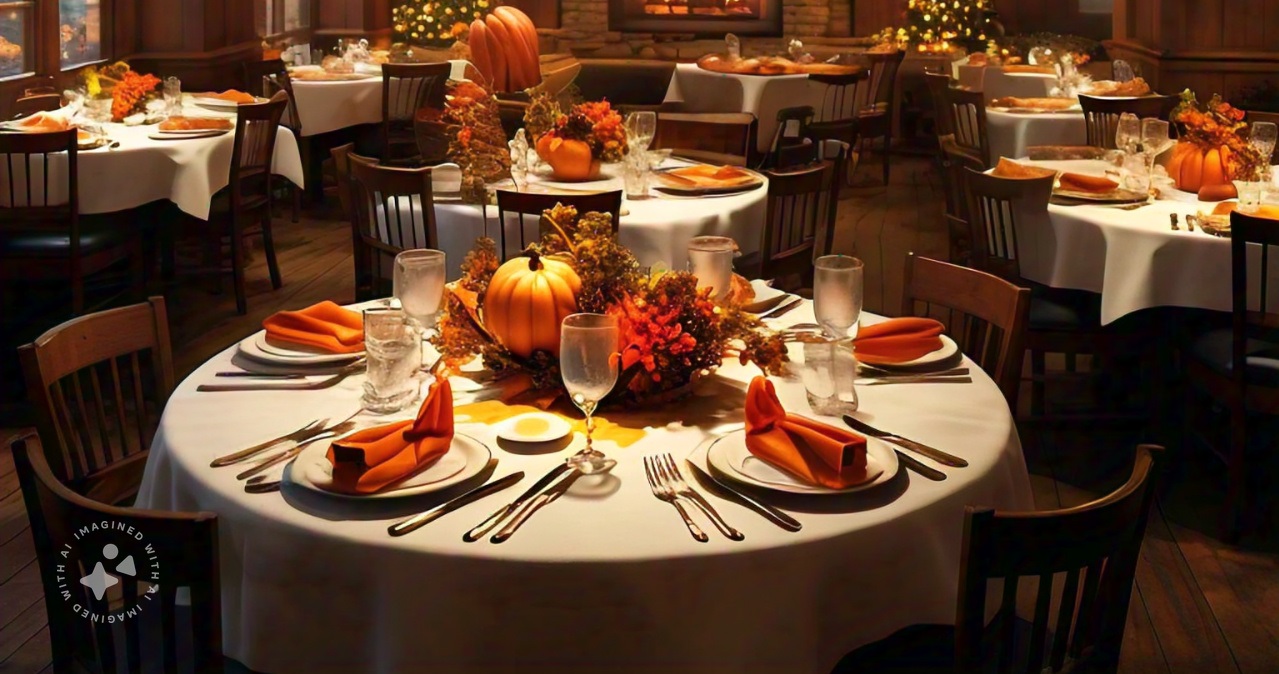
thanksgiving theme in a restaurant

1. Host A Special Thanksgiving Feast

Thanksgiving is synonymous with indulgence, warmth, and togetherness, making it a prime opportunity for your restaurant to shine.

Hosting a dedicated Thanksgiving feast can position your restaurant as a convenient, delicious, and festive alternative to home-cooked meals. Here’s how you can elevate the experience and make it irresistible to potential guests.

Create a Thoughtful Menu

Design a Thanksgiving menu that blends tradition with your restaurant’s unique flair. Offer a mix of holiday classics like roasted turkey, stuffing, and mashed potatoes alongside innovative dishes that showcase your chef’s creativity. Consider options such as:

  • Family-style platters: Perfect for groups who want to share a meal, enhancing the communal vibe of Thanksgiving.
  • Prix fixe menus: A streamlined option that allows guests to enjoy multiple courses without having to make decisions, delivering a cohesive dining experience.
  • A la carte options: Give guests the flexibility to customize their meals by choosing their favorite holiday dishes.
  • Include vegetarian and vegan alternatives, such as lentil loaf or stuffed acorn squash, to cater to diverse dietary needs.

Offer Special Packages

To attract larger parties and families, create bundled packages that include appetizers, main courses, desserts, and drinks for a set price. This simplifies the decision-making process and can increase your per-ticket revenue.

Include a kids’ menu to cater to families. Offer smaller portions of Thanksgiving favorites or simple dishes like mac and cheese with a festive twist.

Enhance the Guest Experience

Transform your restaurant into a cozy, festive haven with thoughtful décor, soft lighting, and background music that evokes the holiday spirit. Staff can wear seasonal accents like autumn-themed aprons or pins to create a warm and welcoming environment.

Consider adding these touches to heighten the experience:

  • Complimentary treats: Greet guests with a seasonal welcome drink like spiced cider or a mini pumpkin tart.
  • Interactive elements: Offer DIY dessert stations, where guests can customize pies or decorate cookies.
  • Photo opportunities: Set up a Thanksgiving-themed photo booth or backdrop where guests can capture memories to share on social media.

Encourage early bookings to ensure full capacity on Thanksgiving. Use online reservation platforms, your website, and social media to highlight the importance of securing a table ahead of time. Incentivize guests to reserve early with offers like 10% off or a complimentary dessert.

Promote your Thanksgiving feast across all possible channels to reach the widest audience possible.

Email marketing is another great way to get the word out.

By hosting a well-planned Thanksgiving feast, your restaurant can become a cherished part of your guests’ holiday traditions. Delivering excellent food and a festive atmosphere not only boosts your revenue but also creates lasting memories that keep guests coming back for years to come.

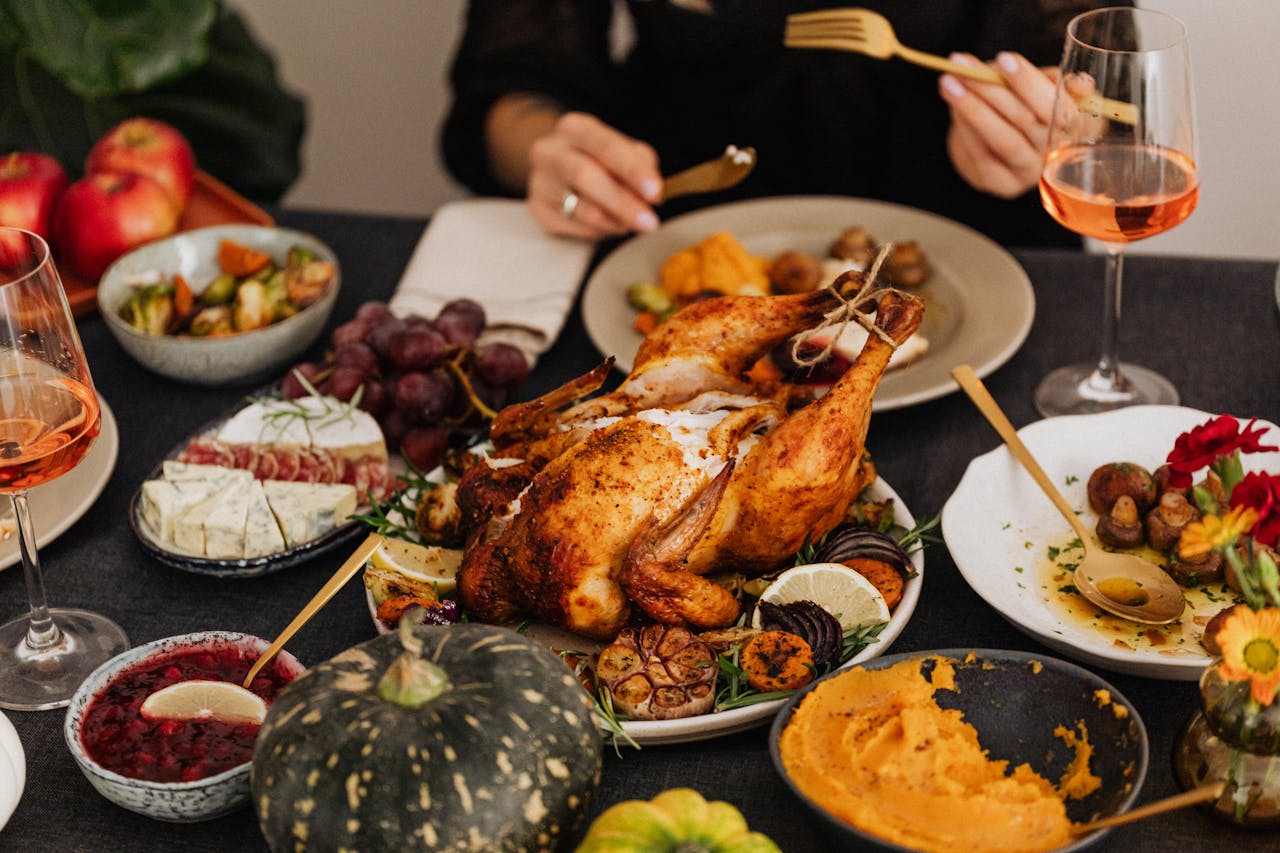
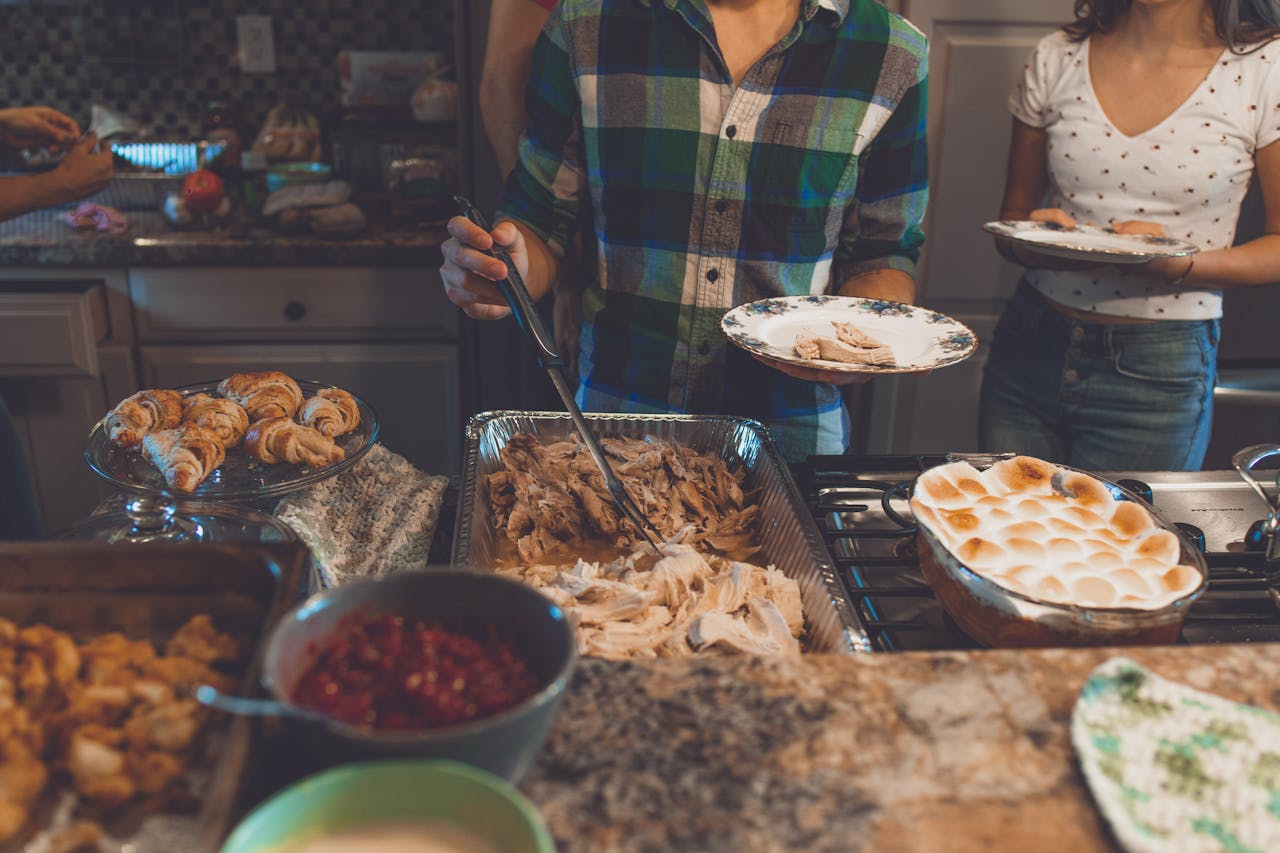
thanksgiving buffet feast at a restaurant

2. Offer Pre-Order Thanksgiving Meals

For many families, Thanksgiving means a table laden with delicious food—but the time, effort, and stress of preparing it can dampen the joy of the occasion.

Offering pre-order Thanksgiving meals allows your restaurant to step in as the hero, giving guests the chance to enjoy a traditional holiday feast without the hassle.

This approach not only caters to a growing demand for convenience but also opens up another lucrative revenue stream for your business.

Design a Convenient and Irresistible Package

Craft meal kits or fully-prepared feasts that include all the Thanksgiving essentials, such as turkey, stuffing, mashed potatoes, green beans, and pie. To stand out, consider offering customizable options:

  • Custom Meal Sizes: Cater to varying party sizes, such as packages for 2, 4, or 10 guests.
  • Dish Add-Ons: Allow guests to select additional items, like extra gravy, side dishes, or specialty desserts.
  • Dietary Options: Include vegetarian, vegan, gluten-free, and low-calorie versions of classic dishes to appeal to a wider audience.
  • Create a signature dish or dessert unique to your restaurant that guests can’t get anywhere else, making your pre-order meals even more enticing.

Ease of ordering is critical to the success of your pre-order program. Use your website, app, or online ordering platform to enable seamless ordering.

  • Clearly list options, pricing, and details about pickup or delivery times.
  • Include photos and descriptions to make the offerings as mouthwatering as possible.
  • Offer online payment options to make the process quick and convenient.
  • Send confirmation emails and reminders to keep your guests informed and excited about their upcoming meal.

Add thoughtful touches to make the experience at home feel special, such as heating instructions, decorative packaging, and pairing suggestions.

Timing is everything. Begin promoting your pre-order meals long before Thanksgiving to allow ample time for planning. Use multiple marketing channels to spread the word:

  • Social Media: Share videos of your chefs preparing the dishes, testimonials from previous years, or behind-the-scenes footage to build excitement.
  • Email Marketing: Send a series of emails featuring enticing photos, countdowns to the pre-order deadline, and reminders to act fast.
  • In-Restaurant Promotions: Use table tents, posters, or conversations with guests to let your in-house diners know about the pre-order option.
  • Create urgency with limited-time discounts for early orders or set a cap on availability, emphasizing that quantities are limited.

After Thanksgiving, don’t let the relationship end there. Send a thank-you message to your guests, asking for feedback about their experience. Offer a bounce-back incentive, such as a discount or free appetizer for their next visit, to encourage repeat business.

Pre-ordered thanksgiving meal

3. Leverage Marketing Automation for Seasonal Campaigns

Thanksgiving is one of the busiest times of the year for restaurants, and marketing automation can help ensure that your campaigns are effective, timely, and personalized without adding to your team’s workload.

By automating communications and promotions, you can engage your audience, fill your reservation book, and drive pre-orders, online orders, or visits—all while focusing on delivering an exceptional guest experience.

Marketing automation tools allow you to plan, execute, and monitor your Thanksgiving campaigns effortlessly. With a platform like Bloom Intelligence, you can:

  • Schedule promotional emails, texts, and other messaging in advance.
  • Send targeted messages based on guest data, such as dining frequency, spending habits, or demographics.
  • Create custom workflows for tasks like reservation confirmations or follow-ups​.
  • Use automation to follow up with guests who visited on Thanksgiving with a thank-you message and an incentive to return during the holiday season.

One of the most powerful features of marketing automation is the ability to segment your audience based on demographics, behavior, or preferences. For example, you can:

  • Target loyal guests with exclusive early access to Thanksgiving pre-orders or special menu items.
  • Reach at-risk guests with a personalized “We Miss You” promotion encouraging them to return for the holidays.
  • Send local patrons updates about events like a Friendsgiving or Black Friday brunch​.
  • Make sure your guests don’t miss out on your Thanksgiving offerings with timely reminders.

Personalization matters—studies show that segmented, personalized marketing campaigns can significantly boost engagement and revenue.

Automation tools don’t just send messages. They also provide valuable insights into what’s working and what’s not. Use analytics to monitor open rates, click-through rates, and engagement levels for your Thanksgiving emails.

Track which segments respond best to specific offers, helping you refine future campaigns and measure ROI by linking marketing efforts to reservations, orders, or guest visits.

Then, use these insights to plan even more effective campaigns for Christmas, New Year’s, and other holidays.

The greatest advantage of marketing automation is the time it saves. Instead of manually managing promotions, you can focus on creating memorable guest experiences, coordinating staff, and ensuring smooth operations on Thanksgiving Day.

Pro Tip: Partner with an all-in-one restaurant marketing platform that integrates marketing automation with customer data and reputation management to streamline your efforts and maximize impact.

restaurant manager enjoying benefits of marketing automation

4. Launch a Loyalty Program Thanksgiving Campaign

Thanksgiving is an ideal time to reward loyal guests and encourage repeat visits by using your restaurant’s loyalty program creatively. Offering exclusive Thanksgiving-related perks helps your most dedicated diners feel valued while driving engagement and revenue.

Start by creating special promotions that are only available to loyalty members. For instance, offer early access to Thanksgiving reservations or pre-order menus, giving them a sense of priority and exclusivity.

You can also introduce holiday-specific rewards, such as bonus points for dining during the Thanksgiving period or ordering a holiday meal package. This not only increases their incentive to engage but also strengthens their connection with your brand.

Tailor your messaging to highlight the gratitude your restaurant feels for their continued support. Send personalized emails or text messages thanking them for their loyalty and inviting them to enjoy exclusive Thanksgiving benefits.

These messages can be crafted with warmth and festive cheer to resonate emotionally, making guests feel appreciated and special.

Additionally, use your restaurant’s loyalty program data to identify high-value guests and VIP diners who contribute the most to your bottom line. Offer them premium rewards, such as a complimentary dessert, a holiday gift, or even a private dining experience during Thanksgiving.

By elevating their experience, you reinforce their relationship with your brand and increase the likelihood of future visits.

Your Thanksgiving loyalty campaign doesn’t need to end with the holiday. Consider extending the celebration by offering bounce-back rewards for visits during the rest of the holiday season. This could include discounts for December reservations or exclusive deals on Christmas or New Year’s Eve dining.

By keeping loyal guests engaged beyond Thanksgiving, you maximize their lifetime value and ensure your restaurant stays top-of-mind throughout the year.

Using your loyalty program effectively during Thanksgiving not only drives immediate traffic but also strengthens long-term guest relationships. When guests feel appreciated, they are more likely to return, bringing consistent value to your business far beyond the holiday season.

Loyal restaurant customers enjoying thanksgiving experience

5. Offer Gift Cards as the Perfect Thanksgiving Surprise

Thanksgiving is not only a time for delicious meals but also for showing appreciation to loved ones. Offering gift cards during this holiday provides your guests with a thoughtful and convenient way to share the joy of your restaurant with friends and family.

Gift cards are a versatile revenue booster, ideal for both those who want to give the gift of a meal and those looking for an easy last-minute option.

Promote gift cards as the perfect Thanksgiving gift by highlighting their convenience and flexibility. Position them as a thoughtful alternative for hosts who prefer to dine out, guests seeking a great gift idea, or even for corporate clients looking to reward their teams.

Include messaging that emphasizes the value of a shared meal, such as “Give the gift of delicious memories this Thanksgiving.”

To encourage purchases, bundle gift cards with added perks. For instance, offer a bonus card for every $50 or $100 spent, or include a small seasonal gift like a holiday dessert coupon or a mini bottle of wine with each card purchase.

Limited-time promotions like these not only drive immediate sales but also create urgency and excitement among your guests.

Promote your gift card offerings through all your marketing channels. Send email blasts to your subscriber list, create engaging social media posts, and add gift card links to your website and online ordering platform.

Display signage in-house, such as table tents or posters, to remind guests of the option during their visit.

Consider making it even easier by offering digital gift cards for purchase online. These are ideal for busy holiday shoppers and can be delivered instantly, making them an attractive option for last-minute buyers.

Lastly, position your gift cards as a way to bring your restaurant’s experience to someone’s table. Highlight how recipients can use them for holiday meals, everyday dining, or upcoming celebrations.

By making gift cards a central part of your Thanksgiving strategy, you’ll not only boost revenue during the holiday season but also attract new guests who will experience your restaurant for the first time.

customer presenting a gift card

6. Holiday-Themed Merchandise

Another potential revenue stream some restaurants explore around the holidays is selling themed merchandise or retail items.

This could include selling branded holiday-themed mugs, t-shirts, hats, or other items either in-person or through an online store. The key is to select merchandise that aligns with your restaurant’s brand and would be genuinely appealing to your customers.

When deciding what types of holiday merchandise to offer, think about items that could enhance the dining experience or be used as gifts. For example, a festive coffee mug or set of coasters might be more appealing than generic branded apparel. Unique, specialized items tend to perform better than generic souvenirs.

Promoting the merchandise through your restaurant’s marketing channels, such as your website and email, can help drive awareness and sales. Offering discounts or bundles for customers who purchase both a meal and merchandise can also incentivize add-on sales.

You can also mention this in other marketing material that you are sending out.

The most important considerations are ensuring the merchandise fits your brand, provides genuine value to your patrons, and is marketed tastefully without coming across as overly promotional.

Thanksgiving merchandise for sale at a restaurant

Summing It Up

The holiday season presents both opportunities and challenges for restaurants. On one hand, increased consumer spending and celebratory moods can translate to higher traffic and revenue.

But the competition for customers’ dining dollars is also fierce, requiring restaurants to differentiate themselves through creative marketing.

The key is to strike a balance – leveraging the holiday spirit to engage customers, while avoiding tactics that come across as overly promotional or inauthentic. Memorable experiences, special menu items, and thoughtful hospitality tend to resonate better than gimmicks.

Ultimately, the most successful holiday restaurant marketing strategies are those that enhance the overall brand and delight customers, rather than just chasing short-term sales. By focusing on building lasting connections, restaurants can turn seasonal traffic into repeat business and customer loyalty year-round.

Discover Bloom Intelligence

Bloom Intelligence is an AI-powered restaurant marketing platform. It includes a powerful customer data platform, automated guest data collection, marketing automation, and reputation management tools.

Guest data is collected from many different sources and aggregated into one single platform. This makes it simple to analyze and segment your guest personas for your restaurant’s digital marketing and operations decisions.

Data is collected from sources like WiFi logins, online reservation systems, online ordering platforms, POS systems, website forms, social media, and more.

Bloom makes guest data collection effortless, this allows you to quickly execute the digital strategies listed above, saving you time, increasing customer lifetime values, attracting new guests, improving your reputation, and boosting your bottom line.

Call us or schedule a free demo online and Bloom will show you how our restaurant marketing platform can help you save time and increase your customer lifetime values by automatically building first-party customer databases, unlocking important guest insights to trigger automated marketing at the right time and place, discover true guest sentiment, save at-risk guests, increase your current guests’ frequency, and find new guests.

Click Here to Schedule a Free Online Demo, or call 727-877-8181 to see how we can help you save time and drive tangible results for your restaurants.

Restaurant Online Ordering Marketing: A Recipe for Success

Are you looking for an exciting way to tap into the hidden powers of your online ordering platform? Did you know you can use your online ordering data to improve your guest experience and drive more revenue? Below, we’ll show you how.

Your online ordering data is a goldmine – if you know how to leverage it. By uncovering the valuable insights buried in the data, you can elevate the customer experience and watch your revenue grow.

And the best part is that it can be completely automated.

Below, we’ll share a simple yet impactful strategy to transform your online orders from an afterthought into a powerful profit center. Get ready to impress your guests, increase order volume, and maximize your off-premise profitability with restaurant online ordering marketing.

The secret lies in your data.

Why Is It Important To Tap Into Online Ordering Data?

Online ordering has become an essential component of a restaurant’s success. As consumer preferences shift towards the convenience and flexibility of digital ordering, restaurants that embrace this trend are poised to reap significant rewards.

In fact, a recent study by the National Restaurant Association found that 60% of consumers say they are more likely to visit a restaurant that offers online ordering.

The rise in online ordering activity extends far beyond just convenience, however. According to a report by Deloitte, restaurants that offer online ordering experience a 20% increase in average order value compared to in-person dining.

Additionally, a survey by Toast revealed that 70% of customers say they are more likely to be loyal to a restaurant that provides a good online ordering experience.

These statistics underscore the immense value that effective online ordering marketing can bring to a restaurant’s bottom line and long-term customer retention.

By tapping into customer information like contact details and purchase history, you can create personalized marketing campaigns to drive engagement and revenue. Segment your audience, then deliver tailored messaging through surveys, limited-time offers, and other exclusive deals.

It’s a win-win – you delight patrons with relevant, helpful content while boosting order volume for your business.

With a restaurant marketing platform like Bloom Intelligence, the entire process becomes automated and simple. You configure your campaigns and they will execute automatically based on the criteria you set forth. It’s like a marketing professional working for you 24 hours a day.

With Bloom, we make it easy to create automated online ordering campaigns.

Some ideas for campaigns include:

  • Send a survey asking about their online ordering experience. This can be used to optimize your online ordering experience over time.
  • Send an offer for on-premise dining to entice them to also visit your physical location.
  • Send a limited-time offer (LTO) providing a discount on their next online order. The urgency can help improve order frequency.
  • Send event reminders for upcoming special events to help increase attendance and engagement.

Whatever online ordering engagement you want to create, tools like Bloom make it simple. All you have to do is watch the results pour in and then optimize your targeting and messaging over time.

Now we’ll show you how easy it is. You’ll create your message, then create your campaign rules, then turn it on and watch your revenue grow.

Here’s how to get it up and running.

The Recipe:

Step 1 – Create Your Message

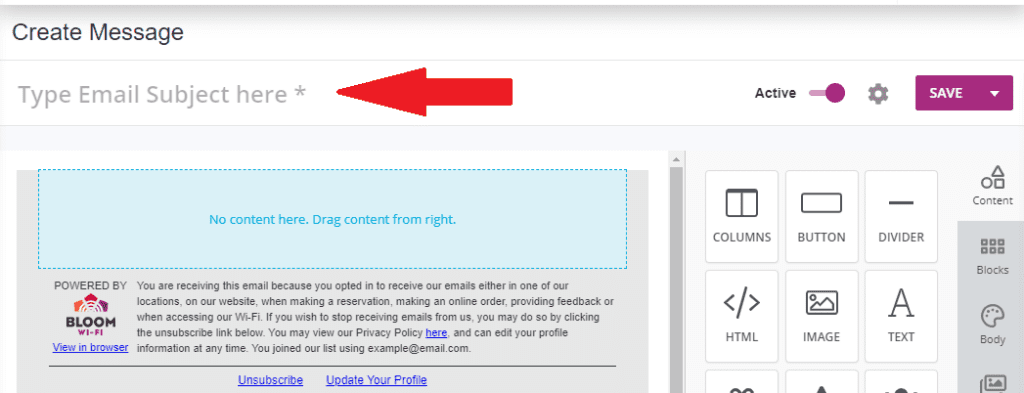
Create a compelling subject line

An effective email subject line will capture attention and convince the recipient to click and read more. Read more about email subject lines.

Once you have the perfect email subject line, simply open the drag & drop editor and type it into the field at the top.

Drag & Drop Email Editor For Subject Lines

Using Images in the Drag & Drop Editor

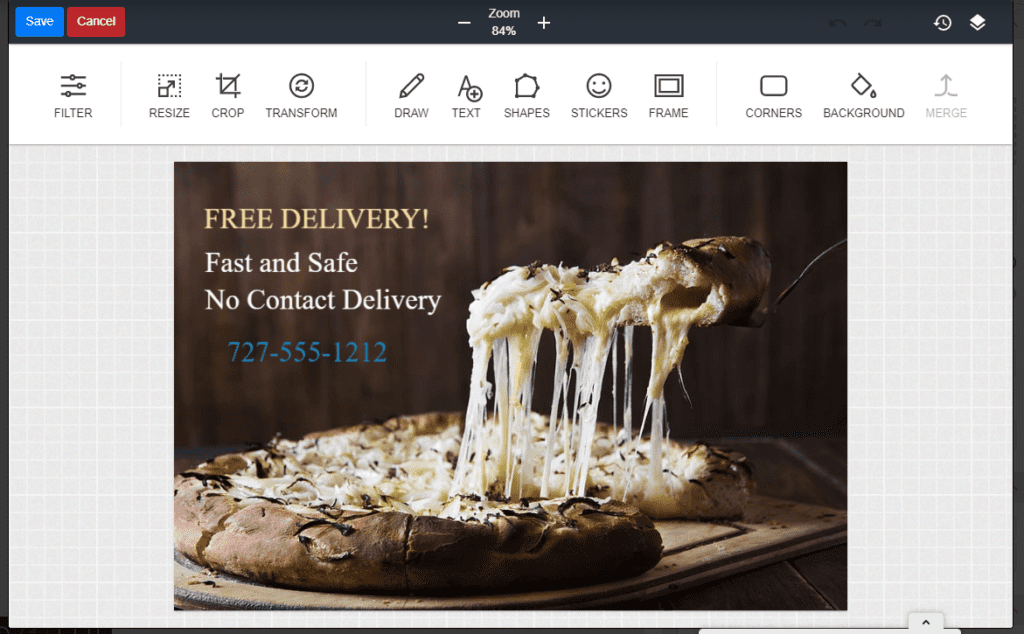
Your emails should have a compelling visual component to them. When images are relevant and high-quality, they can play a crucial role in attracting the attention of the reader.

Make sure your image matches the offer. For instance, if you’re promoting a new appetizer, use an image of that appetizer instead of a stock image of patrons at a restaurant.

Our drag-and-drop editor makes adding and editing images extremely easy. Simply drag the image block into the email editor and upload your image. The image will appear in the editor.

Then you can edit the image in many different ways. Also, you can add text to the image, all right on your screen.

The Email Body: Keep It Light

Remember the last email you received that contained block after block of endless paragraphs? Probably not – because you didn’t read it.

Today’s busy consumers don’t have the time to read a dissertation about your business. When it comes to the message, you want to make sure to clearly state your offer or promotion, and why it is of value to the customer.

Use brief, compelling language, but avoid using strong sales copy, ALL CAPS, or multiple exclamation points!!!!!!

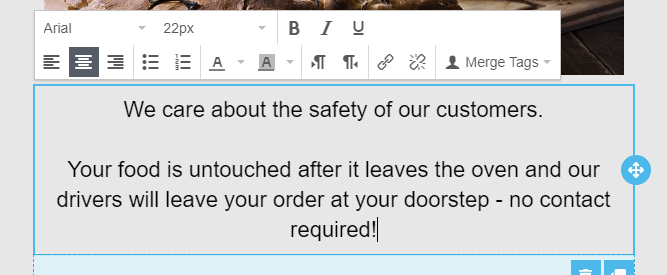
Adding text to your email is also very easy with the drag-and-drop editor. Simply drag the text block from the menu into the editor where you want the text to appear.

Then you just start typing your text. It comes with a full-text editor to change text size, color, font, and more.

You can continue adding whatever blocks you would like. The easy-to-use blocks include:

  • Text blocks
  • Image blocks
  • Social media icons/links
  • Custom HTML
  • Offers
  • Rating requests
  • Mobile app download section
Short On Time? Use Templates

For those who are short on time, or do not consider themselves creative, the Bloom drag & drop editor comes complete with several templates.

All you have to do is load up the template, easily change the colors to match your brand, and then edit the content with your offer, promotion, rating request, or any other message.

Here are some examples of free templates.

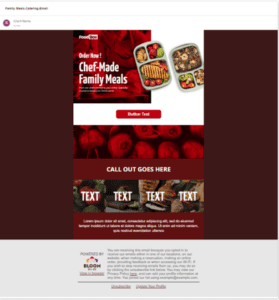
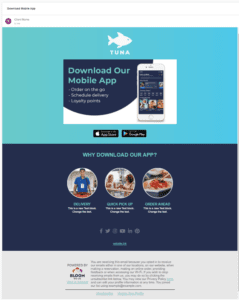
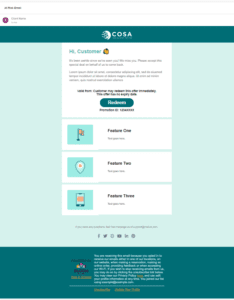
Drag & Drop Editor Template 1Drag & Drop Editor Template 2Drag & Drop Editor Template 3Drag & Drop Editor Template 4


Step 2 – Create Your Campaign

Now that you have crafted and saved the perfect message, it’s time to create the campaign and connect it to the email.

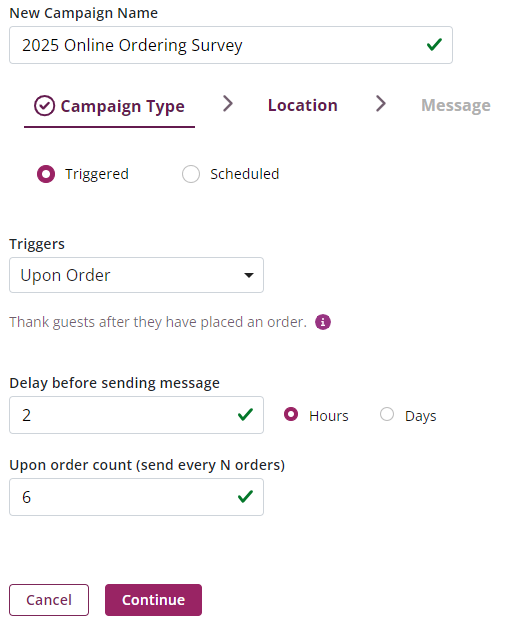
Navigate to Marketing Automation | Campaigns. Click “Create Campaign” and give your campaign a name that you will easily recognize later, such as “2025 Q1 Online Ordering Survey.”

Choose the Upon Order trigger and enter how many hours or days after their order you want to send the message. Then choose how many orders between each send. In the image below, when the message is sent, it will not send the message again until the guest has made 6 more online orders.

Then click Continue.

Choose the location(s) for which you would like to run the campaign. Then click Continue.

Find the correct message in the list of messages. Click on the message name, and then click Continue.

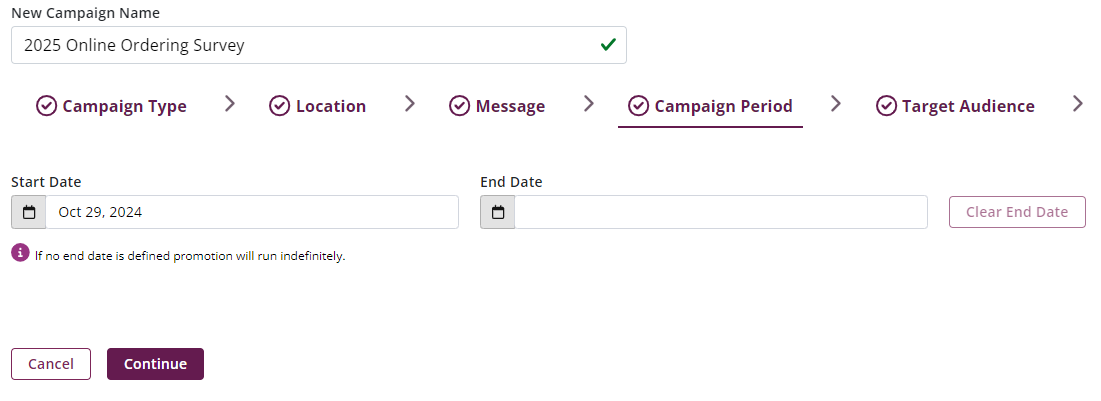
On this page, enter the date span you would like the campaign to run. If no end date is defined, the promotion will run indefinitely.

Then click Continue.

Now you will choose which guests to include in this campaign. You may either choose “All Profiles” or you may choose/create a segmented list of guests.

For this campaign, most users simply choose, “All Profiles.”

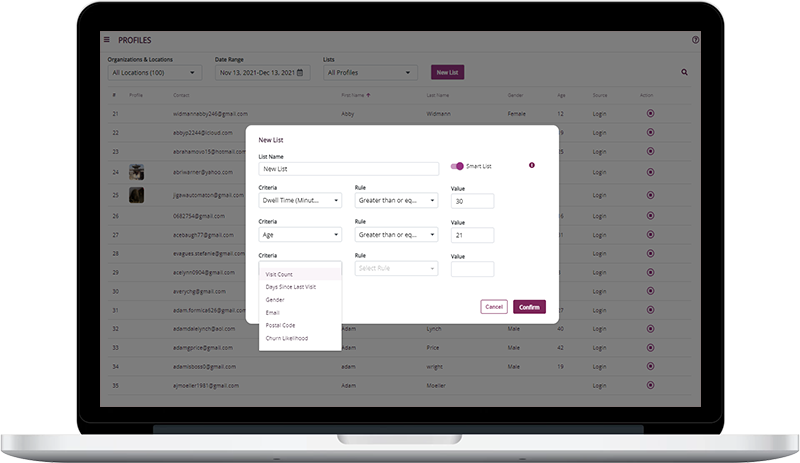
Lists can be static, meaning they are not updated once created, or they can be smart. Smart lists are updated in real-time. Guests are added to the smart list when they meet the list criteria or removed when they no longer meet the list criteria.

You can filter the list by various metrics and in any number of customer segmentation combinations. For example, Bloom’s filterable metrics include:

  • Number of all-time visits to your restaurant
  • Any number of days since their last visit
  • Their average dwell time (average time spent in your restaurant)
  • Guest Age
  • Guest Gender
  • Or the guest’s email address
  • and much more


customer profile segmentation

Once you have chosen or created a list, click Continue. Again, most users will choose, “All Profiles.”

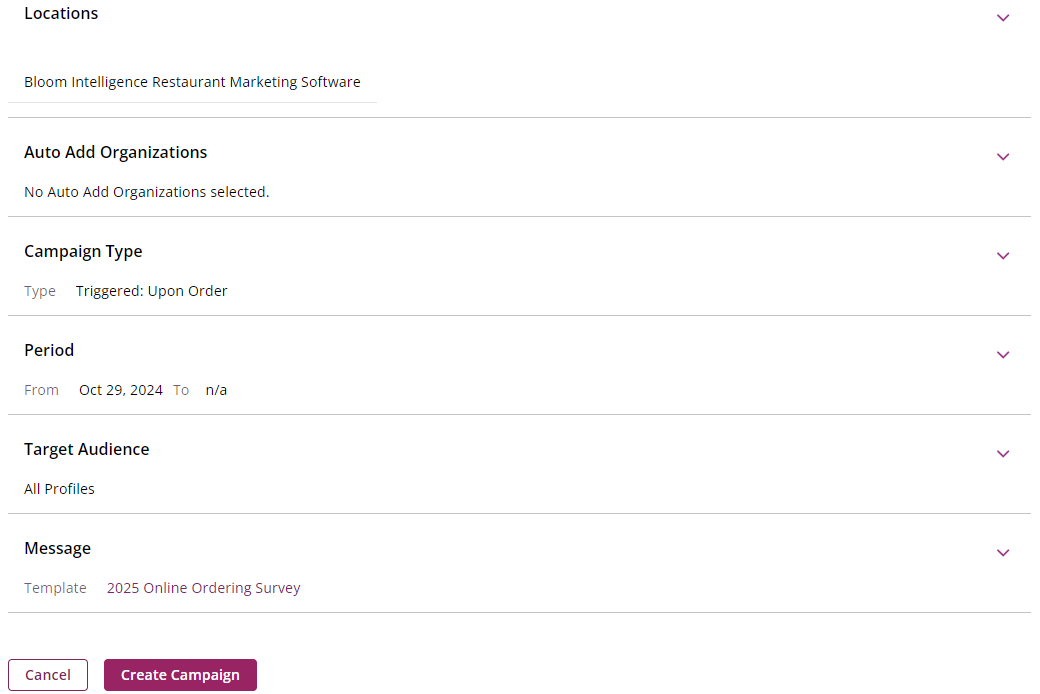
This is where you will do your final review of the campaign before it goes live.

When you are happy with all fields, Click “Create Campaign” and the campaign will begin to execute on the start date you selected above.

Monitoring and Optimization

With Bloom Intelligence, you will have the ability to track the engagement of your email marketing campaigns. Moreover, you will be able to apply an accurate ROI down to a customer walking back in your doors, responding to your message, or ordering online.

This will allow you to make data-driven, intelligent marketing decisions. As a result, you can optimize your campaigns with clean tangible guest data.

As a result, you get the ability to measure customer behavior at your locations, just like Google Analytics for your website.

This gives you the same competitive advantage that online companies have enjoyed for years. You can track the attribution of your marketing campaigns to tangible results.

This gives you the ability to track the results of a guest’s return and the actual value of their return to your location.

In Conclusion

Building a successful online ordering experience requires more than just setting up a website or mobile app. It demands a strategic, data-driven approach that engages customers, drives sales,

By leveraging Bloom’s comprehensive suite of tools, you can possess the power to transform your online ordering into a true competitive advantage. From creating personalized promotions that captivate your patrons to automating the campaign workflow for maximum efficiency, it empowers you to:

  • Boost digital sales and revenue by making the online ordering process seamless and rewarding
  • Foster deeper connections with your patrons by delivering a tailored, memorable experience
  • Future-proof your online experience by anticipating evolving consumer preferences and behaviors
  • Free up valuable time and resources to focus on other critical aspects of your operations

Remember, the secret to online ordering success lies not just in the technology, but in the strategic execution. With Bloom as your partner, you can elevate your digital presence, solidify your brand’s reputation, and position your restaurant as a leader in the ever-changing world of modern dining.

Beyond the Meal: Enhancing the Guest Journey to Cultivate Regular Guests

Regular guests are the lifeblood of any successful restaurant. They bring more than revenue—they provide stability, create a sense of community, and often become advocates who amplify the brand’s reputation through word-of-mouth.

Studies show that repeat guests typically spend up to 67% more than first-time visitors, underscoring the importance of cultivating a loyal base.

Yet, turning a one-time diner into a regular requires more than great food and service. It requires intentional strategies at every stage of the guest journey that make each interaction memorable, meaningful, and tailored to individual preferences.

Creating exceptional guest experiences is more than a commitment to quality – it’s a strategic advantage that fosters loyalty, drives repeat business, and ultimately strengthens a restaurant’s brand.

As restaurants face intense competition and rapidly changing guest expectations, the importance of crafting a standout experience has never been greater.

By crafting a journey that keeps guests engaged before, during, and after their visit, restaurants can unlock the true value of regular guests—gaining both loyalty and a lasting relationship that keeps guests coming back.

waiter engaging regular guests

1. Maximizing Value Before, During, and After the Dining Experience

The guest experience doesn’t begin when someone enters the restaurant nor ends when they walk out the door. Every step of the journey – before, during, and after dining or ordering online – is an opportunity to create value and build lasting loyalty.

By maximizing each stage, restaurants can transform a single visit into a relationship that keeps guests returning. From the initial online interactions to the personalized service during the meal and the thoughtful follow-up after they leave, each moment contributes to a guest’s perception of value.

Today’s diners increasingly expect seamless, memorable experiences that reflect their personal preferences and make them feel valued.

Implementing these practices at each stage of the guest journey can significantly increase loyalty and create a lasting impact that extends beyond a single meal.

Before the Experience: Building Anticipation and Excitement

The guest journey begins long before the guest steps through the door. In the digital age, restaurant experiences often start online, where diners conduct research, browse menus, and read reviews. To make a positive first impression, operators should prioritize:

  • Optimizing Online Presence: BrightLocal’s 2023 Local Consumer Review Survey found that nearly 90% of diners research a restaurant online before visiting, and OpenTable noted that 60% are influenced by online reviews and social media posts before choosing a venue. Restaurants that maintain an engaging online presence—across sites like Google, Facebook, Yelp, and TripAdvisor—demonstrate a commitment to guest satisfaction before the first interaction.
  • Personalized Marketing Outreach: By capturing guest data through Wi-Fi or website visits, restaurants can reach potential guests with personalized emails, social media ads, and exclusive offers that match the diner’s preferences. Targeted messaging builds anticipation, and according to a study by Segment, 44% of guests are more likely to return to a business offering a personalized experience.
  • Incentives for First-Time Guests: Bounce-back offers or welcome discounts for first-time guests increase the likelihood of repeat visits. In fact, guests who receive a positive initial offer or experience are more likely to become loyal, with nearly 70% of consumers reporting that incentives make them feel valued, according to CrowdTwist.

During the Experience: Crafting Memorable Moments

Once the guest arrives, every interaction contributes to their perception of the brand. Exceptional service and unique touches transform a simple meal into a memorable event. Key strategies include:

  • Personalized Service: Staff who acknowledge returning guests by name or remember their preferences create a strong impression. Research shows that guests who receive such personalized attention are more likely to return, with nearly 60% stating that special recognition drives their loyalty.
  • Exclusive Perks and Menu Items: Offering unique, limited-time menu items, or exclusive dishes for loyalty members enhances the dining experience. This sense of exclusivity is highly attractive—over 75% of consumers say they are more loyal to brands that offer a distinct experience, according to Bond Brand Loyalty’s recent Loyalty Report.
  • Table Touches and Staff Engagement: Engaging guests with table touches, chef/manager introductions, or interactive experiences strengthens the sense of hospitality. Even small gestures, like offering a complimentary dessert for special occasions, can elevate the dining experience and make it memorable. According to a report by Toast, 68% of diners feel that personal interaction with staff enriches their dining experience.

After the Experience: Continuing the Connection

The guest’s journey doesn’t end when they leave the restaurant. Following up with guests greatly extends the experience and encourages them to return.

  • Automated Thank-You Messages and Follow-Ups: Sending thank-you emails or follow-up surveys the next day not only shows appreciation but also provides valuable feedback. This immediate follow-up can increase guest satisfaction by up to 27%, according to a study by Qualtrics.
  • Exclusive Loyalty Rewards and Bounce-Back Offers: Loyalty programs that offer points, discounts, or other rewards for return visits are powerful tools for guest retention. Personalized bounce-back offers or special perks for loyalty members help create a sense of value, with statistics showing that guests enrolled in loyalty programs return up to 20% more often.
  • Reputation Management: Responding to online reviews, whether positive or negative, demonstrates a commitment to continuous improvement. Engaging with guests’ feedback not only builds trust but also improves visibility on review platforms. Research by BrightLocal shows that 88% of consumers trust online reviews as much as personal recommendations.

restauranteurs engaging regular guests through automation

2. Creating Memorable Moments That Inspire Loyalty

Memorable moments are the heartbeat of guest loyalty. While quality food and service are essential, it’s the unique, personal touches that linger in a guest’s mind and compel them to return.

Today’s diners seek more than just a meal. They want experiences that feel personal, thoughtful, and worth sharing.

By weaving small surprises, exclusive perks, and genuine interactions into the dining experience, restaurants can foster a sense of connection and appreciation that inspires loyalty.

Crafting these moments requires intention, creativity, and an understanding of what resonates with each guest. When done well, these memorable touches transform ordinary visits into unforgettable experiences, building lasting bonds that keep guests coming back.

From the time they consider your restaurant to the experience they recall after dining, creating special touches builds the foundation for return visits.

  • Surprising and Delighting Guests: Offering surprise elements like complimentary appetizers or exclusive access to a new menu item for regulars fosters a sense of exclusivity. Psychologists have found that positive surprises, even small ones, are more memorable than expected positive outcomes.
  • Celebrating Milestones: Recognizing guests’ birthdays, anniversaries, or other special occasions through customized emails, exclusive discounts, or small celebratory items, like a free dessert, shows genuine care and adds emotional value to the experience. This personal touch is particularly effective, as nearly 80% of consumers report feeling more connected to brands that recognize their life events.
  • Catering to Dietary Preferences and Personal Tastes: Today’s guests often have specific dietary needs, from vegan to gluten-free options. Ensuring these choices are available and memorable is critical. When guests feel understood and valued, they are 80% more likely to return to the same establishment.

restaurant regulars enjoying their experience

3. Leveraging Guest Data and Marketing Automation to Drive Repeat Business

In a competitive market, guest loyalty doesn’t happen by chance; it requires a strategic, data-driven approach that meets guests where they are and anticipates their needs.

Leveraging guest data and marketing automation can unlock personalized experiences that resonate with each diner, encouraging them to return and strengthening their connection with the brand.

By capturing and analyzing data—such as dining preferences, visit frequency, and special occasions—restaurants can create targeted outreach and relevant offers that keep their brand top-of-mind. Marketing automation further enhances this by delivering timely, personalized messages at just the right moment.

Together, guest data and marketing automation allow operators to provide meaningful engagement, ultimately driving repeat business and building a loyal guest base that feels truly understood and valued. It can deepen connections, facilitate personalized experiences, and make follow-up seamless.

  • Utilizing Data to Personalize Experiences: Guest data collected from Wi-Fi, POS systems, online ordering, and reservation platforms provides insights into preferences, dining frequency, and spending patterns. Restaurants can use this data to tailor messaging, recommend favorite dishes, or send reminders that are highly relevant to each individual guest.
  • Marketing Automation for Timely Outreach: With marketing automation tools like Bloom Intelligence, restaurants can reach guests at the right moment with personalized offers, loyalty reminders, and exclusive invitations. For instance, a reminder sent a week before a guest’s birthday with an offer for a celebratory dessert or discount can increase the likelihood of a return visit.
  • Building Community through Engagement: Consistent communication with guests via email, SMS, social media, and loyalty programs builds a sense of community. By sharing updates, hosting events, or even offering VIP experiences for regulars, restaurants can create a unique sense of belonging. According to a study by Deloitte, guests who feel connected to a brand community spend up to 40% more on average than those who do not.

restaurant regular engaged by email and SMS messaging

Building a Lasting Connection Through Consistency and Value

Building guest loyalty isn’t just about memorable meals—it requires a consistent, authentic commitment to delivering value at every stage of the guest journey.

Consistency builds trust, and when guests know they can expect high standards with every visit, they’re far more likely to return. Consistency isn’t limited to the quality of food. It also includes service, ambiance, and even follow-up communication.

Research shows that 81% of consumers are more loyal to brands they find reliable, making consistent service the foundation of loyalty. By standardizing staff training and using guest data, restaurants can provide a dependable yet personalized experience that meets each guest’s expectations.

Delivering value means exceeding guest expectations. This might look like loyalty rewards, such as exclusive discounts, birthday perks, or other personalized offers. Tailoring rewards creates a sense of exclusivity, and guests enrolled in loyalty programs visit 20% more frequently and spend more.

Beyond rewards, attentive customer service that remembers preferences or celebrates guest milestones further elevates the dining experience and fosters long-term loyalty.

Ultimately, delivering consistency and value builds more than loyal guests, it creates advocates who champion the brand. These guests go beyond just returning—they spread the word, post on social media, and write positive reviews.

Word-of-mouth marketing remains one of the most effective ways to attract new diners, and guests who feel a lasting connection are invaluable ambassadors.

By committing to consistency and value, restaurants can transform one-time diners into loyal members of a community. This approach doesn’t just foster repeat visits, it establishes a trusted relationship where guests feel valued and genuinely connected to the brand.

Through this ongoing commitment, restaurants can create a loyal guest base that not only returns but also spreads positive word-of-mouth, creating a foundation for sustained success.

restaurant busy with a dining room full of regulars

Schedule a Free Demo Today

Bloom Intelligence is an AI-powered restaurant marketing platform that includes a powerful customer data platform, automated multi-channel data collection, marketing automation, and reputation management tools.

Bloom can easily target and automatically re-engage your guests via email or SMS to help build an emotional connection and turn them into regulars.

Guest data is collected from many different sources and aggregated into one single platform, making it simple and easy to analyze and segment your restaurant’s guest personas, like regulars, high spenders, or any number of customer segments.
Bloom makes guest data collection effortless, allowing you to quickly execute smart automated marketing strategies, save you time, increase customer lifetime values, attract new guests, improve your reputation, and boost your bottom line.

To see more of what Bloom can do for your restaurant, schedule a free demo today, or call us at 727-877-8181.


From Anonymous to Loyal: How Restaurants Can Convert Guest Data into Regulars

Transforming one-time visitors into loyal customers should be a top priority for any restaurateur.

Yet many restaurants face a significant challenge—most guests remain anonymous, leaving little insight into their preferences, habits, or likelihood to return.

The solution lies in guest data.

By leveraging guest data from various sources such as WiFi logins, online ordering, reservations, POS systems, and review sites, restaurants can turn anonymous visitors into loyal regulars.

This guide explores how restaurants can collect, centralize, and use guest data to personalize marketing efforts, automate re-engagement campaigns, and foster long-term loyalty.

The end result? A data-driven approach that boosts guest retention and maximizes overall revenue.

restaurateur creating regulars with guest data

Why Guest Data is Critical for Building Loyalty

Every interaction between a guest and your restaurant—dining in, placing an online order, making a reservation, or leaving a review—can create valuable data.

However, many restaurants fail to harness this data effectively.

Without a system to collect and organize guest information, opportunities to create personalized experiences are missed.

According to research from Epsilon, 80% of customers are more likely to make a purchase when offered personalized experiences. This underscores the importance of understanding guest behavior and preferences.

Restaurants that capture and centralize guest data can craft tailored marketing campaigns, significantly increasing engagement and loyalty. The first step in leveraging guest data is to establish a system that consolidates it from all available touchpoints:

  • WiFi logins offer basic guest information, such as email addresses and demographics.
  • Online ordering platforms track ordering habits and preferences.
  • Reservation systems provide insight into the frequency of visits and party size.
  • Review sites give real-time feedback on the guest experience and customer sentiment, which is invaluable for improving service and addressing issues.
  • POS Systems track average spend and menu preferences.

With this information, restaurants can create a complete profile for each guest, enabling more personalized interactions and targeted marketing.

restaurant regulars entering data

Progressive Profiling: Gradually Building Complete Guest Profiles

One of the most effective ways to gather guest information without overwhelming them is through progressive profiling. Rather than asking for all guest details upfront, progressive profiling allows restaurants to collect small pieces of data over time.

For example, the first time a guest logs into your WiFi, you might only request their email address. During their next visit, you can prompt them to share their birthday, ZIP code, or dining preferences.

This method reduces friction and encourages more guests to provide more information. Over time, the restaurant builds a complete guest profile, which can be used to craft highly personalized marketing campaigns.

Progressive profiling ensures that data collection is seamless and integrated into the guest experience, making it easier to gather actionable insights without being intrusive.

Action Tip: Start with a simple data request (such as email) and gradually build your profile over time. Use WiFi logins, online ordering/reservations, and post-dining surveys to ask for one new piece of information with each interaction.

restaurant regular being progressively profiled

Using Guest Segmentation for Targeted Campaigns

Once guest data is centralized, restaurants can begin segmenting their audience into different categories based on behavior, frequency of visits, and preferences. Segmentation allows restaurants to create targeted marketing campaigns that resonate more with specific guest groups.

For example, you might segment guests into categories such as:

  • First-time visitors: Send a welcome message and offer to encourage a second visit.
  • Regulars: Reward frequent diners with loyalty incentives or exclusive access to events.
  • At-risk guests: Identify guests who haven’t visited in a while and send a personalized offer to win them back.
  • Lunchtime visitors: Identify guests who only dine at lunchtime and promote happy hour or dinner specials.

Research shows that segmented email campaigns can drive up to 760% more revenue than non-targeted campaigns. By delivering the right message to the right guest at the right time, restaurants can foster stronger relationships and increase the likelihood of repeat visits.

Automating Guest Re-Engagement with AI

One of the biggest challenges for restaurants is keeping guests engaged after their initial visit. This is where AI-powered marketing automation comes into play. Using tools like Bloom Intelligence, restaurants can automate the process of re-engaging guests based on their behavior – or lack thereof.

For example, if a guest hasn’t visited in several weeks, the system can identify the guest and automatically send a personalized message offering a special promotion.

This type of triggered marketing is highly effective. In fact, AI-driven marketing campaigns have been shown to increase engagement rates by 22% and win back up to 37% of lost guests.

Marketing automation also saves time for restaurant marketers, as campaigns can be set up once and run continuously. By using AI to analyze guest data and determine the best times to send offers, restaurants can ensure that their outreach is both timely and relevant, maximizing the chances of bringing guests back.

Action Tip: Automate marketing campaigns based on guest behavior. Set up triggers for at-risk guests, frequent visitors, and those celebrating special occasions like birthdays. AI can help deliver these messages at the optimal time.

Localized Campaigns for Greater Impact

Guest data can also provide insights into where your customers are coming from, allowing you to run localized marketing campaigns.

For example, if your restaurant has multiple locations, you can segment guests based on their postal code and proximity to each location. Neighborhood-specific promotions or events can help build a sense of community and increase loyalty among local diners.

According to a study by Google, 76% of people who conduct a local search on their smartphone visit a physical place within 24 hours, making geo-targeted campaigns a valuable strategy. By tapping into data such as guest ZIP codes, restaurants can create hyper-localized offers that resonate with nearby guests.

The End Value: Increased Loyalty and Revenue

The end value of utilizing guest data through a Customer Data Platform (CDP) and automating marketing efforts is clear: increased guest loyalty and higher revenue.

By personalizing experiences, automating re-engagement, and tailoring offers to specific guest segments, restaurants can significantly improve retention and drive repeat business.

Key Benefits of Automating Guest Data Marketing:

Efficiency: Automation saves time and ensures consistent guest engagement without manual effort.
Personalization: Tailored offers based on guest behavior make guests feel valued, increasing the likelihood of repeat visits.
Increased Revenue: Personalized marketing and loyalty campaigns drive higher conversion rates and return visits.

create regulars and fill seats with guest data

Getting Started

With an all-in-one restaurant marketing solution like Bloom Intelligence, guest data can be collected automatically from all your guests’ touch points. Then you can quickly and easily:

1. Centralize Your Guest Data: Use a platform that integrates all your data sources (Wi-Fi, online orders, reservations, reviews) into one unified system.
2. Set Up Progressive Profiling: Start small by asking guests for basic information and build on that with each interaction.
3. Segment Your Audiences: Categorize your guests into meaningful groups (regulars, at-risk, locals) and target them with personalized campaigns.
4. Automate Your Campaigns: Use AI-driven tools to automatically send personalized messages at the right time, increasing engagement and retention.
5. Monitor Results: Track the performance of each campaign and adjust based on data insights to continuously improve.

Restaurants that embrace data-driven marketing see measurable results. By turning anonymous guests into loyal regulars, you not only improve the guest experience but also significantly boost your bottom line.

Schedule a Free Demo Today

Bloom Intelligence is an AI-powered restaurant marketing platform that includes a powerful customer data platform, automated data collection, marketing automation, and reputation management tools.

Bloom can easily identify and automatically re-engage lost guests via email or SMS. Users are seeing 37%+ of their lost guests return, improving revenue and filling seats.

Guest data is collected from many different sources and aggregated into one single platform, making it simple and easy to analyze and segment your restaurant’s guest personas, including lost guests.

Bloom makes guest data collection effortless, allowing you to quickly execute the strategies listed above, saving you time, increasing customer lifetime values, attracting new guests, improving your reputation, and boosting your bottom line.

To see more of what Bloom can do for your restaurant, schedule a free demo today, or call us at 727-877-8181.


The Silent Revenue Killer: Why Losing Regulars Costs More Than You Think

In the hectic world of a restaurant operator, where new guests walk through the doors daily, it’s easy to overlook a critical factor that could be silently eating away at your profits: the loss of regular patrons.

While the thrill of attracting new diners is certainly undeniable, the cost of losing loyal guests can be far more significant than many restaurateurs realize.

Let’s dive into why retaining regulars is crucial and how modern technology can help keep these valuable guests returning.

The True Cost of Losing a Regular

Consider this: according to a study by Bain & Company, increasing guest retention rates by just 5% can increase profits by 25% to 95%.

This difference can be the line between thriving and merely surviving in the restaurant industry, where margins are often tight.

Regular guests are not just reliable sources of revenue. They are also:

1. Brand ambassadors who bring in new customers through word-of-mouth
2. More likely to try new menu items or visit during off-peak hours
3. Less sensitive to price increases
4. More forgiving of occasional service mishaps

When you lose a regular, you’re not just losing their individual sales – you’re losing all these additional benefits too.

Losing regular guests hurts restaurants both financially and reputationally. It highlights the need for proactive guest retention strategies, personalized marketing, and reputation management to not only attract new guests but also keep regulars engaged and satisfied.

Investing in a Customer Data Platform (CDP) and automated marketing strategies can help restaurants track, understand, and retain their most valuable patrons, ultimately enhancing guest loyalty and improving the bottom line.

restaurant with lost guests

The Hidden Dangers of Silent Attrition

One of the biggest challenges in retaining regulars is that their departure is often silent.

Unlike a bad review or a customer complaint, a regular simply stopping their visits doesn’t trigger any immediate alarms. This “silent attrition” can go unnoticed for months, leading to significant revenue loss before it’s even detected.

A study by the Harvard Business Review found that companies lose 50% of their customers every five years. In the fast-paced restaurant industry, this turnover can be even quicker.

To prevent the dangers of silent attrition, restaurants need to implement proactive guest monitoring, data collection, and personalized engagement strategies.

Tools like a CDP allow restaurants to keep track of guest frequency, preferences, and satisfaction levels, enabling early detection of potential attrition and offering opportunities to re-engage those guests before they are lost completely.

By recognizing the signs of silent attrition early and acting upon them, restaurants can maintain guest loyalty, enhance the guest experience, and protect their business.

Identifying At-Risk Regulars

Identifying at-risk regulars is a vital part of any restaurant’s guest retention strategy. When recognizing the signs that regular guests may be on the verge of leaving, restaurants can take proactive measures to re-engage them and prevent revenue loss.

So how can you spot these at-risk regulars before they slip away? This is where AI-powered customer data platforms (CDPs) come into play. These sophisticated tools can:

1. Track visit frequency and spending patterns
2. Identify changes in behavior that might indicate a customer is at risk of churning
3. Segment customers based on their likelihood to churn

For instance, a CDP might flag a customer who used to visit weekly but hasn’t been seen in a month. Or, a regular who has significantly decreased their average spend.

By combining technology like CDPs, automation, and staff observations, restaurants can effectively identify at-risk regulars before they leave for good.

Proactively addressing their needs, offering personalized experiences, and resolving issues promptly is key to retaining these valuable guests and protecting your restaurant’s long-term success and profitability.

restaurateur identifying lost guests

Re-engaging At-Risk Guests

Once you’ve identified at-risk regulars, the next step is re-engagement. Re-engaging lost guests is essential for a restaurant’s guest retention strategy.

Once you’ve identified guests who have drifted away, having an action plan to win them back can turn occasional visitors back into regulars, boost revenue, and maintain a loyal customer base.

Here’s where targeted, personalized restaurant marketing campaigns become crucial. Some effective strategies include:

1. Personalized “We Miss You” emails or texts
2. Special offers based on the guest’s favorite menu items
3. Invitations to exclusive events or tastings

Chipotle provides an excellent case study on the power of re-engagement. After facing food safety issues, they used data-driven insights to identify at-risk customers and launched targeted win-back campaigns.

This strategy contributed to a 6.1% increase in same-store sales in the first quarter of 2019, as reported by Nation’s Restaurant News.

Winning back lost guests is a blend of art and science. With the right tools and strategies—such as personalized outreach, tailored offers, and effective use of data—you can successfully re-engage guests who have drifted away, rebuild loyalty, and turn them back into regulars.

Remember, a lost guest is not necessarily gone forever. Thoughtful re-engagement tactics can bring them back and often strengthen their relationship with your restaurant, resulting in long-term loyalty and increased lifetime value.

The Power of AI in Guest Retention

AI for restaurants is transforming guest retention in the restaurant industry by allowing restaurants to offer highly personalized experiences, analyze customer behavior, and automate repetitive tasks that enhance guest satisfaction and loyalty.

Modern AI-powered tools can take guest retention to the next level by:

1. Predicting which patrons are likely to churn before their behavior changes
2. Automatically triggering re-engagement campaigns at the optimal time
3. Personalizing offers based on individual guest preferences and history

Starbucks, for example, uses AI to analyze customer data and send personalized marketing messages. This approach has contributed to their loyalty program members accounting for 40% of their U.S. sales, according to a report by Harvard Business Review.

AI is an invaluable tool for restaurants seeking to retain guests by providing personalized, timely, and meaningful experiences.

From predictive analytics to personalized marketing campaigns, real-time feedback management to dynamic pricing, AI empowers restaurants to not only understand their guests better but to engage them in ways that encourage repeat visits, satisfaction, and long-term loyalty.

By implementing AI-driven strategies and tools, restaurants can transform how they approach guest retention, turning regulars into loyal advocates and maximizing their revenue and growth potential.

re-engaging lost guests can fill your seats

Measuring the Impact

To ensure guests are returning to your restaurant and to measure the success of your retention strategies, tracking the right Key Performance Indicators (KPIs) is essential.

These KPIs help you understand guest behavior, monitor the effectiveness of your marketing efforts, and identify opportunities for improvement.

To truly understand the value of retaining regulars, it’s crucial to track the right metrics. KPIs to monitor include:

1. Customer Lifetime Value (CLV)
2. Churn rate
3. Frequency of visits
4. Average spend per visit
5. Response rate of marketing emails and offer redemptions

Tracking these KPIs provides critical insights into guest behavior and satisfaction, enabling you to make data-driven decisions to enhance the guest experience, improve retention, and maximize the lifetime value of each guest.

Regularly monitoring these KPIs allows you to identify trends early, measure the effectiveness of your marketing and loyalty programs, and proactively engage guests to ensure they keep returning to your restaurant.

Conclusion: The Value of Proactive Retention

In an industry as competitive as restaurants, where new dining options are constantly emerging, retaining regulars is more critical than ever. By leveraging AI-powered tools to identify at-risk guests and launch targeted re-engagement campaigns, you can turn the tide on silent attrition and boost your bottom line.

Remember, it’s not just about the individual sales of a regular customer – it’s about the compounding value they bring over time. By focusing on retention, you’re not just saving a customer; you’re securing a valuable asset for your restaurant’s long-term success.

Don’t let the silent revenue killer claim your profits. Start prioritizing regular customer retention today, and watch your restaurant thrive.

Restaurateur realizing lost guest campaigns work

Schedule a Free Demo Today

Bloom Intelligence is an AI-powered restaurant marketing platform that includes a powerful customer data platform, automated data collection, marketing automation, and reputation management tools.

Bloom can easily identify and automatically re-engage lost guests via email or SMS. Users are seeing 37%+ of their lost guests return, improving revenue and filling seats.

Guest data is collected from many different sources and aggregated into one single platform, making it simple and easy to analyze and segment your restaurant’s guest personas, including lost guests.

Bloom makes guest data collection effortless, allowing you to quickly execute the strategies listed above, saving you time, increasing customer lifetime values, attracting new guests, improving your reputation, and boosting your bottom line.

To see more of what Bloom can do for your restaurant, schedule a free demo today, or call us at 727-877-8181.


Restaurant Marketing Plan: Leverage Guest Data to Drive Growth and Retention

As restaurant owners and operators, it’s critical to understand the essential role a well-crafted restaurant marketing plan plays toward your business’s success.

From identifying promising channels for revenue growth, to effectively raising revenue, or even negotiating a business sale, a marketing plan lays a solid foundation for a thriving future. Consider your marketing plan the secret sauce that bridges the gap between strategy and execution.

A restaurant without a marketing plan is like a kitchen without a recipe – things can quickly become chaotic and inefficient.

Moreover, marketing activities lacking strategy and foresight typically won’t produce a satisfying return on investment.

The following steps will help restaurants create a solid and sustainable restaurant marketing plan to keep seats full and revenue growing.

a restaurant marketing plan can keep seats full

1. Brainstorm to create specific goals and an allocated budget

Brainstorming is a mental technique that encourages a free flow of ideas without internal judgment. This thought technique is about quantity vs. quality. The more ideas that can flow, the better the chances are of discovering useful and profitable concepts. This is the first step to discovering productive goals.  

There are two main types of goals: Short-term goals and long-term goals. These goals can be big or small, but all goal types are critical for success.

The SMART acronym can help immensely during this process. Make your goals:

S – Specific or significant 

M – Measurable or meaningful 

A – Action-oriented or attainable 

R – Rewarding or relevant 

T – Time-bound or trackable  

After creating goals, it’s important to establish a strategic budget. Many restaurateurs dread spending money on marketing, but that’s why budgeting is so important. Creating a strategic marketing budget will ensure spending does not get out of control. 

The first step in creating a budget is understanding the sales funnel. This step includes determining how many guests visit per month per location, the average cost per transaction, and loyalty rates. A restaurant customer data platform like Bloom Intelligence can help determine these numbers by collecting data from multiple sources, including online ordering platforms, POS systems, and in-store location analytics.

After understanding the sales funnel, it’s essential to interpret operational costs. Then, use the business goals to set a marketing budget.

Remember to think of marketing as an investment, not a cost.  

Finally, consider the growth stage and budget accordingly: growth mode (quick-win marketing techniques are needed) or planning mode (steady growth is more important than revenue spikes). 

creating a restaurant marketing plan

2. Define a target market

 There are six steps to defining a target market. 

  • Evaluate current guests. Which groups bring in the most business? Who are your regulars? Who spends the most per visit?
  • Determine who the competitors are targeting. If a market is oversaturated, it may be beneficial to reach a different market.
  • Choose target demographics based on age, location, gender, income level, education level, occupation, ethnic background, and family status
  • Take psychographics into consideration, including behavior, personality, lifestyles, attitudes, values, and interests. 
  • Based on the target market, analyze food offerings and ambiance to determine if the correct market receives accurate targeting. 
  • Evaluate. Does the target fit enough people? Can they afford the restaurant? Are they easily accessible? If not, reconsidering the target market might be a good idea. 

3. Understand your guests and what makes your brand unique

A customer needs statement answers the question, “What characteristics should customers look for in a specific brand?” A brand’s specific customer needs statement should remain stable over time. 

Think about what guests should say about your brand and values. Then, create continuity. Ensure your restaurant branding is repeated throughout all of the restaurant’s interior, customer service, and collateral – all customer touchpoints.

Finally, create a reasonable timeline for adaptation. 

By getting into your target market’s shoes, it’s easier to understand what guests will expect. It’s much more important to care about and act upon guest feedback more than personal preferences. 

It’s also important to understand where guests are online. If they are using social media sites like Facebook or Instagram, advertising is an efficient way to reach them where they are 24/7. 

Facebook’s lookalike audiences allow brands with their own first-party data to upload email lists and find new guests that fit similar characteristics. Google has a tool called “Similar Audiences” to accomplish advanced targeting like this, as well.  

Using a restaurant customer data platform to collect guest data and email information is an excellent way to quickly and easily build a large guest database, understand your guests, and execute more effective digital advertising.  

Restaurant marketing plan: lookalike audiences


4. Create a message and build an experience

What brand comes to mind with the words “Finger Lickin’ Good“? Some brand messages are less obvious, such as Starbucks’ “Expect more than coffee.”

Brand messages should embody the entire guest experience from the time they learn about a restaurant online to the moment they walk through the doors or order online – and throughout their entire experience. 

After determining your messaging, everything within the restaurant should embody both the message and the restaurant’s branding.

Subconsciously, restaurant patrons should “hear” the brand message just by looking around and tasting their meals. Create an ambiance that guests will love. Everything from the way menu items are served, to the music, to the lighting should be purposeful, memorable, and centered around your branding. 

5. Gather guest feedback and online reviews

Customer feedback is essential to learning your true voice of guest. More important, however, is the need to constructively act on the feedback you receive. 

Even if guests provide negative feedback, it’s crucial to show them (and online communities) that management listens, understands, aligns, and improves. 

Additionally, a restaurant marketing platform can ask for guest feedback through automated email or SMS marketing campaigns.

For example, if a guest has had a negative experience, an automated follow-up email from management can ask for additional information to make the experience better. Some automated negative feedback campaigns include offers, such as a free drink or cookie to win business back. 

The more positive ratings and reviews a brand accumulates, the easier it is for consumers to find them online. Additionally, brands with positive reviews attract more new guests and maintain a more loyal customer base.   

6. Focus on loyalty and innovation

The success rate of selling to an existing customer is  60-70%, while the success rate of selling to a new customer is 5-20%. Loyalty programs can increase loyalty rates significantly.   

Tools like CDPs are making it easy for restaurant marketers to integrate strategies like automated email marketing and reputation management. It has become essential for brands to use the guest data they collect instead of simply accumulating data and letting it sit unused. 

Remember that what worked well today might not work well tomorrow. While these steps are essential to creating proactive and profitable marketing campaigns, the same campaigns will not always bring success. Reviewing marketing campaigns, A/B testing, and implementing regular changes and optimization are all essential for success. 

For restaurants, a marketing plan defines success and creates a strong focal point for achievement. This plan enables restaurant professionals to manage budgets strategically while achieving a positive return on marketing investment.

Also, remember that what works well for one restaurant might not work well for the next. Planning for the future and staying at the forefront of technology is essential to stay ahead of the competition.  

7. Use Guest Data to Manage and Optimize Your Restaurant Marketing Plan

Any restaurant marketing plan should be monitored, managed, and continuously optimized. To do so, it is important to have accurate, comprehensive guest data to rely on.

With data available using a restaurant customer data platform like Bloom Intelligence, you will have access to the type of data required to accurately test and optimize your restaurant marketing plan.

Bloom delivers accurate guest foot traffic data such as the number of visitors, first-time visitor return rates, overall visitor return rates, dwell times, and more.

Plus, with Bloom’s reputation management features, you’ll be able to see all of your Google, Facebook, Yelp, and TripAdvisor ratings and reviews all in one place. And with Bloom’s integration with those platforms, you can respond to them there too. Or, use Bloom’s AI features to automatically respond to all of your reviews on those platforms.

Likewise, you will have the powerful ability to automatically identify and bring back lost guests.

These tools will allow you to test marketing campaigns and results in real time, all the way back to a guest returning and making a purchase.

Perhaps the most powerful way to boost revenue, improve online ratings, bring back lost customers, and improve customer lifetime values – all while saving time and money – is to invest in a restaurant marketing platform like Bloom Intelligence. With integrated automated marketing and reputation management tools, it is simple and easy to establish and execute a powerful restaurant marketing plan.

Schedule a Free Demo Today

Bloom Intelligence is an AI-powered restaurant marketing platform that includes a powerful customer data platform, automated data collection, marketing automation, and reputation management tools.

Guest data is collected from many different sources and aggregated into one single platform, making it simple and easy to analyze and segment your restaurant’s guest personas.

Bloom makes guest data collection effortless, allowing you to quickly execute the strategies listed above, saving you time, increasing customer lifetime values, attracting new guests, improving your reputation, and boosting your bottom line.

To see more of what Bloom can do for your restaurant, schedule a free demo today, or call us at 727-877-8181.


Restaurant Email Marketing | Tips to Engage Guests & Increase Revenue

Facebook, Instagram, Twitter, Pinterest, Reddit…there is certainly no shortage of online channels to help you keep in close contact with your restaurant guests. But sometimes, using that many channels can make it tough to keep track of things.

To keep your patrons coming back, you don’t necessarily need to be an expert in all the latest social channels, you just have to find out where your guests congregate online, choose the biggest ones, and keep current.

But at the end of the day, all that any of us want is simplicity with solid results.

With the explosion of social media marketing in recent years, traditional email marketing may seem outdated. But that couldn’t be further from the truth.

In fact, restaurant email marketing is more powerful than ever before. According to McKinsey & Company, email is still a significantly more effective way to acquire guests than social media.

restaurant email marketing

A Little History

When Gary Thuerk sent the first marketing email in 1978, he viewed the new tool as a faster, more streamlined way to reach customers with product information when a deadline was looming. And that’s exactly what email marketing quickly blossomed into. As time passed and the whole world eventually joined the bandwagon, the way we did business had to change.

Legislation and policies, like the CAN-SPAM Act of 2003 and the Sender Policy Framework meant that businesses who had been relying on passively sending out emails to “cultivate” customers had to up their game.

Passively sending out solicitation after solicitation began to sour businesses’ relationships with their customers. A better plan was needed to nurture those contacts than just sending out email after email.

Why Email Marketing Still Works

In terms of digital outreach, it’s important to acknowledge that potential guests of your restaurant may frequent various social media platforms, presenting a scattered landscape for effective communication.

However, approximately 90.9% of the U.S. population utilized email, offering a broader and more reliable reach compared to a select few social media platforms.

Plus, email as a marketing channel offers unprecedented creative freedom. Unlike social media platforms that may enforce character restrictions or stringent formatting guidelines, emails provide an uncluttered canvas. There are no explicit word limits and no predetermined formatting rules.

When your audience opens your email, it captures their sole attention, free from competing stimuli. This means that the adaptability of your emails is only bound by your creative vision, opening up a world of possibilities for unique and engaging restaurant marketing.

restaurant owner doing email marketing

Restaurant Email Marketing Tips

Here are a few things you need to know to execute email marketing to its fullest potential.

  • Be Reliable and Consistent – The two biggest reasons people unsubscribe from an e-newsletter are that they’re getting too many emails, or they don’t remember signing up in the first place. Set up an automated welcome email so that as soon as someone subscribes to get emails from you, they receive a message. Use this welcome message just like you use a WiFi landing page. Orient them to your business, tell them the community of guests they’re joining, offer them a deal, and talk up an upcoming big event. Then, once you’ve welcomed them, stick to a consistent schedule, once a week, once a month…it almost doesn’t matter as long as you are consistent. Most people open their emails first thing in the morning, or just before they go home, so time your emails so they’ll be at the top of their inbox.
  • Content Is King – If you email your guests ten separate tidbits a week, the reasons for your customers to open the emails are similarly small. Craft your message in advance and think about what you want to do for them. Is this email about making their lives more convenient? Is this email about giving them a break from the rat race? Find your objective and design your email to that end. Also, make sure that your email establishes and maintains a relationship. Today, photos and videos are where it’s at. Videos can triple your click-throughs. Likewise, personalized emails have a higher chance of success. Just remember that a bad video or improper personalization equals bad content.
  • Simple Designs Work – White space can increase comprehension by as much as 20%. It also gives the air of thoughtfulness, elegance, or intention. About 80% of readers are only going to scan your email, so keep your writing short, simple, and clear, with compelling subheadings that summarize your main point. Also, more than half of your customers are opening your email on their smartphones, another reason to keep things simple, short, and elegant.
  • Know Your Audience: Understanding your audience is a fundamental aspect of effective restaurant email marketing. When you know who your guests are, their dining preferences, favorite dishes, frequency of dining out, and even special occasions like birthdays, you can tailor your email communications to resonate with them on a more personal level. This personalized approach to email marketing not only enhances customer engagement but also fosters a sense of loyalty toward your restaurant. In an industry where repeat guests significantly contribute to the success of the business, making the effort to comprehend and meet your audience’s unique needs can truly set your restaurant apart and ensure a steady stream of patrons eager for a dining experience that feels specially curated for them.
  • Send Personalized Emails: Personalizing your emails in restaurant marketing is not just a nicety—it’s a necessity. In a world where consumers are inundated with generic promotional emails, personalization serves as a powerful tool to cut through the noise and truly connect with your patrons. When you tailor your emails based on your guests’ preferences, dietary restrictions, past orders, or even their special occasions, you demonstrate that you value them as individuals, not just as sales figures. This personalized approach can significantly improve engagement rates, as recipients are more likely to open and interact with emails that feel specifically catered to their interests and needs.
  • Use Eye-Catching Subject Lines: The significance of crafting compelling subject lines in restaurant email marketing cannot be overstated. The subject line acts as the front door to your message—it’s the first thing recipients see in their inbox and often the determining factor in whether they open the email or scroll past it. An enticing subject line can spark curiosity, encourage clicks, and drive guest engagement. It can tease a new menu item, highlight a special offer, or simply reflect your restaurant’s unique personality. Conversely, a poorly composed subject line can lead to lower open rates, or worse, your carefully crafted emails being relegated to the spam folder.
  • Leverage Special Events and Holidays: Capitalizing on special events and holidays in restaurant email marketing offers a golden opportunity to connect with customers in a timely and relevant manner. Whether it’s Christmas, Valentine’s Day, Mother’s Day, local festivals, or even your restaurant’s anniversary, these occasions provide the perfect backdrop for unique promotions, special menus, or exclusive events. By tying your marketing efforts to these celebrations, you can tap into your customers’ existing excitement and anticipation, making your communication more resonant and engaging.
  • Regularly Share Menu Updates: In restaurant email marketing, sharing updates about your menu serves as a crucial strategy for driving customer engagement and business growth. Whether it’s introducing new dishes, announcing seasonal specials, or even alerting customers to discontinued favorites, these updates can create a sense of anticipation and exclusivity, tempting patrons to visit your establishment to try something new. High-quality photos of your offerings can significantly amplify this effect, creating a visual appeal that whets the appetite and stimulates the senses. Regular menu updates not only keep your communication fresh and interesting, but they also signal your commitment to innovation and quality, further solidifying your restaurant’s reputation in the minds of your subscribers.
  • Ask for Feedback: Soliciting feedback is a critical component of restaurant email marketing. It serves as a two-way communication channel, allowing you to understand your patrons’ experiences, preferences, and expectations more deeply. By asking for feedback, you’re not just collecting valuable data that can help improve your services and offerings, but you’re also expressing to your guests that their opinion matters to you. This can significantly enhance customer satisfaction and loyalty. Moreover, guests who provide feedback often feel more invested in your restaurant, which can lead to increased patronage and positive word-of-mouth.
  • Use High-Quality Images: Integrating high-quality photographs into your restaurant’s email marketing strategy is of paramount importance. As the old adage goes, “we eat with our eyes first,” and this rings especially true in the digital world. Photos of your dishes, when done professionally and creatively, can elicit a near-tangible craving, convincing subscribers to book a table or order a delivery. Beautiful imagery can also elevate the perceived value of your offerings, helping to justify premium pricing or special promotions. Moreover, visually captivating emails are more likely to be shared on social media, extending the reach of your marketing efforts.
  • Don’t Overdo It: While keeping in touch with your guests is important, sending too many emails can lead to fatigue and unsubscriptions. Find a balance that keeps your restaurant fresh in your patrons’ minds without overwhelming them.
  • Track and Analyze Your Results: Tracking and analyzing the results of your restaurant’s email marketing campaigns is vital for their continued success. By monitoring key metrics such as open rates, click-through rates, conversions, and bounce rates, you can gain valuable insights into what’s resonating with your audience and what isn’t. This data-driven approach allows you to continuously refine your strategy, tailoring your content, offers, and even send times to better align with your audience’s preferences and behaviors. Understanding the return on investment from your email campaigns can help justify your marketing spend and inform future budget allocations.

There is no shortage of online platforms for you to choose from when developing a marketing strategy. Just keep in mind that you don’t have to go wild to be effective.

Email marketing has been with us for half a century, and for universality, adaptability, and thoughtful communication, it continues to be the best choice for marketers around the globe.

email marketing for restaurants

Schedule a Free Demo Today

Bloom Intelligence is an AI-powered restaurant marketing platform that includes a powerful customer data platform, automated data collection, automated WiFi marketing, and reputation management tools.

Guest data is collected from many different sources and aggregated into one single platform, making it simple and easy to analyze and segment your restaurant’s guest personas.

Bloom makes guest data collection effortless, allowing you to quickly execute the strategies listed above, saving you time, increasing customer lifetime values, attracting new guests, improving your reputation, and boosting your bottom line.

To see more of what Bloom can do for your restaurant, schedule a free demo today, or call us at 727-877-8181.