Category: Restaurant Marketing

Bloom Intelligence Product Release Update: Summer 2024

At Bloom Intelligence, we understand the unique challenges of restaurant owners, operators, and marketers. Our latest Bloom software updates aim to make your marketing efforts more efficient, personalized, and impactful.

Here’s a look at the new features designed to enhance your experience and streamline your operations.

1. More Automated Email Marketing Campaigns and Segmentation

Gone are the days of manually crafting and sending marketing emails. Bloom Intelligence now offers automated email marketing campaigns, allowing you to engage guests with timely and relevant content without lifting a finger based on their behavior at your location, online ordering, reservations, review sites, or a combination of channels.

Automated campaigns allow you to set up campaigns that drive revenue and delight guests, such as bounce-back offers, survey feedback, and surprise and delight.

2. Favorite Location Selection for Multi-Location Restaurants in Website Forms

For restaurants with multiple locations, providing a seamless guest experience is crucial. Bloom Intelligence now allows visitors to your website to select their favorite location in Bloom website form (builder).

This feature helps personalize the guest experience by ensuring they receive information and promotions relevant to their preferred dining spot and allows for more targeted and personalized marketing campaigns.

3. Pin Menu in the Dashboard

Navigating your Bloom dashboard just became easier.

With the new pin menu feature, you can keep the menu open and easily accessible. This enhancement reduces the time spent searching for tools and options, making your workflow more efficient.

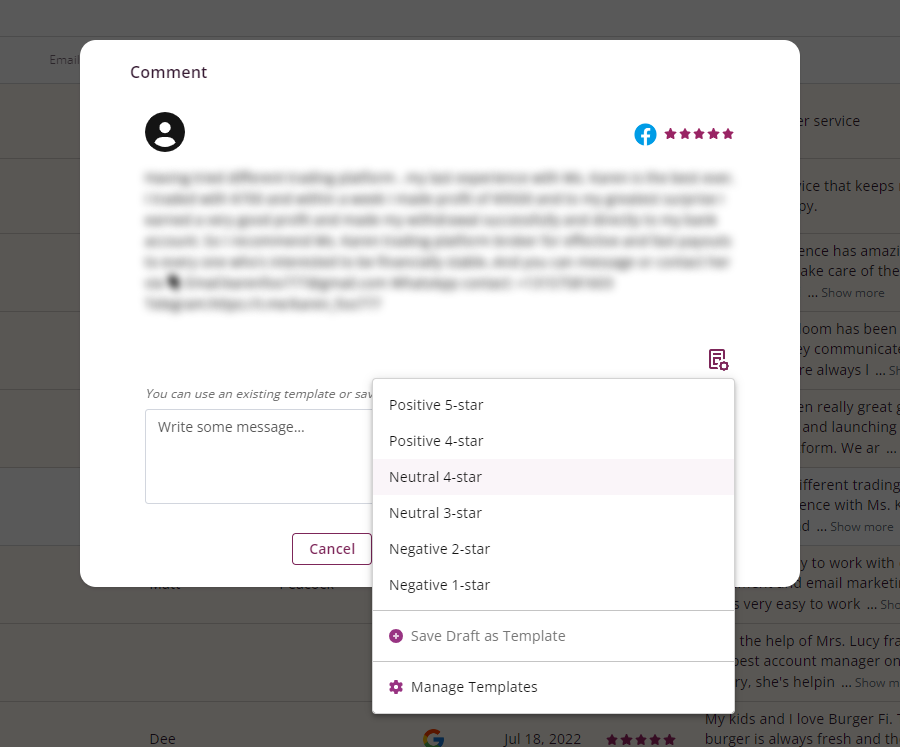
4. Preview Configured Rules for AI Review Responses

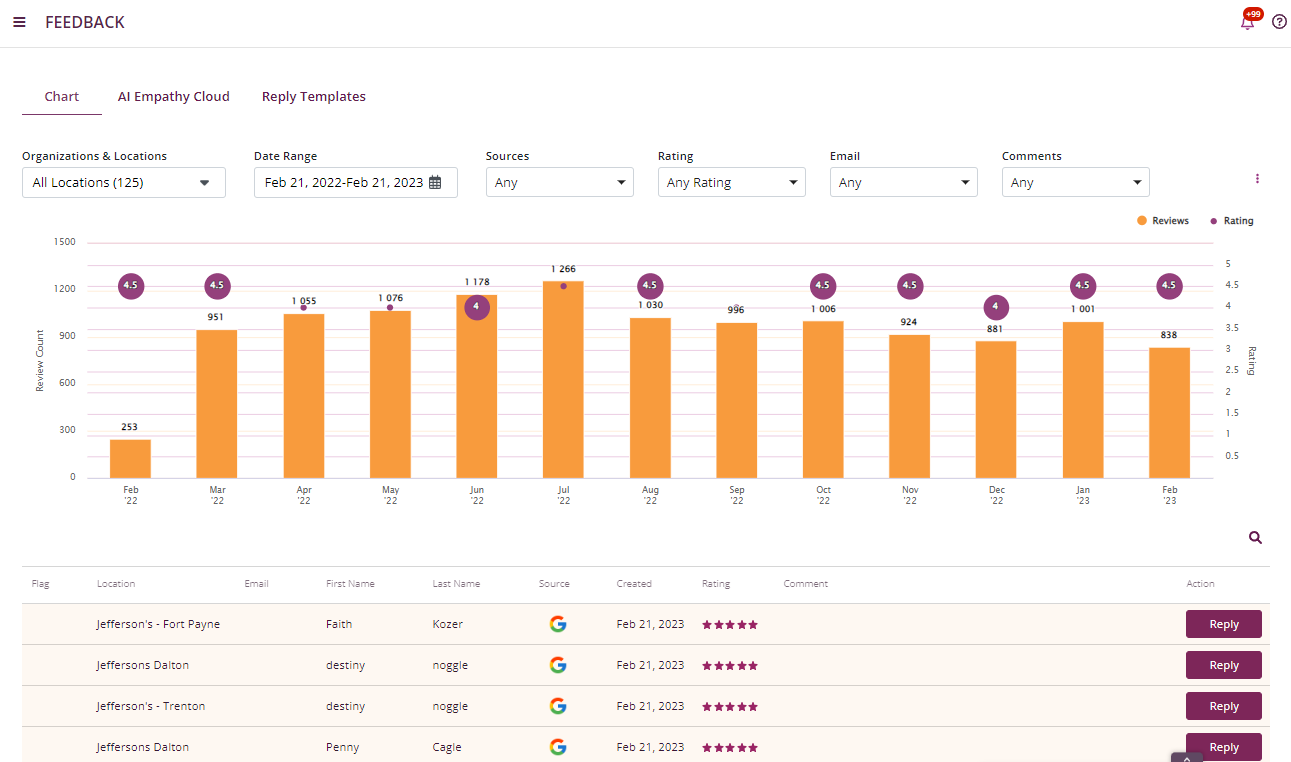
Responding to guest reviews is a critical part of reputation management. Bloom Intelligence’s AI-powered review response rules can now be previewed and tested.

This feature lets you fine-tune your response rules and templates, ensuring they align perfectly with your brand’s voice and message. It offers peace of mind that the Bloom AI response engine delivers relevant and meaningful responses based on individual guest reviews and your rules and templates.

5. Lightning-Fast Dashboard Loading

Managing multiple locations and aggregating significant data over time can slow down your dashboard’s loading speed. Bloom Intelligence’s dashboard now loads lightning-fast, regardless of the number of locations or the timeframe selected.

This huge performance boost ensures quick and easy access to your data, allowing you to make informed decisions quickly.

6. Auto-Add Locations to Existing Campaigns

When running multiple locations, sometimes you might add a new location to an existing trigger campaign. Now, you can do this without having to create a new campaign! All you have to do is click on auto-add new locations when creating new campaigns or edit the campaign and click auto-add. It will automatically add any new locations you open to your triggered campaigns.

It’s just another way for you to save time!

7. Dashboard Voting to Request and Vote For New Features

You have a direct voice in shaping the Bloom Intelligence product. This voting feature gives users a dedicated area to suggest new functionalities, vote on feature requests that matter most to their business, and see what features our development team is working on. Click on the lightbulb icon in the upper right-hand of your dashboard to see for yourself.

Prioritizing development based on user demand ensures that the product evolves in a way that best serves the needs of the Bloom community.

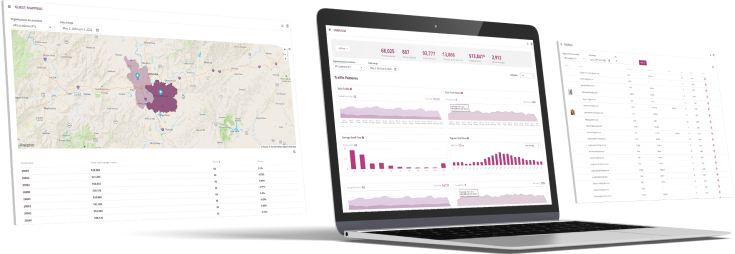
8. All Guest KPIs Now Take Into Account Your Guests Online Ordering, Reservations, and Location Behavior

Now, seeing a single customer view of your guest’s behavior allows restaurant operators to make smarter, data-driven decisions.

This update automatically aggregates data from all guest data sources. It provides insights into guest behavior, saving operators the time and effort previously spent manually collecting and analyzing information from different platforms.

With a fuller picture of guest activity, including POS, location, reviews, online orders, and reservations, you can better understand trends, improve guest experiences, and optimize marketing efforts without extra manual work.

9. Added Tock Reservations Integration

Guest reservation data from Tock is seamlessly collected and incorporated into Bloom’s customer profiles. This new integration enhances the depth of guest insights, creating more comprehensive profiles that include reservation behaviors and preferences.

With richer data, restaurant operators can effortlessly segment their audience and deliver more personalized, triggered marketing campaigns based on guests’ reservations.

10. Added Onosys Integration

This addition enables collecting guest online ordering data to build more comprehensive customer profiles.

This Onosys integration provides a richer understanding of guest behaviors, such as ordering frequency, preferences, and spending patterns. With this data automatically integrated into Bloom’s platform, restaurant operators using Onosys can easily segment guests and create highly targeted marketing campaigns based on real-time insights and online ordering behavior.


Looking Forward

These new features of the Bloom Intelligence platform are designed to simplify your marketing efforts, enhance guest experiences, and improve operational efficiency.

Bloom looks forward to releasing SMS and new hardware integrations in the coming weeks, as well as advanced new AI features that will make your job easier and drive more revenue seamlessly.

By continuously improving our product and adding new features, Bloom Intelligence continues to support restaurant owners and operators in delivering exceptional service and achieving business success.

Discover Bloom Intelligence

Bloom Intelligence is an AI-powered restaurant marketing platform. It includes a powerful customer data platform, automated guest data collection, marketing automation, and reputation management tools.

Guest data is collected from WiFi logins, online reservation systems, online ordering platforms, POS systems, website forms, social media, reviews and aggregated into one platform. This makes it simple to see guest insights and segment your guests into audiences like regular or at-risk guests for your restaurant’s digital marketing and operations decisions.

Your guest data then fuels Bloom’s AI-powered marketing automation and reputation management tools to deliver results.

Bloom makes guest data collection, analysis, marketing, and reputation management easy.

Click Here to Schedule a Free Online Demo, or call 727-877-8181 to see how we can help you save time and drive tangible results for your restaurants.


Integrating a CDP, Marketing Automation, and Reputation Management to Transform Your Restaurant Business

In today’s restaurant landscape, the need to optimize every aspect of your marketing and operations is more pressing than ever. To stand out, restaurant operators must utilize every tool at their disposal to attract new guests, fill more seats, and maximize customer lifetime values.

This is where the integration of a restaurant Customer Data Platform (CDP), marketing automation, and reputation management comes into play.

When used together, these technologies can automate marketing and reputation management campaigns, providing an unparalleled opportunity for growth and efficiency with a great return on investment (ROI).


Understanding the Power of Integrated Technology

A restaurant CDP serves as the backbone of this integrated approach. It centralizes guest data from multiple sources—such as POS systems, online orders, reservations, WiFi logins, and more—into a single, unified profile.

This comprehensive view of each guest, also known as a single customer view, allows for a deeper understanding of guest behavior and preferences, which is key to crafting personalized marketing strategies and enhancing guest experiences.

Marketing automation tools take this data and put it to work, automatically executing targeted campaigns based on guest behavior.

For instance, if a CDP identifies a segment of guests who haven’t visited in a while, marketing automation can trigger a “We Miss You” campaign offering a special discount or promotion.

This type of personalized outreach, based on actual guest data and behavior, is far more effective than generic mass marketing efforts. It ensures that each guest feels valued and recognized, increasing the likelihood of repeat visits and building long-term loyalty.

Reputation management further amplifies this effect by ensuring your restaurant maintains a positive online presence.

Automated tools monitor reviews in real-time, allowing you to respond promptly to feedback, or even let the tool respond for you using AI-powered technology. If a guest leaves a negative review, the system can automatically trigger an apologetic response to encourage them to give your restaurant another chance.

This immediate and proactive response demonstrates a commitment to guest satisfaction, enhancing your restaurant’s reputation and fostering trust among current and potential guests.


Automating Marketing and Reputation Management with CDP Data

The integration of a CDP with marketing automation and reputation management software allows you to run highly targeted and efficient campaigns without manual intervention.

After the initial setup, these campaigns run automatically, freeing up valuable time and resources that can be redirected toward other critical areas of the business. This automation is key to maximizing your marketing efforts while minimizing costs, making it the most cost-effective form of marketing available.

Consider a scenario where a guest dines at your restaurant and pays using a credit card. The CDP can capture this transaction data and update the guest’s profile with the frequency of visits, average spend, and even preferred menu items.

Based on this data, the marketing automation tool can send a personalized email thanking the guest for their visit and offering a discount on their favorite dish if they return within the next two weeks.

Simultaneously, the reputation management tool monitors the guest’s activity online. If the guest leaves a positive review, the system can send a follow-up response thanking them for their feedback. If the review is negative, an apologetic response could be automatically triggered to address their concerns and improve their experience.

This seamless integration of data collection, analysis, and automated response not only enhances guest satisfaction but also drives more traffic to your restaurant.

By continually engaging with guests through personalized and timely communications, you build a stronger relationship with them, encouraging repeat business and increasing their lifetime value.


Driving Business Growth Through Intelligent Automation

The combination of a CDP, marketing automation, and reputation management allows restaurants to operate smarter, not harder.

With all guest data centralized and accessible, you can easily identify trends and insights that can inform your marketing strategies.

For example, by analyzing data from the CDP, you may discover that a significant number of guests prefer dining on weekends. You can then automate a campaign that offers special promotions on weekdays to encourage more frequent visits and fill seats during slower periods.

Reputation management tools add another layer of value by maintaining your restaurant’s public image. They enable you to stay ahead of potential PR crises by monitoring all online reviews on the popular review sites.

By responding swiftly and appropriately to negative feedback, you show current and prospective guests that you are committed to providing an exceptional dining experience.

This proactive approach to managing your online reputation not only prevents revenue loss due to bad reviews but also attracts new guests who value responsiveness and accountability.

Moreover, this integrated approach reduces marketing costs significantly. Traditional marketing methods such as print ads or billboards can be expensive and often fail to provide measurable results.

In contrast, using a CDP combined with automation tools allows for precise targeting and tracking of campaigns, ensuring that every dollar spent contributes to measurable outcomes. You can easily calculate the ROI of each campaign, allowing for better budget allocation and strategic planning.


Enhancing Guest Experience and Increasing Customer Lifetime Value

The real power of integrating a CDP, marketing automation, and reputation management lies in its ability to enhance the guest experience continuously.

Every interaction is informed by data, from the moment a guest makes a reservation to the time they leave a review. This data-driven approach allows you to anticipate guest needs and preferences, delivering a personalized experience that exceeds expectations.

For instance, if the CDP shows a guest frequently dines during lunch hours, the marketing automation tool can send them an exclusive offer during dinner service. At the same time, the reputation management system can monitor the guest’s feedback and ensure any negative experiences are promptly addressed.

This holistic approach ensures that every touch point with the guest is optimized for maximum satisfaction and retention.

By consistently providing exceptional service and personalized offers, you increase the likelihood of repeat visits.

Over time, this leads to a higher customer lifetime value. With each guest worth more to your business over their lifetime, the ROI from these integrated technologies becomes even more apparent.


A Strategic Approach to Restaurant Success

Integrating a CDP with marketing automation and reputation management is more than just a technological upgrade, it’s a strategic approach to achieving sustained business growth.

By automating marketing and reputation management campaigns based on real-time data, you can drive more traffic to your restaurant, improve guest satisfaction, and increase customer lifetime value—all while reducing marketing costs.

This combination of technologies provides a powerful, cost-effective solution that allows you to stay competitive in a rapidly evolving industry.

With minimal effort required after the initial setup, you can focus on what truly matters, delivering an outstanding dining experience that keeps guests coming back.

Investing in these integrated technologies is not just a smart decision, it’s an essential one for any restaurant looking to thrive in today’s challenging market.


Discover Bloom Intelligence

Bloom Intelligence is an AI-powered restaurant marketing platform. It includes a powerful customer data platform, automated guest data collection, marketing automation, and reputation management tools.

Guest data is collected from many different sources and aggregated into one single platform. This makes it simple to analyze and segment your guest personas for your restaurant’s digital marketing and operations decisions.

Data is collected from sources like WiFi logins, online reservation systems, online ordering platforms, POS systems, website forms, social media, and more.

Bloom makes guest data collection effortless, this allows you to quickly execute the strategies listed above, saving you time, increasing customer lifetime values, attracting new guests, improving your reputation, and boosting your bottom line.

Call us or schedule a free demo online and Bloom will show you how our restaurant marketing platform can help you save time and increase your customer lifetime values by automatically building first-party customer databases, unlocking important guest insights to trigger automated marketing at the right time and place, discover true guest sentiment, save at-risk guests, increase your current guests’ frequency, and find new guests.

Click Here to Schedule a Free Online Demo, or call 727-877-8181 to see how we can help you save time and drive tangible results for your restaurants.

Recession-Proof Your Restaurant: The Ultimate Guide to Leveraging a CDP, Marketing Automation, and Reputation Management

The restaurant industry is facing unprecedented challenges. Soaring inflation, rising costs of goods sold, and consumer pullback have created the perfect storm for restaurateurs struggling to maintain profitability.

Now more than ever, restaurants must adopt a comprehensive, technology-driven marketing strategy to recession-proof their businesses.

The good news is that the tools you need to weather the storm are readily available and easier to use than ever before.

By leveraging a customer data platform (CDP), marketing automation, and reputation management, you can easily unlock powerful insights, automate revenue-driving campaigns, and turn your guests into loyal brand advocates.

And believe it or not, it is faster and easier than you might think.
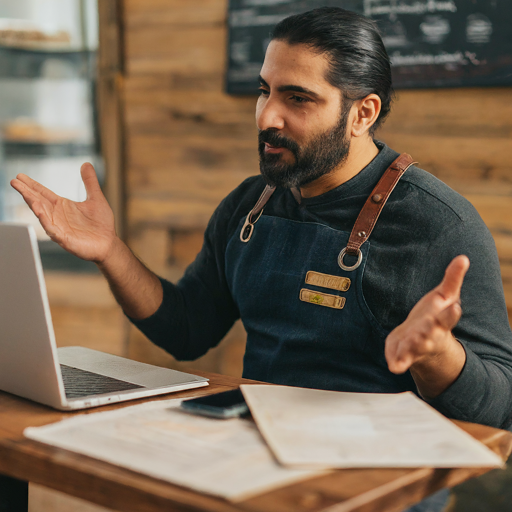
restaurant owner seeing how to leverage a CDP


The Power of a Customer Data Platform (CDP)

At the heart of your recession-proof strategy lies a restaurant CDP. Unlike traditional CRMs that store fragmented customer data, a CDP unifies all your customer information into a single, comprehensive view.

This 360-degree understanding of your diners empowers you to personalize every interaction, anticipate their needs, and maximize their customer lifetime value.

Key benefits of using a CDP for your restaurant include:

  • Unified customer data: Collect and consolidate data from multiple sources, including your point-of-sale system, website, WiFi logins, online ordering, reservations, and more.
  • Personalized targeting and segmentation: Leverage advanced analytics to create highly targeted campaigns and audience segments based on behavior, preferences, and predicted needs.
  • Predictive analytics: Uncover insights to anticipate customer behavior, optimize marketing strategies, and make data-driven decisions.
  • Improved customer retention and lifetime value: By delivering personalized experiences, you can foster deeper brand loyalty and keep customers coming back, even in tough economic times.

At its core, a CDP unifies customer data from multiple touchpoints and sources, creating a single, coherent view of each customer. For restaurants, this means integrating data from point-of-sale systems, online ordering platforms, reservation systems, loyalty programs, website interactions, and even social media engagements.

This unified view provides invaluable insights into customer preferences, behaviors, and patterns that might otherwise go unnoticed.

The 360-degree customer view enabled by a CDP allows restaurants to understand their patrons on a deeper level. For instance, a CDP can reveal that a customer who frequently dines in on weekends also tends to order takeout during weekday lunches. This insight can inform targeted marketing efforts, such as promoting lunch specials to this guest during the work week.

Personalization becomes significantly more powerful with a CDP. Restaurants can move beyond basic segmentation to create highly tailored experiences for each customer.

For example, if the CDP shows that a guest always orders online, the restaurant can send dine-in promotions to the guest to entice them to visit your physical location. Similarly, if a patron frequently orders wine with their meal, the CDP can trigger personalized email or SMS messaging for wine pairings based on their wine selection.

The predictive analytics capabilities of a CDP are particularly valuable for restaurants looking to recession-proof their business. By analyzing historical data and identifying patterns, CDPs can forecast future behavior and trends.

This might include predicting which customers are at risk of churning, allowing the restaurant to proactively engage them with special offers or personalized outreach.

It can also help anticipate demand for certain dishes or ingredients, enabling more efficient inventory management and reducing waste – a crucial factor in maintaining profitability during economic downturns.

restaurant staff using a CDP

CDPs excel at improving customer retention and increasing lifetime value, which is essential for restaurants during tough economic times. By tracking customer interactions over time, a CDP can identify opportunities to deepen relationships and increase engagement.

For instance, it might recognize that a guest who used to dine weekly has reduced their visits to monthly, triggering a re-engagement campaign with personalized incentives to visit more frequently. LTO (limited time only) promotions are perfect for this scenario.

Moreover, CDPs can significantly enhance loyalty programs. Instead of one-size-fits-all rewards, restaurants can use CDP insights to create personalized loyalty tiers and rewards that align with individual customer preferences. A customer who always orders dessert might receive a free dessert as a reward, while a wine enthusiast might be offered a complimentary wine-tasting event.

For multi-location restaurant chains, a CDP can provide valuable insights into location-specific trends and guest preferences. This data can inform menu and operations customization for different locations, ensuring that each restaurant caters effectively to its local clientele.

The long-term benefits in terms of increased customer satisfaction, improved operational efficiency, and boosted revenue make it a worthwhile endeavor for restaurants looking to thrive in challenging economic conditions.

By harnessing the power of unified guest data, restaurants can make more informed decisions, create more engaging customer experiences, and ultimately build a more resilient business model capable of weathering economic uncertainties.

For more details, visit our page here: What Is a Restaurant CDP? Unlock the Power of Guest Data to Boost Revenue and Streamline Operations

restaurateurs leverage a CDP

Supercharge Your Marketing with Automation

Once you have a powerful CDP in place, it’s time to pair it with the magic of marketing automation. By automating key campaigns and customer touchpoints, you can drive revenue at every stage of the customer journey – from acquisition and engagement to retention.

Some of the most impactful automated campaigns for restaurants include:

  • Acquisition: Lead generation, lookalike campaigns, promotional offers, and referral programs to attract new customers
  • Engagement: Loyalty programs, upselling and cross-selling, email and SMS messaging to keep diners coming back
  • Retention: Personalized promotions and guest re-engagement campaigns to maintain a loyal customer base

The beauty of marketing automation lies in its ease of use and measurable return on investment. With the right platform – and integration with your CDP – you can create and deploy these campaigns with minimal effort, freeing up your team to focus on other strategic priorities.

In the competitive restaurant industry, especially during economic downturns, marketing automation becomes a powerful tool to drive revenue and maintain guest engagement. This approach allows restaurants to deliver timely, personalized communications at scale, ensuring consistent interaction with customers while freeing up staff to focus on high-value tasks.

Marketing automation for restaurants encompasses a wide range of strategies and tools designed to streamline and optimize marketing efforts across the entire customer journey. From initial customer acquisition to long-term retention, automation can significantly enhance the effectiveness and efficiency of your restaurant marketing campaigns.

Customer Acquisition Strategies

Automated customer acquisition strategies help restaurants cast a wider net and attract new patrons more efficiently.

Social media campaigns can be automated to post content at optimal times, ensuring maximum visibility. These posts can be dynamically generated based on current promotions, seasonal menu items, or local events, keeping content fresh and relevant without constant manual input.

Targeted ads on platforms like Facebook, Instagram, and Google can be set up to automatically adjust based on performance metrics.

For instance, if a particular ad promoting a new lunch menu is performing well with a specific demographic, the system can automatically allocate more budget to that ad and expand its reach to similar audiences.

Lead generation becomes more sophisticated with automation. For instance, when potential guests interact with a restaurant’s website, automated systems can capture their information and initiate a nurturing sequence.

This might include sending a series of emails introducing the restaurant’s cuisine, ambiance, and special offers, gradually building interest and encouraging a first visit.

Engagement Strategies

Automated engagement strategies keep patrons connected with the restaurant between visits, increasing the likelihood of repeat business.

Restaurant loyalty programs, a cornerstone of guest engagement, benefit greatly from automation. Points can be automatically awarded for visits, with customers receiving real-time updates on their status and available rewards.

Upselling and cross-selling campaigns become more effective with automation. Based on a guest’s order history, the system can suggest complementary items. For instance, if a customer frequently orders pasta dishes, an automated system might suggest a new garlic bread appetizer or an Italian wine pairing. These suggestions can be delivered via email or SMS push notifications.

Event-based marketing becomes more manageable with automation. Restaurants can set up campaigns tied to specific events or milestones in the customer journey.

For example, an automated email or text message can be sent on a guest’s birthday, offering a free dessert or special discount. Similarly, anniversary emails can be sent to patrons on the anniversary of their first visit or their wedding anniversary, thanking them for their loyalty and offering an incentive to visit again.

Retention Efforts

Customer retention is crucial for restaurants, especially during economic downturns, and automation plays a key role in these efforts.

Re-engagement campaigns for lapsed customers can be automatically triggered based on visit frequency. If a once-regular patron hasn’t visited in a while, the system can send a personalized “We miss you” message, perhaps accompanied by an offer tailored to their previous preferences.

Bloom users who have implemented this campaign are seeing up to 38%+ of their lapsed guests return through the doors.

Automated feedback solicitation helps restaurants stay attuned to customer satisfaction and address issues promptly. After a visit, customers can receive an automated email or text message asking about their experience. Negative feedback can trigger an alert to management for personal follow-up and customer service recovery.

Seasonal and holiday marketing becomes more effective with automation. Restaurants can set up campaigns well in advance to promote special menus or events, with messages automatically sent out at the right time to maximize bookings. These campaigns can be personalized based on past guest behavior, such as sending Thanksgiving pre-order information to guests who ordered takeout during previous holiday seasons.

restaurant marketers creating automated marketing campaigns

Integration and Personalization

The true power of marketing automation comes from its integration with other systems, particularly the restaurant’s CDP. By combining automation with rich customer data, restaurants can create highly personalized and timely marketing campaigns.

Implementing marketing automation requires careful planning and ongoing optimization. Restaurants should start with a clear strategy, identifying key touchpoints in the customer journey where automation can have the most impact. It’s important to regularly review the performance of automated campaigns, adjusting and refining them based on customer responses and changing business needs.

While automation can significantly enhance marketing efforts, it’s important to maintain a human touch. Automated messages should be crafted to sound personal and genuine, and there should always be easy ways for customers to reach a real person if needed.

By leveraging marketing automation effectively, restaurants can create a more engaging, personalized experience for their guests, driving loyalty and revenue even in challenging economic times.

This approach allows restaurants to stay top-of-mind with patrons, respond quickly to changing market conditions, and make the most efficient use of their marketing resources.

For more details about marketing automation with Bloom, visit our page here: Automate Your Way to Restaurant Success: Marketing Campaigns That Drive Revenue


Reputation Management for Restaurants

In a challenging economic climate, your online reputation can make or break your restaurant’s success. Diners are more price-conscious than ever, and they’re turning to reviews to guide their dining decisions.

By proactively managing your online presence, you can turn negative reviews into opportunities and transform unhappy customers into loyal brand advocates.

Key reputation management strategies for restaurants include:

  • Monitoring and responding to reviews: Stay on top of what customers are saying about your business and address issues promptly and professionally.
  • Leveraging guest feedback: Use review data to identify areas for improvement and make operational changes that enhance the customer experience.
  • Turning unhappy guests into advocates: Reach out to dissatisfied diners, resolve their concerns, and encourage them to leave positive feedback, boosting your online reputation.

Integrating your reputation management efforts with your CDP and marketing automation platform ensures that you can deliver personalized, timely responses and tailor your outreach to individual customer needs.

The Importance of Online Reputation in a Competitive, Price-Sensitive Market

In a highly competitive and price-sensitive market, your restaurant’s online reputation can make or break your business. With countless dining options available at their fingertips, potential guests often rely on online reviews, social media mentions, and star ratings to make their dining decisions. In fact, studies have shown that a whopping 94% of diners choose a restaurant based on online reviews.

This statistic underscores the critical role that reputation plays in influencing guest choices.

Moreover, in tough economic times, when consumers are more cautious about where they spend their money, they are even more likely to consult online reviews before making a decision.

A strong online reputation not only helps attract new guests but also builds trust and loyalty, encouraging repeat visits and positive word-of-mouth.

Strategies for Effectively Managing Your Restaurant’s Online Reputation

Managing your restaurant’s reputation involves more than just monitoring reviews—it’s about actively engaging with your online audience, addressing concerns, and leveraging feedback to improve your operations. Here are some key strategies to effectively manage and enhance your restaurant’s reputation:

1. Proactive Monitoring and Responding to Reviews

One of the most effective ways to manage your online reputation is through proactive monitoring and timely responses to guest reviews. Whether on Google, Yelp, TripAdvisor, or social media platforms, regularly checking what guests are saying about your restaurant is crucial.

Positive reviews offer an opportunity to reinforce guest loyalty, while negative reviews provide valuable insights into areas needing improvement.

Responding to reviews—both positive and negative—demonstrates that you value your guests’ opinions and are committed to providing excellent service.

For positive reviews, a simple thank you can go a long way in building goodwill and encouraging repeat business. For negative reviews, it’s essential to respond thoughtfully and professionally. Apologize for any shortcomings, offer a solution if possible, and invite the guest to return for a better experience.

2. Leveraging Guest Feedback to Improve Operations

Guest feedback, particularly from online reviews, is a goldmine of information about your restaurant’s strengths and weaknesses. By analyzing this feedback, you can identify recurring issues—such as slow service, menu dissatisfaction, or ambiance concerns—and address them promptly.

For example, if multiple guests mention long wait times, it may be time to reevaluate your staffing during peak hours or consider implementing a reservation management system to better handle the flow of guests.

In addition to operational improvements, guest feedback can inform menu changes, staff training, and even marketing strategies. By continuously refining your operations based on guest input, you can enhance the overall dining experience, leading to higher satisfaction rates and better reviews.

Bloom offers a word cloud based on real-time reviews from Google, Yelp, TripAdvisor, and Facebook. This gives users a very quick and easy way to discover guest sentiment in the time frame selected.
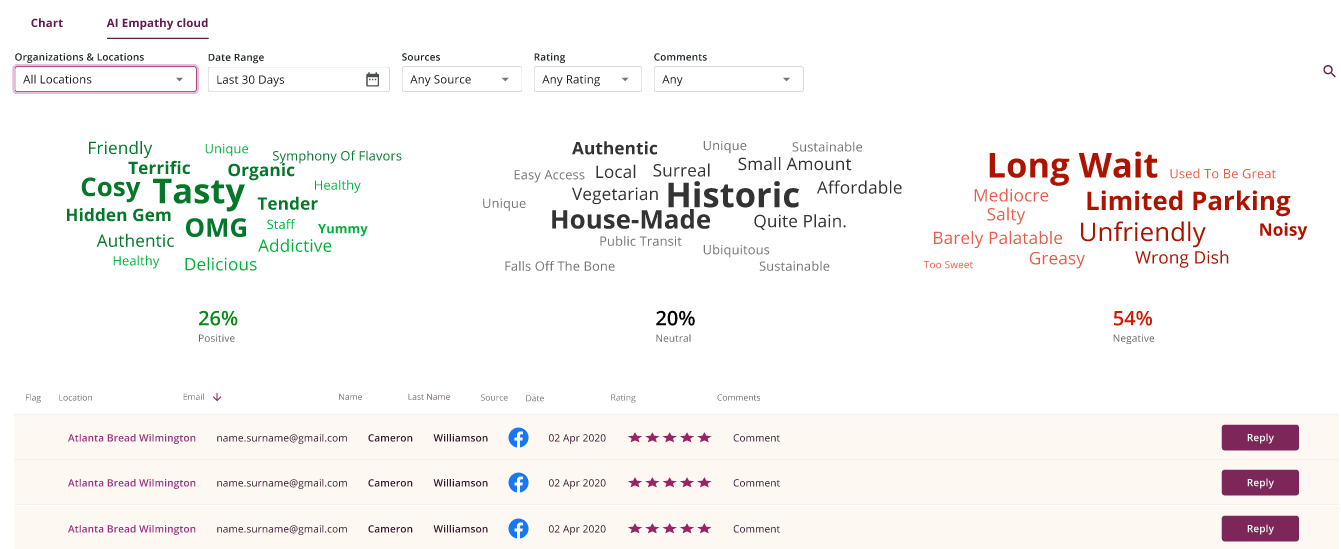
customer sentiment word cloud for reputation management

3. Turning Unhappy Guests into Brand Advocates

Negative reviews, while challenging, present an opportunity to turn dissatisfied guests into loyal advocates. When handled correctly, a well-crafted response to a negative review can not only resolve the issue but also demonstrate your restaurant’s commitment to guest satisfaction.

This approach can win over the disgruntled guest and impress other potential diners who see how you handle criticism.

For example, if a guest complains about a cold dish, acknowledge the mistake, apologize sincerely, and offer a discount or free meal on their next visit. By addressing the issue head-on and making amends, you show that you care about your guests’ experiences and are willing to go the extra mile to make things right.

This level of responsiveness can transform a negative situation into a positive one, earning you a reputation for excellent customer service, as potentially thousands of other diners will also see.

4. Maintaining a Consistent Online Presence

Consistency is key to effective reputation management. Ensure that all your digital platforms, including your website, social media profiles, and review site listings, are up to date and accurately reflect your brand.

This includes keeping your menu, hours of operation, and contact information current. An outdated or incomplete online presence can frustrate potential guests and harm your reputation.

Regularly updating your social media profiles with engaging content—such as photos of new dishes, upcoming events, or behind-the-scenes stories—can help keep your restaurant top of mind for followers.

Additionally, actively participating in conversations on social media, responding to comments, and sharing user-generated content can further enhance your online reputation and build a loyal community around your brand.

5. Encouraging and Showcasing Positive Reviews

Once you’ve accumulated positive reviews, showcase them across your digital platforms.

Highlighting guest testimonials on your website, social media pages, and even in marketing materials can boost credibility and influence potential guests’ decisions.

A strong portfolio of positive reviews not only attracts new guests but also reinforces the trust and loyalty of existing ones.

The Long-Term Impact of Effective Reputation Management

Investing in reputation management is not just about managing your current online presence; it’s about building a long-term strategy that ensures the sustained success of your restaurant.

A well-maintained reputation helps you weather economic downturns by keeping your restaurant top-of-mind for guests and establishing a loyal customer base that supports your business even during challenging times.

Moreover, a positive online reputation can lead to other benefits, such as higher rankings in search engine results, increased media coverage, and stronger relationships with local communities.

All of these factors contribute to a healthier bottom line and a more resilient business.

Reputation management is an integral part of a recession-proof strategy for any restaurant. By actively managing your online presence, leveraging guest feedback, and consistently delivering excellent service, you can ensure that your restaurant not only survives but thrives, even in the toughest economic climates.

For more details about reputation management using Bloom Intelligence, visit our page: How To Respond Efficiently To Online Reviews To Boost Your Bottom Line

 

Integrating the Trio for Maximum Impact: Bloom Intelligence

The true power of this recession-proof strategy lies in the seamless integration of your CDP, marketing automation, and reputation management tools.

By connecting these solutions, you can create a unified, data-driven approach that drives revenue, fosters customer loyalty, and positions your restaurant for long-term success.

Whether you’re just getting started or looking to optimize your existing technology stack, the key is to find a provider that offers a comprehensive, easy-to-use platform. Look for solutions that offer robust integration capabilities, intuitive interfaces, and exceptional customer support to ensure a smooth implementation and ongoing success.

By embracing this powerful trio of technologies, you can recession-proof your restaurant and thrive, even in the most challenging economic conditions.

Start leveraging the power of a CDP, marketing automation, and reputation management today, and watch your business soar to new heights.


Discover Bloom Intelligence

Bloom Intelligence is an AI-powered restaurant marketing platform. It includes a powerful customer data platform, automated guest data collection, marketing automation, and reputation management tools.

Guest data is collected from many different sources and aggregated into one single platform. This makes it simple to analyze and segment your guest personas for your restaurant’s digital marketing and operations decisions.

Data is collected from sources like WiFi logins, online reservation systems, online ordering platforms, POS systems, website forms, social media, and more.

Bloom makes guest data collection effortless, this allows you to quickly execute the strategies listed above, saving you time, increasing customer lifetime values, attracting new guests, improving your reputation, and boosting your bottom line.

Call us or schedule a free demo online and Bloom will show you how our restaurant marketing platform can help you save time and increase your customer lifetime values by automatically building first-party customer databases, unlocking important guest insights to trigger automated marketing at the right time and place, discover true guest sentiment, save at-risk guests, increase your current guests’ frequency, and find new guests.

Click Here to Schedule a Free Online Demo, or call 727-877-8181 to see how we can help you save time and drive tangible results for your restaurants.

Automate Your Way to Restaurant Success: Marketing Campaigns That Drive Revenue

If you’re running a restaurant, you know that time is money. Every minute is priceless. From the moment you open your doors to the last guest’s departure, you’re in a constant race against the clock. Each second spent on manual tasks or inefficient processes is a missed opportunity to delight a customer, optimize your operations, or boost your bottom line.

In today’s competitive restaurant landscape, data-driven, personalized marketing is the key to driving growth and profitability.

However, executing these campaigns can be time-consuming and resource-intensive, distracting your team from other high-impact initiatives. That’s where marketing automation plays a role in changing the way you connect with your guests.

By automating your marketing campaigns, you can streamline workflows, boost ROI, and deliver exceptional, personalized experiences that keep your customers coming back.

  • Implementing automated marketing campaigns can lead to a revenue increase of up to 20%. – SevenRooms
  • Restaurants that utilize marketing automation report a 3x to 5x increase in ROI. – GrubHub
  • By automating repetitive marketing tasks, restaurants can reduce their marketing operational costs by up to 30%. – QSR Magazine
  • Nearly 70% of restaurant operators acknowledge they are not fully optimizing their customer data. However, those who integrate a Customer Data Platform (CDP) with marketing automation tools experience a 2.9x greater year-over-year revenue growth compared to those who don’t. – Segment
  • Restaurants using automated re-engagement campaigns have seen a 37% return of at-risk guests, significantly improving retention rates and reducing customer churn. – Bloom Intelligence

Here, we’ll explore the power of marketing automation, dive into proven revenue-driving campaigns, and share strategies for successful implementation to help you automate your way to restaurant success.

restaurant marketing automation configuration

Understanding the Power of Automation

Marketing automation refers to the use of technology to automate repetitive marketing tasks, allowing restaurant marketers to focus more on strategy and creativity.

Marketing automation is a game-changer for restaurants, enabling the execution of data-driven, personalized campaigns at scale without manual effort.

When integrated with a Customer Data Platform (CDP), automation becomes even more powerful, enabling hyper-personalized campaigns based on guest preferences and behavior.

This technology offers several key benefits:

  • Streamlined workflows: Automation eliminates time-consuming manual processes, allowing your team to focus on strategic initiatives.
  • Improved ROI: By delivering personalized, data-driven campaigns, automation optimizes marketing spend and maximizes impact.
  • Enhanced guest experience: Automated campaigns ensure consistent, relevant messaging across multiple channels.

1. Streamlined Workflows

Automating repetitive, time-consuming marketing tasks – such as email campaigns, SMS messaging, segmenting guest lists, and review management – frees up your team to focus on more strategic, high-impact initiatives.

This shift in focus leads to a significant increase in ROI. Personalized, data-driven campaigns resonate with guests on a deeper level, driving higher engagement, increased customer loyalty, and ultimately, more revenue.

By tracking the performance of automated campaigns, restaurants can measure their impact and optimize their marketing efforts for maximum results.

This not only saves time and money, but also ensures consistent, on-brand messaging across multiple channels.

2. Improved ROI

Automation allows you to deliver personalized, data-driven campaigns that connect with guests on a deeper level, ultimately driving higher engagement and conversion rates.

By optimizing your marketing spend and focusing on efforts that yield the greatest returns, you can maximize the impact of your campaigns while measuring their tangible results​​.

Marketing automation drives improved ROI by making your marketing efforts more efficient, effective, and scalable.

Through personalized guest experiences, efficient resource allocation, higher conversion rates, real-time performance tracking, and enhanced customer lifetime value, automation helps you get the most out of your marketing budget while driving significant revenue growth for your restaurant.

3. CDP Integration

A Customer Data Platform (CDP) is the backbone of effective marketing automation. By centralizing guest data from various sources—such as POS systems, online ordering platforms, reservations, reviews, your website, and WiFi logins—a CDP provides a unified view of each guest. This data can then be used to power audience creations such as a list of your regulars to create personalized automation, ensuring that every interaction is relevant and timely to this segment of your guests.

Seamless integration between your automation platform and customer data platform (CDP) is crucial for powering personalized, effective campaigns.

By leveraging comprehensive guest data from your CDP, your automated outreach can be laser-focused, anticipating your customers’ needs and preferences for maximum engagement and revenue impact.

restaurant owner happy with marketing automation results

Automated Campaigns for Every Stage of the Customer Journey

Automation isn’t a one-size-fits-all solution – it’s a flexible toolset that can drive revenue at every stage of the customer journey, from acquisition to engagement to retention.

By implementing targeted, automated campaigns, you can attract new guests, foster loyalty and repeat visits, and keep your best customers coming back.

Acquisition Campaigns

Automated lead generation and referral programs can help you attract new guests and expand your customer base.

For example, you could implement an automated opt-in campaign offering a special discount to new guests who provide their contact information.

By targeting potential guests with personalized offers and incentives, you can expand your reach and draw in new business.

Automated referral programs further amplify this effort by encouraging your existing guests to share their positive experiences with others, leveraging their networks to grow your customer base.

Engagement Campaigns

Keeping your guests engaged and spending more is crucial for driving revenue growth for long-term success.

Automated loyalty program enrollment and personalized reward offers make it easy to keep guests coming back.

Triggered upsell and cross-sell campaigns based on past purchase behavior can further increase guest spending.

Imagine sending a bounce-back offer after a guest leaves your location or makes an online order that they can only use for a week. This campaign would effectively incentivize your guests to come more often, thus increasing your revenue per guest in a month.

Retention Campaigns

Retaining your most valuable guests is key for long-term success, as loyal guests often represent a significant portion of your revenue.

Marketing automation plays a vital role in keeping these guests engaged and ensuring they continue to choose your restaurant time and time again.

Automation allows you to tailor loyalty rewards and incentives based on individual guest profiles, ensuring that each guest feels recognized and appreciated.

Identifying and bringing back at-risk guests and lost guests is a powerful way to ensure guest retention. Bloom users are seeing up to 38% of lost guests return when using automated campaigns, providing a large boost to their revenue.

As Peyton Kraus, Director of Marketing for Jefferson’s, explained, “The smart emails help a lot. Being able to just set up an automation to occur automatically and not have to worry about it– it just works.”

By focusing on these automated retention strategies, you can effectively keep your best guests coming back, driving higher lifetime value and ensuring sustained revenue growth for your restaurant.

restaurateurs reviewing marketing automation campaigns

Strategies for Successful Automation Implementation

Implementing marketing automation in your restaurant is not just about selecting the right platform – it’s about aligning your automation efforts with your overall business goals, integrating seamlessly with your existing technology stack, and developing a comprehensive strategy to drive maximum impact.

  • Defining Your Automation Objectives
    • Start by defining the key pain points and opportunities within your restaurant business. Determine the specific metrics and KPIs that you want to improve through automation, and ensure your initiatives are aligned with your broader marketing and revenue goals.
  • Selecting the Right Automation Platform
    • Evaluate the features, capabilities, and integrations of various automation solutions, ensuring seamless integration with your restaurant’s customer data platform (CDP). Or choose a platform like Bloom Intelligence, an all-in-one CDP, marketing automation, and reputation management platform. Look for user-friendly, scalable solutions backed by excellent customer support to streamline your implementation and ongoing use.
  • Crafting Your Automation Strategy
    • Map out your customer journey and identify key touchpoints where automation can make the biggest impact. Develop a phased implementation plan to gradually scale your automation efforts and establish clear performance tracking and optimization processes to continuously improve your campaigns.
  • Integration and Data Management
    • Ensuring seamless data flow between your automation platform and other systems, such as your POS, website, and online ordering and reservation systems is the key for unlocking the true power of automation. Look for automation solutions that offer robust CDP integration capabilities (Bloom Intelligence) to maintain data accuracy and security throughout the process.
  • Change Management and Adoption
    • Driving user adoption and engagement with your automation platform is key to maximizing its impact. Choose a solution that will provide comprehensive training and ongoing support for your marketing team, and work to foster a data-driven, automation-first culture across your team. By doing so, you can empower your team to leverage the platform’s capabilities and extract meaningful insights to drive even more revenue and streamline operations.

“They reach out all the time…They’re pretty top-notch with support and customer service. I know some people on personal levels now which is awesome, a bunch of different people, and anytime you reach out. It’s extremely quick responses and they’re willing to help in any way. You don’t find that with too many companies nowadays,” says Kyle Targtaglia of Tavolino’s about Bloom Intelligence.

  • Measuring and Demonstrating ROI
    • Quantifying the impact of your automated campaigns is essential for securing ongoing support and resources. Identify the key performance indicators (KPIs) that matter most to your business, such as revenue growth, guest engagement, and operational efficiency. A platform such as Bloom Intelligence can track ROI down to actual returned guests and transactions and save your team a significant amount of time with automation.

Unlock the Power of Automation Today

Marketing automation is a transformative tool that can significantly enhance the success of your restaurant. In today’s competitive industry, the ability to deliver personalized, data-driven campaigns that engage guests and drive revenue is not just an advantage—it’s a necessity.

By automating your marketing efforts, you free up valuable time and resources, allowing your team to focus on high-impact strategies that align with your broader business goals.

From streamlining workflows and improving ROI to integrating seamlessly with your Customer Data Platform (CDP), marketing automation empowers you to create consistent, on-brand experiences across every touchpoint.

This technology enables you to engage guests at every stage of their journey, from acquisition and engagement to retention, ensuring that each interaction is relevant, timely, and effective.

Retention, in particular, is vital for long-term success, and automation allows you to keep your best guests coming back with personalized re-engagement campaigns and tailored loyalty program incentives. As a result, you can increase guest lifetime value, boost revenue, and maintain a loyal customer base that drives sustained growth.

Ultimately, the key to thriving in the restaurant industry lies in leveraging the power of automation to create more efficient, effective, and scalable marketing strategies. By doing so, you not only enhance guest experiences but also unlock new revenue opportunities, positioning your restaurant for long-term success.

Now is the time to explore and implement automated marketing campaigns that will elevate your restaurant business to new heights.

Discover Bloom Intelligence

Keeping a focus on guest satisfaction, customer sentiment, and online ratings and reviews using AI-driven tools can boost the visibility and reputation of your restaurant, helping you drive new guests into your restaurant – all while saving time and lowering marketing costs.

Call us or schedule a free demo online and Bloom will show you how our restaurant marketing platform can help you save time and increase your customer lifetime values by automatically building first-party customer databases, unlocking important guest insights to trigger automated marketing at the right time and place, discover true guest sentiment, save at-risk guests, increase your current guests’ frequency, and find new guests.

Click Here to Schedule a Free Online Demo, or call 727-877-8181 to see how we can help you save time and drive tangible results for your restaurants.

What Is a Restaurant CDP? Unlock the Power of Guest Data to Boost Revenue and Streamline Operations

Running a successful restaurant is not easy. Today’s restaurant industry faces a variety of challenges, from fluctuating market conditions to ever-evolving guest expectations.

In this environment, guest data has become the cornerstone of success for winning restaurateurs.

By harnessing the power of customer information, you can personalize the guest experience, drive incremental revenue, and streamline your operations – all while saving time and money.

Enter the restaurant customer data platform (CDP), an easy-to-use technology that puts your guest data to work in ways you never realized were possible.

But what exactly is a restaurant CDP, and how can it benefit your business?

Here, we’ll explore the key features and capabilities of a restaurant-specific CDP, the tangible business benefits it can deliver, and strategies for effective marketing to achieve a positive return on your investment.

restaurant CDP example

Understanding the Restaurant CDP

At its core, a restaurant CDP is a powerful data management platform that unifies guest information from different sources, creating a single, comprehensive view of each patron – known as a single customer view.

Unlike traditional customer relationship management (CRM) systems or generic CDPs, a restaurant-focused solution is designed to address the unique needs and challenges of the industry, offering features that directly address the needs of restaurateurs.

A restaurant-specific CDP includes features such as seamless data integration, robust guest profiling, segmentation and personalization tools, predictive analytics, and integrations. These capabilities allow restaurants to fully harness the power of their guest data to boost revenue and streamline operations.

  • A report from Oracle Hospitality in late 2023 found that restaurants using CDPs saw an average increase of 23% in customer lifetime value.
  • According to a 2023 study by Skift, 58% of hospitality businesses using CDPs reported improved operational efficiency, with an average cost reduction of 8% in marketing expenses.
  • According to a 2023 study by Hospitality Tech, 68% of hotels and restaurants reported increased customer retention rates after implementing a CDP.

Here is a look at the key features that set a restaurant CDP apart.

Unified Guest Data

One of the most significant advantages of a restaurant CDP is its ability to consolidate guest data from multiple sources into a single, unified customer profile. This eliminates the data silos that often plague traditional systems and provides a complete view of each guest.

  • Consolidating Data from Multiple Sources
    • A restaurant CDP aggregates data from various sources, point-of-sale (POS) system, website forms, WiFi logins, reservation system, online ordering platform, and more. By unifying this data, restaurants can gain a single customer view of their guests, enabling more informed marketing and operations decision-making.
  • Creating a Single, Comprehensive View of Each Guest
    • With all guest data centralized, restaurants can create detailed customer profiles that include demographics, preferences, purchase history, and behavioral patterns. This comprehensive view allows for deeper insights into guest behavior and more effective marketing strategies.
  • Eliminating Data Silos and Fragmentation
    • Traditional data management systems often suffer from fragmentation, where different pieces of guest data are stored in separate systems that don’t communicate with each other. A CDP eliminates these silos, ensuring that all guest information is easily accessible and actionable.

Comprehensive Guest Profiles

A restaurant CDP goes beyond collecting basic contact information, capturing detailed guest preferences, purchase history, and behavioral insights.

  • Capturing Detailed Guest Information
    • The CDP captures a wide range of guest data, including demographics, dining preferences, purchase history, and even special occasions like birthdays or anniversaries. This detailed information allows for highly personalized interactions. The data is collected automatically, freeing up time for other important tasks.
  • Leveraging Predictive Analytics
    • A CDP can analyze guest data to help predict future behavior, such as the likelihood of a return visit or preferred menu items. These predictive analytics help restaurants anticipate guest needs and personalize marketing efforts.
  • Continuously Updating and Enriching Guest Profiles
    • Guest profiles are dynamic, not static. A CDP continuously updates profiles with new data from each guest interaction, ensuring that the information remains accurate and relevant over time.

As Peyton Kraus, Director of Marketing for Jefferson’s, and Bloom user told us, “I didn’t realize how much we can track, like when customers are there, at which location, and how often they’re coming back. Analytics like that made us able to hone in on who that customer is…what their habits and preferences are.”

restaurant workers using a CDP

Segmentation and Personalization

A restaurant CDP transforms guest data into a powerful tool for segmentation and personalization, revolutionizing how restaurants engage with their guests.

By consolidating information from various touchpoints, the CDP creates a comprehensive view of each guest, enabling precise audience segmentation based on factors like dining preferences, visit frequency, and spending habits.

This granular segmentation allows restaurants to create highly targeted marketing campaigns and offers.

For instance, a CDP might identify a segment of guests who only visit during lunch hours, allowing the restaurant to send them personalized promotions for happy hour or evening dining. Similarly, high-value guests could receive exclusive invitations to special events or chef’s table experiences.

The CDP’s capabilities extend beyond marketing, enhancing the overall guest experience through tailored interactions. Staff can access guest profiles in real-time, enabling them to greet returning customers by name, remember their preferred table, or anticipate dietary restrictions. This level of personalization fosters a sense of recognition and loyalty, turning casual diners into devoted regulars and brand advocates.

McKinsey & Company‘s 2023 report on the hospitality industry stated that hotels leveraging CDPs for personalized guest experiences saw a 20% increase in guest ratings.

By leveraging a CDP for segmentation and personalization, restaurants can deliver more relevant, engaging experiences that drive customer satisfaction, increase visit frequency, and ultimately boost revenue.

Streamlined Operations

A CDP allows restaurants to make data-driven decisions that optimize various aspects of their business. For example, by analyzing guest behavior and preferences, restaurants can predict peak dining times more accurately, which helps in adjusting staffing levels to meet demand without overstaffing.

Similarly, insights into popular menu items enable more precise inventory management, reducing food waste and ensuring that the right ingredients are always in stock.

By providing a comprehensive view of guest data, a CDP empowers restaurant operators to make informed decisions that improve overall efficiency. This level of insight extends across the entire organization, from the kitchen to the front of the house, ensuring that all restaurant operations are aligned with guest needs and preferences.

The result is a smoother, more efficient operation that not only reduces costs but also enhances the guest experience by ensuring that the restaurant is always prepared to meet demand. This combination of efficiency and guest-centricity ultimately leads to significant cost savings and a stronger bottom line.

restaurant CDPs can fill seats

The Business Benefits of a Restaurant CDP

As you explore the world of customer data platforms, you’ll quickly realize the transformative impact a restaurant-specific CDP can have on your business. From boosting revenue to enhancing guest loyalty and streamlining operations, the benefits are numerous and measurable.

  • Boosting Revenue
    • A restaurant CDP enables you to drive incremental revenue through personalized marketing and promotions. By leveraging guest data to deliver tailored offers, you can increase average check size, visit frequency, and overall profitability. The end result is a more engaged, loyal customer base that delivers a stronger bottom line.
  • Enhancing Guest Loyalty
    • In a crowded and competitive market with an unsure economy, guest loyalty is the key to sustained success. A restaurant CDP empowers you to deliver exceptional, personalized experiences that foster deeper emotional connections with your brand. By anticipating guest needs and preferences, you can increase repeat visits and guest lifetime value, future-proofing your business against economic downturns.
  • Streamlining Operations
    • The integration of guest data with your operational systems is another area where a restaurant CDP truly shines. By gaining a data-driven understanding of guest behavior, you can optimize inventory management, labor scheduling, and other critical processes. This, in turn, leads to significant cost savings, improved efficiency, and better decision-making across your organization.
    • The 2023 Restaurant Technology Study by Nation’s Restaurant News found that fast-casual restaurants using CDPs reported a 15% increase in average table turn times due to improved operational insights.


Realizing Benefits and Value

Implementing a restaurant CDP brings clear advantages. With the right tools and approach, you can smoothly integrate a CDP into your restaurant marketing and operations.

With Bloom, the process is straightforward, allowing you to quickly see positive results and value from your investment.

Integrating with Existing Systems

Seamless integration with your existing technology stack is crucial for a successful CDP implementation.

Look for a platform that offers open APIs and pre-built connectors, ensuring a streamlined data flow and minimal disruptions to your ongoing operations.

Driving User Engagement

Fostering user engagement is key to maximizing the value of your restaurant CDP. Bloom provides comprehensive training and support to your staff, empowering them to leverage the platform’s capabilities and extract meaningful insights.

This will create a data-driven culture throughout your organization to ensure long-term success.

Measuring and Demonstrating ROI

Measuring the impact of your restaurant’s CDP is important for most businesses. Identify key performance indicators (KPIs) that align with your business goals, such as revenue growth, guest satisfaction and loyalty, and operational efficiency.

By tracking these metrics and communicating the tangible ROI to stakeholders, you can demonstrate the value of your CDP and justify the investment.

restaurateurs analyzing data from a restaurant CDP

Unlock the Power of Guest Data Today

In the face of industry challenges, a restaurant-specific customer data platform can be the key to unlocking your business’s full potential.

For restaurant operators ready to take their business to the next level, now is the time to explore the power of a CDP. By investing in this technology, you can future-proof your restaurant, ensuring long-term success and resilience in a rapidly changing market.

Unifying guest data, enabling personalized marketing, enhancing the guest experience, and streamlining your operations, a CDP empowers you to boost revenue, foster loyalty, and future-proof your restaurant – all while saving time and resources.

Embrace the power of guest data and explore the transformative benefits of a restaurant CDP.

With the right platform and a strategic implementation approach, you can position your business for sustained success, even in the most competitive and volatile market conditions.

Discover Bloom Intelligence

Keeping a focus on guest satisfaction, customer sentiment, and online ratings and reviews using AI-driven tools can boost the visibility and reputation of your restaurant, helping you drive new guests into your restaurant – all while saving time and lowering marketing costs.

Call us or schedule a free demo online and Bloom will show you how our restaurant marketing platform can help you save time and increase your customer lifetime values by automatically building first-party customer databases, unlocking important guest insights to trigger marketing at the right time and place, discover true guest sentiment, save at-risk guests, increase your current guests’ frequency, and find new guests.

Click Here to Schedule a Free Online Demo, or call 727-877-8181 to see how we can help you save time and drive tangible results for your restaurants.

 

How To Respond Efficiently To Online Reviews To Boost Your Bottom Line

In today’s competitive food service industry, monitoring restaurant ratings and reviews has become an essential strategy for those seeking to thrive and grow.

With the proliferation of online platforms such as Yelp, TripAdvisor, Google Reviews, and Facebook, consumers have more access than ever before to share their dining experiences and opinions.

These reviews and ratings have a significant influence on consumer decision-making and can make or break a restaurant’s reputation. This is why reputation management is essential for success.

ratings and reviews responses can improve reputation

By actively monitoring ratings and reviews, restaurant owners and managers can gain valuable insights into guest preferences, identify areas for improvement, and capitalize on their strengths.

This in turn helps them craft a better dining experience that not only delights existing guests but also attracts new patrons, ultimately leading to a more profitable and sustainable business.

Ratings websites like Yelp, TripAdvisor, Google, and Facebook receive millions upon millions of visitors every single day, and these sites can be one of your restaurant’s most powerful and inexpensive marketing channels.

The more positive ratings you receive, the more consumers will trust that they will have a pleasurable experience at your establishment. But the truth comes in the research that has been done around these ratings sites and the potential effects that restaurant ratings have on your overall bottom line.

Why You Should Care About Guest Ratings and Reviews

There have been many studies about the effects of positive guest ratings and reviews. Among the data, here are some interesting facts they found:

  • 72% of consumers say that positive reviews make them trust a local business more.
  • 61% of consumers have read online restaurant reviews, more than any other type of business.
  • 53% of 18-to-34-year-olds report that online reviews factor into their dining decisions, as do 47% of frequent full-service customers.
  • 34% of diners choose a restaurant based on information provided on a peer review website.
  • Consumers are likely to spend 31% more on a business with excellent reviews.

It’s plain to see that receiving more and better guest ratings is key to growing your customer base, increasing revenue, and driving down costs – and this is expected to remain the case for quite some time.

Therefore, you should be doing everything you can and being proactive in improving your ratings across all the major review sites.

There will always be the occasional poor review. Remember that dealing with poor guest reviews the right way can actually have a positive impact on business. If the rating is bad, you can apologize, offer to resolve any issues, and give them the incentive to come back and re-rate your restaurant. More on this is below.

At the end of the day, you should always be doing your best to provide quality service, excellent food and drink, and the best atmosphere possible. If you do that, good ratings and reviews will naturally follow. This will turn your restaurant’s pages on the ratings websites into a revenue generator, and one of the most powerful marketing tools in your restaurant marketing toolkit.

managing ratings and reviews for restaurant reputation

Responding to Negative Guest Ratings and Reviews

You work hard to keep your restaurant business alive and growing. Part of that effort includes monitoring and improving your restaurant’s online ratings and reviews. All of this energy and determination makes it so much more upsetting when you visit one of the popular online ratings websites to see a scathing, negative review.

Your first inclination will most likely be to fire back with a defensive message. But doing so could have long-lasting damaging effects on the way the public views you and your business. Instead of quickly defending yourself and risking the appearance of not caring about your patrons, take a deep breath, relax, and respond with TACT.

“Bad reviews actually give you power… they give you an opportunity to use your brand voice to right your wrongs and to deliver stellar customer service – and to do it publicly, where potential customers can see it.”  – Tara Johnson, Journalist

Responding to Negative Reviews with TACT

TACT is an acronym that stands for:

  • Thank them
  • Apologize
  • Continue the conversation offline
  • Treat them

First, thank the guest for bringing the issue to your attention. As Jay Baer says, “embrace that feedback as a gift.” Visualize not only the person complaining but other guests who may have had the same experience but have not left a review online.

Next, you need to apologize, not necessarily for the way things are, but for the way things affected that guest’s experience at your location.

Have the mindset of owning the issue that is being raised to you. Recognize that the issue is that person’s perception, and if you want to be seen as valuing your guests, then you should recognize that their perception has reality in their eyes. Apologize either for the condition or for their experience as a result of the condition.

The next important piece of the TACT flow is to continue the conversation offline. Encourage the guest to dialog with you, but in a non-public forum. Make sure in your response that it is apparent to the public that you wish to continue the conversation with the guest. This applies that you are going to do your best to make things right for the guest.

Finally, treat the guest to a return visit. You want the guest to come back through your doors and experience your restaurant in a different, more positive way. Perhaps it was simply an “off” day for your staff, or you may have been out of an important food item, or there was some sort of functional challenge at your location on that particular day. Whatever the issue, you want the guest to come back and experience things the way you expect them to be.

happy guests leaving a positive online review

It is important to recognize that you are providing an incentive to persuade them to come back to your restaurant, not to change their review.

As an example, let’s say you found a negative review from a guest whose order came to the table incorrectly. A great TACT response would be:

Hi John, thank you for taking the time to give us your feedback. I want to personally apologize for the negative experience at our restaurant. Please view my private message, or call me at 555-1212 at your earliest convenience. I’d like to make sure we not only make things right but that we exceed your expectations. Warm regards, Allen Graves, Restaurant Manager.

Even the best restaurants will eventually run into a negative online review. It’s simply the nature of the internet. Just remember that it is how you respond to the negative reviews that can either make you look like you genuinely care about your guests, or that you wouldn’t care if they ever came back.

Responding to Positive Ratings in TIME

It is also important to respond to the positive ratings and reviews your business is receiving online.

Many business owners will look at a positive review and think it is fine to simply leave it alone. It is, after all, a positive. But responding to positive reviews can do wonders for the reputation of your business – and the loyalty of your guests.

Leaving an online review on laptopWhen guests and potential patrons see you in a public forum acknowledging the negative and positive reviews, it sends a clear message that you are engaged with, and care deeply about all of your guests. You just have to make sure you respond in T.I.M.E.

TIME is an acronym that stands for:

  • Thank them
  • Identify your business or location
  • Market (just a little)
  • Engage them

Let’s take a quick look at each bullet point.

First, you want to thank the reviewer for their patronage, their loyalty, and for taking the time to leave their rating and/or review. Doing so will satisfy the reviewer and will encourage others to leave positive reviews.

Next, you want to identify your business or location. Remember that this is in a public forum where people frequently scroll through to find a certain type of restaurant, or an establishment in a specific area or neighborhood. This is an opportunity for you to let potential guests know that your business is relevant to them.

For instance, you might say, “Thank you Paul for providing this great review. As one of the premier restaurants in the Garden District, we would like to…” or you might say, “As San Francisco’s oldest flower shop, we would like to…”

In a related way, you should take the opportunity to market to them…just a little. You don’t want to post anything that is way too salesy or promotional, but you do want to take the opportunity to do something that can show a value proposition or some compelling value to persuade guests to come into your restaurant.

Finally, you want to end with a call to action or a request for them to somehow become engaged. This could be asking them a question, inviting them to come back to the location, or asking them to share it with their friends. You want to stimulate and activate them a little further at this point.

Remember, these guests are already our advocates because they’ve taken the time to write a review and post it online. You just want to stimulate that a little bit and allow that goodwill to carry you a little bit further.

As an example, perhaps you received a 5-star rating from a recent guest. Here’s how you could respond using TIME.

“Thank you for your 5-star review and for taking the time to share your experience. As the premier coffee shop in the downtown area, we’re always excited to hear how great our coffee is. We also offer complimentary cheesecake for birthdays! We hope to see you again soon.”

Remember that leaving a positive review alone without leaving a response isn’t going to break your business, but the upside to responding can make a huge difference in customer loyalty and acquisition. Just remember to respond in TIME.

Using Artificial Intelligence to Respond More Efficiently

The fast rise of artificial intelligence (AI) for restaurants has created a valuable time-saving opportunity for restaurant owners and operators who are serious about their ratings and reviews.

With an AI-powered restaurant marketing platform like Bloom Intelligence, you can aggregate your ratings and reviews from multiple websites into a single platform all in real time.

real-time ratings and reviews management

This alone will save you a great deal of time because it saves you from searching through multiple sites throughout the day or week.

But you can also respond to all of them from within the Bloom platform. Imagine the time you can save that you can then devote to the important areas of running your business.

Plus, you can create templates to use to make responding even faster and more efficient.

In addition, using AI natural language processing, the system will rewrite your response templates for each response. This will appear much more personal and unique.

AI-powered review responses

You can also set up automated responses based on your rules and templates. Then, the system will analyze each review and automatically send an appropriate response for you – all in real time.

Bloom users are reporting saving up to 15 hours per week using this revolutionary new way to manage their restaurant reputation.

To see more of what Bloom’s AI-powered restaurant marketing platform can do for you and your business, click on the link below.

These are only a few of the revolutionary ways that AI can be used in the restaurant industry. AI technology is sure to continue its development, saving even more time and resources for restaurant owners and operators around the world.

Discover Bloom Intelligence

Keeping a focus on guest satisfaction, customer sentiment, and online ratings and reviews using AI-driven tools can boost the visibility and reputation of your restaurant, helping you drive new guests into your restaurant – all while saving time and lowering marketing costs.

Call us or schedule a free demo online and Bloom will show you how our restaurant marketing platform can help you save time and increase your customer lifetime values by automatically building first-party customer databases, unlocking important guest insights to trigger marketing at the right time and place, discover true guest sentiment, save at-risk guests, increase your current guests’ frequency, and find new guests.

Click Here to Schedule a Free Online Demo, or call 727-877-8181 to see how we can help you save time and drive tangible results for your restaurants.
 

Set It and Forget It: Marketing Automation Tricks to Fill Empty Tables

When it comes to running an efficient restaurant business, every minute counts.

Restaurant operators and marketers juggle multiple responsibilities, from staff management and purchasing to finances and guest satisfaction. Amid these demands, effective marketing often takes a back seat despite its critical role in driving revenue.

Restaurant marketing professionals are constantly bombarded with tasks – crafting compelling content, managing social media campaigns, email marketing, and analyzing guest data to create personalized campaigns – all while striving to fill seats daily. This relentless workload can quickly lead to burnout and hinder achieving marketing goals.

Enter marketing automation, a game-changing tool that offers a powerful solution to automate your marketing tasks and drive revenue. Here, we’ll explore how marketing automation can transform daily restaurant marketing and operations, highlighting its time-saving benefits and cost-saving potential and how automation can drive results.

The hospitality industry is increasingly integrating marketing automation with customer data platforms (CDPs) to streamline guest data management and improve personalized marketing efforts. This integration helps create comprehensive guest profiles and tailor marketing campaigns accordingly​ (Hospitality Net).

Let’s take a look at how restaurateurs can use marketing automation to improve their business.

From First Bite to Loyal Fan: Automating the Customer Journey

Marketing automation uses software and technology to streamline, automate, and measure marketing tasks and workflows at scale.

This enables restaurant owners and marketers to improve operational efficiency, deliver personalized guest experiences, and optimize marketing efforts across various channels.

For restaurants, this can include managing email campaigns and social media posts, collecting and analyzing guest data, managing online reviews, and more.

By automating these tasks, restaurant marketers can focus on creativity and strategy while leaving routine tasks to automation. At the same time, it allows restaurant owners to focus on running a successful business and keeping guests satisfied and coming back.

restaurant marketing team setting up automation

1. Email Marketing Automation

Restaurant email marketing remains a powerful and low-cost tool for engaging with guests. However, manually managing email lists, crafting personalized messages, and scheduling sends can be time-consuming.

When integrated with marketing automation, email marketing becomes a powerful solution to drive guest retention, enhance personalized experiences, and increase revenue from existing guests.

Marketing automation tools can handle these tasks effortlessly. With automation, restaurants can:

  • Welcome New Guests: Automatically send a welcome email to new subscribers, introducing them to your restaurant, sharing special offers, and inviting them to join your loyalty program.
  • Send Birthday and Anniversary Offers: Personalize emails with special discounts or offers on guests’ birthdays or anniversaries, enhancing guest satisfaction and encouraging repeat visits.
  • Follow-Up on Reservations: Send a thank you email and request feedback after a guest dines. Positive reviews can be encouraged, while negative feedback can be addressed promptly to improve service.
  • Send First-Party Surveys: Discover customer sentiment by sending survey questions to guests after they dine in, carry out, or order online.
  • Get Back Lost Guests: Identify and bring back lost guests with offers that resonate with your guests.

Emails can be configured to send based on specific guest behavior and/or demographic data. For instance, women over 30 who visit more than once a week. With this kind of specific targeting, email messaging can be crafted to be extremely engaging to that specific audience. This not only increases engagement but ROI as well.

2. Personalizing Guest Interactions

Personalization is an important aspect of engaging guests effectively and enhancing their dining experience. Automated marketing tools significantly streamline the process of personalizing messaging content, making it possible to deliver tailored messages and offers at scale.

By leveraging guest data, restaurants can create custom recommendations that resonate with individual preferences and past behaviors. This targeted approach ensures that the content is relevant and appealing to the recipient, increasing the likelihood of engagement and repeat visits.

This enhances guest satisfaction and increases the likelihood of repeat business.

Behavioral triggers are another powerful feature of automated email marketing. These triggers send specific emails based on a guest’s actions or inactivity.

For example, if a guest hasn’t visited the restaurant in a while, an automated system can send a special offer or a reminder of what they’ve been missing, encouraging them to return. This proactive approach helps to maintain engagement and fosters loyalty.

Personalization extends beyond just offers and promotions. It includes recognizing and celebrating special occasions.

Automated birthday and anniversary emails can make guests feel valued and appreciated. These emails can offer special discounts or complimentary items, encouraging guests to celebrate their special days at the restaurant, thus enhancing their loyalty and increasing the likelihood of repeat visits.

using restaurant marketing automation for guest personalization

3. Managing Online Reviews

In today’s digital age, a restaurant’s reputation is heavily influenced by online reviews. Potential guests often decide where to dine based on feedback they read on platforms like Google, Yelp, Facebook, and TripAdvisor. Effective restaurant reputation management is key to maintaining a positive reputation and attracting new guests by increasing your discoverability online.

Manually monitoring and responding to reviews on multiple platforms can be overwhelming. Marketing automation tools play a vital role in streamlining the monitoring and management of online reviews.

Marketing automation tools simplify this process by aggregating reviews from various sites into a single dashboard. This centralized approach allows restaurant managers to quickly access all reviews in one place, eliminating the need to jump between websites.

Responding to online reviews demonstrates that a restaurant values guest feedback. Marketing automation tools streamline this process by using response templates, rules, and AI that can be customized to address common issues, saving time and ensuring a consistent tone.

For example, a negative review about slow service can be addressed with a template acknowledging the issue, apologizing, and offering a solution or incentive for the guest to return. Positive reviews can be acknowledged with a thank-you message expressing appreciation for the guest’s feedback.

While automation assists with the initial response, it’s important that responses are personalized to some degree to avoid appearing insincere.

To overcome this issue, solutions like Bloom Intelligence use the power of AI to answer reviews automatically using a unique response based on templates, rules, and the voice of your brand. This ensures brand consistency and timely review responses.

Bloom also provides a customer sentiment word cloud and qualitative AI that provides summaries and advice that is updated in real-time (see image) and can quickly show you customer sentiment without reading through dozens or hundreds of reviews. By analyzing these trends, restaurant managers can gain valuable insights into areas that need improvement and those that guests particularly appreciate.

restaurant marketing automation AI-powered sentiment cloud

For example, if multiple reviews mention that the food is excellent but the service is slow, this feedback highlights an area for operational improvement. Or, if reviews consistently praise the friendly staff, this strength can be emphasized in marketing campaigns.

Understanding these trends enables managers to make data-driven decisions to enhance guest satisfaction and operational efficiency.

Time is Money: Translating Time Savings into Cost Savings

The primary advantage of marketing automation is its ability to save time. By automating repetitive tasks, restaurant staff can focus on more strategic and high-impact activities.

These time savings can directly translate into cost savings. By reducing the need for manual labor and improving operational efficiency, restaurants can lower their overall costs.

Here are a few of the ways:

1. Lower Labor Costs

With marketing automation handling repetitive tasks, restaurants can operate with less staff dedicated to manual marketing activities. This reduces labor costs and allows existing staff to focus on more value-added tasks, such as improving guest experiences and developing new marketing strategies.

2. Improved Resource Allocation

Automation enables better resource allocation. Time and effort saved on manual tasks can be redirected to strategic initiatives that drive revenue growth. For example, staff can spend more time analyzing guest feedback, refining menus, or enhancing in-restaurant or online ordering experiences.

3. Reduced Marketing Expenses

Automated email marketing campaigns are often more cost-effective. For instance, email marketing automation can reach a large audience at a fraction of the cost of direct mail. Additionally, automated systems can optimize marketing spend by targeting the most receptive segments of your audience, reducing wasted efforts on less responsive groups.

4. Increased Revenue through Personalization

Personalized marketing has been shown to increase guest engagement and revenue. Automation makes it easier to deliver personalized messages and offers at scale without additional cost. By targeting guests with relevant promotions based on their preferences and behavior, restaurants can drive higher conversion rates and increase average spend.

5. Enhanced Guest Retention

Retaining existing guests is more cost-effective than acquiring new ones. Marketing automation helps improve guest retention by ensuring consistent and personalized communication and touchpoints. Loyal guests are more likely to return, spend more, and recommend your restaurant to others, boosting overall revenue.

restaurant marketing automation can fill your seats

Your Automation Journey Starts Now

Marketing automation offers transformative benefits for restaurants, from streamlining daily operations to saving time and reducing costs.

By automating repetitive marketing tasks, restaurants can focus on delivering exceptional guest experiences and driving revenue growth. The key is to choose the right automation tools and integrate them seamlessly into your existing systems.

For instance, Bloom Intelligence integrates with the top online ordering platforms, reservation systems, online review sites, websites, and WiFi. These integrations allow you to automatically build guest lists by guest type and trigger personalized marketing messages or review responses that drive revenue now.

Marketing automation is essential for staying competitive as the restaurant industry evolves. Restaurants that embrace this technology will be equipped to drive revenue and fill seats when they need it. Not automating birthdays, anniversaries, and lost guest offers leaves money on the table. Not automating these tasks just means you or your team have to spend a significant amount of time to achieve a fraction of the results that marketing automation can deliver.

The right restaurant marketing platforms will automate these difficult tasks and make marketing a much easier process.

Discover Bloom Intelligence

Bloom Intelligence is an AI-powered restaurant marketing platform. It includes a powerful customer data platform, automated guest data collection, marketing automation, and reputation management tools.

Guest data is collected from WiFi logins, online reservation systems, online ordering platforms, POS systems, website forms, social media, and more. and aggregated into one platform. Creating a single customer view, automatically building guest lists that then can be used to trigger personalized marketing and responses that put butts in seats.

Bloom takes advanced marketing strategies, making it simple for restaurant marketers and operators to drive revenue now.

Click Here to Schedule a Free Online Demo, or call 727-877-8181 to see how we can help you save time and drive tangible results for your restaurants.
 

The Power of Using a Restaurant Marketing Platform: Boosting Efficiency and ROI

Now more than ever, restaurateurs need every advantage to attract and retain their guests. Restaurant marketing software offers a powerful solution, streamlining operations and maximizing return on investment (ROI) while enhancing the overall guest experience.

Here’s a detailed look at how using a restaurant marketing platform can transform your business.

Collecting Guest Data from Multiple Touchpoints

Restaurant marketing software collects data from various guest interactions, creating a comprehensive view of your guests’ behavior and preferences.

Restaurant marketing software centralizes guest data from multiple touchpoints, creating a comprehensive customer profile. Sources include:

  • Online ordering systems
  • Online reservations
  • WiFi logins
  • Website forms
  • Point of Sale (POS) transactions
  • Review sites, and more.

Point of Sale (POS) systems track purchase history and preferences, providing insight into what your guests are buying and how frequently. Reservations systems record dining patterns and special requests, which can help you personalize the guest experience. Online ordering platforms capture frequency and types of orders, showing which dishes are most popular for takeout.

Additionally, WiFi logins and website forms can gather basic contact information and visit frequency. Review sites collect feedback and satisfaction levels, giving you a clear picture of how guests perceive your restaurant. By aggregating all of this data, you can build detailed guest profiles, providing insights into their habits and preferences, and allowing you to tailor your marketing efforts to meet their needs better.

By consolidating this information, restaurateurs gain a 360-degree view of their customers. This centralized approach saves time and money by eliminating the need for manual data entry and reduces the risk of errors.

According to a study by Aberdeen Group, companies with a unified customer view achieve a 9.5% year-over-year increase in annual revenue, compared to 3.4% for those without.

Imagine the time saved by having all your guest information readily available in one place, eliminating the need to scour through scattered sources. This translates to less time spent collecting and organizing data and more time crafting segmented, targeted marketing campaigns.

restaurant marketers using a marketing platform

Segmenting the Guest List for Targeted Marketing

With a robust guest database, restaurant marketing software allows for precise customer segmentation. Restaurateurs can group customers based on behavior (both online and offline) and demographic data.

This segmentation enables highly targeted marketing campaigns. Instead of sending generic mass promotions to all of your patrons, restaurateurs can create and tailor messages to specific groups, increasing relevance and engagement.

Common segments might include regular guests, at-risk guests, and high-value guests. Creating these segments allows you to craft personalized marketing messages that resonate more deeply with each group.

For instance, sending a special offer to at-risk guests can entice them back, while regular guests might appreciate loyalty rewards or exclusive menu previews. This targeted approach not only increases engagement but also improves the return on investment (ROI) for your marketing campaigns.

Targeted emails generate 18 times more revenue than mass-broadcast emails, demonstrating the power of segmentation.

Once the customer segments and messaging are created, marketing automation can do all of the work for you.

restaurant workers using a restaurant marketing platform to automate marketing

Marketing Automation for Better ROI

Restaurant marketing software takes the grunt work out of email and SMS marketing with automation features.

Marketing automation takes your segmented lists and uses them to deliver personalized, timely messages to your guests. This can significantly improve your ROI by ensuring that your marketing efforts are both efficient and effective.

Automated email campaigns allow you to send targeted emails based on guest behavior. For instance, you can send a “We Miss You” email to guests who haven’t visited in a while or a thank-you email with a discount for your frequent visitors.

Imagine sending messages like surveys, personalized birthday greetings, or anniversary reminders on autopilot, freeing you and your staff to focus on what matters most – delivering an exceptional dining experience.

These automated campaigns not only save you time but also ensure consistent communication with your customer base, fostering stronger relationships.

Moreover, it allows restaurateurs to reach customers at the right time with the right message, further boosting conversion rates and ROI.

Businesses using marketing automation experience a 14.5% increase in sales productivity and a 12.2% reduction in marketing overhead.

restaurant marketing platform automation can fill your dining room

AI-Powered Review Responses and Sentiment Analysis

Online reviews play a crucial role in a restaurant’s reputation. A restaurant marketing platform with AI capabilities can:

  • Monitor review websites in real-time
  • Generate appropriate responses to both positive and negative reviews
  • Escalate critical issues to management

This automated approach ensures timely responses to all reviews, maintaining a positive online presence without consuming excessive staff time. In addition, prompt responses to negative reviews can increase customer advocacy by up to 25%.

Managing online reviews is critical for maintaining a positive reputation. Restaurant marketing software with AI capabilities can automate this process, making it more efficient and effective.

AI-powered tools can generate responses to reviews on platforms like Google, Yelp, Facebook, and TripAdvisor. This ensures timely and consistent engagement with guests, addressing both positive feedback and concerns professionally.

AI-driven sentiment analysis provides valuable insights into guest experiences. Restaurant marketing software can:

  • Analyze reviews
  • Identify trending topics or concerns
  • Generate real-time reports on customer satisfaction

Sentiment analysis tools can analyze reviews to detect trends in guest sentiment. These insights enable restaurateurs to quickly address issues while capitalizing on positive trends. For instance, if many reviews mention slow service, you can take steps to address this issue proactively.

By continuously optimizing operations based on guest feedback and customer sentiment, restaurants can improve satisfaction and loyalty while reducing costs associated with unresolved problems.

restaurant marketing platform customer sentiment cloud

Operations Optimization through Data Insights

Beyond marketing, the data collected can provide valuable insights into your operations. For inventory management, tracking inventory levels and predicting ordering needs based on sales data can reduce waste and help you avoid 86’ing items.

Staff scheduling can be optimized using historical data to ensure you have the right number of employees during peak times without overstaffing during slower periods.

Insights like these can lead to more efficient operations, saving both time and money while improving the overall guest experience.

Summing It Up

Restaurant marketing software is not just a marketing tool – it’s an investment in the future of your business.

By collecting data from multiple touchpoints, segmenting your guest list, and using marketing automation, you can enhance guest experiences and drive revenue growth.

AI-powered tools for review responses and sentiment analysis ensure you stay on top of your online reputation, while data insights help optimize operations.

The time and cost savings achieved through these tools allow restaurateurs to focus on what matters most: delivering exceptional dining experiences. Adopting these technologies can transform how you connect with guests, making every interaction more meaningful and impactful.

In an industry where margins are often tight, and competition is fierce, restaurant marketing software provides a competitive edge.

Discover Bloom Intelligence

Bloom Intelligence is an AI-powered restaurant marketing platform. It includes a powerful customer data platform, automated guest data collection, marketing automation, and reputation management tools.

Guest data is collected from many different sources and aggregated into one single platform. This makes it simple to analyze and segment your guest personas for your restaurant’s digital marketing and operations decisions.

Data is collected from sources like WiFi logins, online reservation systems, online ordering platforms, POS systems, website forms, social media, and more.

Bloom makes guest data collection effortless, this allows you to quickly execute the strategies listed above, saving you time, increasing customer lifetime values, attracting new guests, improving your reputation, and boosting your bottom line.

Click Here to Schedule a Free Online Demo, or call 727-877-8181 to see how we can help you save time and drive tangible results for your restaurants.


Why You Should Use a Restaurant Marketing Platform

Now more than ever, restaurateurs need every advantage to attract and retain their guests. Restaurant marketing software offers a powerful solution, streamlining operations and maximizing return on investment (ROI) while enhancing the overall guest experience.

Here’s a detailed look at how using a restaurant marketing platform can transform your business.

Collecting Guest Data from Multiple Touchpoints

Restaurant marketing software collects data from various guest interactions, creating a comprehensive view of your guests’ behavior and preferences.

Restaurant marketing software centralizes guest data from multiple touchpoints, creating a comprehensive customer profile. Sources include:

  • Online ordering systems
  • Online reservations
  • WiFi logins
  • Website forms
  • Point of Sale (POS) transactions
  • Review sites, and more.

Point of Sale (POS) systems track purchase history and preferences, providing insight into what your guests are buying and how frequently. Reservations systems record dining patterns and special requests, which can help you personalize the guest experience. Online ordering platforms capture frequency and types of orders, showing which dishes are most popular for takeout.

Additionally, WiFi logins and website forms can gather basic contact information and visit frequency. Review sites collect feedback and satisfaction levels, giving you a clear picture of how guests perceive your restaurant. By aggregating all of this data, you can build detailed guest profiles, providing insights into their habits and preferences, and allowing you to tailor your marketing efforts to meet their needs better.

By consolidating this information, restaurateurs gain a 360-degree view of their customers. This centralized approach saves time and money by eliminating the need for manual data entry and reduces the risk of errors.

According to a study by Aberdeen Group, companies with a unified customer view achieve a 9.5% year-over-year increase in annual revenue, compared to 3.4% for those without.

Imagine the time saved by having all your guest information readily available in one place, eliminating the need to scour through scattered sources. This translates to less time spent collecting and organizing data and more time crafting segmented, targeted marketing campaigns.

restaurant marketers using a marketing platform

Segmenting the Guest List for Targeted Marketing

With a robust guest database, restaurant marketing software allows for precise customer segmentation. Restaurateurs can group customers based on behavior (both online and offline) and demographic data.

This segmentation enables highly targeted marketing campaigns. Instead of sending generic mass promotions to all of your patrons, restaurateurs can create and tailor messages to specific groups, increasing relevance and engagement.

Common segments might include regular guests, at-risk guests, and high-value guests. Creating these segments allows you to craft personalized marketing messages that resonate more deeply with each group.

For instance, sending a special offer to at-risk guests can entice them back, while regular guests might appreciate loyalty rewards or exclusive menu previews. This targeted approach not only increases engagement but also improves the return on investment (ROI) for your marketing campaigns.

Targeted emails generate 18 times more revenue than mass-broadcast emails, demonstrating the power of segmentation.

Once the customer segments and messaging are created, marketing automation can do all of the work for you.

restaurant workers using a restaurant marketing platform to automate marketing

Marketing Automation for Better ROI

Restaurant marketing software takes the grunt work out of email and SMS marketing with automation features.

Marketing automation takes your segmented lists and uses them to deliver personalized, timely messages to your guests. This can significantly improve your ROI by ensuring that your marketing efforts are both efficient and effective.

Automated email campaigns allow you to send targeted emails based on guest behavior. For instance, you can send a “We Miss You” email to guests who haven’t visited in a while or a thank-you email with a discount for your frequent visitors.

Imagine sending messages like surveys, personalized birthday greetings, or anniversary reminders on autopilot, freeing you and your staff to focus on what matters most – delivering an exceptional dining experience.

These automated campaigns not only save you time but also ensure consistent communication with your customer base, fostering stronger relationships.

Moreover, it allows restaurateurs to reach customers at the right time with the right message, further boosting conversion rates and ROI.

Businesses using marketing automation experience a 14.5% increase in sales productivity and a 12.2% reduction in marketing overhead.

restaurant marketing platform automation can fill your dining room

AI-Powered Review Responses and Sentiment Analysis

Online reviews play a crucial role in a restaurant’s reputation. A restaurant marketing platform with AI capabilities can:

  • Monitor review websites in real-time
  • Generate appropriate responses to both positive and negative reviews
  • Escalate critical issues to management

This automated approach ensures timely responses to all reviews, maintaining a positive online presence without consuming excessive staff time. In addition, prompt responses to negative reviews can increase customer advocacy by up to 25%.

Managing online reviews is critical for maintaining a positive reputation. Restaurant marketing software with AI capabilities can automate this process, making it more efficient and effective.

AI-powered tools can generate responses to reviews on platforms like Google, Yelp, Facebook, and TripAdvisor. This ensures timely and consistent engagement with guests, addressing both positive feedback and concerns professionally.

AI-driven sentiment analysis provides valuable insights into guest experiences. Restaurant marketing software can:

  • Analyze reviews
  • Identify trending topics or concerns
  • Generate real-time reports on customer satisfaction

Sentiment analysis tools can analyze reviews to detect trends in guest sentiment. These insights enable restaurateurs to quickly address issues while capitalizing on positive trends. For instance, if many reviews mention slow service, you can take steps to address this issue proactively.

By continuously optimizing operations based on guest feedback and customer sentiment, restaurants can improve satisfaction and loyalty while reducing costs associated with unresolved problems.

restaurant marketing platform customer sentiment cloud

Operations Optimization through Data Insights

Beyond marketing, the data collected can provide valuable insights into your operations. For inventory management, tracking inventory levels and predicting ordering needs based on sales data can reduce waste and help you avoid 86’ing items.

Staff scheduling can be optimized using historical data to ensure you have the right number of employees during peak times without overstaffing during slower periods.

Insights like these can lead to more efficient operations, saving both time and money while improving the overall guest experience.

Summing It Up

Restaurant marketing software is not just a marketing tool – it’s an investment in the future of your business.

By collecting data from multiple touchpoints, segmenting your guest list, and using marketing automation, you can enhance guest experiences and drive revenue growth.

AI-powered tools for review responses and sentiment analysis ensure you stay on top of your online reputation, while data insights help optimize operations.

The time and cost savings achieved through these tools allow restaurateurs to focus on what matters most: delivering exceptional dining experiences. Adopting these technologies can transform how you connect with guests, making every interaction more meaningful and impactful.

In an industry where margins are often tight, and competition is fierce, restaurant marketing software provides a competitive edge.

Discover Bloom Intelligence

Bloom Intelligence is an AI-powered restaurant marketing platform. It includes a powerful customer data platform, automated guest data collection, marketing automation, and reputation management tools.

Guest data is collected from many different sources and aggregated into one single platform. This makes it simple to analyze and segment your guest personas for your restaurant’s digital marketing and operations decisions.

Data is collected from sources like WiFi logins, online reservation systems, online ordering platforms, POS systems, website forms, social media, and more.

Bloom makes guest data collection effortless, this allows you to quickly execute the strategies listed above, saving you time, increasing customer lifetime values, attracting new guests, improving your reputation, and boosting your bottom line.

Click Here to Schedule a Free Online Demo, or call 727-877-8181 to see how we can help you save time and drive tangible results for your restaurants.


Building a Guest Database: The Most Cost-Effective Marketing Strategy for Restaurants

CRM Database Information

The importance of efficient and affordable marketing strategies in today’s restaurant industry cannot be overstated. With the competition being very stiff, restaurants are seeking new and interesting ways to attract and retain guests while optimizing their marketing spend in the best possible way.

One method that continues to gain traction is building a comprehensive guest database.

A guest database serves as a repository of guest information, enabling restaurants to launch targeted, personalized marketing campaigns at a fraction of the cost of traditional advertising.

Using a restaurant customer data platform (CDP), you can passively collect contact information, behavior data, and demographics from guests who log into your WiFi, order online, pay through your POS, make a reservation, and other data collection points.

This approach not only reduces marketing spend but also enhances the return on investment (ROI) by focusing on personalized messaging:

  • Cost reduction: Traditional advertising channels such as print, television, or radio can be too expensive for many businesses, especially for small to medium-sized restaurants. A guest database and a CDP allow for direct, personalized communication with guests through email or SMS, significantly reducing marketing costs.
  • Personalization: With guest data, restaurants can tailor their marketing messages to individual behavior and preferences, increasing the likelihood of engagement and conversion.
  • Customer retention: It is well-established that retaining existing customers is more cost-effective than acquiring new ones. A guest database facilitates ongoing communication and relationship-building with your patrons.
  • Measurable results: Unlike mass advertising, marketing efforts through a CDP and guest database can be easily tracked and analyzed, allowing for continuous optimization and improved ROI.

Here, we will explore in detail how developing and using a guest database can become a restaurant’s most effective and affordable marketing tool, saving time and money while improving guest satisfaction and loyalty.

restaurant guests entering data for guest database

Direct Engagement with Guests

A guest database facilitates direct communication with guests without relying on costly third-party advertising platforms.

By collecting email addresses and/or phone numbers, restaurants can reach their guests through targeted email campaigns and SMS marketing. This direct engagement is not only more affordable than traditional advertising but also more effective.

Personalized marketing messages, tailored to individual guest preferences and behaviors, significantly enhance guest engagement and loyalty.

For instance, by using data collected in your guest database, a restaurant can send personalized emails featuring a guest’s personal preference, or special offers for their birthdays. These personalized touches make guests feel valued and appreciated, increasing their likelihood of returning.

Enhanced Marketing Efficiency

Restaurant marketing automation, powered by a CDP and a well-maintained guest database, streamlines many repetitive marketing tasks, such as sending out promotional emails, reminders, surveys, and personalized offers.

Once configured, these automated systems require minimal maintenance, saving time and reducing labor costs. You can segment guests in your database based on various criteria, ensuring that each marketing message is relevant and timely.

For example, a restaurant can set up an automated campaign to send a “We Miss You” message to guests who haven’t visited in a while or may be churning, coupled with a special discount to encourage their return. This level of targeted marketing is far more effective than generic, mass-email campaigns and requires less manual effort.

restaurant workers using guest database for marketing

Effective Reputation Management

A CDP like Bloom Intelligence also integrates with top review websites like Google, Yelp, TripAdvisor, and Facebook. It collects the reviews from these sites and stores them in your database.

Managing online reviews and interactions efficiently becomes possible with a centralized guest database. Restaurants can quickly identify and respond to negative feedback, turning potential issues into opportunities for improvement.

Automated reputation management tools can monitor reviews across multiple platforms and use AI to respond uniquely to each review, ensuring prompt responses and helping to maintain a positive online presence.

For example, if a guest leaves a negative review about a long wait time, the restaurant can immediately respond with an apology and a special offer for their next visit. This proactive approach not only addresses the issue but also shows other potential guests that the restaurant values feedback and strives to improve.

Bloom can also give restaurants a real-time view of customer sentiment based on all reviews in any given time period.

customer sentiment cloud from guest database and CDP

Data-Driven Decision Making

A guest database provides valuable insights into guest behavior and preferences. Analyzing this data enables restaurants to make informed decisions about menu changes, marketing strategies, and service improvements.

Data-driven decisions ensure that marketing efforts are targeted and effective, reducing wasted resources.

For instance, if the data shows that a significant number of guests prefer vegetarian options, the restaurant can introduce more vegetarian dishes and promote them through targeted marketing campaigns.

This approach ensures that the restaurant meets guest demand and maximizes revenue.

Cost Savings on Marketing Spend

Maintaining a guest database and using it for targeted marketing is significantly cheaper than traditional advertising methods. Traditional advertising often involves high costs with uncertain returns.

In contrast, direct marketing through a CDP and guest database is more predictable and measurable. Restaurants can track the success of their campaigns in real time and adjust their strategies accordingly, ensuring maximum efficiency and cost-effectiveness.

For example, the cost of sending an email campaign is a fraction of the cost of running a print or TV ad campaign.

Moreover, email campaigns can be personalized and targeted, increasing their effectiveness and return on investment.

studying the guest database

Improving Guest Experience

A guest database allows restaurants to offer highly personalized guest experiences. By knowing a guest’s favorite dishes, dietary restrictions, and special occasions, restaurants can tailor their services to meet individual needs.

This personalization enhances the overall guest experience, fostering loyalty and repeat business.

Imagine a guest visiting a restaurant for the second time. The server remembers their favorite wine or that they prefer a quiet corner table. Such personalized service can leave a lasting impression, making the guest feel special and more likely to return.

Long-Term Benefits

Building a guest database is a long-term investment that only grows more valuable over time. As the database grows with more detailed customer profiles, marketing efforts become increasingly precise and effective.

This long-term perspective ensures sustained engagement with guests, leading to higher retention rates and more consistent revenue streams.

For example, over time, a restaurant can build comprehensive profiles that include guests’ dining habits, spending patterns, and feedback. This information can be used to develop loyalty programs, personalized offers, and targeted marketing campaigns that keep guests coming back.

restaurant manager growing business with restaurant management software

Summing It Up

Building a guest database is the most cost-effective marketing strategy for restaurants. It allows for direct and personalized engagement, improves marketing efficiency, enhances the guest experience, supports effective reputation management, and enables data-driven decision-making.

By investing in a guest database, restaurants can save on marketing spend while building a loyal and satisfied customer base. This approach not only boosts revenue but also ensures long-term success in a competitive restaurant industry.

Discover Bloom Intelligence

Bloom Intelligence is an AI-powered restaurant marketing platform. It includes a powerful customer data platform, automated guest data collection, marketing automation, and reputation management tools.

Guest data is collected from many different sources and aggregated into one single platform. This makes it simple to analyze and segment your guest personas for your restaurant’s digital marketing and operations decisions.

Data is collected from sources like WiFi logins, online reservation systems, online ordering platforms, POS systems, website forms, social media, and more.

Bloom makes guest data collection effortless, this allows you to quickly execute the strategies listed above, saving you time, increasing customer lifetime values, attracting new guests, improving your reputation, and boosting your bottom line.

Click Here to Schedule a Free Online Demo, or call 727-877-8181 to see how we can help you save time and drive tangible results for your restaurants.