


The restaurant and coffee shop customer marketplace is more crowded than ever.
Every time a potential client opens a website on their desktop browser or smartphone browser, social media platforms, entertainment apps, and even productivity apps, they’re faced with all kinds of marketing messages.
How do you get the right eyes on your marketing content to promote your business effectively?
Successful restaurant and coffee shop marketing is essential for staying competitive in a highly populated industry. No matter where you’re located, you probably have to contend with various other competitors offering similar products to yours.
Like the competition for successful marketing, competition to successfully draw customers to your restaurant or coffee shop (and away from your direct competitors), should be top-of-mind.
After all, marketing is an ongoing process. You have to stay competitive and stay present on various internet platforms in order to attract clientele.
Thankfully, there are powerful marketing strategies that you can utilize to your ultimate benefit. Customer segmentation, or guest segmentation, is a particularly excellent way to boost the return on investment from your restaurant’s marketing budget.
Collecting Guest Data for Customer Segmentation
It is impossible to accurately segment your customer base into various groups without comprehensive, dependable, and clean data. Firther, the data should be collected from multiple sources, such as:
- WiFi engagement
- Websites
- Social media
- POS systems
- Rating and review sites
- Reservation systems
- and online ordering platforms
By collecting your guest data from many different sources, you will begin to get a full 360-degree view of your guests. Each of these data collection channels can give you different data points to use when you begin to segment your database.
Before we dive into data collection, let’s discuss the basics of guest segmentation.
What Is Restaurant Guest Segmentation?
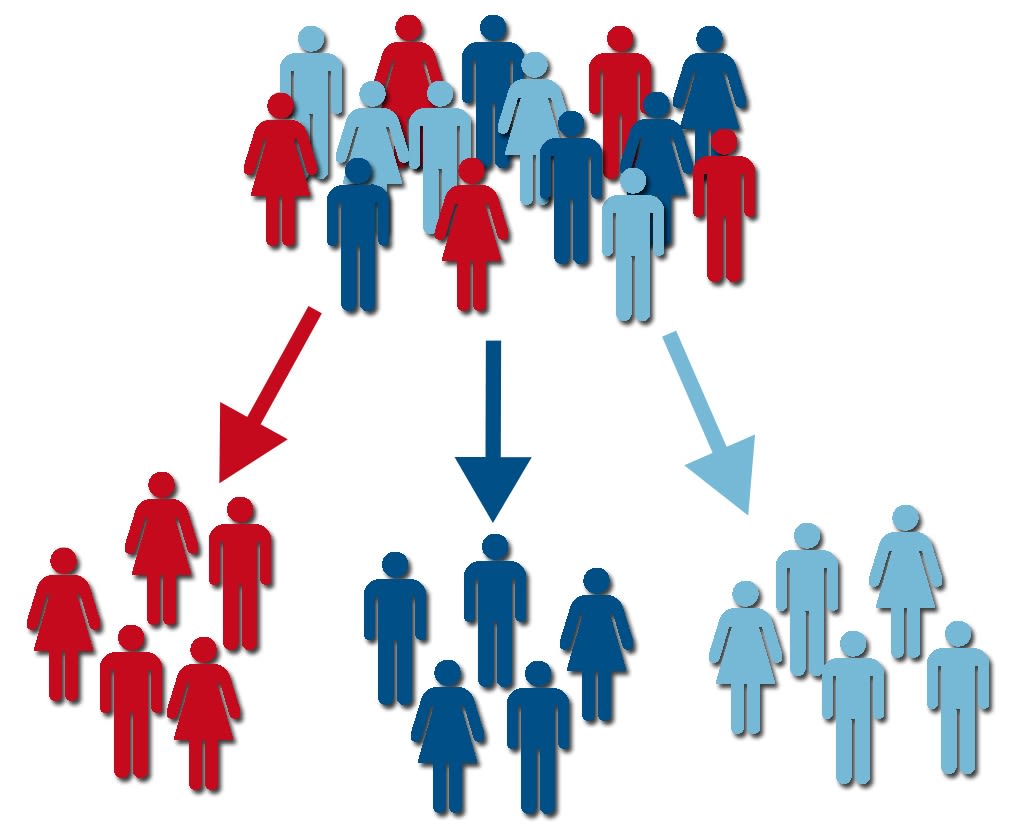
Customer segmentation is a marketing strategy of “segmenting” your current or potential customers into distinct groups (market segments) and then marketing your business to them using focused, group-specific messaging.
Customers are split into groups based on their demographic data–age, geographic location, gender, etc.–and their behavioral and psychographic data–what online content they interact with, how they behave at your place of business, and their perceived interests.
These groups are called customer segments, and each segment has its own persona. And different personas like to be marketed to in certain ways.
Based on marketing research, when you engage with clients with unique, individualized methods, you’re more likely to garner interest and ultimately draw leads to your business.
Marketers can successfully collect segmentation data, then optimize their marketing campaigns based on which “segments” they’re addressing with a given advertisement, social media post, email, or SMS.
How To Group Your Customers?
You might wonder how the power of today’s technology can help you split your guests into these segments. The answer lies in customer data collection.
As discussed already, there are ways to retrieve data to form customer profiles, which help you understand your customers better. Then, you can subdivide your customer database into verious segments.
You can also use software to collect and analyze data for much less than outsourcing these services to an agency. Check out the Bloom Intelligence Restaurant Marketing & Customer Data Platform to see it in action.
Once you collect your guest data, you can sort and filter guest profiles to view your new grouped segments. Then, use this information to create targeted marketing messages. Fine-tune your current marketing strategies or devise new ones to personalize the guest experience.
Why Send Different Marketing Messages to Different Segments?
The ultimate goal of customer segmentation is to adjust your messaging to appeal to different segments. Customer segmentation helps certain demographic-specific businesses find their customers among the highly populated masses online.
For instance, cosmetic companies are probably looking for young, female clients that are particularly interested in beauty products. They’ll market themselves exclusively to this relevant segment.
Similarly, a skateboarding company knows that it isn’t relevant to the population at large. They will try to find relevant clients in urban teenagers and young adults.
So, marketing their products to seniors and middle-aged business people would produce little return on investment. Therefore, these companies would be wasting their marketing budgets without using effective customer segmentation.
The restaurant industry, meanwhile, has mass appeal. You aren’t necessarily looking to narrow down your audience as much as fine-tuning the voice of your marketing strategies to speak to different restaurant guests.
The voice of your marketing messages should be very different for older business people as it is for teenage skateboarders, but the message at the root of your strategy is the same: people should come to your restaurant!
What the Studies Show
Studies show that guest segmentation works, and actually improves the customer experience, too.
CMO.com states that on average, advertisements targeted to unique customer segments are twice as effective as broad-audience, non-targeted ads. And, in fact, the Federal Trade Commission reports that almost 70% of polled consumers actually prefer marketing that is tailored to their interests.
Customer segmentation isn’t just powerful; it’s popular.
Your direct competitors may very well be using this strategy. So, to stay competitive, you should as well.
How to Use Guest Segmentation
In the restaurant and coffee shop marketing industries, guest segmentation has plenty of benefits. First, you can use this tactic to improve messaging. Messaging refers to your approach to communication with your audience.
How do you engage guests and highlight the value of your restaurant? Modify your voice to speak to different segments of your customer base.
For example, if your restaurant has a formal, sophisticated ambiance, you might use professional language and elegant imagery to appeal to an older, higher-income segment of your audience.
Meanwhile, you can appeal to a younger, lower-income segment with more relaxed language and references to date nights or other special occasions.
Marketing messaging for your restaurant can be playful, refined, value-focused, or even exclusive – all based on the segment you’re speaking to.
Guest Segmentation for Advertising and Remarketing
You can use customer segmentation for remarketing on Google and other search engines. Identify profiles of users who have already visited your website or taken specific actions, like placing an online order or reservation, or those who logged into your WiFi.
Then, serve advertisements and other marketing messages to “remarket” toward these clients. The goal is to create lifetime customers who keep coming back.
Restaurants can also advertise with “lookalike” campaigns on Facebook, Instagram, and other popular platforms to increase engagement and appeal to new clients. This strategy identifies segments of existing customers–those who have already visited your website–and then targets digital profiles of similar segments.
For example, if you have a large population of college students that visit your website (and your restaurant), social media platforms can identify other college students in the area and market your restaurant to them, aiming to appeal to these lookalike profiles.
Just remember to adjust your messaging for these audiences!
Automate Data Collection and Guest Segmentation with Bloom Intelligence
Customer segmentation may seem like a difficult strategy to implement. Unfortunately, it can be very difficult to collect and analyze the data you need in order to segment clients without the use of a WiFi customer intelligence platform like Bloom Intelligence.
You can either hire a third-party marketing company to track customer data–a potentially expensive option–or save money and use Bloom to collect large amounts of customer data for you.
With Bloom, you can quickly and easily segment clients yourself and create targeted automated marketing strategies for much less. This saves money and time, increases customer lifetime values, brings new guests, improves your reputation, and increases your bottom line.
To see more of what Bloom can do for your restaurant or coffee shop marketing, schedule a free demo today, or call us at 727-877-8181.