

Author: Robin Johnston

5 Coffee Shop Marketing Ideas For Better Marketing ROI

How to Market a Coffee Shop

Are you developing your coffee shop marketing plan for 2023? Now is the time to evaluate the digital marketing strategy for your coffee shop or cafe.

As we begin a new year, remaining keen on what is working in digital marketing is key to staying current in your strategy. Since most – if not all – of your customers are using the internet to shop, socialize, and connect to local businesses, it is essential to be there when they’re looking to engage with your coffee shop and baristas.

So, we’ve put together some top ideas you need to implement in 2023 in your coffee shop marketing strategy to build customer loyalty and increase foot traffic.

#1. Live Video is a Must

Live video plays a massive role in building awareness and relationships on social media. For instance, tools such as Facebook Live and Instagram Stories capture attention and encourage followers to connect more with cafe brands. Likewise, it helps build customer loyalty.

In fact, according to  Forrester, people watch live videos 10 to 20 times longer than on-demand content, making live streaming a compelling way to deliver interactive content to consumers. Incorporating live video into your coffee shop marketing strategy is a must if you want to engage your followers more and increase brand awareness.

The good news is, there are several ways coffee shop owners can use live video in social media marketing. Here are a few ideas:
marketing guide for coffee shop marketing plan

  • Take your social media followers behind the scenes to show what it’s like preparing a cup of coffee and other foods in your shop.
  • Highlight your coffee shop team on live video so that customers can get to know them. Implement an employee of the month contest and feature your winners.
  • You can promote your new flavors and share the reasons why people will love them. You can also communicate why you decided to add them to your coffee menu.
Coffee Shop Content Marketing

#2. Hone Your Email List

Growing your email subscribers is the lifeblood of your business and is essential for your marketing efforts. The more potential customers that you have coming into your funnel, the more opportunities you create to build relationships and share promotions.

Your email strategy keeps your coffee shop at the forefront of your customers’ minds, fosters relationships with new and loyal customers, and keeps your brand top of mind in your local community.

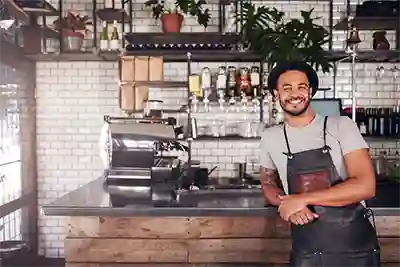
Therefore, focus on honing your email marketing in 2023. You can achieve an excellent strategy for gaining new subscribers by providing free WiFi for your customers. Send users to a captive portal or landing page before they go online to collect their email addresses. You’ll quickly gather valuable information that can fuel your entire digital strategy.
marketing strategy for coffee shop

Rather than just sending sales and promotional content, nurture your leads by offering value your audience can use. Think about your target market and the common problems they experience, whether it relates to your industry or not. Share resources or give tips on how they can overcome them. Answer their questions.

They will see your coffee shop in a whole new light!
Customer Segmentation for Better Coffee Shop Marketing

#3. Ramp up Your Instagram Strategy

Instagram remains one of the fastest-growing social networks, currently boasting over one billion users.

It’s an ideal platform for attracting new followers and customers to your coffee brand while showcasing your creative side. It’s essential to stay up-to-date on the best social media marketing campaigns for your coffee shop.

Therefore, you can use these tips to amplify your Instagram strategy in your coffee shop social media marketing:

  • Hashtags are king on Instagram! If you’re not already using them, be sure to include popular and industry-related hashtags in your content. You can use tools like Hashtagify.me to find relevant ones and drive new followers to your page.
  • Be responsive. Remember, this is a social media platformReplying to comments and online reviews and reposting others’ content is a sure way to maintain engagement on Instagram. It also humanizes your brand, making you more relatable and personable.
  • Share useful content. How-to videos and motivational posts are a hit on social media. Leverage them to your advantage while offering value to your audience.
  • Make sure your visuals are high-quality as they perform better on Instagram. Here are some Tips to Take.

  • coffee shop marketingUse Awesome Food Pictures.
  • Be consistent. If you can only post twice a day, maintain that cadence for improved engagement.

#4. Leverage Digital Marketing & Interactive Content in your Coffee Shop Marketing

In 2023, remember that consumers do not interact the same way with content as they had in the past. Techniques like blogging and social posts still work, yet followers are seeking more engaging experiences.

Additionally, offering multiple ways for people to consume your content allows you to reach a bigger audience.
 

Customer Churn Success Report


Content for your coffee shop is crucial. That’s where interactive content and digital marketing for your coffee shop comes to play. Formats such as quizzes, assessments, surveys, and polls are excellent ways to entertain and engage your followers. Even as a coffee shop, you can think of creative ideas to leverage interactive content in your digital marketing strategy.

best coffee shop social media marketing

For example, create a quiz using interactive content tools like Apester, where users discover their “Coffee Personality Type.” Or, build a poll asking social media followers about their favorite coffee or specialty tea. Finally, you could develop a survey to discover more about your consumers and what they want to improve your customer initiatives.

The options are endless with interactive content.

#5. User-Generated Content Sells!

User-generated content is one of the most effective forms of content in marketing. Your customers’ comments, selfies with your products, testimonials, and videos provide you with valuable content to implement in your coffee shop marketing. Social proof and reviews sell.

The Nielsen Consumer Trust Index shares that  92% of consumers trust organic, user-generated content more than they believe in traditional advertising. This trust plays a massive role in generating buzz on social media and getting more people into your coffee shop!

With that prefaced, encourage your customers to leave positive reviews on your Facebook Page, Yelp, and Google. Make it easy by sending a direct link where they can click and write. Consider hosting a contest where each participant shares a social media post about their experience with your brand.

woman taking a picture of her coffee cupThe key is to collect as much user-generated content as possible to amplify your overall digital marketing strategy. And it can help build your word-of-mouth marketing as well.

#6. Create a Coffee Subscription Service

COVID-19 has transformed the way that cafes and local coffee shops operate. Customers are more comfortable staying at home, and coffee shops struggle to attract their business. That’s why many coffee shops are turning to subscription-based coffee services for their customers.

One type of cafe subscription service involves providing an unlimited amount of coffee for a set monthly cost. The other coffee shop subscription service entails providing customers with packaged coffee beans delivered to their homes.

More than half of online shoppers  (54%) say they subscribe to a subscription box service. The subscription box industry appeals to consumers’ desire for convenient, novel experiences.

Key Coffee Shop Statistics to Keep in Mind

Implementing smart digital marketing tactics in your coffee shop marketing plan will position you well in 2022 as a business owner. It’s essential to continuously test your efforts to keep what’s working and modify what isn’t. With consistency, you’ll create a winning strategy that keeps people connected to your brand online and drives new customers through your doors.

Engage Negative Customer Ratings and Reviews – With T.A.C.T.

You work hard to keep your restaurant business alive and growing. Part of that effort includes monitoring and improving your restaurant’s online ratings and reviews. All of this energy and determination makes it so much more upsetting when you visit one of the popular online ratings websites to see a scathing, negative review.

Your first inclination will most likely be to fire back with a defensive message. But doing so could have long-lasting damaging effects on the way the public views you and your business. Instead of quickly defending yourself and risking the appearance of not caring about your customers, take a deep breath, relax, and respond with TACT.

“Bad reviews actually give you power… they give you an opportunity to use your brand voice to right your wrongs and to deliver stellar customer service – and to do it publicly, where potential customers can see it.”  – Tara Johnson, Journalist

wifi-analytics-1Responding to Negative Reviews with TACT


TACT is an acronym which stands for:

  • Thank them
  • Apologize
  • Continue the conversation offline
  • Treat them

First, thank the customer for bringing the issue to your attention. As Jay Baer says, “embrace that feedback as a gift.” Visualize not only the person complaining, but other customers who may have had the same experience but have not left a review online.

Next, you need to apologize, not necessarily for the way things are, but for the way things affected that guest’s experience at your location. Have the mindset of owning the issue that is being raised to you. Recognize that the issue is that person’s perception, and if you want to be seen as valuing your customers, then you should recognize that their perception has reality in their eyes. Apologize either for the condition, or for their experience as a result of the condition.

The next important piece of the TACT flow is to continue the conversation offline. Encourage the guest to dialog with you, but in a non-public forum. Make sure in your response, that it is apparent to the public that you wish to continue the conversation with the customer. This applies that you are going to do your best to make things right for the customer.

Finally, treat the guest to a return visit. You want the customer to come back through your doors and experience your restaurant in a different, more positive way. Perhaps it was simply an “off” day for your staff, or you may have been out of an important food item, or there was some sort of functional challenge at your location on that particular day. Whatever the issue, you want the guest to come back and experience things the way you expect them to be.  

integrating-free-wi-fi-i-restaurant

It is important to recognize that you are providing an incentive to persuade them to come back to your restaurant, not to change their review.

As an example, let’s say you found a negative review from a guest whose order came to the table incorrectly. A great TACT response would be:

Hi John, thank you for taking the time to give us your feedback. I want to personally apologize for the negative experience at our restaurant. Please view my private message, or call me at 555-1212 at your earliest convenience. I’d like to make sure we not only make things right, but that we exceed your expectations. Warm regards, Allen Graves, Restaurant Manager.

Even the best restaurants will eventually run into a negative online review. It’s simply the nature of the internet. Just remember that it is how you respond to the negative reviews that can either make you look like you genuinely care about your customers, or that you wouldn’t care if they ever came back.

Online customer ratings and reviews are extremely powerful, and they can literally make or break your restaurant business. Responding to negative reviews with TACT could be the difference between the success or the failure of your business.

To learn more about the effects of positive and negative online reviews, download our free ebook by clicking the banner below.

Personalized Email Marketing in Less Time? Here’s How

You’ve done all the work to gather information to use email to get your customers coming back again and again. You may have gotten their email addresses a number of ways. If you collected the addresses through your free Wi-Fi or social media accounts, you probably already know a lot of things about your customers, including things like their: name; address; gender; educational level; marital status; income; and more. You would like to send personalized emails, but it seems like too much work. Don’t worry. It’s not. Here are simple ways to send personalized emails in far less time. 

Use Email Templates

Use a system that will allow you to create one email template, but  send out as many personalized, individual emails as you have on your subscribers’ list.  Depending on the platform you use, you’ll have a database field or token for a name. When it sees that token, it will replace with an email address. This will allow you to send many emails from one template, while including a personal touch in each email. 

Case studies have shown that emails and newsletters that use personalization experience higher conversion rates. If you use email personalization in the subject line, the recipient will be more likely to open your email.  

CELEBRATE YOUR CUSTOMER’S ANNIVERSARY

How long has your customer been visiting business? That is information you will have in your CRM or Wi-fi analytics software. If you have used social media, Wi-Fi sensors, and analyzed online and offline behavior, you will know a lot more than that and can gather information about a customer in your business, even if he or she is not using your Wi-Fi. Personalizing your emails will be simpler and faster with this data. Surveys have shown that more than half of customers want businesses to remember how long they have been coming. Craft an anniversary email for a customer that has been coming six months, a year, or longer. You could even offer a coupon, or special discount, too. 

Send a Happy Birthday Email

Have you started sending birthday emails yet? You should be doing it already. Statistics show that people open emails that mention their birthdays 200 times more often than they do other emails from businesses. Create a custom coupon or discount, based on the customer’s past purchase behavior.

Create a Personalized Image in an Email

This could be something as simple as his or her name, or whether he is married or has children, while offering a discount. Do you know what he does for a living? You could send an email mentioning that, with a special offer you know he would appreciate. The more relevant your email is, the more likely it is that the customer will engage with it.

Use Your Customer’s Name (Twice!)

Most emails will greet the recipient by first name, but including the individual’s name again throughout the email will really catch their eye. 

Use Automated Trigger Emails 

Has your customer not visited for a while? Use your email system to automatically send emails to your customers based on a certain action or behavior, such as not coming for a certain amount of time. Studies have shown trigger emails to have a 152% higher open rate compared with traditional emails. They can help convert casual customers into lifelong ones. Even though they are personal, they can be easily automated and sent out for welcoming new customers, telling some customers you miss them, telling them you hope they had a happy birthday and thank them for coming in your business on that special day, and many other occasions. 

As you can see, sending personalized emails doesn’t have to be time consuming or complicated. It can certainly be profitable. {{cta(‘f5bf467c-b07f-4dbc-af08-162dd4e93b82’)}} 

Are You Segmenting Your Customers? Here’s Why You Need To

Every successful business relies on an effective marketing strategy, and that marketing strategy can only be effective when customer segmentation is implemented. Simply put, customer segmentation is the process in which business owners divide customers and leads into specific groups as it relates to marketing.

Why segment your customers?

Essentially, customer segmentation will narrow down your target audience, allowing you to market with more precision. Additionally, you are more likely to have a business that is successful because customer segmentation helps you understand your customers’ needs and behaviors. With specific data bout your various customer groups, you can personalize your messaging and marketing for more effectiveness. Ultimately, without customer segmentation, your marketing efforts will come back void. For this reason, we’re going to show you how to use customer segmentation for your business.

Types of customer segmentation

Customer segmentation can be divided into a variety of groups. However, some of the most common groups include: demographic, geographical, psychographics, and behavioral.

Demographic: This is market segmentation based on things, such as age, race, religion, gender, ethnicity, income, and education. Demographics is integral for marketing because it helps you create a profile of your ideal customer. From there, you are able to learn important things about your customers, such as their interests and preferences. This ultimately allows you to improve your marketing efforts by marketing to potential customers in a way that interests them.

Geographical: This is market segmentation based on location. You can geographically segment by areas such as cities, states, regions, and countries. Segmenting geographically has proved to be successful for many businesses. For instance, a business selling boating gear will find the most success marketing to the southern region of the U.S. Similarly, a company that sells winter sports gear will find that marketing to the northwest region will be best suited. Essentially, customer segmentation helps business owners to understand where their ideal customers are so that they have a better chance of selling their product or service.

Psychographics: This involves dividing your market into segments based on things such as social class, lifestyle, and personality traits. Psychographic segmentation is beneficial because it is one of the more personal ways to segment your ideal customers. What this essentially means is that you can gain a competitive advantage because you are placing yourself in the mindset of the consumer, which allows you to understand important things about your customers, such as their values. Ultimately, this can be leveraged to create a powerful marketing strategy to effectively target your ideal customers.

Behavioral: This type of segmenting focuses on your ideal customer’s spending and consumption habits, product and service usage, and desired benefits. Behavioral segmentation is extremely beneficial to businesses because it helps you understand why consumers buy certain products. Additionally, it allows you to tailor your product or service to meet the needs of your customers. Behavior segmentation will reveal purchasing patterns that consumers have. Ultimately, this poses a great opportunity for businesses to advertise a campaign or schedule a promotion during the time consumers are more likely to purchase.

How to Collect Customer Data

There are various ways to collect customer data for your business. Some of these ways include, but are not limited to:

Surveys: Running a survey on your business is an excellent way to collect valuable information on your customers. You can easily obtain a generous amount of data from a survey, such as age, gender, and location.

Form Orders: If customers purchase a product or service from your website, you can request additional information such as contact details and their birthday.

Rewards Program: Everyone loves a rewards program, which is why this poses a perfect opportunity for business owners to collect information from customers.

Wi-Fi: If you have a physical location, providing Wi-Fi to customers is going to be one of the most easiest and convenient ways to collect customer data. Essentially, customers can seamlessly give information about themselves in exchange for Wi-Fi access.

Why Customer Segmentation is Necessary for Business Owners

Customer segmentation gives business owners a better understanding of their consumers’ needs. This gives them a competitive advantage because they have a better idea of who is interested in their product or service. Additionally, customer segmentation gives business owners the opportunity to revise their product or service to be more attractive to customers. Furthermore, having defined segments allows businesses to have a more effective marketing message to spark the interest of potential customers. Additionally, business owners can expect to see more engagement because customer segmentation gives valuable information about consumers that can be used to their advantage. If that’s not enough, customer segmentation allows businesses to strengthen their position in the market. Ultimately, the precision of customer segmentation allows businesses to increase their customers’ experience, improve their brand, and generate more revenue as a result.

{{cta(’78d76744-3719-4adf-bd4d-ccaae98a6da7′)}}

Why Customer Lifetime Value is Key in the Restaurant Industry

Customer retention is a crucial factor in the success of all businesses, but particularly important in the restaurant industry. Among the KPIs restaurants need to track, repeat business is a significant indicator of customer loyalty and helps drive the lifetime value of a customer.

Loyal customers typically fall into these three categories:

Evangelists

These are customers who not only visit constantly, but recommend your restaurant to others, post positive reviews online, and mention you on social media. These advocates are invaluable, boosting your brand awareness and visibility, and providing unbiased referrals to everyone who they influence. Brand evangelists are key drivers of long-term success in any business: not only do they advertise your restaurant at no cost to you, but their recommendations are trusted by 92% of people, compared to the 24% of people who trust ads. In most industries, a single brand advocate generates 2.5 new customers, but in the restaurant industry that number is much higher.

Frequenters

These customers have made your restaurant part of their routine, whether it’s coffee every morning, or brunch every Saturday. Among a wide variety of options, they continue to choose your restaurant. In fact, psychology studies demonstrate that once a consumer has formed a habit by repeating the same choice over and over again, the behavior reinforces itself and will continue unless the brand changes so much that it prompts a new choice.

Special Occasioners

While special occasioners are sometimes slightly maligned as the compromise choice (the one restaurant the whole family can agree on, for example), these customers also have significant lifetime value. Whether it’s the family tradition, the annual birthday or anniversary, or the favorite restaurant during vacation, these customers choose to create and share some of their most special and significant moments in your restaurant, building important lifetime memories around their experience.

No matter which kind of repeat business you have, there are important reasons to track the lifetime value of your customer.

WHY TRACK YOUR CUSTOMER LIFETIME VALUE?

  1. It informs your business. Knowing the value of your customers allows you to more accurately predict their behavior and inform inventory and staffing decisions. It has also been shown that restaurant service improvements are a great way to convert customers into brand evangelists and improve loyalty.
  2. It informs marketing decisions. Once you know the lifetime value of a customer, you can spend your marketing budget on the initiatives and programs that make the most sense. There are a variety of innovative ways to market your restaurant, but your marketing strategy will be best informed by prioritizing a desire to recruit new customers or deepen relationships with existing ones.
  3. It informs your loyalty program. Speaking of deepening relationships, once you know the lifetime value of your customers, you can craft a more effective loyalty program. Good loyalty programs are an excellent way to convert frequent customers into brand evangelists, and restaurant loyalty programs increase a customer’s lifetime value by up to 30%.

CALCULATING CUSTOMER LIFETIME VALUE

If you haven’t yet figured out the lifetime value of your customer, the folks at nextrestaurant.com have come up with a convenient calculator that allows you to calculate the lifetime value for free, anonymously. Importantly, you can even store the results and track changes over time, to see how your efforts are paying off.

In every business, customer lifetime value is an important metric to track. But in restaurants, where competition is so fierce, loyalty is key to survival, and word of mouth can make or break you, it’s more important than anywhere else. If you aren’t yet tracking the lifetime value of your customer, and using that information to inform business and marketing decisions, it’s time to begin, and know the real value of your customer.

4 Tips On Getting More Positive Ratings & Fewer Poor Ratings

In the “old days” people opened the phone book to find restaurants, services and products they needed. Today, they open their smart phone and search Google or their favorite review site.

In many searches, it’s the review sites that come up first. Sites like Yelp! and Tripadvisor, for example, are popular review sites that millions of people use to inform their buying decisions. Some people simply don’t purchase or use a service without consulting their favorite trusted review site. With that in mind, here are some tips to help your business get more positive reviews.

The first two tips are about creating a positive experience for your customers, which may seem obvious, but it’s a good idea to keep reviews in mind. People will often be quicker to leave a bad review than a good review. Keeping your customers happy is one of the best ways to avoid a poor review.

1. Provide Memorable, Quality Service

People expect good service. If you give them what they want, they will likely come back and do business with you again. This is wonderful, however you are looking for more. You not only want repeat business, you want your customer to sing your praises. You want them to tell their friends and family about you, and you want them to leave you a five-star review on Yelp! or Google or Zomato.

People aren’t likely to go out of their way to leave a review for “decent” or even good service. You have to find a way to set yourself apart from other businesses. When you go the extra mile or offer a unique, personal touch, you will inspire your customers to leave that glowing review.

2. Respond To Complaints Right Away

This is the best way to avoid a poor review. People want to be heard and acknowledged, and most customers are ecstatic when a business “makes it right.” When the customer is disappointed and feels like they aren’t being heard they are motivated to leave negative reviews.

Of course, there are always those people who just seem to want to write bad reviews, but you can dramatically reduce these instances by addressing problems as they come up, making the situation right, and giving your customer the feeling that they matter and are valued. In fact, many a loyal customer has been created by the way a business handled a “bad” experience.

3. Be Sure You Are Showing Up In Review Sites

Review sites help you show up in searches, so it is important that you maintain your profiles with correct and current information.

4. Make It Easy

Finally, make it easier for people. Let them know how they can leave you a review and where they can leave you a review. Be sure that you have active links to review sites in your email signatures, blog posts and social media. Do you have a Wifi sign-in page? This is another good place to ask for and link to a review.

Remember, it is okay to ask for a review and to let your customers know how important reviews are to your business. Too many businesses fail to do this, by simply asking for the review and making it as simple as possible to do so, you dramatically increase the number of positive reviews your business receives.

Collecting Customer Data is Vital for your Business

As a business owner, it’s important to understand who your customers really are. After all, without them your business wouldn’t exist. For this reason, it’s integral that you are able to meet the demands of your customers to achieve a competitive advantage. One of the best ways to do this is by collecting customer data. 

Customers are spending an increasing amount of time online and because of that, the options of gathering customer data have advanced beyond measure. Collecting this data will not only help you build a loyal base of customers, but will assist in attracting potential new customers as well. Here’s why collecting customer data is essential to your business.

How to Get Your Customer Wi-Fi to Pay For Itself

You want to integrate Wi-Fi into your restaurant. You know businesses that don’t offer free Internet often lose customers to competitors. Actually, one survey showed 70% of customers felt Wi-Fi made their restaurant experience better. You’re concerned about the cost, because the Internet will be free for your customers but not for you. As a smart business person, however, you should know it is actually possible to get your customer Wi-Fi to pay for itself. That may not make sense to you at first, but here are some of the ways it can be done to retain loyal customers and keep new customers coming back–both of which will result in more money, which can pay for the free Internet you will provide. 

How Great Ratings Impact Your Restaurant

Customer ratings: they’re one of the most important elements of your business. Satisfied customers are more likely to share their experience at your restaurant in a way that will bring in their friends, coworkers, and family members, while dissatisfied customers will warn everyone they know away from your restaurant. Thanks to today’s highly digital society, both happy customers and unhappy ones have a wider reach than ever–and more people are turning to those online reviews to help shape the way they choose what restaurants they’ll visit, from those out-of-town tourist visits to people looking for a new place to eat in their own backyards.