

Author: Allen Graves

The Types of Restaurant Data You Should Start Tracking Today

2023 marks a turning point for restaurants – the year in which data will be more essential than ever. The pandemic has demonstrated to food and beverage professionals how vital customer information can be, so it is time to start taking advantage of available restaurant data now.

We’ve compiled 5 types that all restaurateurs should track immediately to ensure success tomorrow.

5. Kitchen Data


Kitchen data has become an indispensable part of restaurant operations, enabling professionals to make informed decisions that help reduce expenses and optimize the customer experience.

For example, kitchen display systems provide up-to-date information on factors like average cook time per meal, speed of service delivery from the kitchen to table, or return on investment for items served – all essential in helping staff find ways to continuously improve efficiency within their establishments.

Understanding and improving kitchen data is essential for smooth restaurant operations. Kitchen data can help determine:

  • What is the average restaurant cook time per meal? (Real-Time Order Status)
  • How long does it take for a server to deliver food from the kitchen? (Speed of Service)
  • Which meals are the most lucrative? (Return on Investment)

Kitchen display systems can help restaurant professionals make crucial decisions based on data points like these. 

Of course, understanding these data is simply the first step. The purpose of obtaining these kitchen data is to consistently improve operational expenses in the kitchen while elevating the customer experience.


4. Guest Management Data


By leveraging Bloom Intelligence’s data, food & beverage leaders can use key metrics to make informed decisions and enhance customer experience.

The comprehensive understanding offered by guest management helps in determining wait times, order sizes, table turn rates and capacity during different days/times – empowering them to boost efficiency across the board – all with the aim of enhancing customer experience in their restaurants.

Interpreting guest management data is essential to improve customer experience, as well. Guest management data can help professionals understand:

  • What is the average wait time per customer?
  • How many people are included in one order?
  • How much time does it take to turn a table?
  • What is the capacity on average during specific days and times?


Bloom Intelligence helps food & beverage leaders acquire data to:

  • Improve wait times.
  • Expand party sizes.
  • Increase table turn times.
  • Grow capacity rates.


3. Email Campaign Data


Email campaigns are essential to the success of many businesses, and using data analysis can help ensure their effectiveness.

With a customer data platform (CDP), restaurants can track Opens (the number of subscribers who opened emails), Click Through Rates (subscribers that clicked a link in an email) as well as Inbox Delivery rates regarding their emails sent out.

Consistently improving subject lines, obtaining emails ethically with tools like a CDP, and providing clear messaging within 7 seconds are key for delivering successful click-throughs while also verifying list authenticity along the way – ultimately helping your establishment reach its goals via these methodologies.

Analyzing email campaign data is important to help improve many essential data points. 

Bloom Intelligence can help restaurants determine:

  • How many subscribers opened the email campaign? (Opens)
  • What is the amount of subscribers who clicked on a link in the email? (Click Through Rates)
  • What are the successful inbox delivery rates?


The following practices can help improve email campaign data:

  • Consistently improve subject lines to increase open rates.
  • Regularly and ethically obtain emails from customers using tools like Bloom Intelligence.
  • Improve email messaging to increase click-through rates. Customers should clearly understand the purpose of an email in 7 seconds and see a call to action button in each email. 
  • Use tools such as Bloom Intelligence to verify email list authenticity.


2. Social Media & Review Site Data


With the help of social media and review site data, restaurants can understand where their brand stands in terms of fan base and reach.

Furthermore, they’re able to measure how effective individual posts are by gauging engagement with customers as well as gaining insight into public opinion through reviews.

Armed with this knowledge, restaurants will be equipped to make strategic decisions on when best to post content that resonates with patrons for maximum visibility online.

Social media datasets can be tracked and managed with the help of tools like Hootsuite, SproutSocial, or Hubspot.

Social media and review site data are essential. They increase rapport and improve the visibility of restaurants in search engines.

Both social media and review site data can help restaurants understand:

  • How many social media fans and followers does the brand have? 
  • What is the average social media reach of a restaurant? (Reach)
  • The multitude of engagement per social media post. (Engagement Rates)
  • Determine the best days and times to post to social media.
  • The amount of positive and negative restaurant reviews online.


1. Customer Data


Restaurants rely heavily on customer data to foster meaningful relationships with their guests and gain valuable insights from their behaviors.

Collecting this information through Bloom Intelligence’s CDP helps food & beverage professionals build up a complete profile of each visitor, including contact details such as names, emails, phone numbers, and postal codes; milestones like birthdays and first visit anniversaries; favorite order items along with habitual purchasing habits, among many other metrics.

With these invaluable pieces of data in hand restaurants can easily identify the times customers choose to frequent them throughout the week/month/year – not forgetting how much time they spend while enjoying an experience at one of your locations.

Automated email campaigns can add a personal touch to your data, resulting in greater returns on investment. Utilizing this strategy could be the key to driving higher engagement with potential customers.

Customer data is the most important dataset for restaurants to obtain. Without customer data, food & beverage professionals cannot understand their customers. More importantly, they cannot reach them where they are. Customer data includes:

  • Names
  • Emails
  • Postal codes
  • Phone numbers
  • Birthdays
  • First visit anniversaries
  • Favorite meal items
  • Purchasing habits

Accumulating these data with Bloom Intelligence provides restaurants with a powerful CRM (Customer Relationship Management) tool. The tool allows food & beverage professionals to understand the visit times, length of stay, and loyalty rates for each customer that walks through their doors.

Once visitors log into WiFi, restaurants can obtain names, emails, postal codes, phone numbers, birthdays, and more.

Then, these data can get added to automated Bloom Intelligence email campaigns. These campaigns can create an added layer of personalization, equating to increased campaign returns on investment.
Top 10 Ways That Restaurants Use Bloom Intelligence

Significantly, data acquisition is an opportunity for agile restaurants in 2021. In another case, a threat to restaurants that are slow to change. Of course, many restaurant professionals appreciate data analytics, but have difficulties acquiring data. Indeed, this is ironic, considering the wealth of data that is available to restaurants through both foot traffic and online traffic.

4 Steps to Understanding Customer Data

What is Customer Data?

Customer data can uncover essential information that restaurant professionals can utilize to create better management and marketing decisions. Bloom Intelligence can expose daily foot traffic, first-time visitors, average dwell time, popular visit times, dwell time by hour, first-time visitor return rates, average customer repeat rates, gender distribution, and much more.

5 Restaurant Social Media Trends for 2025

By now, many restaurateurs have found the painfully apparent need to evolve. So, regardless of how restaurant professionals feel about social media trends, it’s undeniably an essential component for growth in 2025. Unarguably, guest behavior has changed forever.

In fact, 95% of restauranteurs agree that online restaurant technology improves their business. For example, many restaurants that have implemented online ordering receive 2-10x as many orders online as they did via telephone.

1. Facebook Lookalike Audiences

A whopping 33% of restaurants are not paying for social media ads. This statistic exists despite the fact that radio, cable TV, and newspapers are fading away. Likewise, Facebook ads have emerged as the most effective advertising channel for physical locations. However, many restaurants are unaware of the most lucrative way of reaching their target market with lookalike audiences.

How Facebook Lookalike Audiences Work

social media trends - Facebook Lookalikes


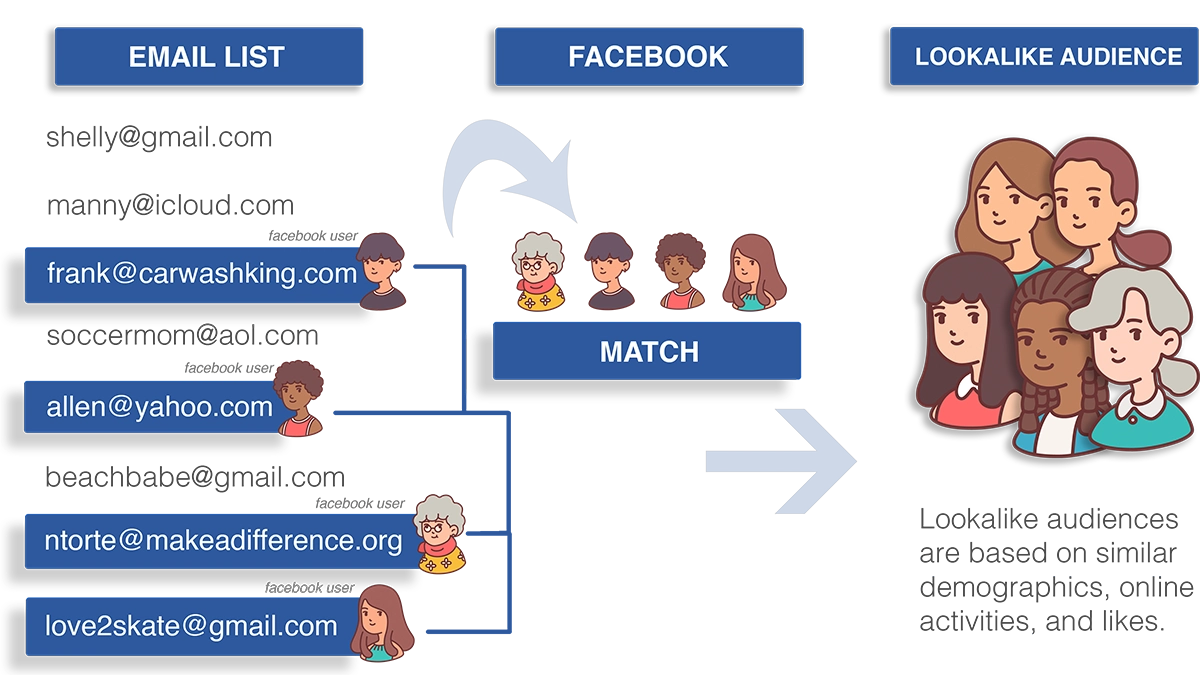
1. Restaurants can upload their email lists to create a Facebook Ads audience.

2. Facebook will connect the emails of current Facebook users.

3. Then, Facebook will match the Facebook users in a list to a similar lookalike audience. As a result, this audience is similar based on demographics, online activities, and likes.

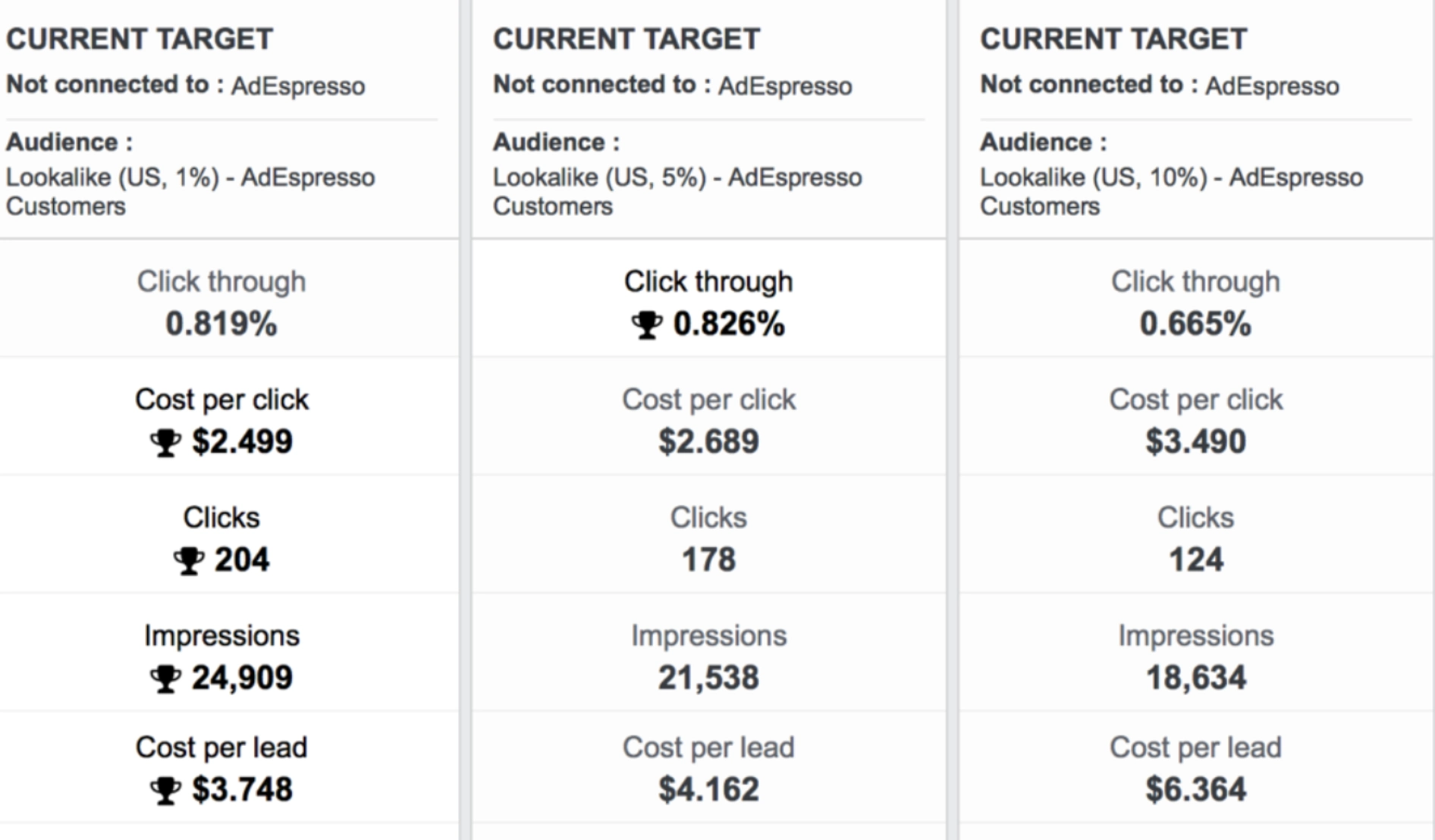
Facebook Lookalike Ad Statistics Based on Audience Drill-Down Percentages

Facebook provides the opportunity to choose the top percentage of lookalike audiences. The lower the percentage, the more identical the audience will be to an uploaded email list.

social media trends - Facebook Reports

2. Restaurant Social Media Reputation Management

Today, 3 out of 4 customers look a Facebook comments and images to make informed decisions on retail or restaurant locations. Likewise, Gen X and Millennials are 99% more likely to choose a restaurant based on social media and online reviews. Additionally, restaurant customers are more likely to leave high ratings on Facebook than any other social media platform. When restaurant brands engage with customers, they see these customers spend up to 40% moreOver 71% of customers are more likely to recommend restaurants that quickly respond to social media inquiries. 

Unarguably, social media reputation management poses a higher level of importance in 2025 than in any other year. As a result, customers are now more comfortable with researching and communicating with brands online than in person.


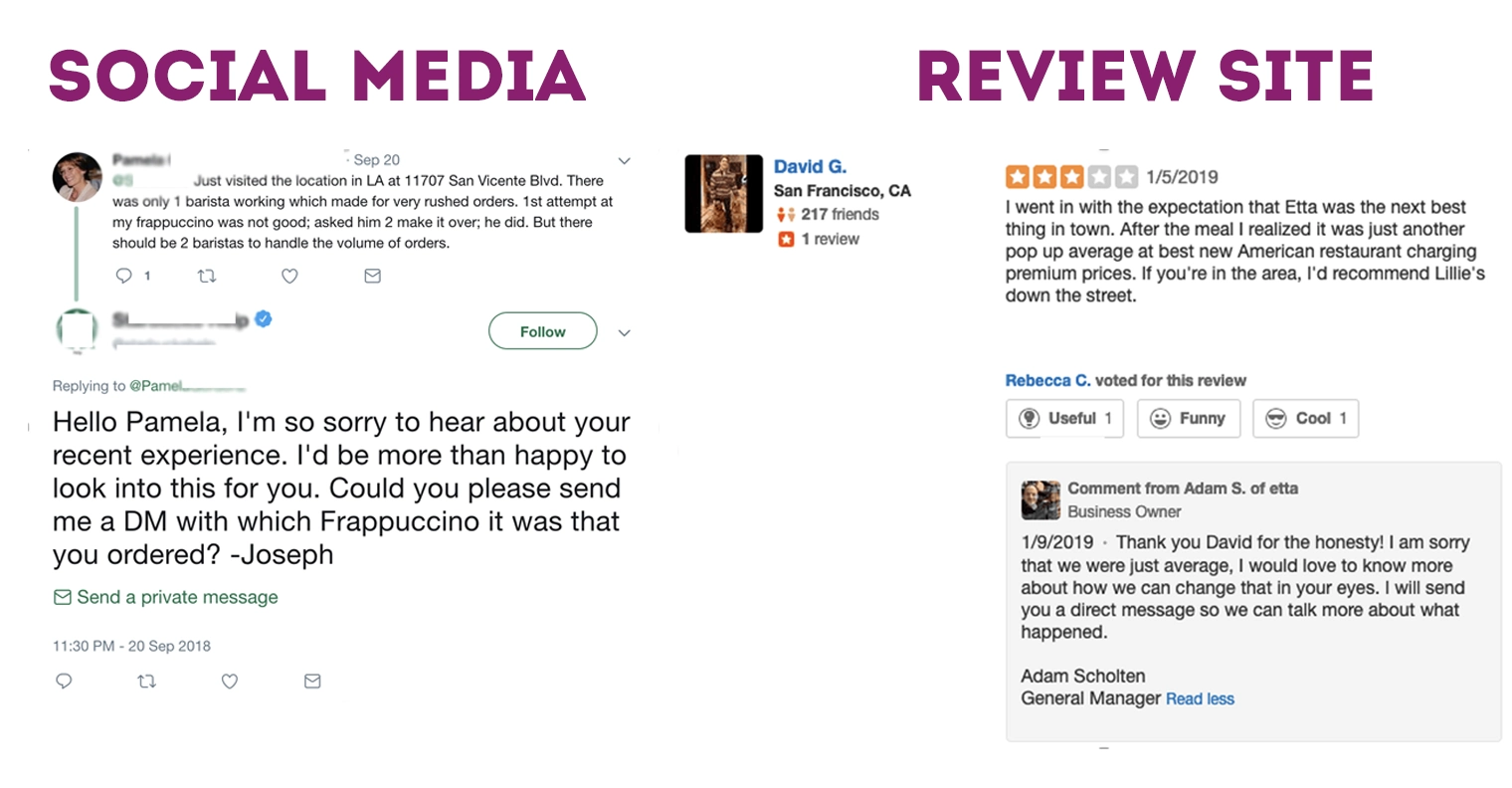
How Social Media Reputation Management Differs from Review Site Reputation Management

social media and review site reputation management for restaurants

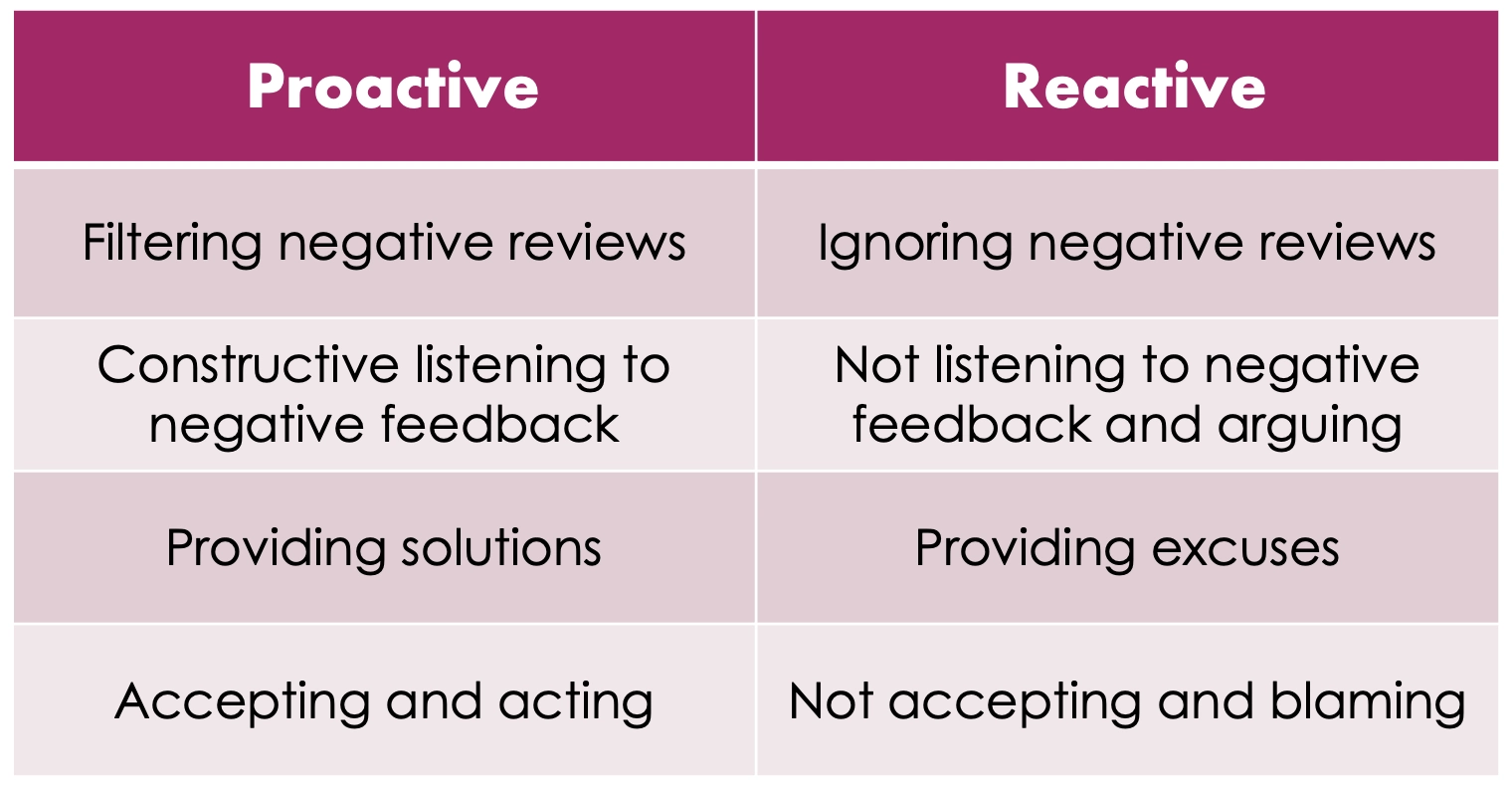
Proactive vs. Reactive Reputation Management

how to respond to negative restaurant reviews

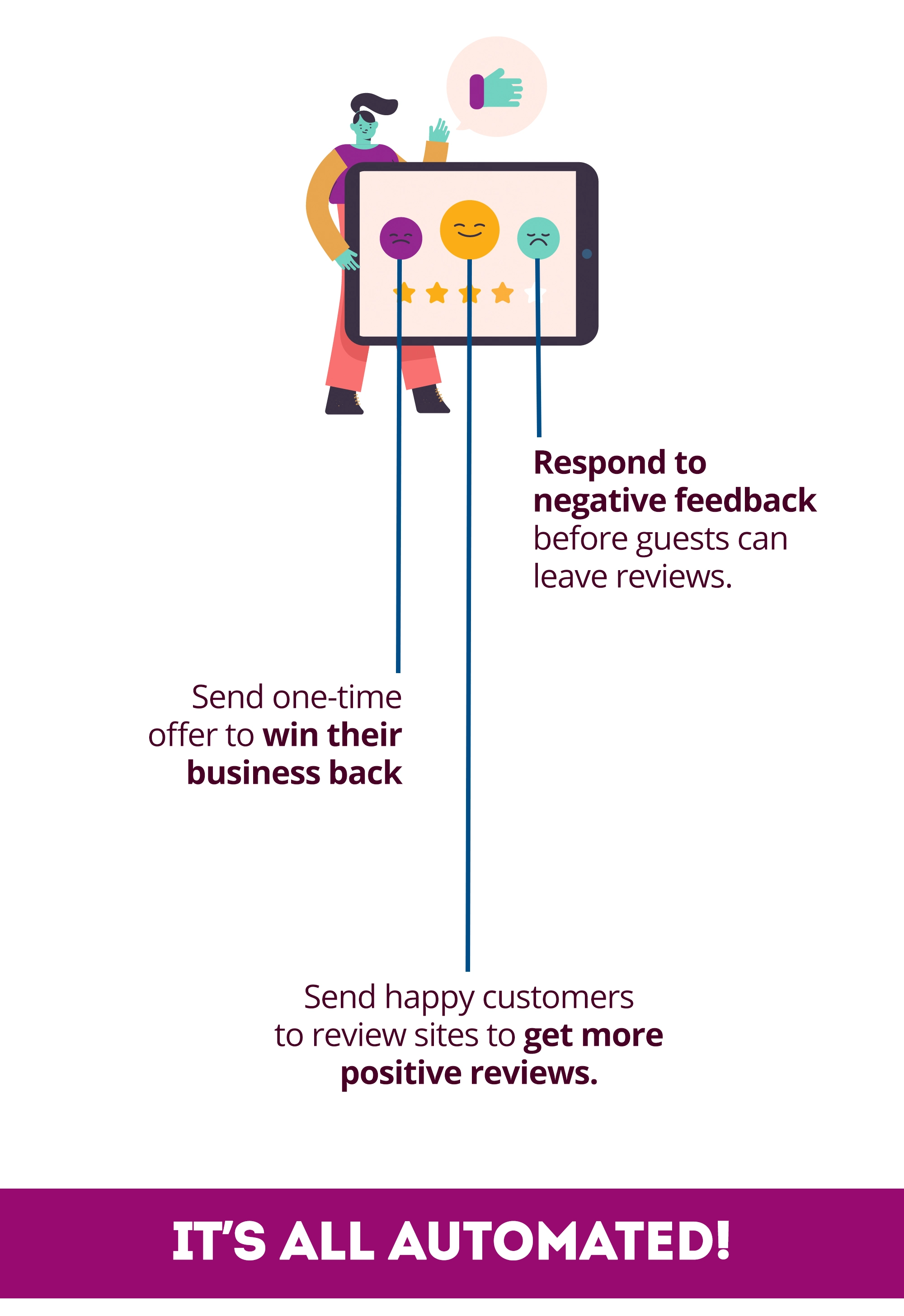
How to Get More Positive Reviews with Bloom Intelligence & Automated Feedback Loop Campaigns

how to increase positive restaurant reviews with social media marketing

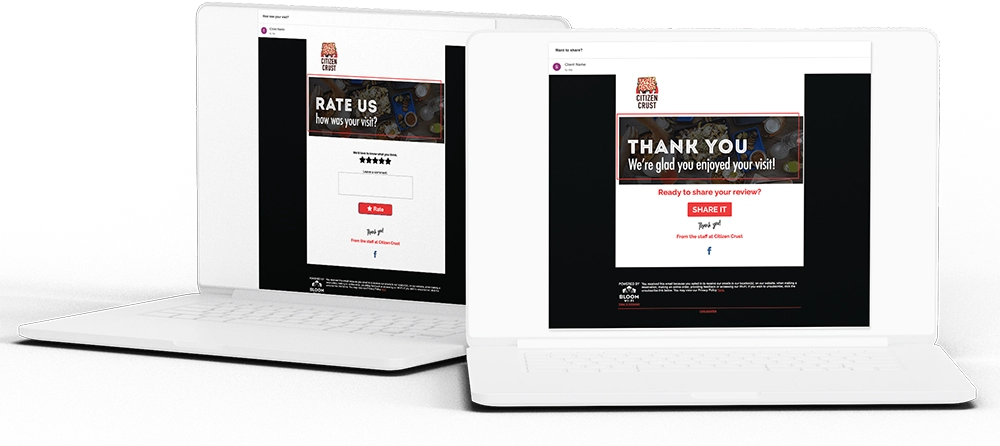
how to automate restaurant reviews

3. Influencers

Many restaurants and cafes are turning to social media influencers as an affordable marketing method. For example, below are some examples of restaurant influencers. When choosing influencers, restaurants should:

  • Check to make sure the influencer has a high amount of real followers.
  • Ensure the influencer has high engagement rates based on their follower counts.
  • Determine if the influencer’s follower base matches a restaurant’s target market.

example of restaurant marketing influencer

restaurant influencer marketing campaign example

4. Restaurant Social Media Calendars & Scheduling

Delegate 

Accountability is an essential component of social media management in the food & beverage industry. Too often, restaurant owners solely attempt to manage their social media without the time to do so. Instead, many restaurant owners may benefit from hiring a marketing person, working with an agency, or delegating social media to an experienced team member.

Social Media Calendars

Social media calendars also help provide accountability. Every month, restaurant professionals can create a calendar that can include:

  • Food specials (two-for-one specials, drink specials, etc.)
  • Holidays (National Burger Day, Columbus Day, Breast Cancer Awareness Day, etc.)
  • Events (live music, game nights, etc.)
  • Promotions (loyalty programs, catering, etc.)
  • Team features (featuring employee birthdays, anniversaries, introductions, etc.)
  • Customer spotlights (featuring loyal customers)
  • Sports events (football catering, Baseball on TVs, etc.)
  • App features (in-app ordering, loyalty programs, etc.)
  • News and public relations

The best time for restaurants to post on social media is between 1 and 3 pm. These times are when most social media sites receive the most traffic. Restaurants and coffee shops can also use social media management platforms like Hootsuite and SproutSocial to view their own best times to post based on engagement rates.

5. Social Media Optimization

Similar to listings such as Google My Business, restaurants need to optimize social media pages.

Social media pages should include:

  • Address
  • Hours of operation
  • Menus
  • Phone number
  • Reservation links
  • Ordering links

Bloom Can Help Your Social Media Marketing

Tackling social media and reputation management can help restaurants decrease acquisition costs. As more customers visit a location, more customers will share their experiences to encourage other first-time visitors. Then, loyal customers are more likely to return. In the end, loyal customers bring more revenue than one-time visitors.

For this reason, it’s important to provide customer service where your customers want to reach you. So while adapting to social media management may be uncomfortable, it is an essential element for success in 2025.


4 Key Customer Loyalty Metrics To Be Tracking in 2025

In the competitive brick-and-mortar landscape, customer loyalty is crucial to business success.

In fact, 82% of companies agree that retention is cheaper than acquisition. Sixty-five percent of business comes from existing customers.

Restaurants and retail establishments need to be tracking key customer loyalty metrics to understand how their customers feel about their brand. And in an environment where online reviews significantly impact customer sentiment, businesses that do not track customer satisfaction will feel the effects sooner or later.

The same is true for customer loyalty. Companies that can closely monitor their customer loyalty metrics in detail will have a considerable advantage over their competition.

customer-metrics3

If you’re unclear about what metrics you should be tracking to understand and improve your customer loyalty, we’ll discuss four key metrics to help you get started, as well as how to collect this valuable data.

Increased customer loyalty means increased revenue. Anecdotal evidence and online customer sentiment cannot give you the crucial data points you need to understand one of the essential ingredients for your business’s success – customer loyalty.

  • Are you currently tracking how your customers feel about your brand?
  • Do you know what percentage of your customers are returning?
  • Are you receiving accurate, measurable data from crucial customer loyalty metrics?

What metrics should you use to measure your customer loyalty, and what do they mean for business? Here are four crucial brand metrics to help get you started. 

#1. Your Brand’s Customer Lifetime Value

Your customer’s lifetime value directly relates to how long a customer remains with you and how much they spend during that time—the more loyal the customer, the greater their lifetime value. Loyal customers not only purchase with reliable frequency, but they do so over long periods. An increase in each customer’s lifetime value improves your revenue and carries financial relevance for your company.

There are various tools available that attempt to track and understand lifetime value. Still, it boils down to simply knowing how often a customer visits and makes a purchase over a certain period. Once you have that data about your customers, you can extrapolate the numbers to understand the revenue you can expect to generate. If you’re not tracking your customer’s lifetime value with accurate and measurable data, you miss a crucial customer loyalty metric.

Grow Customer Loyalty With These Tips

#2. Customer Return or Repeat Rate

Similar to lifetime value, whether a specific customer is returning or making repeat purchases is critical to your company’s revenue and growth. If you’re in the restaurant or retail business and patrons aren’t coming back (i.e., you have a high customer churn rate), you have a big problem, and it needs addressing.

If your data indicates your customer repeat rates are low, you know it’s time to consider your restaurant marketing. You could send out coupons to your email list, promote your new menu items on Facebook and Instagram, and bump up the incentives for joining your loyalty program.

But taking this kind of action starts with having the data. A WiFi marketing and analytics platform is the only practical way to gather and view this data.

#3. Customer Loyalty Program Participation

How many of your customers want to join your loyalty program? How many are participating after they’ve signed up? It’s important to know if your customers love you so much that they want a digital punch card or membership perks or if they see participating in your program as pointless. Getting your customers to participate is also crucial because the loyalty program is a direct-to-consumer restaurant marketing channel.

Once customers sign up, you can send promotions and offers, track whether they are opening your emails and visiting your website, and, ultimately, know whether they are cashing in on the perks. Knowing the redemption rates of offers is a crucial data point that helps deepen your understanding of your brand’s “sticking” power and tells you if you’re spending your money in the right places.

Do you currently present each customer who walks into your business with the option to join your rewards program? How are you tracking whether they show interest? How are you monitoring whether those in the program redeem their perks?

Improve Customer Loyalty at Your Restaurant

#4. Net Promoter Score

A Net Promoter Score is an index that measures your customers’ willingness to recommend your company to others. Understanding where your customers fall on this index helps you appreciate customer loyalty levels because it helps gauge your customers’ overall satisfaction with your business.

People share their favorite businesses and products for a few reasons: increased social capital, financial gain, and the rare selfless share (helping a friend out, etc.). Even when they are getting the benefit of sharing, people still want the process to be easy. So, it’s essential to give customers an easy and accessible way to share information about your business. Once you’ve made it easy, all you need to do is track the response.

If the response is low, you have an opportunity to make adjustments. Knowing there is room for improvement can be a good thing, especially for brick-and-mortar businesses. Room for improvement means there is room to improve your marketing and grow your revenue. But without the data, you don’t honestly know that the opportunities exist.

Defining Your Loyalty Program Metrics


1. Customer return rate (CRR): This measures how many of your current guests have visited in the past. 

Your CRR is determined by subtracting the number of customers you have at the end of a period and the number of customers you have acquired throughout a period. Then, you divide this number by the customers you had at the beginning of a period. 

You’ll want to be patient with tracking CRR improvements because customer loyalty takes time.


2. Redemption Rate (RR): This measures the redemptions of an offer campaign.

Your RR is measured by dividing the number of offers sent by the number of offers redeemed.

Keep in mind that the average RR is 13.67%.


3. Participation Rate (PR): This measures the number of people who engaged with your campaign.

Your PR is measured by dividing your number of promotional members by your total number of customers.

If you have a low PR, then it might be time to start evaluating how to expand your promotional reach.


4. Repeat Purchase Rate (RPR): This measures how many guests repetitively made purchases.

Your RPR is measured by dividing your total number of guests within the past 365 days by the number of guests who made more than one purchase.


5. Loyal Customer Rate (LCR): This measures your guest loyalty.

Your LCR is measured by dividing the number of unique guests by the number of guests who purchased more than four times within 365 days.

Ratings and Reviews Can Spur Customer Loyalty

Get the Data You Need for the Growth You Want

These four customer loyalty metrics are crucial to understanding your current customers and areas for improvement. With accurate, measurable data in hand, you can effectively take action to improve your customer loyalty and increase profits.

Generating the data with the proper tools, like a WiFi marketing and analytics platform, is the first step. If you don’t take that step, you’re missing out on critical opportunities to improve your marketing strategies and grow your revenue. 

8 Changes Coming to Restaurant Technology in 2023

Many restaurants just started getting their feet wet with new technologies. But then, suddenly, COVID-19 thrust the entire industry ten years forward without very much warning at all.

Some restaurants embrace the changes and move forward, but sadly some smaller restaurant chains are still struggling. Many are now out of business.

The question is this: How can restaurants compete in such a fast-evolving climate? Even after COVID-19, the industry will never be the same.

COVID-19 has transformed the meaning of consumer convenience.

While it used to be convenient for a family to merely dine-in, they must now go online to check and see if the restaurant is even open. Then, they get caught up in restaurant reviews to help them make their decision.

Additionally, more guests are checking websites to determine delivery and pickup options. Some customers worry about touching anything in a restaurant. Health food is a growing necessity. Even placing an order with a stranger invokes anxiety for some.

After a year of living like this, consumer behavior and comforts aren’t going away. Society has a new appreciation for cleanliness, germs, and convenience, and safety has a new meaning. New ordering habits are likely here to stay. 

According to Accenture, “Consumers attitudes, behaviors and purchasing habits are changing—and many of these new ways will remain post-pandemic.”

This list includes the top changes that are most likely here to stay for the entire food & beverage industry, including restaurants and coffee shops. 

electronic restaurant menus

1. Electronic Menus for Restaurants, Bars, and Coffee Shops

Many restaurants are adding “virtual menus” to their WiFi landing pages. When a customer orders, they can provide their email to log into WiFi and view the menu. This menu ordering method eliminates the need for guests to touch screens or papers that have been touched by many others. 

You can click here to see how electronic menus work with a free demo.

2. Wireless POS

Let’s face it. Writing an order down on a piece of paper and then providing it to the kitchen doesn’t just increase the spread of germs. It also increases the likelihood of misreading an order and creates more room for error. Many restaurants and bars turn to wireless point of sale systems to provide order directives to kitchens in real-time, increase efficiency, and improve guest satisfaction.

touchless loyalty programs3. Touchless Loyalty Programs

As more and more guests forget to order with their loyalty phone apps, Bloom Intelligence is experiencing an increased demand for touchless loyalty programs.

Touchless loyalty programs can detect customer visits, whether they log into in-location WiFi or not. Then, when they log into WiFi for the first time, loyalty offers are emailed based on custom visit counts. Besides increasing loyalty and customer retainment, redemption is more comfortable to remember than mobile apps. Guests do not have to order with an app to get rewarded for their loyalty, increasing customer satisfaction.

You can click here to see how touchless loyalty programs work with a free demo.

4. Touchless Ordering

Many coffee shops, bars, and restaurants turn to touchless ordering for both their customer’s health and convenience. Customers can log into WiFi on their phones by providing their email address and then receive the page to choose their order on their own devices.

You can click here to see how touchless ordering works with a free demo.

touchless ordering

5. Subscription Services

To increase recurring revenue and provide their customers with value, many cafes and coffee shops turn to subscription services. These services deliver coffee and baked goods to guests, providing them with their favorite goodies in the convenience of their own home. 

6. Delivery & Customer Pickup

Many customers have learned how convenient delivery and pickup services are, and that convenience won’t completely go away after COVID-19. That’s why it’s increasingly important to provide efficient delivery and pickup options for customers while maintaining a focus on decreasing back-end costs over time.

changes coming to restaurant technology after covid-19 coronavirus pandemic

7. Website Focus

If your website does not have online pickup options available, you are leaving money on the table. Many restaurants and coffee shops are shifting their focus to their website to keep their guests from churning to competitors. Guests want to be able to pay for pickup orders online in advance. They prefer the convenience of saving time and getting in and out.

8. Electronic Communications

If there’s one thing many restaurants have learned from the pandemic crisis, it’s that email addresses and phone number lists are gold. It’s more important than ever to reach customers where they are. Restaurants must provide the personalized and automated messaging that they need to feel valued and increase their loyalty.

You can click here to see how automated data collection and personalized campaigns on autopilot work with a free demo.

Of course, many other shifts continue to impact the food and beverage industry. The competition is rising, and reviews are becoming a higher priority. Many restaurants, bars, and cafes turn to Bloom Intelligence to provide automated positive review generation and learn more about their guests. Outdoor seating is making a big comeback. Healthy foods are in higher demand.

The success on the food and beverage industry depends on adaptability and ability to evolve.


aaa-recipe test

Looking to boost your restaurant’s visibility and attract more guests? You’ve in the right place.

Below you’ll find comprehensive guides for launching effective marketing campaigns tailored specifically for you. These step-by-step instructions will help you create those compelling automated campaigns that resonate with your best guests.

[bdp_post design=”design-2″ grid=”4″ show_date=”false” show_author=”false” show_tags=”false” show_comments=”false” show_category=”false” show_content=”false” category=”recipes”]


5 Restaurant Holiday Marketing Strategies in 2020 & 2021

There’s little doubt that the 2020 – 2021 Holiday season will look a bit different than the rest. Indeed, Americans’ expectations when they eat out have changed in what seems like a blink of an eye. So, as restaurants begin to re-open, it becomes even more essential than ever to keep patrons safe while welcoming the New Year with a healthy revenue boost. In fact, according to Upserve, restaurants could see up to a 306% increase in sales for the holidays.