Author: Allen Graves

Use Customer Ratings and Reviews to Improve Your Business

Customer ratings and reviews can have a significant impact on your retail or restaurant business. Whether good or bad, these reviews provide priceless feedback you can use to improve your overall customer experience. They allow you to recognize specific things that customers love about your business, as well as those that need improvement.

Smart restaurateurs are constantly monitoring their online ratings, reviews and conversations about their business. They understand that positive reviews not only generate a great deal of marketing power and social proof, but they contain hidden gems of information about your food, drinks, service and atmosphere. It’s real-time custom market research at its finest.

Customer Ratings and Reviews for Restaurants

If you’re not paying close attention to your online ratings and reviews, you are missing out on vital information that can help grow your business.

Using Customer Ratings and Reviews to Improve Your Business

The first step in utilizing reviews to improve your business is to monitor and evaluate them consistently. Once you are on a regular schedule of evaluating your reviews, you may begin to see patterns emerging. When an issue is identified, good or bad, you should take swift action to improve it.

For instance, if you are seeing consistent positive comments about a certain menu item, you might want to feature it as a special. Or, if you see consistent negative reviews about a certain menu item, you could try modifying the recipe, or removing it from your menu altogether.

Perhaps you notice positive comments about the cleanliness of your front-of-house. You can use those reviews in your marketing to tell the world what other people are saying and experiencing. If, on the other hand, you notice consistent comments about uncleanliness, you can begin paying more attention to keeping your restaurant clean, smelling good, and free of clutter.

customer-service-recovery

I remember years ago when I was waiting tables at a fast-casual restaurant, one of my guests ordered a French dip sandwich. He later told me that the sandwich was great, but it would have been even better with slices of bacon on it. I began suggesting this to other guests when they ordered the sandwich and it turned into a big hit with customers. The owner of the restaurant even added the option in the menu.

Responding To Customer Ratings and Reviews

It is also very important that you respond to your reviews. If the review is great, thank the reviewer and tell them you hope to see them again soon. If the review is positive, but not glowing, try to see if you can spot something that would have made their experience better.

Responding to negative reviews is also very important. Your response to a negative review can actually influence and impress potential future customers. Make sure to respond in a positive tone and provide an effective solution to the issues that caused the negativity. This shows that you are actively listening to your customers and that you are committed to making things better. Again, make sure and take action to resolve the issue.

Always Pat Attention to Customer Ratings and Reviews

The sooner you react to customer ratings and reviews, good or bad, the more it will show that you care about what your customers think. Over time, this will not only build more customer loyalty, your overall ratings and reviews should also inherently begin to improve.

These are just a few examples of using customer reviews to make your customer experience better – the options are endless. By monitoring and evaluating your online reviews and conversations, and then taking action based on them, you can keep your restaurant top-of-mind of your local consumers, build that five-star reputation, and watch your business bloom.

Related Posts:

 Dealing with Poor Customer Ratings and Reviews of Your Restaurant

 Why Every Restaurant Should Care About Customer Ratings and Reviews

 How to Get More Customer Ratings and Reviews

 Using Customer Profiles to Drive ROI

Content Marketing Tips For Restaurants in 2023

When most marketers think of content marketing, they think of the online variety. To be fair, the internet is a perfect medium for content marketing. But it’s often forgotten that this powerful marketing strategy began long before the idea of the World Wide Web was even conceived.

One of the original pioneers of content marketing was John Deere. In 1895, he published The Furrow magazine. The Furrow was not a sales-focused publication. Instead, it focused on informing and educating farmers on how to be better business owners. In fact, in the history of The Furrow magazine, which is still in publication some 125 years later, Deere & Co. have only mentioned their products and services in the magazine a handful of times.

This is a perfect example of content marketing.

content marketing for restaurants

What Is Content Marketing?

As it is defined today, content marketing is a strategic marketing approach focused on creating and distributing valuable, relevant, and consistent content to attract and retain a clearly defined audience and ultimately drive profitable customer action. It involves creating and sharing online and/or offline content that does not explicitly promote a brand but is intended to indirectly generate interest in its products or services.

“Traditional marketing with content means talking at someone about you. Content marketing means talking with someone about them.”

While it may be easier to run a successful content marketing campaign online, it is entirely possible to execute offline as well, as John Deere and many other companies, including restaurants, have shown us. It is also possible to create a hybrid content marketing strategy, using online and offline channels together.

The Best Tip To Get You Started – Customer Data

The first step for any successful restaurant content marketing campaign, whether online or offline, is becoming intimately familiar with your customers or intended audience. You need to know who they are, how they behave and interact with your business, and what kind of information they might be seeking.

The best way for restaurants to do this is to install and utilize a quality WiFi marketing and analytics platform, like Bloom Intelligence. Other data collection options are available, but they are very expensive and only provide a current snapshot of a small portion of your customer base.

WiFi marketing and analytics platforms, described in more detail below, can provide an ongoing, real-time view of a very large portion of your customer base – whether customers log into your WiFi or not. And WiFi analytics can be implemented at a small fraction of the cost of traditional market research solutions. You will also have the ability to collect very detailed customer information, behavior data and demographics.
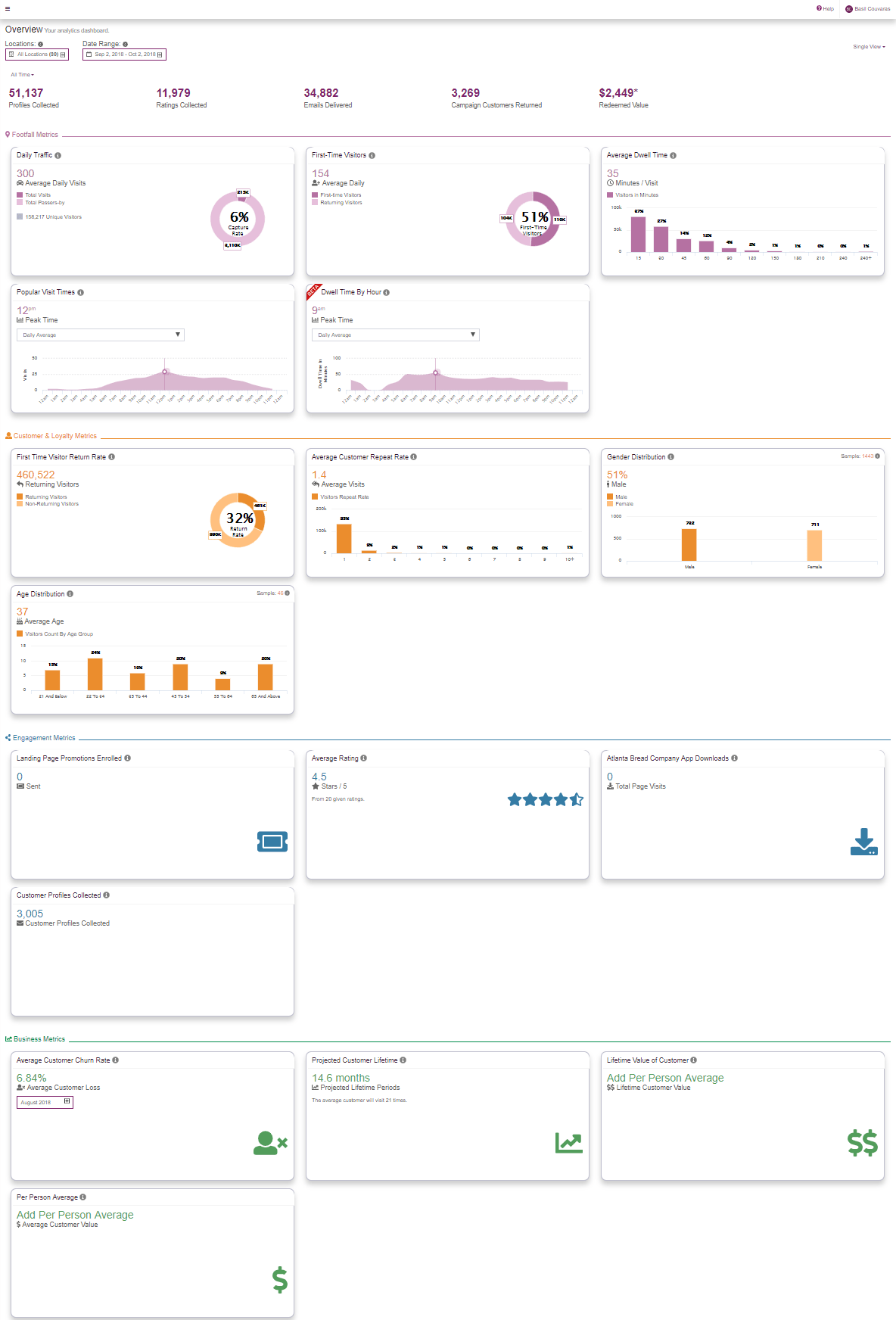
customer data for restaurant content marketing

Through thorough research on the data you collect, you can begin to create your most ideal customer segments and craft the perfect strategy for each of them by finding the emotional value in the data. Remember, content marketing is not about going for the sale. It is providing each of these customer segments with information to show them, inherently, that what you offer can,and will, satisfy their needs.

At this point, your content marketing can begin to take shape. As you begin publishing and sending out your content, it is important to remember that this is just the beginning. You will want to constantly test new types of content, as well as new content topics, on each of your restaurant’s customer segments.

For optimal testing, you’ll need to be able to measure the success of each campaign. This is another reason why marketing and analytics platforms are so powerful for brick-and-mortar businesses. Solutions like Bloom Intelligence are ideal for tracking individual campaigns down to the individual customer level. You’ll be able to monitor each campaign and adjust/optimize your campaigns on an ongoing basis.

Using the definition of content marketing above, let’s examine a few of the ways that brick-and-mortar businesses and restaurants can reap the remarkable rewards of content marketing.

Blogging

Perhaps the most effective way to begin a content marketing campaign is to start a blog on your company website. Once set up, you should post to your blog on a consistent basis. You can blog every day, or once a week, or once a month, but whatever schedule you decide on, you should keep it consistent so that you’re not leaving your audience guessing when to come back for more.

Some topic ideas for content marketing for restaurants include:

  • Restaurant Recipes
  • Money-Saving Tips for Diners
  • Craft Beer and Wine Guides
  • Employee or Customer of the Month

Again, you won’t be selling your brand on your blog, you should simply be giving your customers the information they may be seeking. You could blog about specific types of diets, local events, holiday meals, different craft beer types or how to make a dollar go farther when dining out.

Guest Posting

Another great way of getting content out to the masses is by guest posting. This involves reaching out to related websites and offering to write content they can publish on their website. Typically, they will allow you to publish an author bio with your image and a short biography. This is where you would quickly mention your place of business.

You are essentially getting eyeballs on your content by way of the website’s loyal visitors. When they read your bio, they can make the connection between great, educational content and your place of business.

Likewise, you can usually link back to your website, which will increase your traffic and help with search engine optimization.

Podcasting

There are many great restaurant-related podcasts available today, covering anything from operations and management, to technology, to recipes, to new trends in the industry. Much like guest posting, you can reach out to these pod-casters and offer to be interviewed on a future show.

Think about what you can offer that is above and beyond the ordinary so you can showcase it in your outreach, and in the podcast as well.

You can easily query your favorite search engine to find them, but here is a short list of some of the top restaurant-related podcasts:

Content Marketing Through Email

Email has been, and continues to be, one of the best ways to reach consumers.

  • In 2017, global e-mail users amounted to 3.7 billion. This figure is poised to grow to 4.37 billion users in 2023. (Statista)
  • Email has a median ROI of 122% – over 4x higher than other marketing formats including social media, direct mail, and paid search. (DMA and Demand Metric)

As you can see, collecting your customer email addresses is a crucial part of a successful offline content marketing campaign.  When paired with a WiFi marketing and analytics platform, collecting email addresses becomes extremely easy. Testing various content types and topics also becomes easy while it allows you to track each individual campaign.

All you have to do is install the platform and everything is done behind the scenes. You will passively build a customer list thousands of customers without lifting a finger.

Using a WiFi Marketing and Analytics Platform

These platforms utilize your customer WiFi access points. They gather data from any mobile device with its WiFi signal turned on. Since each device broadcasts its own unique ID, the system will recognize each customer individually based on their mobile device. Specific behavior data can then be tracked on each device, including dwell times, repeat visits, days of the week or hours of the day when at your location, and much more. This data is collected by Bloom whether customers log into your WiFi or not.

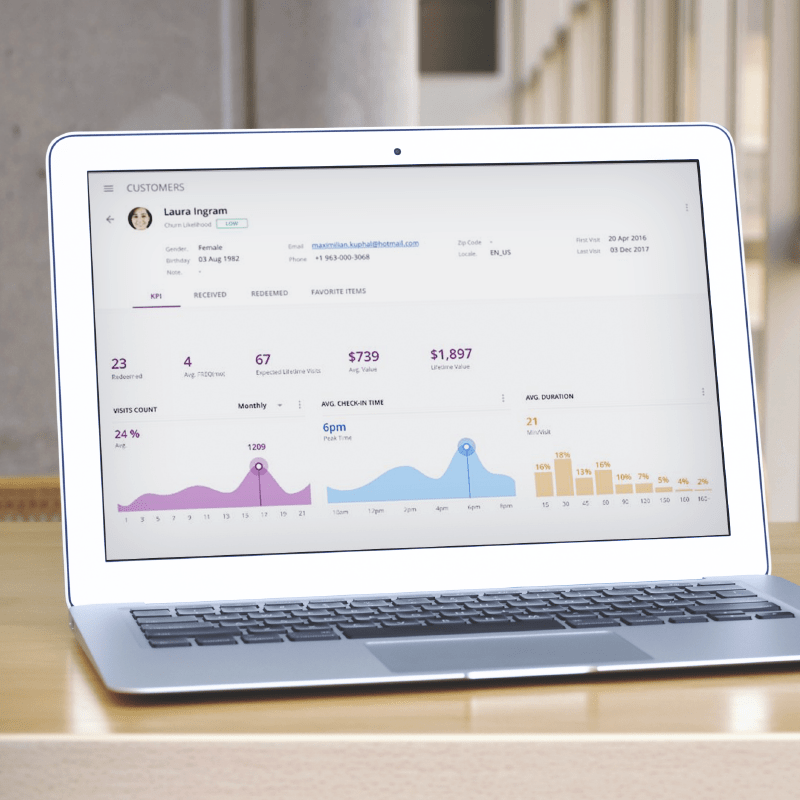
When a customer logs into your WiFi, the system will capture their email address or social media profile, so you will be collecting those valuable email addresses and customer profiles passively. At this point, the system can then associate all previous activity from that device to the customer’s profile, as well as demographics such as gender, age, birthday and more.

With this kind of data, you can send content to your customer segments on a very granular level. And you’ll know each and every time they come back to your location.

With Bloom’s advanced reporting, it is easy to track the results of every campaign, all the way down to a customer coming back to your restaurant and/or redeeming an offer.

Get Started Today

One of the greatest things about content marketing is that you can get started immediately, and on a very limited budget. In some cases, it costs you nothing but the time it takes to write your content and find the perfect place for it to be published.

But the most important thing is that you get started as soon as possible. Competition is fierce in today’s marketplace and it’s up to you to stay a step ahead.  Content marketing can provide you with an inexpensive and powerful way to create relationships with your customers, keep you top-of-mind, and keep them coming back again and again.


 

Increase Revenue With Your POS System and WiFi Marketing

WiFi marketing & analytics are making a huge impact on brick-and-mortar revenue, customer engagement and satisfaction. Using guest WiFi access points, businesses can collect customers names, contact information, and demographics while measuring their behavior data at the location. The data can be used to create targeted remarketing campaigns to influence customers, increasing their visit frequency and spend, and you can measure their satisfaction in real time.

Progressive Profiling For WiFi Marketing Success

Customer profiling is a great way to get a detailed portrait of your current customer base to help you make smarter, more effective marketing decisions as you engage your customers on a more personal level. Using customer profiles, your customers can be broken down into segments, or groups, based on certain demographics and behaviors.

What is Presence Analytics?

The competition in today’s offline marketplace is fierce. Brick-and-mortar businesses like restaurants and retail establishments are in a constant struggle to stay ahead of their competition, and presence analytics can provide them with a huge advantage. This technology is literally changing the way brick-and-mortar businesses are thinking about marketing.

Why Every Restaurant Should Care About Customer Ratings

Restaurant marketing is truly complex. It is driven by seemingly countless digital marketing channels and even more tactics and strategies. And then there are the offline campaigns – radio, television, proximity, and WiFi marketing. There’s certainly a lot going on, and marketing professionals are constantly under the gun to keep their advertising costs at a minimum.

In the midst of this marketing mayhem, there’s one often overlooked channel that can provide a huge bang for your buck, and restaurateurs may not be using to its full advantage – customer ratings sites.

Customer ratings and reviews can literally make or break your restaurant business. If you’re not paying attention to your online ratings and reviews, or you’re not working to improve them, you’re leaving money on the table.

Why Are Customer Ratings Important

More and more, consumers are turning to the internet to help them make their dining decisions. Ratings websites like Yelp, TripAdvisor, Google Maps and Zagat’s receive millions upon millions of visitors every single day, and these sites can be one your restaurant’s most powerful and relatively inexpensive marketing commodities.

Obviously, positive reviews are a great thing, while negative customer reviews are somewhat of a bad thing. The more positive ratings you receive, the more consumers will trust that they will have a pleasurable experience at your establishment. But the truth comes in the research that has been done around these ratings sites and the potential effects that restaurant ratings have on your overall bottom line.

Positive Customer Ratings Improve Foot Traffic

positive customer ratingsA study performed by Michael Anderson and Jeremy Magruder, professors at the University of California, Berkeley, concluded that positive reviews have a direct correlation to increases in foot traffic during peak times. They found that a ½-star rating increase resulted in a 30-40 percent increase in the number of 7 pm bookings.

Based on this study, although online rating websites may not generate attributable financial returns, they can certainly play a role in your restaurant’s success, driving more foot traffic and overall revenue.

At your next lunch or dinner peak time, think about what a 30-40 percent increase in bookings would look like at your restaurant.

Positive Customer Ratings Increase Revenue

Another study conducted by Professor Michael Luca at the Harvard Business School sought a correlation between online ratings and actual revenue.

The study found that a rating improvement of one star led to an increase in revenue of between 5 and 9 percent. Interestingly, Luca also found that the star rating of restaurants played a much higher role in consumer decision-making, finding that website visitors were often overwhelmed by the number of written reviews.

Luca concluded, “Online consumer review websites improve the information available about product quality. The impact of this information is larger for products of relatively unknown quality…On the consumer side, simplifying heuristics and signals of reviewer quality seem to increase the impact of quality information.”

Why You Should Care About Customer Reviews

There are many more studies about the effects of positive customer ratings and reviews. In 2017, websitebuilder.org collected data and statistics about the effects of good and bad user reviews. As you read through the statistics below, think about current foot traffic and revenue at your establishment and you’ll further realize how important and valuable positive user ratings can be.

Among the data, here are some interesting facts they found:

  • 72% of consumers say that positive reviews make them trust a local business more.
  • 61% of consumers have read online restaurant reviews, more than any other type of business.
  • 53% of 18-to-34-year-olds report that online reviews factor into their dining decisions, as do 47% of frequent full-service customers.
  • 34% of diners choose a restaurant based on information provided on a peer review website.
  • Consumers are likely to spend 31% more on a business with excellent reviews.

It’s plain to see that receiving more and better customer ratings is key to growing your customer base, increasing revenue, and driving down costs – and this is expected to remain the case for quite some time.

Therefore, you should be doing everything you can and being proactive in improving your ratings across all the major review sites. This includes leveraging your customer WiFi access to ask for a rating after a customer visits your establishment. If the rating is good, you can send them a convenient link to the ratings website of your choice. If the rating is bad, you can apologize, offer to resolve any issues, and give them an incentive to come back and re-rate your restaurant.

There will always be the occasional poor review, that’s just the nature of the internet. Remember that dealing with poor customer reviews the right way can actually have a positive impact on business.

At the end of the day, you should always be doing your best to provide quality service, excellent food and drink, and the best atmosphere possible. If you do that, good ratings and reviews will naturally follow. This will turn your restaurant’s pages on the ratings websites into a revenue generator, and one of the most powerful marketing tools in your arsenal.