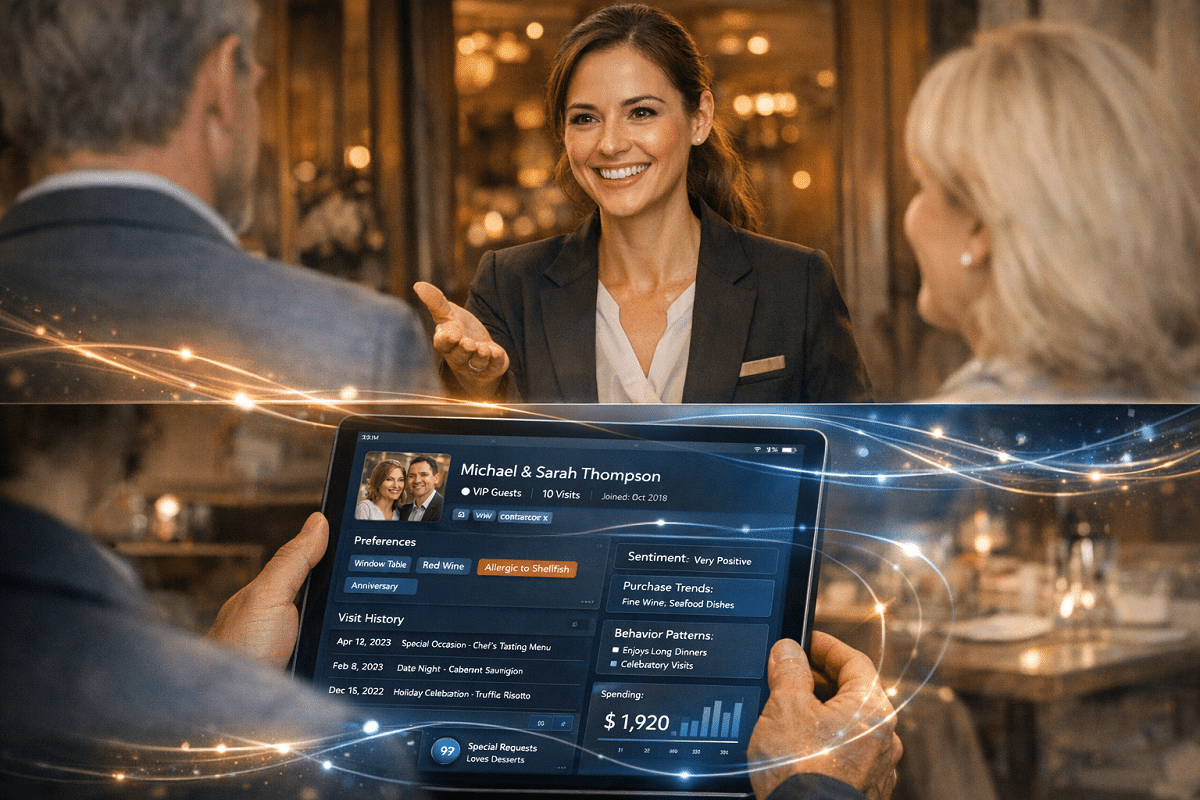
Author: William Wilson

Does Your Restaurant CRM Actually Know Your Guests? 6 Questions Every Operator Should Ask

Key Takeaway

Most restaurants believe they have a CRM. What they actually have is a contacts list, or an outdated platform that stores data but never acts on it. A real restaurant CRM captures guest behavior automatically across every touchpoint, builds living guest profiles, and uses that intelligence to drive marketing, reputation, and discovery. If yours can’t do all three, you’re leaving significant revenue on the table.

▶ THE ANSWER

A restaurant CRM that actually works in 2026 does six things: captures guests automatically, builds unified profiles, functions as a Customer Data Platform (CDP), automates behavior-driven marketing, feeds reputation intelligence back into operations, and powers AI discovery. The best platforms, like Bloom Intelligence, do all six. Most traditional CRMs do one or two.

When Did Your CRM Last Recover a Guest?

Not import a list. Not send a campaign blast. Actually identify a guest who was quietly slipping away. A regular whose visits had dropped from four times a month to once, and do something about it before they were gone for good.

If you can’t answer that question, you’re not alone. Most restaurant operators have some version of a CRM: a spreadsheet with guest emails, an old platform they set up years ago and mostly ignore, a loyalty app that collected sign-ups but never connected to anything else, or a POS-native contact tool that only knows about transactions. What they’re missing isn’t a tool. It’s the intelligence layer that turns guest data into action.

There are three levels of restaurant CRM maturity, and most operators are stuck at level one or two without realizing it.

The 3 Levels of Restaurant CRM Maturity
1
Contact Storage
Names, emails, maybe a phone number. A list you imported once. Marketing happens when someone remembers to send a blast. No behavioral data. No profiles. No automation.
Spreadsheets · Basic email tools · Outdated CRM platforms
↓
2
Relationship Tracking
Transaction history. Some segmentation. Scheduled campaigns by occasion. You know who bought something, but not who is about to stop coming back, or why.
POS-native tools · Basic loyalty apps · Generic CRMs adapted for restaurants
↓
3
Guest Intelligence
Living guest profiles built from every touchpoint. Behavioral segmentation that updates in real time. AI-driven marketing that acts before guests churn. Reputation data feeding back into operations. Discovery authority compounding automatically.
Bloom Intelligence · Unified CDP + CRM platform

The six questions below are a self-diagnostic. Work through them with your current platform in mind. They’ll tell you exactly where you sit, and what the gap is costing you.

Wondering where Bloom fits? See the full restaurant CRM platform →

Question 1: Does It Capture Guests Automatically, Across Every Touchpoint?

This is the foundation question. If your CRM only knows about guests who voluntarily signed up for something, a loyalty app, an email list, a reservation, it has a partial view of your actual guest base at best. Most guests will never proactively opt in to anything. That doesn’t mean they’re not valuable. It means your CRM is invisible to them.

A real restaurant CRM captures guest data passively and automatically across every channel where guests interact with your business. The integration ecosystem below shows what that looks like in practice.

The Data Sources That Feed a Real Restaurant CRM
📶
In-Venue WiFi
Passive behavioral capture: visit frequency, dwell time, new vs. returning. No opt-in required. Captures the guests who never sign up for anything.
🧾
POS Systems
Transaction intelligence: what guests order, how much they spend, which items drive return visits.
Toast · Revel · Square · Aloha
📦
Online Ordering
Off-premise guest identity and ordering behavior, recaptured from delivery platforms into first-party profiles.
Olo · Toast · GloriaFood
📅
Reservations
Booking patterns, occasion data, and return intent signals unified with in-venue behavioral history.
OpenTable · Tock · Resy
⭐
Review Platforms
Sentiment signals from every platform where guests talk about you, connected to the intelligence layer rather than siloed in a response queue.
Google · Yelp · TripAdvisor · Facebook · OpenTable · Tock
📋
Surveys & Website
Direct feedback and intent signals from guests who engage with your owned channels. First-party data at its most direct.
Custom surveys · Web forms
▸ Why WiFi capture matters most

WiFi-based guest capture is particularly powerful because it requires no guest action and no opt-in. It captures every guest who walks through your door, including the 85%+ who will never download a loyalty app. Without it, your CRM draws from a highly self-selected pool that represents a fraction of your actual guest base. Every insight your system generates is skewed toward your most engaged guests and blind to the majority who visit, spend, and leave without ever being captured.

Ask yourself: Is there a guest who visited your restaurant six times last year and never appears in your CRM? If the answer is yes, and for most operators it is, your data capture has a structural gap that no amount of campaign optimization can fix downstream.

Question 2: Does It Build a Unified Guest Profile or Just a Contact Record?

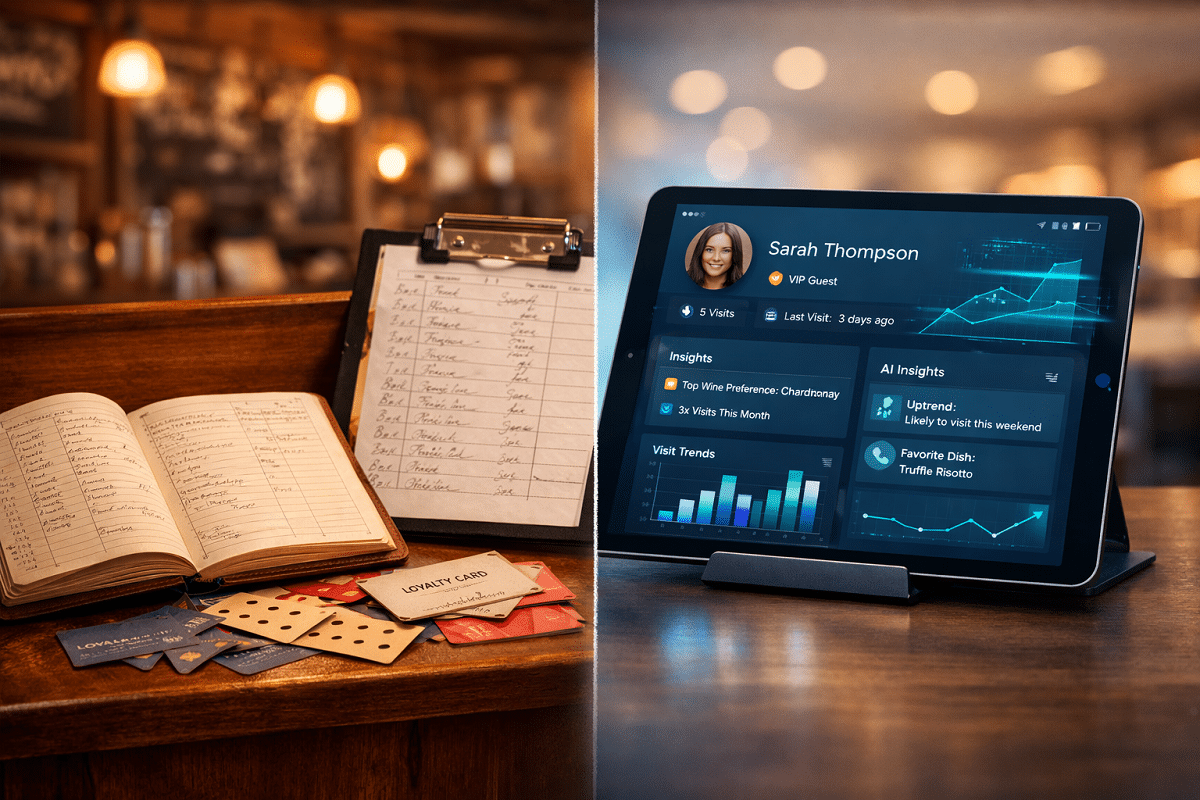
A contact record stores what you know about a guest. A unified guest profile builds what you know from what guests do. The distinction is the difference between a filing cabinet and an intelligence system.

When your CRM knows that the guest who connected to WiFi at your downtown location Tuesday is the same person who ordered delivery from your midtown location Friday, left a 4-star Google review mentioning the truffle fries, and has a birthday coming up next month, that’s a unified profile. When those four data points live in four different systems with no connection, that’s a contacts list with a storage problem.

▸ The 13x Guest Problem

Analysis of millions of guest profiles across Bloom’s platform network reveals that loyal guests, those who return consistently over time, spend 13 times more than first-time visitors. But most restaurants can’t identify who those guests are, because their data is scattered across a POS, a reservation system, and an email list that have never been unified. You can’t retain the guests you can’t see. And you can’t see them without a connected profile. The same data gap that hides your best guests also hides your most at-risk ones. The regulars quietly slipping toward permanent churn.

A real restaurant CRM automatically resolves guest identity across every data source, so one guest generates one profile regardless of how many channels they use to interact with your restaurant. That unified profile becomes the foundation for everything that follows: segmentation, churn detection, automated marketing, and lifetime value calculation.

Bloom Intelligence builds these profiles automatically, without manual data entry, across 22+ integrated data sources. When a regular’s visit frequency drops from four times a month to once, the platform detects it, flags them as at-risk, and can trigger an automated win-back campaign before they’re gone. That capability doesn’t exist in a contact record. It only exists in a unified guest profile.

Question 3: Does It Function as a CDP, Not Just a CRM?

Most operators have heard of CRMs. Fewer have heard of CDPs. The distinction matters more than the acronym.

A CRM manages the relationships you’re already aware of. A Customer Data Platform (CDP) automatically ingests, unifies, and activates data from every source, including the interactions you don’t manually track. A CDP doesn’t wait for you to import a list. It builds the list from what guests actually do.

▸ CRM vs. CDP: The practical difference

Think of a CRM as a smart Rolodex. It gets better when you update it. Think of a CDP as a system that updates itself from every guest interaction automatically, then uses those updates to predict what each guest will do next. The best restaurant marketing platforms today are both. Bloom Intelligence’s Customer Data Platform ingests behavioral, transactional, and sentiment data from every touchpoint and resolves it into living guest profiles. No manual entry, no data analyst required.

Why does this matter for restaurants specifically? Because restaurant guests don’t interact with you through a single channel. They walk in, order delivery, make a reservation, leave a review, and respond to an email, often in the same month. A CRM that only sees the channels you manually connect sees a fragment of the guest. A CDP sees the whole picture.

Bloom Intelligence is built as both: a restaurant CRM for managing guest relationships, and a CDP that automatically unifies behavioral, transactional, and sentiment data into the living guest intelligence that powers every action downstream. That architectural difference is why operators using Bloom see outcomes that generic CRMs simply cannot replicate.

Question 4: Does It Automate Marketing Based on Behavior, Not Just the Calendar?

There’s a version of restaurant email marketing most operators know well: the birthday email, the holiday promotion, the “we haven’t seen you in a while” blast that goes to everyone at once. These campaigns aren’t bad. They’re just not intelligent.

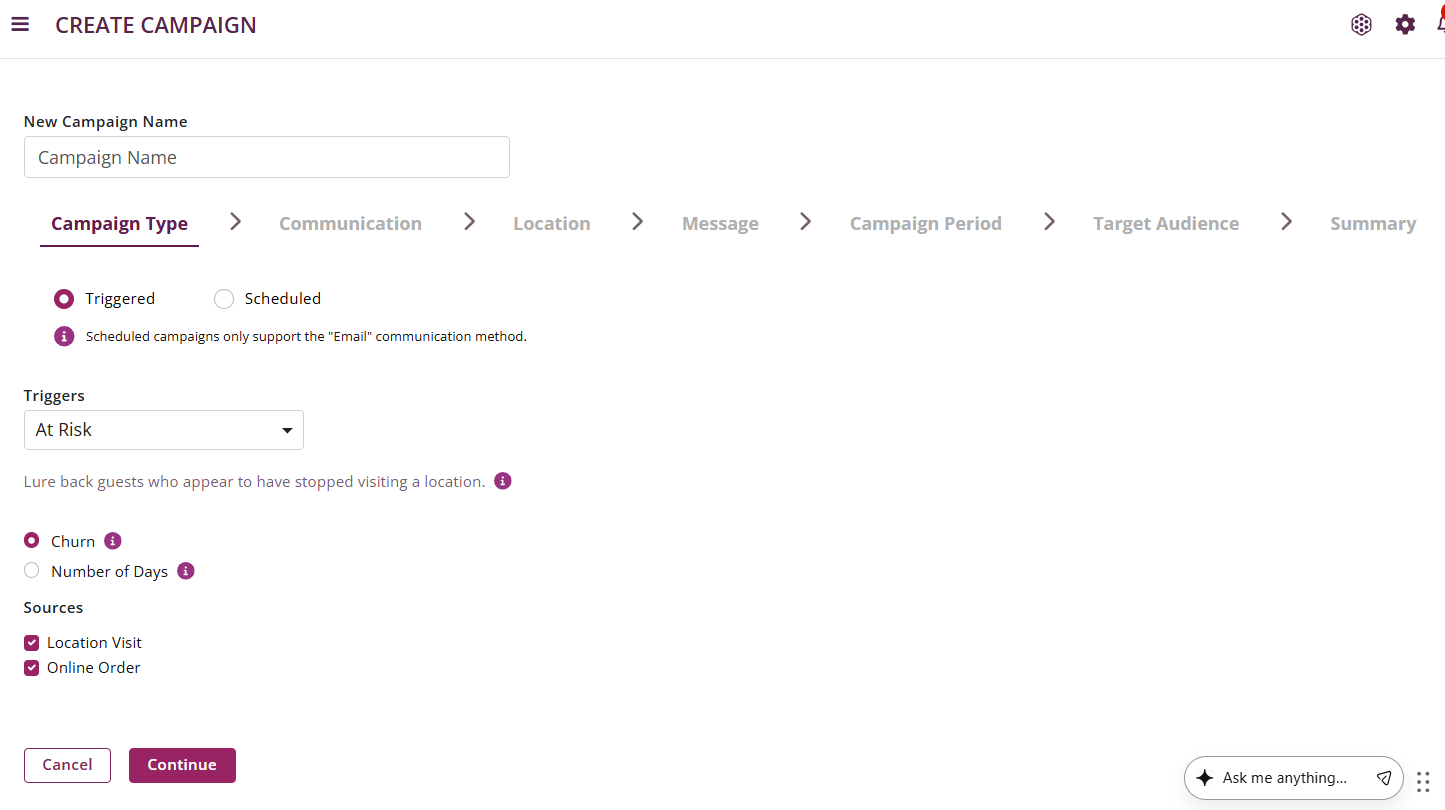
Behavior-driven marketing is different. Instead of asking “what time of year is it?”, it asks “what just happened with this specific guest?” A guest visited for the first time. Trigger a welcome series. A regular hasn’t returned in 28 days. Trigger a win-back sequence. A guest’s visit frequency has declined three months in a row. Flag them as at-risk and deploy a personalized re-engagement offer before they churn entirely.

Calendar-Based Marketing
  • Campaigns triggered by dates and occasions
  • Same message to every guest on the list
  • No connection to individual guest behavior
  • No visibility into whether a campaign drove a visit
  • Metrics: open rates and clicks, not revenue
Behavior-Driven Marketing
  • Campaigns triggered by what individual guests do
  • Personalized based on visit history and preferences
  • Automated across the full guest lifecycle
  • Revenue attributed back to the campaign that drove it
  • Metrics: closed-loop ROI, actual revenue recovered

This is what Bloom’s marketing automation delivers: behavioral triggers connected to unified guest profiles, with every campaign tracked from send through visit through POS transaction. That closed-loop attribution, something generic CRMs and standalone email platforms cannot provide, is what allows operators to see exactly which campaigns recovered which guests and what revenue they generated.

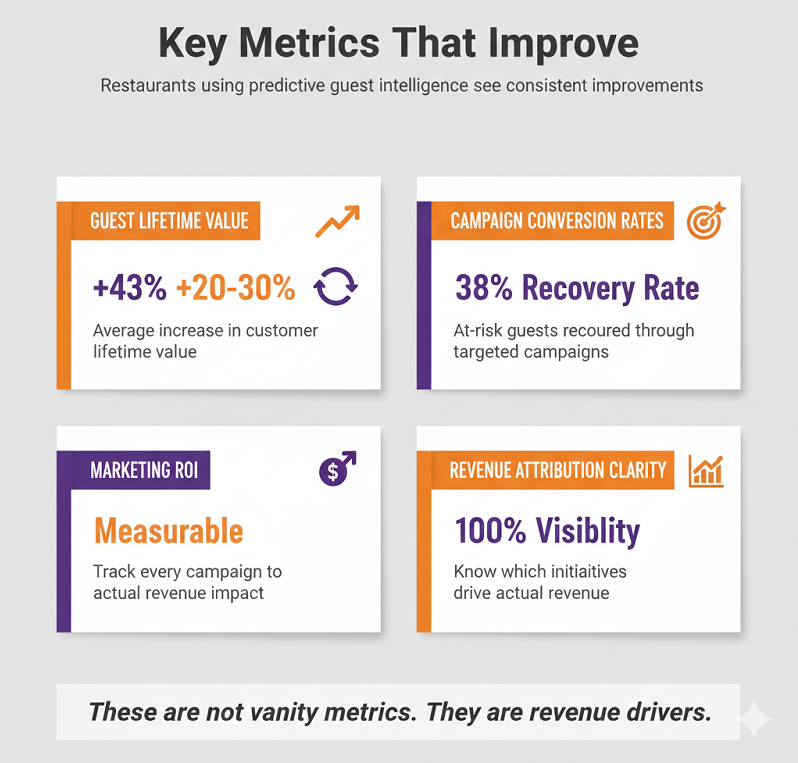
Across Bloom’s client network, automated win-back campaigns recover an average of 38% of at-risk guests. That’s not a projected benchmark. It’s a measured outcome from real campaigns running against real behavioral data on real guest profiles.

Question 5: Does It Feed Your Reputation Intelligence Back Into Operations?

Most restaurant operators think about reviews in one direction: guests leave them, you respond to them, you move on. That’s treating your review corpus as a customer service inbox. It’s the operational equivalent of having a focus group running 24 hours a day, 365 days a year, and only reading the complaint cards.

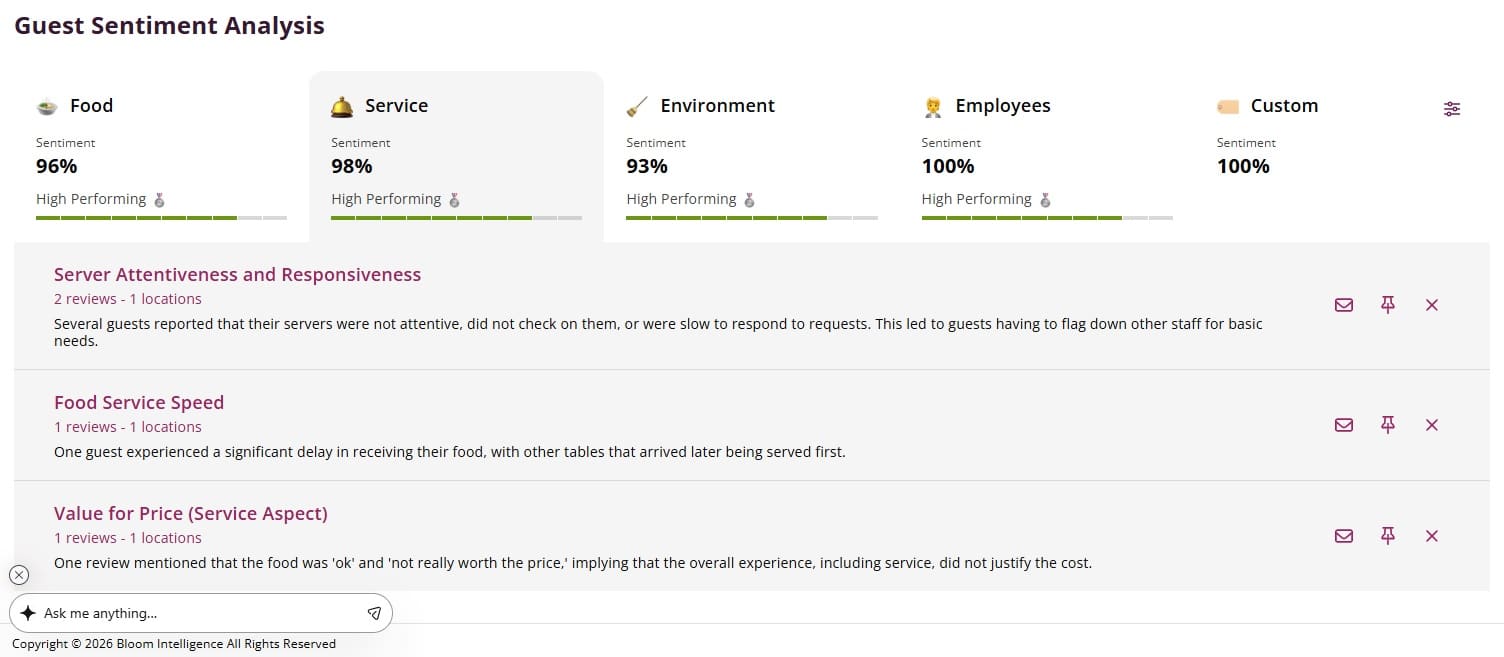
Reviews are guest data. The most direct, unfiltered, unprompted guest data available to any restaurant. When a guest writes “the service was slow during the Friday dinner rush” on Google, they’ve given you an operational intelligence signal that no survey would have generated. When twelve guests say the same thing in the same month, you have a pattern. That pattern should be triggering an operational alert, not sitting in a response queue.

▸ The reputation intelligence loop

A real restaurant CRM connects reputation management to the guest intelligence layer, so review sentiment doesn’t just get responded to, it gets analyzed. Bloom Intelligence monitors reviews across Google, Yelp, Facebook, TripAdvisor, OpenTable, and Tock, using AI to identify emerging sentiment patterns and generate brand-voiced responses at scale. The result: no review goes unanswered, sentiment trends surface as actionable operational intelligence, and review consistency builds the cross-platform signal that AI engines use to evaluate your restaurant for discovery recommendations.

If your current CRM has no connection to your review platforms, if your marketing system and your reputation management are two entirely separate workflows, you’re running the intelligence loop with a broken circuit. The data exists. It’s just not being used.

Question 6: Does It Power Your Discovery on AI Engines, Search, and Voice?

This is the question most traditional CRM evaluations never ask, and it’s the one with the highest stakes in 2026.

When someone asks ChatGPT, Google AI Overviews, or Siri for a restaurant recommendation, the restaurants that earn that recommendation have built something called Data Authority: the verified, specific, multi-source corroborated signals that AI engines use to evaluate which restaurant to recommend with confidence. A CRM that only looks inward, managing relationships with guests you already have, misses the biggest growth lever available to any restaurant right now.

The guest intelligence your CRM builds has a second job. The behavioral data, transaction patterns, sentiment signals, and verified interactions that flow through your CRM are exactly the signals that determine whether AI engines characterize your restaurant as a trustworthy, citable entity, or leave you invisible to the next wave of guests. AI engines recommend restaurants based on verified data, not marketing copy. The question is whether your CRM is generating and connecting that data to your digital presence automatically.

▸ The Discovery Test

Open ChatGPT right now and type: “What is [your restaurant name] known for?”

If the answer is generic, vague, or your restaurant doesn’t appear, that response is a direct readout of your current Data Authority. The AI is showing you exactly what it sees when it evaluates your restaurant as a recommendation candidate. A CRM that’s building rich, unified, behavioral guest profiles and connecting them to your digital presence will show up in that answer in ways a contact list never will.

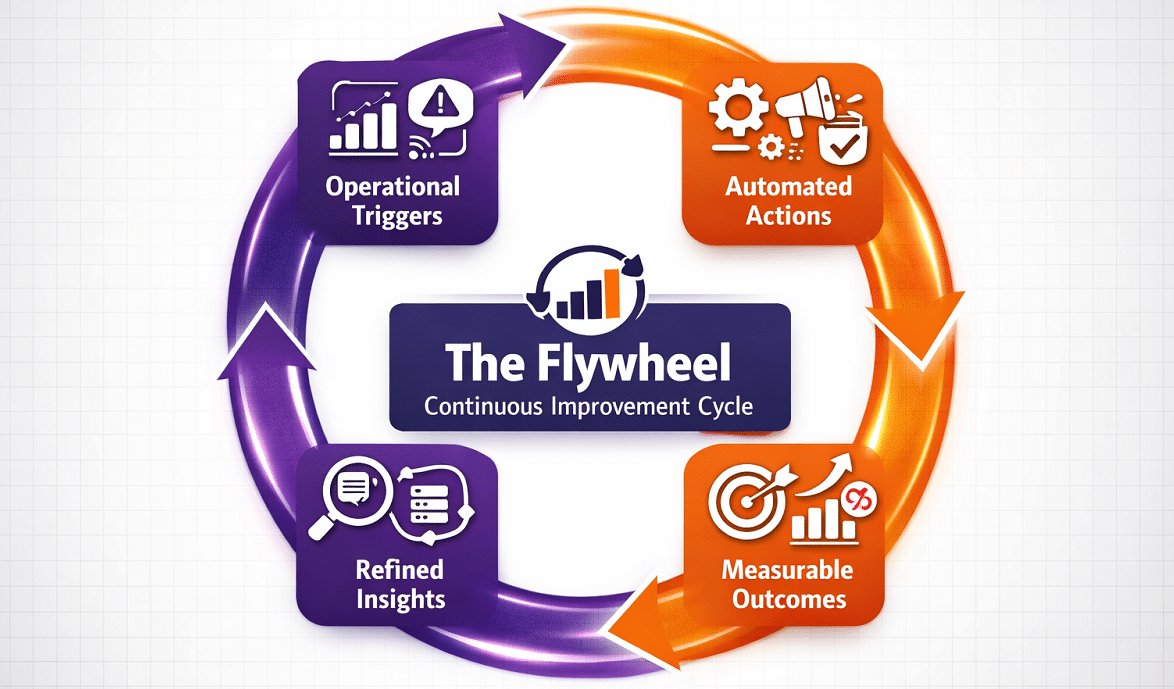
The CRM at the Center of the Discovery Flywheel

Across our recent posts, we’ve written about the Restaurant Discovery Flywheel, the compounding loop in which verified guest interactions generate data, that data builds a restaurant’s digital authority, that authority drives AI recommendations, and those recommendations bring in new guests whose interactions enrich the data further. Each rotation makes the next one faster.

What powers that flywheel is a unified guest intelligence platform. A CRM that’s also a CDP, that captures every touchpoint, resolves every identity, and connects behavioral reality to digital presence. Without that engine at the center, the flywheel doesn’t turn. You generate the raw ingredients, visits, orders, reviews, reservations, and they disappear into disconnected systems that produce no lasting discovery value.

The Discovery Flywheel
Your CRM Is the Engine at the Center
1
Guest visits, orders, books, reviews
→
2
CRM + CDP captures & unifies into living guest profiles
→
3
Behavior-driven marketing retains & recovers guests
→
4
Reputation intelligence builds cross-platform discovery signals
→
5
AI engines recommend, new guests arrive, more data flows in, flywheel accelerates

This is why the six evaluation questions matter beyond immediate marketing outcomes. A platform that checks all six boxes isn’t just a better email tool. It’s the foundational infrastructure that determines whether your restaurant builds compounding discovery authority or starts from zero every quarter.

What All Six Questions Look Like in Practice

Three restaurant groups that moved from contact storage to guest intelligence, and what changed as a result.

Full-Service Chain · 18 Locations
+60,000
New unified guest profiles built
Moving from fragmented systems to unified guest intelligence gave Corky’s a real-time view of behavior across all 18 locations. Automated win-back campaigns recovered 38% of at-risk guests, guests who would have disappeared silently under the old system with no one the wiser.

Read Case Study →

Multi-Concept Hospitality Group
15–20 hrs
Saved weekly on reputation management
Connecting reputation management to the guest intelligence layer transformed their review workflow from a manual burden into an automated discovery-building operation. Consistent, brand-voiced responses across every platform, feeding both operational intelligence and AI discovery signals simultaneously.

Read Case Study →

Fine Dining · Japanese Steakhouse Group
Top Ranked
AI search for their category
A CRM that functioned as a CDP, connected reputation management to the intelligence layer, and powered discovery signals through unified behavioral data. The result wasn’t a content campaign. It was a data infrastructure that AI engines recognized as authoritative enough to recommend consistently.

Read Case Study →

Frequently Asked Questions

Restaurant CRM evaluation, answered for operators at every level

A CRM manages the guest relationships you’re already aware of, storing contact information, tracking interactions you manually record, and enabling communication with guests you’ve identified. A CDP automatically ingests, unifies, and activates data from every source, including behavioral data from guests who haven’t actively opted in. The best restaurant marketing platforms are both: capturing guests passively, building unified profiles automatically, and using that intelligence to drive marketing, reputation, and discovery without manual data management.

HubSpot, Salesforce, and similar platforms are powerful tools built primarily for B2B sales pipelines and e-commerce. They can store restaurant guest contacts and manage basic email marketing, but they have fundamental limitations for restaurant use: they can’t capture in-venue behavioral data, require manual data entry at scale, can’t unify data from POS systems and reservation platforms automatically, and have no mechanism for reputation management or AI discovery optimization. Restaurants adapting these platforms typically cover the basics but leave significant intelligence capability and revenue recovery on the table.

A fully capable restaurant CRM needs to integrate with: WiFi infrastructure for passive behavioral capture; POS systems (Toast, Revel, Square, Aloha) for transaction data; online ordering platforms (Olo, Toast, GloriaFood) for off-premise guest identity; reservation systems (OpenTable, Tock, Resy) for booking and occasion data; and review platforms (Google, Yelp, TripAdvisor, Facebook, OpenTable, Tock) for reputation intelligence. The more complete the integration set, the more accurate and actionable the guest profiles, and the more powerful the marketing, retention, and discovery outcomes.

A restaurant CRM improves guest retention by making the invisible visible: it identifies guests whose visit frequency is declining before they churn completely, segments them by risk level and behavioral profile, and triggers automated win-back campaigns calibrated to their specific history. Without behavioral tracking, most at-risk guests disappear silently, their absence indistinguishable from normal traffic variation. With unified guest intelligence, an 18-location chain can detect thousands of lapsed regulars, deploy targeted re-engagement within 48 hours, and recover 38% of them within three weeks, as Corky’s Kitchen and Bakery did using Bloom Intelligence.

Closed-loop attribution is the ability to track a marketing action, a win-back email, a birthday offer, a VIP recognition message, all the way through to a verified in-restaurant visit and POS transaction. It tells you not just whether a guest opened an email, but whether they came in as a result, what they ordered, and what revenue the campaign generated. Generic email platforms measure open rates and clicks. A restaurant CRM with closed-loop attribution measures actual revenue recovered, the only metric that matters for evaluating true marketing ROI.

A restaurant CRM that functions as a CDP generates the verified behavioral data, sentiment signals, and cross-platform consistency that AI engines like ChatGPT, Google AI Overviews, and voice assistants use to evaluate restaurant recommendations. When a CRM captures real guest visits, connects them to transaction data, and links them to reputation management across multiple platforms, it creates the kind of multi-source, verified, specific entity profile that AI engines trust enough to recommend by name. This is the Discovery Flywheel in action, where guest intelligence builds discovery authority that brings in new guests whose interactions enrich the intelligence further.

The 6-Question Audit

See What a CRM That Answers Yes to All Six Questions Actually Looks Like

Bloom Intelligence is the restaurant CRM built to check every box: automatic guest capture across 22+ sources, unified guest profiles, CDP-level intelligence, behavior-driven marketing automation, AI reputation management, and discovery optimization that compounds with every guest interaction. The flywheel starts on day one.

See the Full Platform →

99.3% client retention
108M+ guest records
22+ integrated sources

Every Guest Who Walks Through Your Door Makes You Easier to Find Online

The Best Discovery Strategy Isn’t What an Agency Does. It’s What Happens Inside Your Restaurant Every Day.

Most restaurants think about discoverability as a marketing problem: something that happens on websites, in ad campaigns, or through content strategies developed by agencies and SEO consultants. This framing misses something fundamental.

The most powerful discovery signals available to any restaurant are not produced by marketers. They are produced by guests: during actual visits, actual orders, actual reviews, actual return trips. Every guest interaction your restaurant has today is simultaneously a discovery signal that either builds or fails to build your restaurant’s authority with AI engines, Google, and voice assistants.

The restaurant that understands this stops treating discovery as a separate project and starts treating operations as the discovery engine.

The Core Problem

The problem isn’t a lack of data. The problem is a broken loop. Most restaurants generate all of this raw material continuously, and then it disappears into disconnected systems, never touching the digital presence that AI engines evaluate. The visit happened. The order was placed. The review was posted. But none of it became a discovery signal. None of it made the restaurant more findable tomorrow than it was yesterday.

What Every Guest Interaction Actually Generates

To understand why the flywheel works, you need to see each guest touchpoint for what it actually produces, not just as an operational event, but as a data event. The cards below map what happens at each moment, and the difference between that data being captured versus discarded.

The Four Guest Touchpoints: Captured vs. Discarded
🚶
Guest Walks In
In-venue visit begins
Behavioral Signal
Duration · Frequency · New vs. Returning · Daypart · Dwell time
Loop Broken

An anonymous visit. No record it ever happened. Behavioral proof evaporates.

Loop Closed

Verified behavioral data point added to a living guest profile, proof AI engines cannot fabricate from copy.

🍽️
Guest Places an Order
Transaction intelligence
Transaction Signal
What ordered · Spend level · Combinations · Item preferences · Daypart
Loop Broken

A POS transaction isolated inside your POS system. No connection to guest identity or digital presence.

Loop Closed

Preference data layered onto the behavioral profile, creating a guest picture specific enough for AI engines to characterize your restaurant with confidence.

⭐
Guest Leaves a Review
Sentiment signal across platforms
Sentiment Signal
Specific language · Emotional quality · Topics mentioned · Consistency across platforms
Loop Broken

A customer service event. Read once, maybe replied to, then forgotten.

Loop Closed

Live entity enrichment, independent language that AI engines extract to characterize what your restaurant genuinely is, from a source they trust more than any marketing copy.

📅
Guest Books Again
Loyalty proof signal
Loyalty Signal
Return intent · Booking source · Occasion type · Dining frequency pattern
Loop Broken

A reservation in a booking system, siloed from every other piece of guest data.

Loop Closed

Return frequency confirmation: behavioral proof that tells AI engines this restaurant delivers on its promise, consistently, to real guests who keep coming back.

The guest experience is identical in both scenarios. The operations are identical. The difference is purely infrastructural.

Touchpoint 1: The Visit: Behavioral Proof That Cannot Be Fabricated

When a guest walks into your restaurant, an in-venue visit begins generating one of the most valuable discovery signals available: verified behavioral data. How long did they stay? Was this their first visit or their tenth? What time of day? What day of week? Are they coming more frequently over time or less?

This behavioral layer is the discovery signal no competitor can build by writing better content about themselves. Visit frequency and dwell time patterns across real guests, captured passively at scale, tell AI engines something that marketing copy cannot: this restaurant is genuinely good enough that real people choose to spend real time here, repeatedly.

The majority of restaurant guests make only one verified visit, which means every single return visit is a compounding behavioral proof point of disproportionate value.

Touchpoint 2: The Order: Transaction Intelligence That Tells the Real Story

Every order placed at your restaurant is a declarative statement about what your guests actually value. Not what your marketing says they value. Not what your website claims is popular. What real guests are choosing, spending money on, returning for.

“A restaurant that says ‘our pasta is exceptional’ is fundamentally less trustworthy to an AI engine than a restaurant whose guest data shows that a specific pasta dish drives more return visits and higher spend than any other item on the menu.”

The distinction between self-reported positioning and verified operational reality

Touchpoint 3: The Review: Sentiment That Compounds Across Platforms

A review posted on Google, OpenTable, TripAdvisor, or Yelp is not just a customer service event. It is an independent, third-party entity enrichment, a data point from a source that AI engines treat as more reliable than anything a restaurant writes about itself.

When the same dishes, the same experience quality, the same staff attributes appear in reviews across multiple platforms independently, AI engines treat that convergence as corroborated fact. This is the Sentiment Consistency signal, and it is generated entirely by real guests making unprompted decisions to share their experience.

▸ The Insight Most Operators Miss

The review your guest left this morning about your wood-roasted chicken is not just a 5-star rating. It is a specific, independent, third-party entity claim that AI engines will cross-reference against every other review mentioning that dish. If that same dish appears positively in reviews across three platforms over twelve months, AI engines begin treating it as a verified restaurant attribute, a characteristic they can cite with confidence when recommending your restaurant to someone specifically asking for that type of food.

This is happening whether you know about it or not. The question is whether your responses, your consistency, and your connected intelligence platform are accelerating it, or leaving it entirely to chance.

Touchpoint 4: The Return: Loyalty Proof That Validates Every Other Signal

When a guest books a reservation, they are making an intent statement: a verifiable declaration that they are choosing your restaurant deliberately, in advance, for a specific occasion. When they return multiple times, that pattern becomes one of the most powerful discovery signals available: loyalty proof.

More than 1.5 million reservation records flow through the Bloom platform network. Each one is not just a booking, it is a data point in a guest relationship history that, when unified with behavioral, transactional, and sentiment data from the same guest, produces a depth of verified intelligence that no marketing campaign can replicate.

The Broken Loop: Why Most Restaurants Discard Their Best Discovery Signals Every Day

Understanding that every guest touchpoint generates a discovery signal makes the next question obvious: why aren’t more restaurants dominating AI search?

The answer is not a lack of effort. Most restaurant operators are working extremely hard. The answer is structural: the systems that capture each type of guest data (the POS, the reservation platform, the WiFi network, the review platforms) were not built to talk to each other. And none of them were built to translate operational data into digital presence signals.

The Broken Loop vs. The Closed Loop
The Broken Loop

Data Generated. Value Discarded.

  • Guest visits. WiFi connects. Visit data lives in hardware, untracked.

  • Order placed. POS records transaction. Profile connection: none.

  • Review posted. Seen once. Reply is generic or absent. Signal wasted.

  • Systems don’t speak. Data doesn’t flow. Discovery stays static.

  • Competitors who close the loop build an insurmountable data lead every month you don’t start.

→
The Closed Loop

Data Generated. Authority Compounded.

  • Guest visits. WiFi captures behavioral signal passively. Profile enriched.

  • Order linked to guest identity. Preference data layers onto profile.

  • Review gets brand-voiced AI response. Entity-enriching language added to the public record across all platforms.

  • Unified intelligence translates operational truth into digital presence AI engines trust.

  • Each rotation adds compounding discovery authority that no content sprint can replicate.

The Broken Loop is not a technology problem. Most restaurants already have the capture systems. What they lack is the layer that unifies them.

▸ Coined Concept: The Broken Loop

The Broken Loop describes the gap between operational data generation and discovery signal activation. Every restaurant with a POS, a WiFi network, a reservation system, and a review presence is generating the raw ingredients of AI discoverability continuously. The Broken Loop is what exists when those ingredients have no connected infrastructure to translate them into the verified, specific, multi-source digital signals that AI engines use to build recommendation confidence. The data is real. The loop is broken. The discovery potential is entirely unrealized.

The Discovery Flywheel: What Happens When the Loop Closes

When guest intelligence is connected: when WiFi behavioral data, POS transaction data, reservation history, and review sentiment all flow into a unified profile that continuously enriches the restaurant’s digital presence, something qualitatively different happens. The restaurant stops doing SEO as a separate activity and starts generating discovery authority as a natural byproduct of operations.

This is the Discovery Flywheel in motion. Each stage reinforces the next, and every rotation makes the next rotation faster.

The Discovery Flywheel: 5 Compounding Stages

The Discovery Flywheel

Every rotation builds data authority that no competitor starting today can replicate

1
Guest Visits
Duration, frequency, new vs. returning, behavioral proof AI engines cannot fabricate from copy.

88M+ sessions

2
Enriched Profile
Visit layered with orders, reviews, reservations into a multi-source identity AI engines trust.

7.3M profiles

3
Stronger Presence
Operational reality translates into a living digital presence, not static copy, but verified current truth.

Dynamic Discovery

4
AI Recommendation
ChatGPT, Google AI Overviews, and voice search cite your restaurant by name with specific attributes.

ChatGPT · Perplexity

5
New Guests → More Data
AI-referred guests visit, order, review. Their interactions enrich the profile. Each rotation is faster.

Compounding ↑

A competitor starting today cannot close the gap through content alone. The flywheel compounds data authority that can only be built through time.

▸ The Compound Advantage

Dynamic Discovery (a digital presence continuously updated with verified guest intelligence) compounds in a way that Static Presence never can. A static website that was excellent when it launched is progressively less authoritative as competitors’ connected digital presences grow richer, more current, and more specifically corroborated by real guest data.

The advantage of Dynamic Discovery is not just that it performs better today. It is that it automatically performs better tomorrow (and the day after) with no additional marketing effort required.

What a Restaurant Needs to Close the Loop

The practical question every operator reading this should be asking is not “how do I get better at SEO?” It is “why isn’t the data my restaurant generates every day already working for me online?” The answer points to three connected capabilities.

Three Capabilities to Close the Broken Loop
01
Capability 1
Unified Guest Intelligence
One identity-resolved profile per guest across every touchpoint: WiFi visits, POS transactions, online orders, reservations, and review activity. Without this, the four touchpoints remain four disconnected data streams. WiFi-based capture is particularly powerful: it requires no opt-in and captures behavioral data that no loyalty app generates.
02
Capability 2
Connected Reputation Management
Treating reviews as a live discovery asset rather than a customer service function. A systematic, brand-voiced response program across every review platform, not sporadic responses, but engagement that adds specific entity-enriching language to the public record over time. Every response is a small act of entity building. Over hundreds of responses across multiple platforms, the cumulative effect is brand specificity AI engines recognize as distinctive and trustworthy.
03
Capability 3
Continuous Discovery Optimization
The connective tissue: a platform that translates unified guest intelligence into a digital presence that continuously reflects verified current reality. The dishes guests are ordering most. The sentiment themes appearing consistently across recent reviews. The behavioral patterns showing which guest segments are growing. This is what separates Dynamic Discovery from Static Presence, not the quality of the initial content build, but the ongoing connection between operational reality and digital representation.

The Flywheel in Practice

Three restaurant groups whose Discovery Flywheels are running, and what’s compounding as a result.

Roka Akor

Fine Dining / Japanese Steakhouse GroupTop RankedAI search ranking for their category

Achieved top placement in AI search through operations that generated verified, specific, multi-source entity data, not a content campaign. New guests arriving via AI recommendation, with specific expectations already formed.
Corky’s Kitchen & Bakery

Full-Service Chain · 18 Locations+50%Marketing database growth · 60,000 new profiles

Every new verified guest profile added a behavioral data point. Multiplied across 18 locations, the result was a guest intelligence platform with the breadth to feed a Discovery Flywheel at meaningful scale, alongside a 38% recovery rate of at-risk guests.
Beachside Hospitality Group

Multi-Concept Hospitality Group15–20 hrsSaved weekly on review management alone

Inconsistent review response was a flywheel brake. AI reputation automation brought consistency (the same brand voice, the same specificity, the same response rate) removing a bottleneck and adding a continuous stream of entity-enriching language across all platforms.
▸ How Bloom Closes the Loop

Bloom Intelligence unifies guest data from WiFi visits, POS transactions, online orders, reservations, and review platforms into a single connected intelligence layer, then uses that verified data to continuously build the discovery authority that AI engines, Google, and voice assistants use to decide which restaurant to recommend.

The flywheel starts on day one. Within 3–6 months, meaningful AI recommendation authority builds as behavioral patterns accumulate depth and sentiment consistency establishes itself across platforms. A restaurant running connected guest intelligence for 12 months has a discovery authority profile that is qualitatively different from (and not closeable by) a competitor starting today.

Frequently Asked Questions

Voice and AI search–optimized answers to what restaurant operators ask most

Every verified guest visit generates behavioral data (duration, frequency, new versus returning status, visit patterns) that AI engines treat as a more credible quality signal than any restaurant-authored marketing copy. When this behavioral data is captured through connected guest intelligence infrastructure and reflected in a restaurant’s digital presence, it builds the kind of verified entity specificity that earns AI engine recommendation confidence.

The Discovery Flywheel is the compounding loop in which verified guest interactions (visits, orders, reviews, reservations) generate behavioral and sentiment data that enriches a restaurant’s AI entity profile, which drives higher recommendation confidence on AI engines, which brings in new guests whose interactions further enrich the data. Each rotation of the flywheel makes the next rotation faster. Restaurants with connected guest intelligence activate this flywheel automatically. Those without it generate the raw ingredients every day and discard them.

The core issue is the Broken Loop: restaurant operations generate rich, verified, multi-source data continuously, but disconnected systems mean that data never reaches the digital presence AI engines evaluate. The visit happened but wasn’t captured. The order was placed but not connected to a guest profile. The review was posted but the response was generic and inconsistent. None of it compounds into the kind of authoritative entity profile AI engines recommend with confidence.

Dynamic Discovery is the state in which a restaurant’s digital presence continuously reflects verified current reality (updated automatically by real guest behavioral data, real transaction intelligence, and real multi-platform sentiment) rather than remaining a static publication maintained infrequently. Traditional SEO optimizes a website at a point in time. Dynamic Discovery creates a living digital presence that grows more authoritative with every guest interaction, whether or not the marketing team takes any action.

WiFi-based guest capture generates verified behavioral data: the visit duration, frequency, and return patterns that represent behavioral proof AI engines cannot get from any self-reported source. When this behavioral data is unified with transaction, reservation, and review data into a connected guest intelligence platform, it builds the depth and specificity of entity profile that AI engines use to evaluate recommendation confidence. WiFi capture is particularly valuable because it is passive: it captures every guest who visits, not just those who opt into a loyalty program.

Reviews generate independent, third-party sentiment signals across multiple platforms that AI engines cross-reference when building a restaurant’s entity confidence profile. When the same dishes and experiences are described positively across Google, OpenTable, TripAdvisor, and other platforms, AI engines treat that convergence as corroborated fact. A systematic review response program (consistent, brand-voiced, entity-specific) adds a compounding layer of public language to this profile that builds Discovery Authority over time.

A restaurant Customer Data Platform unifies guest data from every touchpoint (WiFi visits, POS transactions, online orders, reservations, and reviews) into a single identity-resolved guest profile. When that unified intelligence is connected to a restaurant’s digital presence and discovery optimization, it translates operational data into the verified, specific, continuously updated entity signals that AI engines like ChatGPT, Google AI Overviews, and voice assistants use to decide which restaurant to recommend.

The flywheel begins generating data from day one, but meaningful AI recommendation authority typically builds over three to six months as behavioral patterns accumulate depth, sentiment consistency across platforms establishes itself, and the entity profile grows specific enough for AI engines to cite with high confidence. The compounding nature of the flywheel means that improvements accelerate over time rather than plateau: the restaurant that has been running connected guest intelligence for twelve months has a discovery authority profile that is qualitatively different from (and not closeable by) a competitor starting today.

Start the Flywheel

Your Restaurant Is Already Generating the Signals. Start Capturing Them.

Every service you ran today generated behavioral data. Every order placed added to a guest’s transaction profile. Every review posted added a sentiment signal to your entity profile. The question is whether any of it made your restaurant more findable tomorrow, or disappeared into the Broken Loop, generating no lasting discovery value at all.

See How the Flywheel Works for Your Locations →

99.3% client retention
108M+ guest records
Live in days, not months

Why AI Engines Recommend Some Restaurants and Ignore Others

ChatGPT, Google AI Overviews, and Perplexity are recommending restaurants right now. The question isn’t whether your restaurant should be optimized for AI search. It’s whether the data behind your digital presence is verified, specific, and trustworthy enough to earn the citation.

► THE ANSWER

AI engines recommend restaurants based on Data Authority: the aggregate of verified, specific, and multi-source corroborated data signals in a restaurant’s digital presence. Restaurants with higher Data Authority appear in ChatGPT responses, Google AI Overviews, and voice search results. Those without it remain invisible to AI-driven discovery, regardless of their actual quality or Google ranking.

The Restaurant AI Keeps Recommending

Two restaurants. Same city. Same cuisine category. Similar price points. Similar star ratings.

One of them gets recommended by ChatGPT when someone asks for the best place for a special occasion. The other doesn’t appear at all. The operator of the second restaurant can’t figure out why. Their website is clean. Their reviews are solid. They’ve done what they were told.

This scenario is playing out in every major market, in every cuisine category, right now. And the gap between the two restaurants has almost nothing to do with food quality.

It has everything to do with the quality of their data.

When a top-ranked fine dining group achieved standout placement in AI search for their category, the mechanism wasn’t a campaign. It wasn’t a clever content push or a review surge. What they had built (systematically, over time) was a digital presence so grounded in verified, specific, multi-source data that AI engines had no choice but to treat them as the authoritative recommendation.

That is the new competitive reality of restaurant discovery. And the playbook to win it starts not with content, but with data.

How AI Engines Actually Decide Who to Recommend

To understand why verified data is the foundation of AI discoverability, you need to understand what AI answer engines are actually doing when someone asks for a restaurant recommendation.

Traditional Google is a retrieval system. It finds the most relevant, most authoritative page that matches a query and surfaces it. Signals like domain authority, content relevance, and technical performance determine that ranking.

AI answer engines (ChatGPT, Perplexity, Google AI Overviews) are synthesis systems. They don’t find a page. They build an answer from everything they know about a restaurant entity (synthesized from multiple sources, cross-referenced for consistency, filtered for trustworthiness) and recommend the entity with the highest confidence score. Not the highest-ranking page. The most trustworthy entity.

That confidence score is what we call Data Authority.

► CONCEPT

Data Authority is the aggregate of verified, specific, and multi-source corroborated data signals that AI engines use to evaluate how trustworthy and citable a restaurant entity is. It is not a single metric you can track in any dashboard. It is the cumulative effect of five signals (Entity Specificity, Sentiment Consistency, Behavioral Proof, Cross-Platform Corroboration, and Recency) working together to build or erode AI engine confidence in your restaurant as a recommendation.

Here is the crucial implication: you can have a beautifully designed website, a strong Google ranking, and hundreds of five-star reviews, and still have low Data Authority. Because Data Authority is not about quantity of information. It is about verified information. Specific information. Information that appears consistently across multiple independent sources and that no competitor could replicate simply by writing better marketing copy.

Millions
Verified Guest Interactions Tracked
WiFi · POS · Reservations · Reviews · Online Ordering
Millions
Reviews Aggregated Across Platforms
Google · OpenTable · TripAdvisor · Yelp · Facebook · Tock
Overwhelmingly
Positive: 4 & 5 Stars
An untapped Data Authority signal pool for most operators

The Five Signals That Build Data Authority

These five signals are how AI engines evaluate restaurant entities. The more deliberately you develop each one, the higher your restaurant’s Data Authority, and the more consistently you appear in AI-generated recommendations, Google AI Overviews, and voice search results.

01

Entity Specificity

How precisely and distinctively a restaurant is described across its digital footprint. Generic language registers as noise to AI engines. Specific, unique, verifiable claims give AI engines an anchor for confident recommendations.

Why AI trusts it: Specificity enables confident, un-hedged recommendation
02

Sentiment Consistency

When guests on Google, OpenTable, and TripAdvisor independently describe the same dishes, experiences, and attributes in consistently positive terms, AI engines treat that convergence as corroborated truth, not marketing.

Why AI trusts it: Consistency across independent sources signals truth
03

Behavioral Proof

Verified visit patterns, dwell time, and return frequency that reflect real-world guest engagement. The one Data Authority signal structurally resistant to manipulation, you cannot fabricate how long guests stay or how often they return.

Why AI trusts it: It cannot be manufactured by better copywriting
04

Cross-Platform Corroboration

The same facts appearing consistently across multiple independent, authoritative platforms. A claim on your website is self-assertion. The same claim verified across six platforms is corroborated fact. AI engines treat these as categorically different levels of evidence.

Why AI trusts it: Corroboration multiplies trust; isolation erodes it
05

Recency Signal

How recently a restaurant’s digital presence has been updated with new, verified information. AI engines treat recency as a proxy for accuracy. Data Authority is not a permanent achievement, it requires active maintenance to sustain.

Why AI trusts it: Recent data = current reliability
► HOW TO

How to Build Data Authority for Your Restaurant

Five operational steps that turn real guest interactions into the verified signals AI engines use to recommend your restaurant by name.

  1. 1

    Build Entity Specificity

    Audit every public-facing description of your restaurant and replace all generic language with specific, verifiable, unique claims. Reference signature dishes by name, cite actual accolades, name your cuisine style precisely. Every vague claim replaced with a specific one increases Data Authority.

    Target: Website · Google Business Profile · Menu listings · Social bios
  2. 2

    Create Sentiment Consistency Across Review Platforms

    Respond to every review (not just negative ones) in a consistent brand voice that reinforces your restaurant’s specific identity. When multiple platforms independently describe the same dishes and experiences positively, AI engines treat that convergence as corroborated truth.

    Target: Google · OpenTable · TripAdvisor · Yelp · Facebook
  3. 3

    Capture and Connect Behavioral Proof

    Implement guest intelligence infrastructure that captures verified visit patterns, dwell time, and return frequency from real interactions across WiFi, POS, reservations, and online ordering. Connect this behavioral data to your digital presence, this is the signal AI engines weight most because it cannot be fabricated.

    Target: WiFi · POS · Reservations · Online ordering
  4. 4

    Build Cross-Platform Corroboration

    Ensure your restaurant’s defining attributes (signature dishes, atmosphere, distinctive qualities) appear consistently across multiple independent, authoritative platforms. A claim on six independent platforms is corroborated fact. A claim on your own website alone is self-assertion.

    Target: 6+ independent platforms minimum
  5. 5

    Maintain Recency Discipline

    Treat your digital presence as a living system. Keep hours, menus, and offerings current everywhere. Sustain a steady cadence of fresh, verified reviews. AI engines treat recency as a proxy for accuracy, a profile built on data from two or three years ago is progressively deprioritized against entities continuously refreshed with current signals.

    Ongoing: Monthly audits minimum · Weekly review responses

Signal 1: Entity Specificity: The Difference Between a Mention and a Recommendation

When a guest tells ChatGPT they want “the best wood-fired pizza in Nashville for a date night,” the AI doesn’t scan for keyword matches. It evaluates which restaurant entity has the most specific, verified, multi-source claims around wood-fired pizza, romantic atmosphere, and Nashville.

“Great pizza and a cozy vibe” is noise. It could describe four hundred restaurants.

“Neapolitan-style pizza baked in a wood oven, recognized by Nashville Scene three consecutive years, with a wine list nominated by a regional food publication” is a citable entity claim. AI engines can anchor a confident recommendation to it.

Entity specificity is not keyword optimization. It is the practice of describing your restaurant so specifically and verifiably that an AI engine can recommend it without hedging. Every vague claim replaced with a specific, verifiable one increases Data Authority.

► TEST YOUR SPECIFICITY

Ask ChatGPT: “What is [your restaurant] known for?” If the answer is generic, vague, or your restaurant doesn’t appear at all, that response is a direct readout of your current Data Authority profile. The AI is telling you exactly what it sees when it evaluates your entity. If you don’t like what it says, the fix is more specific, verified data, not better marketing copy.

Signal 2: Sentiment Consistency: When Every Source Tells the Same Story

AI engines are sophisticated pattern recognizers. When evaluating a restaurant entity, they analyze the qualitative patterns across reviews, not just star ratings, but the language guests use, the themes that emerge repeatedly, the experiences consistently described.

A restaurant where reviewers on Google, OpenTable, and TripAdvisor independently use specific positive language about the same dishes, the same service, the same atmosphere, that sentiment consistency is a Data Authority signal of the highest order. Consistency signals truth. It tells the AI engine: this is what this restaurant genuinely is, confirmed independently from multiple unrelated sources.

Sentiment inconsistency (strong reviews on one platform, mediocre on another, no discernible pattern across a third) signals ambiguity. AI engines deprioritize ambiguous entities. If the system can’t characterize a restaurant with confidence, it recommends one it can.

Across Bloom’s platform network, the vast majority of reviews are positive, with an overwhelmingly favorable pattern on every major platform. Most operators are sitting on an enormous, largely untapped Data Authority signal pool and doing almost nothing to activate it. The restaurants that treat their review corpus as a strategic asset (not a customer service inbox) are the ones building the sentiment consistency profile AI engines trust.

Signal 3: Behavioral Proof: The Signal That Cannot Be Faked

Entity Specificity and Sentiment Consistency can be improved through deliberate content and reputation strategy. Behavioral Proof is different. It is the one Data Authority signal structurally resistant to fabrication.

Behavioral Proof is what verified guest visit patterns, dwell time, and return frequency tell AI engines about the real-world quality of a restaurant. A restaurant where guests consistently stay for a full-length dining experience is demonstrably different from one where guests leave quickly. A restaurant whose regulars return many times a year demonstrates something no marketing copy can claim: that the experience actually delivers.

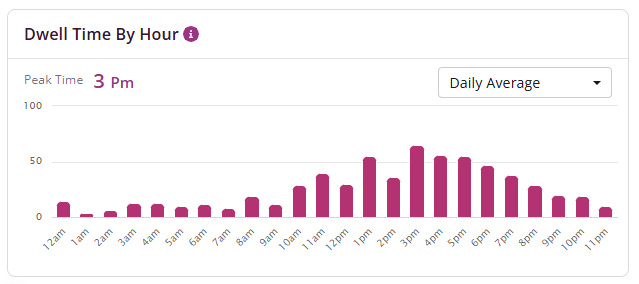
Across the Bloom platform network, guest dwell time data tells a clear story about how genuine guests engage with the restaurants they love. This is behavioral data reflecting how real guests actually spend their time, the kind of verified, observable signal that AI engines weight precisely because it cannot be produced by writing a better “About Us” page.

The practical implication: the connection between a restaurant’s guest intelligence infrastructure and its digital presence is what converts behavioral proof into Data Authority. This is the mechanism most restaurants are missing entirely, and the one that creates the widest competitive moat once established.

Signal 4: Cross-Platform Corroboration: The Consistency Multiplier

A claim that appears once on your own website is self-assertion. The same claim appearing consistently across multiple independent, authoritative platforms is corroborated fact. AI engines treat these two scenarios as categorically different levels of evidence.

When your signature dishes are mentioned on your website, your Google Business Profile, OpenTable reviews, Yelp, TripAdvisor, and food media (all describing the same experience in independently consistent terms) AI engines treat those dishes as established, trustworthy entity attributes. When the same information only appears in your own marketing materials, the AI assigns it lower confidence.

Cross-Platform Corroboration is why how a restaurant responds to reviews matters far beyond customer service optics. Every response in a consistent, recognizable brand voice (across multiple platforms, over time) actively builds the corroboration web that AI engines use to characterize the restaurant with confidence.

The compounding math: more platforms, multiplied by more specific, consistent language, multiplied by more authentic corroboration, equals higher Data Authority. This is not a project with a finish line. It is an ongoing operational discipline.

Signal 5: Recency Signal: The Data Asset That Decays Without Maintenance

Data Authority is not a permanent achievement. It is a living asset that grows with investment and decays with neglect.

AI engines treat recency as a proxy for accuracy. A restaurant’s hours, menu, ownership, and character change over time. An entity profile built on data from two years ago is inherently less reliable than one continuously refreshed with current, verified signals. This is why restaurants that invest in a strong launch and then go dormant lose AI discoverability ground even when their Google rankings hold steady.

Recency also explains why recent review velocity matters disproportionately. A restaurant with a strong volume of recent reviews signals current quality. AI engines interpret this freshness pattern as evidence that the information in its entity profile reflects what the restaurant actually is today, not what it was when it first got online.

The implication: building Data Authority is an operational posture, not a campaign. The restaurants sustaining AI discoverability are those treating their digital presence as a living system (one continuously fed with fresh, verified data from real guest interactions) rather than a static publication maintained infrequently.

Dynamic Discovery vs. Static Presence

Most restaurant websites are frozen in time. They reflect what the restaurant was when the site was last rebuilt, often two to four years ago. The menu has changed. The team has changed. The guest sentiment patterns have evolved. But the website still says what it said at launch.

AI engines are not frozen. They continuously update their understanding of what a restaurant is: pulling from new reviews, new citations, new behavioral signals. An entity profile built from stale, generic, self-reported information is progressively deprioritized against entities whose digital presence reflects current, verified reality.

This is the strategic gap between Static Presence and Dynamic Discovery:

❌ Static Presence
Losing Ground
✓ Dynamic Discovery
Winning
Website reflects what the restaurant was, not what it is today Digital presence continuously updated with current, verified information
“Great food and friendly service”, language that describes everyone Specific, verified claims drawn from real guest sentiment and real experience
Reviews answered inconsistently or not at all Every review responded to promptly, in a consistent and recognizable brand voice
No connection between in-venue guest data and digital presence Real guest interactions (visits, orders, sentiment) continuously enrich the entity profile
The same menu copy from three years ago Content that reflects current offerings, current accolades, current guest language
AI engines characterize the restaurant generically AI engines cite the restaurant by name as a confident, specific recommendation

The restaurants winning AI discoverability in 2026 are not the ones that launched the best website. They are the ones whose digital presence continuously reflects verified current reality, because they have built the infrastructure to connect their guest intelligence to their digital presence automatically.

The Discovery Flywheel: Why Data Authority Compounds

Here is the insight most SEO guides miss: for restaurants with the right infrastructure, Data Authority is not a linear investment with diminishing returns. It is a compounding flywheel.

Every verified guest interaction generates data. That data, when connected to a restaurant’s digital presence, builds the entity specificity, sentiment consistency, and behavioral proof that AI engines use to increase their recommendation confidence. Higher confidence drives more new guest discovery. More discovery brings more guests. More guests generate more verified interactions. The flywheel accelerates.

► THE DISCOVERY FLYWHEEL
①
More verified
guest interactions
→
②
Richer behavioral
& sentiment data
→
③
More specific, authoritative
entity profile
→
④
Higher AI engine
Data Authority
→
⑤
More new guest
discovery through AI
↻ Each revolution builds on the last, the flywheel accelerates
The compounding advantage: The restaurant that starts building this flywheel today will have a Data Authority profile in twelve months that a competitor starting tomorrow cannot replicate with a content sprint. Data compounds. Copy does not.

This is why the earliest movers in AI discoverability are pulling away from competitors at an accelerating pace. It is not that they’ve done more optimization work. It is that they started the flywheel earlier, and the compound effect of twelve months of verified data accumulation creates a gap that is genuinely difficult to close by working harder on the same tactics.

Corky’s Kitchen & Bakery understood this. By growing their guest intelligence infrastructure (dramatically expanding their guest profile database and generating thousands of new verified guest connections) they built the data asset that feeds the flywheel. More profiles meant more behavioral data, richer sentiment signals, and more authoritative entity characteristics across every platform where guests discover restaurants.

What AI-Trustworthy Restaurants Do Differently

The gap between restaurants with high Data Authority and those without it is not primarily a content gap. It is an infrastructure gap. The restaurants earning consistent AI recommendations are not producing more content or spending more on advertising. They have built a different kind of operating foundation, one that systematically converts real guest interactions into verified digital signals.

At the strategic level, the differentiators are consistent across every restaurant operating at the top of AI discoverability rankings:

  • They treat their guest intelligence as a living asset, not a static database. Every guest visit, every transaction, every review is a data point that enriches the entity profile that AI engines use to evaluate their recommendation confidence.
  • They maintain a consistent brand voice across every review platform, treating every response as an opportunity to reinforce specific, verifiable entity claims rather than generic customer service acknowledgments.
  • They connect in-venue behavioral data to their digital presence, closing the loop between what happens inside the restaurant and what AI engines can verify externally. This behavioral corroboration is the competitive moat no competitor can build by writing better copy.
  • They operate with recency discipline: maintaining current, accurate information across every platform where guests and AI engines look, treating staleness as an active competitive liability rather than a background maintenance issue.
  • They build entity specificity as an ongoing practice: continuously replacing vague marketing language with specific, verifiable claims drawn from real guest feedback, real accolades, and real operational facts that distinguish the restaurant from every generic competitor description.

The common thread across all five: these are not content strategies. They are operational postures powered by connected guest intelligence. The infrastructure that makes all five sustainable at scale is a platform that unifies guest data from every touchpoint (visits, orders, reservations, sentiment) and translates it into continuously updated digital signals that AI engines recognize as authoritative.

Bloom Intelligence: The Infrastructure Behind AI-Trustworthy Restaurants

Bloom’s unified guest intelligence platform automatically builds all five Data Authority signals (from verified behavioral data to cross-platform reputation consistency) without adding work to your team.

  • WiFi, POS, reservations & online ordering unified into verified guest profiles
  • AI reputation automation responds to every review in your brand voice, at scale
  • Dynamic Discovery infrastructure that continuously refreshes your entity profile

Data Authority in Practice

Case Study

Roka Akor: Top-Ranked in AI Search for Their Category

Roka Akor (a fine dining Japanese steakhouse group) earned top placement in AI search for their category through a digital presence built on verified data rather than content volume. Their entity profile reflects what they genuinely are: a specific, distinctive, multi-source corroborated restaurant identity that AI engines can characterize with confidence.

The result translated directly to business outcomes, measurable increases in discoverability-driven reservations and new guest acquisition. Not estimated impressions. Guests who arrived having received a specific AI recommendation, with specific expectations, who experienced exactly what the entity profile described.

Key Outcome: Measurable increases in AI-driven reservations and new guest acquisition
Case Study

Beachside Hospitality Group: Reputation as a Discovery Engine

Beachside Hospitality Group used AI reputation automation to save 15–20 hours weekly on review management while simultaneously building the review response consistency that feeds Data Authority across all discovery channels. When every review is responded to (not just the negative ones) in a consistent, recognizable brand voice, the cumulative effect is a sentiment signal that grows stronger with each passing month.

The Marketing Director’s assessment: Bloom’s guest intelligence and automation have driven measurable revenue growth for our group. The connection is direct: reputation management, executed at scale and with consistency, is not a customer service function. It is a discovery infrastructure investment that pays compounding dividends over time.

Key Outcome: 15–20 hours saved weekly + measurable revenue growth through consistent Data Authority building
Case Study

Corky’s Kitchen & Bakery: Building the Data Asset That Feeds the Flywheel

Corky’s Kitchen & Bakery (an 18-location full-service chain) grew their guest intelligence database dramatically, adding tens of thousands of new verified guest profiles. This is Data Authority at the infrastructure level: each new profile is a real guest interaction, each interaction enriches the behavioral and sentiment data that flows into their entity characteristics, and each enrichment increases the confidence with which AI engines can recommend them over competitors with thinner data profiles.

The published results: 38% recovery of at-risk guests through automated win-back campaigns, significant cost savings from platform consolidation, are the marketing outcomes. The compounding AI discoverability benefits of having a richer, more verified, more current entity profile across every platform where guests discover restaurants are the structural advantage that continues to grow long after the initial infrastructure investment is made.

Key Outcome: 38% at-risk guest recovery + tens of thousands of new verified profiles feeding the Data Authority flywheel

Frequently Asked Questions

Voice and AI search optimized answers to the questions restaurant operators and marketers ask most about AI engine discoverability.

What is Data Authority and why does it matter for restaurant SEO?

Data Authority is the aggregate of verified, specific, and multi-source corroborated data signals that AI engines use to evaluate how trustworthy and citable a restaurant entity is. Restaurants with high Data Authority appear in ChatGPT responses, Google AI Overviews, and voice search results. Those without it remain invisible to AI-driven discovery, regardless of their food quality or traditional search ranking.

How do AI engines like ChatGPT decide which restaurant to recommend?

AI answer engines synthesize restaurant recommendations from entity profiles built across multiple sources: review platforms, websites, behavioral data, and verified business information. They prioritize restaurants with specific, consistent, multi-source corroborated data over those with generic marketing copy. A restaurant whose identity can be characterized precisely and confidently, from multiple independent sources, earns recommendations. Ambiguous entities get deprioritized or skipped entirely.

What is AEO and how is it different from traditional restaurant SEO?

AEO (Answer Engine Optimization) is the practice of structuring restaurant content and data so AI engines can extract, synthesize, and cite it directly as a recommendation. Traditional SEO drives clicks to a website page. AEO drives citations in AI-generated answers, often a more influential outcome because guests frequently act on a direct AI recommendation without further research. Both are necessary in 2026; they serve different discovery moments in the guest journey.

Why do my restaurant’s online reviews matter for AI discoverability?

Reviews are among the highest-impact Data Authority signals available to restaurants. They provide multi-platform sentiment consistency that AI engines interpret as corroborated quality evidence, specific guest-language entity attributes that AI engines extract as citable characteristics, and recency signals that demonstrate the restaurant reflects current quality. A systematic, brand-consistent review response program simultaneously builds guest engagement signals and enriches the entity profile across every platform where AI engines look.

What does Dynamic Discovery mean for a restaurant’s online presence?

Dynamic Discovery is the state in which a restaurant’s digital presence continuously reflects verified current reality: updated with fresh guest sentiment, current operational data, and ongoing behavioral proof from real interactions. The opposite is a Static Presence: a website and digital footprint that reflects what the restaurant was years ago, while AI engines continuously update their entity evaluations. Static Presence loses AI discoverability ground over time even when traditional search rankings hold.

How long does it take to build Data Authority for a restaurant?

Data Authority is a compounding asset that builds over months, not weeks. Early investments grow disproportionately over time because the five signals reinforce each other: better entity specificity attracts more reviews, more consistent reviews build higher sentiment corroboration, higher corroboration attracts more AI citations, and more citations drive more guest interactions. The most significant competitive cost is delay, a restaurant that starts building Data Authority six months later than a competitor will face a gap that cannot be closed by working harder on the same tactics.

How does verified guest data help a restaurant rank on AI search engines?

AI search engines trust verified data over self-reported claims because verification is structurally more reliable than assertion. When real guest visit patterns, real transaction behavior, and real multi-platform review sentiment all tell the same coherent story about a restaurant, the AI engine can recommend that restaurant with a confidence level it cannot achieve for a restaurant whose digital presence is built primarily on its own marketing copy.

Is it worth investing in AI search optimization for my restaurant in 2026?

Yes, and the window for first-mover advantage is narrowing in most markets. AI answer engine usage for restaurant discovery is growing rapidly across every guest demographic. Restaurants that build Data Authority now establish entity profiles that compound in AI knowledge graphs over time, creating a structural discovery advantage over competitors who start later. The optimization investment is relatively modest compared to the compounding discovery benefit. The most expensive decision is waiting.

The Data Advantage Compounds. Start Building It Today.

Two restaurants. Same city. Same category. One recommended by ChatGPT. The other invisible.

The difference is not food quality. It is not marketing budget. It is not SEO execution in any traditional sense.

It is Data Authority: the verified, specific, multi-source corroborated data that AI engines use to characterize a restaurant entity with enough confidence to recommend it by name. And Data Authority is not a campaign you run. It is a flywheel you build: one that compounds with every guest interaction, every verified review, every authentic response written in a consistent brand voice, every enrichment of the entity profile that AI engines continuously re-evaluate.

The restaurants that are invisible on ChatGPT today are not bad restaurants. They are restaurants whose data has not yet told AI engines who they are in language those engines can understand and trust.

The five signals are clear. The strategic imperative is documented. The only variable is when you start.

► HOW BLOOM BUILDS DATA AUTHORITY AUTOMATICALLY

Bloom Intelligence: Your Restaurant’s Discovery Loop

Bloom Intelligence connects guest data from WiFi visits, POS transactions, reservations, online orders, and review platforms into a unified guest intelligence layer, then uses that verified data to continuously strengthen the discovery signals that AI engines, Google, and voice assistants use to build recommendation confidence.

  • Unified Guest Intelligence: Every touchpoint captured into verified guest profiles
  • AI Reputation Automation: Consistent brand-voice responses across every platform, at scale
  • Dynamic Discovery Infrastructure: Real guest data continuously feeding your entity profile
  • Discovery Loop Technology: The flywheel that converts today’s guest into tomorrow’s AI recommendation

Key Takeaways

  1. AI engines are synthesis systems, not retrieval systems. They recommend the most trustworthy restaurant entity, not the highest-ranking page.
  2. Data Authority is the new competitive currency. The aggregate of verified, specific, multi-source corroborated signals determines who gets recommended.
  3. Five signals build Data Authority: Entity Specificity, Sentiment Consistency, Behavioral Proof, Cross-Platform Corroboration, and Recency.
  4. Behavioral Proof cannot be faked. Visit patterns, dwell time, and return frequency are the signal AI engines weight precisely because it cannot be manufactured.
  5. Static Presence loses ground continuously. AI engines update constantly; restaurants that don’t are progressively deprioritized.
  6. Data Authority is a compounding flywheel. The restaurant that starts building today will have a profile no competitor can replicate with a content sprint six months from now.
  7. The most expensive decision is waiting. First-mover advantage in AI discoverability compounds, the gap grows with every month of inaction.

8 in 10 Restaurant Guests Never Come Back. Here’s What That’s Costing You.

Key Takeaway

Eight in ten restaurant guests who have ever visited your location have never returned, creating a measurable revenue gap called the LTV gap. Restaurants that unify guest data across WiFi, POS, and reservations into a single customer data platform, segment guests by behavioral lifecycle stage, and automate personalized interventions recover an average of 38% of at-risk guests before they churn, generating $53,000+ in recovered revenue per location annually.

Think about your five busiest regulars. The ones who come in every week without fail, know your menu by heart, and bring friends. Now think about how you market to them.

Odds are, you’re sending them the same email blast you’re sending someone who walked in once six months ago and never came back. Same message. Same timing. Same offer.

That gap (between how well you know your regulars and how little that knowledge shapes your marketing) is the most expensive mistake in the restaurant business. It has a name: the LTV gap. And across millions of guest profiles in Bloom’s restaurant network, it’s draining more revenue from operator locations than almost any other single factor.

Here’s exactly what the data reveals and what the restaurants winning on guest retention are doing differently.

What Restaurant Guest Lifetime Value Actually Means, and Why Most Operators Get It Wrong

Guest lifetime value isn’t a textbook concept. It’s the most important number in your restaurant that almost nobody tracks.

The definition is simple: LTV is the total revenue a guest generates across every visit and online order, for as long as they keep coming back. It is the product of three variables:

Most restaurant operators track covers, average check, and table turns. These are operational metrics. They tell you what’s happening tonight. LTV tells you whether your business is getting stronger or quietly eroding, month over month, location by location.

The reason most restaurants get this wrong comes down to data architecture. To calculate LTV, you need to connect a guest’s identity across every visit, every transaction, every review, and every online order. A POS system gives you transaction data. It cannot tell you who placed that order, whether they’re coming back, or what they’re worth over the next three years.

“Your POS knows what Table 12 ordered. It doesn’t know who’s sitting there, whether they’ve been coming for three years, or that their visit frequency just dropped by half.”

That’s not an analytics problem. It’s a data architecture problem, and the restaurants that solve it have a structural advantage over every competitor still flying blind.

What is guest lifetime value in a restaurant?

Guest lifetime value (LTV) is the total revenue a guest generates across all visits throughout their entire relationship with a restaurant. It is calculated by multiplying visit frequency by average spend per visit by the duration of the guest relationship. LTV is the single metric that determines whether a restaurant’s guest base is building equity or quietly eroding, and it is invisible without a unified customer data platform that connects WiFi behavior, POS transactions, and reservations into identity-resolved guest profiles.

The LTV Gap: What the Data Reveals About Your Guest Base

Across millions of guest profiles in Bloom’s restaurant network, a pattern emerges that operators find genuinely startling the first time they see it.

8 in 10
Guests Visit Once, Never Return

2.1×
Average Visits for a Tracked Guest

38%
At-Risk Guests Recovered Through Automation

The average tracked guest visits just over twice. And nearly eight in ten guests with any visit history, visited once and never returned.

Eight in ten. Let that land for a moment. The overwhelming majority of guests your restaurant captures data on are, statistically, gone. They walked in, they had an experience, and you never saw them again. You may have sent them a birthday email. You probably didn’t send them anything designed specifically to bring them back within the window when a second visit was still likely.

This distribution has a direct P&L consequence. If your marketing treats all guests identically (the one-time visitor and the three-year regular get the same message) you are optimizing for the wrong variable. You are spending marketing budget on an audience that is statistically unlikely to return, while under-investing in the relationships that are actually driving your revenue.

The question isn’t whether you have an LTV gap. Every restaurant does. The question is how large it is, and whether you can see it.

How do you calculate customer lifetime value for a restaurant?

Restaurant guest LTV = (average visit frequency per month) × (average spend per visit) × (average relationship duration in months). A guest who visits twice a month at $45 per visit for 36 months has an LTV of $3,240. The challenge is that this calculation requires connecting guest identity across WiFi visits, POS transactions, and reservations, which requires a restaurant customer data platform, not a POS system alone.

The High-Frequency Guest: Your Most Valuable and Most Invisible Asset

Among millions of guest profiles in Bloom’s network, roughly 234,000 have visited five or more times. That is a small percentage of the total guest base. It is not a small percentage of total revenue.

High-frequency guests (the ones who have crossed the loyalty threshold) share behavioral patterns that make them disproportionately valuable. They visit more often, compounding LTV faster than any campaign you could run. They spend more per visit because they know the menu. They refer new guests through reviews, word of mouth, and direct recommendations. And they are significantly more resilient to a bad experience, one off night doesn’t end a three-year relationship the way it ends a first visit.

The irony is that most restaurant marketing ignores these guests entirely. The assumption is: they’re already coming in, so they don’t need marketing. That assumption is exactly backwards.

High-frequency regulars are worth protecting with the same discipline you’d apply to your most important vendor relationship, because they are your most important revenue relationship. And they are invisible without unified guest data.

How much is a loyal restaurant regular worth?

A loyal restaurant regular who visits twice a month at an average spend of $45 generates $1,080 per year in direct revenue. Over three years, that relationship is worth $3,240. Over five years, $5,400. Multiply 200 high-frequency regulars at a single location and the retention economy exceeds $648,000 in cumulative 3-year value, without acquiring a single new guest.

What Destroys Guest LTV: The Four Silent Revenue Killers

Guest LTV doesn’t collapse dramatically. It erodes quietly, through patterns that are nearly invisible without behavioral data. Here are the four mechanisms draining the most revenue, and why most restaurants miss all of them.

Silent Churn

Guests don’t announce they’re leaving. A regular who visits twice a month starts coming once a month, then every six weeks. Four months later, you’ve lost the relationship, and never knew it was happening. This is the default state for restaurants without predictive guest intelligence.

The Undifferentiated Blast

Sending the same campaign to your most loyal guests and your most recent first-timers actively signals to your regulars that you don’t know them. The guest who has been coming in every Thursday for two years doesn’t need a “first-time visitor” offer. They need recognition. Undifferentiated marketing is the fastest way to erode the emotional component of guest loyalty.

Unmanaged Reputation

A 2-star Google review that goes unanswered for three weeks doesn’t just reflect one bad experience, it signals to every prospective guest that nobody’s paying attention. That review compounds in search results, shaping first impressions for guests who haven’t met you yet. Bloom responds to every review in the brand’s voice, in minutes, not weeks.

The Missed Intervention Window

Between “guest frequency is declining” and “guest is gone” there is a window. Behavioral data shows visit frequency slips before churn, often weeks before a guest disappears entirely. That window is the most valuable moment in guest lifecycle management. Most restaurants miss it entirely, not because they don’t care, but because they can’t see it without unified behavioral data.

How to Increase Restaurant Guest Lifetime Value: The Intelligence-Driven Approach

LTV growth is not a campaign. It is a system. Here is how the restaurants that do this well actually build it, and what makes each step compoundingly more valuable than the last.

1
Unify Your Guest Data

You cannot manage LTV you cannot see. The first requirement is a unified guest profile connecting WiFi visit data, POS transaction history, online ordering behavior, website opt-ins, reservation records, and review sentiment into a single identity-resolved record. In Bloom’s restaurant network, WiFi-based guest capture is the single largest data source, generating passive guest profiles from everyone who walks in and connects, with no loyalty app opt-in required.

2
Segment by LTV, Not by List

RFM segmentation (Recency, Frequency, Monetary) turns a unified guest database into actionable intelligence. Every guest in Bloom’s platform is automatically scored and placed into a dynamic segment that updates continuously based on actual behavior, not static rules. When a Regular’s visit frequency drops below their established pattern, they move to Cooling Off automatically, no manual review required.

⭐ Super GuestsHighest frequency, spend & tenure
✓ RegularsStable core, retain & reward
★ New GuestsVisit 2 is the highest-leverage moment
↓ Cooling OffFrequency declining, intervene now
⚠ At-Risk38% recovered with automation
: LostReactivation still possible

3
Automate the Lifecycle

Every stage of the guest lifecycle should have an automated touchpoint designed to extend LTV. Post-visit thank-you messages that trigger a return. Birthday recognition using actual visit history to personalize the offer. VIP acknowledgment when a guest crosses the Super Guest threshold. Win-back sequences that deploy at the first sign of declining frequency. None of these require manual execution. They run continuously, at scale, personalized to each guest’s actual profile.

4
Intervene Before Churn

Predictive guest scoring in Bloom’s platform identifies the behavioral signatures that precede churn (declining visit gaps, reduced spend per visit, shifted daypart patterns) and flags at-risk guests before they’re gone. The intervention happens in the window when it still matters: before the relationship ends, not after.

5
Measure and Prove the LTV Impact

Closed-loop attribution connects every campaign send to a return visit and a transaction. This is not estimated ROI. Campaign → guest walks back in → transaction recorded → revenue attributed. The chain is complete. This is how you know the system is working, and how you prove LTV growth to ownership with data that cannot be questioned.

What data do I need to track restaurant guest lifetime value?

Tracking restaurant guest LTV requires connecting at least three data sources: visit behavior (from WiFi or foot traffic data), transaction history (from POS or online ordering), and guest identity (email or device-level resolution). Adding reservation data and review sentiment creates a more complete picture. A restaurant customer data platform (CDP) is the system that connects these sources into unified guest profiles. A POS system alone captures only transaction data and cannot build or track LTV.

What $53,000+ in Recovered Revenue Actually Means for LTV

The math behind Bloom’s average revenue recovery per location starts with the at-risk guest pool.

At a typical location, a meaningful percentage of the guest base is in declining-frequency territory at any given time. Some are on their way to Cooling Off. Some have already crossed into At-Risk. Without an automated intervention system, most of them churn silently, the restaurant never knew they were about to leave.

Bloom’s at-risk campaigns (triggered automatically when behavioral patterns indicate declining engagement) recover 38% of flagged guests within the attribution window. Those aren’t one-time visits. Each recovered guest re-enters the LTV compounding engine. They come back once, and then they come back again. Their relationship with your brand resumes.

Case Study
Corky’s Kitchen & Bakery: 18 Locations
38%

At-risk guest recovery rate
+50%

Marketing database growth
60K

New guest profiles added

Automated win-back campaigns running continuously across all 18 locations, no manual execution, no campaign manager required. Each recovered guest re-entered the LTV compounding engine.

“The question isn’t whether your at-risk guests can come back. It’s whether you’re asking them to: at the right moment, with the right message, automatically.”

Every recovered guest has LTV implications extending well beyond the immediate return visit. A guest who was worth $1,080 per year, churned for three months, and was recovered through an automated campaign brings back not just one visit but a resumed trajectory. The flywheel restarts.

How do restaurants increase customer lifetime value?

Restaurant guest LTV increases through five primary levers: converting first-time guests to second visits (the highest-leverage moment in the lifecycle), increasing visit frequency through personalized behavioral campaigns, extending relationship duration through proactive churn prevention, growing average spend through preference-based personalization, and recovering at-risk guests through automated win-back campaigns that trigger at the precise moment behavioral patterns indicate declining engagement. Bloom’s platform automates all five simultaneously.

What a Healthy Restaurant Guest Base Actually Looks Like

There is no universal LTV benchmark that applies to every restaurant segment. A fine dining guest LTV looks nothing like a fast casual guest LTV. But there are structural health signals that apply across the board, and that Bloom’s Command Center surfaces in a single executive view.

In a high-performing guest base, all of these trend in the right direction simultaneously:

  • Visit frequency is rising across the active guest base, more return visits per month, per location
  • The proportion of guests in At-Risk and Lost segments is declining month-over-month
  • The high-frequency guest pool is growing as a percentage of the total base
  • Recovery rate on at-risk campaigns is measurable, tracked, and improving over time
  • New guest-to-Regular conversion rate is tracked and actively optimized: visit 2 is the biggest lever

In Bloom’s Command Center, these signals are visible in a single executive view, no spreadsheets, no analyst required. The platform surfaces which locations have elevated at-risk ratios before they show up as declining covers on a P&L. It benchmarks your metrics against the broader restaurant network so you know not just how you’re performing, but how you’re performing relative to comparable operations.

The compounding advantage is real. Every month the platform runs, the behavioral data gets richer, the predictive models get more accurate, and the automated campaigns get more precisely timed. LTV intelligence is not static, it compounds, exactly like the guest relationships it is designed to protect.

The 13x Guest: How Restaurant Data Analytics Reveals Your Most Valuable Customers

Key Takeaway

Your most loyal restaurant guests spend 13 times more than first-time visitors, but most restaurants can’t identify, retain, or replicate them because their guest data is trapped in disconnected systems. A unified customer data platform that connects WiFi, POS, online ordering, reservations, and review site data into a single guest profile transforms fragmented information into a full-stack marketing flywheel: powering AI discoverability, personalized automation, and reputation management that attracts new high-value guests while protecting the ones you already have.

Somewhere in your restaurant right now, there’s a guest who has visited more than ten times. They’ve spent an average of $576 across those visits. They leave reviews. They bring friends. They order online on Tuesdays and dine in on Saturdays. They are, by every measurable standard, the most important person in your business.

And most restaurants have no idea who they are.

Not because the data doesn’t exist, it does. Your POS has their transaction history. Your WiFi captured their email months ago. Your reservation system knows their preferred party size. Google has their 4-star review from last March. The problem is that none of these systems talk to each other. So instead of seeing one high-value guest with a rich, actionable profile, you see five disconnected data points floating in five different dashboards.

But here’s what most platforms miss entirely: the data sitting in those systems doesn’t just tell you about the guests you already have. It tells you exactly how to attract the next wave of guests: by revealing, in your customers’ own words, what makes your restaurant worth visiting. And in 2026, that language is the fuel that determines whether AI search engines, voice assistants, and traditional search results send new guests to your door or your competitor’s.

This is the full-stack analytics opportunity. Not just retention. Not just marketing. A complete flywheel (from discoverability to landing to expansion to retention) powered by the same unified guest data.

The Math That Changes Everything

Multi-channel guest data reveals a consistent and dramatic spending pattern when you connect it across sources. Guests who visit just once spend an average of $36. Get that same guest to come back two to four more times, and their average spend jumps to $88. By the time a guest reaches ten or more visits, their average cumulative spend climbs to $576.

That’s not a 2x improvement. That’s a 13x multiplier from a single visit to a loyal regular.

First Visit1 visit
$36
$36avg. spend
Returning2–4 visits
$88
$88avg. spend
Loyal Guest5–9 visits
$241
$241avg. spend
Super Guest10+ visits
$576
$576avg. spend
13×
multiplier from a single first visit to a loyal regular, driven by frequency, not higher ticket averages.

The guests with ten or more visits who also have linked transaction data represent a small fraction of total guests, yet they account for nearly a quarter of all tracked revenue. A tiny group of people driving an outsized share of your top line.

The restaurant industry has talked about the value of “regulars” for decades. Every operator knows intuitively that repeat guests matter. But there’s a canyon between knowing that regulars are important and being able to identify exactly which guests are on the path to becoming one, which are starting to drift away, and what specific action will keep them coming back.

And there’s an even wider canyon between retaining the guests you have and systematically attracting new ones who look just like your best customers. Both canyons are data problems. And solving them requires more than a better dashboard.

Q: How much more do repeat restaurant guests spend compared to first-time visitors?

Multi-channel guest data shows that restaurant guests who reach 10 or more visits spend an average of $576 cumulatively: 13 times more than the $36 average of a single-visit guest. Guests who return 2–4 times average $88 in total spend. This 13x multiplier demonstrates that guest retention and frequency growth are the highest-leverage revenue strategies for restaurant brands.

Why Fragmented Data Creates Expensive Blind Spots

Most multi-location restaurant brands have invested in technology: a POS system, an online ordering platform, WiFi marketing, a reservation system, and they’re accumulating reviews across Google, Yelp, OpenTable, and TripAdvisor. The issue is that each system captures a different slice of the guest, and none captures the whole picture.

✕ Siloed Systems
📶 WiFi: “logged in 3× this month”
💳 POS: “spent $47 Tuesday night”
⭐ Reviews: “left a 2-star review”
🍽️ Reservations: “table for 4”
📱 Online: “2 delivery orders”
✓ Unified Guest Profile
Sarah M.: 12 visits, $684 LTV
Visits declining: weekly → monthly
Recent 2-star review: “slow service”
Prefers: Sat dine-in, Tue delivery
⚠️ Status: At-risk: trigger win-back

Each system, on its own, tells a partial story. And partial stories lead to partial decisions. This fragmentation creates four specific blind spots that directly impact revenue, including one that most restaurants don’t even realize exists.

👻
Silent Churn

Without visit frequency and spending data in the same view, a guest who’s been visiting weekly for six months can quietly drop to once a month without anyone noticing. By the time their absence becomes obvious, they’ve already found another spot.

💔
Disconnected Sentiment

If review data lives in one silo and guest profiles in another, you have no way of knowing whether an unhappy reviewer is a first-time visitor you’ll never see again, or a high-value regular whose next visit hangs in the balance.

📢
Batch-and-Blast Marketing

Without unified data, everyone gets the same email and the same offer. A first-time visitor receives the same 15%-off coupon as a loyal guest who’s spent hundreds. At best, it’s inefficient. At worst, it devalues your best relationships.

🔍
Invisible Guest Language

Reviews contain the exact words guests use to describe your restaurant: “best burger around,” “perfect for date night.” If that language lives only on review sites but not on your website, you’re handing your AI discoverability to platforms you don’t control.

Q: Why is fragmented restaurant data a problem for guest retention?

Fragmented data across POS, WiFi, reservations, and review platforms creates blind spots that directly reduce revenue. Restaurants cannot identify high-value guests before they churn, cannot connect negative reviews to spending behavior, default to generic batch-and-blast marketing, and miss the opportunity to use verified guest language for AI discoverability. Unifying these data sources into a single customer data platform eliminates these blind spots.

The Unified Guest Profile: Where Analytics Becomes Intelligence

The solution isn’t more data, restaurants are drowning in data. The solution is connected data, structured, clean, and unified around the individual guest. This is what a customer data platform built for restaurants is designed to do.

It ingests data from every guest touchpoint (WiFi logins, website interactions, online orders, POS transactions, reservations, review sites, and surveys) and resolves it into a single profile per guest. That profile doesn’t just store information. It creates context.

“When you know that a guest first connected through your WiFi, then placed three online orders over two months, then started dining in every other week, and most recently left a 4-star review mentioning slow service, you don’t just have data. You have a story. And that story tells you exactly what this guest needs from you next.”

But the intelligence doesn’t stop at the individual level. When you aggregate hundreds of thousands of guest profiles (their behaviors, transactions, and sentiments) patterns emerge that power every stage of the guest lifecycle. Not just retention. Acquisition too.

This is the difference between data analytics and guest intelligence. Analytics tells you what happened. Intelligence tells you what to do about it, across every channel and every stage of the funnel.

6+
Data Sources Unified
1
Profile Per Guest
360°
Behavioral Context

From Insight to Action: The Full-Stack Marketing Flywheel

When clean, structured, multi-channel guest data feeds an AI engine, the system doesn’t just segment and report. It suggests and acts across four distinct stages (discover, land, expand, and retain) creating a compounding flywheel where each stage feeds the next.

The Guest Intelligence Flywheel
01
Discover

Mine verified guest language to fuel AI search, voice assistants, and website discoverability.

02
Land

Convert website visitors into known guests through optimized WiFi, widgets, and ordering flows.

03
Expand

Personalized AI automation turns first-timers into repeat guests and cross-channel buyers.

04
Retain

Proactive reputation management and loyalty workflows protect your most valuable relationships.

Stage 1: Discover: Reverse-Engineering Relevancy From Verified Guest Data

Turning guest language into AI discoverability signals.

Before a guest walks through your door, they have to find you. In 2026, “finding you” increasingly means asking an AI: whether it’s a Google search, a voice query to Siri or Alexa, or a conversational AI recommending restaurants. The algorithm is looking for the same thing: verified, structured, contextually rich signals that prove your restaurant is relevant.

This is where most restaurant marketing falls apart. Brands spend thousands on generic website copy written by agencies who’ve never eaten there. Meanwhile, their actual guests are writing hundreds (sometimes thousands) of reviews that describe the experience in vivid, specific, authentic language.

💡 Key Insight

Guest review language is a discoverability asset. Phrases like “best burger around,” “great vegetarian options,” and “perfect for date night” are the exact terms real people use when they search, ask a voice assistant, or query an AI engine. A platform that unifies review data with transaction and behavioral data can identify which themes and phrases your highest-value guests associate with your brand, and surface them on your website where AI engines can find and trust them.

When an AI engine crawls your site and finds language that matches the patterns in hundreds of verified reviews across Google, OpenTable, Yelp, and TripAdvisor, it doesn’t just index your page, it trusts your page. Because the signal is consistent across first-party and third-party sources. This is reverse-engineered relevancy, and it turns your guest data into a discoverability engine.

Stage 2: Land: Converting Visitors Into Known Guests

Turning traffic into capturable, marketable guest profiles.

Discoverability drives traffic, but traffic without conversion is just a vanity metric. When a potential guest lands on your website (from an AI recommendation, a search result, or a social ad) the experience they encounter determines whether they become a known guest or a bounce statistic.

This is where WiFi landing pages, website widgets, and online ordering flows become critical capture points. A platform built on unified guest data can optimize these touchpoints based on what’s actually working: which WiFi landing page offer generates the most first-time email captures, which widget placement drives the highest conversion to online orders.

And the content on those pages? It’s informed by the same guest intelligence that powers discoverability. If your highest-rated reviews consistently mention “date night” and “craft cocktails,” your landing page shouldn’t lead with “family-friendly dining.” The data tells you what resonates. The platform helps you act on it.

Q: How does a customer data platform help restaurants convert more website visitors?

A restaurant customer data platform optimizes website conversion by using unified guest data to identify which WiFi landing pages, widget placements, and online ordering flows generate the most first-time guest captures. It also ensures that website messaging reflects the language and themes that resonate most with high-value guests, based on verified review data and transaction behavior, aligning discoverability signals with conversion content.

See the Flywheel In Action

Turn Guest Data Into a Discoverability & Retention Engine

See how Bloom Intelligence unifies WiFi, POS, online ordering, reservations, and review data into AI-powered marketing automation that attracts, converts, and retains your most valuable guests.

1,000+ locations
4.9★ Google
99.3% retention

Get Your Free Demo

Stage 3: Expand: Turning First-Timers Into Repeat Guests

Where the 13x multiplier comes to life through AI-powered automation.

This is where the 13x multiplier comes to life. A guest whose visit frequency is declining gets a personalized win-back message, not a generic coupon, but a message timed to their typical visit cadence, referencing the location they visit most, offering something relevant to their order history. The AI doesn’t guess. It calculates.

A new guest who’s visited twice in their first month gets an automated nurture sequence designed to push them toward that critical third and fourth visit, the inflection point where average spend jumps from $36 to $88 and the probability of long-term loyalty increases dramatically.

A guest who placed their first two orders online gets an SMS inviting them to dine in, with a personalized message that references what they ordered and suggests a complementary experience. The goal isn’t just another transaction. It’s expanding the relationship across channels: online to in-store, weekday to weekend, solo to group.

This is what AI-powered marketing automation looks like when it has access to visit frequency, spending data, capture source, channel behavior, and sentiment, all in one profile. Every message is contextual. Every offer is informed by real behavior.

Weekly Intelligence Brief

Get Restaurant Intelligence Delivered Weekly

Join 30,000+ restaurant operators receiving data-driven insights, AI marketing strategies, and guest retention tactics every week. No fluff, just actionable intelligence.


Stage 4: Retain: Protecting Your Most Valuable Relationships

Proactive reputation management meets loyalty intelligence.

A super guest with 30-plus visits doesn’t need a coupon to come back. They need to feel valued. So instead of 15% off, they get early access to a new menu item, a personal note from the general manager, or an invitation to an exclusive tasting event. The AI knows the difference because the data makes it obvious.

But retention isn’t just about rewarding loyalty. It’s about catching problems before they become defections.

When review data from Google, Yelp, OpenTable, TripAdvisor, Facebook, and first-party surveys flows into the same system as guest behavioral data, reputation management transforms from a reactive task into a strategic retention capability.

A high-value guest who leaves a negative review triggers an immediate, personalized recovery workflow, not a generic “we’re sorry” reply, but a response that acknowledges their loyalty and offers a specific remedy. AI drafts the response. A human reviews and approves it. The guest feels heard. The relationship is preserved.

🔄 The Flywheel Closes

That same guest’s recovery story (their sentiment shift from frustrated to appreciated) becomes another data point that strengthens the system. Their positive follow-up review adds to the corpus of verified language that fuels discoverability for the next wave of guests. Retention feeds discovery. Discovery feeds landing. The flywheel compounds.

Q: How does AI-powered reputation management help retain high-value restaurant guests?

AI-powered reputation management connects review data from Google, Yelp, OpenTable, TripAdvisor, and Facebook with individual guest profiles containing visit frequency and spending history. When a high-value guest leaves a negative review, the system triggers a personalized recovery workflow that acknowledges their loyalty history and offers specific remedies, not generic apologies. AI drafts contextual responses for human review, enabling rapid recovery that preserves relationships with a restaurant’s most valuable guests.

The Operational Flywheel: Data That Improves the Experience Itself

The most overlooked application of multi-channel guest analytics isn’t marketing, it’s operations. When you connect transaction data, visit patterns, and sentiment at scale, patterns emerge that no single location manager could see on their own.

Friday lunch service at one location has seen a steady decline in average check size over six weeks, and negative review mentions of “rushed” and “cold food” have ticked up at that same location during that window. That’s not a marketing problem. That’s an operational problem. And the data surfaced it before it became a P&L problem.

“Guest data doesn’t just fuel marketing and discoverability. It informs staffing decisions, menu optimization, and service improvements. And those improvements generate better guest experiences, which generate better reviews, which generate stronger discoverability signals.”

This is what separates a platform from a point solution. Every new guest who connects through WiFi, every POS transaction that links to a profile, every review that adds sentiment context, it all compounds. The brands that onboard today benefit from the intelligence built by every brand that came before them.

~25%
Revenue From Super Guests
38%
Lost Guest Recovery Rate
20+
Hours Saved Weekly

Clean Data in 2026: The Competitive Advantage No One’s Talking About

AI models are only as good as the data they consume. Feed an AI fragmented, dirty, siloed data and you’ll get generic, unreliable outputs. Feed it clean, structured, multi-channel guest data with real context (transactions, behavior, and sentiment unified in a single profile) and you get a system that can genuinely think on behalf of your marketing team.

This applies to everything: the quality of your AI-generated email campaigns depends on the richness of your guest profiles, the accuracy of your churn predictions depends on real visit frequency data, and the effectiveness of your website’s discoverability depends on whether the language on your pages reflects verified guest experience or generic marketing copy.

In 2026, the restaurants that win won’t be the ones with the biggest marketing budgets. They’ll be the ones with the cleanest data infrastructure.

Verified EmailsReal addresses from WiFi, ordering, and reservations, not purchased lists.
Real Transaction DataActual spend amounts and items from POS integration, not estimates.
Actual Visit CountsTrue frequency data from WiFi and POS, not modeled assumptions.
Genuine Guest SentimentReal reviews from Google, Yelp, OpenTable, and first-party surveys.
Cross-Channel BehaviorOnline ordering, dine-in, delivery, unified per guest profile.
Verified Guest LanguageAuthentic phrases from reviews that fuel AI discoverability.

Q: Why is clean data important for restaurant AI marketing in 2026?

AI marketing effectiveness depends entirely on data quality. Restaurants with clean, structured, multi-channel guest data (verified emails, real transaction amounts, actual visit counts, and genuine review sentiment) get AI systems that deliver accurate churn predictions, personalized automation, and effective discoverability optimization. Restaurants relying on fragmented or estimated data get generic, unreliable AI outputs that waste marketing spend and miss retention opportunities.

Your 13x Guests Are Waiting

Every restaurant has guests on the verge of becoming regulars. Guests who’ve visited twice and are deciding whether to come back a third time. Guests who’ve been coming every week but skipped the last two. Guests who love your food but had one bad experience that’s making them hesitate.

And somewhere out there, a potential guest is asking their phone: “What’s the best place for a date night near me?” The answer depends on whether your data (your real guest data, from real transactions and real reviews) has made its way into the signals that AI engines trust.

Because the full opportunity isn’t just keeping your best guests. It’s building a flywheel where every guest interaction strengthens your ability to discover, land, expand, and retain the next one. Where the language of your happiest customers becomes the signal that brings new guests through the door. Where every transaction, every visit, every review makes your entire operation smarter.

Somewhere in that data is your next 13x guest. And the only thing standing between them and a lifetime of loyalty is whether your restaurant can see them clearly enough (and be seen clearly enough) to act.

Find Your 13x Guests

Your Data Already Knows Who They Are. Now You Can Too.

Bloom Intelligence unifies guest data from WiFi, POS, online ordering, reservations, and reviews into a single platform: giving your team the AI-powered analytics, marketing automation, and reputation management to attract, convert, retain, and grow your most valuable guests.

1,000+ locations
4.9★ Google
99.3% retention

Get Your Free Demo

Restaurant Email Marketing: Why Guest Data Beats Templates

Key Takeaway:

In Bloom Intelligence’s email data, triggered welcome, win-back, and thank-you emails brought back 7% to 30% of recipients, against 0.27% for one-time blasts, but most restaurant chains capture fewer than 15% of guest emails and send undifferentiated blasts to stale lists. The gap between average and exceptional email marketing isn’t about templates or subject lines: it’s about the guest data infrastructure underneath. Chains that connect email automation to real behavioral data from WiFi, POS, and online ordering can attribute exact visit and revenue lift to every campaign, while those relying on general-purpose tools are quietly hemorrhaging thousands of dollars per month in preventable guest attrition.

There’s a number you’ve never calculated. It’s the revenue your restaurant loses every single month from guests who walked in, enjoyed a meal, paid their bill, and disappeared forever, not because the food was bad, not because the service was slow, but because nobody followed up.

No welcome email. No birthday offer. No “we miss you” message when they hadn’t been back in 60 days. Nothing.

That number isn’t small. And once you see it, you can’t unsee it.

7–30%

Triggered welcome, win-back, and thank-you emails bring back 7% to 30% of recipients, against 0.27% for a one-time blast, in Bloom Intelligence’s email data.

Yet most restaurant chains aren’t doing it. Or they’re doing it badly, one generic blast a month to a stale list they uploaded years ago, wondering why open rates are declining and nobody’s clicking.

This post isn’t another “top 10 email platforms” listicle. It’s a breakdown of what restaurant email marketing actually costs you when you’re doing it wrong, what it looks like when you’re doing it right, and why the platform you choose matters far less than the data behind it.

The Math Nobody Wants You to Do

The revenue you’re missing from email isn’t the $50 or $200 you’d spend on a platform subscription: it’s the compounding loss from guests you never captured, never segmented, never messaged, and never brought back.

📝 Napkin Math: Run This Now
Monthly guest count
×
% without an email on file
×
Average per-person spend
×
Probability of 1 return visit in 90 days

For a multi-location chain doing a few thousand covers per location per month, this number lands somewhere between several thousand and tens of thousands of dollars. Every month. Quietly.

Now ask yourself honestly: what percentage of your monthly guests do you have an email address for? If you’re being honest, it’s probably somewhere between 5% and 15%. That’s the gap. That’s the number that should keep operators up at night, not open rates, not unsubscribe rates, not template designs.

Q: What is the ROI of email marketing for restaurants?

In Bloom Intelligence’s email data, triggered welcome, win-back, and thank-you emails brought back 7% to 30% of recipients, against 0.27% for one-time blasts. Email works especially well for restaurants because repeat visitors already know and trust the brand, lowering the cost of conversion compared to acquiring a new guest through paid advertising. The key driver of email ROI in restaurants is data quality, chains that connect email automation to real POS and behavioral data consistently outperform those using general-purpose tools with manual list management.

7–30%
Guests brought back by triggered emails

<15%
Typical guest email capture rate

30×
More revenue from automated vs. blast campaigns

Why Most Restaurant Email Marketing Fails Before It Starts

The standard advice goes like this: sign up for an email marketing platform, upload your customer list, design a template, write a subject line, hit send. Repeat monthly. This advice treats restaurants like e-commerce stores, and it’s wrong in three fundamental ways.

The List Problem

E-commerce businesses capture emails at checkout automatically. Every single customer. Restaurants don’t. Your guests pay and leave. Unless you have systems that passively capture guest information (from WiFi logins, POS transactions, online orders, reservations, or website interactions) your email list grows slowly, manually, and unreliably. Most restaurants that sign up for Mailchimp or Constant Contact discover the same thing within 60 days: they have a tool but no list worth emailing.

The Data Problem

A generic email marketing platform knows that someone opened your last email. It doesn’t know that this guest has visited your downtown location three times in the last month, that their average check is above your restaurant’s mean, or that their visit frequency is starting to decline. Without this behavioral data, every email is a guess. With it, every email is a conversation.

The Labor Problem

Restaurant marketers (especially at chains with 2 to 50 locations) are rarely dedicated email specialists. They’re managing social media, local store marketing, menus, seasonal promotions, and sometimes operations. They don’t have time to manually segment lists, build automation flows from scratch, or export POS data into a spreadsheet every week to figure out who’s at risk of churning. A tool that requires that level of manual work isn’t a solution. It’s another job.

“A tool that requires hours of weekly data maintenance isn’t a marketing solution, it’s another job description. And most restaurant marketing teams are already out of job descriptions to fill.”

These three problems explain why so many restaurants try email marketing, see mediocre results, and quietly abandon it, concluding that “email doesn’t work for restaurants.” It does. Spectacularly. But only when the data infrastructure exists to make it work.

Q: Why doesn’t email marketing work for restaurants?

Email marketing underperforms for most restaurants because of three structural problems: poor list capture (restaurants don’t automatically collect guest emails the way e-commerce stores do), absent behavioral data (generic email tools can’t see actual visit frequency, spending, or POS activity), and unsustainable labor requirements (manual list management and segmentation consume more time than most lean restaurant marketing teams have). When these three problems are solved with a restaurant-specific data platform, email marketing consistently delivers exceptional ROI.

The Three Tiers of Restaurant Email Marketing Maturity

Nearly every restaurant’s email marketing falls into one of three tiers. Understanding where you are today (and what’s required to level up) is worth more than any platform comparison chart.

⚠ Tier 1

Spray and Pray: Where ~80% of Chains Operate

A monthly newsletter goes to the entire list with no segmentation. The same message about the new seasonal menu goes to a guest who visits twice a week and the guest who came in once 18 months ago. Open rates are declining. Unsubscribe rates are climbing. Nobody tracks whether email recipients actually visit afterward because there’s no connection between the email platform and the POS.

  • List built from a website form, a fishbowl at the register, and a one-time POS export
  • Marketing manager reports open rates and click-through rates, that’s all the platform offers
  • No way to prove email drives revenue. Resources consumed, results unmeasurable.

⚡ Tier 2

Basic Automation: Better, But Still Blind

Welcome emails go out to new subscribers. Birthday emails fire on the right date. There may be a lapsed-customer email after 90 days of inactivity. Automated emails generate significantly more revenue, some studies indicate up to 30× the return of one-off blasts. But the automations are built on incomplete data.

  • Welcome email goes to form-fillers, not actual first-time visitors
  • Birthday emails only reach guests who manually provided their date of birth
  • Lapsed triggers fire based on email engagement date, not last in-store visit
  • Feels productive. Looks professional. Still disconnected from actual guest behavior.

✓ Tier 3

Intelligence-Driven: What Best Looks Like

Guest profiles are built automatically from every touchpoint: WiFi, POS, online orders, reservations, website, and review sites. Segmentation is based on actual behavior. Automations trigger based on what guests do, not what they click. Results are measured in revenue, not open rates.

  • Guests enter the system the moment they interact with your restaurant in any way
  • Segments update continuously: super guests, regulars, new, cooling off, at-risk
  • A guest whose visit frequency drops gets a different message than a first-timer
  • Email platform connected to POS, every campaign measured in actual visits and dollars

The gap between Tier 2 and Tier 3 isn’t about email copywriting or template design. It’s about the data infrastructure underneath. Most chains don’t realize they’re at Tier 1 or Tier 2 because the results look plausible, until you see what Tier 3 actually delivers.

Find Out Where You Stand

Which Tier Is Your Email Marketing Actually In?

Most operators think they’re at Tier 2. A Bloom Intelligence demo will show you exactly what’s being left on the table, with real numbers from restaurants like yours.

1,000+ locations
4.9★ Google
99.3% retention

Get Your Free Demo

The Comparison Most “Best Restaurant Email Marketing” Articles Won’t Make

Every comparison post about restaurant email marketing evaluates the same criteria: template design, ease of use, pricing per contact, A/B testing, and automation features. These matter, but they’re table stakes. The question that actually determines your email marketing ROI is this: does the platform know who your guests are, how they behave, and what they’re worth?

Q: What’s the best email marketing platform for restaurant chains?

The best email marketing platform for restaurant chains is one that connects directly to guest behavioral data (including POS transactions, WiFi logins, online orders, and reservation systems) rather than relying on manual list imports. General-purpose platforms like Mailchimp are designed for e-commerce and require restaurants to bring their own data infrastructure. Restaurant-specific customer data platforms like Bloom Intelligence automatically aggregate guest data from every touchpoint, enabling behavioral segmentation and POS-attributed revenue reporting that general-purpose tools cannot provide.

Capability General-Purpose Tools Restaurant Point Solutions Bloom Intelligence
Automatic guest capture from WiFi & POS ✗ Manual imports only ◑ Own channel only ✓ All touchpoints
Behavioral segmentation (visit frequency, recency, spend) ✗ Email engagement only ◑ Partial data ✓ Full behavioral model
Lifecycle stages (new, regular, at-risk, churned) ✗ Manual tagging ◑ Loyalty members only ✓ Auto-updated continuously
POS-attributed revenue tracking per campaign ✗ Open/click only ◑ Limited ✓ Actual visits & revenue
Review site data feeds email automation ✗ No integration ✗ Typically separate ✓ Native reputation loop
Multi-location behavioral targeting ◑ Tag-based, manual ◑ Varies ✓ Per-location visit history
List building requires ongoing staff time ✗ Yes, weekly work ◑ Moderate ✓ Fully automated
Platform capability comparison across the three most common categories restaurant chains consider. The differentiating factor is always the underlying guest data model, not the email editor or template library.

General-purpose email platforms are excellent at sending emails. But for restaurants, they require you to bring your own data, which means manual imports, disconnected systems, and constant maintenance. Restaurant-specific point solutions handle one piece of the puzzle but only see data from their own silo. A restaurant customer data platform with integrated marketing automation takes a fundamentally different approach: it starts with data and makes email one of several automated outputs.

What the Data Infrastructure Actually Changes

When your email marketing platform is connected to real guest behavior data, five specific things change, and they compound on each other in ways that fundamentally alter your email program’s effectiveness.

Your List Grows Without Anyone Lifting a Finger

Guests are captured from WiFi logins, POS transactions, online orders, reservations, and website interactions. Across restaurant chains on the Bloom platform, WiFi is consistently the largest source of guest capture: it’s passive, it’s automatic, and it happens every time a guest connects. Online ordering, reservations, and website widgets each add substantial incremental volume. The result: your email list grows proportionally to your foot traffic without consuming any marketing team time.

Email Validation Rates Go Through the Roof

Because guests provide their email through authenticated systems rather than a scribbled signup card, the data quality is fundamentally higher. Bloom validates email addresses automatically, maintaining list hygiene without manual scrubbing. Across the platform, more than 80% of captured guest emails are validated and deliverable: because poor list quality tanks your sender reputation, which tanks your deliverability, which means even your best emails don’t reach anyone.

Segmentation Reflects What Guests Actually Do

Instead of segmenting by “opened last email” or “clicked a link,” you’re segmenting by visit frequency, recency, spending patterns, and location. You can identify your highest-value guests (those with five, ten, or fifty-plus tracked visits) and treat them differently than a first-time visitor. You can catch guests whose visit frequency is declining before they churn, not after. For multi-unit chains, you can target by location, sending a message about your downtown location’s jazz night only to guests who actually visit downtown.

Your Reputation Data Feeds Your Marketing

Bloom aggregates reviews from Google, OpenTable, Tripadvisor, Yelp, Facebook, and other platforms. When a guest leaves a five-star review, that’s a signal to send a loyalty or referral email. When a guest leaves a critical review, that’s a signal to send a service recovery message, not a promotional blast. This loop between reputation management and email marketing is invisible to general-purpose email tools. They don’t even know the review exists.

Results Are Measured in Dollars, Not Percentages

Because Bloom connects to your POS, you can attribute actual visits and revenue to specific email campaigns. Not “this email had a 22% open rate.” Instead: “This campaign drove 340 return visits and $10,200 in attributed revenue across 12 locations last month.” That’s the number your CFO cares about. That’s the number that justifies your marketing spend. And that’s the number most restaurant email platforms simply cannot provide.

“The most important email marketing metric for restaurant operators isn’t open rate or click rate, it’s attributed revenue per campaign. That number requires a POS connection. Most tools don’t have it.”


Weekly Intelligence Brief

Get Restaurant Intelligence Delivered Weekly

Join 30,000+ restaurant operators receiving data-driven insights, AI marketing strategies, and guest retention tactics every week. No fluff, just actionable intelligence.


No spam. Unsubscribe anytime. Read our privacy policy.

The True Cost of “Cheap” Email Marketing

A general-purpose email tool might cost $50 to $300 per month depending on list size. That looks affordable. But the total cost of ownership includes everything it takes to make that tool actually work for a restaurant, and those hidden costs frequently exceed the subscription price.

What You See
The Visible Costs
  • Platform subscription: $50–$300/mo
  • Email template design (one-time or periodic)
  • Basic A/B testing setup
What You Don’t
The Hidden Costs
  • Staff time for weekly POS data exports and list cleaning
  • Manual segmentation creation and ongoing maintenance
  • Integration development to connect POS, reservations, and review platforms
  • Revenue lost from guests never captured into the list
  • Campaigns run without revenue attribution, no ROI proof

Staff time for list management alone (exporting POS data, cleaning it, de-duplicating it, formatting it, and importing it) can consume several hours per week at a multi-location chain. At a marketing coordinator’s loaded salary, that’s often more than the platform subscription itself. Integration costs to connect a general-purpose tool to your POS, reservation system, and review platforms typically require custom development or third-party middleware that needs ongoing maintenance as systems update.

But the biggest line item is the one that’s completely invisible: every guest who walks into your restaurant, pays, and leaves without being captured represents a missed opportunity for future revenue. That opportunity compounds every month it goes unaddressed.

Q: What is the true cost of restaurant email marketing tools?

The true cost of a restaurant email marketing tool is significantly higher than the monthly subscription price. Hidden costs include staff time for weekly list management and manual segmentation (often several hours per week at multi-location chains), integration development costs to connect the platform to POS, reservation, and review systems, and (most significantly) the ongoing revenue loss from guests who are never captured into the email list at all. A platform that automates guest capture and list building can eliminate these hidden costs entirely.

Who Should Use What: An Honest Assessment

Not every restaurant needs the same solution. Here’s an honest breakdown based on where you are in your growth journey.

Single Location · Under 500 Contacts
Start with the basics, but don’t stay there

If you’re a single-location independent restaurant just getting started with email, a general-purpose platform is a reasonable place to begin. You need to learn the fundamentals (what to send, how often, what works) and the free or low-cost tiers of popular email tools are adequate for that. Your data volume is low enough that manual processes are manageable. But start planning your data infrastructure now, before growth makes the switch painful.

2–5 Locations · Growing Chain
You’re at the inflection point, manual breaks here

This is where manual processes that worked at one location break at three. Your marketing person is already stretched thin. You need a platform that captures guest data automatically, segments by behavior, and runs lifecycle automations without requiring hours of weekly maintenance. This is where a restaurant-specific marketing automation platform starts to deliver outsized value, because the data aggregation and automation aren’t add-ons, they’re the core product.

6–100+ Locations · Established Chain
Every month without this is revenue you won’t recover

If you’re operating at this scale and your email marketing is still built on a general-purpose tool with manual data imports, you’re almost certainly leaving significant revenue on the table. At this scale, the compounding effect of automated guest capture, behavioral segmentation, and POS-attributed revenue tracking is transformative. The question isn’t whether you can afford a purpose-built platform, it’s whether you can afford not to have one. Every month without it is another month of guest attrition you could have prevented.

Built for Your Growth Stage

Your Guests Are Already Visiting. Start Capturing Them.

Whether you’re running 2 locations or 50, Bloom Intelligence scales with you: automating guest capture, segmentation, and lifecycle marketing from day one. See exactly what your current list is missing in a free demo.

1,000+ locations
4.9★ Google
99.3% retention

Get Your Free Demo

What Bloom Intelligence Does Differently

Bloom Intelligence isn’t an email marketing platform that bolted on a restaurant integration. It’s a restaurant customer data platform where AI-powered marketing automation (email and SMS) is one of several intelligence outputs.

The platform aggregates guest data from every major touchpoint: WiFi networks, POS systems, online ordering platforms, reservation systems, website interactions, and third-party review sites. It builds a unified profile for every guest, validates contact information, and continuously updates behavioral segmentation based on actual visit patterns, spending, and engagement.


Guest Intelligence Platform

Bloom Intelligence Data Flow

Data Sources


WiFi
Networks


POS
Systems


Online
Ordering


Reservation
Systems


Website
Interactions


Review
Sites

Auto-captured · Validated

Core Engine
Unified Guest Profile
Contact validated · Visit history · Spend data · Behavioral model

80%+
valid emails

360°
guest view

Lifecycle Segmentation: Auto-Updated Continuously

New Guests

Regulars

Super Guests

Cooling Off

At-Risk

Churned

Behavior-triggered automations

Automated Email
Lifecycle campaigns

→ Welcome series
→ Loyalty recognition
→ Re-engagement
→ Win-back / recovery
→ Birthday offers

Automated SMS
Targeted messaging

→ Flash promotions
→ Reservation reminders
→ Review requests
→ Lapsed guest nudges
→ Event announcements

POS Revenue Attribution Loop
Closed Loop

Campaign results measured in actual POS visits & revenue, not just open rates. Every email and SMS campaign is attributed to real dollars.

7–30%
guests
brought back

30×
vs. blast
campaigns


Revenue data feeds back into guest profiles, continuously refining segmentation and improving future campaign targeting

Bloom Intelligence aggregates guest data from all touchpoints into unified profiles, then uses behavioral segmentation to trigger automated lifecycle marketing, with revenue results attributed back to specific campaigns via POS integration.

That guest data fuels automated lifecycle marketing: welcome sequences for new guests, recognition for your most loyal regulars, re-engagement for guests whose visit frequency is declining, and recovery for those at risk of churning. It also fuels reputation management, with sentiment analysis across hundreds of thousands of reviews, automated response workflows, and the ability to close the loop between what guests say about you online and how you communicate with them directly.

Q: How does Bloom Intelligence differ from Mailchimp or Constant Contact for restaurants?

Bloom Intelligence differs from general-purpose email tools like Mailchimp or Constant Contact in its foundational approach: instead of starting with an email editor and asking restaurants to add data, Bloom starts with a restaurant customer data platform and makes email one of several automated outputs. Bloom automatically captures guest data from WiFi, POS, online ordering, and reservations; segments guests by actual behavioral data (visit frequency, spending, lifecycle stage); and attributes email campaign results to actual POS revenue, none of which Mailchimp or Constant Contact can do natively for restaurants.

For restaurant CEOs, founders, and operators managing the complexity of multi-location growth (often with a lean marketing team wearing multiple hats) Bloom provides the intelligence and automation that would otherwise require a dedicated data team, a dedicated email marketing specialist, and a dedicated reputation manager. It’s the marketing department in a box, powered by guest data that grows smarter with every transaction.

“This isn’t about replacing your team. It’s about giving your one-person marketer or small team the capabilities that only large chains with big budgets and dedicated engineers have traditionally been able to afford.”

The Revenue You’re Not Capturing Today

Go back to that napkin. Every guest who visits your restaurant and isn’t captured in your system is a lost future email, a lost future visit, and lost future revenue. Every email you send without behavioral data behind it is a shot in the dark. Every month you operate without connecting your email campaigns to POS revenue is a month you can’t prove (or improve) your marketing ROI.

The restaurant industry is approaching $1.5 trillion in U.S. sales. The chains that win in this environment won’t be the ones with the best email templates or the catchiest subject lines. They’ll be the ones who know their guests, who communicate with them based on what they actually do, and who can measure the revenue impact of every message they send.

Q: How much revenue are restaurants losing by not capturing guest emails?

Restaurants that capture fewer than 15% of guest email addresses are losing significant compounding revenue each month. For a multi-location chain running several thousand covers per location monthly, the calculation is straightforward: multiply uncaptured guests by average per-person spend by the probability of even one return visit within 90 days. For most chains, this represents thousands to tens of thousands of dollars in preventable revenue loss every month: driven entirely by the absence of passive guest capture infrastructure, not by anything related to the quality of food, service, or experience.

That’s not a technology problem. It’s a data problem. And for restaurants, it’s a solved one. Schedule a free demo to see what your guest data is worth, and what it’s been costing you to leave it on the table.


Click to schedule a Free Online Demo, or call 727-877-8181 to see how guest intelligence can transform your restaurant’s retention strategy.

Restaurant Customer Retention in 2026: Only 18.84% of New Guests Make a Second Visit. Win That One First.

Key Takeaway

How do restaurants improve customer retention? Win the second visit. On the Bloom network only 18.84% of new guests came back a second time. Of those who did, 47.23% made a third visit, and each visit after that, through the sixth, was more likely than the one before.

Most restaurant retention advice treats every guest the same: send more offers, run a loyalty program, ask for reviews. Our data says retention is not one problem. It is a ladder, and almost all of the loss happens on the first rung.

We followed every new guest first seen on the Bloom Intelligence network from October to December 2025 and counted how far each one climbed. Only 18.84% made a second visit. But of the guests who made a second visit, 47.23% made a third, and of those, 63.05% made a fourth.

18.84%
Of new guests made a second visit
47.23%
Of second-visit guests made a third
75.85%
Of fifth-visit guests made a sixth

Read those three numbers together and the strategy writes itself. The hardest visit to earn is the second one. Every visit after it, through the sixth, is more likely than the one before, so the money and attention a restaurant spends on retention should start on day one, not after a guest is already a regular.

Where restaurant guests are lost

Most restaurant guests are lost after one visit. Across the Bloom network, 78.12% of guests visited a location only once in the 12 months to September 2026. That single number hides where the loss happens, and the ladder below shows it.

That 78.12% comes from our 2026 restaurant benchmarks. Our state of restaurant guest retention report measured it a different way, by year, and found restaurants kept only about 21% of their guests from one year to the next. For rate benchmarks, start there.

Both numbers say the same thing. A restaurant that only watches its overall retention rate sees one big, discouraging figure. A restaurant that watches the ladder sees exactly where guests drop off, and which message would catch them.

The retention ladder: why the second visit is the wall

The retention ladder is the share of guests who climb from each visit to the next. On the Bloom network 18.84% of new guests reached a second visit. From there the odds rose at every step: 47.23%, 63.05%, 70.61% and 75.85%.

The first bar is the whole story. Four out of five new guests never climb the first rung. A guest who does climb it is already 2.5 times more likely to take the next step than a brand new guest was to take the first one.

The pattern is not a one-quarter accident. We ran the same ladder for guests first seen a year earlier, who have had almost two years to come back.

Step First seen Q4 2024 First seen Q4 2025
Visit 1 to 2 19.85% 18.84%
Visit 2 to 3 51.90% 47.23%
Visit 3 to 4 67.25% 63.05%
Visit 4 to 5 73.37% 70.61%
Visit 5 to 6 79.47% 75.85%

Two things stand out. First, a whole extra year to return barely lifted the first rung: 19.85% for the older group against 18.84%. Time alone does not bring guests back. Second, the upper rungs were higher in the older group, and its regulars carried it. Guests who reached five visits were 5.08% of that group but made 42.61% of its visits.

What the ladder means for guest lifetime value and churn

Lifetime value is the ladder in dollars. In the group first seen in late 2024, guests who reached five visits were 5.08% of new guests but made 42.61% of the group’s visits. Every guest you lift one rung moves toward that small group that carries the room.

Churn works the same way in reverse. Most churn is a guest who never made visit two, and it is silent. The churn that hurts most is a regular who stops, because that guest was on the top rungs. Our post on predictive guest scoring covers how to spot that guest early.

Why is the second visit so important for restaurant retention?

Because it is where most guests are lost. Only 18.84% of new guests on the Bloom network made a second visit, but 47.23% of those made a third and 63.05% of third-visit guests made a fourth.

The second visit has a clock

Most second visits happen early or not at all. On the Bloom network, 42.3% of guests who returned exactly once did so within 30 days of their first visit, 57.6% within 60 days and 69.0% within 90 days.

Those figures come from our 2026 restaurant benchmarks. The lesson is that a welcome message sent in week six is late. The first 30 days decide most second visits.

How the guest first arrived matters too. In our study of first-time guests, about 13% of WiFi walk-ins came back, against about 20% of guests whose first visit was an online order. A walk-in gives you a thinner signal, so it needs a faster follow-up.

The 5-step restaurant customer retention plan

The best way to increase restaurant customer retention is to work the ladder in order: capture every first visit, measure the climb, welcome new guests inside 30 days, push the third visit, and win back regulars who fade.

1. Capture every first visit into a guest profile. You cannot welcome a guest you cannot name. WiFi login, online ordering, reservations and the POS each see a different slice of your guests. Our guest WiFi data playbook covers the walk-ins that most systems miss.

2. Measure your ladder, not just your average. Count the share of new guests who reach visit two, then three, then four. The section below shows how to do it from a POS export.

3. Welcome every new guest inside 30 days. In our 2026 email marketing benchmarks, a new-guest welcome email brought back 7.2% of recipients, against 0.27% for a one-time blast. That is the cheapest second visit you will ever buy.

4. Push the third visit. The rung from two to three is the second-largest drop. A post-visit thank-you returned 29.9% of recipients in the same benchmarks, and a visit-milestone email returned 19.8%. Send them to guests who just made visit two.

5. Win back regulars before they are gone. A regular who stops coming rarely complains. They just stop. Bloom’s win-back workflows recover an average of 38% of at-risk guests.

Bloom Create Campaign screen with Triggered selected, the At Risk trigger chosen, the description Lure back guests who appear to have stopped visiting a location, and Location Visit and Online Order as sources
Bloom dashboard, Campaign Create, Campaign Type step, captured October 1, 2026. The same screen was unchanged in the October 8, 2026 capture. No guest data appears on this screen. Tap the image to see it full size.

In Bloom, a Triggered campaign with the At Risk trigger runs on its own to “Lure back guests who appear to have stopped visiting a location.” You choose whether it fires on Churn or a Number of Days, and it counts both Location Visit and Online Order as sources, so a regular who switches to delivery is not mistaken for a lost one.

How to measure your restaurant’s retention ladder on Monday

Export every guest first seen in one quarter with their visit count. Divide the guests with two or more visits by all guests, then three or more by two or more, and so on. Compare each step with the network figures.

Here is the network ladder applied to 1,000 new guests. It is the benchmark to hold your own export against.

Of 1,000 new guests Guests Step rate
Made a second visit 188 18.84%
Made a third visit 89 47.23%
Made a fourth visit 56 63.05%
Made a fifth visit 40 70.61%
  1. Pick one quarter at least nine months back, so guests have had time to return.
  2. Count visits per guest per location from your POS, online ordering and reservation exports.
  3. Compute each step. Guests with two or more visits divided by all guests, then three or more divided by two or more.
  4. Find your weakest rung. If visit one to two is under 18.84%, fix your welcome first. If visit two to three is under 47.23%, add a thank-you or milestone message.
  5. Ask your vendors one question: what share of my new guests made a second visit last quarter? If they cannot answer, they cannot improve it.

This October to December matters more than most quarters. The guests you see for the first time over the holidays are next year’s regulars or next year’s strangers, and the ladder above says the first 30 days decide which.

Run this on your own locations

In a 30-minute demo we pull your retention ladder from your own guest data, show you which rung loses the most guests, and set up the welcome and At Risk messages that target it.

For the money side of the same question, read how much a restaurant should spend on marketing. For building segments on top of the ladder, see restaurant guest segmentation in 2026.

Methodology

Ladder figures use Bloom visit patterns across all sources (WiFi, POS, online ordering and reservations), counted per guest per location, so a guest who visits two locations is counted at each. The 2025 group is every guest whose first visit fell between October 1 and December 31, 2025. The 2024 group is the same quarter one year earlier. Visits for both were counted through October 8, 2026. The 2025 group’s second-visit share rises slightly as late returns arrive: our budget analysis measured 18.71% for the same group on October 1, 2026. The 1,000-guest table applies the network step rates and rounds to whole guests. Timing figures, the 78.12% one-visit share and channel return rates come from the Bloom posts linked above. Email return rates come from Bloom’s published 2026 email benchmarks. The 38% at-risk recovery rate is Bloom’s published platform average.

Figures marked “across our restaurant network” are computed from Bloom Intelligence platform data as of October 2026. They reflect the Bloom network and may not be the same for every restaurant. Research and analysis for this article were produced with Bloom Intelligence’s data platform and AI tools, then reviewed and edited by William Wilson.

William Wilson

By William Wilson, Founder and CEO, Bloom Intelligence. William has built restaurant guest marketing since founding Captiveyes Group in 2006.

The Operator’s Almanac: How Data-Driven Restaurants Are Turning Guest Intelligence Into Operational Excellence

Your guests are already telling you what’s wrong.

They’re leaving signals everywhere. In reviews mentioning “slow service during peak hours.” In foot traffic patterns showing an unexplained dip at lunch. In behavioral data, revealing your highest-margin dishes aren’t being ordered by first-time guests. In the subtle shift from weekly visits to monthly ones that precedes a loyal customer’s quiet departure.

The question isn’t whether this intelligence exists. It’s whether you’re listening.

In 2026, the divide between thriving restaurant operations and struggling ones isn’t about who has adopted AI and who hasn’t. That’s yesterday’s conversation.

The real separation is between restaurants using data as operational intelligence. Fuel for daily decisions versus those treating data as a reporting afterthought, something to review at the end of the month when it’s already too late to matter.

The winners aren’t just collecting guest data. They’re operationalizing it.

From Dashboards to Daily Decisions

For years, restaurant operators have been drowning in dashboards. Weekly sales reports. Monthly P&L reviews. Quarterly guest satisfaction surveys. The data arrives in neat packages, gets filed away, and occasionally informs a decision that should have been made weeks earlier.

This approach made sense when data collection was expensive, and analysis required specialized expertise. But the economics have shifted dramatically. Guest data now flows continuously from WiFi logins, online ordering, POS transactions, reservations, and dozens of review platforms. The bottleneck is no longer collection, it’s activation.

The shift happening in data-driven restaurant management is fundamental: from looking at reports monthly to receiving real-time alerts that drive same-day operational changes.

Imagine your morning routine includes not just checking yesterday’s sales, but receiving an automated brief: negative sentiment around wait times spiked 34% last week, concentrated in the evening rush between 7 and 8 PM. Three reviews mentioned “cold food” in the past 48 hours, all referencing dishes from station two. Your at-risk guest segment grew by 12%, with the common thread being visits during your understaffed lunch shift.

This isn’t hypothetical. Restaurant AI dashboards now synthesize data from across your operation – POS, reviews, guest WiFi, reservations – into a unified command center. Rather than logging into six different platforms and mentally stitching together insights, operators see the complete picture: KPIs trending in real-time, sentiment analysis highlighting emerging issues, and suggested actions based on the patterns.

The mental model shift is significant. Data stops being something you look at and becomes something that works for you. The dashboard becomes less a rearview mirror and more a navigation system, alerting you to conditions ahead rather than documenting where you’ve already been.

Custom Keyword Tracking: Your Early Warning System

Reviews have always contained operational intelligence. The problem was extracting it at scale. A single negative review about “sticky floors” is easy to dismiss as one person’s bad day. But when restaurant sentiment analysis tracks that phrase across all review platforms over time, patterns emerge that human reviewers simply cannot catch.

This is where AI keyword tracking transforms reputation management into operational intelligence.

The approach is straightforward: identify the specific operational keywords that matter to your business and track them systematically. Food temperature. Wait times. Cleanliness. Staff attitude. Portion sizes. Parking availability. Background noise levels. Each restaurant has its own vocabulary of operational concerns, and tracking the right keywords creates an early warning system that surfaces problems before they metastasize.

Categories emerge naturally: “Sticky Floors” appearing three times in a month triggers a facilities review. “Staff Overworked” clustering around evening shifts reveals a scheduling problem. “Food Freshness” concerns concentrated on specific menu items points to supply chain or prep issues worth investigating.

The power isn’t just in tracking individual keywords, it’s in seeing how they interact. A spike in “long wait” mentions coinciding with “great food” sentiment tells a different story than “long wait” combined with “not worth it.” The first suggests an operational fix that preserves a loyal customer base. The second signals a more fundamental value proposition problem.

What previously required a dedicated analyst spending hours reading reviews now happens automatically. And crucially, it happens in time to act. Knowing that food temperature complaints spiked last month is useful for a quarterly review. Knowing they spiked yesterday, concentrated during the dinner rush when your expediter called in sick, is actionable intelligence.

The Guest Mapping Advantage

Where do your guests come from? Not metaphorically, literally. What’s their average drive time? What’s the income distribution of the postal codes they call home? How does this differ between your lunch crowd and dinner guests?

Restaurant guest analytics has evolved to answer these questions with precision, and the operational implications run deeper than most operators realize.

Understanding your trade area isn’t just about marketing spend optimization, though that matters. Knowing that 62% of your guests travel less than 10 minutes, while your top-spending 15% average 25-minute drives reveals distinct guest segments with different expectations and tolerances.

The local regulars expect consistency, quick service, and value that justifies frequent visits. The destination diners traveling further expect an experience worth the trip, and they’re more likely to leave reviews, both positive and negative, because the stakes of their decision feel higher.

This geographic intelligence informs operational decisions at every level. Menu pricing can reflect the income distribution of your actual trade area rather than assumptions. Promotional timing can align with when destination diners are most likely to travel. Even parking and accessibility decisions gain clarity when you understand how your guests actually arrive.

For multi-location operators, guest mapping becomes even more powerful. Overlapping trade areas between locations reveal cannibalization concerns. Gaps in coverage suggest expansion opportunities. Income distribution shifts between locations explain why the same menu performs differently across the portfolio.

New location decisions, historically driven by intuition and real estate availability, can now incorporate actual guest behavior data. Where do your current loyal guests live that’s underserved by your existing footprint? Which demographic profiles drive the highest lifetime value, and where are those populations concentrated?

Traffic Patterns Meet Staffing Intelligence

Every restaurant operator understands, at a gut level, the relationship between traffic patterns and staffing needs. The dinner rush is busier than a slow lunch. Summer patio season differs from winter. These rhythms become instinctive over time.

But instinct often misses the second-order patterns that data reveals clearly.

Average dwell time analysis offers a window into the guest experience that pure transaction data obscures. A 29-minute average visit during lunch tells a different operational story than a 47-minute average at dinner. But more importantly, variation around those averages surfaces opportunities.

When dwell time increases during historically fast periods, something’s creating friction, whether that’s a kitchen bottleneck, service delays, or simply guests lingering because they’re enjoying themselves. When dwell time decreases during periods meant to be leisurely, guests may be feeling rushed or underwhelmed.

Peak visit time data at scale reveals patterns that individual shifts obscure. That 7 PM dinner rush might actually be two distinct waves, early-bird diners arriving at 5:30 who’ve cleared out by 7, and prime-time diners arriving at 7:15. Staffing for “dinner rush” as a single block misses the lull between waves where labor costs accumulate without revenue.

Time-of-day patterns interact with seasonal trends in ways that quarters of data reveal, but weeks cannot. A lunch dip might be structural, driven by an office park down the street that shifted to remote work, or seasonal, reflecting school schedules or weather patterns.

This is where restaurant performance metrics evolve from reporting into operational intelligence. The goal isn’t just knowing that 7 PM is busy. It’s understanding precisely how busy, compared to historical patterns, adjusted for seasonality, and forecasted forward so staffing decisions can be made with confidence rather than guesswork.

The operational efficiency gains compound. Accurate traffic forecasting reduces both understaffing (which damages guest experience) and overstaffing (which damages margins). Neither requires perfect precision. Even modest improvements in forecasting accuracy translate directly to the bottom line.

Closing the Loop: From Insight to Action to Measurement

The greatest frustration with traditional restaurant analytics was the gap between insight and action. A monthly report might surface that guest satisfaction with wait times had declined. But by the time the insight reached operators, through layers of data processing and reporting cycles, the moment for intervention had passed.

Data-driven restaurant management in 2026 closes this loop through automation.

The pattern looks like this: operational triggers (guest behavior changes, sentiment shifts, traffic pattern anomalies) automatically initiate appropriate responses. A guest flagged as “cooling off” based on declining visit frequency receives a personalized win-back campaign. A spike in negative wait time sentiment triggers a staffing review alert. A dip in new guest acquisition in a specific postal code prompts a targeted awareness campaign.

Critically, each automated action connects back to measurable outcomes. The win-back campaign either succeeds in reactivating the cooling-off guest or it doesn’t. And that result informs future campaign refinement. The staffing adjustment either resolves the wait time sentiment issue or reveals a deeper problem. The targeted campaign either moves acquisition metrics in the underperforming area or suggests the issue lies elsewhere.

This creates accountability that manual processes rarely achieve. When insights, actions, and outcomes are systematically connected, operators can answer questions that previously required guesswork: What’s the actual ROI of our guest recovery efforts? How quickly do operational fixes translate to sentiment improvement? Which marketing investments drive sustainable guest behavior changes versus temporary bumps?

The restaurants pulling ahead in 2026 aren’t just collecting better data. They’re building operational systems where insights automatically trigger appropriate actions, and those actions generate measurement data that feeds back into refined insights. The flywheel accelerates.

The Operational Intelligence Imperative

Here’s the uncomfortable truth for restaurant operators: your competitors are building these capabilities. Not all of them, and not all at once, but the trajectory is clear. AI restaurant operations aren’t a future consideration; they’re a present reality, creating separation between operators who embrace operational intelligence and those who don’t.

The good news is that access to these capabilities has democratized rapidly. What once required dedicated data teams, custom analytics infrastructure, and significant ongoing investment now comes packaged in platforms designed for lean operations teams.

Platforms delivering AI-powered sentiment analysis, automated alerts, and operational suggestions give a one-person marketing team the insights that previously required dedicated analysts. A regional chain with 15 locations can now operate with the guest intelligence sophistication that was once the exclusive province of enterprise brands with seven-figure analytics budgets.

But the technology is only as valuable as the operational commitment to use it. Data-driven restaurant management isn’t a tool you buy, it’s a discipline you build. The operators thriving in this environment share common characteristics: they’ve moved from monthly reporting cycles to continuous monitoring, from reactive problem-solving to proactive pattern recognition, from gut-feel decision-making to evidence-based operational choices.

Your guests are still telling you what’s working and what isn’t. The signals are more abundant than ever – in every review, every visit pattern, every behavioral shift across your guest database.

The question remains the same one it’s always been: Are you listening?


Restaurant operators exploring data-driven approaches to guest intelligence should evaluate platforms offering unified dashboards, automated sentiment analysis, and operational alerting capabilities, tools that transform scattered data into daily actionable insights.

👉 Request your free demo here!

crowded restaurant dining room

Related Articles

Click to schedule a Free Online Demo, or call 727-877-8181 to see how guest intelligence can transform your restaurant’s retention strategy.

Predictive Guest Scoring: The Next Frontier in Restaurant Growth (And How to Use It)

What Is Predictive Guest Scoring in Restaurants?

Predictive guest scoring uses artificial intelligence and historical guest data to forecast future diner behavior, including visit likelihood, churn risk, lifetime value, and offer responsiveness.

Instead of reacting after guests stop coming, predictive guest scoring allows restaurants to act before revenue is lost.

Simply put, it identifies who will matter most tomorrow, not just who mattered yesterday.

Why Traditional Guest Segmentation Is No Longer Enough

Most restaurants rely on static guest segments, such as regulars, at-risk, lapsed, or new. While helpful, these segments are backward-looking. They describe what already happened, not what’s about to happen.

The downside of reactive segmentation:

  • Churn is addressed too late
  • High-value guests are recognized after the opportunity window
  • Discounts are overused to compensate for poor targeting
  • Marketing activity increases without improving ROI

In today’s margin-tight environment, reactive marketing is expensive marketing.

How Predictive Guest Scoring Works

Predictive guest scoring uses machine learning models trained on historical guest behavior to calculate a dynamic score for every guest.

These models analyze signals such as:

  • Visit frequency and recency
  • Spend patterns and average check size
  • Behavior across WiFi, POS, online ordering, and reservations
  • Engagement with marketing campaigns
  • Guest sentiment from reviews and feedback
  • Behavioral trends over time

The output is a continuously updated probability score that predicts future actions, including likelihood to return, likelihood to churn, and potential lifetime value.

This moves marketing from automation to decision intelligence.

Predictive Guest Scoring vs. Traditional Guest Segmentation

Traditional Segmentation Predictive Guest Scoring
Based on past behavior Based on future probability
Static or manual Continuously updated
Rule-based AI-driven
Broad targeting Precision targeting
Reactive Proactive

The difference is the difference between reporting and forecasting.

Why Predictive Guest Scoring Matters Now

Restaurant operators are facing softer demand, rising acquisition costs, and thinner margins, all while managing more channels with leaner teams.

Predictive guest scoring directly addresses these challenges by:

  • Preventing churn before it happens
  • Increasing guest lifetime value
  • Improving campaign conversion rates
  • Reducing unnecessary discounting
  • Driving measurable marketing ROI

When every dollar matters, foresight beats hindsight.

How Restaurants Use Predictive Guest Scoring to Drive Revenue

Identify Future VIPs Earlier

Predictive models flag guests who are trending toward high lifetime value before they become VIPs. Restaurants can accelerate loyalty and lock in high-value relationships sooner.

Intervene Before Guests Churn

Predictive scores surface early warning signs of disengagement, allowing restaurants to trigger personalized save campaigns at the right moment, when recovery is most effective.

Personalize Offers Without Killing Margin

Not every guest needs a discount. Predictive scoring helps determine who needs an incentive, who needs a reminder, and who responds best to exclusivity or experience-based messaging.

Key Metrics Predictive Guest Scoring Improves

Restaurants using predictive guest intelligence consistently improve:

  • Guest lifetime value
  • Repeat visit frequency
  • Campaign conversion rates
  • Marketing ROI
  • Revenue attribution clarity

These are not vanity metrics. They are revenue drivers.

How Bloom Intelligence Enables Predictive Guest Scoring

Bloom Intelligence unifies guest data across WiFi, POS, online ordering, reservations, websites, and reviews into a single guest profile.

That data powers AI models that:

  • Continuously score guests
  • Automatically trigger personalized campaigns
  • Tie marketing and operational actions directly to revenue

The result is always-on, predictive marketing that runs without adding complexity or headcount.

Frequently Asked Questions about Restaurant Predictive Analytics

What is predictive analytics in restaurant marketing?

Predictive analytics uses AI and historical guest data to forecast future behaviors like visit likelihood, churn risk, and spending potential.

How does predictive guest scoring increase restaurant revenue?

It enables earlier intervention, smarter personalization, fewer wasted discounts, and higher guest lifetime value.

Is predictive guest scoring only for large restaurant chains?

No. Small and mid-size restaurant groups often see the biggest gains because predictive intelligence replaces manual analysis and guesswork.

How often are guest scores updated?

In advanced platforms like Bloom Intelligence, guest scores update continuously as new data is collected.

The Bottom Line

The future of restaurant marketing isn’t more campaigns or deeper discounts.

It’s smarter decisions, made earlier.

Predictive guest scoring turns guest data into foresight, and foresight into sustainable revenue growth.

Ready to See Predictive Guest Scoring in Action?

If you want to stop guessing and start predicting guest behavior, it’s time to see Bloom Intelligence in action.

Book a personalized demo today and see how predictive guest scoring, automated marketing, and unified guest data can help you increase revenue, reduce churn, and make smarter decisions, automatically.

👉 Request your free demo here!

crowded restaurant dining room

Related Articles

Click to schedule a Free Online Demo, or call 727-877-8181 to see how guest intelligence can transform your restaurant’s retention strategy.

How AI is Changing the Restaurant Guest Relationship: Research, Realities, and the 2026 Opportunity

The restaurant industry is witnessing a fundamental shift in how operators connect with their guests.

Not a technological shift. A relationship shift.

For decades, the hospitality industry operated on a simple premise: know your regulars, treat them well, and they will return. This worked when a restaurant served a neighborhood. It breaks down when a restaurant serves thousands of guests across multiple locations, channels, and touchpoints.

AI is not replacing the restaurant-guest relationship. AI is making it possible to have a real relationship with tens of thousands of guests simultaneously.

The restaurants that understand this distinction will capture market share in 2026 and beyond. Those who see AI as just another marketing tool will continue to wonder why their guests feel like strangers.

Before/after image of restaurant guest intelligence then and now, using AI

The Attention Economy Shift

Restaurant operators are competing in an attention economy that grows more crowded each year. The average consumer now interacts with dozens of restaurant brands annually through delivery apps, social media, online ordering, and physical visits. Yet research consistently shows that true loyalty, the kind that drives repeat visits and higher check averages, extends to only a handful of brands per consumer.

This creates both a challenge and an opportunity.

The challenge is that traditional broadcast marketing treats every guest the same. The same email to your Super Guest who visits weekly and spends generously goes to the first-time visitor who ordered once through DoorDash six months ago.

This approach wastes resources and, worse, dilutes the relationship with guests who actually matter to your business.

The opportunity lies in AI-powered guest intelligence that identifies which guests have genuine loyalty potential and concentrates communication where it creates value. Instead of marketing to everyone, intelligent systems recognize who matters and respond accordingly.

The 2026 winner is not the restaurant that markets to everyone. It is the restaurant that recognizes who matters and treats them accordingly.

The Rise of Invisible Loyalty

Traditional loyalty programs are showing their age. The punch card model, whether physical or digital, requires guests to actively participate in tracking their own relationship with your brand.

Each additional card in a wallet or app on a phone competes for limited consumer attention.

The data tells a clear story: program enrollment rates may look healthy, but active redemption rates continue to decline across the industry. Guests sign up, forget, and never engage. The loyalty program becomes a database of email addresses rather than a driver of behavior.

AI-powered loyalty works differently. Instead of asking guests to track points, behavior recognition systems identify loyalty patterns automatically.

The guest who comes in around 6 PM most weeks, always orders the same appetizer, and consistently brings friends, does not need to carry a card. The system recognizes this pattern and responds with relevance.

This is invisible loyalty. No cards to carry. No apps to download. No points to track. Just recognition.

Your best guests do not want another card. They want to feel known when they walk in or place an order. They want the hostess to remember their favorite table. They want the server to mention that the special tonight pairs perfectly with the wine they ordered last time. They want the marketing email to acknowledge their preferences rather than blast generic promotions.

AI makes this recognition possible at scale. The technology that once required a veteran server with decades of experience and perfect memory now extends across every location, every channel, and every touchpoint.

Hostess using guest intelligence to greet guests personally

Sentiment as the New Metric

Restaurant operators have long relied on star ratings as a primary measure of guest satisfaction. A 4.5-star average on Google means you are doing well. A drop to 4.2 signals trouble. Simple, clear, actionable.

But star ratings are lagging indicators. By the time enough reviews accumulate to shift your average, the underlying problems have been affecting guests for weeks or months. You are looking in the rearview mirror while driving forward.

Sentiment analysis changes this equation entirely.

Modern AI systems analyze not just the star rating but the language within every review, survey response, and behavioral signal. They identify patterns that predict future problems before they manifest in aggregate ratings.

Consider the difference: a review might award four stars while containing language that signals growing frustration with wait times. The star rating looks fine. The sentiment tells a different story.

Sophisticated guest intelligence platforms create what amounts to a real-time health score for your guest relationships. This score incorporates review sentiment across platforms, identifies trending concerns, and highlights operational issues requiring attention.

A 4.2-star rating tells you where you were. Guest sentiment intelligence tells you where you are going.

For restaurant operators managing multiple locations, this predictive capability transforms how you allocate management attention. Instead of waiting for a location to accumulate poor reviews, you can identify emerging issues while they remain addressable. Instead of reacting to problems, you can prevent them.

Screenshot of AI guest intelligence platform

The Staff Augmentation Reality

Restaurant labor costs continue climbing while marketing team sizes remain flat or shrink. The economics are unsustainable for traditional approaches to guest engagement.

Consider what a proper guest intelligence program requires without AI:

Someone must compile guest data from multiple sources. Someone must identify patterns in that data. Someone must segment audiences based on behavior. Someone must craft personalized campaigns for each segment. Someone must monitor review sites daily and respond thoughtfully. Someone must analyze which campaigns drove results. Someone must update the strategy based on those results.

A restaurant chain with twenty locations might need a team of four or five people dedicated solely to these tasks. Few operators can justify that expense. So the work goes undone, or worse, it gets done poorly with mass-blast emails and generic responses.

AI changes the staffing equation entirely.

Intelligent systems handle the data work automatically. They compile guest profiles from every touchpoint. They identify behavioral patterns. They segment audiences in real time. They trigger personalized campaigns based on individual guest behavior. They monitor reviews and draft responses. They attribute revenue to specific campaigns. They learn and improve continuously.

This does not eliminate the need for human judgment. It eliminates the need for humans to do data entry, list management, and repetitive analysis.

The question is not “AI or humans.” The question is “What can AI do so humans can be more human?”

When your marketing person spends less time pulling reports and more time developing creative campaigns, your marketing improves. When your managers spend less time monitoring review sites and more time coaching staff, your operations improve. When your operators spend less time wondering what the data shows and more time acting on clear insights, your business grows.

AI handles the mechanics so hospitality professionals can focus on hospitality.

restaurant manager training staff while AI runs in the background

The 2026 Opportunity Window

The current state of AI adoption in the restaurant industry creates a significant opportunity for mid-market operators.

Large enterprise chains, the brands with hundreds or thousands of locations, have invested heavily in custom AI and data infrastructure over the past decade. They built proprietary systems, hired data science teams, and created competitive advantages through guest intelligence.

Small independent restaurants, single locations with limited budgets, often rely on intuition and manual processes. They may never invest in sophisticated guest intelligence.

The middle market, restaurant groups with two to one hundred locations, occupies an interesting position. These operators have enough scale to benefit substantially from AI-powered guest intelligence. They have enough data to train meaningful models. They have enough guests to justify personalized engagement.

Yet many of these operators have assumed that enterprise-grade guest intelligence remains beyond their reach. They saw what larger competitors built and concluded that similar capabilities required similar resources.

That assumption was accurate five years ago. It is no longer accurate today.

The technology that Fortune 500 restaurant chains spent millions building is now accessible through platforms designed specifically for mid-market operators. The AI capabilities that required dedicated data science teams now operate through intuitive interfaces. The guest intelligence that seemed reserved for industry giants now fits the budget and operational reality of growing restaurant groups.

This creates a window of opportunity.

Mid-market operators who adopt AI-powered guest intelligence now can leapfrog competitors who continue relying on traditional methods. They can deliver the personalized guest experience that larger chains pioneered while maintaining the operational flexibility that small operators enjoy.

The window exists because the technology matured faster than awareness of that maturity. Many operators still think AI means expensive custom development. Many still believe guest intelligence requires technical staff they cannot afford. Many are waiting for prices to drop further or capabilities to improve.

Those assumptions will catch up with market reality eventually. When they do, the operators who moved early will have accumulated data advantages, learned what works for their specific guests, and built competitive moats that late adopters will struggle to breach.

Restaurant AI Adoption Curve Graph Showing Opportunity for Mid-Market Restaurant Operators

What This Means for Your Restaurant

The transformation in restaurant-guest relationships is not coming. It is here.

Guests increasingly expect recognition and relevance from the brands they patronize. They receive personalized experiences from airlines, retailers, and streaming services. They notice when their favorite restaurant treats them like a stranger.

AI does not make restaurants less personal. It makes it possible to be personal at scale.

The best operators have always known their guests. The server who remembers that Mrs. Johnson prefers booth seating and her water with extra lemon. The manager who recognizes that the

evening crowd includes a group of nurses who always order family style after their shift. The owner who notices when a regular has not visited in a few weeks and reaches out personally.

This hospitality has always defined great restaurants. What has changed is the ability to extend that same recognition to every guest, at every location, across every channel.

The restaurant that knows you ordered the salmon last time can suggest the new preparation. The restaurant that notices you always celebrate birthdays there can reach out before your anniversary. The restaurant that recognizes declining visit frequency can re-engage before you become a lost guest.

None of this requires replacing human hospitality with artificial substitutes. All of it requires augmenting human capabilities with intelligent systems that handle what humans cannot: remembering everything about thousands of guests simultaneously.

The question for 2026 is not whether AI will transform the restaurant-guest relationship. That transformation is already underway. The question is whether your restaurant will be among those defining what that transformation looks like, or among those reacting to competitors who moved first.

Discover how Bloom Intelligence helps restaurant operators build deeper guest relationships through AI-powered guest intelligence.

Request a free demo to see how the platform transforms guest data into actionable insights that drive revenue and loyalty.

crowded restaurant dining room

Related Articles

Click to schedule a Free Online Demo, or call 727-877-8181 to see how guest intelligence can transform your restaurant’s retention strategy.