Category: Website Optimization

The 90-Day Restaurant SEO Playbook for Multi-Location Operators

Key Takeaway

The 90-day restaurant SEO playbook sequences the work into three 30-day phases, Foundation (technical SEO, schema, NAP, data plumbing), Data Authority (review velocity, AI engine monitoring, verified content), and Flywheel (retention automation that turns first-time guests into regulars). Multi-location restaurants that follow this sequence rank in Google, get cited by ChatGPT and Perplexity, and surface in Siri voice results, typically within one quarter.

Why You Need a Playbook, Not Another Framework

You don’t have a strategy problem. You have a sequence problem. Every multi-location restaurant CEO we talk to already understands that SEO in 2026 means winning Google, AI engines, and voice search together. What they don’t have is the 90-day order of operations that gets it done without burning out a marketing team of one.

If you’ve already read our Triple Crown framework guide, you know the strategic picture: three search engines, different algorithms, one unified data layer that powers all of them. This post is the execution layer underneath that framework.

It’s the playbook we run with restaurant operators who say, on a Monday morning, “okay, I’m convinced, what do I actually do this week, next week, and the week after?” By Day 90 they have a digital presence built on verified data, structured for machine readability, and engineered to compound. Operators in our network typically see $53,000+ in recovered revenue per location in year one following this sequence, and most of that compounding starts inside the first quarter.

$53K+
Average recovered revenue per location in year one when this playbook runs to completion. Most of the data infrastructure that drives that result is in place by Day 90.

Three phases. Thirty days each. Each one builds on the last. Skip a phase and the next one underperforms. Phase 2 only works if Phase 1’s data plumbing is clean, and Phase 3 only compounds if Phase 2’s reputation and content signals are live.

What this playbook assumes

This is written for restaurants with 2 to 100 locations running with a small marketing team, often one person, sometimes the founder. It assumes you have a Google Business Profile, a website, and at least one POS or ordering system already in place. You do not need a developer on staff. You do not need a six-figure SEO budget. You need the right sequence and the discipline to run it.

Phase 0: Pre-Flight Audit (Week 0)

Before Day 1, you need a baseline. You cannot measure improvement against nothing, and you cannot fix what you haven’t measured. Phase 0 takes roughly 4 to 6 hours of focused work per location and produces the audit document that the next 90 days will be measured against.

The Pre-Flight checklist

Access inventory

Confirm admin access to: Google Business Profile, website CMS, every review platform (Google, Yelp, TripAdvisor, OpenTable, Facebook, Tock), every directory listing, and your POS / reservation / ordering systems. Lost logins are the #1 reason Phase 1 stalls.

NAP audit (top 20 directories)

Spot-check your Name, Address, Phone, and hours across your top 20 directory listings per location. Record every inconsistency. A single mismatched address can suppress an entire location’s map pack ranking.

Schema check

Run every location page through Google’s Rich Results Test. Most restaurants discover they have either no schema or broken schema. Document what’s there and what’s missing.

Review velocity baseline

Count new reviews received in the past 30 days, per platform, per location. Calculate average response rate and average response time. These are the numbers Phase 2 has to beat.

AI engine baseline (do this today)

Open ChatGPT, Perplexity, and Google AI Overviews. Search “best [your cuisine] in [your city]” for each location. Screenshot what they return. If your restaurant doesn’t appear, or appears with wrong info, that’s your starting line.

Define the 90-day KPI

Not rankings. Set the target as new-guest-to-regular conversion rate, the percentage of first-time guests who return within 60 days. Most restaurants don’t measure this. You will. It’s how you’ll prove the playbook worked.

How long does Phase 0 take?

Phase 0 takes 4 to 6 focused hours per location for a typical multi-location restaurant. The output is a one-page audit document that captures baseline scores across NAP consistency, schema completeness, review velocity, response rate, and AI engine visibility. Without this baseline, you cannot prove the next 90 days worked.

Phase 1: Foundation (Days 1 to 30)

Phase 1 is plumbing. It is not glamorous. It is non-negotiable. The data layer you build in the first 30 days determines whether the next 60 days compound or collapse. Skip it and you’ll spend Phase 2 explaining why nothing’s working.

The goal of Phase 1 is to make your restaurant machine-readable. Every search engine, Google, AI engine, voice assistant, depends on structured signals it can parse without ambiguity. If your data is fragmented, inconsistent, or missing, no amount of Phase 2 content marketing fixes it.

Week 1

NAP Consistency Sweep

  • Standardize Name, Address, Phone, and hours across all locations
  • Update top 20 directories per location (Google, Apple Maps, Bing Places, Yelp, TripAdvisor, OpenTable, Yellow Pages, Foursquare, MapQuest, BBB)
  • Document every change for the Day 90 audit
Week 2

Google Business Profile Completion

  • Every category correctly assigned (primary + secondary)
  • Menu items uploaded with descriptions, not just a PDF link
  • Updated photos per location (interior, exterior, food, team)
  • Q&A section actively managed, answer the existing questions
Week 3

Schema Markup Deployment

  • LocalBusiness + Restaurant schema on every location page
  • Menu schema with item-level data (not PDF links)
  • OpeningHoursSpecification including holiday exceptions
  • BreadcrumbList sitewide for content hierarchy
Week 4

Data Source Integration

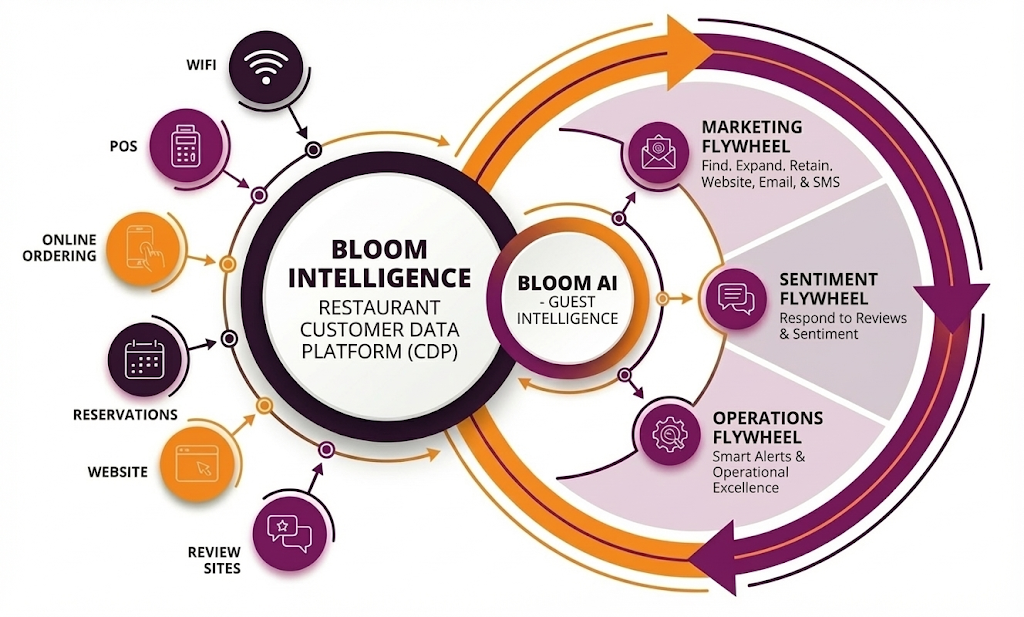
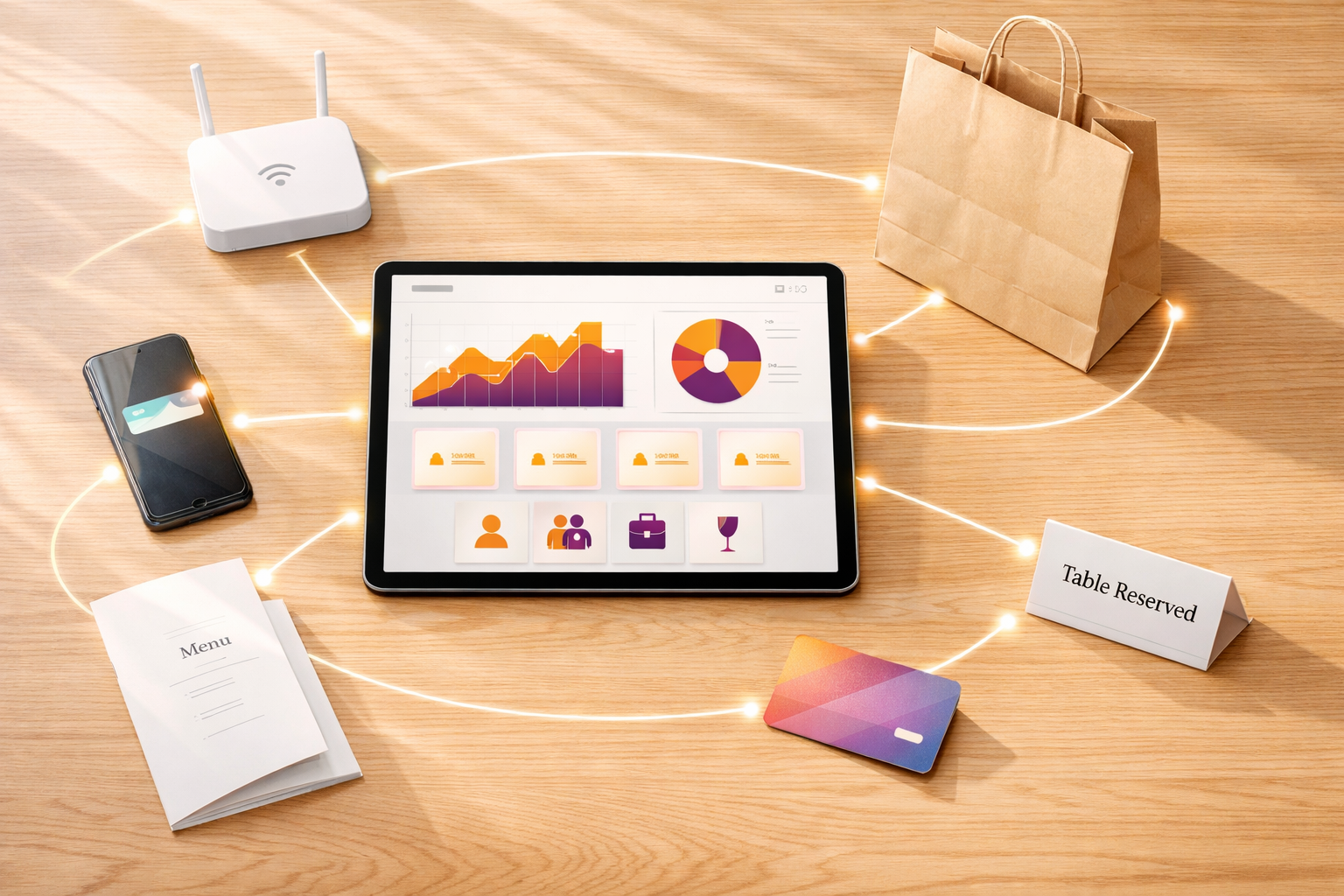
  • Connect WiFi, POS, online ordering, reservations, and review platforms into a unified guest data layer
  • Verify identity resolution across sources is working
  • Confirm review platform integrations are pulling verified content into local pages
  • Lock the Phase 1 audit: every checkbox done, documented, screenshot-verified

What “done” looks like at Day 30

By Day 30, every location should have: consistent NAP across the top 20 directories, a fully completed Google Business Profile, valid Restaurant + LocalBusiness + Menu schema verified in Google’s Rich Results Test, and live integrations into a unified guest data platform capturing visits, transactions, and sentiment.

You will not see rankings change in 30 days. You shouldn’t expect to. What you’ll see is the foundation that makes Phase 2 actually work.

Phase 2: Data Authority (Days 31 to 60)

Phase 2 is where AI engines start to notice you. The foundation from Phase 1 is now signaling to Google, ChatGPT, Perplexity, and voice assistants, but only signaling. Phase 2 fills the signal with verified, specific, multi-source content that AI engines can cite. This is the phase where the “Data Authority” thesis from the Triple Crown framework goes live.

Data Authority is the term we use for what AI engines actually weight when deciding whether to recommend a restaurant. It’s not backlinks. It’s whether your digital presence is corroborated by real, current, multi-source data about real guests and real experiences. The five signals:

Real review content

Specific, recent, multi-platform reviews mentioning dishes by name, staff by name, and experiences in detail. AI engines weight this far above generic content you wrote yourself.

Behavioral signals

Visit frequency, dwell time, return rates, the in-venue patterns captured by your WiFi and POS integration. These corroborate review claims with actual guest behavior.

Transaction signals

Order patterns, average ticket, item popularity, POS data that proves the menu claims on your website match what guests actually buy.

Schema markup

The structured data deployed in Phase 1. AI engines parse it as ground truth. Without it, they’re guessing about you.

Cross-source corroboration

When the same facts about your restaurant show up consistently across your website, Google, Yelp, TripAdvisor, OpenTable, and review platforms, AI engines treat that consistency as the strongest possible trust signal.

Phase 2 weekly breakdown

Week 5

Reputation Automation Live

  • Deploy AI reputation management to respond to every review across Google, Yelp, TripAdvisor, OpenTable, Facebook, and Tock
  • Configure brand voice and brand rules, AI learns your tone, not a generic template
  • Target: 100% response rate, average response time under 4 hours
Week 6

Verified Review Content on Local Pages

  • Pull verified, recent review content into each location page
  • Surface specific dish names, staff mentions, and guest sentiment patterns the AI engines will cite
  • Replace generic “About Us” copy with real, multi-source guest evidence
Week 7

FAQ + Speakable Deployment

  • Add FAQ sections to every location page with conversational, question-format headings
  • Deploy FAQPage schema and Speakable markup on key answer blocks
  • Target the actual questions guests ask voice assistants: hours, parking, dietary, reservations, dress code
Week 8

AI Engine Monitoring

  • Set up weekly tracking across ChatGPT, Perplexity, Gemini, and Google AI Overviews
  • Re-run the Phase 0 baseline queries, capture screenshots of any new citations
  • Document which signals appear to be moving each engine

What “done” looks like at Day 60

By Day 60, every review across every platform is being responded to within hours, in your brand voice. Verified review content is feeding local pages. FAQ schema and Speakable markup are live. You’re tracking AI engine citations weekly and starting to see them appear. Google rankings haven’t moved much yet, they’re a lagging indicator, but the underlying signals are accelerating.

When do AI engine citations start appearing?

AI engines typically begin consistently citing restaurants 60 to 90 days after Data Authority signals go live. Review velocity, structured data completeness, and cross-source corroboration drive citation frequency more than backlinks or domain age, which is why the Phase 2 work in this playbook moves AI citations faster than traditional SEO moves Google rankings.

Phase 3: Flywheel (Days 61 to 90)

Phase 3 is the phase that separates restaurants who get found from restaurants who grow. By Day 60 you’re being discovered. Without Phase 3, discovery is a leaky bucket, every new guest you attract is at high risk of never returning.

Here’s the math nobody likes to confront. About 8 in 10 first-time restaurant guests never come back (Bloom Intelligence, 2026). You can run Phases 1 and 2 perfectly. You can rank #1 in Google, get cited by ChatGPT, and answer every voice query. And if 8 in 10 of the guests you attract never return, your SEO is filling a leaky bucket.

The 8-in-10 Problem

Of 10 first-time guests acquired via SEO this month:

8 never return, discovery wasted
2 come back

SEO without retention is a leaky bucket. Phase 3 fixes it.

Phase 3 turns first-time guests into regulars by activating the retention automations powered by the data layer you built in Phase 1. This is the phase where SEO stops being a cost center and starts being a revenue engine.

Phase 3 weekly breakdown

Week 9

Welcome + Cooling-Off Automations

  • Deploy automated welcome sequences for first-time guests captured via WiFi or online ordering
  • Identify “cooling-off” guests, those whose visit frequency has dropped, and trigger personalized re-engagement
  • Use AI marketing automation to write campaign copy in your brand voice
Week 10

At-Risk Recovery

  • Activate at-risk guest detection across all locations
  • Trigger targeted win-back campaigns, Bloom’s network sees a 38% recovery rate on at-risk guests
  • Tie every recovered guest back to attributed revenue at the POS level
Week 11

KPI Pivot

  • Replace “rankings” with new-guest-to-regular conversion rate as the primary SEO KPI
  • Begin measuring recovered revenue per location, the only SEO metric that hits the P&L directly
  • Report results to leadership in revenue terms, not traffic terms
Week 12

Optimize and Scale

  • A/B test local page content using real guest data signals
  • Expand AI engine coverage by feeding fresh review content and behavioral signals
  • Lock the Day 90 audit: every phase complete, documented, screenshot-verified, and benchmarked against Phase 0 baseline
Case study · Fine Dining · 5 Locations
Roka Akor ran a version of this playbook, and ended up #1 in AI search
No paid ads. No link-building. A data layer connecting verified guest signals to continuous website optimization. Within months, ChatGPT, Claude, Perplexity, and Google AI were citing Roka Akor as the top Japanese steakhouse recommendation in Chicago, San Francisco, and Scottsdale.
5
Locations
3
States
#1
In 3 markets
4
AI engines

Read the full case study →

Day 90: The Audit and What Compounds Next

Day 90 is not a finish line. It’s a checkpoint. The infrastructure is in place. The data layer is feeding every search engine, every AI engine, and every voice assistant. The retention engine is recovering guests who would have been lost. Now you audit what worked, what didn’t, and what compounds from here.

What the Day 90 audit measures

Pull the Phase 0 baseline document. Re-run every measurement:

  • NAP consistency, should be 100% across the top 20 directories per location
  • Schema completeness, every location page passing Google’s Rich Results Test with Restaurant, LocalBusiness, Menu, FAQPage, and Speakable schema
  • Review velocity and response rate, measurably higher than Day 0; 100% response rate is the target
  • AI engine visibility, re-run the original ChatGPT, Perplexity, and AI Overviews queries; document which engines now cite you, for which queries, with what wording
  • New-guest-to-regular conversion rate, the KPI you set in Phase 0; this is the number that matters most
  • Recovered revenue per location, track every dollar attributed to retention campaigns triggered in Phase 3

What happens in Quarter 2

The compounding starts in Quarter 2. Google rankings, the lagging indicator, begin to move. AI engine citations stabilize and expand to new query patterns. The retention engine produces a measurable second-visit lift. Per-location recovered revenue accelerates because the data layer keeps getting smarter.

The strategic pivot at Day 90 is from build mode to optimize mode. The playbook ran. The infrastructure works. Now every additional review, every additional transaction, every additional guest interaction makes every Phase 1, 2, and 3 system more accurate. This is what we mean by the discovery flywheel, and it’s how Quarter 2 starts producing results that Quarter 1 only set up.

What Kills the 90 Days

Six mistakes account for nearly every failed 90-day SEO playbook we’ve seen. Each one is preventable if you spot it early.

01
Skipping Phase 0

Without baseline measurements, you cannot prove the next 90 days worked. Leadership stops funding the program. Phase 0 takes 4 to 6 hours per location, skip it and lose the quarter.

02
Treating Phase 1 as optional

“We’ll fix NAP consistency later.” There is no later. Phase 2 signals get scrambled if Phase 1’s data plumbing is dirty. AI engines stop trusting inconsistent entities.

03
Measuring rankings instead of revenue

Rankings are vanity. New-guest-to-regular conversion rate is sanity. Recovered revenue per location is the P&L. Set the right KPI in Phase 0 or you’ll be measuring the wrong thing all quarter.

04
Ignoring the retention layer (Phase 3)

SEO without retention is a leaky bucket. If you stop at Phase 2, you’ll get found, and watch 8 in 10 of those new guests never return. The math doesn’t pencil out.

05
Trying to do it manually across 20+ locations

The playbook is sequenced for a reason. Without automation, a single marketer cannot run reputation, retention, and AI engine monitoring across 20+ locations. They burn out by Phase 2.

06
Expecting Google rankings to move by Day 30

They won’t. Google is a lagging indicator. AI engine citations move first (Days 30 to 60), then voice (Days 45 to 75), then Google (Quarter 2+). Manage leadership expectations accordingly.

The Bottom Line

The restaurants winning Google, AI search, and voice in 2026 didn’t get there with a clever campaign. They built the data infrastructure that powers all three at once, in a sequence that compounds.

This playbook is that sequence. Phase 1 makes you machine-readable. Phase 2 makes you citation-worthy. Phase 3 stops the leaky bucket. Day 90 is the checkpoint. Quarter 2 is where compounding takes over.

The discovery gap between restaurants that build the data layer and those that don’t widens every day. Every guest interaction that goes uncaptured, every review that goes unanswered, every directory listing that stays inconsistent is a signal the AI engines use to recommend the restaurant next door instead.

The good news: you can start tomorrow. Run Phase 0 this week. Lock the baseline. Pick Day 1.

1,000+
Restaurant locations
99.3%
Client retention
4.9★
Google rating
38%
At-risk recovery

If you want help running the 90 days, or just want the audit done for you, book a free demo. We’ll walk you through what Phase 0 looks like for your locations and show you the timeline we’d recommend based on your current state.
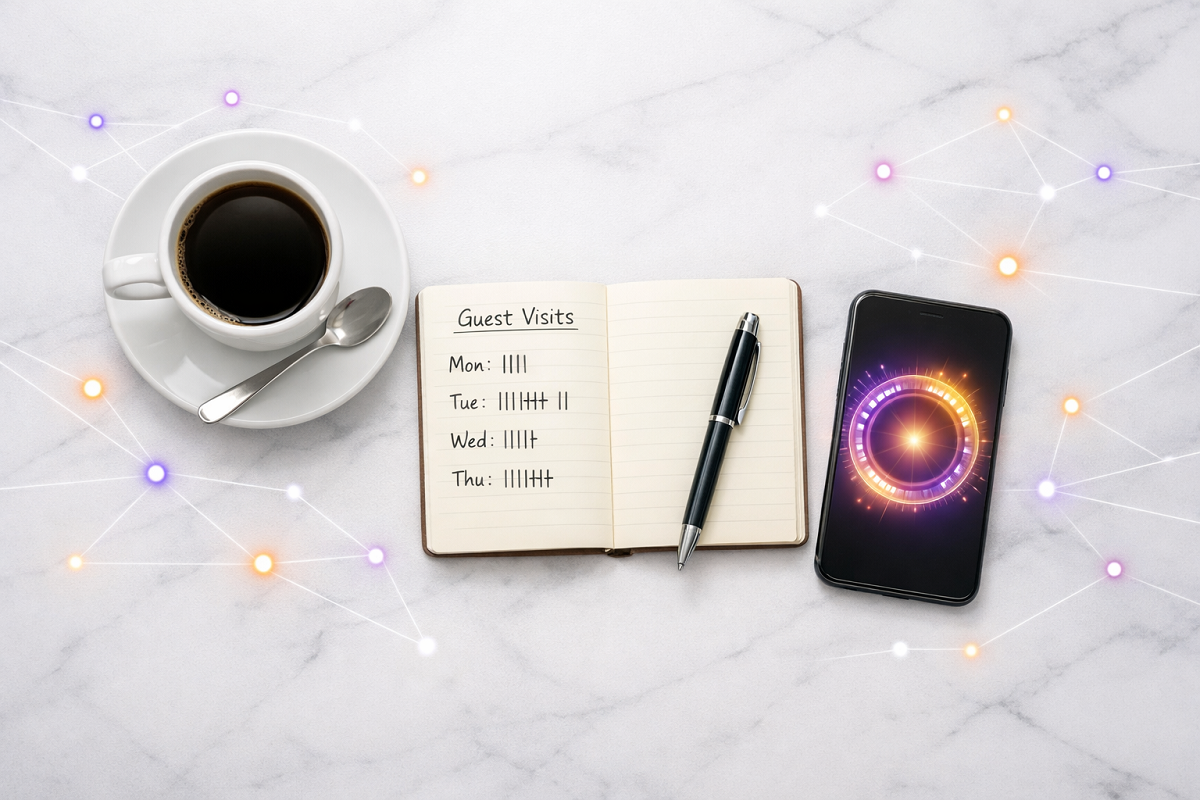
Every Guest Who Walks Through Your Door Makes You Easier to Find Online

The Best Discovery Strategy Isn’t What an Agency Does. It’s What Happens Inside Your Restaurant Every Day.

Most restaurants think about discoverability as a marketing problem: something that happens on websites, in ad campaigns, or through content strategies developed by agencies and SEO consultants. This framing misses something fundamental.

The most powerful discovery signals available to any restaurant are not produced by marketers. They are produced by guests: during actual visits, actual orders, actual reviews, actual return trips. Every guest interaction your restaurant has today is simultaneously a discovery signal that either builds or fails to build your restaurant’s authority with AI engines, Google, and voice assistants.

The restaurant that understands this stops treating discovery as a separate project and starts treating operations as the discovery engine.

The Core Problem

The problem isn’t a lack of data. The problem is a broken loop. Most restaurants generate all of this raw material continuously, and then it disappears into disconnected systems, never touching the digital presence that AI engines evaluate. The visit happened. The order was placed. The review was posted. But none of it became a discovery signal. None of it made the restaurant more findable tomorrow than it was yesterday.

What Every Guest Interaction Actually Generates

To understand why the flywheel works, you need to see each guest touchpoint for what it actually produces, not just as an operational event, but as a data event. The cards below map what happens at each moment, and the difference between that data being captured versus discarded.

The Four Guest Touchpoints: Captured vs. Discarded
🚶
Guest Walks In
In-venue visit begins
Behavioral Signal
Duration · Frequency · New vs. Returning · Daypart · Dwell time
Loop Broken

An anonymous visit. No record it ever happened. Behavioral proof evaporates.

Loop Closed

Verified behavioral data point added to a living guest profile, proof AI engines cannot fabricate from copy.

🍽️
Guest Places an Order
Transaction intelligence
Transaction Signal
What ordered · Spend level · Combinations · Item preferences · Daypart
Loop Broken

A POS transaction isolated inside your POS system. No connection to guest identity or digital presence.

Loop Closed

Preference data layered onto the behavioral profile, creating a guest picture specific enough for AI engines to characterize your restaurant with confidence.

⭐
Guest Leaves a Review
Sentiment signal across platforms
Sentiment Signal
Specific language · Emotional quality · Topics mentioned · Consistency across platforms
Loop Broken

A customer service event. Read once, maybe replied to, then forgotten.

Loop Closed

Live entity enrichment, independent language that AI engines extract to characterize what your restaurant genuinely is, from a source they trust more than any marketing copy.

📅
Guest Books Again
Loyalty proof signal
Loyalty Signal
Return intent · Booking source · Occasion type · Dining frequency pattern
Loop Broken

A reservation in a booking system, siloed from every other piece of guest data.

Loop Closed

Return frequency confirmation: behavioral proof that tells AI engines this restaurant delivers on its promise, consistently, to real guests who keep coming back.

The guest experience is identical in both scenarios. The operations are identical. The difference is purely infrastructural.

Touchpoint 1: The Visit: Behavioral Proof That Cannot Be Fabricated

When a guest walks into your restaurant, an in-venue visit begins generating one of the most valuable discovery signals available: verified behavioral data. How long did they stay? Was this their first visit or their tenth? What time of day? What day of week? Are they coming more frequently over time or less?

This behavioral layer is the discovery signal no competitor can build by writing better content about themselves. Visit frequency and dwell time patterns across real guests, captured passively at scale, tell AI engines something that marketing copy cannot: this restaurant is genuinely good enough that real people choose to spend real time here, repeatedly.

The majority of restaurant guests make only one verified visit, which means every single return visit is a compounding behavioral proof point of disproportionate value.

Touchpoint 2: The Order: Transaction Intelligence That Tells the Real Story

Every order placed at your restaurant is a declarative statement about what your guests actually value. Not what your marketing says they value. Not what your website claims is popular. What real guests are choosing, spending money on, returning for.

“A restaurant that says ‘our pasta is exceptional’ is fundamentally less trustworthy to an AI engine than a restaurant whose guest data shows that a specific pasta dish drives more return visits and higher spend than any other item on the menu.”

The distinction between self-reported positioning and verified operational reality

Touchpoint 3: The Review: Sentiment That Compounds Across Platforms

A review posted on Google, OpenTable, TripAdvisor, or Yelp is not just a customer service event. It is an independent, third-party entity enrichment, a data point from a source that AI engines treat as more reliable than anything a restaurant writes about itself.

When the same dishes, the same experience quality, the same staff attributes appear in reviews across multiple platforms independently, AI engines treat that convergence as corroborated fact. This is the Sentiment Consistency signal, and it is generated entirely by real guests making unprompted decisions to share their experience.

▸ The Insight Most Operators Miss

The review your guest left this morning about your wood-roasted chicken is not just a 5-star rating. It is a specific, independent, third-party entity claim that AI engines will cross-reference against every other review mentioning that dish. If that same dish appears positively in reviews across three platforms over twelve months, AI engines begin treating it as a verified restaurant attribute, a characteristic they can cite with confidence when recommending your restaurant to someone specifically asking for that type of food.

This is happening whether you know about it or not. The question is whether your responses, your consistency, and your connected intelligence platform are accelerating it, or leaving it entirely to chance.

Touchpoint 4: The Return: Loyalty Proof That Validates Every Other Signal

When a guest books a reservation, they are making an intent statement: a verifiable declaration that they are choosing your restaurant deliberately, in advance, for a specific occasion. When they return multiple times, that pattern becomes one of the most powerful discovery signals available: loyalty proof.

More than 1.5 million reservation records flow through the Bloom platform network. Each one is not just a booking, it is a data point in a guest relationship history that, when unified with behavioral, transactional, and sentiment data from the same guest, produces a depth of verified intelligence that no marketing campaign can replicate.

The Broken Loop: Why Most Restaurants Discard Their Best Discovery Signals Every Day

Understanding that every guest touchpoint generates a discovery signal makes the next question obvious: why aren’t more restaurants dominating AI search?

The answer is not a lack of effort. Most restaurant operators are working extremely hard. The answer is structural: the systems that capture each type of guest data (the POS, the reservation platform, the WiFi network, the review platforms) were not built to talk to each other. And none of them were built to translate operational data into digital presence signals.

The Broken Loop vs. The Closed Loop
The Broken Loop

Data Generated. Value Discarded.

  • Guest visits. WiFi connects. Visit data lives in hardware, untracked.

  • Order placed. POS records transaction. Profile connection: none.

  • Review posted. Seen once. Reply is generic or absent. Signal wasted.

  • Systems don’t speak. Data doesn’t flow. Discovery stays static.

  • Competitors who close the loop build an insurmountable data lead every month you don’t start.

→
The Closed Loop

Data Generated. Authority Compounded.

  • Guest visits. WiFi captures behavioral signal passively. Profile enriched.

  • Order linked to guest identity. Preference data layers onto profile.

  • Review gets brand-voiced AI response. Entity-enriching language added to the public record across all platforms.

  • Unified intelligence translates operational truth into digital presence AI engines trust.

  • Each rotation adds compounding discovery authority that no content sprint can replicate.

The Broken Loop is not a technology problem. Most restaurants already have the capture systems. What they lack is the layer that unifies them.

▸ Coined Concept: The Broken Loop

The Broken Loop describes the gap between operational data generation and discovery signal activation. Every restaurant with a POS, a WiFi network, a reservation system, and a review presence is generating the raw ingredients of AI discoverability continuously. The Broken Loop is what exists when those ingredients have no connected infrastructure to translate them into the verified, specific, multi-source digital signals that AI engines use to build recommendation confidence. The data is real. The loop is broken. The discovery potential is entirely unrealized.

The Discovery Flywheel: What Happens When the Loop Closes

When guest intelligence is connected: when WiFi behavioral data, POS transaction data, reservation history, and review sentiment all flow into a unified profile that continuously enriches the restaurant’s digital presence, something qualitatively different happens. The restaurant stops doing SEO as a separate activity and starts generating discovery authority as a natural byproduct of operations.

This is the Discovery Flywheel in motion. Each stage reinforces the next, and every rotation makes the next rotation faster.

The Discovery Flywheel: 5 Compounding Stages

The Discovery Flywheel

Every rotation builds data authority that no competitor starting today can replicate

1
Guest Visits
Duration, frequency, new vs. returning, behavioral proof AI engines cannot fabricate from copy.

88M+ sessions

2
Enriched Profile
Visit layered with orders, reviews, reservations into a multi-source identity AI engines trust.

7.3M profiles

3
Stronger Presence
Operational reality translates into a living digital presence, not static copy, but verified current truth.

Dynamic Discovery

4
AI Recommendation
ChatGPT, Google AI Overviews, and voice search cite your restaurant by name with specific attributes.

ChatGPT · Perplexity

5
New Guests → More Data
AI-referred guests visit, order, review. Their interactions enrich the profile. Each rotation is faster.

Compounding ↑

A competitor starting today cannot close the gap through content alone. The flywheel compounds data authority that can only be built through time.

▸ The Compound Advantage

Dynamic Discovery (a digital presence continuously updated with verified guest intelligence) compounds in a way that Static Presence never can. A static website that was excellent when it launched is progressively less authoritative as competitors’ connected digital presences grow richer, more current, and more specifically corroborated by real guest data.

The advantage of Dynamic Discovery is not just that it performs better today. It is that it automatically performs better tomorrow (and the day after) with no additional marketing effort required.

What a Restaurant Needs to Close the Loop

The practical question every operator reading this should be asking is not “how do I get better at SEO?” It is “why isn’t the data my restaurant generates every day already working for me online?” The answer points to three connected capabilities.

Three Capabilities to Close the Broken Loop
01
Capability 1
Unified Guest Intelligence
One identity-resolved profile per guest across every touchpoint: WiFi visits, POS transactions, online orders, reservations, and review activity. Without this, the four touchpoints remain four disconnected data streams. WiFi-based capture is particularly powerful: it requires no opt-in and captures behavioral data that no loyalty app generates.
02
Capability 2
Connected Reputation Management
Treating reviews as a live discovery asset rather than a customer service function. A systematic, brand-voiced response program across every review platform, not sporadic responses, but engagement that adds specific entity-enriching language to the public record over time. Every response is a small act of entity building. Over hundreds of responses across multiple platforms, the cumulative effect is brand specificity AI engines recognize as distinctive and trustworthy.
03
Capability 3
Continuous Discovery Optimization
The connective tissue: a platform that translates unified guest intelligence into a digital presence that continuously reflects verified current reality. The dishes guests are ordering most. The sentiment themes appearing consistently across recent reviews. The behavioral patterns showing which guest segments are growing. This is what separates Dynamic Discovery from Static Presence, not the quality of the initial content build, but the ongoing connection between operational reality and digital representation.

The Flywheel in Practice

Three restaurant groups whose Discovery Flywheels are running, and what’s compounding as a result.

Roka Akor

Fine Dining / Japanese Steakhouse GroupTop RankedAI search ranking for their category

Achieved top placement in AI search through operations that generated verified, specific, multi-source entity data, not a content campaign. New guests arriving via AI recommendation, with specific expectations already formed.
Corky’s Kitchen & Bakery

Full-Service Chain · 18 Locations+50%Marketing database growth · 60,000 new profiles

Every new verified guest profile added a behavioral data point. Multiplied across 18 locations, the result was a guest intelligence platform with the breadth to feed a Discovery Flywheel at meaningful scale, alongside a 38% recovery rate of at-risk guests.
Beachside Hospitality Group

Multi-Concept Hospitality Group15–20 hrsSaved weekly on review management alone

Inconsistent review response was a flywheel brake. AI reputation automation brought consistency (the same brand voice, the same specificity, the same response rate) removing a bottleneck and adding a continuous stream of entity-enriching language across all platforms.
▸ How Bloom Closes the Loop

Bloom Intelligence unifies guest data from WiFi visits, POS transactions, online orders, reservations, and review platforms into a single connected intelligence layer, then uses that verified data to continuously build the discovery authority that AI engines, Google, and voice assistants use to decide which restaurant to recommend.

The flywheel starts on day one. Within 3–6 months, meaningful AI recommendation authority builds as behavioral patterns accumulate depth and sentiment consistency establishes itself across platforms. A restaurant running connected guest intelligence for 12 months has a discovery authority profile that is qualitatively different from (and not closeable by) a competitor starting today.

Frequently Asked Questions

Voice and AI search–optimized answers to what restaurant operators ask most

Every verified guest visit generates behavioral data (duration, frequency, new versus returning status, visit patterns) that AI engines treat as a more credible quality signal than any restaurant-authored marketing copy. When this behavioral data is captured through connected guest intelligence infrastructure and reflected in a restaurant’s digital presence, it builds the kind of verified entity specificity that earns AI engine recommendation confidence.

The Discovery Flywheel is the compounding loop in which verified guest interactions (visits, orders, reviews, reservations) generate behavioral and sentiment data that enriches a restaurant’s AI entity profile, which drives higher recommendation confidence on AI engines, which brings in new guests whose interactions further enrich the data. Each rotation of the flywheel makes the next rotation faster. Restaurants with connected guest intelligence activate this flywheel automatically. Those without it generate the raw ingredients every day and discard them.

The core issue is the Broken Loop: restaurant operations generate rich, verified, multi-source data continuously, but disconnected systems mean that data never reaches the digital presence AI engines evaluate. The visit happened but wasn’t captured. The order was placed but not connected to a guest profile. The review was posted but the response was generic and inconsistent. None of it compounds into the kind of authoritative entity profile AI engines recommend with confidence.

Dynamic Discovery is the state in which a restaurant’s digital presence continuously reflects verified current reality (updated automatically by real guest behavioral data, real transaction intelligence, and real multi-platform sentiment) rather than remaining a static publication maintained infrequently. Traditional SEO optimizes a website at a point in time. Dynamic Discovery creates a living digital presence that grows more authoritative with every guest interaction, whether or not the marketing team takes any action.

WiFi-based guest capture generates verified behavioral data: the visit duration, frequency, and return patterns that represent behavioral proof AI engines cannot get from any self-reported source. When this behavioral data is unified with transaction, reservation, and review data into a connected guest intelligence platform, it builds the depth and specificity of entity profile that AI engines use to evaluate recommendation confidence. WiFi capture is particularly valuable because it is passive: it captures every guest who visits, not just those who opt into a loyalty program.

Reviews generate independent, third-party sentiment signals across multiple platforms that AI engines cross-reference when building a restaurant’s entity confidence profile. When the same dishes and experiences are described positively across Google, OpenTable, TripAdvisor, and other platforms, AI engines treat that convergence as corroborated fact. A systematic review response program (consistent, brand-voiced, entity-specific) adds a compounding layer of public language to this profile that builds Discovery Authority over time.

A restaurant Customer Data Platform unifies guest data from every touchpoint (WiFi visits, POS transactions, online orders, reservations, and reviews) into a single identity-resolved guest profile. When that unified intelligence is connected to a restaurant’s digital presence and discovery optimization, it translates operational data into the verified, specific, continuously updated entity signals that AI engines like ChatGPT, Google AI Overviews, and voice assistants use to decide which restaurant to recommend.

The flywheel begins generating data from day one, but meaningful AI recommendation authority typically builds over three to six months as behavioral patterns accumulate depth, sentiment consistency across platforms establishes itself, and the entity profile grows specific enough for AI engines to cite with high confidence. The compounding nature of the flywheel means that improvements accelerate over time rather than plateau: the restaurant that has been running connected guest intelligence for twelve months has a discovery authority profile that is qualitatively different from (and not closeable by) a competitor starting today.

Start the Flywheel

Your Restaurant Is Already Generating the Signals. Start Capturing Them.

Every service you ran today generated behavioral data. Every order placed added to a guest’s transaction profile. Every review posted added a sentiment signal to your entity profile. The question is whether any of it made your restaurant more findable tomorrow, or disappeared into the Broken Loop, generating no lasting discovery value at all.

See How the Flywheel Works for Your Locations →

99.3% client retention
108M+ guest records
Live in days, not months

Restaurant Marketing Tools: The Complete Guide

The short answer

The restaurant marketing tools that matter most are the ones that bring guests back, and they work best as one connected system. Across tens of millions of restaurant emails tracked by Bloom Intelligence, one-time blasts brought back only 0.27% of recipients, while triggered emails such as welcome, win-back, and post-visit thank-you messages brought back 7% to 30%. This guide covers the eleven tool categories every restaurant should know and how they fit together.

What are restaurant marketing tools?

Restaurant marketing tools are software platforms and technologies that help restaurants attract new guests, retain existing customers, and increase revenue. These include websites optimized for discovery, customer data platforms (CDPs), email and SMS marketing systems, reputation management software, WiFi marketing, loyalty programs, social media management tools, and AI-powered marketing automation. Modern platforms integrate multiple capabilities to provide unified guest intelligence and automated marketing campaigns that run 24/7.

Introduction: Why Restaurant Marketing Tools Matter in 2026

The U.S. restaurant industry is projected to exceed $1.5 trillion in sales in 2026, according to the National Restaurant Association. With over 749,000 restaurant locations competing for customers, effective marketing has never been more critical to survival and growth.

Yet the data reveals a sobering reality: Bloom Intelligence’s 2026 study found that about 85% of first-time guests never return, representing massive lost revenue potential for restaurants that fail to implement effective marketing strategies.

This comprehensive guide examines every category of restaurant marketing tool available in 2026, providing real statistics, implementation strategies, and guidance on building an integrated marketing technology stack that drives measurable results.

$1.55T
Projected U.S. restaurant and foodservice sales in 2026 (National Restaurant Association)
42%
Of restaurant operators were not profitable in 2025 (National Restaurant Association)
~85%
Of first-time guests never return (Bloom Intelligence 2026 study)
29.9%
Of guests return after a post-visit thank-you email, vs 0.27% for a blast (Bloom Intelligence)

What You Will Learn

  1. Restaurant Websites: Your digital front door for discovery and guest capture
  2. Customer Data Platforms (CDPs): The foundation of data-driven marketing
  3. Email Marketing: High-ROI guest communication and automation
  4. SMS Marketing: Direct, immediate mobile engagement
  5. Reputation Management: Online reviews and brand protection
  6. WiFi Marketing: First-party data collection and guest capture
  7. Marketing Automation: Triggered campaigns that run 24/7
  8. Loyalty Programs: Reward systems that increase visit frequency
  9. Social Media Marketing: Platform strategies and content approaches
  10. AI-Powered Marketing Tools: Predictive analytics and personalization
  11. The Restaurant Marketing Flywheel: Building an integrated system

1. Restaurant Websites: Your Digital Front Door

Why is a restaurant website important for marketing?

Your restaurant website is the foundation of all digital marketing efforts and often the first interaction potential guests have with your brand. With 90% of diners researching restaurants online before visiting, your website serves as both a discovery engine and a conversion tool. An optimized website attracts new guests through search engines and AI assistants, captures visitor data for future marketing, and builds trust through social proof elements like reviews and photos.

In 2026, your restaurant website is no longer just an online brochure. It is your most powerful tool for attracting new guests at the top of the marketing funnel. With the rise of AI-powered search through tools like ChatGPT, Perplexity, and Google AI Overviews, how your website is structured and optimized directly determines whether potential guests discover your restaurant.

The Discovery Opportunity

Search engines and AI assistants have become the primary way diners discover new restaurants. Industry research indicates that over 50% of restaurant searches now involve AI-powered responses, and this percentage is growing rapidly. Restaurants that optimize their websites for these new discovery channels gain a significant competitive advantage.

90%
Of diners research restaurants online before visiting
50%+
Of searches now involve AI-powered responses
46%
Of all Google searches have local intent
76%
Of local searchers visit a business within 24 hours

Three Pillars of Website Optimization

Modern restaurant websites must excel in three areas to maximize guest acquisition: search engine optimization (SEO), answer engine optimization (AEO), and voice search readiness. Together, these ensure your restaurant appears wherever potential guests are looking.

  1. Search Engine Optimization (SEO): Ensures your website ranks highly in traditional Google searches for terms like “best Italian restaurant near me” or “romantic dinner [city name].” Strong SEO drives consistent organic traffic without ongoing advertising costs.
  2. Answer Engine Optimization (AEO): Structures your content so AI assistants like ChatGPT, Perplexity, and Google AI Overviews can easily cite and recommend your restaurant. This includes clear definitions, FAQ content, and structured data markup.
  3. Voice Search Optimization: Formats content to match how people speak when using Siri, Alexa, or Google Assistant. Voice searches are typically longer and more conversational, such as “Where can I get great tacos open late tonight?”

The Value of Optimization

Restaurants that invest in comprehensive website optimization report 40-60% increases in organic traffic within 6-12 months. More importantly, this traffic converts at higher rates because these visitors have specifically searched for what you offer. Unlike paid advertising, organic traffic compounds over time, delivering ongoing value from a one-time optimization investment.

Capturing Guest Data from Your Website

Your website should not just attract visitors but convert them into known contacts you can market to. Every anonymous visitor represents a missed opportunity for future engagement. Effective websites incorporate multiple data capture mechanisms:

  • Email signup forms with compelling offers (exclusive menus, birthday rewards, early event access)
  • Online reservation systems that collect guest contact information
  • Online ordering platforms integrated with your customer database
  • WiFi landing pages that capture data when guests visit your physical location
  • Contest and promotion entry forms that build your marketing list

Building Trust Through Social Proof

Potential guests make dining decisions based on what others say about your restaurant. Your website should prominently feature trust-building elements that reassure visitors and encourage them to choose you over competitors:

  • Aggregated review scores from Google, Yelp, and TripAdvisor displayed prominently
  • Recent positive review excerpts that highlight your strengths
  • Professional food photography and authentic guest photos
  • Awards, press mentions, and industry recognition
  • Chef credentials and restaurant story that builds emotional connection

Restaurants that display review aggregations and testimonials on their websites see conversion rates 20-30% higher than those that do not incorporate social proof elements.

2. Customer Data Platforms (CDPs)

What is a restaurant customer data platform?

A restaurant customer data platform (CDP) is a unified software system that collects, consolidates, and activates guest data from multiple sources including WiFi networks, POS systems, online ordering platforms, reservation systems, websites, loyalty programs, and review sites. CDPs create comprehensive guest profiles that enable personalized marketing, predictive analytics, and measurable ROI tracking across all customer touchpoints.

Customer data platforms represent the foundation of modern restaurant marketing. By unifying data from disparate sources, CDPs enable restaurants to understand guest behavior, preferences, and value at an individual level, then act on those insights through targeted marketing campaigns.

The Business Impact of CDPs

Research from Aberdeen Group demonstrates the transformative impact of customer data platforms on restaurant performance:

Capability Without a CDP With a CDP
Guest identity A separate record in every system One profile per guest across WiFi, POS, online ordering, and reservations
Marketing The same blast to the whole list Messages triggered by each guest’s behavior
Measurement Opens and clicks Verified return visits and revenue
Retention Lost regulars noticed months later At-risk guests flagged automatically

The global CDP market is projected to grow from $2.65 billion in 2024 to $12.96 billion by 2032, representing a 21.7% compound annual growth rate, according to Fortune Business Insights. This growth reflects the increasing recognition that unified customer data is essential for competitive restaurant marketing.

Key CDP Capabilities for Restaurants

  1. Data Unification: Aggregate guest data from POS, WiFi, reservations, online ordering, and reviews into single customer profiles
  2. Identity Resolution: Match anonymous interactions to known guests across devices and touchpoints
  3. Audience Segmentation: Create dynamic segments like regulars, at-risk guests, high-value customers, and new visitors
  4. Behavioral Analytics: Track visit frequency, spending patterns, menu preferences, and lifetime value
  5. Campaign Attribution: Measure the ROI of marketing campaigns down to individual guest visits and revenue

3. Email Marketing

What is the ROI of email marketing for restaurants?

Email remains one of the highest-ROI marketing channels available: in Litmus’s 2025 State of Email report, 35% of marketers said email returns $10 to $36 for every $1 spent, and another 30% reported $36 to $50. Across tens of millions of restaurant email campaigns tracked by Bloom Intelligence, one-time blasts averaged a 19.5% open rate and a 0.7% click rate, and only 0.27% of recipients made a return visit, while triggered emails brought back 7% to 30% of recipients (see the email benchmarks). In e-commerce, Omnisend’s 2025 report found that automated emails drove 37% of email sales from just 2% of email volume.

Email marketing remains one of the most effective and cost-efficient channels for restaurant marketing. The combination of high deliverability, personalization capabilities, and automation makes email an essential component of any restaurant marketing strategy.

Restaurant Email Performance Benchmarks

Email type Guests who returned
One-time blast (19.5% open rate, 0.7% click rate) 0.27%
New-guest welcome 7.2%
At-risk win-back 6.5%
Visit milestone 19.8%
Post-visit thank-you 29.9%

Source: Bloom Intelligence restaurant email benchmarks, tens of millions of restaurant emails tracked from send to verified return visit. Data comes from the Bloom network and may not be the same for all restaurants.

More restaurants now send personalized offers to their email subscribers than ever before. This shift toward personalization reflects the growing understanding that generic promotional emails underperform targeted messages based on guest behavior and preferences.

Essential Email Campaigns for Restaurants

  1. Welcome Series: Automated sequence introducing new subscribers to your restaurant, menu highlights, and special offers
  2. Birthday and Anniversary: Personalized celebration messages with exclusive offers that drive visits on special occasions
  3. Win-Back Campaigns: Re-engagement emails targeting guests who have not visited within their typical frequency
  4. VIP Recognition: Exclusive communications for high-value guests acknowledging their loyalty and offering premium experiences
  5. Feedback Requests: Post-visit emails requesting reviews and providing channels for private feedback resolution

4. SMS Marketing

How effective is SMS marketing for restaurants?

SMS marketing reaches guests almost immediately, which makes it ideal for time-sensitive offers, waitlist updates, and reminders. Automation matters here too: in Omnisend’s 2025 e-commerce report, automated text messages drove 18% of SMS sales from just 9% of sends. Restaurants using SMS marketing are 5.89 times more likely to report success with their digital marketing efforts.

SMS marketing has emerged as one of the most powerful direct communication channels for restaurants. The immediacy and high engagement rates make SMS ideal for time-sensitive promotions, reservation confirmations, and personalized offers that drive immediate action.

SMS vs. Email Marketing Comparison

Factor SMS Marketing Email Marketing
Speed Seen almost as soon as it arrives Read over hours or days
Format Short, single message Long-form and visual
Best use case Time-sensitive offers, waitlists, reminders Menus, stories, newsletters, win-back
Consent Explicit opt-in to texts Opt-in list with an unsubscribe link
Automation Automated texts drove 18% of SMS sales from 9% of sends (Omnisend) Automated emails drove 37% of email sales from 2% of volume (Omnisend)

SMS is uniquely effective for flash promotions, last-minute table availability, and day-of event communications, because guests tend to see a text almost as soon as it arrives.

High-Impact SMS Use Cases for Restaurants

  1. Flash Promotions: Send limited-time offers during slow periods to drive immediate traffic and fill empty tables
  2. Reservation Confirmations: Reduce no-shows with automated SMS reminders 24 hours and 2 hours before reservations
  3. Order Updates: Keep online ordering and delivery customers informed with real-time status notifications
  4. VIP Alerts: Notify high-value guests about exclusive menu items, events, or reservation availability
  5. Win-Back Messages: Re-engage lapsed guests with personalized offers based on their previous ordering history

5. Reputation Management

How do online reviews impact restaurant revenue?

A one-star increase in Yelp rating correlates with a 5-9% increase in restaurant revenue. Research shows that 87% of consumers read online reviews for local businesses, with 94% avoiding businesses after reading negative reviews. Yet across the Bloom Intelligence network, restaurants reply to only 28.5% of their reviews, which leaves most guests who took the time to write one without an answer.

Online reputation has become one of the most important factors in restaurant success. With 90% of diners researching restaurants online before visiting and 75% always reading reviews before making a dining decision, reputation management tools are essential for protecting and growing your business.

The Business Impact of Online Reviews

5-9%
Revenue increase per additional Yelp star
87%
Of consumers read online reviews
94%
Avoid businesses with negative reviews
84%
Trust reviews like personal recommendations

Review signals now account for approximately 16% of the factors that determine Google Local 3-Pack rankings, making reputation management a critical component of local SEO strategy. Restaurants with higher ratings and more reviews consistently outperform competitors in local search visibility.

Key Reputation Management Features

  1. Review Monitoring: Aggregate reviews from Google, Yelp, TripAdvisor, and other platforms into a single dashboard
  2. Response Management: Respond to reviews efficiently with templates and AI-assisted response suggestions
  3. Review Generation: Automated systems that request reviews from satisfied guests at optimal moments
  4. Sentiment Analysis: Track trends in guest feedback to identify operational improvements and menu opportunities
  5. Alert Systems: Real-time notifications for negative reviews enabling rapid response and recovery

6. WiFi Marketing

What is WiFi marketing for restaurants?

WiFi marketing is a technique that uses guest WiFi access to collect and clean customer data including names, emails, phone numbers, visit behavior, and demographics. This first-party data is used to personalize marketing campaigns, increase customer loyalty, build online reviews, and recover at-risk guests. Unlike third-party cookies, WiFi data is owned by the restaurant and is not affected by privacy regulations limiting tracking.

With the deprecation of third-party cookies and increasing privacy regulations, WiFi marketing has become an essential tool for restaurants to collect first-party customer data. Guests willingly exchange their contact information for WiFi access, creating an opt-in database of real customers.

The Value of First-Party Data

Research demonstrates the dramatic impact of personalized marketing enabled by WiFi-captured guest data:

  • Guests receiving 1:1 personalized marketing delivered 5x the sales compared to those receiving non-personalized communications
  • 92% of first-time guests without targeted outreach never returned, representing massive lost revenue potential
  • Guest WiFi increases customer dwell time by 9-18%, leading to higher average check sizes
  • WiFi-captured data enables precise visit tracking and attribution of marketing campaign ROI

WiFi Marketing Capabilities

  1. Data Capture: Collect guest contact information through branded WiFi login portal
  2. Visit Tracking: Automatically record guest visits, duration, and frequency without manual check-ins
  3. Behavior Analysis: Identify visit patterns and segment guests by engagement level
  4. Campaign Attribution: Track which marketing messages drove guests back to your location
  5. Data Enrichment: Enhance profiles with demographic data and social information from login methods

7. Marketing Automation

What is restaurant marketing automation?

Restaurant marketing automation uses software to execute marketing campaigns automatically based on guest behavior triggers, time-based schedules, or data conditions. Automation enables restaurants to deliver personalized messages at scale, including welcome sequences, win-back campaigns, birthday offers, and review requests, without manual intervention for each guest interaction.

Marketing automation transforms restaurant marketing from reactive, manual campaigns into proactive, always-on systems that engage guests at the right moment with the right message. Omnisend’s 2025 e-commerce report found that automated emails drove 37% of email sales from just 2% of email volume, and Bloom’s restaurant data shows the same pattern: triggered emails return 7% to 30% of recipients, against 0.27% for blasts.

Essential Automated Workflows for Restaurants

  1. New Guest Welcome: Trigger a welcome email series when a guest provides their contact information for the first time, introducing your restaurant and incentivizing a return visit
  2. At-Risk Guest Recovery: Automatically identify guests whose visit frequency has declined and send personalized win-back offers before they churn completely
  3. Birthday and Anniversary: Schedule celebratory messages with special offers to arrive before guest birthdays and dining anniversaries
  4. Post-Visit Feedback: Send automated requests for reviews and feedback after dining experiences
  5. VIP Recognition: Trigger special communications when guests reach loyalty milestones or spending thresholds
  6. Seasonal Re-Engagement: Automatically reach out to lapsed guests during holidays and special events with targeted offers

Automation Performance Metrics

According to Bloom Intelligence data, restaurants implementing comprehensive marketing automation achieve significant results: automated at-risk guest campaigns recover 38% of guests who would otherwise churn, a new-guest welcome email brings back 7.2% of recipients, and a visit-milestone email brings back 19.8%, against 0.27% for a one-time blast (see the email benchmarks).

8. Loyalty Programs

How effective are restaurant loyalty programs?

Restaurant loyalty programs deliver measurable results: members visit 20% more frequently and spend 20% more per visit than non-members. Paytronix’s analysis of real transaction data found that loyalty programs raise members’ visits and spending by 18% to 30% over time, and about 80% of adults say they would likely join a rewards program offered by their favorite local restaurant.

Loyalty programs have become standard in the restaurant industry: PYMNTS Intelligence found that 48% of diners were enrolled in at least one restaurant loyalty program in 2025, up from 46% the year before.

Loyalty Program Statistics

Metric Finding Source
Diners enrolled in a restaurant loyalty program 48% in 2025, up from 46% PYMNTS Intelligence, 2026
Member visits and spending Rise 18% to 30% over time Paytronix transaction analysis
Interest in joining About 80% would likely join a program from their favorite local restaurant Paytronix and PYMNTS, 2021

Types of Loyalty Programs

  1. Points-Based Programs: Guests earn points on purchases redeemable for rewards, encouraging increased spending to reach thresholds
  2. Tiered Programs: Multiple reward levels that unlock progressively better benefits, motivating guests to increase visit frequency
  3. Visit-Based Programs: Rewards based on visit frequency rather than spend, ideal for casual dining concepts
  4. Subscription Programs: Monthly or annual fee-based programs offering exclusive benefits and discounts to committed guests
  5. Coalition Programs: Partnerships with other brands allowing guests to earn and redeem across multiple businesses

9. Social Media Marketing

How important is social media for restaurant marketing?

Social media has become essential for restaurant discovery and engagement, with Instagram and TikTok now among the main ways diners find new places to eat, and short videos regularly sending guests through the door.

Social media serves dual purposes for restaurants: it influences discovery and decision-making for potential guests while building community and loyalty among existing customers. Social media has become a baseline expectation for restaurants rather than a competitive advantage.

Social Media Platform Statistics for Restaurants

Platform Best use case What works
Instagram Visual content, food photography Consistent posting, reels, reposting guest photos
TikTok Viral moments, behind-the-scenes Short, authentic videos from the kitchen and staff
Facebook Community, events, local reach Event pages, local groups, and review replies
Google Business Profile Reviews, photos, information Current hours and menu, fresh photos, a reply to every review

Video content has become increasingly important, with restaurant video posts seeing 33% higher engagement than static images. Short-form video on platforms like TikTok and Instagram Reels offers restaurants the opportunity to showcase personality, behind-the-scenes moments, and menu items in engaging formats.

Social Media Best Practices for Restaurants

  1. Post Consistently: Maintain regular posting schedules to stay visible in follower feeds and algorithm recommendations
  2. Prioritize Video: Create short-form video content showcasing food preparation, ambiance, and team personality
  3. Engage Actively: Respond to comments, share user-generated content, and interact with local community accounts
  4. Leverage User Content: Encourage guests to share their experiences and repost high-quality user-generated content
  5. Track Performance: Monitor engagement metrics, reach, and referral traffic to optimize content strategy

10. AI-Powered Marketing Tools

How are restaurants using AI for marketing?

AI adoption in restaurant marketing is accelerating: 53% of restaurants now use AI for sales prediction, 33% use it for personalized recommendations, and 81% of businesses report AI has improved their SMS marketing success. AI enables predictive analytics, automated content generation, intelligent segmentation, and real-time personalization at scale.

Artificial intelligence is transforming restaurant marketing from reactive to predictive, enabling restaurants to anticipate guest behavior and deliver personalized experiences automatically. AI-powered tools can analyze vast amounts of customer data to identify patterns, predict churn, and optimize campaign timing and messaging.

Key AI Marketing Capabilities

  1. Predictive Analytics: Forecast which guests are likely to churn, enabling proactive retention campaigns before guests are lost
  2. Intelligent Segmentation: Automatically group guests based on behavior patterns, value, and preferences for targeted campaigns
  3. Personalized Recommendations: Generate individualized offers based on past ordering behavior and predicted preferences
  4. Content Generation: Create marketing copy, email subject lines, and social media content using AI writing assistants
  5. Send Time Optimization: Determine optimal times to send emails and SMS based on individual guest engagement patterns
  6. Sentiment Analysis: Analyze review and feedback text to identify operational improvements and track brand perception

AI Marketing Implementation Considerations

While AI offers powerful capabilities, successful implementation requires clean, comprehensive customer data. Restaurants should prioritize building a unified customer data foundation through CDPs and WiFi marketing before layering on advanced AI capabilities. The combination of quality first-party data and AI-powered analysis creates a sustainable competitive advantage.

11. The Restaurant Marketing Flywheel: Building an Integrated System

Throughout this guide, we have examined individual marketing tools as separate categories. In practice, the most successful restaurants do not deploy these as isolated point solutions. Instead, they build integrated systems where each component amplifies the others, creating a self-reinforcing marketing flywheel that accelerates growth over time.

The Flywheel Effect

A restaurant marketing flywheel works like this: your optimized website attracts new guests through search and AI discovery. WiFi marketing captures their data when they visit. Your CDP unifies this data with POS transactions and creates rich guest profiles. Marketing automation uses these profiles to send personalized email and SMS campaigns that drive return visits. Reputation management turns satisfied guests into public advocates. Each component feeds the next, and the entire system gains momentum with every cycle.

The AI-Powered Restaurant Marketing Flywheel

↻ Each cycle compounds, accelerating growth

The Problem with Point Solutions

Many restaurants attempt to build this flywheel using separate vendors for each function: one platform for email, another for SMS, a different tool for reputation management, separate software for WiFi, and yet another for analytics. This fragmented approach creates several critical problems:

  • Data Silos: Guest information trapped in separate systems cannot be unified for personalization
  • Integration Complexity: Connecting multiple platforms requires ongoing technical maintenance
  • Attribution Gaps: Measuring ROI across disconnected tools is nearly impossible
  • Operational Overhead: Managing multiple vendor relationships, contracts, and interfaces drains resources
  • Inconsistent Experiences: Guests receive disjointed communications that do not reflect their full relationship with your restaurant

The Unified Platform Advantage

The alternative is a unified platform that integrates all flywheel components into a single system. When your CDP, WiFi marketing, email, SMS, reputation management, and AI analytics share a common foundation, the flywheel spins faster because:

  • Every guest interaction enriches a single customer profile, enabling deeper personalization over time
  • Automated workflows can span multiple channels based on unified behavioral triggers
  • Attribution is automatic because all touchpoints connect to the same guest record
  • AI has access to complete data, enabling more accurate predictions and recommendations
  • Your team manages one platform instead of coordinating across many

Bloom Intelligence: The AI-Powered Restaurant Marketing Flywheel

Bloom Intelligence was purpose-built to deliver the integrated marketing flywheel that multi-location restaurants need. Our unified platform combines:

  • Customer Data Platform that unifies guest data from WiFi, POS, online ordering, reservations, and reviews
  • WiFi Marketing that automatically captures first-party guest data with every visit
  • Email & SMS Automation with AI-powered campaigns that run 24/7
  • Reputation Management that builds reviews and protects your brand automatically
  • AI-Powered Intelligence that predicts churn, optimizes campaigns, and maximizes guest lifetime value

The result: restaurants using Bloom recover an average of $53,000+ in revenue per location in the first year, win back 38% of at-risk guests automatically, and gain the marketing capabilities of expert teams at a fraction of the cost.

Key Takeaways

Building an effective restaurant marketing technology stack in 2026 requires understanding both the individual tools available and how they work together as an integrated system. Here are the essential insights from this guide:

  1. Start with Discovery: Your website is the top of the funnel. Optimize for SEO, AEO, and voice search to ensure potential guests find you when they are actively looking.
  2. Capture Every Guest: Use WiFi marketing and website forms to convert anonymous visitors into known contacts you can market to repeatedly.
  3. Unify Your Data: A customer data platform is the foundation that makes personalization possible. Without unified data, every other tool underperforms.
  4. Automate Relentlessly: Marketing automation enables consistent execution at scale. Triggered emails that return 7% to 30% of recipients, against 0.27% for blasts, prove the value.
  5. Protect Your Reputation: Harvard Business School research found each additional Yelp star is worth a 5% to 9% increase in revenue, so reputation management is not optional.
  6. Prioritize Retention: The roughly 85% of first-time guests who never return represent your biggest revenue opportunity. Win-back campaigns deliver immediate ROI.
  7. Embrace AI: Predictive analytics and intelligent automation separate leaders from followers in 2026.
  8. Build the Flywheel: Integrated platforms outperform point solutions because every component amplifies the others.

Sources and Citations

Statistics and data in this guide are sourced from: National Restaurant Association (2026 State of the Industry Report), Forbes, Aberdeen Group, Tealium, BrightLocal, Fortune Business Insights, McKinsey, TouchBistro, SimpleTexting, MailerLite, Omnisend, Business.com, Restaurant Dive, and Bloom Intelligence proprietary research (2025-2026).

Click to schedule a Free Online Demo, or call 727-877-8181 to see how guest intelligence can transform your restaurant’s retention strategy.

Boost Your Restaurant’s Visibility: Latest Updates On Google Business Profile Optimization

Listen to the audio discussion about this page

Your potential customers are searching for restaurants online right now. In fact, countless thousands of hungry diners turn to search engines every day to find their next meal.

Will they find your restaurant? More importantly, will they choose it over your competitors?

Diners are researching restaurants online before dining out, and anywhere from 64% to 90%+ are likely to choose a restaurant based on what they find in search results.

By improving your search engine rankings and securing coveted rich snippet placements, you can attract more diners, increase brand awareness, and drive significantly more revenue growth.

This guide will equip you with the knowledge and strategies to enhance your restaurant’s search engine optimization (SEO) and drive more customers through your doors using the power of Google Business Profile (formerly Google My Business).

Crowded restaurant

Maximize Success with your Google Business Profile

Your Google Business Profile serves as your restaurant’s digital storefront on Google Search and Maps, making it a crucial tool for attracting diners.

When diners search for restaurants in your area, your profile determines whether they see your business, what information they find, and ultimately whether they choose your restaurant over competitors.

When potential patrons search for restaurants in your area, a well-optimized profile significantly influences whether they discover your establishment and choose it over competitors.

Creating and updating a Google Business Profile page is relatively simple. If you haven’t started, you can learn about it here.

In addition to the basic information, visual content plays a vital role in attracting guests. Regular photo updates showcase your restaurant’s atmosphere and offerings. Include high-quality images of your exterior, your interior dining spaces, popular dishes, and special events.

Short videos can provide virtual tours and capture the energy of your establishment. Keep your menu information current, including prices and dietary options to help diners make informed decisions.

More and more, Google is using data from Business Profiles to create rich snippets in their search results. In fact, just last month they announced the ability to feature your latest offers and events in the search results.

Google Business Profile Strategy

A quote from the Google Newsletter, “Discover fresh new ways to attract customers and boost your visibility on Google. Our updated “Nearby Offers and Events” carousel now prominently features exciting updates from local restaurants like yours on both desktop and mobile searches.”

Google provides information on getting started here.

Connect Your Social Media Accounts

In the same article, Google also suggests connecting your social media accounts to your Business Profile.

“To enhance your events, deals, and offers posts on your Google Business Profile from platforms like Facebook, Instagram, and more, link your social media profiles.”

Connecting your social media accounts to your Google Business Profile (GBP) can significantly enhance your online visibility and improve your search engine rankings. Here’s how:

  • Increased Visibility: When you connect your social media accounts, Google can display links to your social media profiles directly on your GBP listing. This allows potential customers to easily navigate to your social media pages, where they can learn more about your restaurant, see customer photos and videos, and engage with your brand.
  • Enhanced Brand Credibility: Connecting your social media accounts demonstrates a strong online presence and builds trust with potential patrons. It shows that you are actively engaged on social media and that you value customer interaction.
  • Improved Search Engine Rankings: Google considers social media signals as a ranking factor. By connecting your accounts, you provide Google with additional information about your business, which can improve your GBP’s ranking in local search results.
  • Rich Snippets & Featured Snippets: Connecting your social media accounts can increase the likelihood of your GBP appearing in rich snippets and featured snippets in search results. Rich snippets display key information directly in the search results, such as your address, phone number, hours, and customer reviews. Featured snippets often appear at the very top of search results and provide a concise answer to a user’s query.

Google Rich Snippet

So, by connecting your social media accounts to your GBP, you can create a powerful synergy that enhances your online visibility, improves your search engine rankings, and ultimately drives more guests to your restaurant.

Showcase Your Menu on GBP

Google goes on to say, “Whether you provide services, sell products, or both, it’s important to show all your offerings on your Business Profile.”

For restaurants, this obviously equates to the menu (and any other product offerings). Make sure to include descriptions, images, and prices.

This will serve as a digital showcase of your menu and offerings, directly influencing how diners discover your restaurant through Google Search and Maps. Each menu item you add strengthens your restaurant’s visibility and helps capture the attention of potential customers searching for specific dishes or cuisine types.

Beyond standard menu items, highlight any additional offerings that set your restaurant apart. This might include catering services, meal kits, specialty food products, cooking classes, or branded merchandise.

Each product category you add creates new opportunities for your restaurant to appear in relevant searches.

Keep your product listings current by regularly updating seasonal specials, daily features, and limited-time offerings. This dynamic content not only improves your search visibility but also gives repeat customers reasons to check your profile frequently for new items.

Remember that your product listings don’t exist in isolation – they work together with your overall Business Profile to create a comprehensive digital presence that helps convert online searches into seated diners and loyal customers.

restaurateurs updating their Business Profile page

Keyword Domination: The Foundation of SEO Success

Keyword research is the cornerstone of any successful SEO strategy. Begin by identifying the specific terms your target audience uses when searching for restaurants like yours.

Don’t limit yourself to broad terms like “Italian food near me.” Dive deeper. Consider phrases like “romantic Italian dinner,” “best pizza in [neighborhood],” or “gluten-free pasta options.”

These more specific, long-tail keywords attract highly targeted traffic that is more likely to convert into paying customers. By aligning your content with guest intent, you attract diners actively seeking your offerings.

Once you’ve identified your key terms, strategically weave them into your website content, online menu descriptions, blog posts, social media, and your Business Profile. Remember to use keywords naturally and avoid “keyword stuffing” as this can negatively impact your search engine rankings.

Conclusion: Transform Your Digital Presence, Transform Your Business

Your Google Business Profile represents more than just another digital marketing task – it’s a powerful tool that connects your restaurant with diners actively searching for their next meal. In today’s digital-first dining landscape, a well-optimized profile often makes the difference between a full house and empty tables.

The strategies outlined in this guide require consistent effort, but the rewards far outweigh the investment. Each photo you upload, review you respond to, and menu item you add builds your restaurant’s digital foundation.

While your competitors might focus on short-term advertising wins, your optimized Business Profile works continuously to attract and engage potential customers.

Consider this: Every day, diners in your area search Google for restaurants like yours. They’re looking for your signature dishes, reading about your atmosphere, and deciding where to spend their dining dollars.

An optimized Google Business Profile ensures you’re not just part of that conversation – you’re leading it.

Start implementing these optimization strategies today. Begin with the basics: verify your information, add high-quality photos, and update your menu. Then gradually incorporate more advanced features like product listings and event updates.

Remember that consistent, incremental improvements yield long-lasting results.

Your restaurant’s story deserves to be told well, and your Google Business Profile is often where that story begins. Make it count.

Discover Bloom Intelligence

Bloom Intelligence is an AI-powered restaurant marketing platform. It includes a powerful customer data platform, automated guest data collection, one-click segmentation, marketing automation via email and SMS, reputation management, and reporting tools.

It also provides a tool for Business Listings Management.

Data is collected from sources like WiFi logins, online reservation systems, online ordering platforms, POS systems, website forms, social media, and more. This makes it simple to analyze and segment your guest personas for your restaurant’s digital marketing and operations decisions.

Bloom makes guest data collection effortless, which allows you to quickly execute the strategies listed above, saving you time, increasing customer lifetime values, attracting new guests, improving your reputation, and boosting your bottom line.

Call us or schedule a free demo online and Bloom will show you how our restaurant marketing platform can help you save time and increase your customer lifetime values by automatically building first-party customer databases, unlocking important guest insights to trigger automated marketing at the right time and place, discover true guest sentiment, save at-risk guests, increase your current guests’ frequency, and find new guests.

Click Here to Schedule a Free Online Demo, or call 727-877-8181 to see how we can help you save time and drive tangible results for your restaurants.