Category: SMS Marketing

Restaurant SMS Marketing: The 2026 Playbook for Texts That Fill Tables

Restaurant Marketing · Guest Intelligence

Your guests open texts in minutes and almost always read them. Here’s how to turn that attention into second visits, third visits, and revenue you can actually measure, without becoming the restaurant that gets blocked.

The short answer

Restaurant SMS marketing is the practice of sending text messages (promotions, reminders, surveys, and behavior-triggered campaigns) to guests who have opted in. Done well, it pairs the near-universal open rate of texting with first-party guest data, so every message fires off what a guest actually did (a first visit, a lapse, a completed order) instead of a blast to everyone on a list.

Most restaurant text marketing fails for one reason: it’s a megaphone, not a conversation. Operators buy a “blast” tool, send the same 20%-off coupon to their entire list, watch opt-outs climb, and conclude SMS doesn’t work.

It works. It just isn’t a blast. The restaurants winning with SMS in 2026 treat every text as a triggered response to guest behavior, and they prove the visit each one caused. This guide gives you the data, the three workflows that do the heavy lifting, the email-and-SMS orchestration rules, and the compliance guardrails, so you can build a program that grows revenue instead of opt-outs.

~98%
of texts opened, by industry estimate (email: ~20%)
~90 sec
typical time to read a text
21–30%
conversion for well-built SMS programs
$53K+
avg. revenue Bloom recovers per location / year

Channel figures: 2025–2026 SMS benchmark research (Forbes, Validity, Omnisend, Notifyre). Revenue recovery: Bloom Intelligence network data across 1,000+ locations.

Why SMS works for restaurants (and where operators get it wrong)

Email is a quiet channel, most messages are never opened. Texting is the opposite: it is read, fast, by nearly everyone. Industry estimates put SMS open rates around 98% against roughly 20% for email (SMS has no open tracking, so the figure is an estimate rather than a measurement), with most texts read within three minutes and replies arriving in about 90 seconds. In food and beverage specifically, SMS programs have been shown to lift engagement meaningfully, and well-optimized programs convert in the 20–30% range, far above typical email.

Guests read texts. They ignore email. Share of messages opened SMS 98% Email ~20% Source: industry estimates compiled by Forbes, Validity, and Notifyre, 2025–2026. SMS opens cannot be tracked directly, so the SMS figure is an estimate.
Reach isn’t the problem with SMS, relevance is. Texts get seen; the playbooks below make them worth opening.

So why do so many restaurant text programs flop? Because reach without relevance is just noise. A guest who gets a generic coupon every Friday tunes out and replies STOP. The fix isn’t sending less, it’s sending the right text at the right moment, triggered by what the guest just did.

The endowment you’re sitting on: You already have guest profiles in your WiFi logins, point-of-sale orders, online ordering, and reservations. The question isn’t whether to start collecting, it’s what you’re not doing with the guests you’ve already captured. SMS is how you act on them in the moment that matters.

SMS vs. email for restaurants: when to use each

This is the question every operator asks, and the answer is not “pick one.” SMS and email do different jobs. The mistake is running them as two disconnected tools that contradict each other. Run them off one guest profile and they reinforce each other.

Use the channel for… SMS Email
Time-sensitive, must-see moments (reservation reminders, win-back, flash offers, VIP perks) ✓ Best fit Secondary
Rich storytelling: menus, newsletters, seasonal campaigns, brand Too small ✓ Best fit
Short, urgent nudges that need a reply ✓ Best fit Weak
Cost per send Higher per message ✓ Effectively unlimited
Reach guests who never open email ✓ Read in minutes Often missed

The rule of thumb: if a guest would be annoyed to miss it, text it. If it’s a story you want them to enjoy, email it. And when it truly matters (a lapsed regular, a VIP, a service-recovery moment) use both, sequenced so the email backs up the text instead of repeating it.


The restaurant SMS playbook: three workflows that do the work

Everything above is theory until it’s automated. These three workflows are where the revenue is. Each one is built the same way in a modern platform: a trigger (a guest enters a segment, completes an order, hits a date), a sequence of steps (text, email, wait, branch), and a goal that attributes the return visit and purchase to the workflow. That last part is what separates a real program from a guessing game.

Playbook 1: First visit → second → third (the visit ladder)

The hardest guest to keep is the one who just left for the first time. Across Bloom’s network, roughly 4 in 5 first-time guests never come back, but the ones who do are worth multiples more, and a guest’s fifth visit is worth around 4.5× their first. The entire game is engineering visits two and three before the guest forgets you. SMS is the only channel fast enough to catch them while the meal is still a memory.

The visit ladder: turn one visit into three Visit 1 Visit 2 Visit 3 Regular 5th visit ≈ 4.5× the first Welcome text + perk One reminder · SMS + email Third-visit offer Bloom network data: ~4 in 5 first-time guests never return; the 5th visit is worth about 4.5× the first.
Each text is timed to drive the next visit, and the goal node attributes every return.
Trigger: Guest enters the New Guest segment

First-to-third-visit ladder

1
Welcome text + a reason to returnWithin 24–48 hours, send a personalized SMS: thank them by name, name the location, and offer one specific perk for visit two, a free dessert or appetizer beats a vague percent-off.

Channel: SMS · Goal: 2nd visit + purchase within 30 days
2
Branch on what they doIf they return, advance them toward Regular and stop the offers. If they don’t, wait, then send one well-timed reminder (SMS first, email as backup) before the perk expires.

Channel: SMS + Email · Logic: If/Then on “Made a purchase?”
3
Engineer the third visitAfter visit two, send the offer built for visit three, the threshold where a casual guest becomes a habit. Tie it to their visit pattern (a weekday lunch guest gets a weekday lunch reason).

Channel: SMS · Goal: 3rd visit within 45 days
4
Attribute the revenueThe goal node counts every guest who returned and spent, matched to point-of-sale data. Now you know the ladder’s true return, not its open rate.

Outcome: closed-loop revenue per enrolled guest

Playbook 2: The post-visit feedback loop (return + operational improvement)

This is the most underused workflow in the industry, and it does two jobs at once. After a guest leaves, completes an online order, or finishes a reservation, you send a short multi-step survey (food, service, atmosphere) in exchange for a perk like a free dessert on their next visit. That single sequence creates two loops:

  • A return loop. The perk gives every respondent a reason to come back, so feedback collection doubles as a re-engagement campaign.
  • An operational improvement loop. The answers surface problems within 24 hours of the visit, before a public review is ever written. Survey feedback is the earliest warning signal you have.
One survey, two loops Post-visit survey · sent ~24h after the visit food · service · atmosphere · perk for replying 4–5 ★ 1–3 ★ Return loop Invite a public review → deliver the perk → the guest comes back. Operational loop Auto service-recovery offer → flag the manager → fix it before a public review. Every response is tagged with the guest’s segment, so you act on the guests whose departure costs the most.
The same sequence pulls happy guests back and surfaces problems 24 hours before a public review.
Trigger: Visit, online order, or reservation completed

Post-visit survey → recover or amplify

1
Wait, then ask, with a perk on the tableAbout 24 hours after the visit, send the survey (a 24-hour delay tends to earn the highest response). Lead with the reward: “Tell us how we did: dessert’s on us next time.”

Channel: SMS or Email · Question types: star rating, food / service / atmosphere, open comment
2
Branch on the ratingA low score (1–3 stars) routes to service recovery. A high score (4–5) routes to amplification. One workflow, two outcomes.

Logic: If/Then on rating
3
Low score → recover the guest, flag the issueAuto-send a service-recovery message with an offer, and create a task for the manager. If the same theme clusters (say, “slow service” at one location), it becomes an operational alert for the team, the improvement loop.

Channel: SMS + internal task · Outcome: guest saved, problem surfaced early
4
High score → thank them and bring them backThank the guest, then deliver the promised perk to pull them back in.

Channel: SMS + Email · Outcome: return visit booked

Why this beats a stand-alone survey tool: every response is tagged with the guest’s segment, so feedback isn’t a flat average. You can see that your at-risk guests rate service far lower than your regulars, and act on exactly the guests whose departure would cost the most.

Playbook 3: Segment enter/exit triggers (the always-on engine)

The first two playbooks are sequences. This one is the engine that runs underneath everything, firing automatically as guests move between behavioral segments. You don’t schedule these, you set the rules once, and the guest’s own behavior decides when they get a message.

The always-on segment engine Behavior decides who gets what, and when New Guests enter → welcome ladder Regulars enter → recognition Super Guests enter → VIP perks At-Risk enter → win-back (38%) Needs Attention enter → we-miss-you Lost enter → last chance Set the rules once. Guests enter and exit on their own behavior, and exits matter as much as entrances.
Recovered a guest? They exit the win-back flow automatically, so you never text “we miss you” to someone sitting in your dining room.
Segment When a guest ENTERS When a guest EXITS
New Guests Kick off the first-to-third-visit ladder (Playbook 1) Graduates to Regular → switch to nurture, stop the welcome perks
Regulars Light-touch recognition; protect the relationship Slips toward Needs Attention → trigger an early nudge
Needs Attention (a.k.a. cooling off) Gentle “we miss you” before they’re truly gone, cheapest guest to save Returns to Regular → tag as recovered, exit the sequence
At-Risk Launch the win-back flow with a real incentive; this is where recovery pays Comes back → remove from win-back, send a welcome-back, re-segment
Super Guests VIP recognition and perks, your most valuable guests, treated like it Frequency drops → high-priority alert and a personal recovery touch
Lost One honest last-chance reactivation offer Reactivates → drop back into the New/Regular journey

The win-back leg is the one that pays for the whole program: Bloom’s automated at-risk recovery brings back an average of 38% of at-risk guests. The exit triggers matter just as much as the entrances, the moment a guest is recovered, they should stop getting “we miss you” texts and start getting treated like the regular they’ve become. Contradicting yourself is how you earn an opt-out.

See these workflows running on your own guest data

Bloom builds the triggers, writes the messages in your brand voice, and attributes the revenue, so a one-person marketing team gets the output of a full department. Watch it work on your locations.

Get a Free Demo →


Best practices: orchestrating email, SMS, and operational triggers

Channels don’t live in silos, guests don’t think in “email” and “SMS,” they just experience your restaurant. Here’s how to make the pieces work as one system.

Channel choreography

  • SMS leads, email supports. For anything time-sensitive, text first and let email carry the detail. Never send the identical message on both.
  • Trigger on behavior, not the calendar. A first visit, a lapse, a birthday, a completed order, these are your send moments. They’re relevant by definition.
  • Cap the noise. Hold promotional texts to roughly two to four a month. Relevance keeps opt-outs near the floor; frequency without relevance does the opposite.
  • Personalize with real data. Use the guest’s name, home location, and visit pattern. Generic texts read as spam; specific ones read as service.

Operational triggers (where marketing meets the kitchen)

  • Sentiment → action. When survey or review feedback clusters around an issue at a location, it should generate an operational alert, not just a chart.
  • Behavior → recovery. A regular whose visit frequency is sliding should trigger a recovery touch automatically, before they become at-risk.
  • Cross-signal beats single-signal. A survey flags “slow service,” point-of-sale data confirms longer ticket times, and the affected guests turn out to be high-value regulars. That combined picture is the alert worth acting on.

Restaurant SMS compliance: TCPA, 10DLC, and quiet hours

Texting guests is regulated, and the penalties are real: statutory damages run roughly $500 to $1,500 per message, and class actions stack fast. The good news: compliance is mostly a setup problem, and a real platform handles most of it for you. Here’s what every restaurant operator needs to know in 2026. (This is general guidance, not legal advice, confirm specifics with counsel.)

  • Get consent first. Promotional texts require prior express written consent. A purchase alone isn’t consent. Capture it at WiFi login, online ordering, reservations, the review widget, or a table/receipt prompt, with a clear opt-in.
  • Make the opt-in compliant. It should state your business name, that the guest agrees to receive marketing texts, the expected frequency (e.g., “up to 4 msgs/month”), that message and data rates may apply, and how to stop (“Reply STOP”) and get help (“Reply HELP”).
  • Register for 10DLC. Business texts over standard numbers must be registered through The Campaign Registry. Since carrier enforcement began in early 2025, unregistered traffic is filtered or blocked outright, so this is step one, not a nicety.
  • Respect quiet hours. Don’t send marketing texts before 8 a.m. or after 9 p.m. in the guest’s local time zone. Several states (for example Florida, Oklahoma, and Washington) are stricter, when in doubt, apply the strictest rule that fits the guest.
  • Honor opt-outs fast. As of 2025, you must accept opt-outs through any reasonable method (not just “STOP”) and process them promptly. Keep your consent and opt-out records.

Sources: FCC/TCPA rules, CTIA messaging principles (updated Oct 2025), and 10DLC carrier requirements via The Campaign Registry, 2025–2026.

How to measure SMS ROI (stop counting opens)

A 98% open rate, even if it could be measured, tells you almost nothing. A text that everyone opens and no one acts on is worse than a text half as many open that fills your tables. The metric that matters is returned visits and revenue, not opens.

The way to get there is a goal on every workflow: define success as a return visit and purchase within a set window, then attribute the guests who meet it, matched to your point-of-sale data. That’s closed-loop attribution, and it’s the difference between “we sent 4,000 texts” and “this win-back flow brought back 38% of at-risk guests and we can see the checks.” It’s also how SMS earns a permanent line in your budget instead of an annual debate.

Restaurant SMS marketing best-practices checklist

  • Capture opt-in consent at every touchpoint, with a compliant disclosure
  • Register your number through 10DLC before you send
  • Trigger texts on guest behavior and segment movement, not a blast schedule
  • Lead with SMS for urgency; back it with email for depth
  • Personalize with name, location, and visit pattern
  • Put a goal on every workflow and measure returned revenue
  • Run survey-driven service recovery and route issues to the team
  • Don’t blast one offer to your whole list
  • Don’t text outside 8 a.m.–9 p.m. local time
  • Don’t keep texting a guest after they’ve opted out or come back
  • Don’t optimize for open rate instead of revenue

Turn your guest data into texts that drive repeat visits

Bloom unifies WiFi, point-of-sale, online ordering, reservations, and reviews into one guest profile, then automates SMS and email off real behavior, with the revenue attributed. See your own one-and-done rate and what it’s worth to fix it.

Get a Free Demo →

Or explore SMS marketing on the Bloom platform →


Keep going:
Restaurant Customer Retention: The 2026 Guide ·
How to Win Back Lapsed Guests ·
Best Restaurant Email Marketing ·
Restaurant Survey Software ·
Restaurant Benchmarks 2026 ·
SMS Marketing on the Bloom Platform
St. Patrick’s Day Promotion Ideas For Your Restaurant Business

St. Patrick’s Day represents a significant revenue opportunity for restaurants and bars, consistently ranking as one of the highest-grossing days of the year for on-premise establishments. According to NielsenIQ analysis, St. Patrick’s Day is the highest grossing day of the year for U.S. bars and restaurants. In 2018, compared with the average day, beer sales grew 174% on St. Patrick’s Day, and spirits sales rose 153%.

St. Patrick’s Day Sales Performance vs. Average Day
Beer Sales
+174%
Spirits Sales
+153%
Bar/Pub Revenue
+57%

Source: NielsenIQ

The 2025 National Retail Federation survey shows that 61% of consumers plan to celebrate St. Patrick’s Day, with an average spend of $43.64 per person. With St. Patrick’s Day 2026 falling on Tuesday, March 17th, restaurants have the opportunity to extend celebrations throughout the weekend and capture multiple days of increased traffic.

No matter what type of restaurant you’re operating, St. Patrick’s Day can provide a major boost for spring sales. Here are proven strategies to help you maximize revenue on St. Patrick’s Day 2026 at your restaurant.

Overall Consumer Spending Trends

St. Patrick’s Day Consumer Spending 2024
$7.2B
Total U.S. Spending
$44.40
Average Per Person
61%
Participation Rate
27%
Dine at Bar/Restaurant

Source: National Retail Federation / Statista

In 2024, U.S. consumers planned to spend a total of approximately $7.2 billion to celebrate St. Patrick’s Day, representing a 4.3% increase from 2023. The average American spent $44.40 on St. Patrick’s Day celebrations in 2024, with 62% of the population participating in the festivities.

According to Prosper Insights & Analytics’ February 2025 survey, 61.8% of adults plan to celebrate St. Patrick’s Day, with average planned spending of $48.04 for those celebrating, showing consistent growth in participation.

Maximize Beer and Beverage Sales

St. Patrick’s Day is synonymous with beverage sales, particularly beer. Pubs and bars see uplifts of 57% compared with dining locations, which see an uplift of 7%. National stout sales rise significantly, up 141% versus the previous weekend.

Guinness Performance on St. Patrick’s Day Weekend 2025
Volume Share Increase
+117%
Pints Poured vs 30-Day Avg
+122%
Brand Ranking Jump
#13 to #9

Source: BeerBoard 2025 Report

Guinness performs exceptionally well during St. Patrick’s Day weekend. During the 2025 holiday weekend, Guinness Draught climbed from the #13 brand year-to-date to the #9 position. The brand’s volume share increased from 1.44% to 3.12%, surpassing its year-to-date share by 117%. Bars poured an average of 122% more Guinness pints during these four days than the daily average for the 30 days prior.

Beverage Strategy Recommendations:

  • Feature Guinness prominently with special pricing or promotions
  • Offer green beer using food coloring for visual appeal
  • Create Irish-themed cocktails featuring Irish whiskey
  • Don’t forget alternatives like Murphy’s Stout, Smithwick’s Irish Ale, or Harp Lager
  • Include green mocktails for non-drinkers and families
  • Consider whiskey tastings as upscale offerings
  • Bundle drink specials with food items

Create Irish-Themed Menu Specials

While St. Patrick’s Day is known for drinking, food plays a crucial role in the celebration. According to the National Retail Federation, 29% of celebrators plan to cook a special dinner, creating opportunities for both dine-in and takeout offerings.

Extend Celebrations Throughout the Weekend

St. Patrick’s Day 2026 falls on Tuesday, March 17th, but smart restaurants start celebrations early. Consider extending your promotions from Friday, March 14th through the weekend and into the actual holiday.

BeerBoard’s 2025 St. Patrick’s Day Report analyzed the holiday weekend (Friday-Monday, March 14-17), showing that celebrations span multiple days. This multi-day approach allows you to:

  • Maximize capacity across several nights
  • Capture different customer segments (weekend partiers vs. Tuesday traditionalists)
  • Smooth out staffing and inventory management
  • Market “practice” or “warm-up” events before the main day

Host Irish-Themed Events and Entertainment

Events drive traffic and create memorable experiences that encourage social media sharing and word-of-mouth marketing.

🎵 Live Irish Music

Traditional Irish bands or folk musicians create authentic atmosphere

💃 Irish Dance Performances

Professional dancers or dance competitions

🧠 Trivia Nights

Test customers’ knowledge of St. Patrick’s Day, Irish culture, or “all things green”

👗 Costume Contests

Prizes for best leprechaun, most creative green outfit, or best Irish-themed costume

🔍 Scavenger Hunts

Hide four-leaf clovers or gold coins throughout the venue with prizes

🍀 Four-Leaf Clover Hunt

Tape paper clovers under random bar stools, lucky seat winners get free items

🥮 Coin Toss Games

Guests throw plastic gold coins into leprechaun pots for points and prizes

🎤 Karaoke

Irish songs and pub favorites

Decorate for Maximum Impact

Nearly a quarter of consumers (approximately 24%) decorate their homes or workplaces for St. Patrick’s Day, showing the importance of visual ambiance.

Decoration Essentials:

  • Green, white, and orange decorations (Irish flag colors)
  • Shamrocks and four-leaf clovers throughout the venue
  • Rainbow and pot-of-gold displays
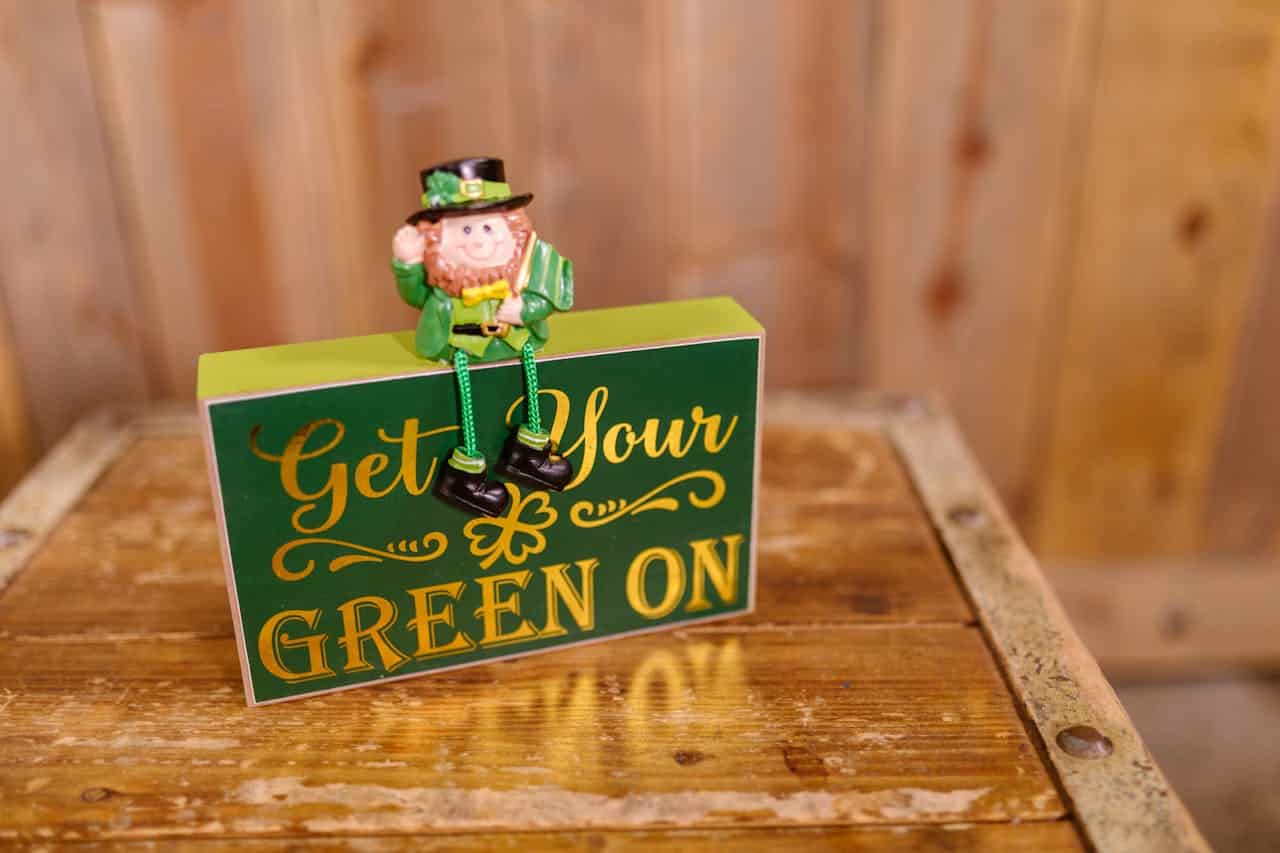
  • Leprechaun figurines and themed signage
  • Green lighting or uplighting for evening atmosphere
  • Irish flags and banners
  • Themed table centerpieces with shamrocks or mini pots of gold
  • Photo-worthy backdrop areas for social media sharing

Offer Family-Friendly Options

Family Appeal Strategies:

  • Green-themed kids’ menu items (green pancakes, green mac and cheese)
  • Non-alcoholic “mocktails” in festive green colors
  • Face painting station with shamrocks and Irish flags
  • Leprechaun treasure hunts for children
  • Coloring sheets and activities
  • Special kids’ meal deals
  • Early dining hours for families before evening crowds

Leverage Digital Marketing and Social Media

Wearing green is the leading St. Patrick’s Day activity at 79.4%, making visual content especially shareable.

Marketing Strategy:

  • Start promoting 3-4 weeks in advance
  • Create Instagram-worthy moments with themed decorations and drinks
  • Use hashtags: #StPatricksDay, #StPaddysDay, #LuckOfTheIrish, #GoGreen
  • Run social media contests (best green outfit, most festive photo)
  • Email past St. Patrick’s Day customers with early reservation offers
  • Post daily countdown content leading up to March 17th
  • Share menu sneak peeks and drink specials
  • Partner with local food bloggers or influencers
  • Create Facebook events for special programming

Manage Reservations and Capacity

With St. Patrick’s Day being one of the busiest days for restaurants, proper reservation management is critical.

Reservation Best Practices:

  • Open reservations 3-4 weeks in advance
  • Consider prepayment or deposit requirements to reduce no-shows
  • Implement time limits for table turns during peak hours
  • Use waitlist technology for walk-in overflow
  • Send confirmation reminders 24-48 hours before reservations
  • Overstaff for expected volume increase
  • Pre-batch popular cocktails to speed service
  • Prepare mise en place for high-volume menu items

Don’t Forget Takeout and Delivery

Not everyone wants to brave crowded restaurants and bars on St. Patrick’s Day. Offering takeout and delivery options expands your revenue potential.

Takeout Strategies:

  • “Meal for Two” or “Family Feast” Irish dinner packages
  • Pre-order systems to manage kitchen capacity
  • Special packaging that keeps food hot and fresh
  • Include reheating instructions for best quality
  • Bundle drinks (growlers of green beer, Irish whiskey bottles)
  • Offer pickup discounts to incentivize direct orders
  • Market through third-party delivery platforms
  • Create “St. Patrick’s Day Party Kits” with food, drinks, and decorations

Create Loyalty Through Post-Holiday Marketing

St. Patrick’s Day provides an opportunity to capture new customers and turn them into regulars.

Turn St. Patrick’s Day Visitors Into Loyal Customers

With Bloom’s restaurant marketing platform, you can:

– Automatically capture customer data from St. Patrick’s Day visitors

– Track who came in during the celebration and what they ordered

– Send automated follow-up campaigns in the following weeks

– Offer “come back” promotions for April to maintain momentum

– Segment customers by spending patterns and preferences

– Measure the true ROI of your St. Patrick’s Day promotions

– Build your customer database for future holiday marketing

The best part? Bloom automates these processes, allowing you to focus on delivering great experiences while the platform handles customer engagement and retention.

Click Here to Schedule a Free Online Demo, or call 727-877-8181 to see how we can help you save time and drive tangible results for your restaurants.


Announcement: New Wedding Anniversary Marketing Trigger for Restaurants

Bloom Intelligence is thrilled to introduce another powerful new feature: the ability to collect and utilize wedding anniversary data in your email and SMS marketing campaigns.

This innovative tool will allow restaurants to capture anniversary dates when guests log into WiFi, complete a website form, or through Bloom’s integration partners. The data is automatically added to guest profiles, enabling restaurants to trigger automated personalized email and SMS marketing messages that celebrate these special moments.

With this feature, live to all users the week of February 10, 2025, Bloom helps restaurants create deeper emotional connections with their guests, driving loyalty and increasing customer lifetime value (CLV).

Effortless Setup, Powerful Results

One of the standout aspects of this new feature is how simple it is to implement. Restaurants can activate the wedding anniversary field in their WiFi login pages or website forms with just a few clicks.

  • To add the anniversary date field to your website form, locate your form in the Bloom Dashboard, open it, and simply drag and drop the Anniversary block into your form.
  • To add the anniversary date field to your WiFi landing page, call your customer success representative at 727-877-8181.

Alternatively, Bloom can pull this data directly from its integration partners, ensuring a seamless experience for both the restaurant and the guest.

Once the data is collected, Bloom’s platform takes care of the rest, automating personalized messages that make guests feel valued and appreciated.

For example, imagine a guest receiving a thoughtful email or SMS on their wedding anniversary, inviting them to celebrate with a complimentary glass of champagne or a discount on their next visit.

These small gestures can have a big impact, fostering a sense of connection and loyalty that keeps guests coming back.

The Link Between Emotional Connection and Customer Lifetime Value

Happy, emotionally connected guests are not just one-time visitors—they become loyal patrons who return again and again.

Personalization plays a critical role in building these connections. According to a study by Epsilon, 80% of consumers are more likely to make a purchase when brands offer personalized experiences.

By leveraging wedding anniversary data, restaurants can create moments that resonate deeply with guests, turning ordinary interactions into memorable experiences.

This emotional connection directly translates into increased customer lifetime value. Research shows that increasing customer retention rates by just 5% can boost profits by 25% to 95% (Source: Harvard Business Review).

When guests feel a personal connection to your restaurant, they’re more likely to return, spend more, and recommend your establishment to others.

In fact, 77% of consumers have chosen, recommended, or paid more for a brand that provides a personalized service or experience (Source: Forbes).

Launching an anniversary marketing campaign feeds directly into this type of emotional connection.

Driving Revenue Through Personalization

Personalized marketing isn’t just about making guests feel good—it’s also a powerful revenue driver. Bloom’s new feature allows restaurants to send timely, relevant messages that encourage repeat visits and higher spending.

For instance, a personalized anniversary offer can bring guests in during slower periods, increase average check sizes, and create opportunities for upselling.

Studies show that personalized emails deliver 6x higher transaction rates (Source: Experian), while SMS marketing boasts a 98% open rate (Source: MobileSquared).

These statistics highlight the potential of personalized communication through your restaurant marketing to drive measurable revenue growth.

Restaurants leveraging anniversary-triggered marketing can expect:

  • Higher customer loyalty
  • Increased repeat visits
  • More valuable word-of-mouth referrals

A Competitive Edge in a Crowded Market

In today’s competitive restaurant industry, standing out requires more than just great food and service. It’s about creating an experience that guests can’t find anywhere else.

By celebrating milestones like birthdays, ordering milestones, and wedding anniversaries, restaurants can better differentiate themselves and build a more loyal customer base.

Happy guests are also more likely to share their experiences with friends and family (word-of-mouth advertising), further amplifying your restaurant’s reach and bottom line. In fact, 92% of consumers trust recommendations from friends and family over other forms of advertising, according to Nielsen.

Get Started Today

Bloom Intelligence’s wedding anniversary data feature is designed to be easy to set up and even easier to use. In just a few simple steps, restaurants can start collecting this valuable data and automating personalized messages that delight guests.

By investing in these meaningful connections, restaurants can enhance the guest experience, increase customer lifetime value, and drive long-term revenue growth.

The future of restaurant marketing is personal, and Bloom Intelligence is here to help you make every guest feel special. Ready to transform your marketing strategy and build lasting relationships with your guests?

Contact Bloom Intelligence today to learn more about this exciting new feature and start creating even more unforgettable experiences for your guests.

Discover Bloom Intelligence

Bloom Intelligence is an AI-powered restaurant marketing platform. It includes a powerful customer data platform, automated guest data collection, one-click segmentation, behavior-triggered marketing automation via email and SMS, reputation management, and reporting tools.

Data is collected from sources like WiFi logins, online reservation systems, online ordering platforms, POS systems, website forms, social media, and more. This makes it simple to analyze and segment your guest personas for your restaurant’s digital marketing and operations decisions.

Bloom makes guest data collection effortless, which allows you to quickly execute the strategies listed above, saving you time, increasing customer lifetime values, attracting new guests, improving your reputation, and boosting your bottom line.

Call us or schedule a free demo online and Bloom will show you how our restaurant marketing platform can help you save time and increase your customer lifetime values by automatically building first-party customer databases, unlocking important guest insights to trigger automated marketing at the right time and place, discover true guest sentiment, save at-risk guests, increase your current guests’ frequency, and find new guests.

Click Here to Schedule a Free Online Demo, or call 727-877-8181 to see how we can help you save time and drive tangible results for your restaurants.

Why You Need To Add SMS To Your 2025 Restaurant Marketing Strategy

Have you been thinking about adding SMS marketing (texting) to your 2025 marketing strategy?

In today’s mobile-first world, text messages are among the most-seen messages people receive (an often-quoted industry estimate puts SMS open rates at 98%), making SMS one of the most powerful communication channels available to restaurants.

With most messages being read within three minutes of delivery, SMS marketing presents an unprecedented opportunity for restaurants to connect with their guests in real time.

While social media, email, and traditional advertising play their roles, SMS marketing has emerged as a game-changing tool for creating timely, personal, and engaging communication.

As restaurants face increasing competition and evolving guest expectations, the ability to deliver personalized, timely communications has become more critical than ever.

Adding SMS to your restaurant marketing toolkit can significantly enhance guest engagement and satisfaction.

restaurateurs setting up SMS marketing

The Power of SMS Marketing for Restaurants

The statistics speak volumes about the effectiveness of SMS marketing in the restaurant industry. Email marketing typically sees open rates of 20% to 30%, while SMS open rates are commonly estimated at about 98% (SMS has no open tracking, so that figure is an estimate rather than a measurement).

This remarkable engagement level translates directly to business results, with mobile marketing driving 79% of consumers to make a purchase.

When compared to other marketing channels, SMS stands out for its immediacy and direct impact. Text messages command immediate attention, unlike emails that could get buried in crowded inboxes or social media posts that can get lost in busy feeds.

This instantaneous connection makes SMS particularly valuable for time-sensitive promotions and last-minute opportunities to drive restaurant traffic.

Moreover, guests increasingly prefer businesses that communicate directly and personally. A well-crafted SMS feels like an invitation rather than a promotion.

By leveraging SMS, restaurants can not only meet but exceed modern guest expectations, offering convenience and personalization that other channels struggle to deliver.

restaurant regular getting a text from restaurant

Creative SMS Campaign Strategies That Drive Results

SMS marketing offers a versatile platform for a wide range of creative campaigns. Here are some effective strategies restaurants can implement:

Birthday and anniversary celebrations represent a perfect opportunity to create personal connections with guests.

By sending personalized messages with special offers like complimentary desserts or exclusive discounts, restaurants can make these occasions more memorable while encouraging visits during these celebration periods.

Event promotions through SMS have proven particularly effective for driving attendance on special occasions. Whether it’s announcing live music nights, wine-tasting events, or seasonal menu launches, text messages ensure your announcements reach guests when they’re most likely to act.

The immediacy of SMS makes it ideal for promoting limited-time offers and filling last-minute reservations.

Re-engaging lost guests represents another powerful application of SMS marketing. By analyzing guest data to identify those who haven’t visited recently, restaurants can send carefully crafted “We Miss You” messages with compelling offers to bring them back.

This proactive approach to restaurant guest recovery often yields higher response rates than traditional email campaigns.

Guest feedback is crucial for continuous improvement, and SMS provides an efficient channel for gathering insights. By sending survey links shortly after visits, restaurants can capture fresh feedback while the experience is still top of mind.

This timely approach typically generates higher response rates and more detailed feedback compared to traditional survey methods.

Reservation and order reminders reduce no-shows and streamline operations by sending automated SMS confirmations and reminders for reservations and online orders.

This simple step can significantly improve efficiency and reduce wasted resources.

Exclusive Access to VIPs rewards your most loyal guests with exclusive perks, such as sneak peeks of new menu items or early access to reservations. This VIP treatment fosters a strong sense of community and strengthens guest loyalty.


Elevating the Guest Experience Through SMS Integration

While SMS marketing is a powerful tool, its true potential shines when integrated into a broader guest engagement strategy. SMS should not exist in isolation but as a complementary piece of your marketing puzzle. When combined with email campaigns, social media updates, and in-restaurant interactions, SMS enhances the overall guest experience.

For instance, imagine a guest receiving an email promoting a new seasonal menu, followed by an SMS with a link to reserve a table. This coordinated approach ensures consistent messaging across platforms while catering to different guest preferences.

By delivering timely, relevant, and personalized messages, restaurants can make every guest feel more valued and appreciated. This consistent communication builds stronger relationships and enhances the overall dining experience.

Guest retention improves significantly when restaurants maintain regular, meaningful contact through SMS. By combining exclusive rewards, personalized offers, and relevant updates, restaurants can create a sense of connection that keeps guests coming back.

The data shows that engaged guests visit more frequently and spend more per visit than those who aren’t engaged through mobile channels.

Revenue growth follows naturally from effective SMS marketing implementation. Time-sensitive offers can drive immediate action, helping restaurants fill tables during traditionally slower periods. Imagine having a full dining room on a once-empty Tuesday afternoon.

VIP programs delivered through SMS can create excitement around new menu items or special events, generating buzz and encouraging high-value guests to visit more frequently.

full restaurant dining room

Implementation Strategies for Success

Successfully implementing SMS marketing requires a thoughtful approach and the right tools. Modern restaurant marketing platforms like Bloom Intelligence make it easy to launch and manage SMS campaigns while integrating them with other marketing channels.

Platforms like Bloom provide valuable guest data and advanced segmentation capabilities, enabling restaurants to target their messages effectively.

Automation plays a crucial role in maintaining consistent communication without overwhelming staff – and makes it even easier.

From birthday messages to reservation reminders, automated SMS workflows ensure no opportunity for engagement is missed. The key is to balance automation with personalization, ensuring every message feels relevant and valuable to the recipient.

The result is a seamless, efficient system that enhances guest engagement while reducing manual effort – and improving your bottom line.

Taking Action for Future Success

The evidence is clear: SMS marketing represents a powerful opportunity for restaurants to enhance guest engagement, drive loyalty, and increase profitability.

By leveraging the immediate nature of text messaging and combining it with sophisticated targeting and automation, restaurants can create meaningful connections with their guests that drive real business results.

As competition in the restaurant industry continues to intensify, those who embrace effective SMS marketing strategies will have a significant advantage in attracting and retaining guests. The time to act is now.

Start by evaluating your current guest engagement efforts and identifying opportunities where SMS could drive better results.

Whether you’re looking to improve guest retention, increase event attendance, or drive more immediate responses to promotions, SMS marketing provides the tools and capabilities to achieve these goals more effectively than ever before.

restaurant manager setting up SMS marketing

Discover Bloom Intelligence

Bloom Intelligence is an AI-powered restaurant marketing platform. It includes a powerful customer data platform, automated guest data collection, one-click segmentation, marketing automation via email and SMS, reputation management, and reporting tools.

Data is collected from sources like WiFi logins, online reservation systems, online ordering platforms, POS systems, website forms, social media, and more. This makes it simple to analyze and segment your guest personas for your restaurant’s digital marketing and operations decisions.

Bloom makes guest data collection effortless, which allows you to quickly execute the strategies listed above, saving you time, increasing customer lifetime values, attracting new guests, improving your reputation, and boosting your bottom line.

Call us or schedule a free demo online and Bloom will show you how our restaurant marketing platform can help you save time and increase your customer lifetime values by automatically building first-party customer databases, unlocking important guest insights to trigger automated marketing at the right time and place, discover true guest sentiment, save at-risk guests, increase your current guests’ frequency, and find new guests.

Click Here to Schedule a Free Online Demo, or call 727-877-8181 to see how we can help you save time and drive tangible results for your restaurants.