
Author: Robin Johnston

How Restaurants Can Attract Repeat Business from Millennials

If you operate a restaurant or other brick-and-mortar business, you depend a great deal on repeat customers.

It can be particularly challenging to motivate millennials to return consistently to your business. Millennials move at a fast pace and grabbing their attention can be difficult in today’s hyperconnected world.

This requires a well-conceived marketing strategy that understands their behavior and preferences. Here are some of the best ways to get more repeat business from millennials. 

The Importance of Repeat Customers

Every business owner wants loyal customers who frequently return. However, not everyone fully appreciates just how valuable such customers are.

Research indicates that repeat customers typically account for most of a business’s total revenue. Once someone is in the habit of returning to your place, you no longer have to spend as much money convincing him or her to come back.

Such customers are more likely to refer their friends to your business. These are just some of the reasons that it makes sense to prioritize your returning customers.

The Latest Trends for Millennials (and Gen Z)

Toast POS released a study in 2024 about the latest Millennial trends when dealing with restaurants. In the article, they break down:

  • What are Gen Z and Millennials’ dining preferences
  • How these young people view the economy and the future of dining
  • Ways restaurants can attract more Gen Z and Millennial customers
  • Some problems restaurants might face with these diners

Read the full article here: Gen Z And Millennial Restaurant Trends

Reach Millennials on Their Devices

The line dividing online and offline is getting thinner all the time. Today, it’s essential for brick and mortar businesses to have a website as well as social media pages.

If you want to attract millennials, it’s equally vital to connect with them on their smartphones with mobile apps, email, social media, and other online tactics. Nielsen reports that 98% of millennials between 18 and 24 and 97% between 25 and 34 own smartphones.

If you want to appeal to younger customers, you have to connect with them on the platforms they’re using.

Track Your Customers

The first step in attracting more repeat customers is to track the behavior of people who enter your business. Many businesses only know this in a casual manner, as when they recognize familiar faces.

You need a more reliable and systematic way to keep track of returning customers. One of the best ways to do this is through Wi-Fi sensor technology. Many of your customers, millennials, in particular, are likely to boot up their devices when they spend time in your space.

With Wi-Fi analytics, you can be notified whenever someone logs in using the same device more than once. This is an efficient way to measure repeat business.

Apply Triggered Marketing

Online marketers who send out emails and social media messages know the value of timing their communications. They study analytics about when people are most likely to read emails, Facebook posts, and other content.

Most marketing by brick and mortar businesses, on the other hand, doesn’t account for customers’ current locations or daily habits. A newspaper ad, for example, is read whenever the reader happens to see it.

Triggered marketing helps you increase engagement by connecting with customers at strategic moments and places. With the help of the aforementioned Wi-Fi analytics, you can encourage your young customers to return by sending them timely offers.

For example, if someone eats dinner at your restaurant every Friday night and logs into your Wi-Fi, you can send him or her a coupon for a free entree that may entice him or her to try new dishes and return more often.

If you have a salon, you might have a customer who comes in every few weeks for hair styling. Before her next appointment, you could send a coupon promoting another service such as a manicure or massage.

Observe, Measure, and Improve

If you want your millennial customers to return to your business, make sure you’re constantly looking for ways to improve.

  • Analyze your data. Track all of your results, whether from your website, social media campaigns, or emails. Always look for ways to improve your results. Split test elements such as headlines, subject lines, graphics, and layouts.
  • Ask their opinion. Millennials love to tell you what they think. So ask them, whether it’s on social media or printed surveys that you hand out at your business.
  • Reward and loyalty programs. These are familiar techniques but still effective, especially if you offer people discounts on products they highly value.
  • Practice empathic design. While traditional analytics (which, as we just discussed, you should definitely study) focuses on the internet, empathic design is about observing customers in the real world and looking for ways to enhance their experience. Could you make the layout of your cafe or restaurant more comfortable? If you have several types of chairs, which do people prefer? Could you improve the atmosphere with a different type of lighting? These and other design elements can affect customers’ behavior and whether or not they return.

Don’t underestimate the value of repeat customers. They are the bedrock of your business. Millennials are a fickle group, always looking for the latest, the best, and the hippest whether it’s coffee, beer, pizza, or fashion. If you want to attract repeat business from this group, you have to be ready to constantly up your game. {{cta(‘dd239719-d8af-4417-a078-fd3a1900337c’)}} 

Live Event Marketing: How to Leverage Social Media

Live Event Marketing- How to Leverage Social Media.jpgWhen your business hosts a large event, it’s important to make the most of it. You’re spending a lot of time and money on planning and throwing this event, and you need to make sure that you are getting a good return on your investment. One way to do this is by forming a connection with attendees, and having that connection last after they leave the event. 

For this to happen, you need a way to stay in touch with attendees. Years ago, this might have meant gathering phone numbers or mailing addresses, but this is no longer as efficient. Instead, it’s better if you can connect with your visitors digitally online, giving you a way to instantly connect with hundreds – or even thousands – of people. But how to do this? 

Customer Repeat Rate: Loyal Customers are Most Profitable

If you’ve read our website or followed our blog, you’ll know that we love big data. By delivering high-quality insights, we can help you refine your sales and marketing strategies, driving your numbers ever higher. Of course, we know not everyone loves data as much as we do. There’s a lot of information out there, and using it effectively takes a little education and plenty of work.

Data speaks and, luckily, we are fluent in that language. So, today, we’ll be exploring one of the most profitable points of traffic analytics (and perhaps the most under-appreciated), the average customer repeat rate. Read on, to learn more about this metric, why it’s got so much potential for profit, and how you can use updated strategies to take advantage of it.  

What Is Average Customer Repeat Rate?

Let’s start simply by looking at what the average customer repeat rate actually is. Our dashboard defines the customer repeat rate as “the average number of times that customers visited your location during a given time period.” Essentially, this data set will track who your repeat customers are and how often they do business with you before delivering an average that will help you determine your customer retention rating.

These numbers – and the customers they represent – are crucial to building a better customer experience and expanding the influence of your brand. So, if there’s one piece of advice we can give you, it’s this: focus on repeat customers and driving your average repeat customer rate higher. Why? Well, the numbers don’t lie. And data is nothing but numbers. Take a look at some of the reasons why repeat customers are the most profitable.

Repetition is the Key to Loyalty

Rule of thumb: if your average customer repeat rate goes up, you’re doing something right. Repeat customers are the backbone of any business, creating a reliable avenue for revenue and (hopefully) becoming promoters for your business along the way. Customer loyalty is a commodity all its own. Not to mention, repeat customers are cheaper to retain… Just take a look at the data on repeat customer conversions.

Higher Conversion Rates

Repeat customers are easier to sell to. They’ve already bought your product and interacted with your company, so there’s no need to win them over. In fact, according to Marketing Metrics by Paul Farris, a repeat customer has a 60%-70% chance of converting. This number is astronomical in comparison with the estimated 1%-3% average global conversion rate.

By focusing on repeat customers, you can spend less on advertising and conversion tactics and focus on building a better customer experience. If you make your existing customers happy, they’ll become your best source of advertisement.

Purchasing Power

Repeat customers also tend to spend more. It’s been estimated that repeat customers are responsible for generating up to 40% of a given business’ revenue. Not only that, but repeat customers spend more on average than a first-time buyer. Additionally, there is a direct correlation between how long a customer has been with you and how much they spend.

With this information in hand, it’s safe to say that repeat customers are crucial to the success of your business. Who knew?

Rewarding Repeat Customers

There’s nothing like a user-friendly customer experience that is personalized and rewarding. Think of the things that motivate your customers to do business with you again and again. Sure, you’ve got a great product, but in the age of Amazon what makes you stick out? Do you deliver exceptional customer service by following up on every sale? Do you offer a rewards program that encourages repeat purchases to earn exclusive discounts? Capture your customers’ loyalty with retention tools and watch that average customer repeat rate soar!

There you have it: everything you need to know about the customer repeat rate. It’s a pretty exciting tool on its own, but when used in conjunction with our other traffic analytics (First Time Visitor Return Rate, Lifetime Value of Customers, Churn Rate, etc.) you’ll have access to profound insights that will allow you to collect, analyze and react to the needs of your customers. Increase your customer frequency, revolutionize the way you market yourself, and watch your business grow with the help of Bloom Intelligence. Contact us to learn more!

Increase Your Customer Lifetime Value with the 80-20 Rule

One of the most important business metrics is the lifetime value of customers. In short, it is the expected amount that a single customer will spend at your business during their lifetime of patronage with you. Customers with a high lifetime value tend to spend more per purchase, spend more often, and remain loyal for years. The more high-value customers you have, the better your current and future business prospects.

Acquiring these customers may take a long time. This depends on whether increasing lifetime value is an active goal and on the methods used in the customer acquisition and retention processes. However, achieving rapid improvements in customer lifetime value (CLVs) is doable with a concept that was discovered over a century ago.

What is The 80-20 Rule?

While there are many ways of stating the 80-20 rule, the most useful of these for businesses is that 80% of your results will come from 20% of your X. X can be words such as efforts, investments, employees, advertising sources, customers, etc. Your “results” with respect to customers could be sales dollars, profits, or other metrics. For example, 80% of your sales dollars will come from 20% of your customers.

To some, it might seem mysterious why the rule should work at all. But the reason is that most things are unevenly distributed. Some apple trees grow more fruit than others. Some employees are more productive than others, and some customers are more profitable. The ratio is not always 80-20 and the percentages do not always add up to 100%. Nevertheless, a minority of inputs, sometimes called the vital few, will usually have a disproportionate effect on your business. In addition, the 80-20 rule can be used to find the causes of businesses problems. For example, 80% of your customer service headaches will be caused by 20% of your customers.

Increasing Your customer lifetime value With the 80-20 Rule

Rather than dividing your resources equally between different types of marketing campaigns, let the 80-20 rule tell you which of these campaign types yields the best results. If 80% of your high lifetime value customers come from only 20% of your marketing campaigns, you should determine the commonalities between these successful campaigns. Perhaps they have a single demographic in common, or perhaps it was a specific promotion. Greater focus on this commonality will increase your marketing ROI.

For example, if a marketing email was responsible for acquiring 80% of your high lifetime value customers, you might want to commit more resources to your email marketing strategy. Note that campaigns bringing in high lifetime value customers will not necessarily bring in the most initial sales. Initial sales and CLV are different business metrics.

The 80-20 rule applications discussed so far, will efficiently increase the number of high lifetime value customers. However, you can also apply this rule to increase the lifetime value of your current best customers. If you are using a large variety of reward programs, upsells, and cross-sells to increase customer lifetime value, look for 80-20 patterns in your data.

For example, if 20% of your reward programs were responsible for most (80%) of your customer lifetime value improvements, then committing more resources to these programs and reducing resources to the other 80% is worth your while. Look for 80-20 patterns in your upsell and cross-sell data as well.

Note that the 80-20 rule works best with a large amount of data. Online sample size calculators are available for determining the minimum sample size that is statistically meaningful. The main takeaway here is that for long-term business success, you should seek to improve the lifetime value of your customers and that the 80-20 rule provides an efficient way to go about it. 80-20 patterns are (almost) everywhere. Look for them in your business data, especially when seemingly inexplicable spikes in sales or CLVs occur.


Combining Marketing and Technology Skills is Vital

Marketing used to be a job that was at least somewhat separate from technology, but now many marketing efforts are completely dependent on technology. This has created the need for a new position at many companies: Chief Marketing Technologist (CMT). If you’re a marketing manager at a retail store or restaurant, here is what you need to know about the marriage between marketing and technology.

Holiday Marketing Campaign Lessons for Your Business

Shopping for the holidays has always been a large revenue earner for retail stores. However, holiday shopping is important for other reasons. How retailers market and cater to clients for the holidays reveals important insights about effective ways to communicate with customers. Retailers and even those in the restaurant industry can learn from these trends in holiday marketing campaigns.

Employ Personalization

The best part of holiday shopping is that there is a huge demand as virtually every adult on the planet has at least one person they need to shop for. The downside is that everyone knows how valuable holiday shoppers are to businesses, so the competition is fierce. To stand out, stores focus on how they talk to clients.

This doesn’t just mean interacting with customers on social media or through emails but encompasses the way brands talk to shoppers. Retailers report success with email marketing campaigns that are simple and include a greeting and concise messages. Overall, the content must be personalized.

Email Marketing is Most Effective

While social media gets a lot of focus when talking about customer engagement, email marketing is still superior when reaching clients. 66% of those surveyed found email marketing the most effective form of advertising over online and print ads and social media. Perhaps because it feels more intimate and friendly to receive a message tailored to you than to read posts anyone can view on social media.

If you use social media, use Facebook

When talking about social media, Facebook remains king for marketing campaigns. A whopping 88% of companies surveyed invest marketing dollars into the site. In second place is Twitter with 46% investing there.

Start Early

During the holidays, the biggest revenue driver is said to be identifying and aligning seasonal marketing strategies with eCommerce promotions. Preparing promotions and marketing content early was the most helpful strategy for the holiday season for 62% of companies. Ranked less important was having a responsive mobile website. Of those who reported a profitable holiday season, only 22% had success when preparing in September or later. Of those who started prepping before September, 33% had success.

Using These Lessons

Whether gearing up for the holidays or not, topical promotional content that is also personalized makes an impact on customers. These two points can be used by retailers and restaurant owners in any season. Success requires planning early and making genuine connections with customers.

Let’s imagine a mid-priced restaurant called Hank’s Bistro. They specialize in hot soups and sandwiches, and their business often drops off in the summer when the weather turns warm. In anticipation of  the summer, they start planning early in the year and have the Bloom Intelligence Analytics Dashboard to help them.

They host a March Madness contest that ties in with basketball season and ask clients to vote on different sandwiches. The winners will go on their summer menu. During the period where clients can try the sandwiches, they sell each on a different day. They’re able to establish a baseline then view days where the Popular Visitor Time increases at lunch. This gives them two ways to gauge their efforts, through feedback and the numbers.

Hank’s advertised their contest on social media and through email. They had moderate success but are already planning how to improve their next campaign. While their contest tied in with the season, they’ve learned that it didn’t appeal much to their audience. The sensor technology has given them a demographic breakdown and shown that middle aged women are their core audience. Their next effort has to appeal more to this group.

Data Driven — Business Intelligence Benefits Car Dealerships

Business intelligence takes business data and reorganizes it into a clear picture. Data is a valuable resource that many car dealerships underutilize.  In this blog, we learn how business intelligence benefits car dealerships.Car Dealers and Income Streams

How do car dealers make money? The obvious answer is that they sell cars but they also make money by selling services and parts. What business intelligence does is it looks at data from different angles. For example, there is the productivity of employees. Data might answer questions such as who sells the most, who produces the most leads, who converts the most leads, and who loses the most leads.

Data intelligence might also look at data that is all about customers. It can answer questions such as, of all the people who bought cars here last year, how many of those people use our service department for routine services such as oil changes, scheduled maintenance, and warranty service? This is also an example of how data empowers managers. For example, if only 25 percent of those customers who purchase vehicles use the dealer’s service department for routine maintenance, then you have a 75 percent loss of business from those customers.

Loss versus Opportunity

When data helps answer questions, the results are both a loss and an opportunity. First, data helps illustrate deficits and those deficits become opportunities. We have a 75 percent deficit in purchasers who do not utilize our car service for routine maintenance. Opportunity is the ability to capitalize on that loss. Data can help you capitalize on lost opportunities by either showing you the loss or by helping you gather the information that allows you to take advantage of opportunities. Business intelligence helps dealers by:

  • automatically builds a house list of prospects, customers, and sales opportunities
  • increases customer engagement
  • provides information on return frequency to the lot
  • shows popular visit times

If you are looking to take advantage of an opportunity to increase the percentage of visitors that utilize the dealer’s car service center, then what you are looking to do is to increases customer engagement.

The next question is, “how are we engaging our customer base when it comes to vehicle service?”

  • Email — courtesy service notices, coupons, service announcements, thank you notes, and service specials
  • Text — service specials, etc.
  • Calling — Do you call customers to remind them it is time for vehicle service?
  • Direct Mail — Do you send notices, coupons, newsletters, or other marketing material to your customers via regular mail?

Can you do all these things?  Are you capturing the right data? In other words, why are only 25 percent of customers who purchased a car from you returning to your shop for service? Data solves those kinds of problems by showing you trends.

Data offers a powerful set of tools. In its raw form, data is just a pile of numbers. It takes the right tools to turn that raw pile of numbers into a clear picture that then helps dealers to boost sales, increase efficiency, and spot deficits. That is exactly what Bloom Intelligence does. Via the Bloom Intelligence Dashboard, you gain a crystal-clear image of loss and opportunity. With the integration of Bloom Intelligence Wi-Fi, you also increase the capabilities of analytics and marketing.

Bloom Intelligence delivers a variety of analytics such as footfall metrics, loyalty metrics, engagement metrics, and business metrics. What this information helps show is —

  • The average daily traffic as it pertains to potential customers.
  • Shows how many people are first-time visitors to your dealership or website.
  • What are the most popular times that people visit your business are.
  • How many first-time visitors return
  • Customer demographics.
Engagement metrics show
  • How many people come to your location from promotions such as social media, ads, etc.
  • Are people utilizing free services such as Wi-Fi?
  • What percentage of new email or contract information your system is collecting.
  • Social media performance
  • Churn rates

Loss and opportunity – car dealerships have both, but can your dealership capitalize on either? They can with business intelligence and the easy way that data becomes a tool that helps managers make informed decisions about how to turn a loss into profit.

Restaurant Customer Segmentation to Improve Your Marketing

Restaurant Customer Segmentation Example

Restaurant customer segmentation is incredibly valuable to a strategic marketing program. It increases ROI and improves guest experiences.

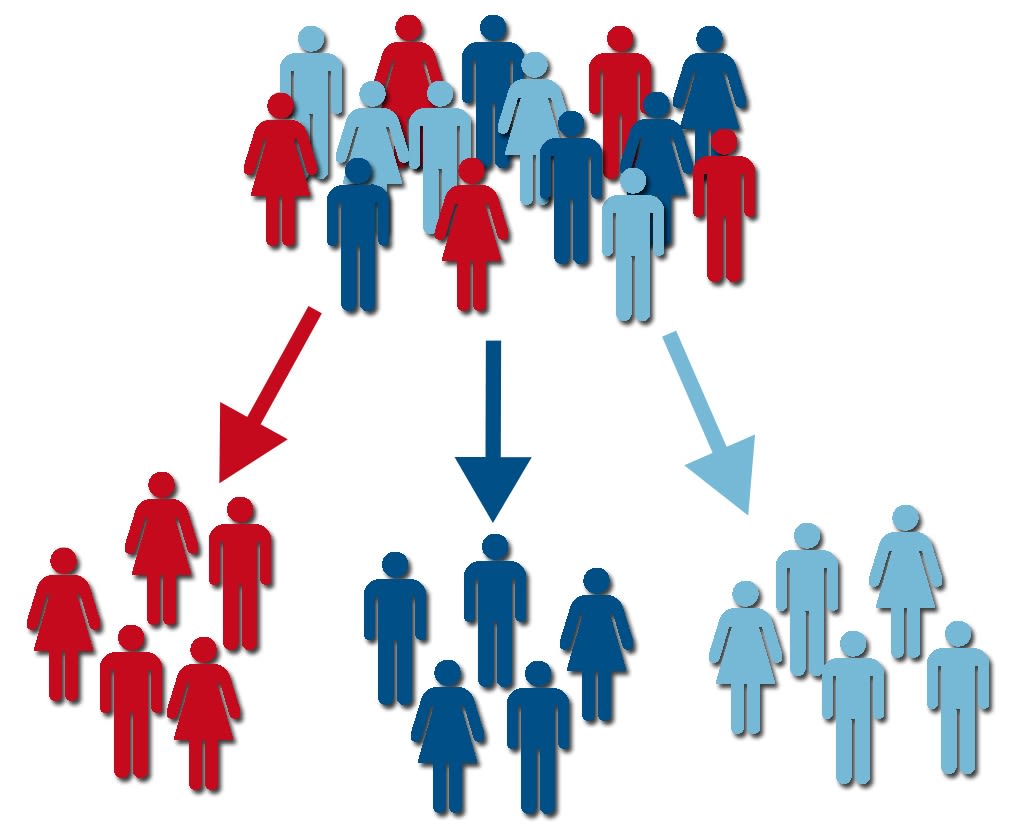
When you know who your guests are, you can segment them according to their similarities and differences, then your marketing messages can target each group with appropriate and specific messages that will best engage them.

No matter your call to action — a return visit, a Facebook like, or something else — a targeted communication approach will be more successful than blasting the same message to every guest in your database.

In addition to calls-to-action, segmentation and target marketing will better engage your patrons, build loyalty, increase customer lifetime value, and improve your return on investment.

Here’s how it might work.

Let’s say you have identified a customer segment that dines with you once a week. These loyal guests might enjoy a special perk or coupon for referring friends or writing a restaurant review on Google.

Customer buying history provides another option for segmentation. Think how special your guests will feel if you communicate to them about the things they purchase from you.

For example, a restaurant’s steak lovers will love to hear from you about a new menu item with a unique preparation or cut.

When you integrate customer segmentation data with point-of-sale data you have a golden egg.

For instance, customers love your gratitude for their patronage. Sending an email thanking a guest shortly after a visit to the restaurant, and including a targeted promotion, will likely yield higher success of the offer than sending the same promotion at a random time.

When you have access to a tool that can show you both customer spending habits and visit frequency, you have all you need to create some simple but powerful campaigns based on basic restaurant customer segmentation.

Since your high-frequency / low-expenditure customers are unlikely to increase their visit frequency, you can send them offers to encourage them to try new items or add an appetizer or dessert. Meanwhile, promotions for your big spenders can be focused on getting them to return more often.

The more you know about your guests the more ways you can segment your database to appeal to their individual preferences.

Targeted messages make for more loyal customers. Loyal customers make for higher customer lifetime values. Higher customer lifetime values make for more profitable restaurants.

Restaurant Customer Segmentation Guide