


WiFi Marketing: Generational Customer Segmentation Tips
A recent study conducted by The NPD Group, ranked the 8th largest market research company in the world by the AMA Gold Top 50 report, found that Generation Z may soon be giving a large boost to restaurant industry traffic.
In a recent RestaurantHospitality.com article, Gen Z was described as being, “…tech-savvy and socially conscious — and love to dine out. In fact, these consumers, born from 1995 to 2012, made 11 billion restaurant visits to restaurants in the year ended July 2019, and now represents 24 percent of total foodservice traffic. They are also the strongest users of fast-casual restaurants.”
At the same time, Millennials and Baby Boomers are slowly reducing their number of visits to restaurants, and this trend is expected to continue.
Why Generational Segmentation Is Crucial
This poses a major issue for restaurant marketing professionals, namely the fact that one message or incentive won’t resonate with all of their customers cross-generationally. With the divergence of each generation in terms of dining preferences, it only makes sense that each of these generational personas would engage better with messages aimed directly at those preferences.
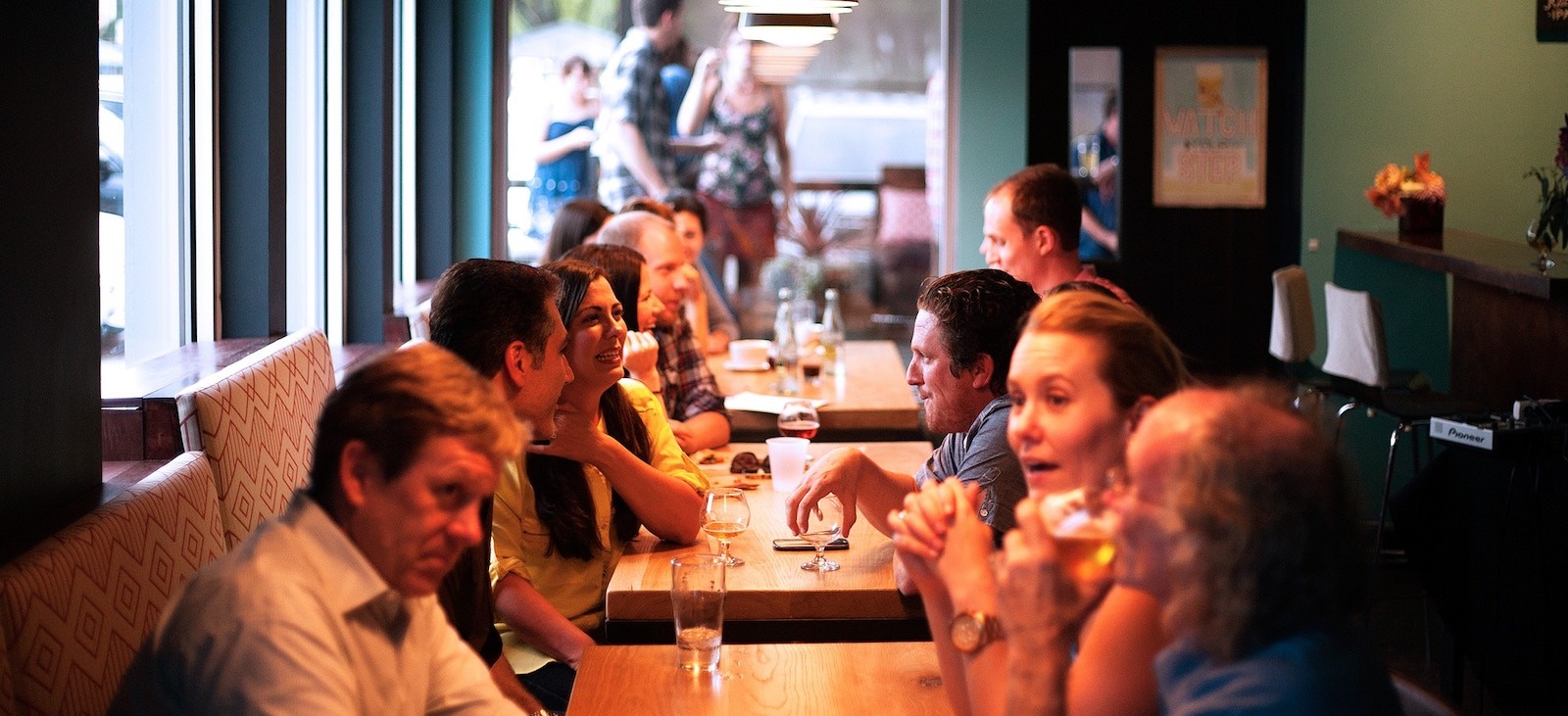
For instance, since the Baby Boomers are visiting restaurants less and less, it would make sense to send them a worthwhile incentive to get them back through your doors. On the other hand, the Gen Z population is visiting more and more, so sending them an incentive would only drive up marketing costs.
Likewise, the tone and scope of your message would be different when marketing to older Baby Boomers versus the younger Gen Z crowd.
Without the benefit of having actual customer data to use for creating marketing campaigns, marketers are left to base campaigns and messages more on their personal opinion. In this situation, effective marketing becomes extremely difficult to manage, measure, and keep profitable.
{{cta(‘4b4e8822-2373-461c-8861-70ed8e1d466f’)}}
The issue then becomes having a way to collect customer data in an effective, affordable, non-obtrusive, and secure manner.
WiFi analytics solves this problem.
WiFi Analytics Is The Best Solution For Restaurant Customer Data Collection
Implementing a top-quality WiFi marketing and analytics platform like Bloom Intelligence allows restaurant owners and operators to collect accurate customer data using their guest WiFi access point. Even if a customer doesn’t log into the WiFi, their mobile device will be detected, and the platform will log and track that device based on its unique ID.
This provides powerful and comprehensive customer behavior data, also known as location analytics. It is considered “anonymous” data because it is not yet tied to a specific person – only a device. This type of data includes:
- Daily Overall Traffic Counts
- First-Time Visitors
- First-Time Visitor Return Rates
- Average Customer Repeat Rates
- Average Dwell Times
- Popular Visit Times
- Dwell Time by Hour, and more
When a customer logs into the WiFi access point, they are taken to a WiFi landing page, also known as a captive portal. When they enter their name and email address to gain internet access, the platform will then tie all of the previously collected device data to a person, along with their contact information.
A customer profile is created for the guest and all previous and future behavior data will be shown there. If they log in using a social media platform, then any public demographic data will also be placed into the customer profile, such as age and gender.
Bloom will then begin progressively profiling the customer. This means that any subsequent attempts to log into WiFi will result in a request for an additional piece of information, such as phone number, age, gender, or postal code. Over time, a comprehensive, detailed profile will be created.
Segmenting WiFi-Collected Customer Data
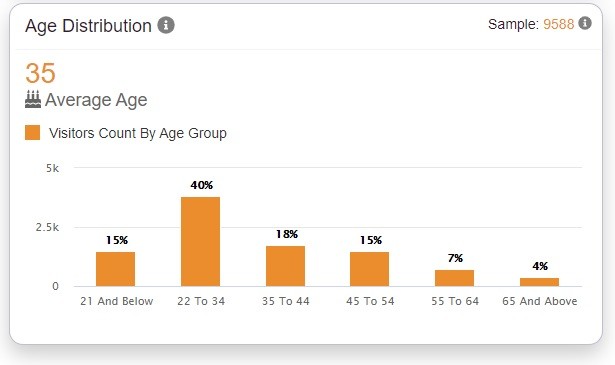 Bloom users have passively built enormous databases of customer profiles. Overall average age of customers can be easily seen on the Bloom dashboard. This will give you a great idea of where to place the most focus as you get started. And it will act as a measurement tool moving forward.
What’s more, the customer database can be easily sorted and filtered by certain demographics, including age, and saved for use later. This means that users can create various customer lists and develop separate marketing campaigns for each of them.
Given the data found in the NPD Group study, restaurant marketers will need this ability in order to stay relevant to their customers, stay ahead of the competition and keep their seats full. It allows them to market efficiently to each generation separately, sending more targeted messaging that more customers will engage with.
According to a study from Mailchimp, marketing email recipients are 75% more likely to click on emails from segmented campaigns than non-segmented campaigns. And an article from CMO.com stated that targeted promotions are, on average, almost twice as effective as non-targeted ones. Mailchimp also noted that email open rates are 14.31% higher in segmented campaigns.
Customer segmentation is just one of the many features and growth tools available with Bloom Intelligence. Take a look at our white papers and case studies to see how WiFi marketing and analytics can help your business grow.
Click here or call us at 727-877-8181 for a free, no-obligation demo of the Bloom Intelligence platform.
{{cta(‘4b4e8822-2373-461c-8861-70ed8e1d466f’)}}
FREQUENTLY ASKED QUESTIONS
Common Questions About Restaurant Marketing
Restaurant marketing is the process of getting people to visit your restaurants. Restaurant marketing creates loyalty, provides data to research, analytics, and allows restaurants to gain a better understanding of their ideal customer profile. It utilizes all customer channels: guest WiFi, website, social, rating sites, mobile apps, email, text, and advertising.
WiFi marketing is a marketing technique that uses guest WiFi to collect & clean customer data such as names, emails, phone numbers, customer behavior, and demographics. This data is used to personalize marketing campaigns to increase customer loyalty, build online reviews, and save at-risk customers. The performance of every campaign can be tracked down to the tangible ROI of a customer walking back in your door.
Restaurant reputation management is the process for restaurants to manage customer feedback and creating systems to improve customer experiences, passively build positive online reviews, and save at-risk customers. It is a very important aspect of running a successful restaurant business.
A restaurant customer data platform (CDP) is a unified software system that collects, consolidates, and activates guest data from multiple sources including WiFi networks, POS systems, online ordering platforms, reservation systems, websites, loyalty platforns, event platforms, and review sites. Unlike generic CDPs built for e-commerce or SaaS companies, restaurant CDPs are purpose-built to handle restaurant-specific data sources and create actionable guest intelligence that drives personalized marketing, operational improvements, and revenue growth automatically.
Bloom Intelligence uses machine learning to identify at-risk customers. When one is recognized, the system will send them a message with an incentive to get them to return and re-establish their visit pattern. Bloom users are seeing up to 37% of churning customers return.
Ready to Turn Your Guest Data Into Revenue?
Join 1,000+ restaurant locations using Bloom Intelligence to recover lost guests, automate marketing, and drive measurable revenue growth.
Keep Reading
View All Posts →8 in 10 Restaurant Guests Never Come Back. Here’s What That’s Costing You.
Key Takeaway Eight in ten restaurant guests who have ever visited your location have never returned, creating a measurable revenue...
Your Restaurant Reputation Management Software Only Does 10% of the Job. Here’s What It’s Missing.
Key Takeaway Most restaurant reputation management software only handles review responses. That's just 10% of the value your guest sentiment...
The 13x Guest: How Restaurant Data Analytics Reveals Your Most Valuable Customers
Key Takeaway Your most loyal restaurant guests spend 13 times more than first-time visitors — but most restaurants can't identify,...