


How Restaurants Can Attract Repeat Business from Millennials
If you operate a restaurant or other brick-and-mortar business, you depend a great deal on repeat customers.
It can be particularly challenging to motivate millennials to return consistently to your business. Millennials move at a fast pace and grabbing their attention can be difficult in today’s hyperconnected world.
This requires a well-conceived marketing strategy that understands their behavior and preferences. Here are some of the best ways to get more repeat business from millennials.
The Importance of Repeat Customers
Every business owner wants loyal customers who frequently return. However, not everyone fully appreciates just how valuable such customers are.
Research indicates that repeat customers typically account for most of a business’s total revenue. Once someone is in the habit of returning to your place, you no longer have to spend as much money convincing him or her to come back.
Such customers are more likely to refer their friends to your business. These are just some of the reasons that it makes sense to prioritize your returning customers.
The Latest Trends for Millennials (and Gen Z)
Toast POS released a study in 2024 about the latest Millennial trends when dealing with restaurants. In the article, they break down:
- What are Gen Z and Millennials’ dining preferences
- How these young people view the economy and the future of dining
- Ways restaurants can attract more Gen Z and Millennial customers
- Some problems restaurants might face with these diners
Read the full article here: Gen Z And Millennial Restaurant Trends
Reach Millennials on Their Devices
The line dividing online and offline is getting thinner all the time. Today, it’s essential for brick and mortar businesses to have a website as well as social media pages.
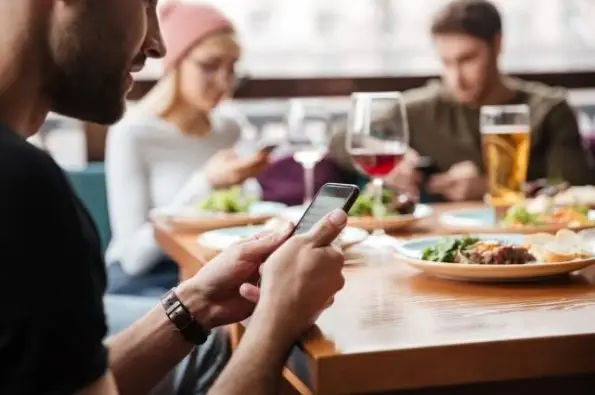
If you want to attract millennials, it’s equally vital to connect with them on their smartphones with mobile apps, email, social media, and other online tactics. Nielsen reports that 98% of millennials between 18 and 24 and 97% between 25 and 34 own smartphones.
If you want to appeal to younger customers, you have to connect with them on the platforms they’re using.
Track Your Customers
The first step in attracting more repeat customers is to track the behavior of people who enter your business. Many businesses only know this in a casual manner, as when they recognize familiar faces.
You need a more reliable and systematic way to keep track of returning customers. One of the best ways to do this is through Wi-Fi sensor technology. Many of your customers, millennials, in particular, are likely to boot up their devices when they spend time in your space.
With Wi-Fi analytics, you can be notified whenever someone logs in using the same device more than once. This is an efficient way to measure repeat business.

Apply Triggered Marketing
Online marketers who send out emails and social media messages know the value of timing their communications. They study analytics about when people are most likely to read emails, Facebook posts, and other content.
Most marketing by brick and mortar businesses, on the other hand, doesn’t account for customers’ current locations or daily habits. A newspaper ad, for example, is read whenever the reader happens to see it.
Triggered marketing helps you increase engagement by connecting with customers at strategic moments and places. With the help of the aforementioned Wi-Fi analytics, you can encourage your young customers to return by sending them timely offers.
For example, if someone eats dinner at your restaurant every Friday night and logs into your Wi-Fi, you can send him or her a coupon for a free entree that may entice him or her to try new dishes and return more often.
If you have a salon, you might have a customer who comes in every few weeks for hair styling. Before her next appointment, you could send a coupon promoting another service such as a manicure or massage.
Observe, Measure, and Improve
If you want your millennial customers to return to your business, make sure you’re constantly looking for ways to improve.
- Analyze your data. Track all of your results, whether from your website, social media campaigns, or emails. Always look for ways to improve your results. Split test elements such as headlines, subject lines, graphics, and layouts.
- Ask their opinion. Millennials love to tell you what they think. So ask them, whether it’s on social media or printed surveys that you hand out at your business.
- Reward and loyalty programs. These are familiar techniques but still effective, especially if you offer people discounts on products they highly value.
- Practice empathic design. While traditional analytics (which, as we just discussed, you should definitely study) focuses on the internet, empathic design is about observing customers in the real world and looking for ways to enhance their experience. Could you make the layout of your cafe or restaurant more comfortable? If you have several types of chairs, which do people prefer? Could you improve the atmosphere with a different type of lighting? These and other design elements can affect customers’ behavior and whether or not they return.
Don’t underestimate the value of repeat customers. They are the bedrock of your business. Millennials are a fickle group, always looking for the latest, the best, and the hippest whether it’s coffee, beer, pizza, or fashion. If you want to attract repeat business from this group, you have to be ready to constantly up your game. {{cta(‘dd239719-d8af-4417-a078-fd3a1900337c’)}}
FREQUENTLY ASKED QUESTIONS
Common Questions About Restaurant Marketing
Restaurant marketing is the process of getting people to visit your restaurants. Restaurant marketing creates loyalty, provides data to research, analytics, and allows restaurants to gain a better understanding of their ideal customer profile. It utilizes all customer channels: guest WiFi, website, social, rating sites, mobile apps, email, text, and advertising.
WiFi marketing is a marketing technique that uses guest WiFi to collect & clean customer data such as names, emails, phone numbers, customer behavior, and demographics. This data is used to personalize marketing campaigns to increase customer loyalty, build online reviews, and save at-risk customers. The performance of every campaign can be tracked down to the tangible ROI of a customer walking back in your door.
Restaurant reputation management is the process for restaurants to manage customer feedback and creating systems to improve customer experiences, passively build positive online reviews, and save at-risk customers. It is a very important aspect of running a successful restaurant business.
A restaurant customer data platform (CDP) is a unified software system that collects, consolidates, and activates guest data from multiple sources including WiFi networks, POS systems, online ordering platforms, reservation systems, websites, loyalty platforns, event platforms, and review sites. Unlike generic CDPs built for e-commerce or SaaS companies, restaurant CDPs are purpose-built to handle restaurant-specific data sources and create actionable guest intelligence that drives personalized marketing, operational improvements, and revenue growth automatically.
Bloom Intelligence uses machine learning to identify at-risk customers. When one is recognized, the system will send them a message with an incentive to get them to return and re-establish their visit pattern. Bloom users are seeing up to 37% of churning customers return.
Ready to Turn Your Guest Data Into Revenue?
Join 1,000+ restaurant locations using Bloom Intelligence to recover lost guests, automate marketing, and drive measurable revenue growth.
Keep Reading
View All Posts →8 in 10 Restaurant Guests Never Come Back. Here’s What That’s Costing You.
Key Takeaway Eight in ten restaurant guests who have ever visited your location have never returned, creating a measurable revenue...
Your Restaurant Reputation Management Software Only Does 10% of the Job. Here’s What It’s Missing.
Key Takeaway Most restaurant reputation management software only handles review responses. That's just 10% of the value your guest sentiment...
The 13x Guest: How Restaurant Data Analytics Reveals Your Most Valuable Customers
Key Takeaway Your most loyal restaurant guests spend 13 times more than first-time visitors — but most restaurants can't identify,...