


AI Restaurant Customer Data Platform
Stop Losing $53K+ Per Location to Fragmented Guest Data






Restaurant CDP that turns scattered data into unified guest profiles and automatically identifies your Super Guests, Regulars, and At-Risk Guests. Drive revenue, predict behavior, optimize operations—on autopilot.
Trusted by 1000+ Restaurant Locations



Click any logo to read their success story
The Hidden Revenue Killer
Your Guest Data Is Trapped in Silos
Every system knows something about your guests... but nothing connects.
That's how you're losing guests—and $50K+ per location annually.
Your systems know everything about your guests... separately

WiFi
Demographics and visit patterns isolated from transactions

POS
Order history disconnected from guest identity

Reservations
Booking behavior separate from feedback

Reviews
Guest sentiment detached from guest profiles

Online Orders
Digital transactions unlinked to guest profiles

Website
Guest data land behavior lives in different system
Consolidate all of your data into one platform
and use AI to improve your business
Restaurant Customer Data Platform
Complete Guest Profiles That Drive Action
Bloom's restaurant guest data platform (GDP) transforms raw data into predictive insights and automated actions.

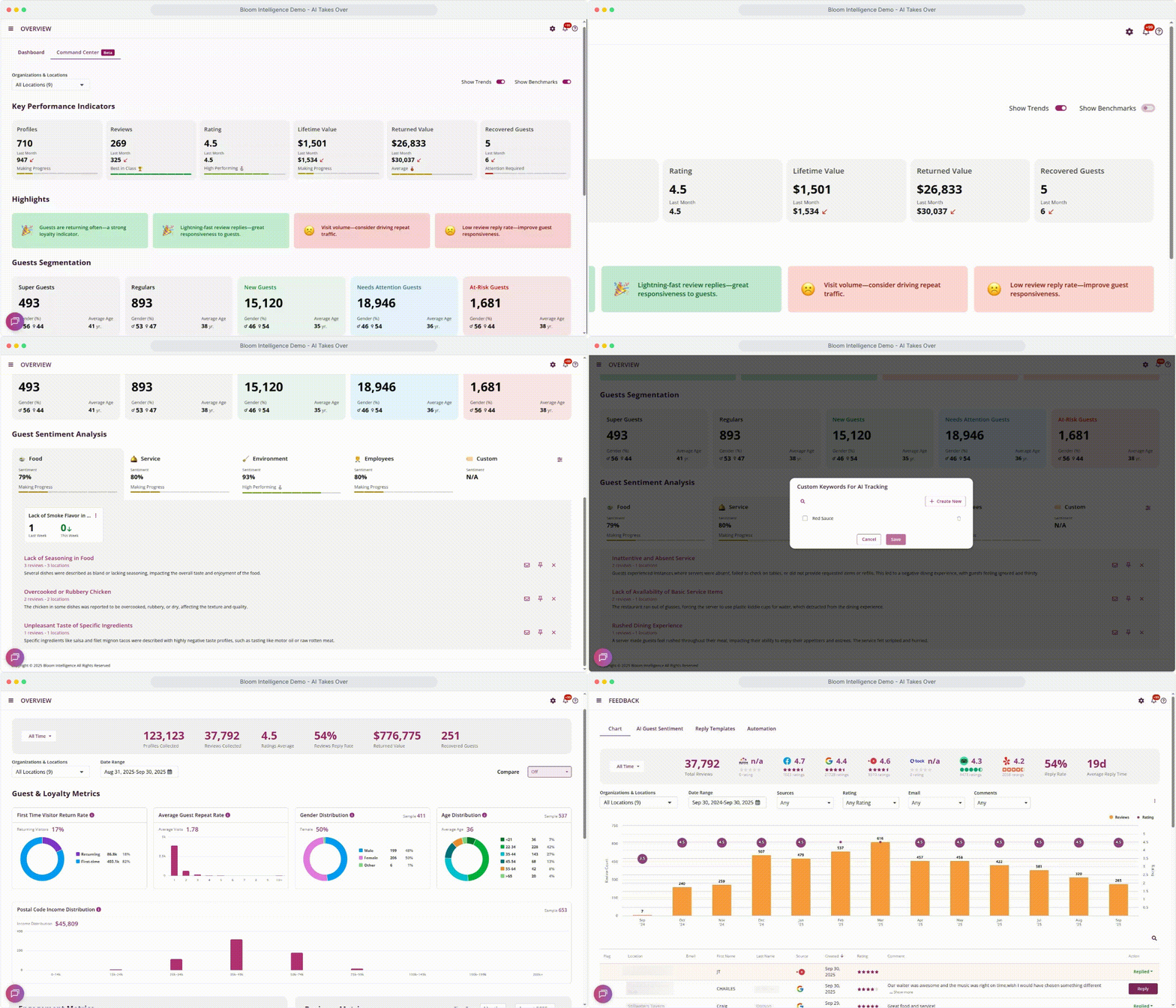
360 Guest Profiles
Visits, order, review, and interaction in one complete view with predictive scoring

Automatic Segmentation
AI segments guests into Super Guests, Regulars, New Guests, Cooling Off, and At-Risk automatically

Behavioral Analytics
Visit frequency, recency, spending trends, single guest views, and preference patterns that predict future behavior

Operational Insights
Guest sentiment, data, and behavior analysis and feedback loops reveals operational issues before they spread

Geographic Intelligence
Guest location and demographic data drives expansion decisions and local marketing

Revenue Attribution
Track every campaign to transactions and prove ROI down to the guest returning

Why Bloom's Restaurant CDP
Built Specifically for Restaurant Operations
Unlike generic CDPs, Bloom is purpose-built for restaurant guest intelligence
| Feature |

|
Other Tools |
|---|---|---|
| Unified Guest Profiles | Unifies 22+ data sources (WiFi, POS, websites, reservations, reviews, online ordering) into guest profiles and guest intelligence | Limited integrations (5-10 sources), manual data entry required, No marketing automation, No reputation management |
| Restaurant-Specific Intelligence | Frequency, recency, spend, sentiment, expert restaurant models | Generic data models, limited insights |
| AI-Powered Guest Audiences | Restaurant specific segmentation, automatically identify regulars, super guests, new guests, at-risk guests, and lost guests | Manual segmentation, non restaurant specific |
| Single Guest View | Single guest view by location, grouping of locations, and audiences. | Limited access to restaurant specific data |
| Operational Insights | Your restaurant gets smarter every day—automatically and effortlessly | Never learns, Stays the same |
| Seamless Integration | 22+ platforms integrated into one streamlined system | Limited integrations, Days or weeks to integrate |
| Revenue Attribution | Track every campaign to actual orders and walk-ins | Vanity metrics like views and clicks only |
| Onboarding Time | Go live in days with expert support - forever | 4-8 weeks implementation with limited or no support ongoing |
Simple Implementation
From Fragmented Data to Unified Intelligence in 4 Steps

Connect Everything
Seamlessly integrate WiFi, POS, reservations, online ordering, and reviews. No disruption to operations. Complete in 24 hours.
- Seamless integration with existing systems
- No disruption to daily operations
- Complete data unification in 24 hours
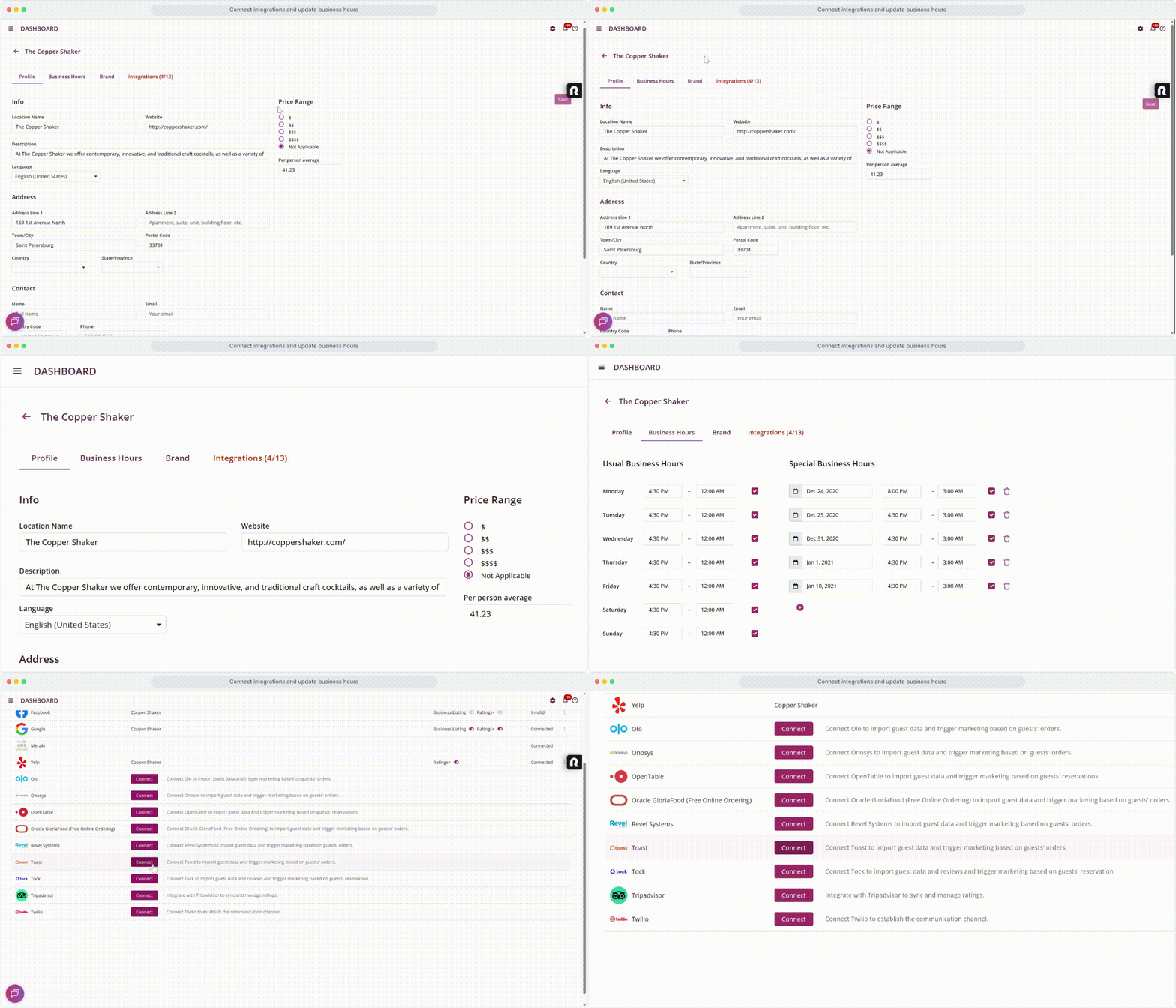

Automatic Unification
Our CDP automatically creates unified guest profiles, merging touchpoints into single guest views with predictive scoring.
- Voice of brand
- Automatic generation of the voice of your guest
- Best-in-class marketing and deliverability AI models
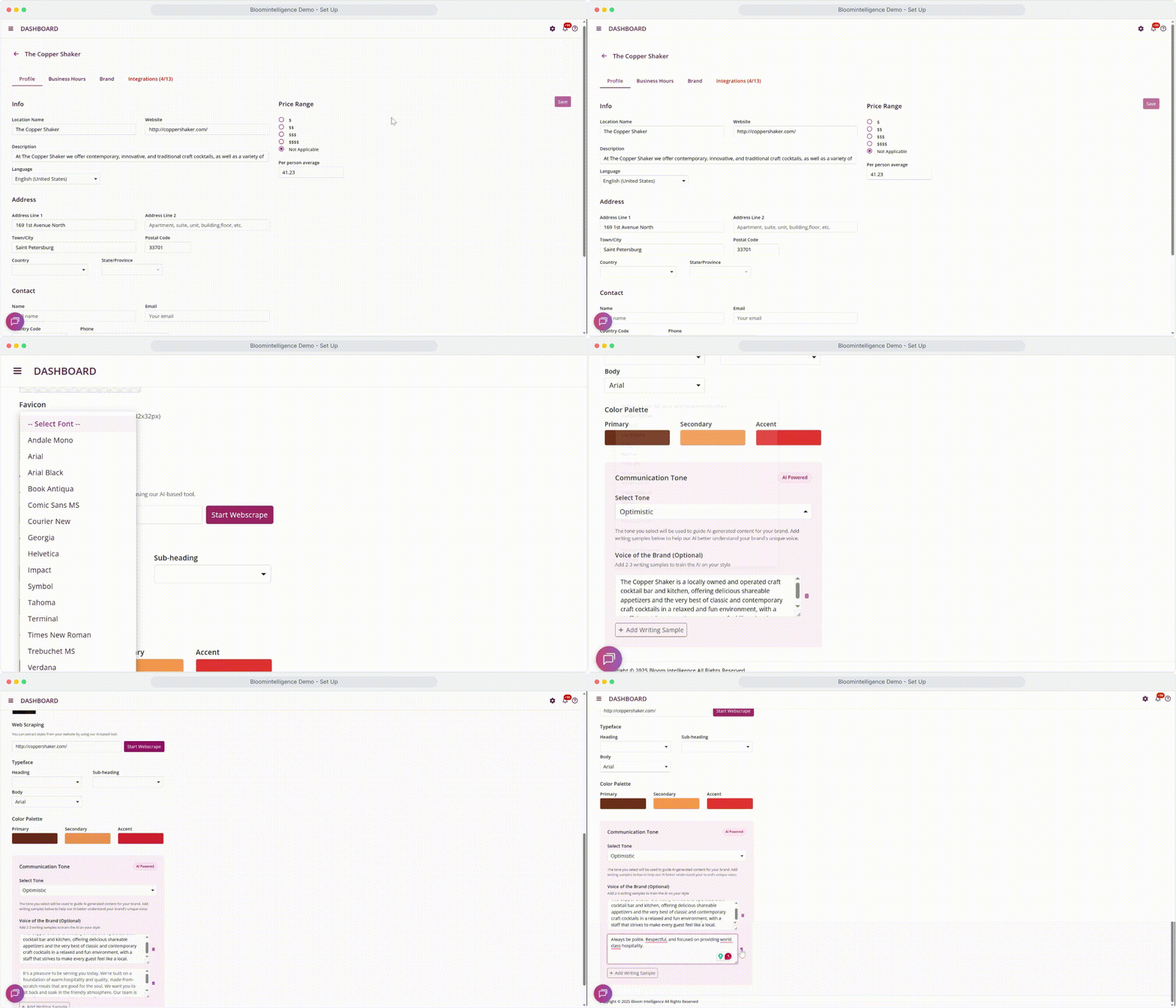

AI Intelligence Layer
AI analyzes behavior, segments guests, identifies at-risk customers, and surfaces operational insights automatically.
- Smart guest segmentation
- Behavioral trigger campaigns
- Automated review management

Automated Action
Marketing campaigns, review responses, and operational alerts trigger automatically based on guest intelligence.
- Real-time revenue attribution
- Guest lifetime value optimization
- Continuous performance improvements

Built for Every Role in Your
Restaurant Organization
Whether you're an owner, marketer, or operations manager - we've got you covered
For Restaurant Owners & CEOs
Use geographic guest intelligence to identify expansion opportunities. Track guest lifetime value across locations. Measure operational changes' impact on satisfaction. Make data-driven decisions with confidence.
-

Geographic analysis
Drives expansion decisions
-
Location performance
Location performance
-
Guest acquisition
Cost tracking
-
ROI
Measurement across all initiatives

Ask Bloom AI...
- Which locations are underperforming and why?
- What's our guest lifetime value by segment?
- Where should we expand next?
- How do operational changes impact satisfaction?
For Marketing Teams
Stop spray-and-pray marketing. Target Super Guests with VIP offers. Recover at-risk guests before they churn. Launch automated campaigns that prove ROI to the guest returning
-
38%
At-risk guest recovery rate
-
Automated Triggers
Such as win-back campaigns
-
Revenue Attribution
Tracking to return rates and transactions
-
Segment
Specific messaging
Ask Bloom AI...
- Which guests are about to churn?
- What's our best-performing campaign?
- Which segments have highest LTV?
- How effective are our win-back campaigns?
For Operations Teams
Turn Guest feedback into continuous operational excellence
Catch operational issues before they spread. Track how changes impact satisfaction. Identify training opportunities. Create continuous feedback loops between guests and operations.
-
Real-time sentiment
Analysis from reviews
-
Feedback Loops
Track how operational changes impact satisfaction scores
-
Proactive Alerts
Catch issues before they become spread
-
Staff
Performance insights
Ask Bloom AI...
- What are guests saying about food quality?
- Which issues impact satisfaction most?isfaction most?
- How do staffing changes affect experience?
- Which locations need operational attention?
Why 1,000+ Restaurant Operators
Choose Bloom
Join the Guest Intelligence Revolution
"Stay connected to guests and drive sales As an executive of two medium sized Restaurant companies I would absolutely recommend Bloom Intelligence. The services they provide are fiscally responsible, reliable, informative and easy to use. They also continuously add new ways that enhance their services that add to an outstanding ROI."
"We started working with Bloom to enhance our guests' Wifi experience. In addition to achieving that goal, Bloom offers so much more in terms of their CDP, marketing automation, and reputation management. They have replaced our review management software and email marketing platform thus saving us both time and money, and their customer service is unparalleled.
"I’ve had the absolute pleasure of using Bloom Intelligence’s Reputation Management & Marketing platform and it has been an an absolute time saver.They are constantly updating their platform to serve their customers better, as well as causing an overall improvement in operations! Highly recommend!"
We're So Confident, We Remove Your Risk
We Guarantee Your Guest Intelligence Success

Free
White-Glove Setup
& Integration
$5,000 value included

Free
Historical Data
Migration
Up to 2 years of data

Dedicated
Success
Manager
Forever
Cancel Anytime in First 90 Days
If you don't see unified guest profiles and measurable
results in 90 days.
... and you keep all the data
Customers See Results
...or we work for free until you do!
Frequently Asked Questions
Everything you need to know about Bloom Guest Intelligence for Restaurants
Question: What is a restaurant customer data platform?
A restaurant customer data platform (CDP) is a unified software system that automatically collects, organizes, and activates guest data from multiple sources—including WiFi analytics, POS systems, reservation platforms, online ordering, review sites, and websites—into complete, actionable guest profiles. Unlike generic CDPs built for retail or e-commerce, restaurant customer data platforms are purpose-built to handle restaurant-specific data like visit frequency, dwell time, average check size, dining preferences, party size, and guest sentiment from reviews. The platform creates a single source of truth for all guest intelligence, enabling personalized marketing, automated guest recovery campaigns, and operational insights—all on autopilot.
Key capabilities of a restaurant CDP:
- Unification of 22+ restaurant technology platforms
- Complete guest profiles with predictive scoring
- Automatic segmentation (Super Guests, Regulars, At-Risk, etc.)
- Behavioral analytics and visit pattern tracking
- Revenue attribution to individual campaigns
- Operational insights from sentiment analysis
Question: What is a restaurant guest data platform and how is it different from a customer data platform?
A restaurant guest data platform and restaurant customer data platform are the same thing—”guest” and “customer” are interchangeable terms in the restaurant industry, with many operators preferring “guest” to emphasize hospitality. Both refer to unified systems that consolidate guest/customer data from all touchpoints into actionable profiles.
What makes restaurant guest data platforms unique:
- Restaurant-specific data models: Built to handle visit frequency, dwell time, order preferences, party size, and dining occasions—not just transactions
- Hospitality-focused segmentation: Automatically identifies Super Guests, Regulars, VIPs, Cooling Off guests, and At-Risk guests based on restaurant behavior patterns
- Operational intelligence integration: Connects guest sentiment from reviews to operational performance, creating feedback loops between guest experience and operations
- Pre-built restaurant integrations: Native connections to major POS systems, reservation platforms, online ordering, and WiFi analytics
- Speed of implementation: Restaurant guest data platforms deploy in 24-48 hours vs. weeks/months for generic CDPs requiring custom configuration
The key difference from generic CDPs: Restaurant guest data platforms understand the unique guest journey in hospitality, from first WiFi connection through reservation, dining, review, and repeat visit.
Question: What is restaurant guest intelligence and how does it differ from just having guest data?
Restaurant guest intelligence is the layer of AI-powered analysis, predictive modeling, and automated segmentation that transforms raw guest data into actionable business insights. Having guest data means you collect information; having guest intelligence means you automatically know what to do with it.
Guest Data vs. Guest Intelligence:
Guest Data (what you collect):
- Name, email, phone from WiFi signup
- Order history from POS
- Reservation records
- Review content
- Website visit logs
Guest Intelligence (what it means):
- Predictive churn scoring: “This guest has 78% probability of not returning”
- Automatic segmentation: “This is a Super Guest worth $2,400 annually”
- Behavioral patterns: “This guest always orders lunch on Tuesdays and never tips below 20%”
- Sentiment analysis: “Guests’ satisfaction dropped 15% after the menu change.”
- Revenue attribution: “Win-back campaign recovered this $850 guest”
How restaurant guest intelligence platforms work:
- Unified profiles: Connect all touchpoint data into a single guest view
- AI analysis: Machine learning identifies patterns, trends, and anomalies
- Predictive scoring: Calculates lifetime value, churn risk, and next-visit likelihood
- Automated segmentation: Groups guests by value and behavior without manual work
- Actionable triggers: Automatically launch campaigns when guests change audiences or risk thresholds
- Continuous learning: Gets smarter with every guest interaction
The platform transforms “Sarah visited 3 times” into “Sarah is a high-value regular showing early churn signals—trigger win-back campaign now.”
Question: How long does restaurant customer data platform implementation take?
Bloom’s restaurant customer data platforms can be fully implemented in 24-48 hours with zero disruption to daily operations. This includes:
Day 1 (Setup – 4-6 hours):
- WiFi analytics integration and guest WiFi configuration
- POS system connection
- Reservation platform integration (OpenTable, Tock, etc.)
- Online ordering connection (website, third-party delivery)
- Review platform connections (Google, Yelp, Facebook, TripAdvisor)
- Historical data migration
Day 2 (Activation – 2-4 hours):
- Brand kit setup (voice, colors, messaging)
- Automated campaign configuration (win-back, birthday, VIP)
- Review response automation setup
- Guest segmentation rules activation
- Team training and dashboard walkthrough
Ongoing (Automated):
- Guest profiles update in real-time as new data arrives
- AI segmentation runs continuously
- Campaigns trigger automatically based on behavior
- Review responses are generated automatically
Why restaurant CDPs are faster than generic CDPs:
- Pre-built integrations with major restaurant technology platforms
- Restaurant-specific data models (no custom configuration needed)
- White-glove setup included (not DIY implementation)
- Purpose-built for hospitality workflows
Generic enterprise CDPs can take 3-6 months to implement because they require custom data modeling, manual integration development, and extensive configuration. Restaurant customer data platforms are turnkey.
Question: What integrations does Bloom Intelligence support?
Bloom Intelligence integrates with 22+ restaurant platforms, including Toast, Olo, OpenTable, Tock, Revel, Gloria Food, Onysis, Google, Yelp, Facebook, TripAdvisor, and major WiFi systems. All integrations are included in every plan.
Question: How does a restaurant customer data platform increase revenue?
Restaurant customer data platforms increase revenue through five proven mechanisms, with platform averages showing $53,000+ recovered revenue per location annually:
1. At-Risk Guest Recovery (38% success rate):
- AI identifies guests showing early churn signals (declining visit frequency, satisfaction drops)
- Automated win-back campaigns trigger with personalized offers
- Average value: $18,500 per location annually
2. Guest Lifetime Value Increase (43% average improvement):
- Personalized campaigns based on complete guest profiles increase visit frequency
- Targeted offers match proven preferences and behaviors
- VIP treatment for Super Guests increases spend per visit
- Average value: $22,800 per location annually
3. New Guest Acquisition Cost Reduction:
- Unified profiles reveal highest-value guest acquisition sources
- Marketing spend optimizes toward channels that attract best guests
- Referral programs target Super Guests most likely to bring quality referrals
- Average value: $6,200 per location annually
4. Operational Efficiency Gains:
- Sentiment analysis catches issues before they spread (reduces guest loss)
- Menu optimization based on preference data
- Staffing adjustments based on predicted traffic patterns
- Average value: $4,100 per location annually
5. Review-Driven Guest Acquisition:
- Automated review responses improve ratings
- Higher ratings drive more organic discovery
- Better reviews = higher conversion on reservation/ordering platforms
- Average value: $1,900 per location annually
Revenue Attribution Tracking: Modern restaurant CDPs track every dollar back to specific campaigns and guest segments, proving ROI:
- “Win-back campaign recovered 47 guests worth $8,340 this month”
- “Birthday campaign generated $2,190 from 23 redemptions”
- “Super Guest VIP offer drove $12,400 in incremental revenue”
Question: What's the ROI of a restaurant guest intelligence platform?
The typical ROI of a restaurant guest intelligence platform is 5-8x annual investment, with most restaurants seeing positive ROI within 60-90 days.
ROI Calculation Example (3-location restaurant):
Annual Platform Investment: ~$9,000 Annual Revenue Impact: $159,000 (3 locations × $53,000 average) ROI Multiple: 17x + Payback Period:~ 2 Months
Where ROI Comes From:
Immediate (Month 1):
- Historical data activation: Win-back campaigns to dormant guests in your database
- Review response automation: Saves 15-20 hours/week of manual work
- Basic segmentation: Identify and protect Super Guests immediately
Short-term (Months 2-3):
- At-risk guest identification: Recover cooling-off guests before they churn
- Operational issue alerts: Fix problems before they become widespread
- Campaign optimization: Data reveals what messaging works
Long-term (Months 4-12):
- Guest lifetime value increases: Personalization drives frequency
- Acquisition cost decreases: Smarter targeting of marketing spend
- Compounding intelligence: Platform gets smarter with more data
Hidden ROI Benefits:
- Time savings: Marketing automation eliminates 20+ hours/week of manual campaign work
- Tool consolidation: Replaces separate review management ($200-400/mo), email marketing ($150-300/mo), and analytics tools
- Reduced guest loss: Every prevented churn of a $1,200 LTV guest is $1,200 saved
- Operational improvements: Faster issue resolution reduces negative reviews
Risk Mitigation: Most restaurant guest intelligence platforms offer:
- Free historical data migration
- White-glove setup included
- Cancel anytime in first 90 days
Question: What's the difference between a restaurant CDP and a CRM?
Restaurant CDPs and CRMs serve different purposes, though many operators confuse them:
Restaurant Customer Data Platform (CDP):
- Purpose: Unify ALL guest data from every touchpoint into complete profiles
- Data source: Automatically pulls from WiFi, POS, reservations, ordering, reviews, website
- Primary use: Marketing automation, guest intelligence, behavioral analytics
- Updates: Real-time as guests interact with any system
- Automation: AI-powered segmentation, predictive scoring, campaign triggers
- Who uses it: Marketing teams, owners, operations for guest insights
- Example action: “Automatically segment guests and trigger win-back campaign when someone shows churn signals”
Restaurant CRM (Customer Relationship Management):
- Purpose: Manage relationships with business contacts (vendors, partners, large accounts)
- Data source: Manually entered information about business relationships
- Primary use: Sales pipeline management, vendor communications, contract tracking
- Updates: Manual data entry by staff
- Automation: Limited – mostly task reminders and email templates
- Who uses it: Sales teams, business development, catering sales
- Example action: “Track catering proposal sent to corporate client, set follow-up reminder”
Key Differences:
| Feature | Restaurant CDP | Traditional CRM |
|---|---|---|
| Data collection | Automatic from systems | Manual entry |
| Guest volume | Thousands to millions | Dozens to hundreds |
| Use case | Consumer guest marketing | B2B relationship management |
| Intelligence | AI-powered insights | Basic reporting |
| Real-time | Yes – continuous sync | No – manually updated |
| Integration | WiFi, POS, reviews, ordering | Email, calendar, manual logs |
Do restaurants need both?
- CDP: Yes – for managing consumer guest data and marketing
- CRM: Maybe – only if you have significant B2B/catering sales operations
Most restaurants only need a CDP. Restaurant groups with major catering operations might use both: CDP for consumer guests, CRM for corporate accounts.
Question: Can a restaurant guest intelligence platform help with operations, not just marketing?
Yes—modern restaurant guest intelligence platforms provide operational insights that help improve food quality, service, staffing, and overall guest experience, not just marketing ROI.
How Guest Intelligence Powers Operations:
1. Sentiment Analysis from Reviews
- What it does: AI analyzes all review content across Google, Yelp, Facebook, TripAdvisor
- Operational insights extracted:
- Food quality issues: “Cold food” mentions up 40% this week
- Service problems: “Slow service” mentioned in 12% of reviews vs. 4% baseline
- Cleanliness concerns: “Bathroom” sentiment score dropped from 4.2 to 3.1
- Menu item feedback: “Pasta” mentioned positively in 78% of reviews
- Action: Operations team gets automated alerts when patterns emerge
2. Visit Pattern Analysis
- What it does: WiFi and transaction data reveal traffic patterns
- Operational insights:
- Peak hours shifting: Tuesday lunch now 30 minutes earlier than historical
- Capacity utilization: Thursdays at 65% while Fridays at 105%
- Dwell time trends: Average table time increased from 47 to 62 minutes
- Walk-out detection: WiFi shows 15% of visitors don’t make purchases
- Action: Adjust staffing schedules, optimize table turns, reduce wait times
3. Guest Satisfaction Tracking
- What it does: Combines review ratings, visit frequency, and spending into satisfaction scoring
- Operational insights:
- Location A: Satisfaction declining 12% month-over-month
- Specific shift issues: Dinner satisfaction 15% lower than lunch
- Staff correlation: Shifts managed by Manager X have 4.8 stars vs. 4.2 average
- Post-change impact: New menu rollout correlates with 8% satisfaction drop
- Action: Investigate root causes, adjust training, modify procedures
4. Menu Performance Intelligence
- What it does: POS data + review mentions reveal what guests love/hate
- Operational insights:
- Items ordered but mentioned negatively in reviews
- High-satisfaction items with low order frequency (marketing opportunity)
- Items that drive repeat visits vs. one-time orders
- Price sensitivity signals: “Expensive” mentions correlate with specific items
- Action: Optimize menu, adjust pricing, train servers on descriptions
5. Operational Issue Alerts
- What it does: Pattern recognition identifies problems before they become widespread
- Alert examples:
- “Food temperature complaints up 300% in past 48 hours” → Kitchen equipment issue
- “Wait time mentions increased across 8 reviews this week” → Understaffing
- “Noise level complaints spiking on Saturday nights” → Acoustic/capacity problem
- “Parking mentioned negatively in 40% of 1-star reviews” → Address in communications
- Action: Fix issues immediately instead of discovering them weeks later in monthly review analysis
6. Staff Performance Insights
- What it does: Connects guest feedback to specific shifts and team members
- Operational insights:
- Guest satisfaction by manager/shift lead
- Service quality trends by day part
- Training needs identification
- High-performer recognition opportunities
- Action: Targeted training, schedule optimization, recognition programs
Real-World Operational Use Case:
Scenario: Restaurant notices declining visit frequency among regulars
Marketing-Only View: “Regulars are churning. Let’s send a win-back campaign.”
Guest Intelligence Platform View:
- 47 regular guests visited 30% less frequently in past 60 days
- All 47 guests historically ordered the salmon special
- Review sentiment shows “salmon” dropped from 4.7 to 3.2 stars in same period
- 12 reviews mention “salmon dry” or “salmon overcooked”
- Pattern started exactly when new chef began 58 days ago
Operational Action:
- Kitchen manager reviews salmon prep with new chef
- Adjusts cooking technique
- Monitors salmon satisfaction in reviews
- Once resolved, marketing targets those 47 guests with “New & Improved Salmon” campaign
Result: Fix root cause (operations) before spending money on marketing. Win-back campaign succeeds because the problem is actually solved.
Operational ROI:
Beyond revenue recovery, operational improvements deliver:
- Reduced negative reviews: Fix issues before they become public complaints
- Lower turnover: Data-driven training improves staff confidence and performance
- Menu optimization: Remove low-satisfaction items, promote high-performers
- Labor efficiency: Staff based on actual demand patterns, not guesses
- Food cost reduction: Identify waste from items ordered then sent back
Bottom Line: Restaurant guest intelligence platforms that only focus on marketing miss 50% of the value. The best platforms create feedback loops where guest intelligence drives operational excellence, which improves guest satisfaction, which improves marketing ROI.